Hookito

Philippines · Books

Books from Philippines
10 books from and about Philippines: what each is about, the plot, and a note from Professor Kogi.

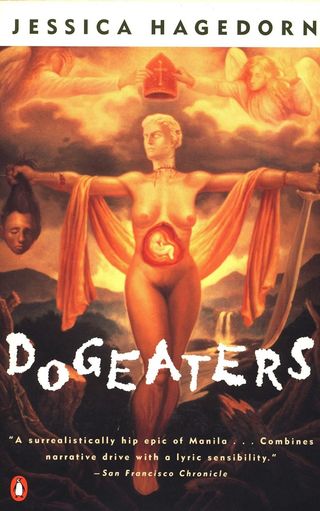
Cover of Dogeaters

Dogeaters

Jessica Hagedorn

Original language: English · Paperback · ISBN 978-0140149043

Dogeaters is set in Manila during the final years of the Philippines' late dictator, a period when American pop culture and local Filipino traditions existed side by side in loud, sometimes contradictory ways. Jessica Hagedorn builds her novel around a wide cast of characters drawn from different layers of Manila's social world: movie stars, waiters, wealthy elites, a young addict, and others whose lives overlap and collide. The story moves toward a beauty pageant, a film festival, and a political assassination, pulling these characters into a shared spiral of events.

At the center is Rio, a schoolgirl observing the chaos around her. She will eventually leave the Philippines for the United States, and from that distance she recalls the country she grew up in. The novel shifts between voices and perspectives, mixing gossip, storytelling, and spectacle in a way that mirrors the culture it describes. Manila itself functions almost as a character, shaped by colonial history, cinema, political power, and everyday survival.

The book was a finalist for the National Book Award for Fiction and received the American Book Award. Hagedorn, who was born in Manila and later moved to the United States, draws on both settings in her work.

Plot

Welcome to Manila in the turbulent period of the Philippines’ late dictator. It is a world in which American pop culture and local Filipino tradition mix flamboyantly, and gossip, storytelling, and extravagant behavior thrive. A wildly disparate group of characters—including movie stars and waiters, a young junkie and the richest man in the Philippines—becomes ensnared in a spiral of events culminating in a beauty pageant, a film festival, and an assassination. At the center of this maelstrom is Rio, a feisty schoolgirl who will grow up to live in America and look back with longing on the land of her youth.
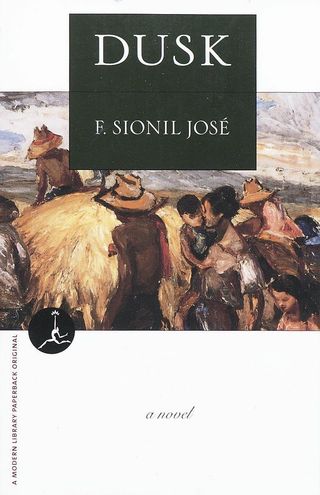
Cover of Dusk

Dusk

F. Sionil Jose

Original language: Filipino · Paperback · ISBN 978-0375751448

Dusk, originally published in the Philippines under the title Po-on, is the opening novel of F. Sionil Jose's five-part Rosales Saga. Set in the 1880s, it follows a tenant farming family forced into exile from their village. They resettle in the small town of Rosales, in the Pangasinan province of Luzon, where they try to build a new life under difficult conditions. The novel sits at a turning point in Philippine history, as Spanish colonial rule weakens and the country edges toward upheaval.

Jose portrays the physical and emotional hardships faced by ordinary Filipinos caught between colonial powers. The family's displacement is shaped by forces far beyond their control, including land tenure systems, religious authority, and the politics of occupation. Alongside these historical pressures, the novel follows its characters through questions of faith, loyalty, and personal meaning. The story moves between intimate domestic life and the broader sweep of national change.

The Rosales Saga spans several generations and multiple decades of Philippine history. Dusk, as the chronological starting point, establishes the family, the landscape, and the social tensions that carry forward through the remaining four novels in the sequence.

Plot

Set in the 1880s, Dusk records the exile of a tenant family from its village and the new life it attempts to make in the small town of Rosales. Here commences the epic tale of a family unwillingly thrown into the turmoil of history. But this is more than a historical novel; it is also the eternal story of man's tortured search for true faith and the larger meaning of existence. Jose has achieved a fiction of extraordinary scope and passion, a book as meaningful to Philippine literature as One Hundred Years of Solitude is to Latin American literature.

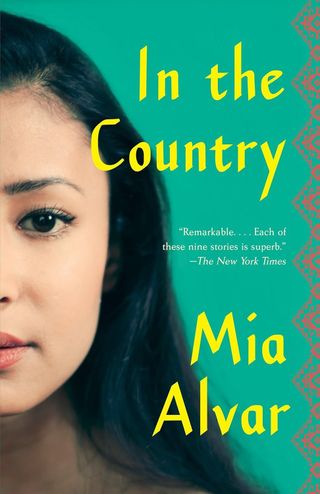
Cover of In the Country

In the Country

Mia Alvar

Original language: English · Paperback · ISBN 978-0804171496

In the Country is a debut short-story collection by Mia Alvar, built around nine stories of Filipino lives shaped by migration. The characters range from pharmacists and teachers to housemaids and college students, scattered across the Philippines, the Middle East, and the United States. Each story follows people caught between the places they have left and the places they are trying to belong to, whether they moved by choice or necessity.

Several stories center on family bonds stretched thin by distance. In one, a man running a pharmacy in New York smuggles medication back to Manila for his sick father and uncovers a difficult secret about his mother. In another, a woman in Bahrain confronts a situation that forces her to reconsider her marriage. A Manila college student trying to write fiction measures her own quiet life against her brother's more eventful one abroad. The novella-length title story traces the linked paths of a journalist and a nurse during the labor strikes that shook Manila in the 1970s.

Alvar draws her characters from varied social positions and geographic settings, but displacement and the desire for connection run through every story. The collection maps a diaspora that stretches across continents while remaining rooted in Philippine experience.

Plot

From teachers to housemaids, from mothers to sons, Alvar’s stories explore the universal experiences of loss, displacement, and the longing to connect across borders both real and imagined. In the Country speaks to the heart of everyone who has ever searched for a place to call home—and marks the arrival of a formidable new voice in literature.

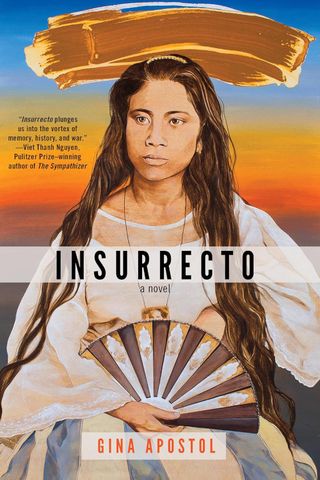
Cover of Insurrecto

Insurrecto

Gina Apostol

Original language: English · Hardcover · ISBN 978-1616959449

Insurrecto follows two women on a road trip through the Philippines under Duterte. Magsalin, a Filipino translator, and Chiara, an American filmmaker, work together on a screenplay about the Philippine-American War. Their collaboration soon turns into a contest over who controls the story. At the center sits an event of 1901 in Balangiga, on Samar, where a garrison of American soldiers was attacked by Filipino fighters, followed by a devastating military reprisal across the countryside.

The novel nests two competing film scripts inside its own narrative. Chiara's version centers on a white photographer, while Magsalin's script follows a Filipino schoolteacher. Each woman reshapes the same historical material according to her own perspective and loyalties. The structure loops and shifts between these layered accounts, so that the act of writing and rewriting becomes part of the story itself.

Gina Apostol, who received the PEN Open Book Award for her earlier novel Gun Dealer's Daughter, uses overlapping voices and a fragmented architecture to examine how colonial violence is recorded, forgotten, or reclaimed. The present-day road trip and the 1901 events run in parallel, connected by questions of authorship and national memory. The two scripts approach the same days in Samar from different vantage points.

Plot

Two women, a Filipino translator and an American filmmaker, go on a road trip in Duterte’s Philippines, collaborating and clashing in the writing of a film script about a massacre during the Philippine-American War. Chiara is working on a film about an incident in Balangiga, Samar, in 1901, when Filipino revolutionaries attacked an American garrison, and in retaliation American soldiers created “a howling wilderness” of the surrounding countryside. Magsalin reads Chiara’s film script and writes her own version. Insurrecto contains within its dramatic action two rival scripts from the filmmaker and the translator—one about a white photographer, the other about a Filipino schoolteacher.

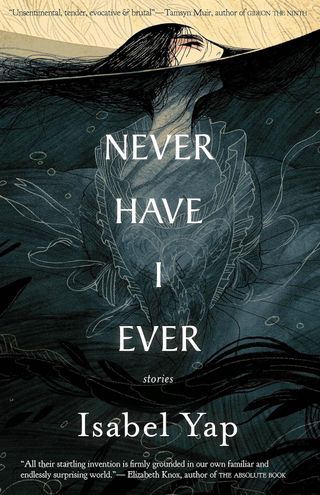
Cover of Never Have I Ever

Never Have I Ever

Isabel Yap

Original language: English · Paperback · ISBN 978-1618731821

Never Have I Ever is a debut short story collection by Filipino author Isabel Yap. The stories draw on Philippine folklore, urban legends, and the experience of living between cultures. Characters encounter supernatural figures from local tradition, navigate spells tied to schoolyard emotions, and face the particular dread that comes from stories passed mouth to mouth. The collection opens with a scene in which a girl asks a spirit whether she is dead, setting a tone that moves between tenderness and unease.

Several of the stories are set in the Philippines, while others follow Filipino characters abroad, carrying familiar myths into unfamiliar cities. Yap's subjects range from childhood friendships tested by danger to the loneliness of immigrant life to retellings shaped by creatures and spirits specific to Philippine storytelling. Individual pieces shift in register: some lean toward horror, others toward quiet fantasy or emotional realism. The book was named a finalist for the World Fantasy Award.

Among the collected works are pieces such as A Canticle for Lost Girls, A Spell for Foolish Hearts, and Have You Heard the One About Anamaria Marquez, each built around a different strand of fear, affection, or suspense.

Plot

“Am I dead?” Mebuyen sighs. She was hoping the girl would not ask. Spells and stories, urban legends and immigrant tales: the magic in Isabel Yap’s debut collection jumps right off the page, from the friendship and fear building in “A Canticle for Lost Girls” to the joy in “A Spell for Foolish Hearts” to the terrifying tension of the urban legend “Have You Heard the One About Anamaria Marquez.”

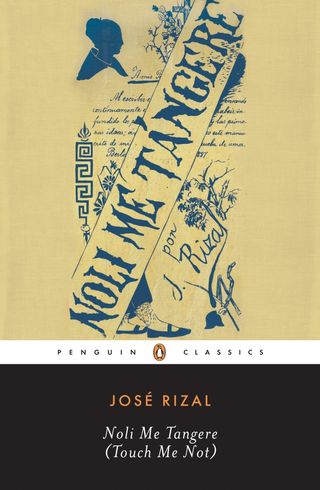
Cover of Noli Me Tangere

Noli Me Tangere

José Rizal

Original language: Filipino · Paperback · ISBN 978-0143039693

Noli me tangere — Painting by Antonio da Correggio (1525)

Plot

A passionate love story set against the ugly political backdrop of repression, torture, and murder, "The Noli," as it is called in the Philippines, was the first major artistic manifestation of Asian resistance to European colonialism, and Rizal became a guiding conscience—and martyr—for the revolution that would subsequently rise up in the Spanish province.

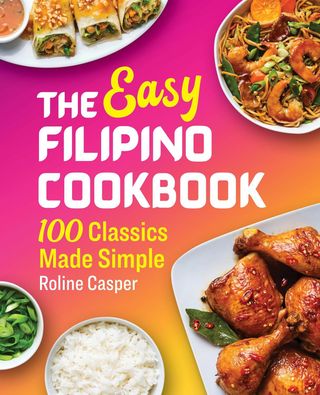
Cover of The Easy Filipino Cookbook: 100 Classics Made Simple

The Easy Filipino Cookbook: 100 Classics Made Simple

Roline Casper

Original language: English · Paperback · ISBN 978-1641526289

Roline Casper's cookbook collects 100 Filipino recipes organized by region, covering dishes from Luzon, Calabarzon, Bicol, Visayas, and Mindanao. The book opens with a section on the history of Filipino food and the culinary influences that have shaped it over centuries, including trade connections and colonial-era exchanges that brought ingredients and techniques from China, Spain, and the United States into Filipino kitchens. Casper also provides guidance on essential tools, techniques, and core ingredients used across popular dishes.

The recipes are written for home cooks who may not have prior experience with Filipino cooking. Each one is designed to be relatively quick to prepare, and the book includes adaptations for electric pressure cookers. Dishes reflect the characteristic balance of sweet, sour, salty, and bitter flavors found across Filipino cuisine. The collection also features suggested party menus, grouping recipes into combinations suited for celebrations and shared meals.

The five regional sections give readers a way to see how geography shapes flavor profiles across the Philippine archipelago. Bicol, for instance, is known for dishes that use coconut milk and chili, while Visayan cooking draws on the seafood resources of the central islands. This regional structure helps distinguish flavors that are often grouped together under a single national label.

Plot

Filipino food is a versatile, adaptable cuisine, perfect for cooking and sharing with your loved ones. Each delectable dish is a labor of love―and a proud celebration of Pinoy culture. This Filipino cookbook makes home cooking quick and easy, bringing the flavors of the islands to your own kitchen. The Easy Filipino Cookbook begins with an in-depth history of Filipino food as we know it, as well as culinary influences from around the world. These tasty and traditional Filipino recipes are also simple enough for any home cook and so delicious you'll feel proud to share with everyone. Kain tayo―let's eat! The Easy Filipino Cookbook includes: Regional recipes―This Filipino cookbook gives you a look into flavor profiles for dishes hailing from Luzon, Calabarzon, Bicol, Visayas, and Mindanao. Pinoy prep―Discover essential tools, techniques, and ingredients for popular Filipino dishes, as well as adaptations for an electric pressure cooker or Instant Pot®. Masarap menu―Cook your way through 100 easy-to-make, classic, and favorite Filipino dishes―including some yummy party menu inspiration to complete any celebration.

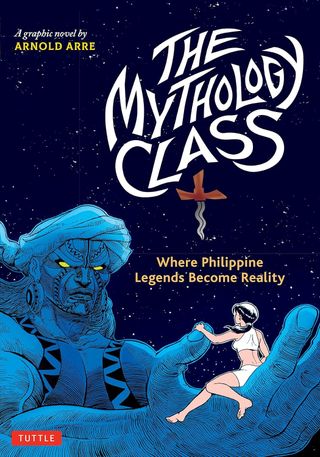
Cover of The Mythology Class: Where Philippine Legends Become Reality

The Mythology Class: Where Philippine Legends Become Reality

Arnold Arre

Original language: English · Paperback · ISBN 978-0804855426

The Mythology Class follows Nicole Lacson, an anthropology student at the University of the Philippines, who is drawn into a hidden world when a figure called Madame Enkanta summons her to a secret gathering. There, Nicole encounters creatures from Filipino mythology and folklore, beings she had only heard about in her grandfather's bedtime stories. Tikbalangs, kapres, and various engkantos (enchanted spirits from traditional Philippine tales) turn out to be real, upending everything she thought she understood about the world around her.

Nicole sets out on a quest through the streets of metropolitan Manila alongside a small, loosely assembled group of fellow college students. Along the way, legendary Filipino heroes such as Sulayman, Kubin, and Lamang appear as the group confronts an ancient threat. Arnold Arre, the book's author and creator, draws on traditional fables and rebuilds them inside a contemporary action setting, placing old stories in recognizable modern locations.

The book received the Philippine National Book Award. Its premise connects university life in Quezon City with a layer of myth that runs beneath everyday Manila, treating Filipino folklore not as distant history but as something still present in the landscape.

Plot

Borrowing elements from The Lord of the Rings and The Phantom Tollbooth, author and creator Arnold Arre reinvents age-old Filipino fables, constructing a rich world of fantasy and adventure for a new generation. The Mythology Class follows Nicole Lacson, an anthropology student at the University of the Philippines. When she is summoned to a secret meeting by the mysterious Madame Enkanta, Nicole finds herself face-to-face with living creatures from mythology and folklore that she never imagined existed in real life! Tikblangs, kapres and a range of engkantos—fantasy figures from her grandfather's bedtime stories—challenge her previously-held notions of reality. Nicole embarks on a quest through the streets of metropolitan Manila with a ragtag crew of college students. With guest appearances from legendary Filipino heroes like Sulayman, Kubin and Lamang, Nicole's class must face down and repel an ancient evil.

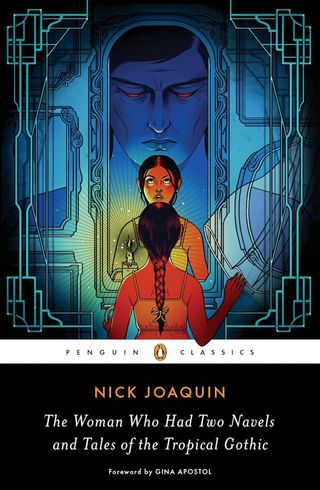
Cover of The Woman Who Had Two Navels and Tales of the Tropical Gothic

The Woman Who Had Two Navels and Tales of the Tropical Gothic

Nick Joaquin

Original language: Filipino · Paperback · ISBN 978-0143130710

Nick Joaquin is widely regarded as one of the most important Filipino writers, though his work stayed little known outside the Philippines despite being written in English. This collection gathers fiction and drama set against Manila after the destruction of World War II, a city shaped by centuries of Spanish and then American rule. The title story follows Philippine emigrants in Hong Kong and was later expanded into a novel.

Also included are the widely anthologized stories May Day Eve and The Summer Solstice, and the play A Portrait of the Artist as Filipino. Joaquin's writing circles the tension between Catholic rites inherited from Spain and the uncertain freedoms that followed independence. His characters move through folklore, ceremony, and colonial memory, in prose that mixes realism with baroque excess and the fantastical.

The volume is described as the first American collection of Joaquin's work, and it places him near Latin American writers such as Gabriel Garcia Marquez and Mario Vargas Llosa, who examined colonial history with similar irony. The Philippines sat between two empires, Spanish and American, and these stories return to how those overlapping histories shaped Filipino life.

Plot

Set amid the ruins of Manila devastated by World War II, Nick Joaquin's stories are steeped in the post-colonial anguish and hopes of his era and resonate with the ironic perspectives on colonial history of Gabriel García Márquez and Mario Vargas Llosa. His work meditates on the questions and challenges of the Filipino individual’s new freedom after a long history of colonialism, exploring folklore, centuries-old Catholic rites, the Spanish colonial past, magical realism, and baroque splendor and excess. This collection features his best-known story, “The Woman Who Had Two Navels,” centered on Philippine emigrants living in Hong Kong and later expanded into a novel, the much-anthologized stories “May Day Eve” and “The Summer Solstice” and a canonic play, A Portrait of the Artist as Filipino. As Penguin Classics previously launched his countryman Jose Rizal to a wide audience, now Joaquin will find new readers with the first American collection of his work.

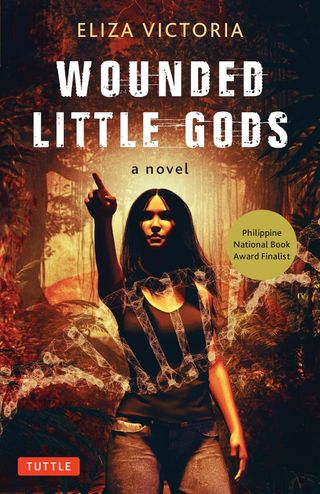
Cover of Wounded Little Gods

Wounded Little Gods

Eliza Victoria

Original language: English · Hardcover · ISBN 978-0804855228

Regina grew up in Heridos, a small town where gods and spirits were part of daily life. Then the harvest failed completely, the people concluded the gods had abandoned them, and the community scattered. A decade later Regina lives in the city. When a new colleague, Diana, has an unsettling conversation with her and then vanishes, Regina finds a handwritten note in her bag. It carries two names and a rough map pointing back to Heridos.

Her search for Diana leads into unexpected territory. Back near her abandoned hometown she encounters talk of genetic experiments, a facility that locals seem unaware of, and places that should not exist. The novel sits at a crossing point between mythology and science fiction, presenting gods with recognizably human frailties while questions multiply about who the people around her really are.

Eliza Victoria is a Filipino writer, and the book's setting draws on rural life and local belief. The title points to the central idea: divinity that is present, wounded, and near at hand rather than remote and untouchable. The story also traces how human cruelty can be mirrored in the figures people worship.

Plot

Regina was born and raised in the small town of Heridos, where gods and spirits walked the earth. Until they didn't. Ten years ago, the town's harvest failed utterly, and the people—-believing the gods had abandoned them—left their farms and moved on. Now living in the city, Regina has a strange and disturbing conversation with a new colleague, Diana. Then, mysteriously, Diana disappears. A few days later, Regina finds a folded piece of paper in her bag. In Diana's handwriting are two names and a strange map that will send Regina back to her home town. In her quest to find Diana, she encounters rumors of genetic experiments, stumbles upon a strange facility that no one seems to know about, finds herself in places that don't exist, and discovers that people aren't who they seem to be and that the strange evens in her town are closer to home than she ever knew.

More from Philippines

See the country page for Philippines for its map, facts and largest cities, or browse books from other countries.

Free editions are on Project Gutenberg, matched by title and author. Links go to Amazon; Hookito doesn’t sell books. Know a book that belongs here, or spotted a mistake? Write to submissions@hookito.com.

Where to next?

Back to the globe
Hookito landscape illustration