Hookito

Portugal · Books

Books from Portugal

13 books from and about Portugal: what each is about, the plot, and a note from Professor Kogi.

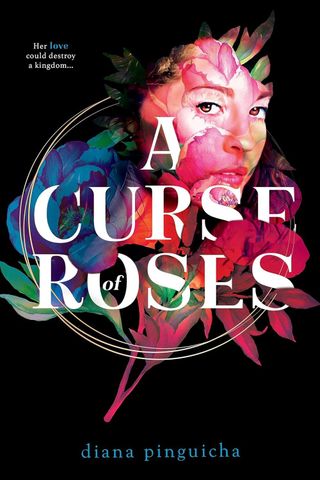
Cover of A Curse of Roses

A Curse of Roses

Diana Pinguicha

Original language: Portuguese · Hardcover · ISBN 978-1682815090

A Curse of Roses is a historical fantasy by Diana Pinguicha, built on Portuguese legend. Princess Yzabel carries an unwanted magic: food changes the moment she touches it, so bread becomes roses and cheese becomes lilies. She is close to starving, and the country around her is enduring a famine that has lasted years. Her power destroys what everyone needs most.

Yzabel wonders whether the magic could work in reverse, turning flowers into food. The only person who might teach her is Fatyan, an Enchanted Moura, a figure from Iberian folklore who is held by magical bonds. Fatyan offers instruction in exchange for release, and that release requires a kiss. Since Yzabel is betrothed to the King of Portugal, such an act would count as treason.

The novel is set in medieval Portugal and draws on the miracle of the roses, a story long attached to Isabel of Aragon, who became queen consort there. Pinguicha reworks that material into a tale of hunger, duty to a crown, and affection that royal politics does not allow. It is presented as an OwnVoices historical fantasy, a label used when an author shares an identity with the characters.

Plot

With just one touch, bread turns into roses. With just one bite, cheese turns into lilies. There’s a famine plaguing the land, and Princess Yzabel is wasting food simply by trying to eat. Before she can even swallow, her magic―her curse―has turned her meal into a bouquet. She’s on the verge of starving, which only reminds her that the people of Portugal have been enduring the same pain for years. If only it were possible to reverse her magic. Then she could turn flowers into food. Fatyan, a beautiful Enchanted Moura, is the only one who can help. But she is trapped by magical binds. She can teach Yzabel how to control her curse―if Yzabel sets her free with a kiss. As the King of Portugal’s betrothed, Yzabel would be committing treason, but what good is a king if his country has starved to death?
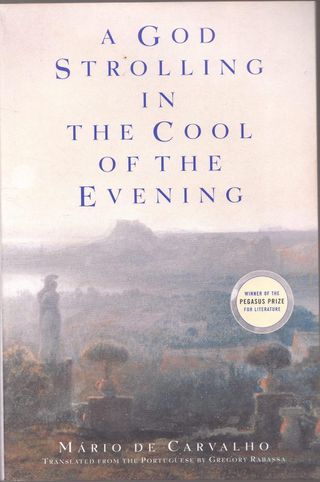

Cover of A God Strolling in the Cool of the Evening

A God Strolling in the Cool of the Evening

Mario de Carvalho

Original language: Portuguese · Paperback · ISBN 978-0802137746

Mario de Carvalho's novel is set in a fictional Roman city called Tarcisis on the Iberian peninsula during a period of overlapping crises. Moorish raiders are attacking Roman settlements, but the citizens of Tarcisis remain largely indifferent. Sheltered by generations of stability under the Pax Romana, they occupy themselves with public spectacles and with growing hostility toward a small Christian community living inside the city walls.

The story follows Lucius Valerius Quintius, the city's prefect, who models himself on the Stoic ideals of Marcus Aurelius. Lucius tries to hold the city together against external military threats and internal complacency. His position becomes far more difficult when Iunia Cantaber, the striking and persuasive leader of the local Christian group, is brought to trial before him. The collision between Roman civic order and an outlawed faith forces Lucius to weigh his public responsibilities against his personal convictions.

Carvalho, a Portuguese novelist, received both the Portuguese Writers' Association Grand Prize for Fiction and the Pegasus Prize for Literature for this book. The novel uses the late Roman setting to examine what happens when familiar structures of authority begin to fracture and individuals must decide what they actually owe the communities they serve.

Plot

Mario de Carvalho's A God Strolling in the Cool of the Evening is a vivid and affecting historical novel set at the twilight of the Roman Empire and the dawn of the Christian era. Lucius Valerius Quintius is prefect of the fictitious city of Tarcisis, charged to defend it against menaces from without -- Moors invading the Iberian peninsula -- and from within -- the decadent complacency of the Pax Romana. Lucius's devotion to civic duty undergoes its most crucial test when Iunia Cantaber, the beautiful, charismatic leader of the outlawed Christian sect, is brought before his court. A God Strolling in the Cool of the Evening is a timeless story of an era beset by radical upheaval and a man struggling to reconcile his heart, his ethics, and his civic duty.

Cover of Authentic Portuguese Cooking

Authentic Portuguese Cooking

Ana Patuleia Ortins

Original language: English · Paperback · ISBN 978-1624146862

Ana Patuleia Ortins gathers more than 185 recipes from Portugal in this cookbook. Dishes come from the mainland as well as the Atlantic island regions of the Azores and Madeira. Ortins builds the collection around her own family's kitchen and the country's food history, presenting Portuguese cooking as mild in spice yet full of flavour. The result is arranged like an encyclopedia of a national table.

The recipes follow the shape of a complete meal. Meat dishes include beef kabobs cooked with garlic and Madeira wine, and pork tenderloin stuffed with mushrooms and served in a pomegranate sauce. Salt cod appears grilled alongside potatoes in a preparation linked to Saint Martin. Vegetable sides include kale sauteed with onions and pine nuts, and there is bread baked at home.

Instructions are set out stage by stage, so a cook can follow each step without prior experience of this cuisine. Geography shapes the differences the book records: the Azores lie far out in the mid-Atlantic, while Madeira sits nearer the coast of northwest Africa. Ortins treats the islands and the mainland as parts of one national kitchen rather than separate curiosities.

Plot

An Encyclopedic Collection of Recipes from One of the World's Most Cherished Food Cultures Ana Patuleia Ortins will help you travel to and experience the unique paradise of Portugal without setting foot on a plane. Portugal is known for its cuisine that while mild in spice, is rich in flavor. As the authority on Portuguese cooking, Ana highlights the fare through an encyclopedic look into her family's cooking and the country's history.

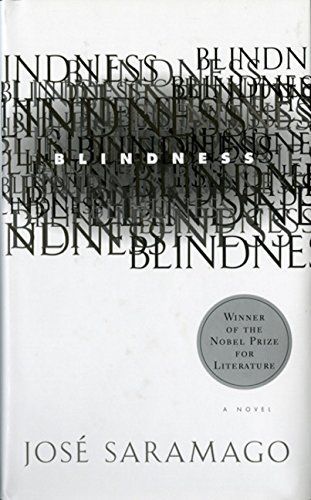
Cover of Blindness

Blindness

Jose Saramago

Original language: Portuguese · Hardcover · ISBN 978-0151002511

An unnamed city is struck by an epidemic of what becomes known as white blindness. The first person affected is a man sitting in his car at a traffic light. He is examined by an eye doctor who cannot explain the condition, and who soon loses his own sight. As the affliction spreads without apparent limit, authorities order those affected into a disused mental hospital, guarded by soldiers told to shoot anyone who tries to leave.

Inside the facility, conditions collapse. A group of inmates seizes control of the food rations and uses violence and coercion against the others. The doctor's wife, who has kept her sight, pretended to be blind so she could stay with her husband, and she becomes the only witness. After fire destroys the compound, she leads a small group into streets that are now unrecognizable: the doctor, a boy without a mother, an old man with a black eye patch, a girl with dark glasses, and a dog.

Saramago, a Portuguese writer who received the Nobel Prize in Literature in 1998, wrote the novel without named characters and with sparse punctuation. The story works as a parable about social order, vulnerability, and what happens when familiar structures vanish at once.

Plot

A city is hit by an epidemic of "white blindness" which spares no one. Authorities confine the blind to an empty mental hospital, but there the criminal element holds everyone captive, stealing food rations and raping women. There is one eyewitness to this nightmare who guides seven strangers-among them a boy with no mother, a girl with dark glasses, and a dog of tears-through the barren streets, and the procession becomes as uncanny as the surroundings are harrowing. A magnificent parable of loss and disorientation and a vivid evocation of the horrors of the twentieth century, Blindness has swept the reading public with its powerful portrayal of man's worst appetites and weaknesses-and man's ultimately exhilarating spirit.

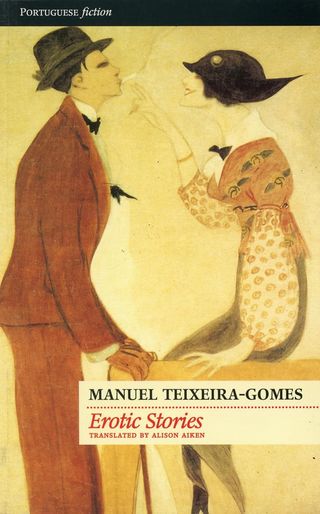
Cover of Erotic Stories

Erotic Stories

Manuel Teixeira-Gomes

Original language: Portuguese · Paperback · ISBN 978-1857543896

Erotic Stories, originally titled Novelas Eróticas, is a collection by Manuel Teixeira-Gomes, who served as President of Portugal from 1923 to 1925. He wrote the book during his seventies while living in exile in Algeria, far from the country he had once led. The stories take the form of elegantly constructed vignettes set across Europe and the Mediterranean, drawing on memory and desire as their central threads.

Rather than straightforward accounts of passion, the stories carry a tone of ironic distance. Teixeira-Gomes looks back on youthful encounters and sensuality from the vantage point of old age, mixing nostalgia with sardonic self-awareness. The writing pays close attention to poetic detail, and the tension between longing and the passage of time runs through the collection. Each piece revisits a moment or figure from the past, filtered through decades of reflection.

Teixeira-Gomes is an unusual figure in Portuguese letters: a former head of state who turned to literary work in exile, producing fiction concerned with the body, memory, and the ironies of aging. The collection sits at the intersection of personal recollection and carefully shaped storytelling.

Plot

Novelas Eróticas, or Erotic Stories, is a late work of Manuel Teixeira-Gomes, who served as President of Portugal from 1923 to 1925, that revisits memory and desire through elegantly told vignettes set in Europe and the Mediterranean. With ironic distance and poetic detail, the stories explore sensual encounters, longing, and aging from the perspective of a writer looking back on his youth.

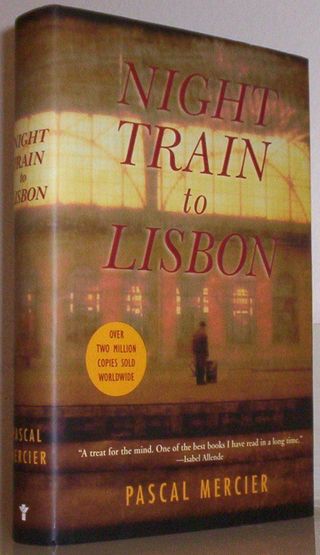
Cover of Night Train to Lisbon

Night Train to Lisbon

Pascal Mercier

Original language: German · Hardcover · ISBN 978-0802118585

Raimund Gregorius, a Latin teacher at a Swiss school, leads a quiet, orderly life until a chance meeting with a mysterious Portuguese woman upends everything. On impulse, he leaves his teaching post and boards a night train to Lisbon, carrying a book by Amadeu de Prado, a fictional Portuguese doctor and essayist. Prado's writings circle around loneliness, mortality, friendship, love, and loyalty, and Gregorius finds himself unable to put the book down.

In Lisbon, Gregorius sets out to learn who Prado really was. He tracks down people across the city who knew the doctor personally, piecing together fragments of a complicated life. What emerges is the portrait of a man who was both a physician and a poet, someone who lived under the Salazar dictatorship and chose to resist it. Each conversation Gregorius has adds a new layer to the picture, and each layer complicates the one before it.

The novel moves between Gregorius's present-day search and the philosophical passages attributed to Prado, whose reflections on how people understand themselves and others give the story its slower, more contemplative rhythm. Lisbon itself serves as a constant backdrop, its streets and neighborhoods shaping the path of the investigation.

Plot

Raimund Gregorius is a Latin teacher at a Swiss college who one day—after a chance encounter with a mysterious Portuguese woman—abandons his old life to start a new one. He takes the night train to Lisbon and carries with him a book by Amadeu de Prado, a (fictional) Portuguese doctor and essayist whose writings explore the ideas of loneliness, mortality, death, friendship, love, and loyalty. Gregorius becomes obsessed by what he reads and restlessly struggles to comprehend the life of the author. His investigations lead him all over the city of Lisbon, as he speaks to those who were entangled in Prado’s life. Gradually, the picture of an extraordinary man emerges—a doctor and poet who rebelled against Salazar’s dictatorship.

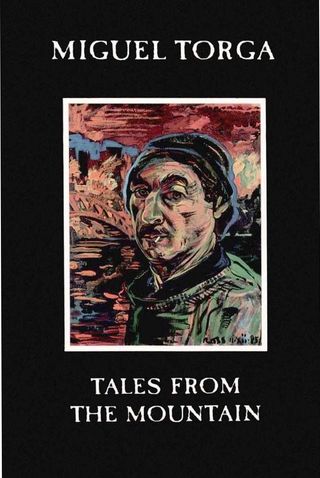
Cover of Tales from the Mountain

Tales from the Mountain

Miguel Torga

Original language: Portuguese · Paperback · ISBN 978-0936609232

Tales from the Mountain collects short stories by the Portuguese writer Miguel Torga, set in the rural highlands of northern Portugal. The stories follow peasants, shepherds, and villagers whose lives are shaped by hard terrain, thin resources, and the demands of the land. This edition was the first English-language collection of his work, and Torga was twice nominated for the Nobel Prize in Literature.

The landscape works almost as a character. Rocky hillsides, isolated settlements, and seasonal extremes press against the people who live among them, and Torga grounds his fiction in the textures of that geography. His writing joins careful realism with moments of heightened intensity, giving weight to small moral choices and quiet acts of persistence. The stories stay close to daily labour and its rhythms.

Across the collection, poverty shapes how people treat each other, their animals, and the cycles of work and weather. Torga returns to questions of fate and duty, to the bond between a person and a patch of ground, and to what endurance costs in a place where little comes easily.

Plot

Miguel Torga’s Tales from the Mountain is a collection of short stories set in the rugged landscapes of northern Portugal, where peasants, shepherds, and villagers struggle against poverty, nature, and fate. Blending realism with lyrical intensity, Torga portrays human resilience, moral dilemmas, and the deep bond between people and their land.

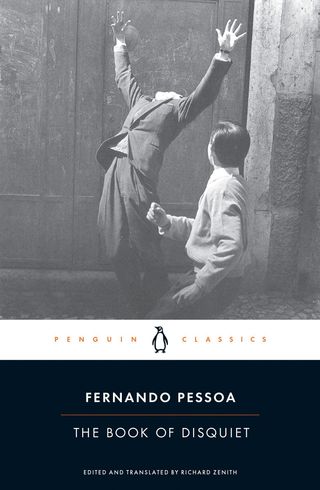
Cover of The Book of Disquiet

The Book of Disquiet

Fernando Pessoa

Original language: Portuguese · Paperback · ISBN 978-0141183046

Fernando Pessoa wrote under many invented identities, each with its own personality, style, and even astrological chart. Most fragments in The Book of Disquiet are attributed to one of them, Bernardo Soares, an assistant bookkeeper in Lisbon. The text takes the shape of a diary or fictional autobiography, gathering observations, aphorisms, and reflections on solitude, routine, and the passage of time. There is no conventional plot. Instead, short prose passages circle around identity, perception, and interior life.

Pessoa died in 1935, leaving a trunk of unfinished and unpublished manuscripts. The Book of Disquiet first appeared in Portuguese in 1982, assembled from those papers forty-seven years after his death. Because the pages were loose and unordered, editions differ in how they sequence them. The English translation by Margaret Jull Costa presents the texts chronologically.

Lisbon runs through the book as its constant setting. The narrator's work as a bookkeeper keeps him close to offices, streets, and ordinary routines, and these small details become material for reflection. The writing sits between modernist prose poetry and personal essay, carried by a voice that treats daily life as both a burden and a subject of sustained attention.

Plot

Fernando Pessoa was many writers in one. He attributed his prolific writings to a wide range of alternate selves, each of which had a distinct biography, ideology, and horoscope. When he died in 1935, Pessoa left behind a trunk filled with unfinished and unpublished writings, among which were the remarkable pages that make up his posthumous masterpiece, The Book of Disquiet, an astonishing work that, in George Steiner's words, "gives to Lisbon the haunting spell of Joyce's Dublin or Kafka's Prague."

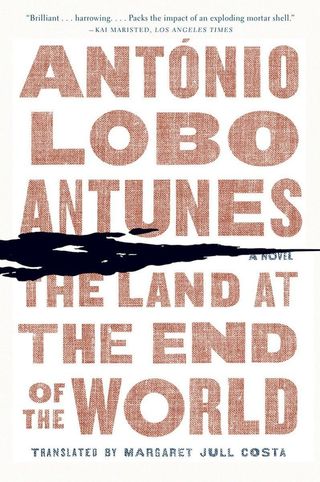
Cover of The Land at the End of the World

The Land at the End of the World

António Lobo Antunes

Original language: Portuguese · Paperback · ISBN 978-0393342338

The Land at the End of the World is a novel by António Lobo Antunes, one of Portugal's most prominent literary figures. Set against the backdrop of the Portuguese colonial war in Angola in the early 1970s, the book takes the form of a long monologue delivered by a former military doctor to an unnamed woman during a night of drinking. He recounts his time as a medic in the conflict, and the physical and psychological destruction it left behind.

The narrative unfolds with the feverish quality of a confession that cannot be stopped once started. The narrator, now back in Portugal, circles through memories of Angola, of the violence he witnessed, and of a country and a self he can no longer recognize. Lobo Antunes draws on his own experience as a doctor deployed to Angola during the war, and the novel carries a sharp sense of firsthand observation. The English translation is by Margaret Jull Costa.

Rather than following a conventional plot, the book builds its force through accumulation, returning again and again to images of landscape, decay, and disillusionment. The structure has been compared to the compulsive storytelling of Coleridge's Ancient Mariner, a speaker who cannot leave his listener or his own past alone.

Plot

In the tradition of William Faulkner and Gabriel García Márquez, one of the twentieth century’s most original literary voices offers "kaleidoscopic visions of a modern Portugal scarred by its Fascist past and its bloody colonial wars in Africa" (Paris Review). Hailed as a masterpiece of world literature, The Land at the End of the World―in an acclaimed translation by Margaret Jull Costa―recounts the anguished tale of a Portuguese medic haunted by memories of war. Like the Ancient Mariner who will tell his tale to anyone who listens, the narrator’s evening unfolds like a fever dream that is both tragic and haunting. The result is one of the great war novels of the modern age.

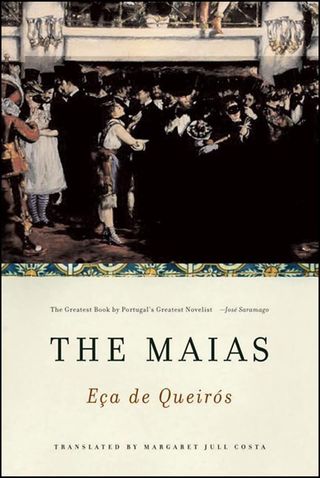
Cover of The Maias

The Maias

Eça de Queirós

Original language: Portuguese · Paperback · ISBN 978-0811216494

The Maias follows Carlos da Maia, a young heir to one of Portugal's great fortunes, through the social world of late nineteenth-century Lisbon. Carlos is gifted, educated, and genuinely wants to contribute something meaningful to his country and to honor his grandfather. He trains as a doctor and sets up a laboratory, but his wealth and temperament pull him steadily toward leisure. Days fill with horseback riding, theater visits, love affairs, and novels rather than serious work.

His closest companion, Ega, shares the same pattern of sharp intelligence spent mostly on wit and pleasure. Together they move through Lisbon's upper circles in what the story frames as a long, comfortable summer of postponed ambition. The novel uses their drift to observe Portuguese society more broadly, touching on politics, culture, and the gap between inherited privilege and actual purpose.

Beneath the social comedy, a fateful encounter awaits Carlos. A passionate attachment and a hidden secret gradually tighten around him, shifting the novel from satire toward something darker. Eça de Queirós, one of the central figures of nineteenth-century Portuguese literature, published the book in 1888, and it remains closely associated with the city of Lisbon and the world it portrays.

Plot

Our hero Carlos Maia, heir to one of the greatest fortunes in Portugal, is rich, handsome, generous and intelligent: he means to do something for his country, something useful, something that will make his beloved grandfather proud. However, Carlos is also a bit of a dilettante. He drifts along, becoming a doctor and pottering about in his laboratory, but spends more and more time riding his splendid horses or visiting the theater, having affairs or reading novels. His best friend and chief partner in crime, Ega, is likewise engaged in a long summertime of witticisms and pleasure. Carlos however is set on a dead reckoning course with fate―with the love of his life and with a terrible, terrible secret...

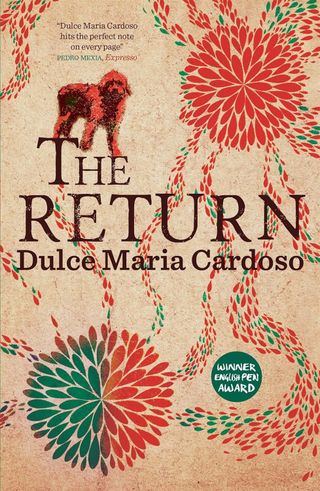
Cover of The Return

The Return

Dulce Maria Cardoso

Original language: Portuguese · Paperback · ISBN 978-0857054364

Luanda, 1975. Angola's long war of independence is nearing its end, and with the Salazar dictatorship gone in Lisbon, Portuguese control is collapsing. Fifteen-year-old Rui has spent his whole life in the city and has never visited Portugal, the distant homeland he knows only through family stories. His family finally accepts that they must leave too, and Rui feels both excitement and dread.

On the day of the flight, as they set out for the airport, Rui's father is taken away by Angolan rebels. His mother, his sister and Rui board the plane without him, and arrive in a country they barely know, unsure whether he is alive or whether news will ever reach them. They must start again without knowing what has become of him.

Dulce Maria Cardoso keeps the story close to Rui's point of view, with attention to family, adolescence and daily detail rather than military events. The novel belongs to the history of the retornados, the Portuguese settlers who left Angola and other African colonies as colonial rule ended in the mid-1970s. Its themes include dislocation, uncertain identity, and a homeland known mainly from stories.

Plot

Luanda, 1975. The Angolan War of Independence has been raging for at least a decade, but with the collapse of the Salazar dictatorship, defeat for the Portuguese is now in sight. Thousands of settlers are fleeing back to Portugal to escape the brutality of the Angolan rebels. Rui is fifteen years old. He has lived in Luanda all his life and has never even visited the far-away homeland - although he has heard many stories. But now his family are finally accepting that they too must return, and Rui is filled with a mixture of excitement and dread at the prospect. But just as they are leaving for the airport, his father is taken away by the rebels, and the family must leave without him.

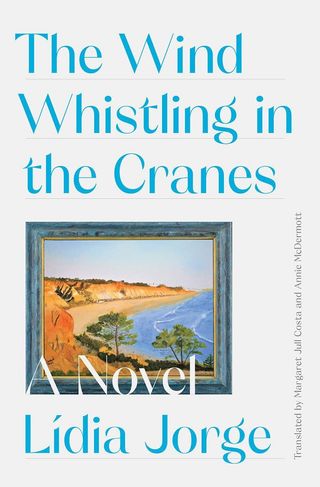
Cover of The Wind Whistling in the Cranes

The Wind Whistling in the Cranes

Lídia Jorge

Original language: Portuguese · Hardcover · ISBN 978-1631497599

The Wind Whistling in the Cranes is a novel by the Portuguese writer Lídia Jorge, set in a small seaside town during the final decades of the twentieth century. Two families with very different histories live close to one another, and their claims and grievances gradually collide in a place still marked by Portugal's colonial past. Jorge follows the households through everyday encounters rather than one dramatic event.

The book moves through several characters at once, braiding their perspectives together instead of following a single line of plot. At its centre stands a figure who is by turns exasperating and sympathetic, and much of the tension comes from family loyalty, silence and old obligation. The town, the coast and the machinery of a changing shoreline give the story its concrete frame.

Lídia Jorge has published fiction for decades and is counted among Europe's influential contemporary novelists, with readers well beyond Portugal. She received the FIL Prize in Romance Languages, an award for writing in the languages descended from Latin, including Portuguese, Spanish and French. This edition carries the novel into English, keeping its setting in the years when Portugal was adjusting to life after empire.

Plot

With the grand sweep of Elena Ferrante’s Neapolitan novels, this enduring tale transports us to a picturesque seaside town haunted by its colonial past. Considered one of Europe’s most influential contemporary writers, Portuguese novelist Lídia Jorge has captivated international audiences for decades. With the publication of The Wind Whistling in the Cranes, English-speaking readers can now experience the thrum of her signature poetic style and her delicately braided multicharacter plotlines, and witness the heroic journey of one of the most maddening, and endearing, characters in literary fiction.

Cover of Whites Can Dance Too

Whites Can Dance Too

Kalaf Epalanga

Original language: Portuguese · Hardcover · ISBN 978-0571371426

Hours before performing at a major European music festival, a musician named Kalaf Epalanga is stopped at the border and detained on suspicion of being an undocumented immigrant. While held, his mind moves through the rhythms and history of kuduro, an Angolan music genre that blends fast electronic beats with African dance styles. The novel follows Kalaf's path from Luanda through cities across several continents, including Kristiansund, Beirut, Rio de Janeiro, Paris, and Lisbon, tracing how kuduro carried him outward into the world.

The story is told through three distinct voices. Alongside Kalaf's own reflections during his detention, two other perspectives unfold: Sofia, a friend deeply connected to Lisbon's dance culture, and the immigration official responsible for deciding Kalaf's case, referred to as the Viking. Each narrator offers a different angle on the encounter at the border and on the broader questions it raises about belonging, movement, and cultural exchange.

Kalaf Epalanga, who is himself a musician and writer of Angolan origin based in Portugal, draws on his own background for the novel. The book's three-voice structure allows it to sit inside a single tense situation while ranging widely across geography and musical history, connecting Angola's post-independence cultural life to the European cities where its sounds have taken root.

Plot

Hours before performing at one of Europe’s most iconic music festivals, Kalaf Epalanga is detained at the border on suspicion of being an illegal immigrant. Trapped, his thoughts soon thrum to the beat of kuduro, the blistering, techno-infused Angolan music which has taken him from Luanda to Kristiansund, Beirut to Rio de Janeiro, Paris to Lisbon. Shifting between his reflections while incarcerated, and the stories of Sofia – Kalaf’s friend at the heart of the Lisbon dance scene – and the ‘Viking’, the immigration official holding Kalaf’s fate in his hands, Whites Can Dance Too is a celebration of the music of Epalanga’s homeland, and a hypnotic paean to cultural roots, to freedom and love.

More from Portugal

See the country page for Portugal for its map, facts and largest cities, or browse books from other countries.

Links go to Amazon; Hookito doesn’t sell books. Know a book that belongs here, or spotted a mistake? Write to submissions@hookito.com.

Where to next?

Back to the globe
Hookito landscape illustration