Hookito

Slovenia · Books

Books from Slovenia

10 books from and about Slovenia: what each is about, the plot, and a note from Professor Kogi.

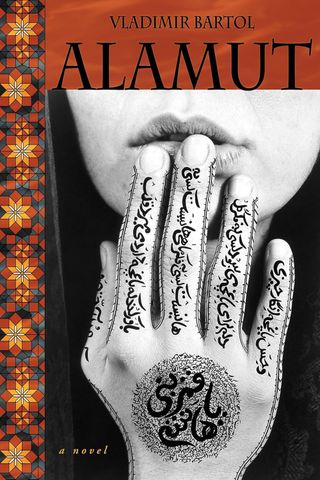
Cover of Alamut

Alamut

Vladimir Bartol

Original language: Slovenian · Paperback · ISBN 978-1556436819

Alamut is set in 11th-century Persia, inside and around the mountain fortress of Alamut. The novel follows Hasan ibn Sabbah, a historical figure who founded the Nizari Ismaili order, as he builds a system of control over a small group of young fighters he calls his living daggers. Sabbah constructs an enclosed garden within the fortress, complete with women, wine, hashish, and careful stagecraft, to convince his recruits that they have glimpsed paradise. Their belief that obedience will return them there makes them willing to carry out any command, including assassination.

Bartol, a Slovenian writer, originally published the novel in 1938. The book was written partly as an allegory of Mussolini's fascist state, exploring how a charismatic leader can manufacture faith and loyalty through spectacle, secrecy, and deliberate deception. The story examines the machinery of devotion: how ordinary people can be shaped into instruments of political violence when they are isolated, rewarded, and given a cause they consider sacred.

The fortress of Alamut was a real stronghold in the Alborz Mountains of present-day Iran. Bartol used this distant historical setting to comment on the authoritarian politics of his own time, and the novel gained renewed international attention after 2001 when readers noticed parallels to contemporary events.

Plot

Alamut takes place in 11th Century Persia, in the fortress of Alamut, where self-proclaimed prophet Hasan ibn Sabbah is setting up his mad but brilliant plan to rule the region with a handful of elite fighters who are to become his "living daggers." By creating a virtual paradise at Alamut, filled with beautiful women, lush gardens, wine and hashish, Sabbah is able to convince his young fighters that they can reach paradise if they follow his commands. With parallels to Osama bin Laden, Alamut tells the story of how Sabbah was able to instill fear into the ruling class by creating a small army of devotees who were willing to kill, and be killed, in order to achieve paradise.


Cover of Forbidden Bread: A Memoir

Forbidden Bread: A Memoir

Erica Johnson Debeljak

Original language: English · Paperback · ISBN 978-1556437403

Erica Johnson Debeljak was working as a financial analyst in New York City when she met Ales Debeljak, a Slovenian poet, at a cocktail party. What followed was a decision to leave behind her American career and relocate to Slovenia, a small country on the edge of the Alps that was itself in the middle of a profound transition from a communist system to a market economy. Forbidden Bread is her memoir of that crossing, both geographic and personal.

In Slovenia, the author faces the practical difficulties of building a life in a foreign place: learning a complex language, navigating unfamiliar social expectations, and adjusting to attitudes about gender roles that differ sharply from those she grew up with. The book follows her relationship with Ales and her gradual connection to his family and their rural traditions, many of which were already fading during the years she describes. Ethnic tensions and old political divisions surface in everyday conversation, giving the memoir a layer of historical context that runs alongside the personal story.

Slovenia declared independence from Yugoslavia in 1991, and the country Debeljak arrived in was still defining itself as a new state. Her account places one marriage and one household against that broader background of national change.

Plot

Forbidden Bread is an unusual love story that covers great territory, both geographically and emotionally. The author leaves behind a successful career as an American financial analyst to pursue Ales Debeljak, a womanizing Slovenian poet who catches her attention at a cocktail party. The story begins in New York City, but quickly migrates, along with the author, to Slovenia. As she struggles to forge an identity in her new home, Slovenia itself undergoes the transformation from a communist to a capitalist society. A complicated language, politically incorrect ethnic jokes, and old-fashioned sexism are just a few of the challenges Debeljak faces on her journey. Happily, she marries her poet and comes to love her new husband's family as well as the fast-disappearing rural traditions of this beautiful country.

Cover of I Saw Her That Night

I Saw Her That Night

Drago Jancar

Original language: Slovenian · Paperback · ISBN 978-1564789976

I Saw Her That Night follows the life and unexplained disappearance of Veronika Zarnik, a young woman from a comfortable bourgeois background in Ljubljana, Slovenia. Set before and during World War II, the novel traces a period when ordinary people found themselves caught up in forces they could neither control nor fully understand. Veronika's story unfolds through the voices of five different narrators, each offering a partial view of her life and of the turbulent circumstances surrounding it.

The five narrators do not simply tell Veronika's story. They also speak about themselves and their own entanglements with the era. Through their overlapping accounts, the novel builds a picture of Slovenian society under extreme pressure, where political allegiances and personal choices carried unpredictable consequences. Even those who tried to stay on the margins, sheltering behind the walls of a country manor, discovered that neutrality offered no real protection.

Drago Jancar, one of Slovenia's most prominent living authors, received both the French Prix du meilleur livre étranger and the Kresnik Award for this novel. The book is structured as a layered investigation into memory, witness, and the gaps between what different people see and recall of the same events.

Plot

I Saw Her That Night, a love story in time of war, is a novel about a few years in the life and mysterious disappearance of Veronika Zarnik, a young bourgeois woman from Ljubljana, sucked into the whirlwind of a turbulent period in history. We follow her story from the perspective of five different characters, who also talk about themselves, as well as the troubled Slovenian times before and during World War II; times that swallowed, like a Moloch, not only the people of various beliefs involved in historical events, but also those who lived on the fringes of tumultuous events, which they did not even fully comprehend—they only wanted to live. But “only” to live was an illusion: it was a time when, even under the seemingly safe and idyllic shelter of a manor house in Slovenia, it was impossible to avoid the rushing train of violence.

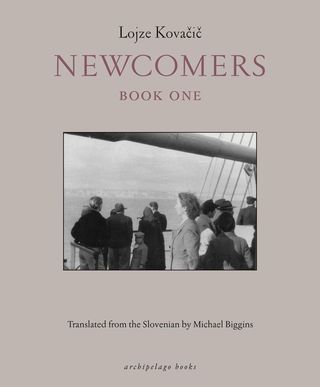
Cover of Newcomers

Newcomers

Lojze Kovacic

Original language: Slovenian · Paperback · ISBN 978-0914671336

Newcomers is the first volume of a three-part autobiographical work by Slovenian writer Lojze Kovačič. It opens in 1938, when the Kovačič family is expelled from Switzerland and forced to relocate to the father's homeland of Slovenia. The narrator is Kovačič himself at the age of ten, and everything is filtered through that young view. Before the family leaves, the boy pictures Slovenia as a kind of fairytale country.

That fantasy collapses quickly. Once the family arrives, they face poverty, hunger, and open hostility from the people around them. The boy responds by refusing to learn Slovenian and withdrawing into silence. His world narrows as the gap between languages and cultures becomes something he cannot cross on his own. The writing moves between fragments of memory, some gentle and others harsh.

Kovačič's prose stays close to ordinary, physical details rather than abstract reflection. The child narrator reports displacement without fully understanding it, and the distance between what he notices and what he can explain shapes the book. Events of the late 1930s in Europe press on the family from outside, though the boy registers them mainly as changes in food, rooms, and voices.

Plot

The first volume of this three-part autobiographical series begins in 1938 with the expulsion of the Kovacic family from their home of Switzerland, eventually leading to their settlement in the father's home country of Slovenia. Narrated by Kovacic as a ten-year-old boy, he describes his family's journey with uncanny naiveté. Before leaving their home, he imagines his father's home country as something beautiful out of a fairytale, but as they make their way toward exile, he and his family realize that any attempt to make a home in Slovenia will be in vain. Confronted by misery, hunger, and hostility, the young boy refuses to learn Slovenian and falls silent, his surroundings becoming a social, cultural and mental abyss.

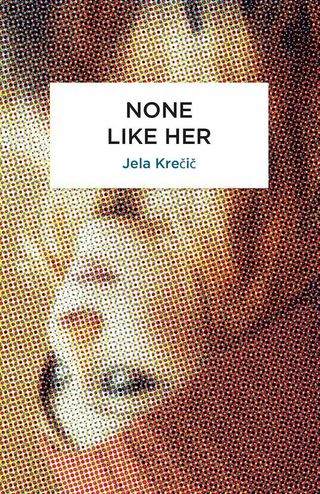
Cover of None Like Her

None Like Her

Jela Krecic

Original language: Slovenian · Paperback · ISBN 978-0720619119

Matias wants to prove, mostly to himself, that he is over his former girlfriend. His method is to arrange a string of dates across Ljubljana, the compact Slovenian capital set between the Julian Alps and the Karst plateau. Each encounter brings a different woman, a different conversation, and a different version of the person Matias believes himself to be. The novel tracks these meetings with close attention to dialogue, letting the characters reveal their assumptions and anxieties through what they say and how they say it.

Jela Krečič uses this structure to examine a particular type of modern man: someone who considers himself progressive and emotionally aware yet repeatedly falls into patterns of self-serving behavior. The book frames Matias as a figure whose subtle misogyny surfaces not through dramatic acts but through small choices, evasions, and the way he narrates his own story. The women he meets are drawn with variety and specificity rather than serving as interchangeable foils.

The novel's satirical edge is balanced by genuine curiosity about how people in their twenties and thirties talk about love, ambition, and identity in a mid-sized European city where everyone seems to know everyone else.

Plot

To prove that he has moved on from his ex-girlfriend, Matias embarks on an odyssey of dates around the city of Ljubljana. The dates and women are wonderfully varied, the interactions perspicuously observed, the preoccupations of the characters—drawn from lively and ambitious dialogue—will speak directly to Generation Y. In Matias, Krecic has created a well-observed crypto-misogynist of the new millennium whose behavior she offers up for our scrutiny.

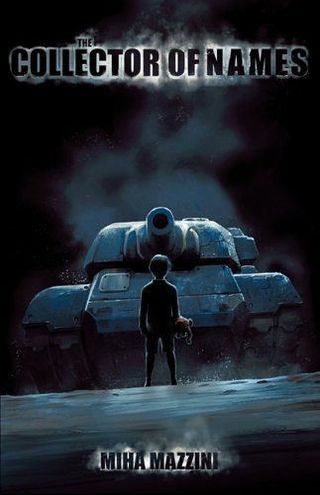
Cover of The Collector of Names

The Collector of Names

Miha Mazzini

Original language: Slovenian · Paperback · ISBN 978-0980606539

The Collector of Names is a novel by Slovenian author Miha Mazzini, set on an isolated island where a mysterious figure known as the Name Collector awaits the moment to unleash destruction. The premise centers on a strange and unsettling power: by asking a person their name, the Name Collector takes it from them. What it means to lose one's name, and whether a person can endure without one, forms the core tension of the story.

Opposing this figure is Aco and a small group of aging men who have trained together since childhood for exactly this confrontation. Now elderly, they form an unlikely fighting force facing a single night of danger on the island. The novel blends horror with dark camaraderie, placing its characters in a situation where solidarity and lifelong preparation meet something they may not fully understand.

Miha Mazzini is one of Slovenia's best-selling authors, and The Collector of Names marked his first work to appear in English translation. The story operates in a compressed timeframe, with most of its events unfolding over the course of one night, giving it a taut and contained structure.

Plot

On an isolated island "The Name Collector" waits to fulfill his destiny to bring death and destruction upon the world. Standing in his way-Aco and his band of brothers- a geriatric fighting force that have been training and waiting for this day since childhood. As the Name Collector asks each his name he takes it. But what's in a name and can anyone survive without a name-even for one horrific night? "The Name Collector is a monster like no other"

Cover of The Fig Tree

The Fig Tree

Goran Vojnovic

Original language: Slovenian · Paperback · ISBN 978-1912545247

Jadran is in his thirties when Anja walks out of their shared life. Unable to explain her departure, he turns back through his family's history for patterns that might explain his own present. His grandfather died in circumstances never fully accounted for, and his grandmother has withdrawn into dementia, taking what she knew with her. His father left during the first year of the Balkan wars, and his mother carries an unexplained resentment toward the grandfather.

Goran Vojnovic, a Slovenian writer, structures the novel across three generations, moving between the mid-twentieth century and the present day. The story shifts among family members and time periods, layering each person's version of events against the others. What Jadran uncovers is shaped as much by silences and contradictions as by anything spoken directly. The wars of the 1990s in the Balkans sit at the centre of the family's fractures, but the damage stretches both earlier and later than the conflict itself.

The novel traces how private grief and political upheaval grow hard to separate inside one family. Each generation passes on decisions and losses that the next inherits without the context needed to read them clearly, which is where Jadran begins his search.

Plot

The Fig Tree is a novel composed of the intertwining stories of the family of Jadran, a 30-something who tries to piece together the story of his relatives in order to better understand himself. Because he cannot understand why Anja walked out of their shared life, he tries to understand the suspicious death of his grandfather and the withdrawal of his grandmother into oblivion and dementia. With all his might, Jadran tries to understand the departure of his father in the first year of the war in the Balkans as he also tries to comprehend his mother, with her bewildering resentment of his grandfather, and her silent disappointment with his father.

Cover of The Food and Cooking of Slovenia

The Food and Cooking of Slovenia

Janez Bogataj

Original language: English · Hardcover · ISBN 978-1903141601

The Food and Cooking of Slovenia by Janez Bogataj is a cookbook presenting over 60 recipes from a country whose cuisine sits at a crossroads of Central European and Slavic cooking traditions. The book is organized into chapters covering appetizers and soups, one-pot meals, vegetables and dumplings, meat, fish, and a section on bread, cakes, and desserts. Over 300 specially commissioned photographs accompany the recipes and regional context.

Slovenia's geography shapes its food in visible ways, and the book reflects this. Recipes from the Primorska region near the Adriatic coast carry Mediterranean influences, such as a sweet-and-sour bean and sauerkraut hotpot. From the northeast, the Prekmurje Gibanica Pie is a layered pastry associated with that flat, agricultural corner of the country. Other dishes include millet-stuffed turnips, lightly smoked pork sausages, and Poppy Potica, a traditional rolled sweetbread found across Slovenian households.

Bogataj treats Slovenian cooking as regional and practical rather than ornamental. The recipes tend toward robust, filling preparations built on grains, root vegetables, preserved cabbage, and pork, ingredients that reflect both the alpine climate and the agricultural patterns of a small country bordered by Italy, Austria, Hungary, and Croatia.

Plot

This inspirational new book reveals the potential of this little-known cuisine, a fascinating blend of European and Slavic tastes. Whether one chooses the sweet-and-sour Bean and Sauerkraut Hotpot from the Primorska region near the Adriatic sea, or the multi-layered Prekmurje Gibanica Pie from the north east, the dishes give a delightful insight into the varied and wholesome tastes of Slovenia. Over 60 authentic, mouthwatering recipes are divided into chapters on Appetizers and Soups, One-pot Meals, Vegetables and Dumplings, Meat, Fish, and Bread, Cakes and Desserts. Dishes include peppery Millet-Stuffed Turnips, lightly smoked Slovenian Pork Sausages, and Poppy Potica, a traditional sweetbread.

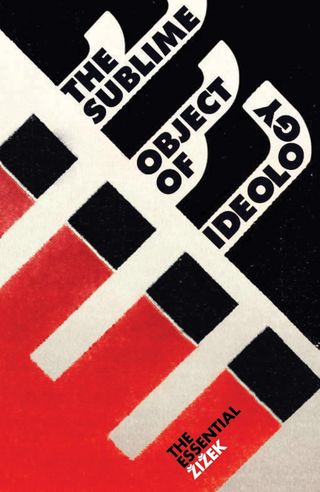
Cover of The Sublime Object of Ideology

The Sublime Object of Ideology

Slavoj Zizek

Original language: English · Paperback · ISBN 978-1844673001

First published in 1989, The Sublime Object of Ideology is Slavoj Žižek's debut book-length work. Žižek, a philosopher from Ljubljana, Slovenia, brings together the thought of Hegel, Marx, and the French psychoanalyst Jacques Lacan to examine how ideology operates in contemporary life. Rather than treating ideology as a set of false beliefs that can simply be corrected, Žižek argues that it works at a deeper level, shaping how people experience reality itself. The book asks what holds ideological structures in place even when individuals recognize their flaws.

Žižek draws on psychoanalytic concepts, particularly Lacan's idea of the Real, a term for what resists full representation in language or thought. He uses this framework to reconsider classical questions about political belief, commodity fetishism, and the role of enjoyment in sustaining social systems. The writing moves between dense theoretical argument and examples drawn from everyday culture, a method that became characteristic of Žižek's later output. This Verso edition, part of a series reissuing his earlier titles, includes a new introduction by the author.

Plot

Slavoj Zizek, the maverick philosopher, author of over 30 books, acclaimed as the “Elvis of cultural theory”, and today’s most controversial public intellectual. His work traverses the fields of philosophy, psychoanalysis, theology, history and political theory, taking in film, popular culture, literature and jokes—all to provide acute analyses of the complexities of contemporary ideology as well as a serious and sophisticated philosophy. His recent films The Pervert’s Guide to the Cinema and Zizek! reveal a theorist at the peak of his powers and a skilled communicator. Now Verso is making his classic titles, each of which stand as a core of his ever-expanding life’s work, available as new editions. Each is beautifully re-packaged, including new introductions from Zizek himself. Simply put, they are the essential texts for understanding Zizek’s thought and thus cornerstones of contemporary philosophy.

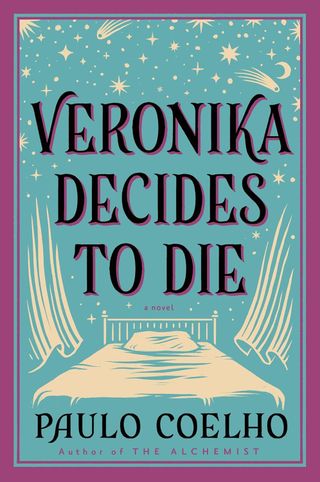
Cover of Veronika Decides to Die

Veronika Decides to Die

Paulo Coelho

Original language: Portuguese · Paperback · ISBN 978-0061124266

Veronika is twenty-four years old, living in Ljubljana, Slovenia. She has a steady job, boyfriends, and a family that cares about her. From the outside, nothing appears to be wrong. One November morning she swallows a handful of sleeping pills, intending to end her life. She survives, but wakes up inside a mental hospital and learns that the damage to her body has left her with only a short time to live.

Inside the hospital, Veronika encounters other patients whose behavior the outside world would label insane. Through their stories and her own shifting outlook, the novel examines what society treats as normal and what it pushes to the margins. Veronika begins to confront desires and feelings she had suppressed during her outwardly comfortable life, and the days she has left take on a different weight than the years she had before.

Paulo Coelho has said the novel draws on his own experiences with psychiatric institutions. The story is set in Slovenia, a small Central European country that gained independence in 1991. Coelho uses its capital, Ljubljana, as both a real and symbolic backdrop for questions about conformity, freedom, and what it means to be fully alive.

Plot

This captivating and life-affirming tale follows twenty-four-year-old Veronika, who on the surface has it all: youth, beauty, and a loving family. Yet, she feels something crucial is missing. Taking a drastic step, she consumes a handful of sleeping pills, expecting to slip away from life. Instead, she awakens in a mental hospital, with the revelation that she has mere days to live. Drawing from Paulo Coelho's own life experiences, this profound and thought-provoking book delves deeply into the essence of madness, exploring its many layers and celebrating those who dare to challenge societal norms. By questioning what the world deems "normal," this story provokes readers to reflect on their own perspectives and embrace the unconventional--wherever it may bring you.

More from Slovenia

See the country page for Slovenia for its map, facts and largest cities, or browse books from other countries.

Links go to Amazon; Hookito doesn’t sell books. Know a book that belongs here, or spotted a mistake? Write to submissions@hookito.com.

Where to next?

Back to the globe
Hookito landscape illustration