Hookito

Syria · Books

Books from Syria

8 books from and about Syria: what each is about, the plot, and a note from Professor Kogi.

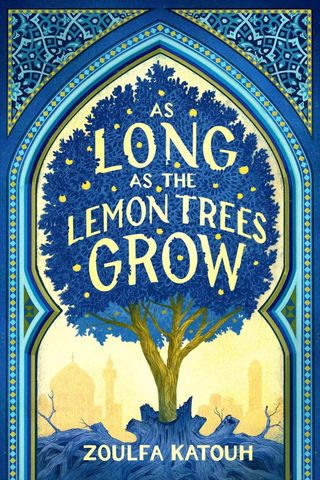
Cover of As Long as the Lemon Trees Grow

As Long as the Lemon Trees Grow

Zoulfa Katouh

Original language: English · Hardcover · ISBN 978-0316351379

Salama Kassab is a pharmacy student in Homs, Syria, whose ordinary life falls apart when the Syrian Revolution begins. She loses her parents and brother, and now spends her days volunteering at a hospital overwhelmed with casualties. Her one remaining family tie is Layla, her pregnant sister-in-law, and Salama is determined to get them both out of the country before the baby arrives.

The pressure of survival and loss takes a specific form in the story. Salama's fear becomes a figure she can see and hear, an imagined companion called Khawf who follows her and urges her toward safety. This speculative element sits inside an otherwise grounded portrayal of life in a besieged city, where daily choices carry life-or-death weight. The tension between staying to help the wounded and leaving to protect Layla and her unborn child drives the narrative forward.

Zoulfa Katouh sets the novel in Homs during a period when the city was one of the hardest-hit areas of the conflict. The book treats the revolution and its consequences through the eyes of a young woman caught between duty to her community and responsibility to her family. Lemon trees appear throughout as a recurring symbol tied to Syrian identity and resilience.

Plot

Salama Kassab was a pharmacy student when the cries for freedom broke out in Syria. She still had her parents and her big brother; she still had her home. She had a normal teenager’s life. Now Salama volunteers at a hospital in Homs, helping the wounded who flood through the doors daily. Secretly, though, she is desperate to find a way out of her beloved country before her sister-in-law, Layla, gives birth. So desperate, that she has manifested a physical embodiment of her fear in the form of her imagined companion, Khawf, who haunts her every move in an effort to keep her safe.
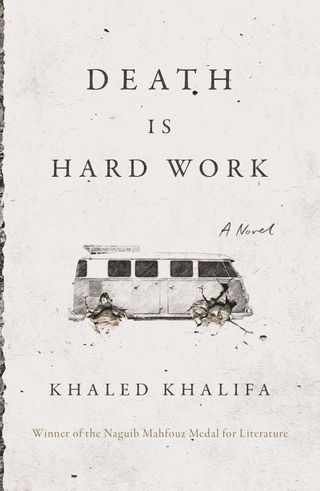

Cover of Death Is Hard Work

Death Is Hard Work

Khaled Khalifa

Original language: Arabic · Hardcover · ISBN 978-0374135737

Abdel Latif, an elderly man from the Aleppo region, dies in a Damascus hospital. Before dying he tells his youngest son, Bolbol, that he wants to rest in the family plot at Anabiya, the village his people come from. Bolbol treats the request as binding and convinces Hussein, his older brother, and Fatima, their sister, to travel north with the body. On a peaceful map the drive lasts about two hours.

The circumstances are far from ordinary. Syria is in civil war, and the landscape the siblings once knew has become a patchwork of checkpoints and competing armed groups. A short trip turns into a prolonged ordeal. The three are stopped, questioned, detained, and pressed into hard decisions as they move their father's body through territory that changes hands without warning.

Khaled Khalifa places the action against the physical reality of wartime Syria, where roads that once linked cities and villages have become contested boundaries. The strained ties among the siblings, distant from one another well before this trip, add a second difficulty. Each carries grievances toward the father and toward the others, and the trip forces those tensions into close quarters.

Plot

Abdel Latif, an old man from the Aleppo region, dies peacefully in a hospital bed in Damascus. His final wish, conveyed to his youngest son, Bolbol, is to be buried in the family plot in their ancestral village of Anabiya. Though Abdel was hardly an ideal father, and though Bolbol is estranged from his siblings, this conscientious son persuades his older brother Hussein and his sister Fatima to accompany him and the body to Anabiya, which is―after all―only a two-hour drive from Damascus.

Cover of Imad’s Syrian Kitchen

Imad’s Syrian Kitchen

Imad Alarnab

Original language: English · Hardcover · ISBN 978-1623711160

Imad Alarnab is a chef from Damascus who left Syria and eventually opened a restaurant in London. This book, his first cookbook, collects 90 recipes rooted in Syrian cooking traditions. The dishes range across the broad spectrum of Syrian home and street food, covering staples like flatbreads, dips, grilled meats, and sweets. Alarnab presents both traditional preparations and versions he has adapted for ingredients available outside Syria.

Alongside the recipes, the book includes Alarnab's own account of how he came to settle in London, as well as observations about Syrian food culture and the role meals play in daily and family life in Damascus and beyond. The restaurant he runs in London was named GQ's Best Breakthrough Restaurant in 2022, and the cookbook draws on the same approach he developed there: Syrian flavors presented for a broad audience with varied access to specialty ingredients.

The book is organized so that each recipe sits alongside photography and illustrations. Alarnab provides context for the techniques and ingredient combinations that define Syrian cooking, such as the frequent use of pomegranate molasses, sumac, and fresh herbs in both cooked and raw preparations.

Plot

This is the first cookbook by Imad Alarnab, a renowned chef from Damascus. Imad now runs an acclaimed restaurant in London, which was named GQ’s “Best Breakthrough Restaurant 2022.” Imad’s Syrian Kitchen is a bustling tour through 90 traditional and adapted Syrian dishes that can be made in the comfort of your own home. Imad introduces us to the delicious flavors and techniques of the Syrian kitchen. And alongside delicious recipes, mouthwatering photography, and beautiful illustrations, Imad shares the unforgettable details of how he came to settle in London, as well as the story of his home country, Syria. This book is a celebration of how food has the power to bring people together.

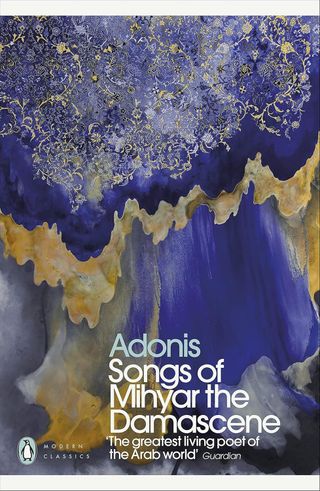
Cover of Songs of Mihyar the Damascene

Songs of Mihyar the Damascene

Adonis

Original language: Arabic · Paperback · ISBN 978-0241483558

Songs of Mihyar the Damascene is a poetry collection by the Syrian-born poet Adonis, written in Beirut in the early 1960s. Its central figure, Mihyar, moves through a landscape that feels both ancient and barren, encountering elemental images such as cloud, stone, desert, and sea. He is drawn partly from the tradition of Orpheus and partly from Nietzsche's Zarathustra, a solitary walker whose presence transforms the sparse features of his surroundings into expressions of intense feeling, ranging from exaltation to grief.

The poems challenge authoritarianism and rigid doctrine. Biblical, Quranic, and Ancient Greek references run through the text, and the collection brings together surrealist technique with elements of Sufi mystical tradition. In one passage, a reimagined Noah chooses to abandon his ark and descend with those who have been condemned rather than sail above them. These inversions of familiar stories give the poems a persistent sense of defiance.

Adonis, born Ali Ahmad Said Esber in Syria, settled in Lebanon and became one of the most prominent Arabic-language poets of the twentieth century. The collection has been compared in its impact on Arabic poetry to the effect T.S. Eliot's The Waste Land had on English-language verse. This English-language edition makes the work accessible to readers outside the Arabic literary world.

Plot

Cloud, mirror, stone, thunder, eyelid, desert, sea. Through a dead or dying land, Mihyar walks: a figure of heroic individualism and dissent, part-Orpheus, part-Zarathustra. Where he goes, the austere building-blocks of his world become the expressions of passionate emotion, of visionary exaltation and despairing melancholy. The traditions of the Ancient Greeks, the Bible and the Quran flow about and through him. These are poems against authoritarianism and dogma, in which a new Noah would abandon his ark to dive with the condemned, and in which surrealism and Sufi mysticism meet and intertwine. The result is a masterpiece of world literature.

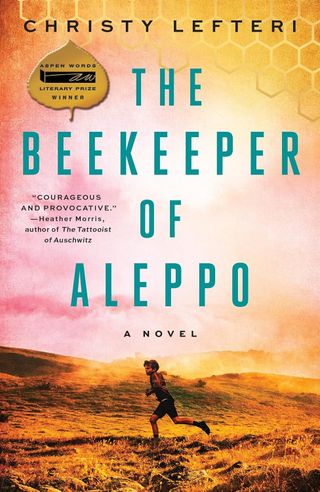
Cover of The Beekeeper of Aleppo

The Beekeeper of Aleppo

Christy Lefteri

Original language: English · Paperback · ISBN 978-0593128176

Nuri is a beekeeper living in the hills around Aleppo, Syria. His wife Afra is a painter who sells landscape works at the local open-air market. Their days follow a quiet rhythm of prayer, family, and the tending of hives in the countryside. When civil war reaches Aleppo and destroys the life they have built, Nuri decides they must leave. The journey ahead will take them through Turkey and Greece, aiming for an uncertain arrival in Britain.

Afra has lost her sight, a detail that reshapes every stage of their displacement. Nuri must guide her physically while also contending with her grief and his own. Christy Lefteri structures the novel around this shared crossing, using it to explore how people carry forward what they have lost and how they hold onto each other when familiar surroundings disappear. The route the couple follows mirrors paths taken by real refugees during the Syrian conflict, and Lefteri herself volunteered with refugees in Athens before writing the book.

The story moves between memories of life in Aleppo and the present dangers of the road. Sensory details from beekeeping and painting recur throughout, linking what was left behind to the couple's effort to imagine a future.

Plot

Nuri is a beekeeper and Afra, his wife, is an artist. Mornings, Nuri rises early to hear the call to prayer before driving to his hives in the countryside. On weekends, Afra sells her colorful landscape paintings at the open-air market. They live a simple life, rich in family and friends, in the hills of the beautiful Syrian city of Aleppo—until the unthinkable happens. When all they love is destroyed by war, Nuri knows they have no choice except to leave their home. But escaping Syria will be no easy task: Afra has lost her sight, leaving Nuri to navigate her grief as well as a perilous journey through Turkey and Greece toward an uncertain future in Britain.

Cover of The Shell: Memoirs of a Hidden Observer

The Shell: Memoirs of a Hidden Observer

Mustafa Khalifa

Original language: Arabic · Paperback · ISBN 978-1623717131

The Shell follows Musa, a young Syrian graduate who returns home from studying abroad only to be arrested and sent to Tadmur prison. He is an atheist, but the authorities classify him as a radical Islamist, and he is held for thirteen years without trial. The novel takes the form of a diary that Musa composes entirely in his memory during his imprisonment and commits to paper only after his release.

Tadmur, located near the ancient ruins of Palmyra in the Syrian desert, was one of the most feared detention facilities in the Middle East. Mustafa Khalifa sets his story inside this environment and records the daily realities of confinement, the relationships between prisoners, and the small absurdities that surface even under severe conditions. Musa is observant and dry in tone, finding moments of irony among events that are otherwise bleak and violent. The misidentification at the center of his case places him in a particularly strange position: isolated from fellow inmates whose beliefs he does not share, yet subjected to the same punishments.

Khalifa, a Syrian writer and filmmaker, published the novel in Arabic in 2008. It has been compared to the work of Aleksandr Solzhenitsyn for its documentation of state detention and its attention to the psychological details of long-term imprisonment.

Plot

This compelling first novel is the astonishing story of a Syrian political prisoner of conscience—an atheist mistaken for a radical Islamist—who was locked up for 13 years without trial in one of the most notorious prisons in the Middle East. The novel takes the form of a diary which Musa keeps in his head and then writes down upon his release. In Tadmur prison, the mood is naturally bleak and yet often very beautifully captured. The narrator, a young graduate, is defiant and stoical, and somehow able to pick out humor and irony in the shocking events and characters he describes.

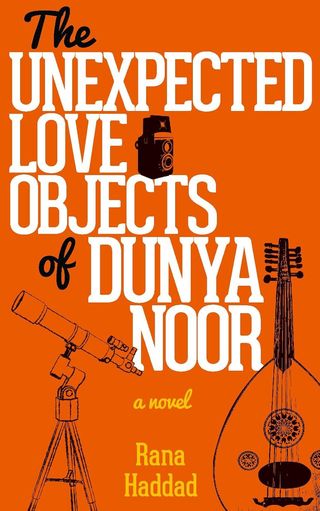
Cover of The Unexpected Love Objects of Dunya Noor

The Unexpected Love Objects of Dunya Noor

Rana Haddad

Original language: English · Paperback · ISBN 978-9774168611

Dunya Noor is thirteen when she is sent from Syria to live with her grandparents in England. Growing up in the 1980s under the Assad dictatorship, her independent streak and open curiosity mark her as a problem. She wants to be a photographer, but the rigid social rules around her leave little room for that kind of ambition. Her family decides exile is safer than staying.

Years later, living in London, Dunya meets Hilal, a young man from Aleppo whose father is a tailor. The class gap between them is wide: Dunya's father is a well-known heart surgeon. Despite the mismatch in their families' standing, the two fall in love and eventually choose to travel back to Syria together. Their return sets the novel's central tension, as both characters face a country and a system neither of them can simply re-enter on their own terms.

Rana Haddad's debut novel uses satire and a playful tone to portray daily life under authoritarian rule. The story moves between England and Syria, contrasting the freedoms and restrictions of each setting. Social class, family expectation, and political control all shape the choices available to the characters at each stage.

Plot

Aspiring photographer Dunya Noor discovers early on that her curious spirit, rebellious nature, and very curly hair are a recipe for disaster in 1980s Syria. And at the tender age of thirteen, she is exiled to live with her grandparents in England. Many years later in London, she meets Hilal, the son of a humble tailor from Aleppo and no match for Dunya, daughter of a famous heart surgeon. But, dreamy, restless Dunya falls in love with Hilal and they decide to return to Syria together, embarking on a journey that will change them both forever.

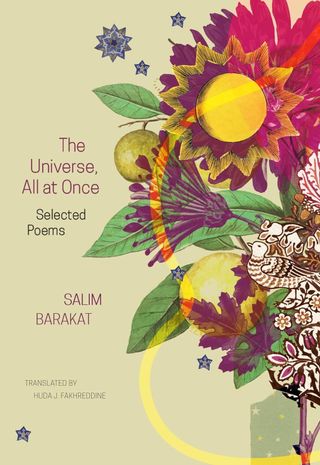
Cover of The Universe, All at Once

The Universe, All at Once

Salim Barakat

Original language: Arabic · Paperback · ISBN 978-1803094038

Salim Barakat is a Kurdish-Syrian poet and novelist who writes in Arabic and is widely regarded as one of the most distinctive voices in contemporary Arabic literature. Born in Qamishli, a city in northeastern Syria near the Turkish border, Barakat has spent much of his life outside his homeland. His writing in Arabic carries a layered complexity that has earned him a reputation as one of the language's most challenging and original stylists.

The Universe, All at Once gathers poems from his later work, composed between 2021 and 2023. Barakat selected these pieces himself, in collaboration with translator Huda J. Fakhreddine, who rendered them into English. The collection ranges from sections of a longer, book-length poem to shorter, compressed fragments. Each piece reflects a writer working at the far edges of what Arabic poetic language can hold, and the translation confronts the difficulty of carrying that density across into English.

Barakat's poetry does not follow familiar patterns of accessibility. The language is dense and often resistant to easy summary, shaped by a sensibility that draws on both Kurdish cultural memory and the possibilities of Arabic as a literary instrument. This bilingual tension runs through the collection as a steady undercurrent.

Plot

Salim Barakat, the captivating Kurdish-Syrian poet and novelist known for his mastery of Arabic style, is hailed as an enigmatic and intricate figure in contemporary Arabic literature. In The Universe, All at Once, he curates, in collaboration with translator Huda J. Fakhreddine, a selection from his later works, considering them the pinnacle of his poetic career. Drawn from pieces composed between 2021 and 2023, the poems in this collection vary from excerpts of an expansive book-length poem to concise, intense fragments. Fakhreddine expertly renders his writing in English, a courageous and praiseworthy attempt to challenge the barriers of the untranslatable.

More from Syria

See the country page for Syria for its map, facts and largest cities, or browse books from other countries.

Links go to Amazon; Hookito doesn’t sell books. Know a book that belongs here, or spotted a mistake? Write to submissions@hookito.com.

Where to next?

Back to the globe
Hookito landscape illustration