
Hookito

Togo · Books

Books from Togo

4 books from and about Togo: what each is about, the plot, and a note from Professor Kogi.

Cover of An African in Greenland

An African in Greenland

Tete-Michel Kpomassie, James Kirkup, A. Alvarez

Original language: English · Paperback · ISBN 978-0940322882

Tété-Michel Kpomassie grew up in Togo, a narrow West African country along the Gulf of Guinea. As a teenager, he came across a book about Greenland and became absorbed by descriptions of its Arctic landscape and Inuit way of life. The encounter sparked an unusual ambition: he decided he would travel there himself. What followed was a journey northward that took nearly a decade, as Kpomassie worked his way through several countries before finally reaching Greenland.

Once there, Kpomassie recorded what he saw with careful attention to daily routines, social customs, food, and family life among Inuit communities. His account is shaped by the double perspective of an outsider from tropical West Africa observing a society built around ice, hunting, and long polar winters. He notices details that a European visitor might overlook or take for granted, and he compares what he finds with the habits and expectations of his own upbringing in Togo.

The book, translated into English by James Kirkup, carries an introduction by A. Alvarez. It belongs to a small category of travel writing in which the author crosses not only geographic distance but also a wide gap in climate, culture, and daily reality, making the ordinary features of each place stand out more sharply.

Plot

Tété-Michel Kpomassie was a teenager in Togo when he discovered a book about Greenland—and knew that he must go there. Working his way north over nearly a decade, Kpomassie finally arrived in the country of his dreams.
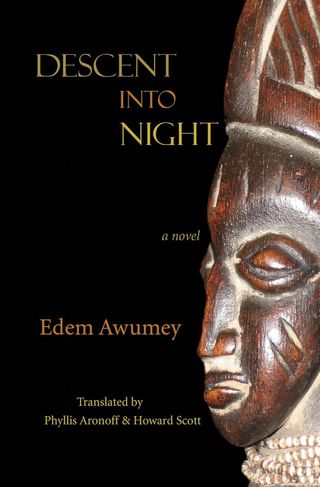
Cover of Descent into Night

Descent into Night

Edem Awumey

Original language: French · Paperback · ISBN 978-1988449166

Ito Baraka, a young dramatist from an unnamed West African nation, distributes leaflets containing quotations from Samuel Beckett as part of a student protest against a ruling oligarchy. He is seized and taken to a detention camp where torture, starvation, and sexual violence are routine. Inside the camp he meets Koli Lem, a teacher and devoted reader who has been blinded by being forced to stare directly at the sun. The two form a bond built around language and shared endurance in captivity.

After his release, Ito reaches Quebec, settling in a small flat in Gatineau with his girlfriend, Kimi, who is Indigenous. He is gravely ill and aware that time is short. His remaining purpose is to finish a written account of the protest, the camp, and the people he knew there, especially Koli Lem. The novel moves between these two settings, the bright, punishing heat of a dictatorship and the cold distance of a Canadian city, as Ito tries to set down a record before he cannot.

Edem Awumey, born in Togo, draws on the literary worlds of Beckett and the Czech writer Bohumil Hrabal. The book examines how creativity and performance persist under repression, and how the act of writing can serve as both testimony and obligation.

Plot

With a nod to Samuel Beckett and Bohumil Hrabal, a young dramatist from a West African nation describes a student protest against a brutal oligarchy and its crushing aftermath. While distributing leaflets with provocative quotations from Beckett, Ito Baraka is taken to a camp where torture, starvation, beatings, and rape are normal. Forced to inform on his friends, whose fates he now fears, and released a broken man, he is enabled to escape to Quebec. His one goal is to tell the story of the protest and pay homage to Koli Lem, a teacher, cellmate, and lover of books, who was blinded by being forced to look at the sun--and is surely a symbol of the nation.

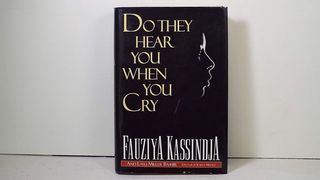
Cover of Do They Hear You When You Cry?

Do They Hear You When You Cry?

Fauziya Kassindja

Original language: English · Hardcover · ISBN 978-0385318327

Fauziya Kassindja grew up in Togo under the protection of a father who rejected certain tribal customs, including polygamy and female genital mutilation. When he died in 1993, that protection disappeared. At seventeen, Kassindja was married to a man with three existing wives and faced the prospect of genital cutting, a procedure carried out without anesthesia or medical safeguards. Hours before the ritual, her sister helped her flee the country.

Kassindja traveled first to Germany and then to the United States, where she sought asylum. Rather than finding safety, she was detained by the Immigration and Naturalization Service for sixteen months, held in various facilities where she was strip-searched and shackled. The book recounts the conditions of her detention in detail, drawing on her own account of daily life inside the system.

A second central figure in the story is Layli Miller Bashir, a law student who took up Kassindja's case and worked to secure her release. The book follows both women's paths, connecting Kassindja's experience in Togo with the legal process she faced in the United States and the question of whether asylum law could recognize her claim.

Plot

Fauziya Kassindja's harrowing story begins in Togo, Africa, where she enjoyed a sheltered childhood, shielded by her progressive father from the tribal practice of polygamy and genital mutilation. But when her father died in 1993, Fauziya's life changed dramatically. At age seventeen Fauziya was forced to marry a man she barely knew who already had three wives, and prepare for the tribal ritual of female genital mutilation--a practice that is performed without painkillers or antibiotics. But hours before the ritual was to take place, Fauziya's sister helped her escape to Germany, and from there she traveled to the United States seeking asylum--and freedom. Instead, she was stripped, shackled, and locked up in various INS detention facilities for sixteen months.

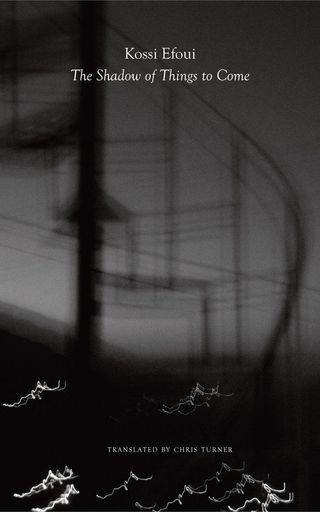
Cover of The Shadow of Things to Come

The Shadow of Things to Come

Kossi Efoui

Original language: French · Hardcover · ISBN 978-0857420992

In an unnamed African country locked in endless war, a young man hides in a bare room lit only by moonlight. He is waiting for figures known as the crocodile-men, who may be able to help him escape the violent control of the state. While he waits, he tells his story, piecing together a life shaped by conflict and fear.

The novel's setting is defined not only by physical danger but by a deliberate corruption of language. The ruling power strips words of their meaning, turning communication into a tool of confusion and control. Kossi Efoui, a Togolese playwright and novelist, builds a world where both violence and distorted speech work together to make ordinary life feel senseless. The atmosphere shifts between the bleak and the surreal, with carnivalesque and dreamlike elements running through the narrative.

Efoui's prose sits at the border between political fiction and allegory. The unnamed country, the perpetual war, and the manipulation of language all point toward recognizable patterns of authoritarian rule without being fixed to a single historical case. The story unfolds from the young man's hiding place, where memory and waiting fill the hours before an uncertain escape.

Plot

In an unnamed African nation, the people are subject to a state of perpetual warfare and to an Orwellian abuse of language that strips from language its meaning and renders life senseless. And in a bare room lit only by moonlight, a young man hides, waiting for the mysterious crocodile-men to come and help him escape from the violent tyranny of the state. While he waits, he tells his story.

More from Togo

See the country page for Togo for its map, facts and largest cities, or browse books from other countries.

Links go to Amazon; Hookito doesn’t sell books. Know a book that belongs here, or spotted a mistake? Write to submissions@hookito.com.

Where to next?

Back to the globe
Hookito landscape illustration