Hookito

Uganda · Books

Books from Uganda

4 books from and about Uganda: what each is about, the plot, and a note from Professor Kogi.

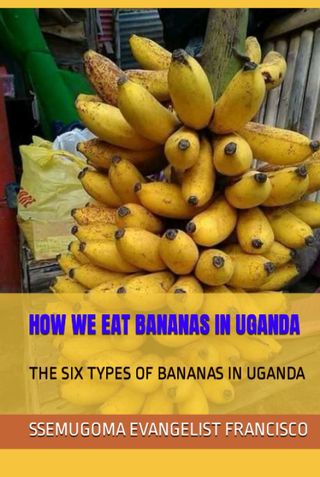
Cover of HOW WE EAT BANANAS IN UGANDA

HOW WE EAT BANANAS IN UGANDA

SSEMUGOMA EVANGELIST FRANCISCO

Original language: English · Hardcover · ISBN 979-8388077202

In Uganda, the word banana covers a far wider range of foods than many outsiders expect. Ssemugoma Evangelist Francisco's book explains the major types grown and eaten across the country, each with its own local name and its own place in the kitchen. Varieties such as Matooke, Gonja, Ndiizi, Mbiide, Bogoya, and Kivuuvu differ not only in appearance but in how they are prepared and consumed. Some are eaten raw once ripe, others must be cooked or roasted, and others are used primarily for their juice.

The book introduces readers to the local naming system for these banana types and describes the specific uses each one serves. Matooke, for example, is a cooking banana that is steamed and mashed, forming a staple dish central to daily meals in much of central and western Uganda. Bogoya, by contrast, is a sweet dessert banana, the variety most people outside Uganda picture when they hear the word.

Francisco notes that each major type contains numerous subtypes, making the full scope of Ugandan banana culture difficult to capture in a single volume. The book focuses on the principal categories and their distinct preparation methods, offering a practical guide to a crop that shapes everyday eating across the country.

Plot

Each type of Banana has so many sub types and if written, there’s no reader who can read all the pages if written, however, it’s the major types which are mentioned in this book and they are totally different in terms of consumption and preparation. The Bananas are eaten in different forms depending on their types, some types are eaten in a raw form when they ripen, others are eaten after they are cooked, others must be roasted while others, juice must be squeezed out of them, this book therefore will enable the reader to know the specific Bananas for specific uses. The Names used for the specific Bananas are the local names used in reference to the particular Bananas such as Bogoya, Ndiizi, Matooke, Mbiide, Gonja and Kivuuvu.
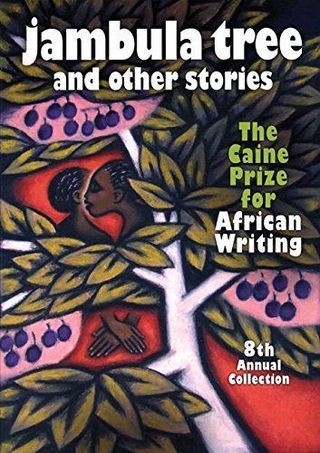
Cover of Jambula Tree and other stories

Jambula Tree and other stories

Monica Arac de Nyeko

Original language: English · Paperback · ISBN 978-1904456735

Jambula Tree and other stories collects short fiction by the Ugandan writer Monica Arac de Nyeko. The title story follows two teenage girls whose closeness turns into a romantic relationship inside a community where such bonds are neither accepted nor openly named. The setting is Uganda, where social expectation and legal pressure leave little space for difference, and where same-sex relationships carry heavy stigma.

Rather than staging an abstract argument about sexuality, the narrative stays close to domestic and neighbourhood detail, including households, gossip, and the watchful attention of neighbours. Community pressure builds through ordinary exchanges rather than open confrontation. The jambula tree of the title marks a meeting point for the two girls, a familiar local landmark carrying a private meaning that others do not share.

Beyond the title piece, the collection gathers further stories of lives shaped by expectation, belonging, and quiet refusal. Arac de Nyeko writes with attention to the gap between private feeling and public conduct, and to the ways affection is managed when it cannot be declared. Love, sexuality, and the limits set by a conservative society run through the book.

Plot

The story Jambula Tree is about the romantic relationship between two teenage girls in Uganda, exploring themes of love, sexuality, and societal norms in a country where LGBTQ+ relationships are heavily stigmatized. It’s a beautifully written and poignant narrative about forbidden love and the struggles of being different in a conservative society.

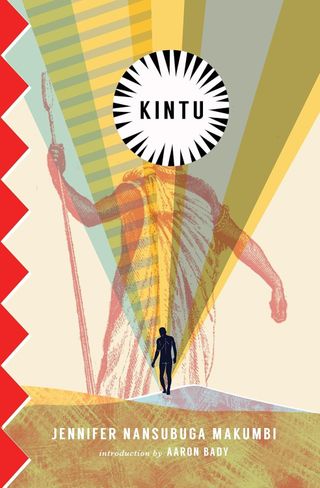
Cover of Kintu

Kintu

Jennifer Nansubuga Makumbi

Original language: English · Paperback · ISBN 978-1945492013

Kintu opens in 1750 with Kintu Kidda traveling to the capital of the Buganda Kingdom to swear loyalty to its new ruler. During this journey, an act of his sets a curse in motion, one that will follow his bloodline across generations. The novel is structured in six sections, each centering on different descendants of the Kintu clan as they live under the shadow of that original event.

Jennifer Nansubuga Makumbi uses the family's story to trace a longer arc of Ugandan history, from the pre-colonial Buganda Kingdom through to the pressures and contradictions of contemporary life. Each descendant faces a distinct set of circumstances, but all share the question of how to live with an inherited past they did not choose. Tensions between older customs and newer ways of organizing life run through the separate narratives without being reduced to a simple opposition.

The novel was first published in Kenya in 2014, where it received both critical and popular attention. Makumbi, a Ugandan writer, constructed the book as a work of historical and domestic fiction grounded in Ganda culture and geography, giving the Buganda Kingdom and its surroundings a detailed fictional presence that spans roughly two and a half centuries.

Plot

Divided into six sections, the novel begins in 1750, when Kintu Kidda sets out for the capital to pledge allegiance to the new leader of the Buganda Kingdom. Along the way, he unleashes a curse that will plague his family for generations. In an ambitious tale of a clan and a nation, Makumbi weaves together the stories of Kintu’s descendants as they seek to break from the burden of their shared past and reconcile the inheritance of tradition and the modern world that is their future.

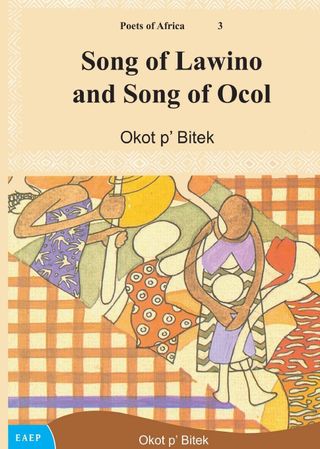
Cover of Song of Lawino and Song of Ocol

Song of Lawino and Song of Ocol

Okot P'Bitek

Original language: English · Paperback · ISBN 978-9966467089

Song of Lawino and Song of Ocol is a pair of long poems by Ugandan writer Okot p'Bitek. Originally composed in Acholi, a language spoken in northern Uganda and parts of South Sudan, the poems were translated into English by the author himself. Song of Lawino is spoken by an Acholi woman whose husband, Ocol, has turned away from the customs and values he grew up with after receiving a Western education. Lawino addresses him directly, describing what has been lost and questioning why he now rejects the traditions that once shaped their shared life.

Song of Ocol serves as a companion piece in which the husband responds, attempting to explain his rejection of traditional culture. Together the two voices create a tense conversation about identity, loyalty, and the pull between inherited ways of living and the habits and ambitions that colonial education introduced. The poems draw on the rhythms and oral patterns of Acholi song, giving them a distinctive sound even in their English versions.

The setting is firmly rooted in the social landscape of post-independence East Africa, where personal relationships often mirrored larger cultural conflicts. p'Bitek structured the work so that neither voice fully resolves the argument, leaving the tension between Lawino and Ocol open and unfinished.

Plot

Song of Lawino is an African woman's lamentation over the cultural death of her western educated husband - Ocol. In Song of Ocel the husband tries to justify his cultural apostasy. These songs were translated from Acholi by the author. They evince a fascinating flavour of the African rhythmical idiom.

More from Uganda

See the country page for Uganda for its map, facts and largest cities, or browse books from other countries.

Links go to Amazon; Hookito doesn’t sell books. Know a book that belongs here, or spotted a mistake? Write to submissions@hookito.com.

Where to next?

Back to the globe
Hookito landscape illustration