Hookito

Australia · Books

Books from Australia
7 books from and about Australia: what each is about, the plot, and a note from Professor Kogi.

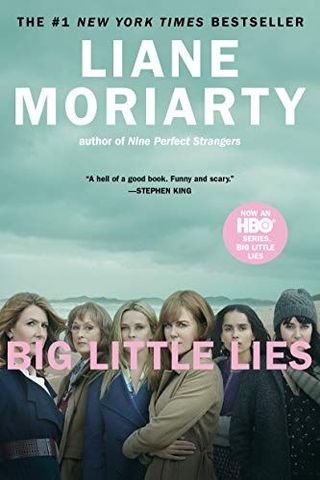
Cover of Big Little Lies

Big Little Lies

Liane Moriaty

Original language: English · Kindle Edition

Big Little Lies by Liane Moriarty opens with a death connected to a school trivia night in a small Australian coastal community. The novel withholds the identity of the victim and the circumstances surrounding what happened, parceling out details through police interview transcripts placed between chapters. Three women stand at the center of the story: Madeline, a sharp-tongued mother navigating tensions with her ex-husband and his new wife; Celeste, whose outwardly perfect marriage conceals a disturbing private reality; and Jane, a young single mother who has recently arrived in town carrying an unresolved trauma.

The setting is a beachside suburb where school drop-offs and birthday parties become stages for rivalry, gossip, and shifting alliances among parents. Moriarty uses this enclosed world to examine how small deceptions accumulate, how public appearances diverge from domestic life, and how the politics of a kindergarten community can amplify existing fractures in relationships. The book addresses domestic violence with specificity rather than treating it as background atmosphere.

Moriarty is an Australian author based in Sydney. The novel's structure moves backward and forward around the night of the incident, letting the reader piece together what led to it while following the three women as their separate problems begin to overlap.

Plot

A murder...A tragic accident...Or just parents behaving badly? What’s indisputable is that someone is dead. Madeline is a force to be reckoned with. She’s funny, biting, and passionate; she remembers everything and forgives no one. Celeste is the kind of beautiful woman who makes the world stop and stares but she is paying a price for the illusion of perfection. New to town, single mom Jane is so young that another mother mistakes her for a nanny. She comes with a mysterious past and a sadness beyond her years. These three women are at different crossroads, but they will all wind up in the same shocking place.
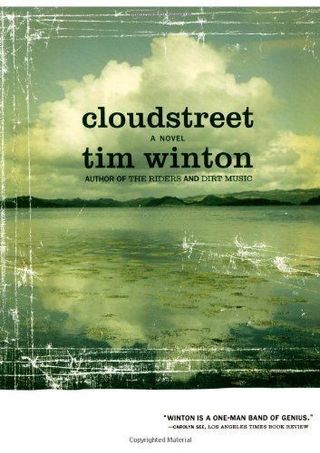
Cover of Cloudstreet: A Novel

Cloudstreet: A Novel

Tim Winton

Original language: English · paperback

Cloudstreet follows two working-class families who end up sharing a large, run-down house in a suburb of Perth, Western Australia. The Pickles have inherited the property after a run of personal disasters, while the Lambs, a devout family recovering from their own misfortune, move in as tenants and open a small grocery shop on the ground floor to make ends meet. The arrangement is uneasy from the start.

Over roughly two decades the novel tracks both households as they cope with work, loss, love, and the ordinary business of getting through each day. Tim Winton writes in a loose, vernacular style shaped by Australian speech, and his sense of place draws on the river, suburbs, and coastal edges of Perth. The narration moves between many characters rather than settling on one.

The house gives the book its title and its centre. Divided between two families who share walls, a yard, and little else at first, it becomes the place where questions of luck, chance, and belonging are worked out in postwar Australia. Winton also lets the building carry an unsettled, faintly haunted atmosphere that the families never fully explain.

Plot

Struggling to rebuild their lives after being touched by disaster, the Pickle family, who've inherited a big house called Cloudstreet in a suburb of Perth, take in the God-fearing Lambs as tenants. The Lambs have suffered their own catastrophes, and determined to survive, they open up a grocery on the ground floor.

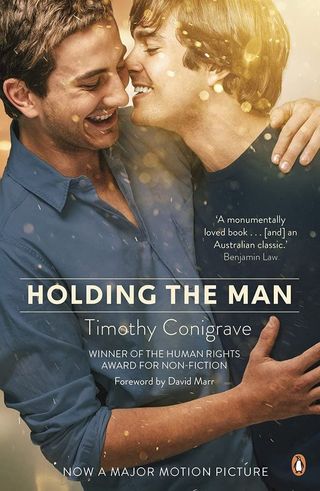
Cover of Holding the Man

Holding the Man

Tim Conigrave

Original language: English · paperback · ISBN 978-0143009498

Holding the Man is a memoir by Australian writer Tim Conigrave. It begins in a Melbourne high school, where Conigrave, a drama student, falls in love with John Caleo, the captain of the football team. Their relationship starts in adolescence and continues into adulthood, spanning roughly fifteen years. The book traces how two young men in 1970s and 1980s Australia navigated a relationship that defied the social expectations around them.

Conigrave wrote with directness about love, sex, loyalty, and the pressures that shaped their lives together. The memoir records ordinary domestic detail alongside larger questions about identity and belonging in a society that was still hostile toward same-sex relationships during much of the period described. He completed the manuscript shortly before his death in 1994.

The book received the United Nations Human Rights Award for Nonfiction and was later adapted for the stage, with the theatrical version opening in the United States in 2007. The adaptation was described by its playwright as drawing on a memoir of striking and unapologetic honesty. Holding the Man has remained one of the most widely read Australian memoirs of its era.

Plot

From the land of Down Under comes this true story about a male high school drama student who falls in love with the football team captain. Winner of the United Nations Human Rights Award for Nonfiction, HOLDING THE MAN has been adapted into a play opening in America in September 2007. The playwright who adapted the book for stage refers to this as a memoir of striking and unapologetic honesty.

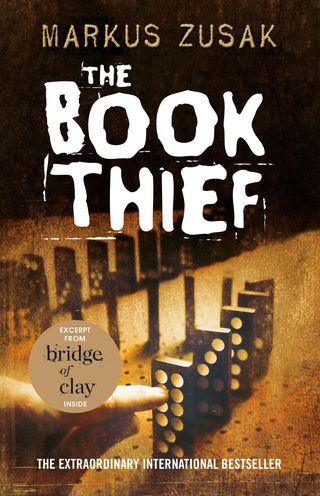
Cover of The Book Thief

The Book Thief

Markus Zusak

Original language: English · paperback

The Book Thief is set in Nazi Germany beginning in 1939 and follows Liesel Meminger, a young foster girl living in a small town outside Munich. After arriving at her new home, Liesel begins to steal books, drawn to them even before she can read. Her foster father, an accordion player, teaches her to read using the books she collects. As Allied bombing raids intensify, Liesel shares the stories she has gathered with neighbors sheltering in basements. The household also harbors a Jewish man in hiding, and the danger of that secret runs through the novel.

One of the book's most distinctive choices is its narrator: the story is told by Death, who observes human behavior during wartime with a tone that is at times weary, at times puzzled. This framing allows the novel to move between close domestic detail and a wider view of destruction across Europe. Australian author Markus Zusak, who also wrote I Am the Messenger, published The Book Thief in 2005. The novel centers on the power that words and stories hold for people living under extreme restriction, where owning or sharing the wrong book carries real consequences.

Plot

It is 1939. Nazi Germany. The country is holding its breath. Death has never been busier and will become busier still. Liesel Meminger is a foster girl living outside of Munich, who scratches out a meager existence for herself by stealing when she encounters something she can’t resist–books. With the help of her accordion-playing foster father, she learns to read and shares her stolen books with her neighbors during bombing raids as well as with the Jewish man hidden in her basement.

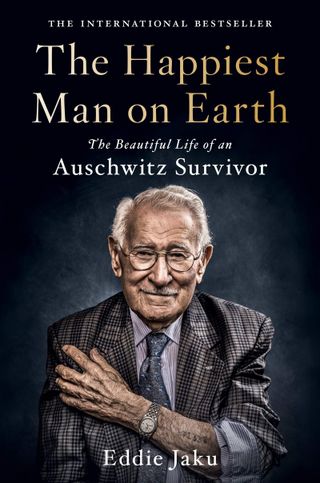
Cover of The Happiest Man on Earth

The Happiest Man on Earth

Eddie Jaku

Original language: English · hardcover

Eddie Jaku was born into a Jewish family in Leipzig, Germany. As a teenager on November 9, 1938, during the organized violence known as Kristallnacht, he was beaten, arrested, and sent to a concentration camp. Over the following seven years, he endured imprisonment in Buchenwald and Auschwitz before being forced onto a death march in the final period of the war. He lost family members, friends, and his connection to the country where he had grown up.

Jaku survived, and after the war he eventually settled in Australia, where he became a public speaker and educator about the Holocaust. This memoir, written when he was around 100 years old, recounts what happened to him during those years and describes the promise he made to himself afterward: to appreciate each day he had been given and to remember the six million Jewish people who were killed.

The book sits alongside other well-known accounts by survivors who chose to write about meaning and gratitude after extreme loss. Jaku's perspective is shaped by decades of distance from the events he describes, and by a long life lived in a country far from the one where his story began.

Plot

Born in Leipzig, Germany, into a Jewish family, Eddie Jaku was a teenager when his world was turned upside-down. On November 9, 1938, during the terrifying violence of Kristallnacht, the Night of Broken Glass, Eddie was beaten by SS thugs, arrested, and sent to a concentration camp with thousands of other Jews across Germany. Every day of the next seven years of his life, Eddie faced unimaginable horrors in Buchenwald, Auschwitz, and finally on a forced death march during the Third Reich’s final days. The Nazis took everything from Eddie—his family, his friends, and his country. But they did not break his spirit. Against unbelievable odds, Eddie found the will to survive. Overwhelmingly grateful, he made a promise: he would smile every day in thanks for the precious gift he was given and honor the six million Jews murdered by Hitler. Today, at 100 years of age, despite all he suffered, Eddie calls himself the “happiest man on earth.”

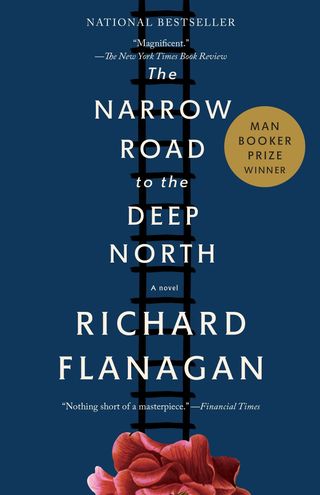
Cover of The Narrow Road to the Deep North

The Narrow Road to the Deep North

Richard Flanagan

Original language: English · paperback

Richard Flanagan's novel follows Dorrigo Evans, an Australian surgeon held in a Japanese prisoner-of-war camp during the construction of the Burma Railway in the Second World War. The story moves between the brutality of the camp, where Evans tries to keep his fellow prisoners alive under impossible conditions, and the decades of his later life in Australia. Both the captives and the Japanese guards receive sustained attention, and the novel traces how the war reshapes each of them long after it ends.

The title borrows from Matsuo Basho's seventeenth-century Japanese travel journal, a detail that threads through the book's structure and its interest in the collision between cultures forced together by violence. Flanagan sets the wartime sections along the Thailand-Burma railway line, where tens of thousands of Allied prisoners and Asian laborers died. Against this background, the novel also carries a love story that begins before the war and continues to shape Evans as he ages, rises in public standing, and contends with what the camp took from him. The book won the 2014 Man Booker Prize.

Plot

Moving deftly from a Japanese POW camp to present-day Australia, from the experiences of Dorrigo Evans and his fellow prisoners to that of the Japanese guards, this savagely beautiful novel tells a story of the many forms of love and death, of war and truth, as one man comes of age, prospers, only to discover all that he has lost.

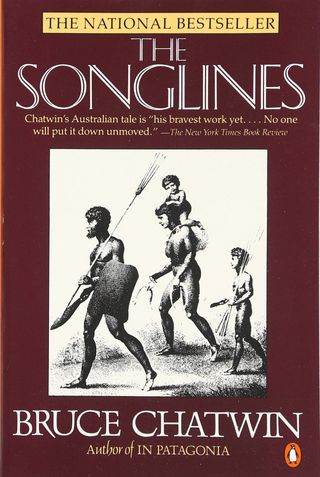
Cover of The Songlines

The Songlines

Bruce Chatwin

Original language: English · paperback · ISBN 978-0140094299

Bruce Chatwin's The Songlines follows the author into central Australia, where he sets out to understand the Aboriginal concept of Dreaming tracks. These are ancient paths crossing the landscape, tied to songs that describe the land's features and origins. For Aboriginal Australians, singing a track is a way of navigating the territory and affirming a relationship with it. Chatwin's account moves between his own travels and conversations with Aboriginal elders, settlers, police, and prospectors scattered across the outback.

The book mixes autobiography, anthropology, narrative, and historical observation. Chatwin records encounters with a wide cast of people living in or passing through remote Australia, including missionaries, redneck locals, and holy men whose knowledge of the land operates on principles unfamiliar to European thinking. Alongside these scenes, he assembles notebook entries and quotations from earlier writers on nomadism, displacement, and the human impulse to walk.

Chatwin is interested in whether the songlines offer a way of thinking about land that differs fundamentally from Western ownership. The book sits at the intersection of travel writing and speculative inquiry, shaped by the particular dryness and scale of the Australian interior.

Plot

Bruce Chatwin-author of In Patagonia-ventures into the desolate land of Outback Australia to learn the meaning of the Aborginals' ancient "Dreaming tracks." Along these timeless paths, amongst the fortune hunters and redneck Australians, racist policemen, and mysterious Aboriginal holy men, he discovers a wondrous vision of man's place in the world.

More from Australia

See the country page for Australia for its map, facts and largest cities, or browse books from other countries.

Links go to Amazon; Hookito doesn’t sell books. Know a book that belongs here, or spotted a mistake? Write to submissions@hookito.com.

Where to next?

Back to the globe
Hookito landscape illustration