Hookito

Azerbaijan · Books

Books from Azerbaijan
6 books from and about Azerbaijan: what each is about, the plot, and a note from Professor Kogi.

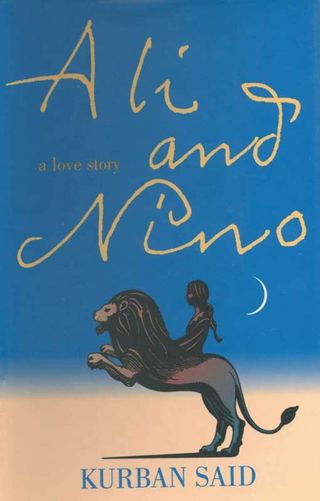
Cover of Ali and Nino

Ali and Nino

Kurban Said

Original language: German · hardcover

Ali and Nino is a love story set in Baku, the capital of Azerbaijan, on the western shore of the Caspian Sea. Ali is a Muslim Azerbaijani boy and Nino is a Georgian Christian girl, and the two grow up together in a city where Asian and European ways of life overlap. Their different backgrounds shape how each of them sees the world, and these differences become harder to navigate as they grow older and the pressures of family, religion, and politics close in around them.

The novel opens in the final years before the First World War, when Baku is still part of the Russian Empire. As war breaks out and the Russian Revolution follows, the city and the wider Caucasus region are pulled into years of upheaval. Ali and Nino's personal story unfolds against this period of collapsing empires and emerging nations, and their fates become entangled with the political struggles around them.

The book was first published in 1937 under the pen name Kurban Said. The true identity of the author has been a subject of long-running debate among scholars and researchers, with several candidates proposed over the decades. Baku itself, with its oil wealth and its position between Europe and Central Asia, plays a central role in the story.

Plot

Ali and Nino, two lovers from vastly different backgrounds, grow up together in carefree innocence in Baku on the Caspian Sea. Here, where Eastern and Occidental collide, they are inevitably drawn into the events of the First World War and the Russian Revolution.
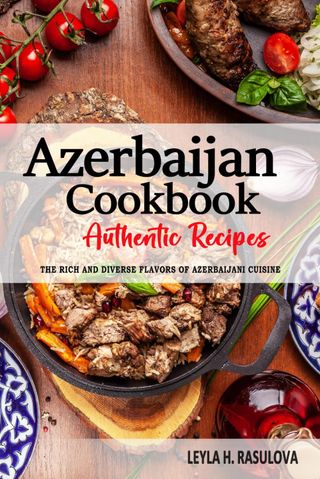

Cover of Azerbaijan Cookbook

Azerbaijan Cookbook

Leyla H. Rasulova

Original language: English · ISBN 979-8320330532

Azerbaijan Cookbook by Leyla H. Rasulova is a collection of traditional Azerbaijani recipes gathered from family and generational cooking practice. The book covers a range of dishes that form the everyday and celebratory meals of Azerbaijan, with step-by-step preparation instructions for each one. Rasulova presents recipes that reflect the country's characteristic use of fresh herbs, dried fruits, saffron, and other aromatic ingredients common in Azerbaijani kitchens.

Azerbaijani cooking draws on the geography of the South Caucasus, where the Caspian coastline, mountain pastures, and fertile lowlands each contribute distinct ingredients. Lamb, pomegranate, walnuts, sumac, and fresh greens appear frequently across the cuisine. Dishes such as plov, dolma, and kebab carry regional variations shaped by local produce and family tradition. The cookbook aims to document these recipes in a form accessible to home cooks working outside Azerbaijan, providing ingredient lists and techniques that can be followed in a standard kitchen.

The book is organized around the variety within Azerbaijani food rather than a single region or meal type. It addresses both staple daily dishes and the richer preparations associated with holidays and gatherings, offering a practical entry point into a cuisine that remains relatively underrepresented in English-language cookbook publishing.

Plot

A collection of traditional and authentic Azerbaijani recipes passed down through generations. This book highlights the variety of dishes that comprise the classic Azerbaijani culinary landscape and provides detailed instructions on how to prepare each recipe. From the fresh and vibrant flavors that characterize Azerbaijan's staple meals to the rich and aromatic ingredients commonly used in daily cooking, this cookbook is designed to inspire home cooks and food enthusiasts alike.

Cover of Azerbaijani Language for Foreigners

Azerbaijani Language for Foreigners

Nazli Ali

Original language: Azeri · Paperback · ISBN 979-8230967606

Azerbaijani Language for Foreigners by Nazli Ali is a structured introduction to the Azerbaijani language aimed at beginners with no prior knowledge. The book covers the Azerbaijani alphabet, pronunciation rules, basic grammar, common phrases, and everyday vocabulary. It includes interactive exercises, dialogues, and cultural context to support learners in reading, writing, and speaking.

Azerbaijani belongs to the Turkic language family and is the official language of Azerbaijan. It uses a Latin-based alphabet of 32 letters, some of which represent sounds not found in English. The book is organized for either self-study or use in a classroom setting, making it accessible to travelers preparing for a trip, people with professional needs, or anyone curious about the language and its cultural background.

The material progresses from foundational elements like letter sounds and simple sentence patterns toward more practical communication. Cultural notes appear alongside the language instruction, giving learners a sense of how Azerbaijani is used in daily life rather than presenting grammar in isolation. The book is designed to provide a working base in the language rather than advanced fluency.

Plot

It covers essential topics such as the Azerbaijani alphabet, pronunciation rules, basic grammar, common phrases, and everyday vocabulary. Learners will build confidence in speaking, reading, and writing through interactive exercises, dialogues, and cultural insights. Designed for self-study or classroom use, this book is perfect for travelers, language enthusiasts, and anyone interested in Azerbaijani culture. Whether you're learning for personal growth, business, or communication, this book provides a solid foundation to start your journey in Azerbaijani!

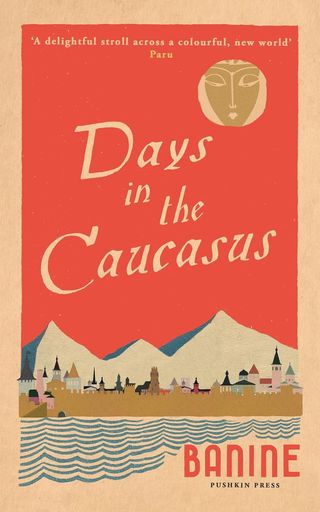
Cover of Days in the Caucasus

Days in the Caucasus

Banine

Original language: French · Hardcover · ISBN 978-1782274872

Days in the Caucasus is a memoir by Banine, the pen name of Umm El-Banu Asadullayeva, who grew up in a wealthy Azerbaijani family during the early twentieth century. She describes a childhood shaped by contrasts: lavish household feasts of sweets and fruit alongside the strict authority of her Muslim grandmother, and a flaxen-haired German governess who represented a European world just beyond reach. The household was full of personality, with relatives who bickered, played poker, and smoked constantly.

The memoir follows Banine through a period of upheaval as the Bolsheviks arrived in Azerbaijan and her family lost its fortune. Against this backdrop of political violence and social collapse, she fell in love, only to be pushed into a marriage she did not want. The tension between personal desire and family obligation runs through her account, set against a country caught between Eastern traditions and Western influences.

Banine eventually left Azerbaijan for Paris, where she spent most of her adult life and wrote in French. The book was originally published in French in 1945 and later translated into English, bringing her sharp, detailed observations of Baku society to a wider audience decades after the events she recorded.

Plot

Banine remembers her luxurious home, with endless feasts of sweets and fruit; her beloved, flaxen-haired German governess; her imperious, swearing, strict Muslim grandmother; her bickering, poker-playing, chain-smoking relatives. She recalls how the Bolsheviks came, and they lost everything. How, amid revolution and bloodshed, she fell passionately in love, only to be forced into marriage with a man she loathed- until the chance of escape arrived.

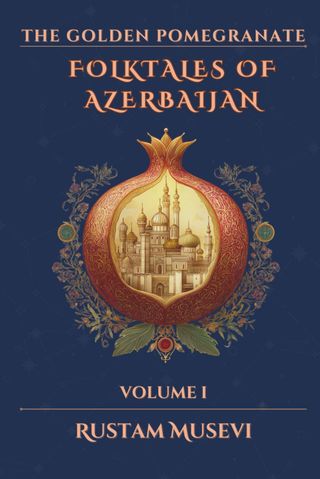
Cover of The Golden Pomegranate: Folktales of Azerbaijan

The Golden Pomegranate: Folktales of Azerbaijan

Rustam Musevi

Original language: English · Paperback · ISBN 979-8999462206

The Golden Pomegranate is a collection of 23 folktales from Azerbaijan, gathered and retold by Rustam Musevi for contemporary readers. The stories feature recurring characters familiar in Azerbaijani oral tradition, including Bahtiyar, Kechal, and Jirtan, folk heroes whose names carry specific associations in the culture. Alongside them appear talking animals, particularly foxes known for their cleverness, as well as nightingales, wise elders, and antagonists ranging from corrupt viziers to dragons and the giant creatures known as Deevs.

Azerbaijan sits at a geographic crossroads between Eastern Europe and Western Asia, bordered by the Caspian Sea to the east. The country's position along historical trade routes, including branches of the Silk Road, shaped a storytelling tradition that absorbed influences from Persian, Turkic, and Caucasian cultures over many centuries. Oral tales in this region often carry moral weight, using humor and animal trickery to address themes of courage, loyalty, and resourcefulness.

This first volume organizes the tales with an emphasis on variety, moving between animal fables and longer hero narratives. The stories reflect a tradition where folktales served practical social purposes, passing values and local knowledge between generations through memorable characters and situations.

Plot

The Golden Pomegranate, Volume I is a vibrant collection of 23 timeless folktales brought to life for modern readers. These stories, passed down for generations, reflect a culture where storytelling is a way of life. Inside, you’ll meet clever foxes and other talking animals, and brave folk heroes like Bahtiyar, Kechal, and Jirtan. You’ll encounter mystical nightingales, wise elders, and fearsome villains—from greedy viziers to dragons and the legendary giant Deevs. Each tale is filled with humor, adventure, and a moral lesson about courage, friendship, and wit.

Cover of The Orphan Sky

The Orphan Sky

Ella Leya

Original language: English · Paperback · ISBN 978-1402298653

Leila is a young classical pianist in late 1970s Azerbaijan, a place shaped by the overlap of Turkish, Persian, and Russian traditions. She is also a loyal daughter of the Communist Party, eager to win international competitions and bring prestige to her country. When her Party mentor assigns her to watch a music shop suspected of spreading Western cultural influence, she accepts without hesitation.

The shop belongs to Tahir, a painter whose interests run counter to everything Leila has been taught to value. He listens to jazz, makes abstract art, and holds political views the state would consider dangerous. Through him, Leila encounters ideas and feelings that unsettle the certainties she grew up with. What begins as an assignment turns into something personal, and the distance between her public loyalty and her private life starts to narrow in ways she cannot easily control.

The novel is set in Baku during a period when Soviet authority still governed daily life in Azerbaijan, including what music could be performed and what art could be displayed. Leila's conflict sits at the point where political obedience and personal desire pull in opposite directions, with consequences that extend beyond her alone.

Plot

Leila is a young classical pianist who dreams of winning international competitions and bringing awards to her beloved country Azerbaijan. She is also a proud daughter of the Communist Party. When she receives an assignment from her communist mentor to spy on a music shop suspected of traitorous Western influences, she does it eagerly, determined to prove her worth to the Party. But Leila didn't anticipate the complications of meeting Tahir, the rebellious painter who owns the music shop. His jazz recordings, abstract art, and subversive political opinions crack open the veneer of the world she's been living in. Just when she begins to fall in love with both the West and Tahir, her comrades force her to make an impossible choice.

More from Azerbaijan

See the country page for Azerbaijan for its map, facts and largest cities, or browse books from other countries.

Links go to Amazon; Hookito doesn’t sell books. Know a book that belongs here, or spotted a mistake? Write to submissions@hookito.com.

Where to next?

Back to the globe
Hookito landscape illustration