Hookito

Bosnia and Herzegovina · Books

Books from Bosnia and Herzegovina
8 books from and about Bosnia and Herzegovina: what each is about, the plot, and a note from Professor Kogi.

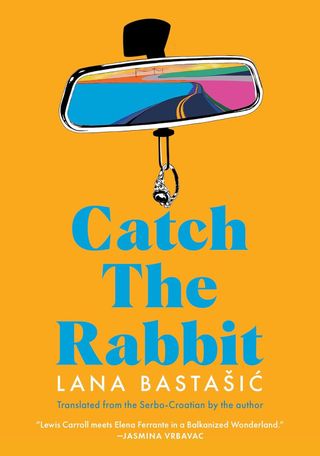
Cover of Catch the Rabbit

Catch the Rabbit

Lana Bastašić

Original language: Bosnian-Croatian-Serbian · Paperback · ISBN 978-1632062895

Sara and Lejla grew up close in Bosnia, but twelve years of silence have passed when an unexpected phone call pulls Sara back. She has been living in Dublin, distancing herself from the language and memories of her earlier life. Lejla, still magnetic and unsettling, draws Sara into returning home. What follows is a road trip from Bosnia to Vienna, where the two women set out to find Lejla's brother Armin, who lives in exile.

The trip reopens buried questions about their friendship, about a misunderstanding that split them apart, and about the fractured country they share as a backdrop. Lana Bastašić sets their personal story against post-war Bosnia, where the effects of conflict sit alongside ordinary life. The novel moves between past and present, layering childhood episodes with scenes from the road. Sara's guilt and curiosity keep her bound to Lejla even as old tensions resurface.

Bastašić's debut novel won the 2020 European Union Prize for Literature. Its route runs from Bosnia through the roads of a changed region toward Vienna, a city that has long received people leaving the Balkans. The search for Armin gives the two women a destination, while their older questions about each other stay unresolved.

Plot

It’s been twelve years since inseparable childhood friends Lejla and Sara have spoken, but an unexpected phone call thrusts Sara back into a world she left behind, a language she’s buried, and painful memories that rise unbidden to the surface. Lejla’s magnetic pull hasn’t lessened despite the distance between Dublin and Bosnia or the years of silence imposed by a youthful misunderstanding, and Sara finds herself returning home, driven by curiosity and guilt. Embarking on a road trip from Bosnia to Vienna in search of Lejla’s exiled brother Armin, the two travel down the rabbit hole of their shared past and question how they’ve arrived at their present, disparate realities.
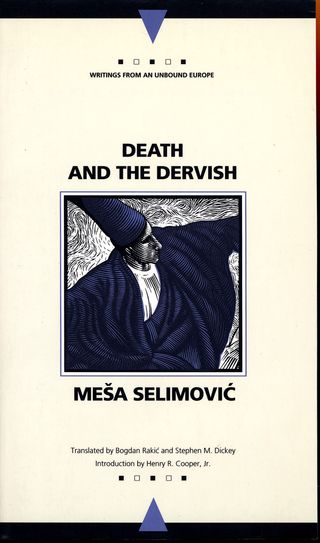
Cover of Death and the Dervish

Death and the Dervish

Mesa Selimovic

Original language: Serbo-Croatian · Paperback · ISBN 978-0810112971

Sheikh Nuruddin is a dervish and spiritual leader at an Islamic monastery in eighteenth-century Sarajevo, living a life deliberately set apart from worldly affairs. His withdrawal ends abruptly when his brother is arrested by the Ottoman authorities who control the Balkans. Nuruddin finds himself forced to leave the monastery and confront a bureaucratic system that offers no clear answers, no transparent process, and no reliable path to justice.

The novel is told in Nuruddin's own voice. As he moves through layers of Ottoman administration trying to learn his brother's fate and secure his release, his encounters with power reshape his understanding of himself. The distance he once maintained from society begins to collapse, and he is pushed toward broader questions about complicity, spiritual isolation, and the choices that have defined his life. The atmosphere has often been compared to Kafka's writing for its portrayal of an individual trapped inside an opaque and indifferent authority.

Mesa Selimovic published the book in Yugoslavia in 1966, where it became a bestseller. The story is set in Ottoman-era Bosnia, but many readers at the time also saw parallels with their own political surroundings. The English translation appeared under the Northwestern University Press imprint.

Plot

It recounts the story of Sheikh Nuruddin, a dervish residing in an Islamic monastery in Sarajevo in the eighteenth century during the Ottoman Turk hegemony over the Balkans. When his brother is arrested, he must descend into the Kafkaesque world of the Ottoman authorities in his search to discover what happened to him.

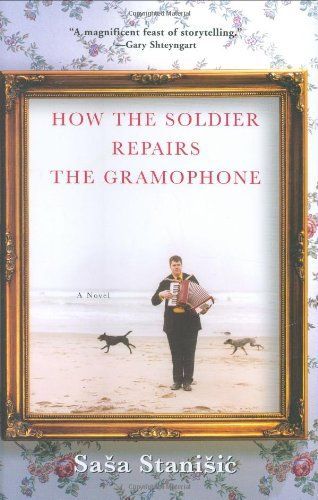
Cover of How the Soldier Repairs the Gramophone

How the Soldier Repairs the Gramophone

Sasa Stanisic

Original language: Serbo-Croatian · Hardcover · ISBN 978-0802118660

Aleksandar, known as Aleks, grows up in Višegrad, a town in Bosnia and Herzegovina where different ethnic and religious communities live side by side without apparent friction. He is a boy with a strong imagination and a habit of reshaping the world through stories, a skill he first develops after the sudden death of his grandfather. Storytelling becomes his way of processing loss and holding on to what matters.

When war reaches Višegrad in the 1990s, the town is reshaped by violence and division. Aleks and his family flee to Germany, but safety does not erase what he has witnessed. He carries memories of the place he left behind and of Asija, a girl he tried to protect and whose fate he does not know. In Germany, he exists between two lives: the one unfolding around him and the one he cannot stop replaying.

Saša Stanišić published this novel in German in 2006, drawing on his own experience of displacement from Bosnia during the war. The story moves between Aleks as a child in Višegrad and as a young man in Germany, using his voice to convey both the ordinariness of daily life before the conflict and the rupture that followed.

Plot

When his grandfather dies suddenly, Aleks summons this gift of storytelling to see him through his grief. It is a gift he will have to call on again when soldiers transform Višegrad--a town previously unconscious of racial and religious divides--into a nightmarish landscape of terror and violence. Though Aleks and his family fled to Germany, he is haunted by his past, and especially by Asija, the mysterious girl he tried to save.

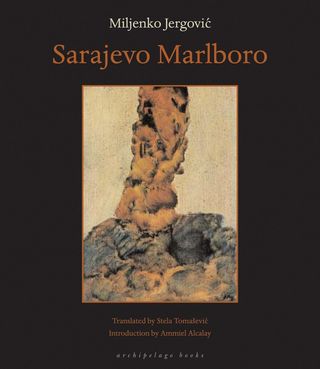
Cover of Sarajevo Marlboro

Sarajevo Marlboro

Miljenko Jergović

Original language: Bosnian-Croatian · Paperback · ISBN 978-0972869225

Sarajevo Marlboro is a collection of short stories by Miljenko Jergović, set in Sarajevo during the 1990s war in Bosnia and Herzegovina. Jergović, Croatian by birth, grew up in the city and stayed through most of the siege. The stories center on everyday people, young Muslims, Croats, and Serbs, caught inside a city under prolonged bombardment. Rather than focusing on the fighting itself, the writing stays close to small, concrete details of daily life: objects, habits, memories, and fleeting encounters.

Jergović places the killing zone in the background while keeping the interior lives of his characters in the foreground. The effect is a collection shaped by dark, understated humor and a persistent sense of loss. Each story operates on its own terms, sometimes dreamlike in structure, sometimes grounded in sharp physical observation. The brevity of the individual pieces gives the book a rhythm that shifts between stillness and sudden tension.

The collection was Jergović's first published book of stories and brought him recognition across Europe. It has been compared to works by Alan Lightman and Italo Calvino for its compressed, meditative approach to storytelling, though its subject matter is rooted in a specific city and a specific conflict.

Plot

In “melancholy, dreamlike” prose, the stories in Sarajevo Marlboro “recall Alan Lightman's Einstein's Dreams and Italo Calvino's Invisible Cities, but Jergovic’s book is the strongest of the three” (Maud Newton). Croatian by birth, Jergović spent his childhood in Sarajevo and chose to remain there throughout most of the war. These stories are distinctly of the material world, and they are shaped by Jergović’s deeply personal vision, subterranean humor, and a razor-sharp understanding of the fate of the city’s young Muslims, Croats, and Serbs – the minute details of their interior lives in the foreground, the killing zone in the background.

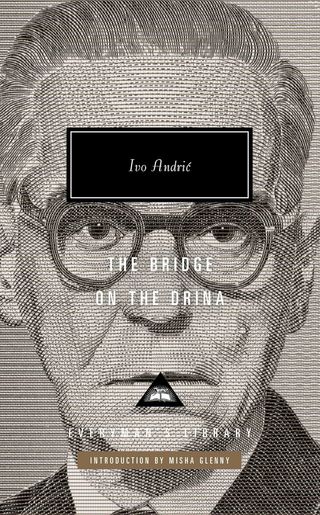
Cover of The Bridge on the Drina

The Bridge on the Drina

Ivo Andric

Original language: Serbian · Hardcover · ISBN 978-1841594026

The Bridge on the Drina, first published in 1945, follows the life of a stone bridge over the River Drina at Visegrad, in what is now Bosnia and Herzegovina. It was built in the sixteenth century for a Grand Vezir of the Ottoman Empire, a Serb taken from his mother as a boy, who chose the site of that separation. A workman named Radisav resists the construction and is punished harshly.

Around the bridge, generations of Catholics, Muslims, and Orthodox Christians share a daily life shaped by the empires that govern them. Individual stories surface across the centuries: a young woman named Fata climbs the parapet rather than accept an arranged marriage, and a gambler called Milan stakes everything on one last wager. Visegrad sits between Ottoman and Austro-Hungarian spheres, and each shift of power alters ordinary routines.

The narrative stretches from the late 1500s to 1914, when tensions in the Balkans reach the bridge at the start of the First World War. Ivo Andric built the book as a chain of episodes rather than one continuous plot, with the bridge as the constant presence linking them across nearly four hundred years.

Plot

The town of Visegrad was long caught between the warring Ottoman and Austro-Hungarian Empires, but its sixteenth-century bridge survived unscathed--until 1914 when tensions in the Balkans triggered the first World War. Spanning generations, nationalities, and creeds, The Bridge on the Drina brilliantly illuminates a succession of lives that swirl around the majestic stone arches. Among them is that of the bridge's builder, a Serb kidnapped as a boy by the Ottomans; years later, as the empire's Grand Vezir, he decides to construct a bridge at the spot where he was parted from his mother. A workman named Radisav tries to hinder the construction, with horrific consequences. Later, the beautiful young Fata climbs the bridge's parapet to escape an arranged marriage, and, later still, an inveterate gambler named Milan risks everything on it in one final game with the devil. With humor and compassion, Ivo Andric chronicles the ordinary Catholics, Muslims, and Orthodox Christians whose lives are connected by the bridge, in a land that has itself been a bridge between East and West for centuries.

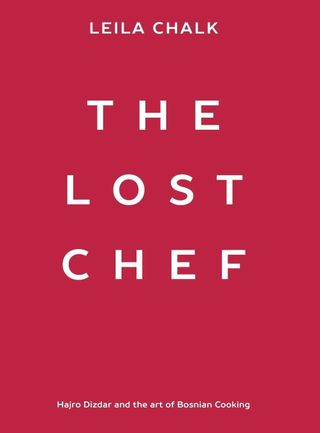
Cover of The Lost Chef: Hajro Dizdar and the art of Bosnian Cooking

The Lost Chef: Hajro Dizdar and the art of Bosnian Cooking

Leila Chalk

Original language: Bosnian · Hardcover · ISBN 978-0648073802

The Lost Chef tells the story of Hajro Dizdar, a cook from Bosnia and Herzegovina whose life was shaped by the wars that broke apart the region in the 1990s. Written by his niece Leila Chalk, the book combines personal biography with a collection of recipes Dizdar was known for among family and friends. The title refers directly to his fate during the conflict, and the biographical sections address what happened to him and to the community around him with a plainness the author describes as honest rather than dramatic.

The recipes draw on Bosnian regional cooking and are presented in a simplified, modern format intended for home kitchens. Chalk emphasizes a connection between ingredients and their origins, following a philosophy she calls paddock to plate. Dishes include regional favorites adapted so that cooks outside the Balkans can prepare them with accessible ingredients and clear steps.

Beyond the kitchen instructions, the book serves as a family document. It records how one person's daily practice of feeding others carried meaning before, during, and after a period of destruction. The food and the biography sit side by side, each giving context to the other.

Plot

This book is Bosnian cooking made modern and simple, with easy to follow instructions, and a paddock to plate philosophy. Learn how to make regional favourites to tantalise your family and guests. It also offers a glimpse into the life of one man, the food he fed his family, and tells, with refreshing honesty, the story of a region blighted by war.

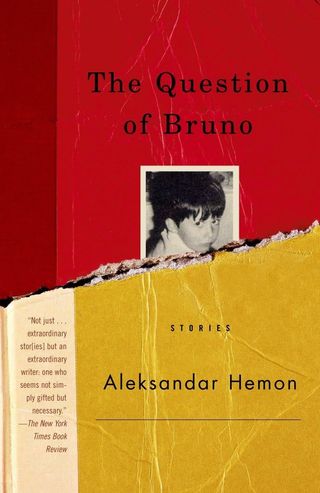
Cover of The Question of Bruno

The Question of Bruno

Aleksandar Hemon

Original language: English · Paperback · ISBN 978-0375727009

The Question of Bruno is a collection of stories and a novella by Aleksandar Hemon, set between Sarajevo and Chicago. The pieces are connected through recurring characters, shared locations, and substories that thread across the book. One story reimagines the assassination of Archduke Franz Ferdinand through a brief, disorienting close-up. Another follows an exiled writer working in a Chicago sandwich shop, adjusting to the small strangeness of a new country. In another, letters sent from wartime Sarajevo describe the practical geometry of moving through a city under siege.

Hemon, who was born in Sarajevo and settled in Chicago, writes in English as a second language, and his prose carries a particular attentiveness to words and their odd behavior in unfamiliar surroundings. The book treats displacement, war, and loss with dark humor and precise physical detail rather than sentiment. Several of the stories appeared individually in publications including Ploughshares, TriQuarterly, Granta, Chicago Review, The New Yorker, and The Baffler. The story titled Islands was selected for Best American Short Stories in 1999.

Across the collection, large historical events press against small private ones. The Bosnian War, early twentieth-century political violence, and the daily texture of immigrant life in the American Midwest all occupy the same pages, observed at close range and without commentary.

Plot

A love affair is experienced in the blink of an eye as the Archduke Ferdinand watches his wife succumb to an assassin's bullet. An exiled writer, working in a sandwich shop in Chicago, adjusts to the absurdities of his life. Love letters from war torn Sarajevo navigate the art of getting from point A to point B without being shot. With a surefooted sense of detail and life-saving humor, Aleksandar Hemon examines the overwhelming events of history and the effect they have on individual lives. These heartrending stories bear the unmistakable mark of an important new international writer.

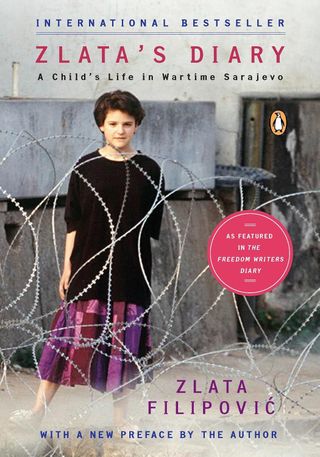
Cover of Zlata's Diary: A Child's Life in Wartime Sarajevo

Zlata's Diary: A Child's Life in Wartime Sarajevo

Zlata Filipovic

Original language: English · Paperback · ISBN 978-0143036876

Zlata Filipovic began keeping a diary in Sarajevo in the early 1990s, when she was eleven years old. The first entries record an ordinary life: piano lessons, school routines, birthday celebrations with friends. Within months, the Bosnian conflict reached the city, and the diary shifted from everyday concerns to something far more urgent.

As the siege of Sarajevo set in, Zlata documented food shortages, the loss of electricity and water, and the deaths of people she knew. She described sheltering from bombardments in a neighbor's cellar and watching her familiar surroundings change under sustained shelling. Her entries are specific and direct, noting particular days, particular losses, and particular fears without dramatic framing. The diary was first published while the conflict was still ongoing and became an international bestseller. It drew comparisons to The Diary of Anne Frank for its combination of a young, clear-eyed voice and the harshness of the circumstances surrounding it.

Filipovic was eventually evacuated from Sarajevo with her family. The published edition includes a new introduction added to later printings. The book sits within a longer tradition of wartime diaries kept by young people, valued for the concrete detail that only a daily written record can preserve.

Plot

It begins as the day-to-day record of the life of a typical eleven-year-old girl, preoccupied by piano lessons and birthday parties. But as war engulfs Sarajevo, Zlata Filipovic becomes a witness to food shortages and the deaths of friends and learns to wait out bombardments in a neighbor’s cellar. Yet throughout she remains courageous and observant. The result is a book that has the power to move and instruct readers a world away.

More from Bosnia and Herzegovina

See the country page for Bosnia and Herzegovina for its map, facts and largest cities, or browse books from other countries.

Links go to Amazon; Hookito doesn’t sell books. Know a book that belongs here, or spotted a mistake? Write to submissions@hookito.com.

Where to next?

Back to the globe
Hookito landscape illustration