Hookito

Barbados · Books

Books from Barbados

11 books from and about Barbados: what each is about, the plot, and a note from Professor Kogi.

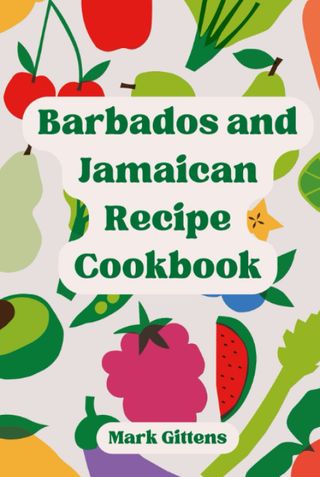
Cover of Barbados and Jamaican Recipe Cookbook

Barbados and Jamaican Recipe Cookbook

Mark Anthony Gittens

Original language: English · Hardcover · ISBN 979-8394099625

Barbados and Jamaican Recipe Cookbook by Mark Anthony Gittens is a collection of recipes drawn from two distinct Caribbean food traditions. The book covers dishes from both islands, including Jamaican jerk chicken and the Bajan national dish of flying fish served with cou-cou, a preparation made from cornmeal and okra. Each recipe is presented with a photograph, a list of ingredients, and step-by-step cooking instructions.

Barbados and Jamaica sit roughly 1,600 kilometres apart in the Caribbean Sea, and their kitchens reflect different histories and influences. Jamaican cooking is widely known for its bold spice blends and slow-cooked marinades, while Barbadian cuisine leans on seafood and locally grown produce. The cookbook brings recipes from both traditions into a single volume, organized so that cooks with varying levels of experience can follow along.

The book is structured as a practical kitchen reference rather than a cultural survey. Gittens presents the recipes with enough detail for readers unfamiliar with Caribbean ingredients to identify what they need and how to prepare it. The focus stays on home cooking, with dishes sized and described for ordinary domestic kitchens.

Plot

This cookbook is the perfect addition to any kitchen, whether you're a seasoned chef or a beginner looking to explore new flavors. Inside, you'll find a wide range of delicious recipes inspired by the vibrant cultures of Barbados and Jamaica. From classic Jamaican jerk chicken to Bajan flying fish and cou-cou, this cookbook offers an array of mouth-watering dishes that will transport your taste buds to the islands. Each recipe is accompanied by a stunning photograph, step-by-step instructions, and a list of ingredients, making it easy to recreate these authentic Caribbean dishes in your own home.
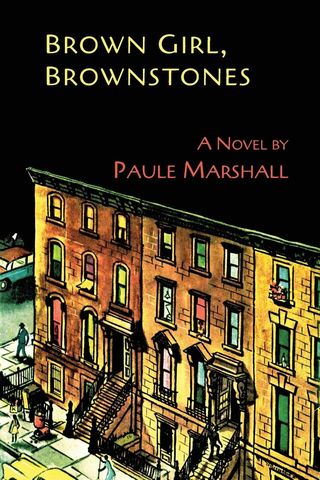
Cover of Brown Girl, Brownstones

Brown Girl, Brownstones

Paule Marshall

Original language: English · Paperback · ISBN 978-1614276135

Paule Marshall's first novel, published in 1959, follows a Barbadian immigrant family living in Brooklyn, New York, during the Great Depression and the years of World War II. At its center is Selina Boyce, a young girl caught between her parents' opposing visions of the future. Her mother is determined to stay in Brooklyn and save enough to buy one of the neighborhood's brownstone row houses. Her father longs to return to Barbados. Selina must find her own direction while contending with poverty and racial discrimination.

The story draws on Marshall's own background in a close-knit Barbadian community in Brooklyn. It portrays tensions between West Indian immigrants and African Americans, and the pressures that arise when cultural identity is shaped by two different worlds at once. Selina and her sister Ina each respond differently to the strains placed on their family, and the novel traces Selina's gradual effort to define herself apart from the expectations surrounding her.

The book received limited attention on its initial release but gained wider recognition after being reprinted in 1981. It is considered one of the earliest American novels to center the interior life of a young Black woman from an immigrant Caribbean household.

Plot

Brown Girl, Brownstones is about Barbadian immigrants in Brooklyn, New York. The book gained widespread recognition after it was reprinted in 1981. The somewhat autobiographical story describes the life of Barbadian immigrants in Brooklyn during the Great Depression and then in World War II. The primary characters include Selina and Ina Boyce and their parents, who suffer from racism and extreme poverty. The book focuses most directly on the growth and development of the character Selina. Paule Marshall's novel was among the first to portray the inner life of a young female African-American, as well as depicting the cross-cultural conflict between West Indians and American blacks. It remains a vibrant, compelling tale of self-discovery.

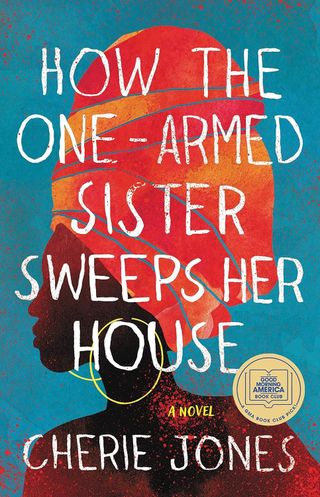
Cover of How the One-Armed Sister Sweeps Her House

How the One-Armed Sister Sweeps Her House

Cherie Jones

Original language: English · Hardcover · ISBN 978-0316536981

In Baxter's Beach, Barbados, Lala grows up hearing her grandmother Wilma tell the story of the one-armed sister, a warning about daughters who ignore their mothers and enter the Baxter's Tunnels. As an adult, Lala lives on the same shore with her husband Adan, a small-time criminal with easy charm. His interrupted burglary of a beachfront mansion begins a chain of events with severe consequences.

Four lives intersect: a gunshot without an intended witness, a newborn found lifeless at the water's edge, a woman divided between two worlds and stalled by grief, and two men whose need and greed lead them underground into the Tunnels. Jones sets these against the distance between the island's tourist image and the lives lived at its edges. The grandmother's tale runs alongside the present-day story, linking childhood warnings to adult harm.

The book moves between the households of the beach and the mansions rented by visitors, holding the word paradise at a distance. Cherie Jones is a Barbadian writer. Barbados itself is built largely of coral limestone, a soft rock that water carves into caves and passages, so tunnels belong to the island's real geology.

Plot

In Baxter’s Beach, Barbados, Lala’s grandmother Wilma tells the story of the one-armed sister. It’s a cautionary tale, about what happens to girls who disobey their mothers and go into the Baxter’s Tunnels. When she’s grown, Lala lives on the beach with her husband, Adan, a petty criminal with endless charisma whose thwarted burglary of one of the beach mansions sets off a chain of events with terrible consequences. A gunshot no one was meant to witness. A new mother whose baby is found lifeless on the beach. A woman torn between two worlds and incapacitated by grief. And two men driven into the Tunnels by desperation and greed who attempt a crime that will risk their freedom – and their lives.

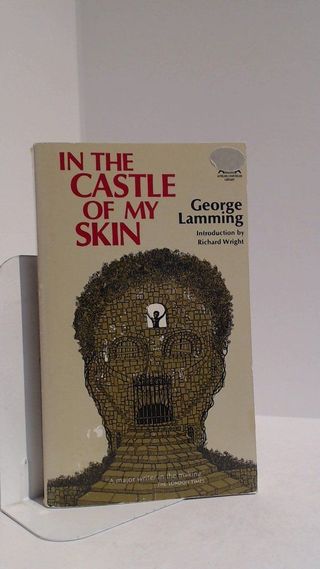
Cover of In the Castle of My Skin

In the Castle of My Skin

George Lamming

Original language: English · Paperback · ISBN 978-0472094684

In the Castle of My Skin is an autobiographical novel by George Lamming, set in a small village in Barbados during the 1930s and 1940s. The story follows a boy growing up in a colonial society shaped by British rule, where land ownership, class, and race define daily life. Lamming draws on his own childhood to describe the rhythms of a community where neighbors share tight bonds, children learn to read the unspoken codes of adult life, and older generations hold to customs that younger ones begin to question.

The novel unfolds against a period of social unrest in Barbados, including labor strikes and riots that pushed the island toward political change. Through the boy's widening awareness, the book traces how colonial structures affect individuals at every level, from schoolyard hierarchies to the arrangement of land and housing. As the village itself begins to change, residents face displacement and uncertainty about what will replace the old order.

Lamming writes in a layered style that moves between the boy's personal observations and the voices of villagers, teachers, and landlords. The narrative shifts between close interior moments and broader communal scenes, giving the village a collective presence alongside the central character.

Plot

"Two worlds collide in this lyrical autobiographical novel that evokes the coming-of-age of a Barbadian boy in his dying primitive culture where the price of 'progress' is pain and alienation."

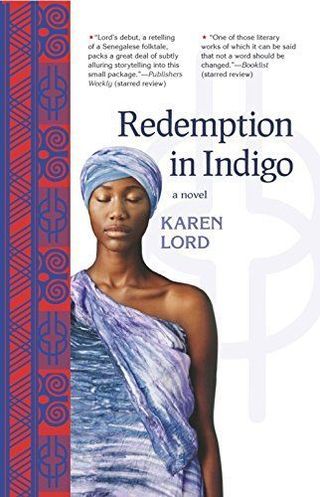
Cover of Redemption in Indigo

Redemption in Indigo

Karen Lord

Original language: English · Paperback · ISBN 978-1931520669

Redemption in Indigo by Karen Lord draws on a Senegalese folk tale and reshapes it into a story set in a world of its own. Paama, the central character, has left her foolish, gluttonous husband after he followed her to her parents' village of Makende and caused public embarrassment through theft and the killing of livestock. Her departure sets a larger story in motion when she comes to the attention of the djombi, powerful undying beings who exist beyond ordinary human life.

The djombi give Paama the Chaos Stick, an object that grants influence over the hidden forces shaping events in the world. This gift draws conflict: one djombi, marked by indigo-colored skin and a deep sense of grievance, considers the power rightfully his. The tension between Paama and this figure drives the story forward, raising questions about how power should be held and what it costs to wield it.

Lord is a Barbadian author, and the novel blends Caribbean literary voice with West African source material. The book's narrator addresses the audience directly at times, giving the prose the rhythm and awareness of oral storytelling tradition rather than a conventional novel structure.

Plot

Paama’s husband is a fool and a glutton. Bad enough that he followed her to her parent's home in the village of Makende, now he’s disgraced himself by murdering livestock and stealing corn. When Paama leaves him for good, she attracts the attention of the undying ones—the djombi—who present her with a gift: the Chaos Stick, which allows her to manipulate the subtle forces of the world. Unfortunately, a wrathful djombi with indigo skin believes this power should be his and his alone.

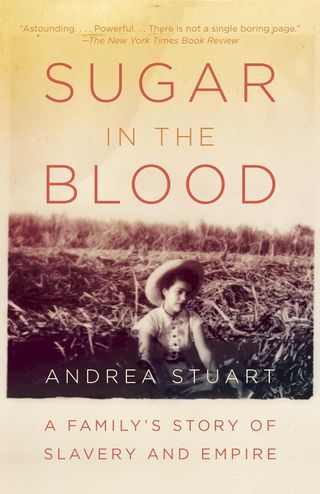
Cover of Sugar in the Blood

Sugar in the Blood

Andrea Stuart

Original language: English · Paperback · ISBN 978-0307474544

In the late 1630s, a young Englishman named George Ashby sailed to Barbados hoping for a better life. He became a sugar plantation owner largely by accident, but his timing placed him at the start of a transformation that would reshape the Caribbean and the wider Atlantic world. Andrea Stuart, a descendant of Ashby on her maternal side, traces her family line from that arrival through several centuries to the present day, using genealogy as a framework for a broader history of sugar, colonial settlement, and slavery in the Americas.

Stuart's account follows the intertwined fates of planters and enslaved workers whose lives were bound together by the economics of sugar cane. As European demand for sugar grew, Barbados and neighboring islands became sites of forced labor on an enormous scale. The book examines how wealth generated by plantations shaped family identity, social hierarchy, and financial standing across generations. Stuart also authored The Rose of Martinique, an earlier work set in the colonial Caribbean.

By anchoring the narrative in one family's documented past, Stuart connects large historical forces to specific people and places. The book moves between Barbados, England, and the broader Caribbean, mapping how migration and the sugar trade left marks on both landscape and lineage.

Plot

In the late 1630s, lured by the promise of the New World, Andrea Stuart’s earliest known maternal ancestor, George Ashby, set sail from England to settle in Barbados. He fell into the life of a sugar plantation owner by mere chance, but by the time he harvested his first crop, a revolution was fully under way: the farming of sugar cane, and the swiftly increasing demands for sugar worldwide, would not only lift George Ashby from abject poverty and shape the lives of his descendants, but it would also bind together ambitious white entrepreneurs and enslaved black workers in a strangling embrace. Stuart uses her own family story—from the seventeenth century through the present—as the pivot for this epic tale of migration, settlement, survival, slavery and the making of the Americas.

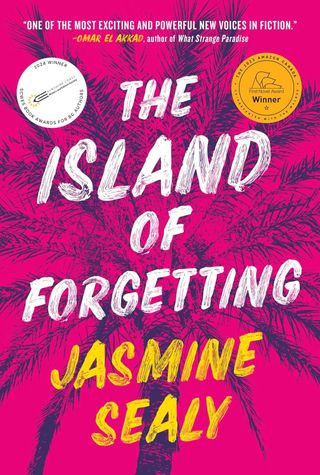
Cover of The Island of Forgetting

The Island of Forgetting

Jasmine Sealy

Original language: English · Paperback · ISBN 978-1443465212

The Island of Forgetting is a novel by Jasmine Sealy that opens in Barbados in 1962. Iapetus wanders the island alone, his mind broken after he saw his father killed by his mother and his older brother, Cronus. Before he is lost completely, Iapetus becomes a father himself, though the child cannot hold him back from what his family has hidden.

Seventeen years later, his son Atlas is growing up in the household of his uncle Cronus, knowing little about how his father's life ended. Atlas is reserved, while his cousin Z draws attention easily, and the house gives shelter without affection. The central tension is a choice: leave the island for a different life, or stay loyal to the uncle who raised him.

The names come loosely from Greek mythology, since Atlas, Cronus and Iapetus were Titans in those old stories, reset here inside one Barbadian family across generations. Sealy uses that frame to follow how deep love, sometimes tragic, and secrets kept from the young are passed from one generation to the next on a small island.

Plot

Barbados, 1962. Lost soul Iapetus roams the island, scared and alone, driven mad after witnessing his father’s death at the hands of his mother and his older brother, Cronus. Just before Iapetus is lost forever, he has a son, but the baby is not enough to save him from himself—or his family’s secrets. Seventeen years later, Iapetus’s son, the stoic Atlas, lives in a loveless house, under the care of his uncle, Cronus, and in the shadow of his charismatic cousin Z. Knowing little about the tragic circumstances of his father’s life, Atlas must choose between his desire to flee the island and his loyalty to the uncle who raised him.

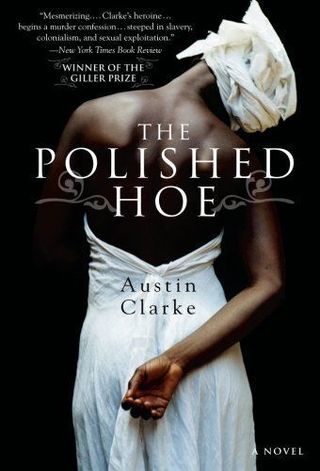
Cover of The Polished Hoe

The Polished Hoe

Austin Clarke

Original language: English · Paperback · ISBN 978-0060557621

The Polished Hoe by Austin Clarke takes place over a single night on the fictional island of Bimshire, a name the novel uses for Barbados. Mary-Mathilda, a prominent and respected woman on the island, summons the local police to her home to confess to a crime. What follows is a long, winding account told largely through her own voice as she speaks through the dark hours until morning.

Mary-Mathilda's confession stretches far beyond the immediate event. Her story reaches back through decades of life on a sugar plantation, touching on the power held by plantation owners, the position of women in a colonial society, and the layers of silence that accumulate around violence and exploitation. The novel draws on the history of slavery and its aftermath in the Caribbean, grounding these large subjects in the specific geography and social texture of a small island community.

Clarke structures the book around the long conversation between Mary-Mathilda and a police sergeant who has known her for years. Their exchange moves between memory and the present, assembling a picture of the island's past through personal experience rather than distant summary. The narrative unfolds at a deliberate pace, shaped by the rhythms of spoken Caribbean English.

Plot

When Mary-Mathilda, one of the most respected women on the island of Bimshire (also known as Barbados) calls the police to confess to a crime, the result is a shattering all-night vigil that brings together elements of the island's African past and the tragic legacy of colonialism in one epic sweep.

Cover of The Price of Freedom

The Price of Freedom

Donna Every

Original language: English · Paperback · ISBN 978-1494204945

In 1670, a group of settlers from Speightstown in Barbados sailed to Carolina and founded Charles Town. Donna Every's novel picks up the story twenty-six years later, when Richard Fairfax, the son of one of those original adventurers, travels back to Barbados to visit his uncle's sugar plantation. The island is then at the height of its sugar wealth, and the planter class lives in extravagance built on the labor of enslaved people.

At the center of the story is Deborah, a quadroon house slave, a term used in the colonial Caribbean for a person of one-quarter African ancestry. Deborah wants freedom above anything else, and Richard holds the means to grant it. Their connection is shaped by an imbalance of power that neither can fully escape. The novel frames their situation as a transaction: freedom has a cost, and the question is what each person is prepared to give up or accept.

The setting draws on the real historical link between Barbados and the Carolina colony. Barbadian planters were among the earliest English settlers in what became Charleston, and they brought plantation customs and slave codes with them. Every uses this colonial corridor as the backdrop for a story about captivity, desire, and the cost of autonomy.

Plot

In 1670 a group of Barbadian Adventurers left Speightstown in Barbados and sailed to Carolina where they established Charles Town. Twenty-six years later, Richard Fairfax, son of one of the original settlers, leaves Carolina to visit his uncle’s sugar plantation in Barbados, at a time when the island is at the peak of its wealth and influence and the planters live like gods, denying themselves nothing. Deborah is a beautiful quadroon house slave, whose hunger for freedom makes her vulnerable to Richard who is captivated by her beauty and spirit. He holds the keys to her freedom, but will she be willing to pay the price? And will Richard be the one to find himself enslaved?

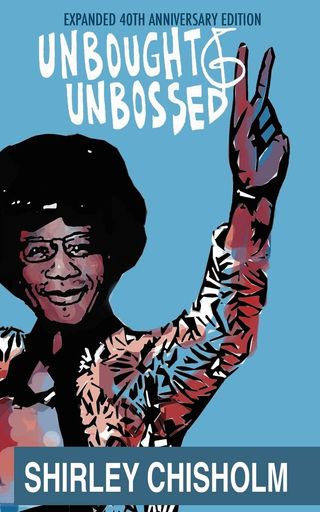
Cover of Unbought and Unbossed

Unbought and Unbossed

Shirley Chisholm

Original language: English · Paperback · ISBN 978-0980059021

Shirley Chisholm grew up in Brooklyn, New York, and in 1968 became the first African-American woman elected to the United States Congress. Unbought and Unbossed is her own account of that path, from her early years to the political fights she won on the way to the House of Representatives. The title comes from her campaign slogan, presenting her as a candidate who could not be bought or directed by party machines and special interests.

She represented a Brooklyn district in New York and uses the book to describe how she confronted entrenched political structures, party organizations and established figures who had long decided who could run and win. She writes about giving a public voice to people with little representation in national politics, and about the daily work of an outsider operating inside a large institution.

The book also sets up her later decision to seek the presidency, making her the first woman and the first African-American to campaign for the nomination of a major American party. This expanded edition, edited by Scott Simpson, adds commentary from Donna Brazile, Shola Lynch and other contributors who consider how her career shaped later politics.

Plot

Shirley Chisholm shares how she took on an entrenched system, gave a public voice to millions, and sets the stage for her trailblazing bid to be the first woman and first African-American President of the United States. By daring to be herself, Shirley Chisholm shows us how she forever changed the status quo. This expanded edition, edited by Scott Simpson, digs deeper with analysis by experts like Donna Brazile and Shola Lynch exploring Shirley Chisholm’s impact on today and tomorrow’s world.

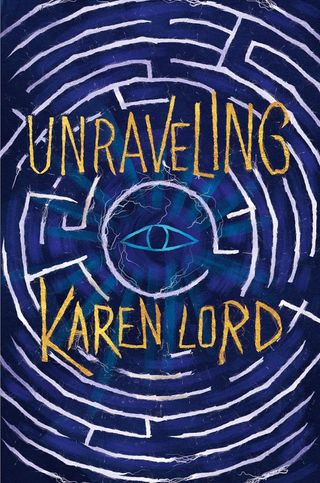
Cover of Unraveling

Unraveling

Karen Lord

Original language: English · Hardcover · ISBN 978-0756415204

Dr. Miranda Ecouvo is a forensic therapist working in a place known simply as the City. She has just helped secure the conviction of a serial killer, but seven unusual murders from her caseload continue to trouble her. The investigation she thought was finished turns out to have loose threads that pull toward something far stranger than criminal psychology.

A near-death experience displaces Miranda from ordinary time and drops her into a realm of labyrinths and spirits. There she meets two brothers, Chance and the Trickster, figures whose interest in the murders she investigated is not professional or legal but otherworldly. The story moves between forensic detail and mythic territory, drawing on Caribbean storytelling traditions where trickster figures and spirit worlds sit close to everyday life.

Karen Lord is a Barbadian author whose previous work has been recognized with awards in speculative fiction. Unraveling is a standalone fantasy novel that combines crime narrative structure with elements of myth and memory. The setting shifts between a grounded urban world and a spiritual landscape governed by its own logic, and the central question is what connects a set of seemingly ordinary crimes to forces operating outside human time.

Plot

Dr. Miranda Ecouvo, forensic therapist of the City, just helped put a serial killer behind bars. But she soon discovers that her investigation into seven unusual murders is not yet complete. A near-death experience throws her out of time and into a realm of labyrinths and spirits. There, she encounters brothers Chance and the Trickster, who have an otherworldly interest in the seemingly mundane crimes from her files.

More from Barbados

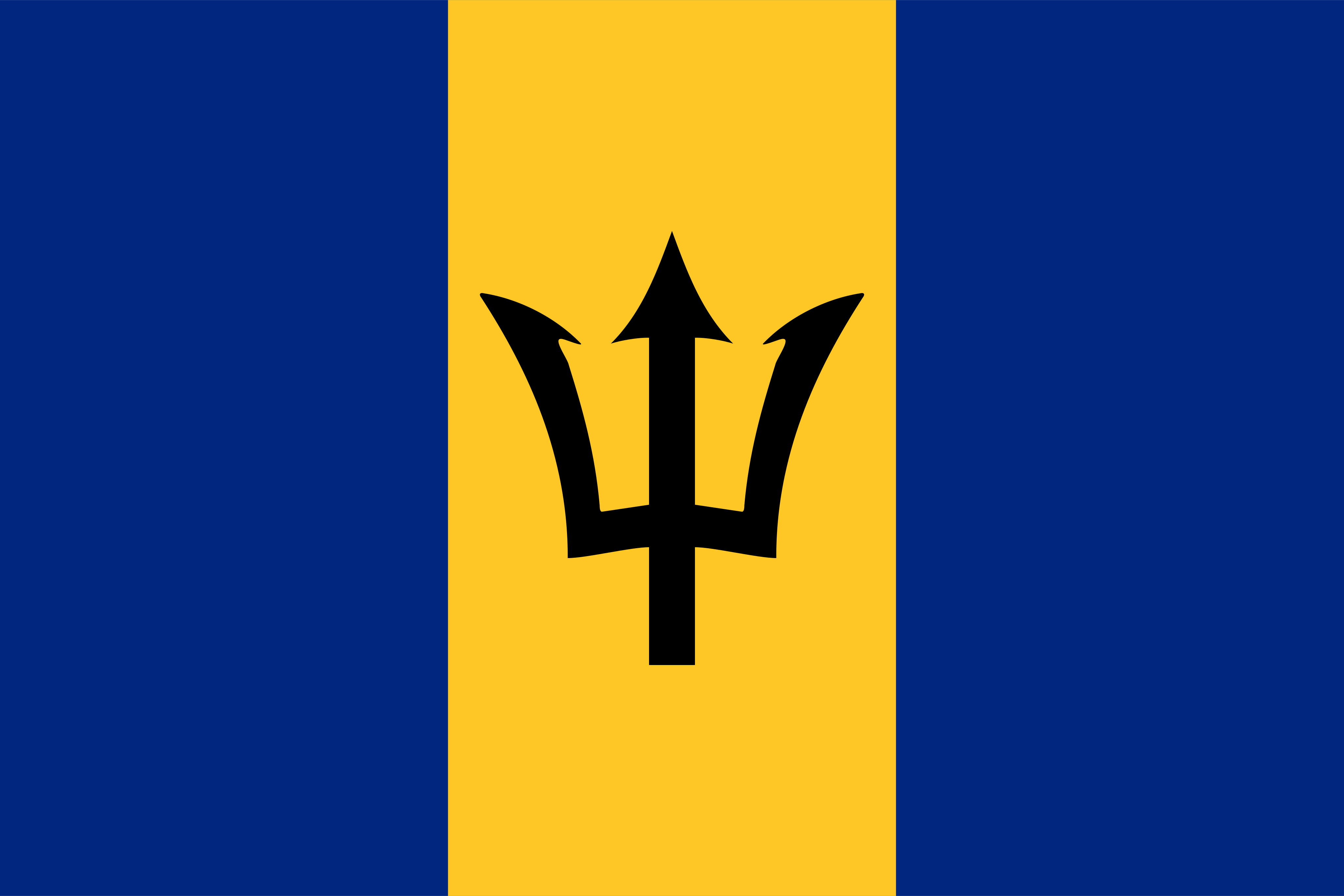
See the country page for Barbados for its map, facts and largest cities, or browse books from other countries.

Links go to Amazon; Hookito doesn’t sell books. Know a book that belongs here, or spotted a mistake? Write to submissions@hookito.com.

Where to next?

Back to the globe
Hookito landscape illustration