Hookito

Bangladesh · Books

Books from Bangladesh
8 books from and about Bangladesh: what each is about, the plot, and a note from Professor Kogi.

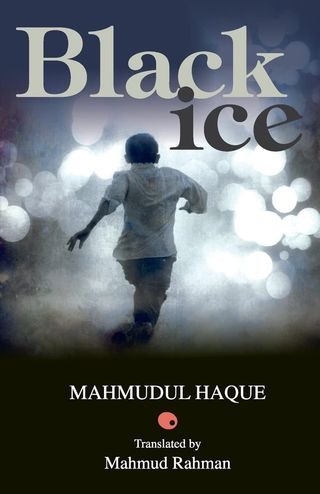
Cover of Black Ice

Black Ice

Mahmudul Haque

Original language: Bengali · Paperback · ISBN 978-9350292174

Abdul Khaleq is a teacher at a rural college on the verge of closing in newly independent Bangladesh. When a writer friend encourages him to set down memories of his childhood, Abdul finds himself pulled back to the suburbs of Calcutta, to a time before Partition reshaped the subcontinent. He recalls a girl who spoke to fish and birds, the first person he loved, and the steady flow of visitors who arrived at his family's door carrying need, ill will, or quiet generosity. Those early memories eventually reach the period when Hindu-Muslim tensions in undivided Bengal cut through his childhood world.

His wife Rekha has little patience for his backward gaze. She is frustrated by what she sees as his passivity and emotional distance. At the urging of the village physician Doctor Narhari, the couple takes a boat ride that becomes an occasion to face the fractures in their marriage and to trace how Abdul's sense of dislocation took root.

First published in 1977, Black Ice is Mahmudul Haque's novel about the quiet, persistent damage that Partition left on those who inherited its losses. The story moves between two settings, postwar Bangladesh and prewar Calcutta, linking personal memory with historical rupture across a single life.

Plot

Abdul Khaleq teaches at a rural college nearing collapse in a newly independent Bangladesh. When a writer friend asks him to chronicle his childhood, Abdul retreats to an enchanting world in the suburbs of Calcutta. He remembers the girl who spoke to fish and birds, the girl he first loved. He also recalls the stream of visitors who came to his parents' door in those days, some bearing want, some malice, and others, generosity and wisdom. He plummets into despondency when memories return him to a time when Hindu-Muslim tensions in undivided Bengal eclipsed his innocence. Abdul's nostalgia enrages his wife Rekha who resents his lack of ambition and aloofness. Prodded by the village physician Doctor Narhari, the couple embarks on a boat ride that forces them to confront their discord and desires and plumb the roots of Abdul's alienation.
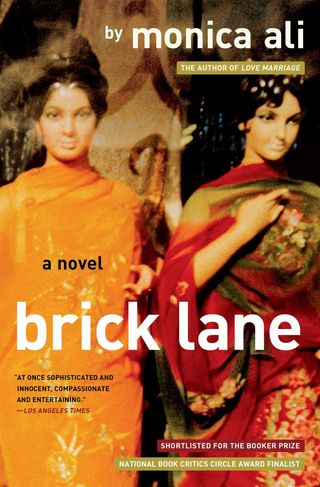
Cover of Brick Lane

Brick Lane

Monica Ali

Original language: English · Paperback · ISBN 978-0743243315

Nazneen arrives in London after an arranged marriage to Chanu, a man twenty years her senior. She has left her village in Bangladesh, and her new surroundings present constant puzzles, from crossing busy roads to reading the social codes of her housing estate. Her neighbor Mrs. Islam is a forceful presence, and Chanu, full of opinions, grows disappointed with his prospects in England. Nazneen raises their daughters and tends the household, taught by upbringing and faith to accept what comes.

Set across the 1980s and 1990s, the novel follows Nazneen as she discovers that the life handed to her is not the only one available. She begins a relationship with a younger man involved in local politics, and the pull between desire and duty unsettles her long discipline. Around her, Brick Lane in East London works as its own small world of work, religion, and unmet expectations.

Monica Ali's first novel was published in 2003. The story reaches back to Bangladesh through letters Nazneen exchanges with her sister Hasina, whose own life follows a very different course, so both countries remain present in the book from beginning to end.

Plot

After an arranged marriage to Chanu, a man twenty years older, Nazneen is taken to London, leaving her home and heart in the Bangladeshi village where she was born. Her new world is full of mysteries. How can she cross the road without being hit by a car (an operation akin to dodging raindrops in the monsoon)? What is the secret of her bullying neighbor Mrs. Islam? What is a Hell's Angel? And how must she comfort the naïve and disillusioned Chanu? As a good Muslim girl, Nazneen struggles to not question why things happen. She submits, as she must, to Fate and devotes herself to her husband and daughters. Yet to her amazement, she begins an affair with a handsome young radical, and her erotic awakening throws her old certainties into chaos.

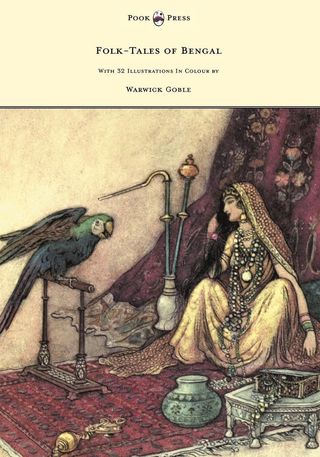
Cover of Folk-Tales of Bengal

Folk-Tales of Bengal

Behari Day

Original language: Bengali · Hardcover · ISBN 978-1447449416

Folk-Tales of Bengal is a collection of twenty-two traditional stories gathered by Lal Behari Day (1824-1892), a Bengali journalist, folklorist, and Christian missionary. Day was born in Bengal and spent years absorbing the oral traditions of the region before setting them down in written form. The stories cover a wide range of subjects familiar to Bengali storytelling: encounters with spirits, transformations, clever animals, moral puzzles, and the doings of figures such as Brahmans and jackals. Titles like The Evil-Eye of Sani, A Ghostly Wife, The Origin of Rubies, and The Match-Making Jackal suggest the variety of tone and subject matter across the collection.

The edition referenced here includes thirty-two colour illustrations by Warwick Goble (1862-1943), a British illustrator known for his work on books with Japanese and Indian themes. Goble's images accompany the tales with detailed compositions that reflect the settings and characters Day described. The pairing of a Bengali folklorist's gathered narratives with an English illustrator's visual interpretations places this volume at a particular intersection of colonial-era cultural exchange, where oral traditions from Bengal were recorded and published for English-reading audiences.

Plot

The narratives were collated by the Reverend Lal Behari Day (1824 - 1892); a Bengali Indian journalist, who converted to Christianity, and became a Christian missionary himself. He was a well-respected folklorist, and immersed himself in Bengali culture. The twenty-two stories of 'Folk Tales of Bengal' include: 'The Indignant Brahman', 'The Evil-Eye of Sani', 'The Story of Swet-Basanta', 'A Ghostly Wife', 'The Origin of Rubies', 'The Match-Making Jackal', and many more. Warwick Goble (1862 - 1943) was an illustrator of children's books, who specialised in Japanese and Indian themes.

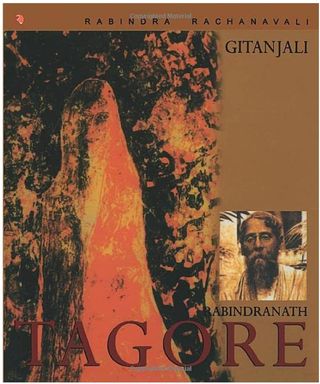
Cover of Gitanjali

Gitanjali

Rabindranath Tagore

Original language: Bengali · Paperback · ISBN 978-8171676767

Gitanjali is a collection of 103 poems in English, translated by Rabindranath Tagore from his own Bengali writings. The title combines two Bengali words: git, meaning song, and anjali, meaning offering. Fifty-three of the poems come from the original Bengali Gitanjali, while the remaining fifty are drawn from eight other poetry collections and a drama called Achalayatan. Tagore produced the English versions himself, making this an unusual case of a poet serving as his own translator across two very different languages.

The poems carry a strong devotional tone, addressing themes of spiritual longing, the natural world, and an attentive wonder at the scale and variety of life. Rather than following a single narrative, the collection moves through moods of reverence, questioning, and quiet observation. Tagore writes about the relationship between the individual and something larger, whether understood as god, the universe, or the ordinary mystery of being alive. The language is plain and direct, closer to prose rhythm than to formal verse, which gives the poems an openness that has kept them accessible to readers in many countries and traditions.

Plot

Translated by Tagore himself, the book contains fifty-three translated poems from the original Bengali version of Gitanjali: Rabindranath Tagore, as well as fifty other poems from eight of his other works on poetry and a drama titled Achalayatan. An integration of two words, 'Git' and 'Anjali,' meaning song and offering respectively, the literal meaning of the word is 'offering of songs.' and because of the strong devotional tone and subliminal spiritual incitation, the book can be said to have devotion to god as its theme. It highlights the poet's intense response to the magnificence of the universe or rather an affirmation of life with all its abundance, mystery and diversity.

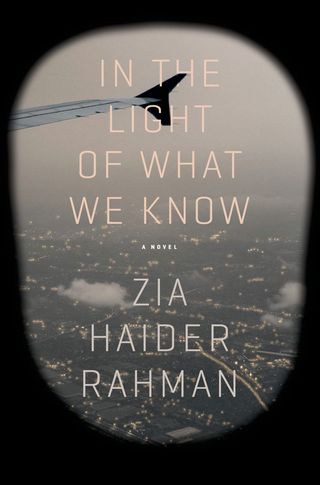
Cover of In the Light of What We Know

In the Light of What We Know

Zia Haider Rahman

Original language: English · Hardcover · ISBN 978-0374175627

In September 2008, an investment banker in West London opens his door to find a figure he has not seen in years: a former college friend, a gifted mathematician, standing on his doorstep with a backpack and no clear explanation for where he has been. The banker's own life is fracturing, his career faltering amid the financial crisis and his marriage coming apart. The returning friend carries a confession, and the two men begin circling each other's pasts in conversations that stretch across months and continents.

The novel moves between Kabul, London, New York, Islamabad, Oxford, Princeton, and Sylhet, following two lives shaped by class, culture, and migration. One man comes from privilege; the other has spent years trying to escape the constraints of his origins. Their friendship, built during university, is tested by questions of loyalty, ambition, and belonging. Zia Haider Rahman threads mathematics, finance, and the politics of the Afghan war through a story that is essentially about two people trying to understand what they owe each other.

The narrator sets out to reconstruct his friend's story but gradually confronts the limits of his own knowledge. The book is structured around layered recollections and digressions, giving it the texture of a long, unfinished conversation rather than a straightforward plot.

Plot

One September morning in 2008, an investment banker approaching forty, his career in collapse and his marriage unraveling, receives a surprise visitor at his West London townhouse. In the disheveled figure of a South Asian male carrying a backpack, the banker recognizes a long-lost friend, a mathematics prodigy who disappeared years earlier under mysterious circumstances. The friend has resurfaced to make a confession of unsettling power. In the Light of What We Know takes us on a journey of exhilarating scope--from Kabul to London, New York, Islamabad, Oxford, and Princeton--and explores the great questions of love, belonging, science, and war. It is an age-old story: the friendship of two men and the betrayal of one by the other. The visitor, a man desperate to climb clear of his wrong beginnings, seeks atonement; and the narrator sets out to tell his friend's story but finds himself at the limits of what he can know about the world--and, ultimately, himself.

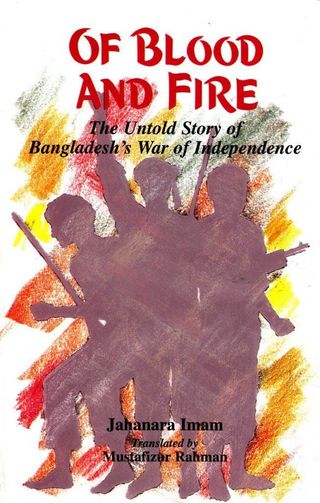
Cover of Of Blood and Fire

Of Blood and Fire

Mustafizur Rahman

Original language: Bengali · Hardcover · ISBN 978-9848815267

Of Blood and Fire is a diary-form account of the 1971 war of independence in what was then East Pakistan, now Bangladesh. The author, Mustafizur Rahman, recorded events during the months when a military crackdown targeted civilians across the region, prompting an armed resistance movement led in part by students and ordinary citizens. Rahman, along with her husband and son, took part in the struggle, and the book draws on both her direct observations and material gathered from other sources she considered reliable.

Originally written and published in Bengali, this English edition aims to bring the account to readers beyond Bangladesh. The diary structure follows events as they unfolded rather than reshaping them into a conventional narrative. Mass killings, arson, and looting of unarmed people form the backdrop, while the foreground traces the emergence of organized resistance and the course of the liberation war. Because Rahman was present during some of the episodes she describes, portions of the book carry the specific detail of eyewitness testimony.

The volume sits within a body of personal literature from 1971 that documents the conflict from inside occupied territory. Its scope covers both public events and the daily pressures faced by families caught up in the fighting.

Plot

The year 1971 saw the eastern half of Pakistan (now Bangladesh) rise in revolt against the military regime of the country which had unleashed a reign of terror to crush the people's demand for independence. There were indiscriminate killing, burning, and looting of unarmed civilians. An underground resistance movement spearheaded by students came into being to fight the oppressor. A full-fledged war of liberation ensued. The breathtaking events of 1971 are faithfully recorded in the present volume. It is a first-hand account of the author who along with her son and husband took an active part in the struggle for freedom. She had herself witnessed some of the events. For the rest, she gathered facts from authentic sources. Written in the form of a diary, -the book was originally published in Bengali.

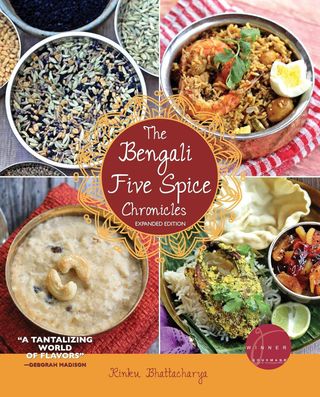
Cover of The Bengali Five Spice Chronicles

The Bengali Five Spice Chronicles

Rinku Bhattacharya

Original language: English · Paperback · ISBN 978-0781814232

The Bengali Five Spice Chronicles is a cookbook by Rinku Bhattacharya focused on the food traditions of Bengal, a cultural region spanning Bangladesh and the Indian state of West Bengal. The book opens with an introduction to Bengali cooking methods, key spices, common ingredients, and kitchen equipment. It includes over 200 recipes organized by category: rice and breads, lentils, fried vegetables and fritters, vegetarian dishes, eggs, fish, chicken and poultry, meat, chutneys and relishes, drinks and snacks, and desserts. The collection balances traditional preparations with contemporary adaptations.

Bengali cuisine places particular emphasis on spice combinations, and the book includes dedicated sections on spice pastes and spice blends. The title itself refers to panch phoron, a mixture of five whole spices used widely in Bengali kitchens. Sidebars throughout the book provide family stories alongside historical and cultural context for individual dishes and ingredients. An expanded edition added over 60 new recipes, a chapter on globally influenced Bengali favorites, and additional photography.

Dining and communal eating hold a central place in Bengali culture, and the book treats food as a point of entry into that broader world. The recipes cover a wide range of skill levels and meal types, from everyday lentil dishes to festive sweets.

Plot

Now expanded with over 60 new recipes and a new photo section, this perennial favorite of Bengali cuisine is more comprehensive than ever! Bengalis have been compared to the French in terms of food-obsessed peoples, as dining and entertaining are such an integral part of the culture. This book begins with a thorough introduction to Bengali culture and cooking, including sections on spices, ingredients, and equipment. Following are recipe chapters (incorporating a balance of traditional and contemporary recipes) on Rice & Breads, Lentils, Fried Vegetables and Fritters, Vegetarian First Courses, Vegetarian Entrees, Eggs, Fish, Chicken & Poultry, Meat Dishes, Chutneys & Relishes, Drinks & Snacks, and Desserts.

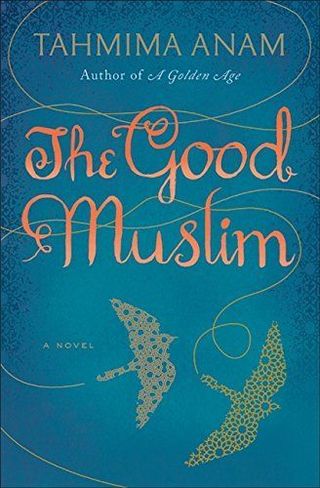
Cover of The Good Muslim

The Good Muslim

Tahmima Anam

Original language: Bengali · Hardcover · ISBN 978-0061478765

The Good Muslim is Tahmima Anam's second novel, set in Bangladesh during a period when Islamic fundamentalism is gaining political ground. At its center are a sister and brother whose relationship fractures under the pressure of diverging beliefs. Both survived the 1971 Liberation War, the conflict that established Bangladesh as an independent nation after its separation from Pakistan. The war left deep marks on each of them, but they have absorbed its consequences in very different ways.

The sister holds on to the secular ideals that shaped the independence movement, while her brother turns toward religious conservatism. Their conflict is personal rather than abstract: it plays out inside a single family, touching questions of loyalty, grief, and identity that have no clean resolution. Anam grounds this tension in everyday domestic life, portraying how political shifts reshape private bonds.

Anam's first novel, A Golden Age, covered the 1971 war itself. The Good Muslim moves the timeline forward, examining what happens to a society and its people in the decades after a liberation struggle. The story is set against the specific geography and politics of Bangladesh, where the memory of war continues to shape public life.

Plot

Set in Bangladesh at a time when Islamic fundamentalism is on the rise, The Good Muslim is an epic story about faith, family, and the long shadow of war. Tahmima Anam, the prize-winning author of A Golden Age, offers a moving portrait of a sister and brother who struggle with the competing loyalties of love and belief as they cope with the lasting ravages of war and confront the deeply intimate roots of religious extremism. Echoing the intensity and humanity of Thrity Umrigar’s The SpaceBetween Us, Abraham Verghese’s Cutting for Stone, and Kiran Desai’s TheInheritance of Loss, Anam’s “accomplished and gripping novel,” in the words of author Pankaj Mishra, “describes not only the tumult of a great historical event but also the small but heroic struggles of individuals living in the shadow of revolution and war.”

More from Bangladesh

See the country page for Bangladesh for its map, facts and largest cities, or browse books from other countries.

Free editions are on Project Gutenberg, matched by title and author. Links go to Amazon; Hookito doesn’t sell books. Know a book that belongs here, or spotted a mistake? Write to submissions@hookito.com.

Where to next?

Back to the globe
Hookito landscape illustration