
Hookito

Burkina Faso · Books

Books from Burkina Faso
3 books from and about Burkina Faso: what each is about, the plot, and a note from Professor Kogi.

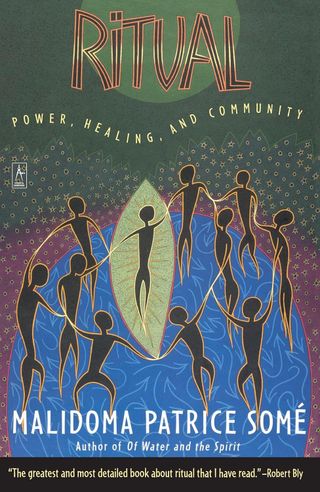
Cover of Ritual: Power, Healing and Community

Ritual: Power, Healing and Community

Malidoma Patrice Some

Original language: English · Paperback · ISBN 978-0140195583

Malidoma Patrice Somé grew up among the Dagara people of Burkina Faso before pursuing Western academic education in Europe and the United States. This unusual path placed him between two ways of understanding the world, and in Ritual: Power, Healing and Community he draws on both. The book examines what ritual means within Dagara life, where it serves practical functions tied to healing and to holding a community together.

Somé describes specific ritual practices and the thinking behind them, then considers what modern societies lose when communal ceremony disappears from everyday life. He treats ritual not as spectacle or superstition but as a structured activity through which people address grief, transition, and belonging. The book connects these practices to broader questions about why communities fracture and what tools exist for repair.

The writing moves between personal narrative rooted in Dagara village experience and broader commentary shaped by Somé's encounters with Western thought. Michael Meade, in his introduction, notes the way the book weaves modern critical reflection with the complexity of tribal ritual knowledge. The result is a compact work grounded in a specific place and tradition while addressing problems that cross cultural borders.

Plot

The stories within these books have the poignancy of new discoveries as well as the unworn imagination of the ancestors. The commentary has the sharp edge of modern thought and the intricacy which results from the intellect being woven through the ritual complexities of tribal life. The purpose of constructing thresholds that bring this world together is to find the powers that can heal the rends in tribal as well as modern communities.? --Michael Meade, from the Introduction
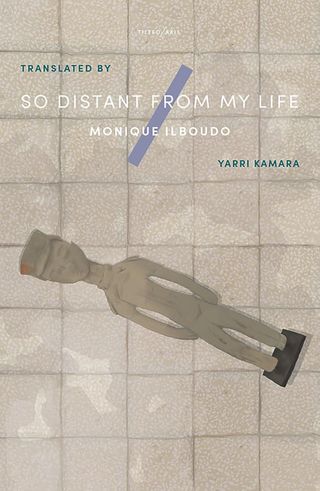
Cover of So Distant From My Life

So Distant From My Life

Monique Ilboudo

Original language: French · Paperback · ISBN 978-1911284802

Jeanphi is a young man living in Ouabany, a fictional city in West Africa. His single driving ambition is to leave. He saves what money he can and sets out on the illegal route north across the Sahara, reaching Morocco before being sent back. The novel follows his growing desperation as he searches for another way out, and the lengths to which that desperation leads him.

In Ouabany, Jeanphi encounters a French widower struggling with bureaucratic obstacles while trying to set up a charitable project in the country. The two men, each blocked by systems they cannot navigate alone, recognize something useful in one another. What begins as a practical arrangement opens a path forward for Jeanphi, but the opportunity carries consequences neither man fully anticipates.

Monique Ilboudo is a Burkinabé author whose work often centers on social questions in and around Burkina Faso. In this novel, she traces the mechanics of irregular migration from the perspective of someone who has already failed at it once and is willing to try again on different terms. The story sets personal ambition against the rigid structures of borders, paperwork, and unequal access to movement.

Plot

Jeanphi, a young man from the fictional West African city Ouabany, has one obsession that will determine the fate of his life – migration. He scrapes together money to take the illegal route across the Sahara, making it as far as Morocco before being repatriated. Increasingly desperate, Jeanphi meets an elegant French widower who for his part is despairing at the insurmountable bureaucratic hurdles for his charitable endeavour in Jeanphi’s country. A window opens to opportunity – but it will also bring tragedy.

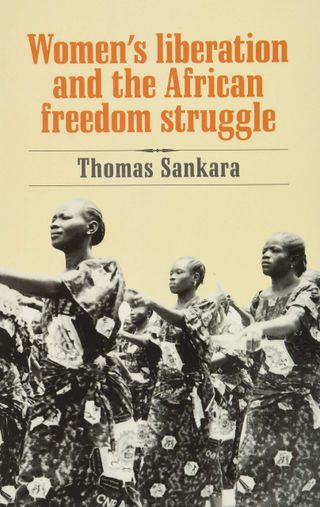
Cover of Women's Liberation and the African Freedom

Women's Liberation and the African Freedom

Thomas Sankara

Original language: English · Paperback · ISBN 978-0873489881

Thomas Sankara led the revolution in Burkina Faso from 1983 to 1987, during which a popular government based on workers and peasants pursued broad social reforms. This short book gathers his statements on the connection between women's liberation and wider political transformation in the West African country. Sankara argued that no society could achieve genuine revolution while women remained excluded from public life and economic participation.

Burkina Faso, known before 1984 as Upper Volta, faced deep poverty, widespread illiteracy, and dependence on outside economies. The revolutionary government tried to change these conditions through land redistribution, literacy work, and mass vaccination campaigns. Sankara placed the position of women at the center of that program, treating inequality between women and men as both a cause and a result of the country's structural problems.

The volume runs to 69 pages and was published by Pathfinder Press, with a preface by Mary-Alice Waters and an introduction by Michel Prairie. This second edition, issued in 2007, includes a map, photographs, notes, and an index. As a primary document, it records how one head of state framed the rights of women inside a broader plan for social change in 1980s West Africa.

Plot

“There is no true social revolution without the liberation of women,” explains the leader of the 1983-87 revolution in Burkina Faso. Workers and peasants in that West African country established a popular revolutionary government and began to combat the hunger, illiteracy, and economic backwardness imposed by imperialist domination.

More from Burkina Faso

See the country page for Burkina Faso for its map, facts and largest cities, or browse books from other countries.

Links go to Amazon; Hookito doesn’t sell books. Know a book that belongs here, or spotted a mistake? Write to submissions@hookito.com.

Where to next?

Back to the globe
Hookito landscape illustration