Hookito

Bulgaria · Books

Books from Bulgaria

6 books from and about Bulgaria: what each is about, the plot, and a note from Professor Kogi.

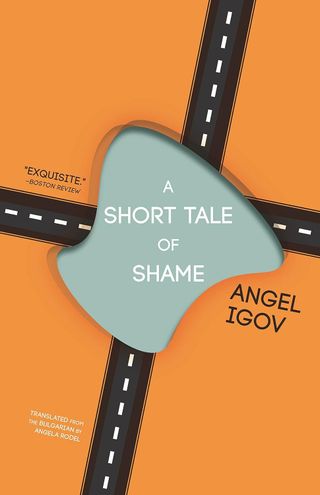
Cover of A Short Tale of Shame

A Short Tale of Shame

Angel Igov

Original language: Bulgarian · Paperback · ISBN 978-1934824764

Three university friends, Maya, Sirma, and Spartacus, pause their studies for a semester and set out to hitchhike to the sea. On the road they are picked up by Boril Krustev, a middle-aged widower and former rock musician driving without a destination, trying to stay ahead of his grief. The chance meeting turns complicated when the travellers realise they are linked by more than the trip. That link runs through Boril's daughter, whose actions damaged each of them.

Shame and guilt sit at the centre of the book, shaping how each character speaks, withholds, and eventually explains. Igov keeps the cast small and the setting contained, letting the shared car and the route to the coast force proximity between people who have reasons to avoid one another. Old friendships are tested as much as the new acquaintance.

The novel was a co-winner of the Contemporary Bulgarian Writers Contest. Written by Angel Igov, it places a story about personal responsibility in a Bulgarian landscape of roads, lifts from strangers, and a coastline that works as destination and as reason to keep moving.

Plot

After deciding to take a semester off their studies to think about future plans, long-time friends Maya, Sirma, and Spartacus decide to hitchhike to the sea. Boril Krustev, former rock star and middle-aged widower who is driving aimlessly to outrun his grief, picks them up and accompanies them on their journey. It doesn't take them long to figure out they're connected to each other by more than their need to travel—specifically through Boril's daughter, whose actions damaged each of the characters in this novel.
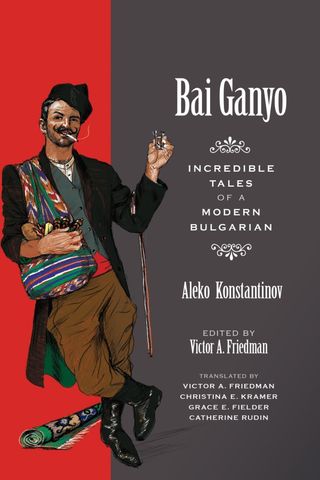
Cover of Bai Ganyo: Incredible Tales of a Modern Bulgarian

Bai Ganyo: Incredible Tales of a Modern Bulgarian

Aleko Konstantinov

Original language: Bulgarian · Paperback · ISBN 978-0299236946

Aleko Konstantinov's 1895 novel follows Ganyo Balkanski, a Bulgarian rose-oil salesman who travels across Europe. Bai is a Bulgarian title of familiar respect. Unkempt and shameless, Ganyo blusters through the drawing rooms and hotels of Vienna, Dresden, and St. Petersburg, always on guard against pickpockets and always looking for a free meal. His misadventures in polished European society form a series of comic episodes that expose his rough manners and the pretensions of the circles he passes through.

The satire shifts tone when Ganyo returns to Bulgaria. At home he turns from a bumbling traveler into a local operator who bullies, bribes, and rigs elections. Bulgaria was then a young state, having emerged in stages from Ottoman rule with backing from Czarist Russia. Konstantinov uses the homecoming to examine the distance between the country's European aspirations and its unsettled politics.

The book has been translated into most European languages. The English edition by Victor Friedman and fellow translators adds an introduction, glossary, and notes covering Bulgarian terms and historical background. Konstantinov built the tales as linked episodes rather than one continuous plot, so each chapter carries its own comic situation and cast of bystanders.

Plot

A comic classic of world literature, Aleko Konstantinov’s 1895 novel Bai Ganyo follows the misadventures of rose-oil salesman Ganyo Balkanski (“Bai” is a Bulgarian title of intimate respect) as he travels in Europe. Unkempt but endearing, Bai Ganyo blusters his way through refined society in Vienna, Dresden, and St. Petersburg with an eye peeled for pickpockets and a free lunch. Konstantinov’s satire turns darker when Bai Ganyo returns home—bullying, bribing, and rigging elections in Bulgaria, a new country that had recently emerged piecemeal from the Ottoman Empire with the help of Czarist Russia.

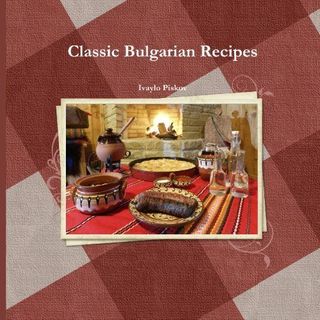
Cover of Classic Bulgarian Recipes

Classic Bulgarian Recipes

Ivaylo Piskov

Original language: Bulgarian · Paperback · ISBN 978-1451504729

Classic Bulgarian Recipes by Ivaylo Piskov is a cookbook focused on traditional dishes from Bulgaria. The book presents recipes that reflect a cuisine shaped by several overlapping culinary traditions, including Slavonic, Greek, Turkish, and broader European influences. Bulgaria's geographic position in southeastern Europe, bordered by the Black Sea to the east and mountain ranges across much of its interior, has long placed it at a crossroads of food cultures.

Many of the recipes collected here have been passed through families over generations, moving from grandparents to children as a form of household knowledge. The book covers a range of meals drawn from this domestic tradition. Bulgarian cooking often makes use of ingredients common across the Balkans, such as yogurt, fresh vegetables, white cheese, and slow-cooked meats, though the specific combinations and preparations can differ noticeably from neighboring countries.

The collection is designed for home cooks who want to reproduce Bulgarian dishes outside the country. By gathering recipes that might otherwise exist only in family memory or local practice, the book attempts to make a regional kitchen accessible to an international audience. It covers multiple courses and meal types rather than concentrating on a single category of food.

Plot

You will enjoy preparing and tasting every one of the meals! Bulgarian cuisine is one of its kind. Gourmets all over the world have been attracted for ages by the culinary temptations that Bulgaria offers. The traditional Bulgarian cuisine is a mixture of classic Bulgarian meals with dishes from the Slavonic, Greek, Turkish and other European cuisines. Cooking traditions in Bulgaria are centuries old. They have been kept alive by passing the unique Bulgarian recipes from grandparents and parents to children and grandchildren. The very same recipes are now available to you on the pages of this book. Bon Appétit!

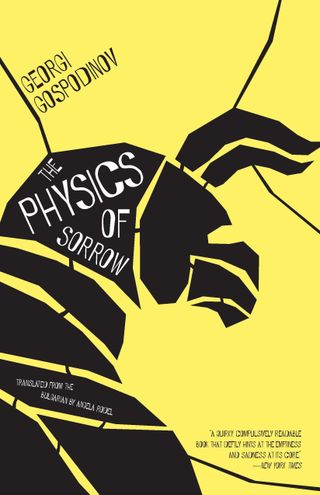
Cover of The Physics of Sorrow

The Physics of Sorrow

Georgi Gospodinov

Original language: Bulgarian · Paperback · ISBN 978-1940953090

Georgi Gospodinov's The Physics of Sorrow takes the Greek myth of the Minotaur as its organizing image and turns it toward something personal. The narrator assembles a labyrinth built not from stone but from family stories, moving between generations and viewpoints to trace the mindset and everyday trappings of Eastern Europeans. The Minotaur appears less as a monster than as a figure of isolation, sorrowful and misunderstood.

The book moves between eras and speakers by association rather than chronology, so a reader follows side passages instead of one straight corridor. Some sections carry considerable emotional weight, including an account of the narrator's grandfather being accidentally left behind at a mill. Others are openly comic, such as an extended complaint about the awfulness of asking someone how they are.

Gospodinov writes in Bulgarian and is among the most widely translated contemporary authors from Bulgaria, a country on the western shore of the Black Sea whose twentieth century included decades of communist rule. The novel's interest in ordinary Eastern European objects, habits and phrases sits against that background. Its labyrinth structure gives these scattered fragments a shape that can be entered from many directions.

Plot

Using the myth of the Minotaur as its organizing image, the narrator of Gospodinov's long-awaited novel constructs a labyrinth of stories about his family, jumping from era to era and viewpoint to viewpoint, exploring the mindset and trappings of Eastern Europeans. Incredibly moving—such as with the story of his grandfather accidentally being left behind at a mill—and extraordinarily funny—see the section on the awfulness of the question "how are you?"

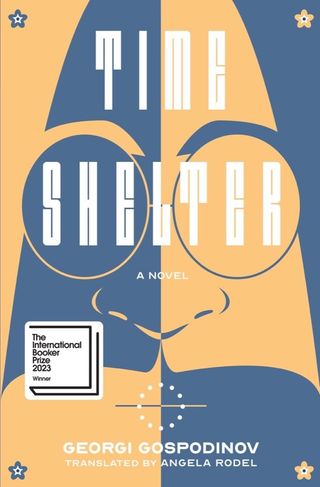
Cover of Time Shelter

Time Shelter

Georgi Gospodinov

Original language: Bulgarian · Hardcover · ISBN 978-1324090953

Time Shelter, by Bulgarian author Georgi Gospodinov, follows an unnamed narrator who encounters a figure called Gaustine, a man who has withdrawn from the present by surrounding himself with old newspapers, outdated clothing, and the forgotten textures of earlier decades. In an apricot-colored building in Zurich, bordered by forget-me-nots, Gaustine opens what he calls a clinic for the past. Each floor of the building recreates a specific decade in careful detail, designed as a treatment for Alzheimer's patients. By walking through furnished rooms that reproduce the sights and objects of their younger years, patients can recover fragments of memory that the disease has begun to erase.

The clinic's idea soon escapes its medical purpose. As word spreads, the appeal of living inside a reconstructed past grows beyond the patients themselves, and the story shifts toward a broader and darker question: what happens when entire societies begin to prefer a curated version of yesterday over the uncertainties of the present. The novel was translated from Bulgarian by Angela Rodel and won the International Booker Prize in 2023, bringing Gospodinov wide recognition outside Bulgaria.

Plot

At one point they tried to calculate when time began, when exactly the earth had been created,” begins Time Shelter’s enigmatic narrator, who will go unnamed. “In the mid–seventeenth century, the Irish bishop Ussher calculated not only the exact year, but also a starting date: October 22, 4,004 years before Christ.” But for our narrator, time as he knows it begins when he meets Gaustine, a “vagrant in time” who has distanced his life from contemporary reality by reading old news, wearing tattered old clothes, and haunting the lost avenues of the twentieth century. In an apricot-colored building in Zurich, surrounded by curiously planted forget-me-nots, Gaustine has opened the first “clinic for the past,” an institution that offers an inspired treatment for Alzheimer’s sufferers: each floor reproduces a past decade in minute detail, allowing patients to transport themselves back in time to unlock what is left of their fading memories.

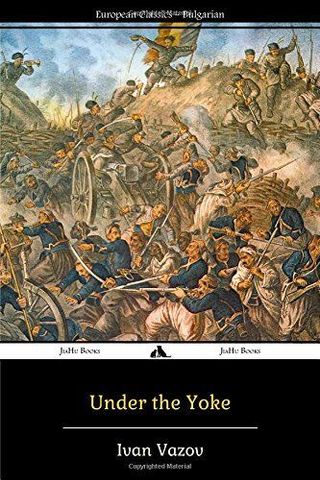
Cover of Under the Yoke

Under the Yoke

Ivan Vazov

Original language: Bulgarian · Paperback · ISBN 978-1784351076

Under the Yoke, published in 1888, is the best-known work of Bulgarian literature. Written by Ivan Vazov, the novel is set during the period of Ottoman rule over Bulgaria and centers on the lead-up to an armed rebellion. The story takes place in the fictional town of Byala Cherkva, a composite drawn from real Bulgarian towns of that era, where daily life runs alongside growing tension between those who support an uprising and those who resist or oppose it.

The central figure is Boicho Ognyanov, a fugitive who has escaped from a prison in Diarbekir and returned to Byala Cherkva to join the rebellion. His arrival reconnects him with old allies and adversaries alike, and he meets the woman who becomes the great attachment of his life. Vazov uses these personal relationships to explore the different reasons people choose to act, to wait, or to betray. Fear, loyalty, love, and political conviction all pull the characters in different directions as events accelerate.

Vazov wrote the novel while living in Odessa, having left Bulgaria after a political upheaval. The book draws on the historical April Uprising of 1876, which preceded Bulgarian independence, and it remains central to how the country remembers that period.

Plot

The plot follows the story of Boicho Ognyanov, who, having escaped from a prison in Diarbekir, returns to the Bulgarian town of Byala Cherkva to take part in the rebellion. There he meets old friends, enemies, and the love of his life. The plot portrays the personal drama of the characters, their emotions, and motives for taking part in or standing against the rebellion, betrayal, and conflict.

More from Bulgaria

See the country page for Bulgaria for its map, facts and largest cities, or browse books from other countries.

Links go to Amazon; Hookito doesn’t sell books. Know a book that belongs here, or spotted a mistake? Write to submissions@hookito.com.

Where to next?

Back to the globe
Hookito landscape illustration