
Hookito

Benin · Books

Books from Benin

5 books from and about Benin: what each is about, the plot, and a note from Professor Kogi.

Cover of Amazons of Black Sparta

Amazons of Black Sparta

Stanley B. Alpern

Original language: English · Paperback · ISBN 978-0814707722

The Kingdom of Dahomey, located in what is now Benin in West Africa, maintained an unusual military force from at least the mid-eighteenth century until its defeat by France in 1892. Its army included thousands of women soldiers, often called Amazons by European observers. Stanley B. Alpern's study traces the origins and development of these troops, who began as palace guards and grew into a professional fighting corps numbering around 6,000 by the 1840s.

Alpern examines the structure of this force in detail. The women served under their own female officers and carried muskets, machetes, and clubs. They had their own flags, insignia, and military bands. The book draws a comparison between Dahomey and ancient Sparta, noting that both societies practiced intense militarism and collective discipline, and that women in both cultures underwent demanding physical training from a young age. But the purposes diverged: Spartan women trained to bear strong sons, while Dahomean women trained to fight on the front lines themselves.

The book covers the social conditions that shaped recruitment, the daily life of the soldiers, and the military campaigns they took part in, including the final conflict with French colonial forces. Dahomey's territory corresponds closely to the modern nation of Benin.

Plot

The only thoroughly documented Amazons in world history are the women warriors of Dahomey, an eighteenth- and nineteenth-century Western African kingdom. Once dubbed a ‘small black Sparta,’ residents of Dahomey shared with the Spartans an intense militarism and sense of collectivism. Moreover, the women of both kingdoms prided themselves on bodies hardened from childhood by rigorous physical exercise. But Spartan women kept in shape to breed male warriors, Dahomean Amazons to kill them. Originally palace guards, the Amazons had evolved by the 1760s into professional troops armed mainly with muskets, machetes and clubs. By the 1840s their numbers had grown to 6,000. The Amazons served under female officers and had their own bands, flags and insignia: they outdrilled, outshot and outfought men, became frontline troops and fought tenaciously and with great valor till the kingdom’s defeat by France in 1892.

Cover of Autobiography of the Lower East Side

Autobiography of the Lower East Side

Rashidah Ismaili

Original language: English · Paperback · ISBN 978-1937997397

Autobiography of the Lower East Side is a novel told through linked short stories, set in New York City during the late 1950s and the 1960s. Rashidah Ismaili, a writer born in Benin, draws on the sensory life of Manhattan's Lower East Side to build a portrait of a neighborhood shaped by immigration, poverty, and creative energy. The streets carry the smell of African cooking from tenement kitchens, the sound of jazz from basement clubs, and the voices of poets reading aloud in small gatherings.

The stories follow different characters through overlapping scenes of daily survival and political tension. Among them are drug users caught in addiction, anarchists distributing pamphlets on sidewalks, and pacifists helping draft resisters travel an underground route from New York to Canada. Ismaili maps the alphabet-lettered avenues of the Lower East Side as spaces where African, Caribbean, and American lives intersect, each story adding a layer to the same few city blocks.

The book sits at the border between fiction and memoir, using a neighborhood as its organizing principle rather than a single plot. Its structure allows Ismaili to shift between perspectives and decades while keeping the geography tight and specific.

Plot

Autobiography of the Lower East Side is a novel in short stories, set in New York during the late nineteen-fifties and the turbulent decade that followed. Inhale the exotic spices from tenement hallways, smell the sweat and garbage in the streets, feel the sweltering heat of summer in the City. Taste the texture and densities of African dishes: the rice and pepper sauce, stewed fruits, tagine, okra soup, bread and fish. Walk the alphabet streets in the daytime, weaving among pushcarts, or at night in the biting winds of winter, footsteps too close at your back. Sway to the cool jazz. Groove to the lilt of African voices reciting poetry, intoning prayers. Follow a junkie riding out a Jones, an anarchist handing out pamphlets, a pacifist leading a draft resister on the Underground route from New York City to Canada.

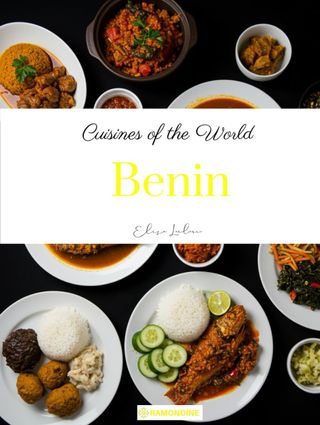
Cover of Cuisines of the World: Benin

Cuisines of the World: Benin

Elise Leclerc

Original language: French · Hardcover · ISBN 979-8298799041

Cuisines of the World: Benin by Elise Leclerc is a cookbook focused on the food traditions of Benin, a narrow West African country that stretches from the Gulf of Guinea northward into the Sahel. The book presents a selection of Beninese recipes organized to include meat, fish, and plant-based dishes, offering a range of options across different dietary preferences. Each recipe is accompanied by a large color photograph intended to show the finished dish.

Beninese cooking draws on ingredients such as cassava, yams, palm oil, and dried fish, and the book aims to guide readers toward versions of these dishes that use ingredients available outside Benin. The recipes are described as straightforward in preparation, with an emphasis on preserving the character of the original flavors rather than simplifying them beyond recognition. The collection sits within a broader series titled Cuisines of the World, which positions each volume as an entry point into a specific national food culture.

The book is structured as a practical kitchen reference rather than a cultural survey, though the food itself carries historical layers tied to trade routes, local agriculture, and regional cooking methods found across southern and central Benin.

Plot

This Benin cookbook makes the culinary experience accessible and delicious for everyone. Inside, you will find: • The best recipes from Beninese cuisine, prepared simply and authentically • Dishes with meat, fish, and plant-based options for a balanced diet • Typical Beninese ingredients that are easy to find • Practical and flavorful recipes, perfect for those who love discovering new cultures • Large, colorful photos to inspire you to recreate each dish

Cover of Say You're One of Them

Say You're One of Them

Uwem Akpan

Original language: English · Hardcover · ISBN 978-0316113786

Say You're One of Them gathers short fiction by Uwem Akpan, a Nigerian writer and Jesuit priest. Each story is told from the point of view of a child, and the settings move across Kenya, Rwanda, Nigeria, Benin, and Ethiopia. Poverty, ethnic conflict, and the daily work of survival shape what these young narrators notice and are able to describe.

In An Ex-Mas Feast, an eight-year-old boy living in a Nairobi street shanty wants only enough money for school fees and books. Food comes first in his household, and even when his twelve-year-old sister goes out onto the streets to earn, the sum never stretches far enough. Affection and exploitation sit side by side within the same family.

A second story, set against the conflict in Rwanda, is narrated by a young girl who, with her small brother, watches their parents face a decision no family should have to weigh. Other stories move to West Africa and the Horn of Africa. Two of them first appeared in a special fiction issue of The New Yorker, and the ebook edition adds an interview, author photographs, and discussion questions.

Plot

The eight-year-old narrator of "An Ex-Mas Feast" needs only enough money to buy books and pay fees in order to attend school. Even when his twelve-year-old sister takes to the streets to raise these meager funds, his dream can't be granted. Food comes first. His family lives in a street shanty in Nairobi, Kenya, but their way of both loving and taking advantage of each other strikes a universal chord.

Cover of The Viceroy of Ouidah

The Viceroy of Ouidah

Bruce Chatwin

Original language: English · Paperback · ISBN 978-0140112900

Bruce Chatwin's novel follows Francisco Manoel de Silva, a destitute Brazilian who crosses the Atlantic to the Kingdom of Dahomey in West Africa. His purpose is straightforward and brutal: to trade in enslaved people and build a fortune. Dahomey, a powerful state on the coast of what is now Benin, was one of the principal sources of the transatlantic slave trade for centuries, and Ouidah was its main port of departure. Manoel arrives as an outsider with little standing, but his ambitions quickly outpace even his own expectations.

As Manoel rises to control the slave trade at Ouidah, the title of viceroy becomes both a mark of power and a trap. The wealth he accumulates and the authority he holds over the port do not shield him from the corrosive reality of his enterprise. Chatwin traces the slow unraveling of Manoel's grip on his own mind as the violence and instability of daily life in Dahomey close around him.

The story draws on the historical figure of Francisco Félix de Souza, a Brazilian slave trader who operated from Ouidah in the late eighteenth and early nineteenth centuries. Chatwin visited Ouidah while researching the book, and the novel reflects his characteristic attention to landscape, movement, and the strangeness of displaced lives.

Plot

In this vivid, powerful novel, Chatwin tells of Francisco Manoel de Silva, a poor Brazilian adventurer who sails to Dahomey in West Africa to trade for slaves and amass his fortune. His plans exceed his dreams, and soon he is the Viceroy of Ouidah, master of all slave trading in Dahomey. But the ghastly business of slave trading and the open savagery of life in Dahomey slowly consume Manoel's wealth and sanity.

More from Benin

See the country page for Benin for its map, facts and largest cities, or browse books from other countries.

Links go to Amazon; Hookito doesn’t sell books. Know a book that belongs here, or spotted a mistake? Write to submissions@hookito.com.

Where to next?

Back to the globe
Hookito landscape illustration