Hookito

Brazil · Books

Books from Brazil

13 books from and about Brazil: what each is about, the plot, and a note from Professor Kogi.

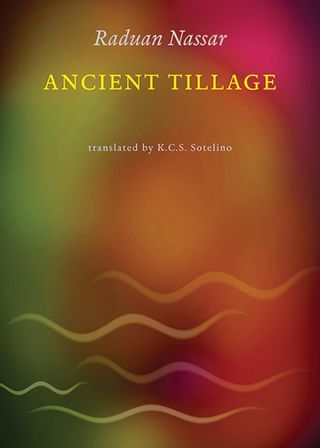
Cover of Ancient Tillage

Ancient Tillage

Raduan Nassar

Original language: Portuguese · Paperback · ISBN 978-0811226561

Ancient Tillage is a novel by Brazilian writer Raduan Nassar, originally published in Portuguese as Lavoura Arcaica in 1975. The story centers on André, a young man raised on a farm in Brazil within a family shaped by strict religious discipline. His father governs meals and daily life with sermon-like authority, and the household follows rhythms tied to the land, the wheat, and the bread on the table. André grows up caught between devotion to this order and a growing resistance to it.

As André enters adolescence, he begins to experience desires he cannot reconcile with the moral code enforced at home. Among these is an attraction to his sister Ana, which deepens his sense of shame and isolation. He turns to alcohol for relief and faces an internal conflict between obedience and independence, between the body and the constraints placed on it by family and faith. The novel traces this tension without offering easy resolution.

Nassar's prose draws on biblical cadence and sensory detail rooted in rural life. The book was first translated into English decades after its original publication, introducing a wider audience to a work already well regarded in Brazilian literature. It remains one of Nassar's few published novels.

Plot

For André, a young man growing up on a farm in Brazil, life consists of “the earth, the wheat, the bread, our table, and our family.” He loves the land, fears his austere, pious father, who preaches from the head of the table as if from a pulpit, and loathes himself as he begins to harbor shameful feelings for his sister Ana. Lyrical and sensual, written with biblical intensity, this classic Brazilian coming-of-age novel follows André’s tormented path. He falls into the comforting embrace of liquor as―in his psychological and sexual awakening―he must choose between body and soul, obligation and freedom.
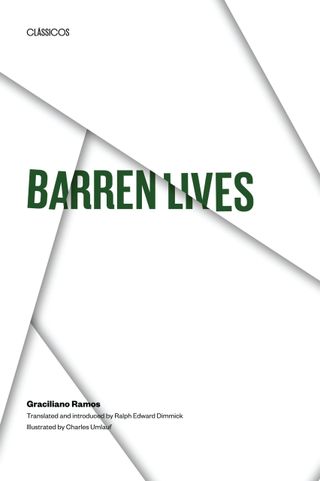
Cover of Barren Lives

Barren Lives

Graciliano Ramos

Original language: Portuguese · Paperback · ISBN 978-0292701335

Barren Lives follows a peasant family crossing the drought-stricken sertao, the vast semi-arid interior of northeastern Brazil. Exhausted and desperate, they arrive at an abandoned ranch and settle there, tending cattle for an absent landowner. For a time, the rains return and life becomes bearable. But the cycle of drought is never far away, and when it closes in again, the family is forced back onto the road with nothing resolved.

Graciliano Ramos structures the novel in loosely connected chapters, each centered on a different member of the household, including the family dog. The father, Fabiano, struggles with language itself, unable to articulate his frustrations with the local authorities and traders who exploit him. His wife, Vitoria, holds the family together through small, stubborn acts of planning. Even the two young boys, never given names in the text, carry their own internal worlds of confusion and curiosity. Ramos writes in a spare, dry style that mirrors the landscape and the limited speech of his characters.

Originally published in Portuguese as Vidas Secas in 1938, the novel is set in a region where periodic droughts have shaped migration patterns for generations. Ramos himself grew up in the state of Alagoas in northeastern Brazil.

Plot

A peasant family, driven by the drought, walks to exhaustion through an arid land. As they shelter at a deserted ranch, the drought is broken and they linger, tending cattle for the absentee ranch owner until the onset of another drought forces them to move on, homeless wanderers again. Yet, like the desert plants that defeat all rigors of wind and weather, the family maintains its will to survive in the harsh and solitary land. Intimately acquainted with the region of which he writes and keenly appreciative of the character of its inhabitants, into whose minds he has penetrated as few before him, Graciliano Ramos depicts them in a style whose austerity well becomes the spareness of the subject, creating a gallery of figures that rank as classic in contemporary Brazilian literature.

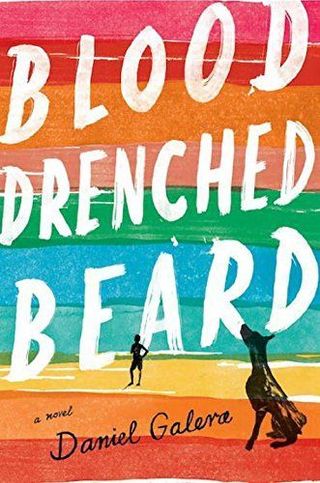
Cover of Blood-drenched Beard

Blood-drenched Beard

Daniel Galera

Original language: Portuguese · Hardcover · ISBN 978-0670068340

A young man learns a family secret from his dying father: his grandfather, a gaucho from southern Brazil, was killed by fellow villagers in the coastal town of Garopaba. The murder reportedly took place during a Sunday dance at a community hall. The lights cut out, and when they returned, the old man lay dead on the floor in his own blood. With this fragment of a story as his only lead, the young man sets out for Garopaba to piece together what actually happened.

Garopaba sits on the Atlantic coast of Santa Catarina state, known today for its surf breaks and fishing harbors. Daniel Galera uses this setting to ground a narrative that moves between present-day coastal life and the murky oral history of a small community. The grandson's search for facts about the killing brings him into contact with locals who may remember events differently or prefer not to remember them at all.

The novel operates in a space between family myth and verifiable truth. What the father passed on was a version of events, incomplete and possibly shaped by decades of retelling. Whether the grandson can recover anything closer to what happened is the central tension that holds the story together.

Plot

The young man’s father, dying, at last tells him the truth about his grandfather – or at least the truth as he knows it. The mean old gaucho was murdered by some fellow villagers in Garopaba, a town on the Atlantic now famous for its surfing and fishing. It was during a Sunday dance at a community hall. The lights went out suddenly and when they came up, his grandfather was lying on the ground in a pool of blood…or so the story goes.

Cover of Brazilian Food

Brazilian Food

Thiago Castanho, Luciana Bianchi

Original language: English · Hardcover · ISBN 978-1770854727

Brazilian Food gathers more than 100 recipes chosen by Thiago Castanho and Luciana Bianchi, drawn from the varied food traditions of Brazil. The range runs from street food and seafood to sweet dishes and cocktails. The book is addressed to cooks working at home who may never have travelled to Brazil, and it presents these flavours as something that can be prepared far from the country itself.

Three guest chefs contribute their own favourites. Roberta Sudbrack, voted best chef in Rio five times, turns everyday Brazilian ingredients into refined plates such as smoked okra with shrimp. Rodrigo Oliveira, whose restaurant Mocoto has drawn wide attention, builds dishes from the traditional ingredients of the Backlands, including Baiao-de-dois, a mix of rice, beans, cheese, jerked beef, sausage and bacon. Felipe Rameh, named Chef of the Year by the guide Veja BH, favours the products of his own state.

Several ingredients keep their Portuguese names in the text. Cachaca is a spirit distilled from sugarcane and closely associated with Minas Gerais, doce de leite is milk cooked slowly with sugar until it caramelises, and jerked beef is meat salted and dried so it keeps without refrigeration. Palm hearts, pork, beans and rice appear repeatedly, tying particular dishes to the places that supply them.

Plot

Along with three award-winning guest chefs, Castanho and Bianchi selected more than 100 recipes that adventurous cooks will want to try at home, even if they have never been to Brazil. Three guest chefs also contribute their favorites: Roberta Sudbrack, voted best chef in Rio five times, and whose self-named restaurant is one of the top 100 in the world, takes everyday Brazilian ingredients to sophisticated heights, such as smoked okra with shrimp. Rodrigo Oliveira, a young award-winning chef whose restaurant, Mocoto, is garnering much attention, uses traditional ingredients from the Backlands of Brazil to create standout dishes, such as Baiao-de-dois (rice, beans, cheese, Brazilian jerked beef, sausage and bacon). Felipe Rameh, named Chef of the Year by Brazilian magazine guide Veja BH, uses what he calls his state's "best products": palm hearts, cachaca (Minas sugarcane spirit), Brazilian 'doce de leite' (caramelized milk), and pork.

Cover of Captains of the Sands

Captains of the Sands

Jorge Amado

Original language: Portuguese · Paperback · ISBN 978-0143106357

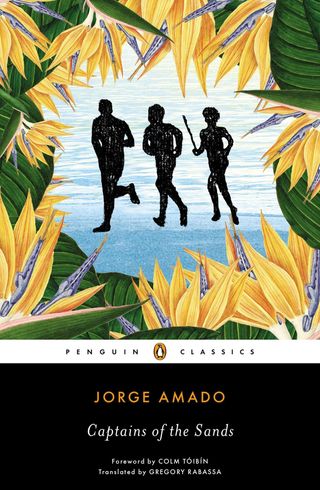
Captains of the Sands is a novel by Jorge Amado set in the Brazilian city of Salvador, the capital of Bahia state. It follows a group of orphaned and abandoned boys who survive on the streets, sleeping in an abandoned warehouse on the waterfront and stealing to feed themselves. The group is led by a fifteen-year-old called Bullet, and its members include Professor, a boy who reads and draws; Legless, a cunning manipulator; and Cat, known for his early romantic pursuits. Together they carry out robberies and schemes targeting the wealthier classes of the city.

The novel opens with a series of fictional newspaper articles, letters, and official statements that frame the public debate around these children. Authorities and citizens argue over what should be done about the so-called little criminals, while the narrative that follows gives the boys their own voices and histories. Amado uses this structure to contrast how the city talks about street children with how they actually live.

Originally published in 1937, the book was written during a period when Amado was politically active and living in Salvador. The story examines class division, institutional neglect, and the limited choices available to children growing up without family support in a deeply unequal society.

Plot

They call themselves “Captains of the Sands,” a gang of orphans and runaways who live by their wits and daring in the torrid slums and sleazy back alleys of Bahia. Led by fifteen-year-old “Bullet,” the band—including a crafty liar named “Legless,” the intellectual “Professor,” and the sexually precocious “Cat”—pulls off heists and escapades against the right and privileged of Brazil. But when a public outcry demands the capture of the “little criminals,” the fate of these children becomes a poignant, intensely moving drama of love and freedom in a shackled land.

Cover of Macunaíma: The Hero with No Character

Macunaíma: The Hero with No Character

Mário de Andrade

Original language: Portuguese · Paperback · ISBN 978-0811227025

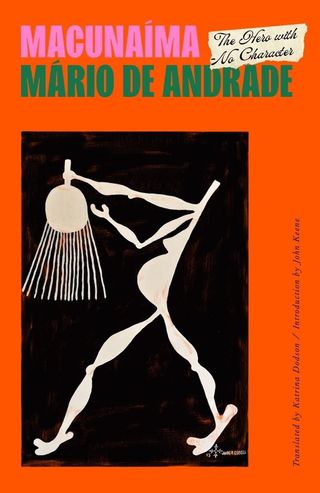
Macunaíma, first published in 1928, follows a shapeshifting hero of the same name and his brothers as they leave their Amazon home and travel across Brazil. The novel folds four centuries and a whole continent into one mythic plane. A lost magic amulet drives the plot: it has passed into the hands of an Italo-Peruvian industrialist in São Paulo, who is also a cannibal giant.

Mário de Andrade wrote the book over six days, drawing on years of study. The text blends dialect, folklore, anthropology, mythology, plants and animals, and popular culture, setting indigenous and European traditions beside each other while moving between rural and urban Brazil. The subtitle points to a protagonist without a fixed character, and the novel keeps circling the question of what Brazilian identity might be.

This English edition was translated by Katrina Dodson over many years and includes a long section of notes that explains references a reader outside Brazil may not recognise. Andrade was a central figure in Brazilian modernism, the movement that took shape around the 1922 Modern Art Week in São Paulo, where writers and artists argued for new national forms.

Plot

This landmark 1928 novel follows the adventures of the shapeshifting Macunaíma and his brothers as they leave their Amazon home for a whirlwind tour of Brazil, cramming four centuries and a continental expanse into a single mythic plane. Having lost a magic amulet, the hero and his brothers journey to São Paulo to retrieve the talisman that has fallen into the hands of an Italo-Peruvian captain of industry (who is also a cannibal giant). Written over six delirious days―the fruit of years of study―Macunaíma magically synthesizes dialect, folklore, anthropology, mythology, flora, fauna, and pop culture to examine Brazilian identity. This brilliant translation by Katrina Dodson has been many years in the making and includes an extensive section of notes, providing essential context for this magnificent work.

Cover of Max and the Cats

Max and the Cats

Moacyr Scliar

Original language: Portuguese · Paperback · ISBN 978-0452284531

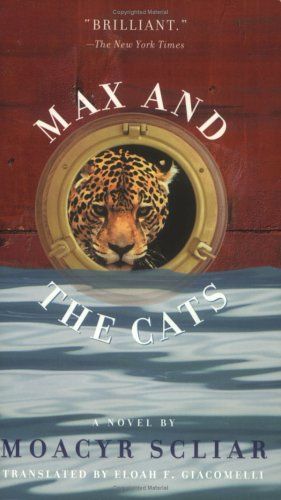
Max Schmidt grows up surrounded by animal pelts in his father's fur shop in Germany, where a stuffed tiger watches from the top of a wardrobe. As a young man, he begins a secret affair with a married employee of the store. When the woman's husband reports him to the Nazi secret police, Max flees to Hamburg and boards a freighter bound for South America. The ship sinks, leaving Max stranded on a small boat with a jaguar.

Survival at sea with a large predator becomes the novel's central situation, and Moacyr Scliar uses it as an allegory. The fear Max feels toward the animal mirrors the dangers he has already escaped in Europe, and the story draws a line between political terror and the raw threat of nature. When Max reaches the shore near Porto Alegre, Brazil, he faces the prospect of building a new life in unfamiliar territory.

Scliar, a Brazilian author from Porto Alegre, published this short novel decades before Yann Martel's Life of Pi appeared. The similarities between the two books prompted public discussion and some accusations of plagiarism, though Scliar chose not to pursue legal action. He said he considered Martel's work an appropriation of his premise rather than direct copying.

Plot

Max Schmidt grew up in the stockroom of his father's fur store, cloaked among the foxes, minks, and leopards, hiding from the glaring eyes of a stuffed tiger atop the wardrobe. It is here he dreams of traveling to distant lands; and here, as a young man, he begins an affair with the store's married clerk. Forced to flee when his lover's husband discovers the affair and denounces Max to the Nazi secret police, Max steals away to Hamburg, where he takes passage on a freighter destined for disaster. When the ship founders somewhere off the coast of South America, Max is trapped in a dinghy with a hungry jaguar. Max believes his days are numbered-until he washes ashore on the coast of tiny Porto Alegre, Brazil, prepared to begin anew in the tropical clime.

Cover of Pele: The Autobiography

Pele: The Autobiography

Pele

Original language: English · Paperback · ISBN 978-1416511212

Pele: The Autobiography traces the life of Edson Arantes do Nascimento, known worldwide as Pele, from his childhood in Brazil to his years as one of the most recognized football players in history. He grew up in poverty in the state of Sao Paulo, where he learned the game on unpaved streets before joining Santos FC as a teenager. By the age of seventeen, he had already played in a World Cup final, scoring twice as Brazil won the 1958 tournament in Sweden.

The book covers his three World Cup victories with Brazil, in 1958, 1962, and 1970, along with his long career at Santos and his later move to the New York Cosmos in the North American Soccer League. Pele recounts the pressures of fame, his relationship with Brazilian football culture, and the physical toll of competing at the highest level for more than two decades. He also addresses episodes away from the pitch, including business dealings and his public role as a sporting ambassador.

Written in a direct, personal tone, the autobiography gives Pele's own account of key moments in his career and the people who shaped it. He reflects on what football meant in Brazil during a period of rapid social and political change.

Plot

From the poverty-stricken streets of Sao Paulo to an international icon and one of the most celebrated footballers of all time, Pele's life story is as extraordinary as it is enrapturing. With his trademark wit and deference, the legend draws us into a wonderful story lit by insight and humour and encompassing everything you ever wanted to know about the great man himself.

Cover of Perfect Days

Perfect Days

Raphael Montes

Original language: Portuguese · Paperback · ISBN 978-0143129998

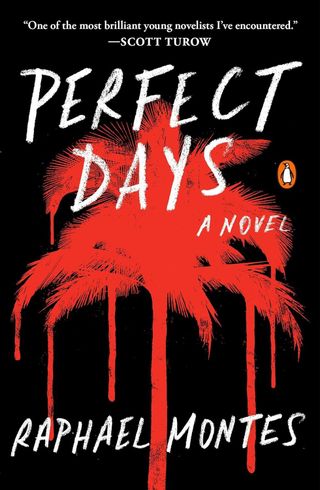
Teo Avelar is a medical student in Rio de Janeiro who lives a deeply isolated life with his paraplegic mother and her dog. He has few social connections and finds his only sense of closeness with the cadaver he studies at school. That changes when he meets Clarice, an aspiring screenwriter whose openness and spontaneity are everything Teo is not. She is working on a screenplay titled Perfect Days, which follows three friends on a road trip across Brazil. Teo becomes fixated on her, and when she turns him down, he kidnaps her and forces a journey that mirrors the route in her own script.

The novel follows Teo's increasingly desperate logic as he convinces himself that enough time together will make Clarice love him. Each step pulls him further into dangerous territory, and his efforts to keep the situation under control grow more extreme as obstacles appear. The story is told from Teo's perspective, placing the reader alongside a narrator whose reasoning is disturbingly methodical.

Raphael Montes is a Brazilian crime writer, and Perfect Days was his English-language debut. The book has drawn comparisons to Patricia Highsmith's work, particularly The Talented Mr. Ripley, for its close attention to a calculating protagonist operating just beneath the surface of ordinary life.

Plot

Teo Avelar is a loner. He lives with his paraplegic mother and her dog in Rio de Janeiro, he doesn't have many friends, and the only time he feels honest human emotion is in the presence of his medical school cadaver—that is, until he meets Clarice. She's almost his exact opposite: exotic, spontaneous, unafraid to speak her mind. An aspiring screenwriter, she's working on a screenplay called Perfect Days about three friends who go on a road trip across Brazil in search of romance. Teo is obsessed. He begins to stalk her, first following her to her university, then to her home, and when she ultimately rejects him, he kidnaps her and they embark upon their very own twisted odyssey across Brazil, tracing the same route outlined in her screenplay.

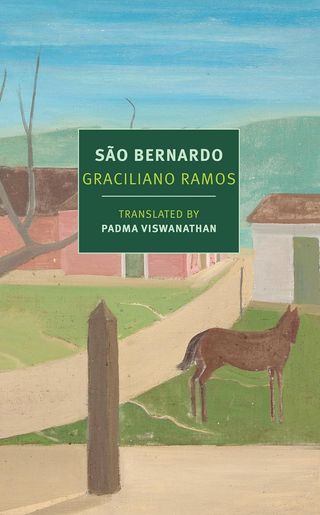
Cover of São Bernardo

São Bernardo

Graciliano Ramos

Original language: Portuguese · Paperback · ISBN 978-1681373850

São Bernardo is narrated by Paulo Honório, a man who rose from rural labor to own the estate where he once worked as a field hand. Set in the Brazilian backcountry, the novel follows his aggressive accumulation of land and influence. He sees people largely as instruments, and his voice carries the blunt pragmatism of someone who fought for every advantage. Graciliano Ramos builds the story entirely through this first-person account.

The plot turns when Paulo Honório marries a younger, educated woman. He expects her to fit into the life he has constructed, much as he might acquire another piece of property. Instead, the marriage brings tensions he cannot manage through force or calculation. The contrast between his transactional view of the world and her different temperament drives the central conflict.

Ramos, one of Brazil's recognized twentieth-century novelists, has often been compared to William Faulkner for his spare regional prose. The novel is available in English through a translation by Padma Viswanathan, which keeps the rough, direct quality of Paulo Honório's narration. The book stays close to the landscape and social hierarchies of the country's interior.

Plot

Paulo Honório is a sometime field hand who has kicked and clawed and schemed his way to prosperity, becoming master of the decrepit estate São Bernardo, where once upon a time he toiled. He is ruthless in his exploitation of his fellow man, but when he makes a match with a fine young woman, he is surprised to discover that this latest acquisition, as he sees it, may be somewhat harder to handle. It is in Paulo Honório’s own rough-hewn voice that the great Brazilian writer Graciliano Ramos, often compared to William Faulkner, tells this gritty and dryly funny story of triumph and comeuppance, a tour de force of the writer’s art that is beautifully captured in Padma Viswanathan’s new translation.

Cover of The Complete Stories

The Complete Stories

Clarice Lispector

Original language: Portuguese · Hardcover · ISBN 978-0811219631

Clarice Lispector is one of the most prominent figures in Brazilian literature, and this volume gathers every short story from the nine collections she published during her lifetime. The pieces span her whole working life, from writing done in adolescence to work made near its end. Set out in order of time, they follow one writer's development across several decades.

The subjects cover a wide human range. Some stories center on young people becoming aware of desire and creative ambition. Others turn to domestic life, where routine is broken by sudden, disorienting moments of clarity. Still others watch older characters who are unsure what to do with the time they have. Much of the tension comes from interior experience rather than outward event.

This English edition was published by New Directions, which had earlier issued five of her novels in translation and brought her fiction to a new set of readers. Before it appeared, the stories were scattered across separate volumes or had not been translated at all. Lispector wrote in Portuguese, and her stories made her a celebrated figure in Brazil.

Plot

The recent publication by New Directions of five Lispector novels revealed to legions of new readers her darkness and dazzle. Now, for the first time in English, are all the stories that made her a Brazilian legend: from teenagers coming into awareness of their sexual and artistic powers to humdrum housewives whose lives are shattered by unexpected epiphanies to old people who don’t know what to do with themselves. Clarice’s stories take us through their lives―and ours.

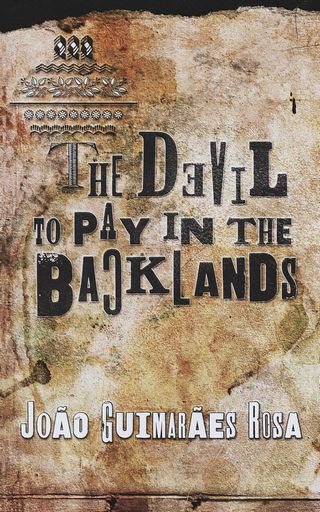
Cover of The Devil to Pay in the Backlands

The Devil to Pay in the Backlands

João Guimarães Rosa

Original language: Portuguese · Paperback · ISBN 979-8284633946

The Devil to Pay in the Backlands is a novel by João Guimarães Rosa, originally published in Portuguese as Grande Sertão: Veredas in 1956. It is set in the sertão, the vast dry interior of northern Minas Gerais in Brazil, a landscape crossed by veredas, narrow paths through palm-lined wetlands at higher altitudes. These paths form a web where all routes interconnect, making it easy for an outsider to become lost and impossible to follow a single fixed direction to any destination.

The story is told as a long monologue by Riobaldo, a former jagunço, or backlands gunman, who recounts his years among armed bands roaming the sertão. Central to his account is his bond with a fellow fighter named Diadorim, and the question of whether Riobaldo once attempted to strike a pact with the Devil. These two threads, loyalty and the possibility of damnation, run through the narrative as Riobaldo tries to make sense of his own past.

The original Portuguese title names the landscape itself, while the English title foregrounds the episode of the supposed diabolical bargain. The novel is widely considered one of the major works of Brazilian and Portuguese-language literature.

Plot

The original title refers to the veredas, which are small paths through wetlands usually located at higher altitudes characterized by the presence of grasses and buritizais, groups of the buriti palm-tree, that criss-cross the Sertão region in northern Minas Gerais as a labyrinthine net where an outsider can easily get lost, and where there is no single way to a certain place, since all paths interconnect in such a way that any road can lead anywhere. The English title refers to a later episode in the book involving an attempt to make a deal with the Devil.

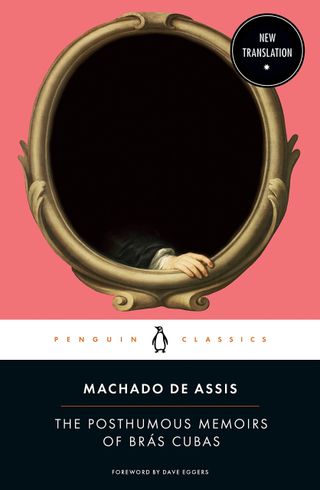
Cover of The Posthumous Memoirs of Brás Cubas

The Posthumous Memoirs of Brás Cubas

Machado de Assis

Original language: Portuguese · Paperback · ISBN 978-0143135036

The Posthumous Memoirs of Brás Cubas, first serialized in 1880 and published as a book in 1881, is a novel by the Brazilian writer Machado de Assis. Its narrator is a dead man. Brás Cubas, a wealthy and idle member of Rio de Janeiro's upper class, begins writing his life story from beyond the grave, dedicating the account to the worms consuming his body. From this unusual vantage point he recounts failed love affairs, halfhearted attempts at a political career, and eccentric philosophical ideas, all delivered with a sharp, mocking tone.

Machado de Assis acknowledged the influence of Laurence Sterne's Tristram Shandy on the novel's structure. Like Sterne's work, the book abandons linear storytelling in favor of digressions, short chapters of wildly varying length, and direct addresses to the reader. This approach set it apart from the objective realism practiced by European contemporaries such as Flaubert and Zola. The result is a portrait of nineteenth-century Rio de Janeiro filtered through the self-serving and unreliable voice of its narrator.

The novel is widely regarded as a turning point in Brazilian literature, marking the beginning of literary Realism in Brazil, though shaped by Machado de Assis's own inventive and ironic style. At the time of publication, its caustic tone and unconventional form surprised many reviewers.

Plot

In his masterpiece, the 1881 novel The Posthumous Memoirs of Brás Cubas (translated also as Epitaph of a Small Winner), the ghost of a decadent and disagreeable aristocrat decides to write his memoir. He dedicates it to the worms gnawing at his corpse and tells of his failed romances and halfhearted political ambitions, serves up harebrained philosophies, and complains with gusto from the depths of his grave

More from Brazil

See the country page for Brazil for its map, facts and largest cities, or browse books from other countries.

Links go to Amazon; Hookito doesn’t sell books. Know a book that belongs here, or spotted a mistake? Write to submissions@hookito.com.

Where to next?

Back to the globe
Hookito landscape illustration