Hookito

Canada · Books

Books from Canada

11 books from and about Canada: what each is about, the plot, and a note from Professor Kogi.

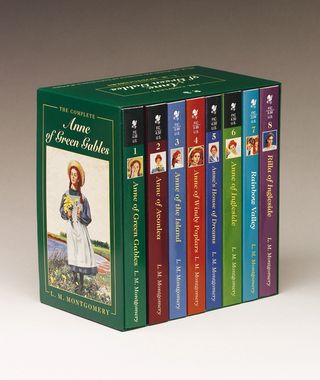
Cover of Anne of Green Gables, Complete 8-Book Box

Anne of Green Gables, Complete 8-Book Box

Lucy Maud Montgomery

Original language: English · Paperback · ISBN 978-0553609417

Anne Shirley is eleven years old, an orphan, and not the person anyone asked for. When she arrives at Green Gables, a farmhouse on Prince Edward Island in Canada, she has been sent there by mistake. Matthew and Marilla Cuthbert, a quiet middle-aged brother and sister, had requested a boy to help with the farm work. Instead they receive a thin, red-haired girl with a sharp imagination and an unstoppable habit of talking. The first novel traces what happens when Anne tries to make this accidental home a permanent one.

The eight books in this collected set follow Anne from childhood through adulthood. Lucy Maud Montgomery published the original novel in 1908, and the sequels extend over several decades of Anne's life. The stories are set largely on Prince Edward Island, a small province in the Gulf of St. Lawrence whose rural landscape and coastal scenery figure prominently in the narrative. Montgomery drew on her own experience growing up on the island.

The series has remained widely read for well over a century. Anne's tendency to rename ordinary places, argue with anyone who comments on her red hair, and throw herself into dramatic situations gives the books a specific, often comic energy that keeps them grounded in character rather than sentiment.

Plot

Eleven-year-old Anne Shirley has never known a real home. Since her parents' deaths, she's bounced around to foster homes and orphanages. When she is sent by mistake to live with Matthew and Marilla Cuthbert at the snug white farmhouse called Green Gables, she wants to stay forever. But Anne is not the sturdy boy Matthew and Marilla were expecting.
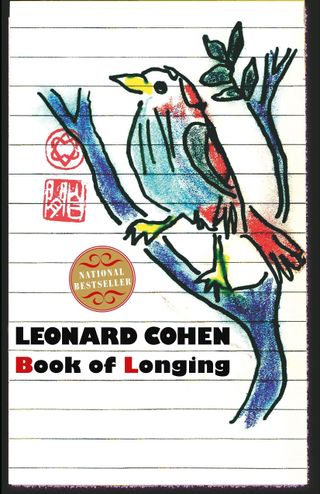
Cover of Book of Longing

Book of Longing

Leonard Cohen

Original language: English · Paperback · ISBN 978-0061125614

Leonard Cohen published Book of Longing in 2006, his first collection of new poetry since Book of Mercy appeared in 1984. The poems were written across a span of roughly two decades, during which Cohen spent five years living at a Zen Buddhist monastery on Mount Baldy in the San Gabriel Mountains of Southern California. Other poems came from periods in Los Angeles, Montreal, and Mumbai. The collection reflects these scattered locations and the long stretch of time over which it took shape.

Alongside the poems, Cohen included his own ink drawings, many of them self-portraits rendered in a loose, comic style. The drawings sit on the page beside or around the text, forming a kind of visual conversation with the poetry rather than serving as simple illustration. Cohen's writing here moves between meditation, desire, aging, and humor, often within the same poem. The tone can shift from quiet observation to blunt self-mockery in a few lines.

Mount Baldy, where Cohen lived as an ordained monk under Zen teacher Joshu Sasaki Roshi, sits at roughly 3,000 meters elevation east of Los Angeles. The monastery's isolation and discipline shaped much of the book's contemplative character, though Cohen balances that stillness with wit and restlessness drawn from city life.

Plot

Leonard Cohen wrote the poems in Book of Longing—his first book of poetry in more than twenty years after 1984's Book of Mercy—during his five-year stay at a Zen monastery on Southern California's Mount Baldy, and in Los Angeles, Montreal, and Mumbai. This dazzling collection is enhanced by the author's playful and provocative drawings, which interact in exciting, unexpected ways on the page with poetry that is timeless, meditative, and often darkly humorous.

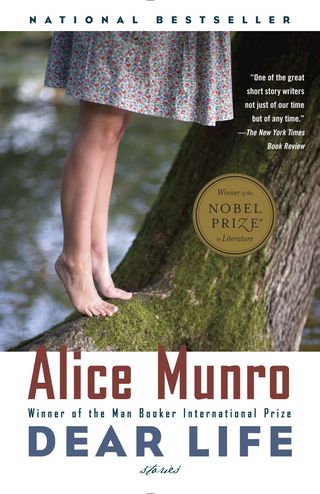
Cover of Dear Life: Stories

Dear Life: Stories

Alice Munro

Original language: English · Paperback · ISBN 978-0307743725

Dear Life is a collection of short stories by Alice Munro, most of them set in the rural towns and lakeshore communities near Lake Huron in southwestern Ontario. The stories follow ordinary people at turning points: a soldier back from war who avoids reuniting with his fiancée, a woman weighing whether to face down a blackmailer, a father carrying guilt, a young teacher whose employer withdraws a promised position. In each case, a single encounter or a decision left unmade reshapes a life in ways the person may only partly understand.

What ties the collection together is Munro's attention to the small, specific moment when something shifts. Her characters are not heroes or villains but people caught between what they want and what they can manage. The final section of the book stands apart from the rest: four pieces drawn from Munro's own childhood memories, offering a direct, autobiographical view of the landscape and family circumstances that shaped her writing. These closing pieces are shorter and more personal, set in the same Ontario territory but told without the usual distance of fiction.

Plot

In story after story in this brilliant new collection, Alice Munro pinpoints the moment a person is forever altered by a chance encounter, an action not taken, or a simple twist of fate. Her characters are flawed and fully human: a soldier returning from war and avoiding his fiancée, a wealthy woman deciding whether to confront a blackmailer, an adulterous mother and her neglected children, a guilt-ridden father, and a young teacher jilted by her employer. Illumined by Munro’s unflinching insight, these lives draw us in with their quiet depth and surprise us with unexpected turns.

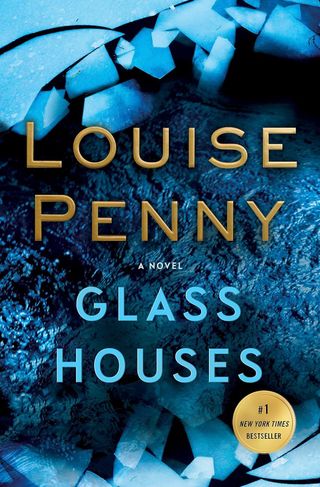
Cover of Glass Houses: A Novel

Glass Houses: A Novel

Louise Penny

Original language: English · Hardcover · ISBN 978-1250066190

Glass Houses is a crime novel by Louise Penny, set in the fictional Quebec village of Three Pines. The story opens on a cold November day when a strange, silent figure appears in the village and stands motionless through rain and sleet, staring ahead without explanation. The villagers shift from curiosity to unease as the figure refuses to move or speak, casting a growing sense of dread over the small community.

Armand Gamache, now serving as Chief Superintendent of the Sûreté du Québec, watches the figure with increasing alarm. He suspects it carries a dark purpose but finds himself unable to act against something that has committed no obvious crime. When the figure disappears overnight and a body is found, Gamache must determine what happened and whether a hidden debt connects the death to the stranger's presence. The novel moves between the investigation and a courtroom setting, layering questions about justice, conscience, and the moral cost of waiting.

Three Pines has served as the recurring setting for Penny's series featuring Gamache, beginning with Still Life in 2005. Glass Houses is the thirteenth book in the sequence. Penny is a Canadian author based in Quebec, and the series draws on the geography and culture of rural francophone communities south of Montreal.

Plot

When a mysterious figure appears in Three Pines one cold November day, Armand Gamache and the rest of the villagers are at first curious. Then wary. Through rain and sleet, the figure stands unmoving, staring ahead. From the moment its shadow falls over the village, Gamache, now Chief Superintendent of the Sûreté du Québec, suspects the creature has deep roots and a dark purpose. Yet he does nothing. What can he do? Only watch and wait. And hope his mounting fears are not realized. But when the figure vanishes overnight and a body is discovered, it falls to Gamache to discover if a debt has been paid or levied.

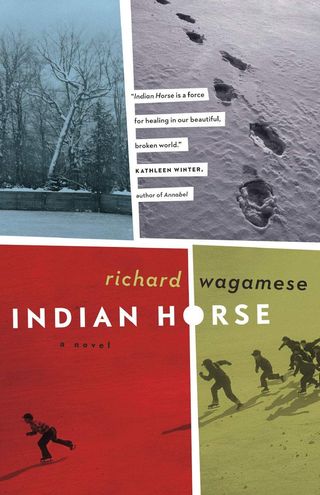
Cover of Indian Horse

Indian Horse

Richard Wagamese

Original language: English · Paperback · ISBN 978-1553654025

Saul Indian Horse is a northern Ojibway man who has reached a crisis point. After a drinking binge that nearly kills him, he enters a treatment center for alcoholics. He does not expect much from the people around him, but he slowly accepts that recovery will require him to look back through his own life and speak it aloud. The novel follows his memories as they unfold, moving between very different worlds.

Much of the story centers on two formative experiences. The first is Saul's time in a residential school, one of the institutions where Indigenous children in Canada were separated from their families and pressured to abandon their languages and customs. The second is hockey, where Saul discovers an unusual ability on the ice, and the game becomes a route out of the school and into wider Canadian society.

Richard Wagamese, who was Ojibway from the Wabaseemoong Independent Nations in northwestern Ontario, sets the novel largely in the north of that province. He traces how talent and effort meet racism, and how the harm done in one part of a life can return in another, long after the events themselves have passed.

Plot

Saul Indian Horse has hit bottom. His last binge almost killed him, and now he’s a reluctant resident in a treatment center for alcoholics, surrounded by people he’s sure will never understand him. But Saul wants peace, and he grudgingly comes to see that he’ll find it only through telling his story

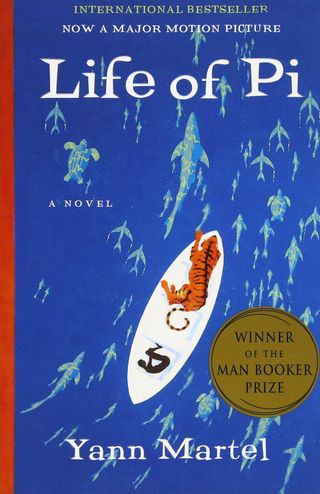
Cover of Life Of Pi

Life Of Pi

Yann Martel

Original language: English · Paperback · ISBN 978-0156027328

Life of Pi, by Canadian writer Yann Martel, begins with a cargo ship going down in the Pacific. One lifeboat survives the wreck, and its passengers make an improbable group: a boy of sixteen named Pi Patel, a wounded zebra, a hyena, an orangutan, and a Royal Bengal tiger weighing about 450 pounds. The balance among the animals settles quickly, leaving Pi with the tiger, Richard Parker.

Pi draws on everything he knows about animal behavior, fear, and improvisation to share the lifeboat with a large predator for 227 days. The novel traces the practical details of that coexistence: fresh water, food, territory on a tiny craft, and the shifting balance between boy and tiger as weeks turn into months on open water.

When the pair finally reaches the coast of Mexico, Pi is questioned by Japanese officials investigating the shipwreck. He offers them a second account of events, one that is far more ordinary and far harder to sit with. The novel leaves a central question suspended between the two versions of the story.

Plot

After the sinking of a cargo ship, a solitary lifeboat remains bobbing on the wild blue Pacific. The only survivors from the wreck are a sixteen-year-old boy named Pi, a hyena, a wounded zebra, an orangutan—and a 450-pound Royal Bengal, tiger. Soon the tiger has dispatched all but Pi Patel, whose fear, knowledge, and cunning allow him to coexist with the tiger, Richard Parker, for 227 days while lost at sea. When they finally reach the coast of Mexico, Richard Parker flees to the jungle, never to be seen again. The Japanese authorities who interrogate Pi refuse to believe his story and press him to tell them "the truth." After hours of coercion, Pi tells a second story, a story much less fantastical, much more conventional—but is it more true?

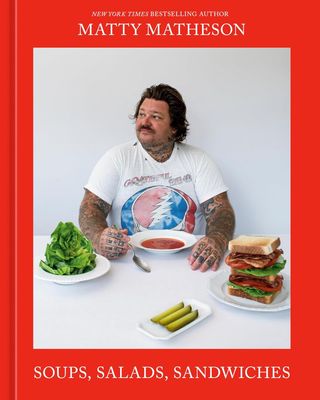
Cover of Matty Matheson: Soups, Salads, Sandwiches: A Cookbook

Matty Matheson: Soups, Salads, Sandwiches: A Cookbook

Matty Matheson

Original language: English · Hardcover · ISBN 978-0525612643

Matty Matheson is a Canadian chef, restaurateur, and media personality based in Toronto who became widely known through online cooking videos and television appearances. This cookbook focuses on three categories of food that appear constantly in everyday meals but rarely get a dedicated book: soups, salads, and sandwiches. Matheson approaches all three with his characteristic directness, offering recipes that rework familiar dishes with unexpected flavor combinations.

The book pairs its recipes with personal stories from Matheson's life and family, along with photographs that show food preparation alongside domestic scenes. Recipes are designed to be accessible, favoring straightforward techniques over complicated methods. The goal throughout is to treat these everyday meal formats as worth real creative attention rather than as afterthoughts to larger cooking projects.

Matheson's approach leans toward bold seasoning and inventive ingredient pairings applied to otherwise simple structures. A sandwich or salad serves as a frame that can hold a wide range of flavors depending on what a cook brings to it. The book is organized around that principle, encouraging readers to adapt and combine freely once they understand the underlying ideas behind each recipe.

Plot

Chances are you’ve eaten a soup, salad, or sandwich in the past day (or maybe all three). This trio makes up so many of our meals but is rarely given the attention it deserves–until now. Matty Matheson, known for his bold, innovative flavors, has created a cookbook that will revolutionize how you think of these kitchen basics. This book is for anyone and everyone, offering up Matty’s signature twists on the classics, delivered with minimal effort for maximum flavor.

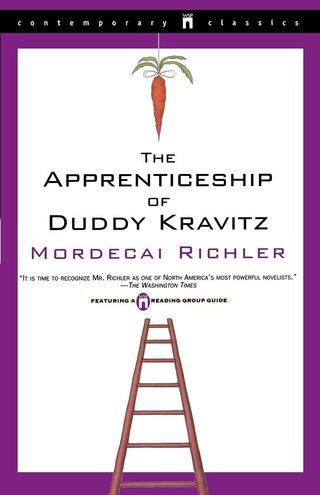
Cover of The Apprenticeship of Duddy Kravitz

The Apprenticeship of Duddy Kravitz

Mordecai Richler

Original language: English · Paperback · ISBN 978-0671028473

Duddy Kravitz grows up in a working-class Jewish household in Montreal, the third generation of an immigrant family. Restless and sharp-tongued, he is set on becoming somebody. The novel follows him from school days at a Jewish academy, where he already schemes and torments teachers, into a frantic adult life of overlapping jobs and deals across the city.

His rise is short and dubious, fueled by charm, cunning and a willingness to cut corners. Along the way he watches a series of older figures who act as informal mentors, observing how they live and borrowing whatever suits his own plans. His relationships with family, friends and business contacts shift as his ambitions grow bolder and more expensive.

Mordecai Richler places the story against wider pressures of money, class and antisemitism, and against the demands that arrive with adulthood. Duddy is written as combative, amoral and often very funny, a character whose energy carries the comedy while the cost of his methods keeps surfacing in the people around him. The satire takes in love, money and politics as much as one young man's plans.

Plot

Duddy -- the third generation of a Jewish immigrant family in Montreal -- is combative, amoral, scheming, a liar, and totally hilarious. From his street days tormenting teachers at the Jewish academy to his time hustling four jobs at once in a grand plan to "be somebody," Duddy learns about living -- and the lesson is an outrageous roller-coaster ride through the human comedy. As Richler turns his blistering commentary on love, money, and politics, The Apprenticeship Of Duddy Kravitz becomes a lesson for us all...in laughter and in life.

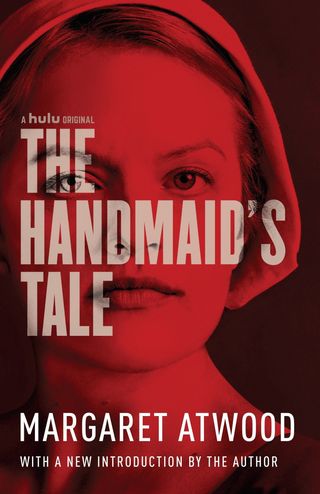
Cover of The Handmaid's Tale

The Handmaid's Tale

Margaret Atwood

Original language: English · Paperback · ISBN 978-0525435006

The Handmaid's Tale, published in 1985, is set in a near-future New England where the government of the United States has been overthrown. In its place stands the Republic of Gilead, a totalitarian state that enforces rigid religious and patriarchal rules. Environmental damage and falling birth rates have led to a second American civil war, and the new regime assigns the few remaining fertile women to its ruling men.

Offred has lost her husband, her daughter, and her own name. She lives under constant surveillance in the household of a high-ranking Commander, her role reduced to reproduction. Through her account, the story moves between her constrained present and fragments of her earlier life, when the freedoms she took for granted were dismantled step by step. Memory and obedience pull against each other in her daily life.

Atwood, a Canadian writer, traces how a state can erase individual identity and remove women's agency, and how small acts of resistance persist under close control. The book took the Governor General's Award for 1985 and the inaugural Arthur C. Clarke Award in 1987, with nominations for the Nebula Award, the Booker Prize, and the Prometheus Award.

Plot

In Margaret Atwood’s dystopian future, environmental disasters and declining birthrates have led to a Second American Civil War. The result is the rise of the Republic of Gilead, a totalitarian regime that enforces rigid social roles and enslaves the few remaining fertile women. Offred is one of these, a Handmaid bound to produce children for one of Gilead’s commanders. Deprived of her husband, her child, her freedom, and even her own name, Offred clings to her memories and her will to survive.

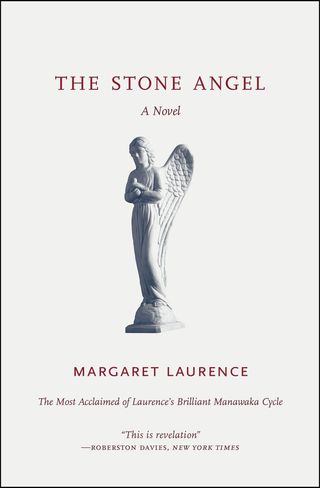
Cover of The Stone Angel

The Stone Angel

Margaret Laurence

Original language: English · Paperback · ISBN 978-0226469362

Hagar Shipley is ninety years old and losing her hold on the present, though not on her memory. In Margaret Laurence's novel, Hagar narrates her own life, moving between her days of physical decline and the decades behind her. She grew up as the daughter of a respected merchant, married against her family's expectations, and later knew grief as a mother. The book follows her attempt to understand how the pride that sustained her also cut her off from those closest to her.

Past and present alternate throughout. Hagar recalls her divided feelings toward her husband and the sharp difference in how she treated her two sons, with strong attachment to one and neglect of the other. She is sometimes regretful and rarely apologetic. Fear of appearing unrespectable or of needing too much shaped many of her choices, and her pride worked as both armour and barrier. Laurence keeps her voice funny, exasperating, and exact.

The Stone Angel appeared in 1964 and is set largely in Manawaka, a fictional prairie town that Laurence used across several books. She drew it from Neepawa, Manitoba, where she grew up, so Hagar's remembered prairie has a real counterpart on the map.

Plot

In The Stone Angel, Hagar Shipley, age ninety, tells the story of her life, and in doing so tries to come to terms with how the very qualities which sustained her have deprived her of joy. Mingling past and present, she maintains pride in the face of senility, while recalling the life she led as a rebellious young bride, and later as a grieving mother. Laurence gives us in Hagar a woman who is funny, infuriating, and heartbreakingly poignant.

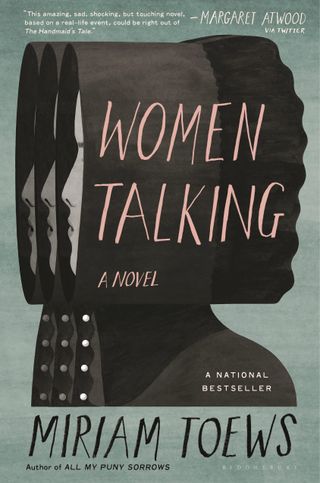
Cover of Women Talking

Women Talking

Miriam Toews

Original language: English · Hardcover · ISBN 978-1635572582

In a remote Mennonite colony, women and girls have for two years been drugged and assaulted at night by men from their own community. The attacks were first blamed on demons sent as punishment for sin. When the truth becomes known, eight women gather secretly in a hayloft while the colony's men are away in the city raising bail for the accused.

The novel is presented as the minutes of that single long meeting, recorded by a male schoolteacher, the only man in the loft. The women are illiterate and cannot speak the national language of the country where they live. Their debate moves through faith, forgiveness, motherhood, safety, and the right to decide for themselves. Miriam Toews grew up in a Mennonite community in Manitoba, Canada.

Toews based the story on real events in a Mennonite colony in Bolivia, where assaults of this kind were documented and men were prosecuted. The conversations in the loft shift between dry humor and gravity, and each woman argues from her own age, temperament, and experience. The confined setting keeps attention on what the women say and what they are prepared to do.

Plot

One evening, eight Mennonite women climb into a hay loft to conduct a secret meeting. For the past two years, each of these women, and more than a hundred other girls in their colony, has been repeatedly violated in the night by demons coming to punish them for their sins. Now that the women have learned they were in fact drugged and attacked by a group of men from their own community, they are determined to protect themselves and their daughters from future harm. While the men of the colony are off in the city, attempting to raise enough money to bail out the rapists and bring them home, these women―all illiterate, without any knowledge of the world outside their community, and unable even to speak the language of the country they live in―have very little time to make a choice: Should they stay in the only world they’ve ever known or should they dare to escape?

More from Canada

See the country page for Canada for its map, facts and largest cities, or browse books from other countries.

Links go to Amazon; Hookito doesn’t sell books. Know a book that belongs here, or spotted a mistake? Write to submissions@hookito.com.

Where to next?

Back to the globe
Hookito landscape illustration