Hookito

Switzerland · Books

Books from Switzerland
15 books from and about Switzerland: what each is about, the plot, and a note from Professor Kogi.

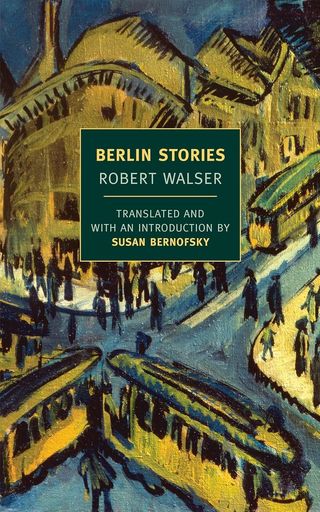
Cover of Berlin Stories

Berlin Stories

Robert Walser

Original language: German · Paperback · ISBN 978-1590174548

Robert Walser, a Swiss writer, moved to Berlin in 1905 to be near his older brother Karl, who had established himself as a stage-set designer. The city was accelerating into industrial modernity, and Walser responded with short prose pieces about nearly everything he met: theaters, cabarets, painters' galleries, literary salons, street markets, the Tiergarten park, quick-service restaurants, and the electric tram.

The earlier pieces read like notes from an enthusiastic but unconventional guide, mixing celebration with dry humor and occasional satire. Later contributions turn inward, touching on the writing process, on memory, and on brief character studies. Throughout, small things receive careful attention: a tram ride, a restaurant meal, the mood of one street. Walser noticed what others passed over, and his sentences often land on precise, counter-intuitive images.

Many of these texts first appeared in literary magazines and in the feuilleton sections of newspapers, the cultural pages of the daily press, a format suited to compact observation. Berlin Stories gathers them into one volume, following Walser's years in the German capital and giving a street-level view of a city then diving into modernity.

Plot

Berlin Stories collects his alternately celebratory, droll, and satirical observations on every aspect of the bustling German capital, from its theaters, cabarets, painters’ galleries, and literary salons, to the metropolitan street, markets, the Tiergarten, rapid-service restaurants, and the electric tram. Originally appearing in literary magazines as well as the feuilleton sections of newspapers, the early stories are characterized by a joyous urgency and the generosity of an unconventional guide. Later pieces take the form of more personal reflections on the writing process, memories, and character studies. All are full of counter-intuitive images and vignettes of startling clarity, showcasing a unique talent for whom no detail was trivial, at grips with a city diving headlong into modernity.


Cover of Great Fear on the Mountain

Great Fear on the Mountain

Charles Ferdinand Ramuz

Original language: French · Paperback · ISBN 978-1953861825

In a small rural village in Switzerland, feed for livestock is running dangerously low. The town council gathers to discuss a difficult option: climbing a nearby mountain to reach open pastures said to hold enough grass to sustain seventy animals through the summer. The problem is that the mountain carries a fearsome reputation. Village elders warn against the ascent, pointing to old stories of danger and dread that cling to the passageways like fog. The younger or more desperate members of the community push back, arguing that the animals will starve if nothing is done.

Charles Ferdinand Ramuz sets the story in a landscape where practical need collides with inherited fear. The villagers who eventually form a group to brave the climb must contend not only with the physical difficulty of the mountain but with the psychological weight of local lore passed down through generations. Ramuz builds tension steadily, drawing his characters in sharp detail as they respond in different ways to the same threat.

The novel works as both a realistic portrait of alpine subsistence life and an allegorical study of how communities handle collective anxiety. Ramuz wrote in French from the Vaud region of western Switzerland, and his prose carries a close attention to terrain, weather, and the rhythms of rural decision-making.

Plot

Teeming with tension, this immersive, rhapsodic story transports readers to the Swiss mountainside, bringing to mind the writing of Thomas Mann while offering character studies as vivid and bracing as Eudora Welty’s. Feed is running low in a rural village in Switzerland. The town council meets to decide whether or not to ascend a chimerical mountain in order to access the open pastures that have enough grass to “feed seventy animals all summer long.” The elders of the town protest, warning of the dangers and the dreadful lore that enfolds the mountain passageways like thick fog.

Cover of Green Henry

Green Henry

Gottfried Keller

Original language: German · Paperback · ISBN 978-1847498922

Green Henry follows a young man named Heinrich Lee, nicknamed for the green clothing his mother dresses him in, as he pursues a career as a painter. Written by Swiss author Gottfried Keller and composed between 1846 and 1855, the novel draws heavily on Keller's own youth and artistic training. It is a Bildungsroman, a German literary term for a novel that traces a character's formation from childhood into adulthood. Heinrich's path takes him from rural Switzerland to the art world, where his talent and ambition collide with practical reality.

The story also tracks Heinrich's attachments to two women: Anna, who is gentle and reserved, and Judith, who is proud and physically vivid. These relationships pull him in different directions and reflect broader tensions in his character between idealism and experience. Keller uses Heinrich's personal struggles to build a wider portrait of Swiss society and its values during the mid-nineteenth century.

Keller revised the novel significantly, producing a second version in the 1870s and 1880s that changed the narrative perspective from third person to first person and altered key elements of the plot. Both versions remain in print. The book is semi-autobiographical, and Keller, like his character, studied painting before turning to writing.

Plot

The story of young Henry, who struggles to fulfill his ambitions to become a successful painter and is torn between the gentle Anna and the proud and sensual Judith, is one of the most outstanding and personal Bildungsroman written in the German language. Composed between 1846 and 1855, Keller's poetic, semi-autobiographical novel draws on the author's own youth, artistic studies and development as a man, as well as providing a comprehensive portrait of his country and his times.

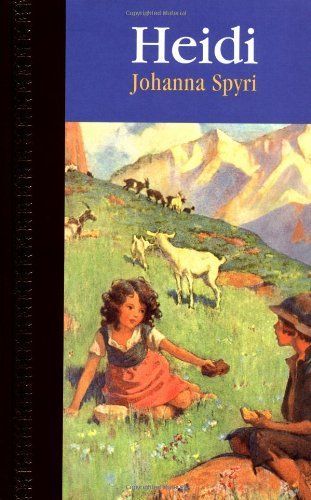
Cover of Heidi

Heidi

Johanna Spyri

Original language: German · Hardcover · ISBN 978-0517189672

Heidi, written by Johanna Spyri and first published in 1881, follows a five-year-old orphan girl who is sent to live with her reclusive grandfather on an Alpine pasture high above the village of Maienfeld in the Swiss Alps. There, surrounded by goats, wildflowers, and open sky, Heidi quickly adapts to mountain life. She befriends Peter, a young goatherd, and gradually draws her withdrawn grandfather back into contact with the people around him.

The story shifts when Heidi is taken to Frankfurt to serve as a companion in a wealthy household. City life, with its enclosed rooms and rigid routines, stands in sharp contrast to the freedom she knew on the mountain. Heidi's longing for the Alps and her grandfather grows steadily, and the tension between these two worlds forms the emotional center of the book.

Spyri wrote the novel in two parts, originally published in German. The setting is specific to the canton of Graubünden in eastern Switzerland, and the landscape plays a central role in the narrative. Heidi has since been translated into dozens of languages and adapted for film, television, and stage in many countries.

Plot

The story of Heidi was written over one hundred years ago, however, it is far from a period piece. In the Swiss Alps, where it is set, a hundred years is just the blink of an eye. We see in her the daughter that every mother dreams of having and every little girl dreams of being.

Cover of Helvetic Kitchen

Helvetic Kitchen

Andie Pilot

Original language: English · Hardcover · ISBN 978-3038691280

Helvetic Kitchen is a cookbook by food blogger Andie Pilot, collecting recipes rooted in Swiss cooking traditions. Some dishes follow family recipes passed down through generations, while others offer updated versions of well-known Swiss preparations. The book is written in English, which makes it unusual among Swiss cookbooks, since most are published in German, French, or Italian to match the country's official language regions.

Alongside the recipes, Pilot explains lesser-known details about Swiss food culture, pointing out ingredients, techniques, and habits that may surprise readers unfamiliar with the cuisine. Switzerland's cooking draws from its German-speaking, French-speaking, and Italian-speaking communities, and the resulting variety is wider than the country's small size might suggest. Dishes like Rösti, raclette, and fondue are internationally recognized, but many everyday Swiss recipes remain largely unknown outside the country.

This edition presents the material as a photographic tour, with more than 100 photos set beside the recipes and the notes on Swiss curiosities. It is described as a bestselling Swiss cookbook available in English, and it is positioned as an introduction for cooks meeting these dishes for the first time.

Plot

Food blogger Andie Pilot takes readers on a photographic tour of her favorite recipes – some just like her grandmother made and some modern takes on Swiss classics. Along the way she illuminates many of Swiss cuisine’s curiosities. This new edition of the classic Helvetic Kitchen is the best introduction to Swiss cooking available in English.

Cover of I'm Not Stiller

I'm Not Stiller

Max Frisch

Original language: German · Paperback · ISBN 978-1564784506

A man is arrested in a small Swiss town and immediately insists he is not the person the authorities believe him to be. He says his name is Jim White, not Stiller, and that he has been jailed under someone else's identity. To support his claim, he offers elaborate accounts of his supposed past: three unsolved murders he says he committed, years spent among cowboys and laborers in America and Mexico, episodes set in back alleys and on docks. The more urgently he tries to prove who he is, the less anyone around him is persuaded.

The novel sits in an uncomfortable space between confession and performance. The prisoner's stories are vivid and detailed, but their very extravagance raises questions about whether they are memories, inventions, or something in between. Max Frisch uses the situation to examine how identity is constructed, how much of a person's self-image depends on the willingness of others to accept it, and what happens when that acceptance is withheld.

Frisch, one of Switzerland's most prominent twentieth-century writers, published the novel in German in 1954. The book has been recognized as a significant work of post-war European fiction, blending humor with a persistent sense of unease about the self.

Plot

Arrested and imprisoned in a small Swiss town, a prisoner begins this book with an exclamation: "I'm not Stiller!" He claims that his name is Jim White, that he has been jailed under false charges and under the wrong identity. To prove he is who he claims to be, he confesses to three unsolved murders and recalls in great detail an adventuresome life in America and Mexico among cowboys and peasants, in back alleys and docks. He is consumed by "the morbid impulse to convince," but no one believes him.

Cover of Laughing Truths

Laughing Truths

Carl Spitteler

Original language: German · Paperback · ISBN 979-8284546840

Carl Spitteler was a Swiss writer who received the Nobel Prize in Literature in 1919, recognized for his epic poetry and independent literary voice. Laughing Truths is a philosophical work in which Spitteler uses irony, satire, and allegorical stories to examine recurring contradictions in human behavior. Topics include morality, self-deception, and the unspoken rules of social convention.

The book moves between serious philosophical inquiry and deliberate wit. Each chapter pairs a concrete observation or parable with a broader question about how people construct meaning, defend habits, or avoid uncomfortable facts. Spitteler treats logic as a useful but limited instrument, and much of the writing circles around the gap between what people claim to believe and what their actions reveal. The tone stays controlled, balancing pointed criticism with humor rather than anger.

Spitteler spent most of his life in Switzerland, working as a teacher and journalist before committing fully to writing. His output ranged from mythological epics to shorter prose pieces like this one. Laughing Truths sits in the latter category, offering a compressed look at ideas he explored across a long and varied career.

Plot

Laughing Truths is a philosophical work that examines the paradoxes of human existence through the lens of irony and satire. The author employs poetic language and allegorical tales to challenge readers' perceptions of reality and truth. Each chapter juxtaposes serious philosophical inquiry with playful wit, creating a balance that is both thought-provoking and accessible. The book highlights the limitations of logic and the necessity of embracing ambiguity in understanding life’s complexities. Readers are invited to confront their own beliefs and assumptions while savoring the author’s clever prose. Laughing Truths is ideal for those interested in existential thought, ethical dilemmas, and literary works that blend intellect with humor. It remains a powerful exploration of how laughter can be both a coping mechanism and a tool for enlightenment.

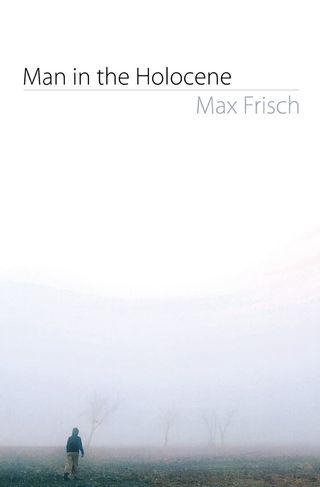
Cover of Man in the Holocene

Man in the Holocene

Max Frisch

Original language: German · Paperback · ISBN 978-1564784667

Man in the Holocene follows an elderly man named Geiser, alone in a remote Swiss mountain village during a prolonged rainstorm. As landslides and flooding reshape the landscape outside, Geiser grows increasingly preoccupied with the idea that the surrounding mountains could collapse and bury the town entirely. He fills his time cutting passages from encyclopedias and reference books, pinning facts about geology, dinosaurs, and human prehistory to his walls, as if assembling a private archive against the disorder closing in around him.

The novella is structured in fragments. Geiser's clipped thoughts appear alongside excerpts from the reference materials he consults, blurring the line between his inner world and the objective knowledge he clings to. At one point he attempts a difficult crossing through a mountain pass, hoping to reach the nearest town, but turns back. The physical danger of the journey mirrors a quieter erosion taking place inside him: his memory is faltering, and his grip on sequence and meaning is loosening.

Max Frisch, one of Switzerland's most recognized twentieth-century writers, published Man in the Holocene in 1979. The book places one person's mental decline against the vast timescale suggested by its title, measuring a single life against the geological epoch in which all recorded human history has occurred.

Plot

As a rainstorm rages outside, Max Frischs protagonist, Geiser, watches the mountain landscape crumble beneath landslides and flooding, and speculates that the town will be wiped out by the collapse of a section of the mountain. Seeking refuge from the storm in town, he makes his way through a difficult and dangerous mountain pass, only to abandon his original plan and return home. A compelling meditation by one of Frischs most original characters, Man in the Holocene charts Geisers desperate attempt to find his place in history and in the confusing and fragile world outside his window.

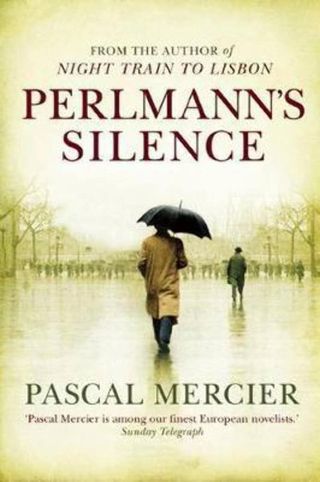
Cover of Perlmann's Silence

Perlmann's Silence

Pascal Mercier

Original language: German · Hardcover · ISBN 978-0802119575

Philipp Perlmann is a respected linguist invited to lead a gathering of international academics in a coastal town near Genoa, Italy. He is expected to deliver a keynote address, but the recent death of his wife has left him unable to concentrate or produce original work. His confidence in his own scholarship has collapsed, and the blank page in front of him feels impossible to fill.

Facing a deadline he cannot meet, Perlmann turns to the unpublished manuscript of a Russian colleague named Leskov and decides to pass it off as his own. For a brief moment the pressure lifts. Then word arrives that Leskov himself is about to join the conference, and what had seemed like a private solution becomes a trap. Perlmann's fear of exposure pushes him toward increasingly extreme thinking as the days before the event run out.

Pascal Mercier, a Swiss author also known as the philosopher Peter Bieri, sets this story at the intersection of language, memory, and professional identity. The novel examines how grief can strip away the structures a person relies on, leaving them exposed to choices they would not otherwise consider. Mercier is also the author of Night Train to Lisbon, which became an international bestseller and was adapted into a film.

Plot

Pascal Mercier’s critically acclaimed debut novel, Night Train to Lisbon, became an international bestseller and the basis for a film starring Jeremy Irons. Now, in Perlmann’s Silence, Mercier delivers a deft psychological portrait of a man striving to get his life back on track in the wake of his beloved wife’s death. Philipp Perlmann, prominent linguist and speaker at a gathering of international academics in a seaside town near Genoa, is struggling to maintain his grip on reality. Derailed by grief and no longer confident of his professional standing, writing his keynote address seems like an insurmountable task. Terrified of failure, he decides to plagiarize the work of Leskov, a Russian colleague, and breathes a sigh of relief once the text has been submitted. But when Leskov’s imminent arrival is announced, Perlmann’s mounting desperation leads him to contemplate drastic measures.

Cover of Ring

Ring

Élisabeth Horem

Original language: French · Paperback · ISBN 978-1564788689

Quentin, a European man recovering from a painful breakup, leaves his old life behind and settles in Tahas, a fictional city in a desert country. The place is at once monotonous and strangely dreamlike. Rather than confronting it directly, he moves into the Ring, a sheltered enclave where expatriates live in relative comfort, separated from the surrounding city and its people. The Ring operates as a kind of green zone, a bubble of familiar habits transplanted into foreign ground.

Inside this compound, Quentin becomes an observer. He watches the small rituals and social patterns of his fellow outsiders, people who have chosen comfort over curiosity. But his own loneliness pushes him toward the edges of the enclave and into contact with local culture and politics. The tension in the novel sits between two impulses: the urge to disappear into a strange new country and the instinct to retreat into safety among people who share your background.

Élisabeth Horem, a Swiss author, sets these questions of exile and belonging in a place that feels both specific and unnamed. Tahas is fictional, but the dynamics of expatriate life it portrays, the insularity, the uneasy distance from the host country, are recognizable across many real cities.

Plot

Ring follows Quentin, a man recovering from heartbreak who relocates to Tahas, a fictional desert city. He moves into The Ring — an enclave of expatriates — and becomes an observer of its insular community and the world outside it. As Quentin navigates daily life, his loneliness, curiosity, and desire for connection bring him into contact with the local culture, politics, and other outsiders.

Cover of The Alp

The Alp

Arno Camenisch

Original language: Romansh · Paperback · ISBN 978-1628970104

Arno Camenisch's The Alp takes place over a single summer on a high mountain pasture in Switzerland. Four unnamed men share the season's labor: a dairyman, his farmhand, a cowherd, and a swineherd. They live and work side by side in tight quarters, tending animals and processing milk in conditions that are physically demanding and often isolating. The novel is the first part of what became Camenisch's alpine trilogy.

Despite the pastoral setting, this is not a sentimental portrait of mountain life. The characters deal with hazardous work, loneliness, heavy drinking, cruelty, and a deep-rooted stubbornness that keeps them going through each day. Camenisch writes about these realities with warmth and with a strain of humor that tips frequently into the surreal. His prose pays close attention to sound, capturing the particular noises of the landscape and the rhythms of speech in this remote world.

Camenisch, who grew up in the canton of Graubünden, writes in both Romansh and German. The Alp draws on that bilingual background, and the compressed, episodic structure of the book reflects the repetitive pace of a summer spent working at altitude.

Plot

The four main (unnamed) characters are a dairyman, his farmhand, a cowherd, and a swineherd who all live and work in close proximity--but this is no "Heidi." Theirs is an existence marked by dangerous work, solitude, cruelty, alcoholism, and sheer stubbornness; but the author's handling of these situations and lives is characterized at all times by affection, surreal humor, and a brilliant ear for the sounds of the setting.

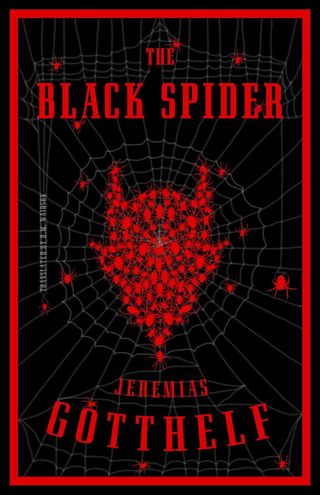
Cover of The Black Spider

The Black Spider

Jeremias Gotthelf

Original language: German · Paperback · ISBN 978-1847494535

The Black Spider is a novella by Swiss author Jeremias Gotthelf, first published in 1842. The story uses a layered narrative structure: an outer frame set during a baptism celebration in the Emmental region of Switzerland leads into an older, darker tale told by a grandfather. That inner story concerns a rural community that enters into a pact with the Devil. When members of the village repeatedly fail to honor the terms of this agreement, a plague of deadly black spiders descends on the settlement.

Gotthelf uses the supernatural premise to examine the social dynamics of a small, insular community. The villagers are portrayed as petty and morally compromised, and the spiders function as a consequence of collective failings rather than individual sin alone. The novella moves between folk horror and pointed social observation, drawing on the language and landscape of the Swiss countryside to ground its more fantastical elements.

Gotthelf, born Albert Bitzius, was a pastor in the canton of Bern. His fiction frequently depicted rural Swiss life with a combination of realism and moral purpose. The Black Spider remains one of his most widely translated works, blending a compact allegorical structure with sharp commentary on communal responsibility and self-interest.

Plot

After one of their own people repeatedly fails to live up to a pact with the Devil, a petty and morally bankrupt village community is plagued by a swarm of deadly black spiders. Using a complex narrative structure, Gotthelf ’s cautionary novella shrewdly dissects the iniquitous social dynamics of rural life.

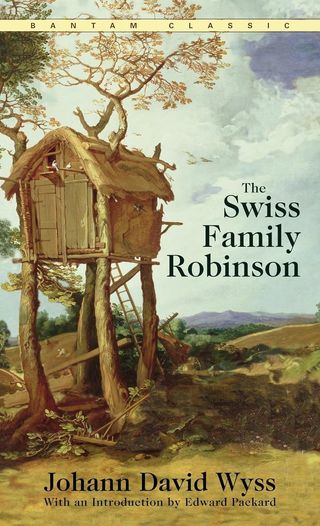
Cover of The Swiss Family Robinson

The Swiss Family Robinson

Johann David Wyss

Original language: German · Paperback · ISBN 978-0553214031

The Swiss Family Robinson follows a pastor, his wife, and their four sons who survive a shipwreck and find themselves stranded on an uninhabited tropical island. Written by Johann David Wyss and first published in the early nineteenth century, the novel draws openly on Daniel Defoe's Robinson Crusoe but shifts the focus from a solitary castaway to a whole family working together. The father narrates their efforts to build shelter, find food, and adapt to an environment filled with unfamiliar animals and plants.

Each of the four boys has a distinct personality, and much of the story follows their separate encounters with the island's challenges. The family salvages tools, seeds, and livestock from the wrecked ship, giving them a practical starting point that sets the book apart from harsher survival tales. Over time they construct increasingly elaborate living arrangements, including a tree house. A mysterious message attached to an albatross introduces a thread of contact with the outside world.

Wyss, a Swiss pastor himself, structured the novel partly as a series of lessons in natural history and resourcefulness. The book has been widely adapted and translated since its original German-language publication, and its premise has shaped later castaway stories in literature and film.

Plot

“For many days we had been tempest-tossed…the raging storm increased in fury until on the seventh day all hope was lost.” From these dire opening lines, a timeless story of adventure begins. One family will emerge alive from this terrible storm: the Robinsons—a Swiss pastor, his wife, and four sons, plus two dogs and a shipload of livestock. Inspired by Daniel Defoe’s Robinson Crusoe, this heartwarming tale portrays a family’s struggle to create a new life on a strange and fantastic tropical island. There each boy must learn to utilize his own unique nature as their adventures lead to difficult challenges and amazing discoveries, including a puzzling message tied to an albatross’s leg.

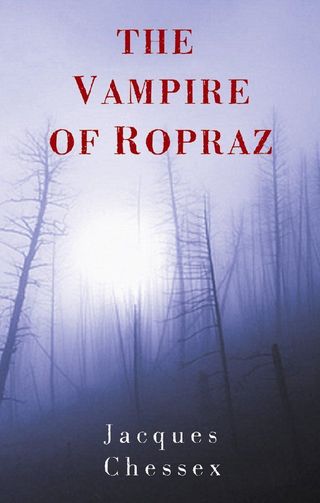
Cover of The Vampire of Ropraz

The Vampire of Ropraz

Jacques Chessex

Original language: French · Paperback · ISBN 978-1904738336

In 1903, in the rural Swiss village of Ropraz, a young woman named Rosa Gillieron dies and is buried. Shortly after, her coffin is found opened and her body violated. The discovery sends fear through the surrounding region, and when additional graves are desecrated in similar fashion, locals begin speaking of a vampire. Jacques Chessex builds this novella around the real events that shook the canton of Vaud in the early twentieth century, drawing on local records and collective memory.

Suspicion quickly settles on Charles-Augustin Favez, a farmhand known for erratic behavior and minor offenses. Favez is an outsider in temperament if not in geography, and the community's anxiety finds a ready target in him. Chessex traces how fear moves through a small, tightly bound population, how superstition fills the space left by incomplete answers, and how collective guilt can harden into persecution. The story is set against a landscape of cold winters, isolated farms, and Protestant villages where social order is prized and deviation is noticed.

The novella is brief and direct, closer in shape to a case study than a conventional novel. Chessex, who was born in the canton of Vaud, wrote from close proximity to the places and traditions that shaped the story.

Plot

Set in rural Switzerland in 1903, the novella begins with the death of Rosa Gillieron, a young woman from the village of Ropraz. Soon after her burial, her coffin is found desecrated, her body mutilated — and panic spreads through the region. When more graves are violated, the villagers become convinced a “vampire” is among them. Suspicion falls on Charles-Augustin Favez, a troubled farmhand with a history of odd behavior and petty crimes.

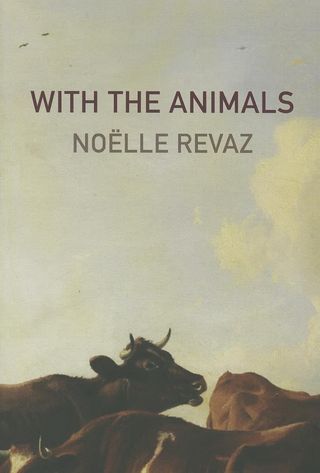
Cover of With the Animals

With the Animals

Noëlle Revaz

Original language: French · Paperback · ISBN 978-1564787545

With the Animals is the debut novel by Swiss author Noëlle Revaz, written in French and set in a rural farming world of physical labor, mud, and close proximity to livestock. The story is narrated by Paul, a farmer whose entire existence revolves around his animals and land. He treats his wife and children with contempt, barely acknowledging them as people, while lavishing attention on his cattle. His voice is blunt, repetitive, and shaped by the narrowness of his daily routines. The language Revaz gives him mirrors his character: stripped down, coarse, and darkly comic.

Paul's isolated authority over his small domain is disrupted when a farmhand named Georges arrives for the summer. Georges introduces an outside presence into a household that has been sealed off by Paul's rigid control. The tension between Paul's need to dominate and the quiet challenge that Georges represents drives the novel forward. Revaz has been placed in the Franco-Swiss literary tradition alongside figures such as Jacques Chessex and C. F. Ramuz, and her approach to rural masculinity, cruelty, and dark humor has drawn comparisons to Louis-Ferdinand Céline. The novel examines what happens when a closed world is forced open, even slightly.

Plot

"With the Animals," her shocking debut, is a novel of mud and blood whose linguistic audaciousness is matched only by its brutality, misanthropy, and gallows humor. Narrated by the singular Paul--a violent, narrow minded farmer whose unceasing labor leaves him with more love for his livestock than his family--"With the Animals" is at once a fantastically exaggerated and entirely honest portrait of masculinity gone mad. With his mute and detested wife and children huddled at his side, Paul is only roused from his regimen of hard labor and casual cruelty when a farmhand, Georges, comes to work on his property for the summer. His sovereignty seemingly threatened, an element of unwanted humanity now injected into his universe, Paul's little kingdom seems ripe at last for a revolution.

More from Switzerland

See the country page for Switzerland for its map, facts and largest cities, or browse books from other countries.

Free editions are on Project Gutenberg, matched by title and author. Links go to Amazon; Hookito doesn’t sell books. Know a book that belongs here, or spotted a mistake? Write to submissions@hookito.com.

Where to next?

Back to the globe
Hookito landscape illustration