Hookito

Ivory Coast · Books

Books from Ivory Coast
5 books from and about Ivory Coast: what each is about, the plot, and a note from Professor Kogi.

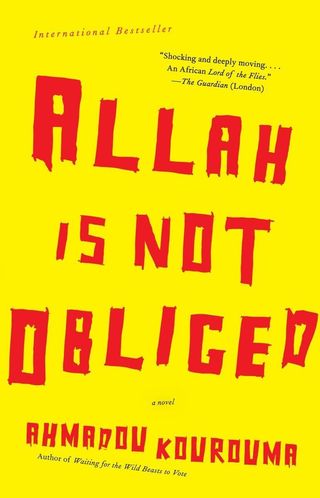
Cover of Allah is Not Obliged

Allah is Not Obliged

Ahmadou Kourouma

Original language: English · Paperback · ISBN 978-0307279576

Ahmadou Kourouma's novel follows Birahima, a ten-year-old boy from a village in the Ivory Coast who sets out to find his aunt Mahan after his mother dies. Traveling with Yacouba, a man who works as both a sorcerer and a cook, Birahima crosses into Liberia and is captured by rebel forces. He is handed a Kalashnikov, given drugs and minimal food, and made to fight in a civil war alongside other children. The story is told in Birahima's own voice, mixing four dictionaries into his narration as he tries to explain a world that resists explanation.

Kourouma, one of the most recognized writers from West Africa, uses Birahima's perspective to present the mechanics of child soldiering with plain, close-up detail. The boy witnesses killing, mutilation, and breakdown around him, yet his narration carries dark humor and a stubborn directness that keeps it grounded in his effort to simply make sense of events. The title draws from a phrase Birahima repeats throughout: that God is not obliged to be fair in the things that happen on Earth.

The novel is set against the actual civil conflicts that swept through Liberia and Sierra Leone during the 1990s. Kourouma wrote it in French, and it was among his final works before his death in 2003.

Plot

ALLAH IS NOT OBLIGED TO BE FAIR ABOUT ALL THE THINGS HE DOES HERE ON EARTH.These are the words of the boy soldier Birahima in the final masterpiece by one of Africa’s most celebrated writers, Ahmadou Kourouma. When ten-year-old Birahima's mother dies, he leaves his native village in the Ivory Coast, accompanied by the sorcerer and cook Yacouba, to search for his aunt Mahan. Crossing the border into Liberia, they are seized by rebels and forced into military service. Birahima is given a Kalashnikov, minimal rations of food, a small supply of dope and a tiny wage. Fighting in a chaotic civil war alongside many other boys, Birahima sees death, torture, dismemberment and madness but somehow manages to retain his own sanity.
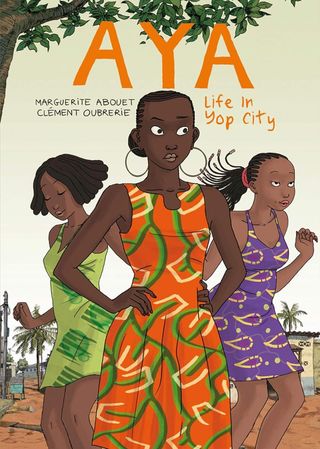
Cover of Aya: Life in Yop City

Aya: Life in Yop City

Clément Oubrerie, Marguerite Abouet, Marguerite Abouet & Clément Oubrerie

Original language: French · Paperback · ISBN 978-1770460829

Aya: Life in Yop City is a graphic novel set in Ivory Coast in 1978, a period when the country enjoyed unusual economic growth and political calm compared to much of West Africa. The story follows nineteen-year-old Aya, a focused and observant young woman living in Yopougon, a large working-class commune on the western edge of Abidjan. Her friends Adjoua and Bintou are more interested in nightlife and romance, while Aya keeps her attention on her studies. Around them, relatives and neighbors insert themselves into every decision, from career plans to love interests.

The book is loosely drawn from author Marguerite Abouet's own upbringing in Yopougon. Together with illustrator Clément Oubrerie, she uses the setting to show ordinary domestic life rather than crisis or conflict. Family meals, street conversations, local bars, and small rivalries fill the panels. The tone stays light and often comic, but private tensions run beneath the surface as the characters navigate expectations about marriage, money, and ambition.

Yopougon itself is one of the most populated communes in Abidjan, and its local nickname, Yop City, gives the book its subtitle. The story grounds its characters in specific streets and social routines, making the neighborhood as central to the narrative as any person in it.

Plot

Ivory Coast, 1978. It's a golden time, and the nation, too-an oasis of affluence and stability in West Africa-seems fueled by something wondrous. Aya is loosely based upon Marguerite Abouet's youth in Yop City. It is the story of the studious and clear-sighted nineteen-year-old Aya, her easygoing friends Adjoua and Bintou, and their meddling relatives and neighbors. It's a wryly funny, breezy account of the simple pleasures and private troubles of everyday life in Yop City.

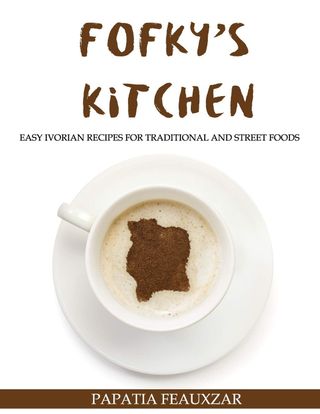
Cover of Fofky's Kitchen: Easy Ivorian Recipes for Traditional and Street Foods

Fofky's Kitchen: Easy Ivorian Recipes for Traditional and Street Foods

Papatia Feauxzar

Original language: English · Paperback · ISBN 978-1947148154

Fofky's Kitchen is a cookbook focused on the food traditions of Ivory Coast, written by Papatia Feauxzar. It presents recipes for both traditional home-cooked dishes and popular street foods found across the country. The book is designed as an accessible guide, with straightforward instructions aimed at cooks who may be encountering Ivorian cuisine for the first time.

Ivory Coast, located in West Africa along the Gulf of Guinea, has a cooking culture shaped by its tropical climate and diverse agricultural landscape. Staples such as cassava, plantain, yams, and rice appear in many regional dishes, alongside sauces built from groundnuts, tomatoes, and local vegetables. Street food plays a visible role in daily life, with grilled meats, fried snacks, and portable meals sold in open-air markets and along roadsides in cities like Abidjan and Bouake.

The book addresses a growing interest in Ivorian food both inside and outside the country. Younger generations of Ivorians, including those living abroad, are looking for ways to recreate the dishes their families prepared at home. By collecting these recipes in one place, Fofky's Kitchen serves as a practical reference for anyone wanting to cook Ivorian meals in their own kitchen.

Plot

Ivorian Cuisine has started to gain recognition across the globe. In addition, many Millennium and post-Millennium Ivorians are seeking restaurants to enjoy their favorite traditional dishes and street foods. Others simply want to know how to cook the same dishes their ancestors made.

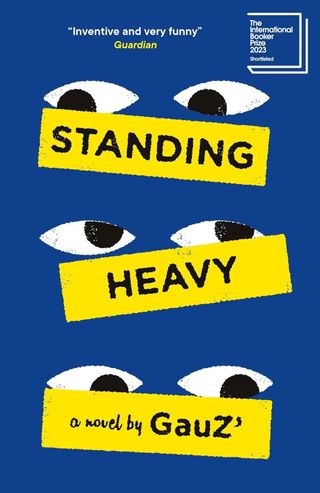
Cover of Standing Heavy

Standing Heavy

Gauz

Original language: French · Paperback · ISBN 978-1529414431

Standing Heavy follows two generations of Ivoirian men navigating life in Paris as undocumented workers. In the 1960s, Ferdinand arrives from Côte d'Ivoire with plans to establish himself in France, only to find his ambitions shaped by the politics of a student residence and the realities of immigrant labor. Decades later, in the 1990s, Ossiri and Kassoum face a different Paris, one where immigration policy is shifting and the paths available to them are narrowing.

All three characters work as security guards, a role that places them at the edges of French society while giving them a direct view of its interior. In a third timeline set in the 2010s, a guard stationed at a Sephora on the Champs-Élysées watches the rituals of consumer culture from behind a fixed post. The novel uses these overlapping periods to trace how France's relationship with its former colonies has changed in practice while remaining rooted in older patterns of power and exclusion.

Gauz, himself originally from Côte d'Ivoire, structures the book around the physical stillness of standing guard for hours. The title refers to this posture literally, and the narrative draws its observations from what a person notices when paid to watch but expected to remain unseen.

Plot

The 1960s - Ferdinand arrives in Paris from Côte d'Ivoire, ready to take on the world and become a big somebody. The 1990s - It is the Golden Age of immigration, and Ossiri and Kassoum navigate a Paris on the brink of momentous change. The 2010s - In a Sephora on the Champs-Élysées, the all-seeing eyes of a security guard observes the habits of those who come to worship at this church to consumerism. Amidst the political bickering of the inhabitants of the Residence for Students from Côte d'Ivoire and the ever-changing landscape of French immigration policy, Ferdinand, Ossiri and Kassoum, two generations of Ivoirians, attempt to make their way as undocumented workers, taking shifts as security at a flour mill.

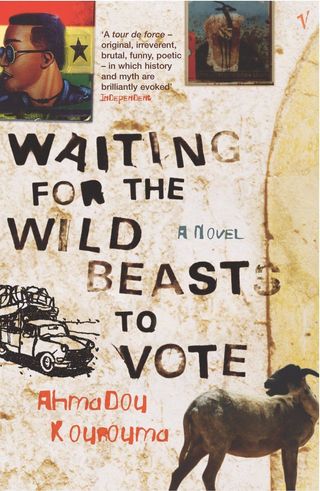
Cover of Waiting For The Wild Beasts To Vote

Waiting For The Wild Beasts To Vote

Ahmadou Kourouma

Original language: French · Paperback · ISBN 978-0099283829

Koyaga is orphaned at seven and grows into a fearsome hunter, battling mystical creatures and able to change his shape into beasts and birds. He fights in the French colonial armies in Vietnam and Algeria, then returns home to mount a coup and rule a state called the Gulf Coast for thirty years, surviving repeated assassination attempts. His regime is corrupt yet outwardly orderly enough to attract foreign backing and investment.

Ahmadou Kourouma, an Ivorian novelist writing in French, builds the book as a donsomana, a ceremonial recitation performed by a griot, or professional oral storyteller, in honour of a hunter. The result reads like a praise song addressed to a dictator, blending folklore with political satire. When Western governments stop supporting authoritarian allies and begin demanding democracy, Koyaga must look for another ruse to stay in office.

The novel first appeared in French in 1998 as En attendant le vote des betes sauvages. Kourouma writes a French shaped by Malinke speech, so the sentences carry the rhythm and logic of spoken narration, and the story stands close to the records of several Cold War era leaders in West and Central Africa.

Plot

Orphaned at the age of seven, Koyaga grows up to be a terrible hunter; he fights mystical beasts, and is a shape-shifter, capable of changing himself into beasts and birds. He fights in the French colonial armies, in Vietnam and Algeria, but on his return, he mounts a coup and becomes ruler and distator of the Gulf Coast. For thrity years, he runs a corrupt but 'clean' state, surviving repeated assassination attempts and gaining support and investment from abroad. But, when the 'First World' decide they no longer want to support disctatorships and call for democracy, he needs another ruse to maintain himself in power ...

More from Ivory Coast

See the country page for Ivory Coast for its map, facts and largest cities, or browse books from other countries.

Links go to Amazon; Hookito doesn’t sell books. Know a book that belongs here, or spotted a mistake? Write to submissions@hookito.com.

Where to next?

Back to the globe
Hookito landscape illustration