Hookito

Chile · Books

Books from Chile

9 books from and about Chile: what each is about, the plot, and a note from Professor Kogi.

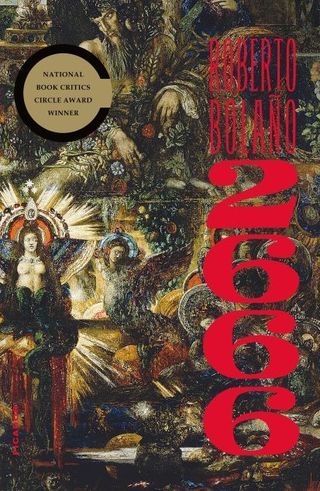
Cover of 2666

2666

Roberto Bolaño

Original language: Spanish · Paperback · ISBN 978-0312429218

2666 is a posthumous novel by the Chilean writer Roberto Bolaño, published in 2004. It consists of five interconnected parts that Bolaño originally intended to release as separate books, partly to provide financial security for his children. After his death in 2003, his heirs chose instead to publish the work as a single novel. The structure moves between continents and perspectives, following a wide cast that includes four European literature professors, an American sportswriter, a reclusive German novelist named Benno von Archimboldi, a teenage student, and her widowed father.

The four professors are bound together by their shared obsession with Archimboldi, whose growing reputation has made him a subject of international scholarly attention. Their intellectual camaraderie develops complicated personal dimensions, and a rumored sighting of the novelist draws them to Santa Teresa, a fictional city modeled on Ciudad Juárez, on the border between Mexico and the United States.

Santa Teresa anchors the novel's darkest thread. In the city's industrial sprawl, hundreds of young women working in factories have gone missing, a pattern drawn from real events in Juárez during the 1990s and 2000s. The lives of the novel's scattered characters converge around this place and its unanswered violence.

Plot

Its throng of unforgettable characters includes academics and convicts, an American sportswriter, an elusive German novelist, and a teenage student and her widowed, mentally unstable father. Their lives intersect in the urban sprawl of Santa Teresa―a fictional Juárez―on the U.S.-Mexico border, where hundreds of young factory workers, in the novel as in life, have disappeared.
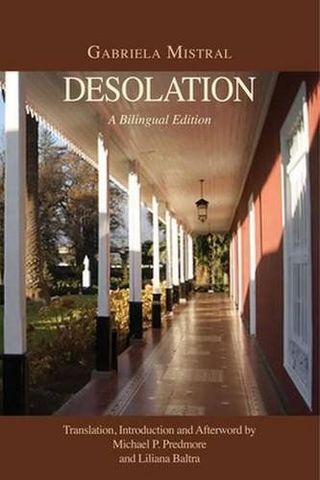
Cover of Desolation

Desolation

Gabriela Mistral

Original language: Spanish · Paperback · ISBN 978-1891270246

Desolación, first published in 1922, is the debut poetry collection by Chilean writer Gabriela Mistral. The poems move through themes of love, grief, nature, childhood, and the landscapes of rural Chile, particularly the arid valleys and mountains where Mistral grew up and worked as a teacher. The collection established her as a distinctive voice in Latin American literature and helped shape her path toward becoming the first Latin American author awarded the Nobel Prize in Literature, which she received in 1945.

This bilingual edition presents the poems in both Spanish and English, making it the first full English translation of the collection. The text is based on the 1923 Nascimento edition, published in Santiago, which is considered the most reliable Spanish version of the book. That edition appeared one year after the original New York printing and reflected Mistral's own revisions.

Mistral spent much of her life outside Chile, serving as a diplomat and educator in Europe and the Americas. Desolación, rooted in the stark terrain and emotional life of her early years, remains the foundation of her broader body of work and a starting point for understanding her later poetry and prose.

Plot

For the first time, it allows English readers to appreciate the integrity and expressive power of this foundational book in the life and works of Gabriela Mistral. The translation is based on the most reliable and accurate text in Spanish, the 1923 edition of Nascimento, which will be of interest and importance both to a Spanish-speaking public as well as to specialists in the field.

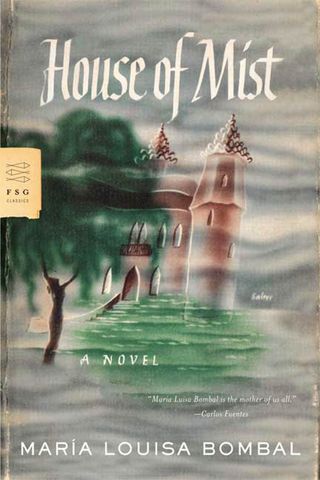
Cover of House of Mist

House of Mist

María Luisa Bombal

Original language: Spanish · Paperback · ISBN 978-0374531362

House of Mist follows a young woman who marries a distant landowner and moves into his home, set deep in the forested Chilean countryside. The marriage is cold and uncommunicative, and the narrator finds herself surrounded by unexplained events and half-visible presences in the woods and fog around the house. The story unfolds through her interior world as much as through external action, with memory, desire, and strange happenings layered together until the boundary between what is observed and what is felt becomes difficult to locate.

María Luisa Bombal, a Chilean writer active from the 1930s onward, is often cited as a forerunner of the literary movement later known as magical realism. Her approach in this novel treats the natural landscape and the emotional states of her characters as continuous with each other. Trees, mist, and water do not merely serve as backdrop but carry psychological weight within the narrative. The Chicago Tribune critic Penelope Mesic noted Bombal's willingness to set aside conventional realism in favor of a heightened reality where the outer world mirrors internal feeling.

The novel is relatively short and tightly focused on a single household and its surroundings. Its Chilean forest setting gives the story a particular atmosphere of enclosure and isolation that shapes the tensions between the characters.

Plot

Of this story of a young bride struggling with her marriage to an aloof landowner―and the mysteries surrounding their life together―in a house deep in the lush Chilean woods, Penelope Mesic wrote in the Chicago Tribune that Bombal showed "bold disregard for simple realism in favor of a heightened reality in which the external world reflects the internal truth of the characters' feeling . . . mingling . . . fantasy, memory and event."

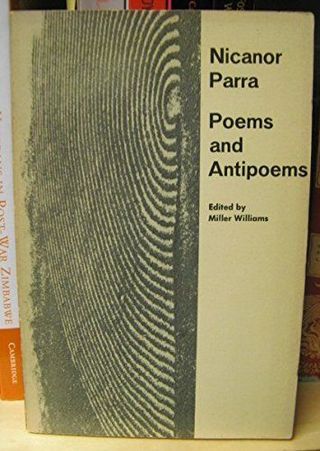
Cover of Poems and Antipoems

Poems and Antipoems

Nicanor Parra

Original language: Spanish · Paperback

Nicanor Parra, born in Chile, became one of the most distinctive voices in Latin American literature through his concept of the antipoem. Rather than elevated imagery or formal meter, Parra used colloquial speech, sharp irony, and dark humor to strip poetry down to the language people actually speak. This collection presents a selection of his work in both Spanish and English, with the originals set beside their translations.

The English versions were produced by a notable group of translators, including Lawrence Ferlinghetti, Denise Levertov, Thomas Merton, W.S. Merwin, Allen Ginsberg, and James Laughlin. Ferlinghetti was among the first to bring Parra's writing to North American audiences, publishing a volume in the City Lights series in 1960. The variety of translators gives the collection an unusual range of interpretive voices, each responding differently to Parra's dry, conversational tone.

Parra's antipoems resist grand statements and poetic decoration. They tend toward the flat, the mundane, and the absurd, turning everyday situations into material that questions literary convention itself. The bilingual format allows Spanish-speaking readers to measure each translation against the original phrasing and rhythm.

Plot

Dual language (Spanish/English) selection of the poetry of the Chilean Nicanor Parra. Translators include Lawrence Ferlinghetti, Denise Levertov, Thomas Merton, W S Merwin, Allen Ginsberg, and J Laughlin. Ferlinghetti first discovered Parra for North American readers with a book in the City Lights series in 1960.

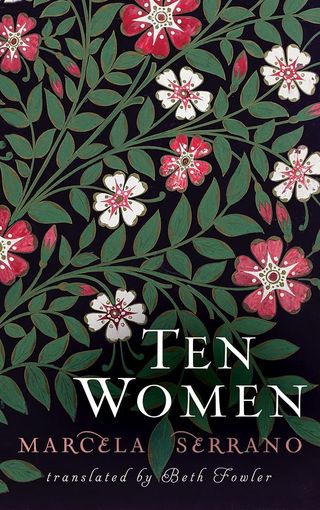
Cover of Ten Women

Ten Women

Marcela Serrano

Original language: Spanish · Paperback · ISBN 978-1477849453

Ten Women follows nine Chilean women and the therapist who connects them. Each woman occupies a different corner of Chilean society. Among them are a teenager skilled with computers who is working through questions about her sexual identity, a middle-aged woman who has withdrawn from social life, a housekeeper, a well-known television figure, and an older woman facing isolation. Their ages, backgrounds, and daily circumstances vary widely, and at first glance they share little beyond the same therapist.

The therapist is the tenth woman of the title, and through her the group gradually begins to meet and speak openly. As each woman tells her own story, overlapping experiences surface between people who assumed they had nothing in common. Marcela Serrano, a Chilean author, structures the novel around these individual accounts, letting each voice carry its own rhythm and concerns. The setting is contemporary Chile, and the social contrasts between the characters reflect the country's mix of economic classes, generations, and cultural identities.

Serrano builds the book around the gap between how isolated each woman feels and how much her experience echoes in the lives of the others. The novel moves between personal histories that touch on loss, resilience, and the slow, uncertain process of forming trust across social boundaries.

Plot

For nine Chilean women, life couldn’t be more different. There is the teenage computer whiz confronting her sexual identity. A middle-aged recluse who prefers the company of her dog over that of most humans. A housekeeper. A celebrity television personality. A woman confronting the loneliness of old age. Of disparate ages and races, these women represent the variety of cultural and social groups that Chile comprises. On the surface, they seem to have nothing in common…except for their beloved therapist, who brings them together. Yet as different as they all are, each woman has a story to share. As the women tell their stories, unlikely common threads are discovered, bonds are formed, and lives are transformed. Their stories form an intricate tale of triumph, heartache, and healing that will resonate with women from all walks of life.

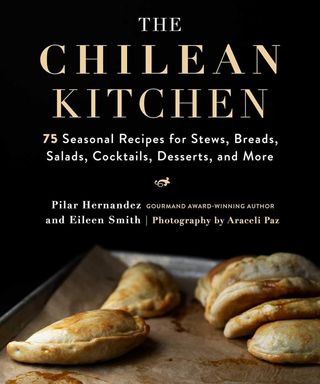
Cover of The Chilean Kitchen

The Chilean Kitchen

Pilar Hernandez, Eileen Smith

Original language: English · Hardcover · ISBN 978-1510752856

The Chilean Kitchen is a cookbook by Pilar Hernandez and Eileen Smith built around the Chilean custom of lingering at the table. The Spanish phrase quédate un poquito, meaning stay a while, sets the tone: meals in Chile are not rushed events but occasions for company and conversation. The book collects over seventy recipes drawn from Hernandez's family cooking, organized by season to follow the natural availability of ingredients. Smith contributes the written context, describing Chilean food culture for readers who may have little prior knowledge of it.

Chile stretches more than 4,000 kilometers from the Atacama Desert in the north to Patagonia in the south, and its geography shapes a wide range of regional ingredients and cooking traditions. The recipes in this collection have been adjusted for the US market, substituting or clarifying where certain products may be harder to find outside Chile. Seasonal organization is central to the book's structure, linking dishes to the time of year when their key ingredients are freshest. The pairing of family recipes with explanatory writing gives each dish a context beyond the ingredient list, connecting food to the daily rhythms of Chilean households.

Plot

The Spanish phrase quédate un poquito, or “stay a while,” is the essence of Chilean hospitality—one does not “stop by for a quick bite” in Chile. Comprised of more than seventy authentic Chilean recipes, organized seasonally for maximum freshness, and tweaked ever-so-slightly to fit neatly into the US market, this book creates an accessible, authentic, and uniquely Chilean cooking experience. It marries Pilar’s family recipes and Eileen’s astute writings, which make even those who have never visited Chile feel like they have found home.

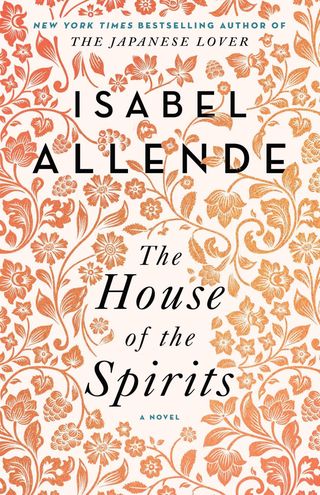
Cover of The House of the Spirits

The House of the Spirits

Isabel Allende

Original language: Spanish · Paperback · ISBN 978-1501117015

Isabel Allende's first novel follows three generations of the Trueba family in Chile, beginning with the patriarch Esteban, a proud and volatile landowner driven by ambition and political power. His wife Clara possesses an intuitive, spiritual sensitivity that sets her apart from the rigid social world her husband inhabits. The contrast between Esteban's forceful temperament and Clara's quiet, otherworldly nature shapes the household and the generations that follow.

Their daughter Blanca defies her father by entering a love affair he forbids, and the tension between family loyalty and personal freedom runs through the novel's core. From this conflict comes Alba, Esteban's granddaughter, whose own life becomes bound up with the political upheaval of her country. The story moves across decades, linking private domestic struggles to larger shifts in Chilean society, including periods of social reform and authoritarian rule.

Allende draws on elements of magical realism, grounding supernatural details in the everyday texture of family life. The novel's structure relies on multiple narrators and overlapping timelines, with Clara's personal notebooks serving as a key thread connecting past and present. It was first published in Spanish in 1982.

Plot

The House of the Spirits, the unforgettable first novel that established Isabel Allende as one of the world’s most gifted storytellers, brings to life the triumphs and tragedies of three generations of the Trueba family. The patriarch Esteban is a volatile, proud man whose voracious pursuit of political power is tempered only by his love for his delicate wife Clara, a woman with a mystical connection to the spirit world. When their daughter Blanca embarks on a forbidden love affair in defiance of her implacable father, the result is an unexpected gift to Esteban: his adored granddaughter Alba, a beautiful and strong-willed child who will lead her family and her country into a revolutionary future.

Cover of The Story of a Seagull and the Cat Who Taught Her to Fly

The Story of a Seagull and the Cat Who Taught Her to Fly

Luis Sepúlveda

Original language: Spanish · Paperback · ISBN 978-1846884009

A seagull caught in an oil slick uses her last strength to reach the port city of Hamburg, where she lands on the balcony of a large black cat named Zorba. Before she dies, she asks him for three promises: to look after her egg, to resist eating it, and to teach the chick to fly once it hatches. Zorba agrees, and the story follows his efforts to honor each promise in turn, with help from a small band of neighborhood cats.

Luis Sepúlveda, a Chilean writer who spent much of his life in Europe, published this short fable in 1996. The book is written for younger readers but carries themes that apply well beyond childhood. Responsibility, difference, and the courage to attempt something outside one's nature all run through the plot. The cats must figure out how to raise a bird that is nothing like them, and the young gull must eventually trust a world she was not born into.

The setting matters to the story. Hamburg's rooftops, harbor, and rain give the fable a specific geography rather than a vague fairy-tale backdrop. Sepúlveda keeps the tone gentle and direct, letting the animal characters carry real emotional weight without sentimentality.

Plot

Her wings burdened by an oil slick, a seagull struggles to the nearest port to lay her final egg. Exhausted, she lands on a balcony where Zorba the cat is sunning himself. She extracts three extraordinary promises from him: that he will watch over the egg, that he will not EAT the egg, and that, when it's time, he will teach the baby gull to fly. The first two promises are hard enough, but the third one is surely impossible. Isn't it?

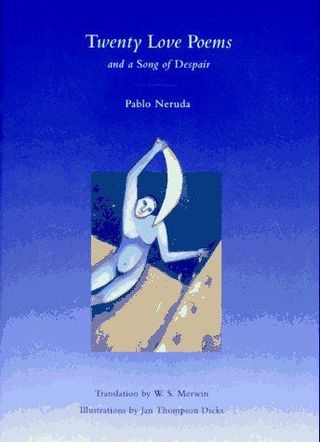
Cover of Twenty Love Poems and a Song of Despair

Twenty Love Poems and a Song of Despair

Pablo Neruda

Original language: Spanish · Hardcover · ISBN 978-0811803205

Pablo Neruda first published Veinte poemas de amor y una cancion desesperada in 1924, when he was nineteen years old and living in Santiago, Chile. The collection contains twenty love poems followed by a single closing poem of loss. It became one of the most widely read poetry books in the Spanish language and has remained in print for over a century.

The poems draw on Neruda's early personal experiences and set desire against landscapes of sea, wind, and sky. Physical longing and the natural world run through the sequence together, with bold metaphors linking the body to earth and weather. The tone shifts across the collection, moving from intense closeness to solitude and grief. Neruda's language is direct but layered, mixing plainspoken feeling with surreal or expressionist imagery that was unusual in Latin American poetry at the time.

This English-language edition pairs the original Spanish text with translations by the American poet W. S. Merwin, presented on facing pages. Merwin, himself a recognized poet and translator, worked to carry the rhythm and concreteness of Neruda's lines into English while preserving the spare emotional force of the originals.

Plot

A perennial best-seller since it was published in Chile nearly 70 years ago, Twenty Love Poems and a Song of Despair is now offered for the first time in a beautiful gift edition. A superb translation by W.S. Merwin and striking, richly colored illustrations bring the poems of this classic volume vividly to life, making it an eloquent, evocative gift for lovers and poetry lovers everywhere.

More from Chile

See the country page for Chile for its map, facts and largest cities, or browse books from other countries.

Links go to Amazon; Hookito doesn’t sell books. Know a book that belongs here, or spotted a mistake? Write to submissions@hookito.com.

Where to next?

Back to the globe
Hookito landscape illustration