Hookito

Colombia · Books

Books from Colombia

7 books from and about Colombia: what each is about, the plot, and a note from Professor Kogi.

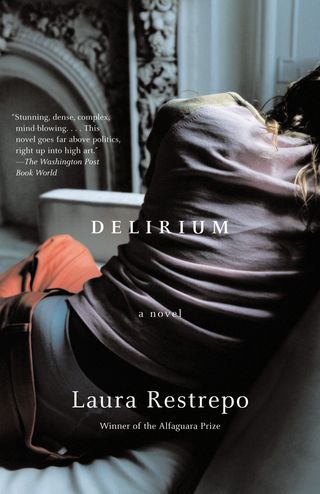
Cover of Delirium

Delirium

Laura Restrepo

Original language: Spanish · Paperback · ISBN 978-0307278043

Aguilar, an out-of-work literature professor now earning a living selling dog food, comes home from a short trip to find that his wife, Agustina, has lost her grip on reality. He has no idea what happened while he was away. His search for an explanation pulls him into buried layers of her family history, and the novel unfolds partly as a mystery: what drove Agustina into madness?

Four voices carry the story. Aguilar narrates as a husband desperate to understand and recover the woman he loves. Agustina herself speaks from inside her fractured state of mind, a woman raised in an upper-class Colombian family with its own concealed damage. Midas, a former lover turned drug trafficker and money launderer, offers a view from the criminal economy that shaped the country during this period. And Nicolás, Agustina's grandfather, adds a generational thread reaching further back into the family.

Laura Restrepo sets the novel against a Colombia marked by armed conflict, corruption, and the drug trade, using these personal stories to map the pressure those forces place on ordinary domestic life. The book was awarded the 2004 Premio Alfaguara and the 2006 Grinzane Cavour Prize in Italy. The English translation is by Natasha Wimmer.

Plot

In this remarkably nuanced novel, both a gripping detective story and a passionate, devastating tale of eros and insanity in Colombia, internationally acclaimed author Laura Restrepo delves into the minds of four characters. There's Agustina, a beautiful woman from an upper-class family who is caught in the throes of madness; her husband Aguilar, a man passionately in love with his wife and determined to rescue her from insanity; Agustina's former lover Midas, a drug trafficker and money-launderer; and Nicolás, Agustina's grandfather. Through the blend of these distinct voices, Restrepo creates a searing portrait of a society battered by war and corruption, as well as an intimate look at the daily lives of people struggling to stay sane in an unstable reality.
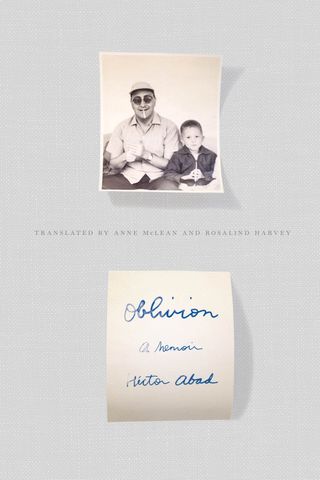
Cover of Oblivion: A Memoir

Oblivion: A Memoir

Héctor Abad Faciolince

Original language: Spanish · Paperback · ISBN 978-0374533939

Héctor Abad Faciolince spent roughly twenty years writing this memoir about his father, Héctor Abad Gómez, a Colombian doctor and human rights advocate who was killed by paramilitaries in Medellín in 1987. The book traces the elder Abad Gómez's life as a public health professor who spoke openly against poverty, inequality, and political violence in Colombia during a period of widespread paramilitary activity and civic repression.

Much of the memoir is built around the relationship between father and son. Faciolince recalls a household shaped by his father's warmth, intellectual curiosity, and stubborn commitment to social causes. The portrait is domestic as much as political: meals, letters, everyday routines sit alongside accounts of threats, censorship, and the narrowing space for dissent in Colombian public life during the 1970s and 1980s.

The book also examines how a family absorbs and carries forward an act of political violence over decades. Faciolince writes from the position of someone reconstructing both a person and a historical moment, working through memory, documents, and the long gap between the event and the page. The memoir was originally published in Spanish and later translated into English by Anne McLean.

Plot

Héctor Abad's Oblivion is a heartbreaking, exquisitely written memorial to the author's father, Héctor Abad Gómez, whose criticism of the Colombian regime led to his murder by paramilitaries in 1987. Twenty years in the writing, it paints an unforgettable picture of a man who followed his conscience and paid for it with his life during one of the darkest periods in Latin America's recent history.

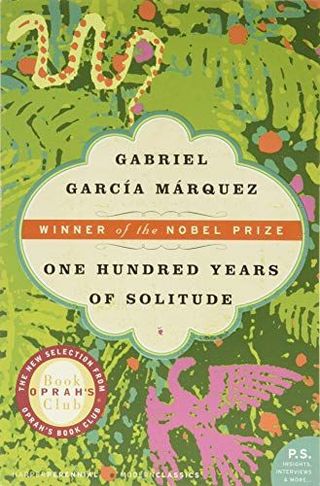
Cover of One Hundred Years of Solitude

One Hundred Years of Solitude

Gabriel García Marquez

Original language: Spanish · Paperback · ISBN 978-0060883287

One Hundred Years of Solitude follows the Buendia family across seven generations in the fictional town of Macondo, somewhere in Colombia. The town is founded, grows, attracts outsiders, and eventually faces decline, all filtered through the births, loves, wars, obsessions, and deaths of the Buendia line. Gabriel Garcia Marquez wrote the novel in Spanish as Cien anos de soledad, and it became one of the most widely translated and read works in the language.

The book is closely associated with a literary approach often called magic realism, in which extraordinary events appear alongside everyday life without explanation or surprise. Rain may last for years, a priest may levitate after drinking chocolate, and the dead may return to sit quietly in their old chairs. These elements are woven into the domestic and political struggles of the family rather than standing apart from them.

Garcia Marquez, a Colombian writer, received the Nobel Prize in Literature in 1982. Macondo, though invented, has become one of the most recognized place names in fiction, and the recurring patterns of the Buendia family give the novel a circular structure in which names, habits, and mistakes repeat across the generations.

Plot

One Hundred Years of Solitude tells the story of the rise and fall, birth and death of the mythical town of Macondo through the history of the Buendiá family. Inventive, amusing, magnetic, sad, and alive with unforgettable men and women—brimming with truth, compassion, and a lyrical magic that strikes the soul—this novel is a masterpiece in the art of fiction

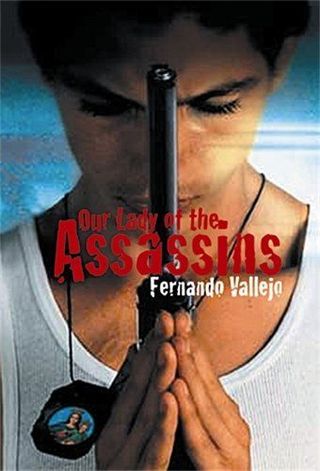
Cover of Our Lady of the Assassins

Our Lady of the Assassins

Fernando Vallejo

Original language: Spanish · Paperback · ISBN 978-1852426477

Our Lady of the Assassins follows Fernando, an aging writer who returns to his hometown of Medellín, Colombia, after years away. The city he knew has been reshaped by the drug trade, and its streets are marked by poverty, addiction, and routine killings. Fernando begins a relationship with Alexis, a teenage sicario, a hired killer working in the city's violent underworld. Through their time together, the novel maps a Medellín where churches sit alongside open gunfire and where affection and danger occupy the same rooms.

Fernando Vallejo writes in a confessional, direct style, placing his narrator's voice close to the chaos around him. The prose moves between tenderness and blunt descriptions of death, refusing to soften either. Medellín itself functions almost as a character, with its hillside comunas, its basilicas, and its overcrowded barrios shaping every scene. The story addresses the social fractures of Colombia during the 1990s, when cartel violence had become part of daily life for many residents.

After Alexis is killed, Fernando's search through the city's slums draws him toward another young man, Wilmar, who bears a resemblance to Alexis. This second relationship deepens the novel's attention to cycles of loss and repetition in a place where violence has become ordinary.

Plot

Our Lady of the Assassins by Fernando Vallejo tells the story of a middle-aged writer who returns to Medellín and begins a relationship with a young hitman, witnessing firsthand the violence, despair, and fleeting tenderness of a city consumed by drug wars. Through stark, confessional prose, the novel portrays both personal intimacy and the brutal social realities of Colombia in the 1990s.

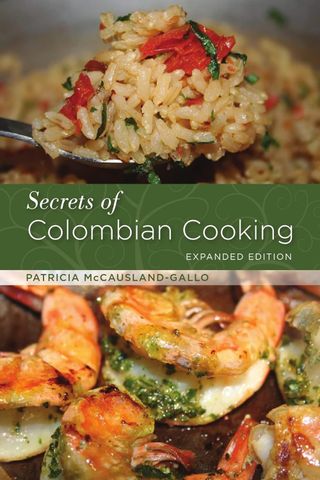
Cover of Secrets of Colombian Cooking

Secrets of Colombian Cooking

Patricia McCausland-Gallo

Original language: English · Paperback · ISBN 978-0781812894

Secrets of Colombian Cooking by Patricia McCausland-Gallo is a recipe collection organized around the geographic and agricultural diversity of Colombia. The book draws on ingredients from several distinct zones: coffee and cacao from the highland Andes, tropical fruits from the Caribbean and Amazonian lowlands, beef from the cattle-raising plains known as the Llanos, and seafood from both the Pacific and Caribbean coasts. This range of sources reflects a country that spans multiple climates within a relatively compact area of South America.

The cookbook contains over 200 recipes written in a step-by-step format. Supporting material includes a glossary of Colombian foods and ingredients, a 16-page color photo section, and an introductory guide to the country's culinary regions. An updated edition added a chapter focused on lighter preparations within Colombian cooking. McCausland-Gallo treats each region's food traditions as shaped by local geography and available produce rather than presenting Colombian cuisine as a single unified style.

Colombia is one of the few countries with coastline on both the Atlantic and Pacific, and that double exposure shows up clearly in the seafood chapters. The plains, mountain valleys, and tropical forests each contribute distinct ingredients and cooking methods to the collection.

Plot

From the coffee and cacao grown high in the Andes Mountains, to the tropical fruits of the Caribbean and Amazonian regions, the great cattle farms on the plains, and bountiful seafood from the Pacific Ocean and Caribbean Sea, Colombia is a country of varied and exotic culinary offerings. With a 16-page color insert, glossary of Colombian foods and ingredients, an introduction to Colombia’s cuisine and regions, and of course, over 200 easy-to-follow recipes, this cookbook brings the vibrant culinary tradition of Colombia alive!

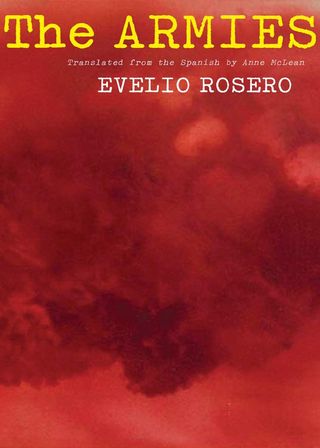
Cover of The Armies

The Armies

Evelio Rosero

Original language: Spanish · Paperback · ISBN 978-0811218641

Ismael is a retired teacher living in San José, a small town in Colombia. His days follow a quiet routine: he wanders his garden, pretends to tend his orange trees, and watches his neighbor Geraldina sunbathing beneath a ceiba tree. His wife Otilia disapproves of his habits and urges him to visit the local priest. Ismael drifts through town instead, visiting old friends, carrying memories he has never fully sorted through. The peace of the place feels sturdy, even lazy, with macaws calling and green hillsides rolling out in every direction.

That surface begins to crack when armed groups move into the area. What once looked like gentle countryside turns out to conceal landmines and coca fields. The violence arrives gradually, tightening around the town until ordinary life becomes impossible. Otilia disappears, and Ismael is forced out of his passive routines to search for her. The novel follows his movement through a place he thought he understood but which has been reshaped by conflict beyond his control.

Evelio Rosero sets the story against the long-running armed struggle in rural Colombia, where civilian towns often found themselves caught between guerrillas, paramilitaries, and drug traffickers. The book holds its focus tightly on one elderly man's limited view, using his confusion and proximity to register the human cost of the fighting.

Plot

Ismail, the professor, is a retired teacher in a small Colombian town where he passes the days pretending to pick oranges while spying on his neighbor Geraldina as she lies naked in the shade of a ceiba tree on a red floral quilt. The garden burns with sunlight; the macaws laugh sweetly. Otilia, Ismail's wife, is ashamed of his peeping and suggests that he pay a visit to Father Albornoz. Instead, Ismail wanders the town visiting old friends, plagued by a tangle of secret memories: Where have I existed these years? I answer myself: up on the wall, peering over. When the armies slowly arrive, the professor's reveries are gradually taken over by a living hell. His wife disappears and he must find her. We learn that not only gentle, grassy hillsides surround San José but landmines and coca fields. The reader is soon engulfed by the violence of Rosero's narrative which is touched not only with deep sadness but an extraordinary tenderness.

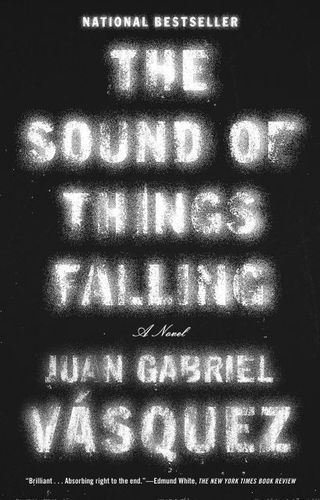
Cover of The Sound of Things Falling

The Sound of Things Falling

Juan Gabriel Vasquez

Original language: Spanish · Paperback · ISBN 978-1594632747

In Bogotá, a young law professor named Antonio Yammara comes across a news story about a hippopotamus that escaped from a rundown zoo once belonging to Pablo Escobar. The detail pulls him back to the 1990s, when the conflict between the Medellín cartel and the Colombian government spilled into ordinary streets and skies. During that period, Antonio witnessed the killing of a friend, and the event left a permanent fracture in his life.

As Antonio tries to understand what happened, he traces his friend's history and family back to the 1960s, a time when Colombia's relationship with small aviation and the outside world was shifting. The novel follows the way narco-trafficking reshaped not only politics and security but also private lives, marriages, and the choices available to an entire generation. Vásquez builds the story through overlapping timelines, connecting personal grief to decades of national instability.

The book won the International Dublin Literary Award, one of the largest prizes for a single work of fiction published in English. Set across several decades of Colombian history, it uses the stray hippo as both a concrete artifact of the Escobar era and a starting point for Antonio's attempt to piece together a past he has tried to leave behind.

Plot

In the city of Bogotá, Antonio Yammara reads an article about a hippo that had escaped from a derelict zoo once owned by legendary Colombian drug kingpin Pablo Escobar. The article transports Antonio back to when the war between Escobar’s Medellín cartel and government forces played out violently in Colombia’s streets and in the skies above. Back then, Antonio witnessed a friend’s murder, an event that haunts him still. As he investigates, he discovers the many ways in which his own life and his friend’s family have been shaped by his country’s recent violent past. His journey leads him all the way back to the 1960s and a world on the brink of change: a time before narco-trafficking trapped a whole generation in a living nightmare.

More from Colombia

See the country page for Colombia for its map, facts and largest cities, or browse books from other countries.

Links go to Amazon; Hookito doesn’t sell books. Know a book that belongs here, or spotted a mistake? Write to submissions@hookito.com.

Where to next?

Back to the globe
Hookito landscape illustration