Hookito

Germany · Books

Books from Germany

14 books from and about Germany: what each is about, the plot, and a note from Professor Kogi.

Cover of All Quiet on the Western Front

All Quiet on the Western Front

Erich Maria Remarque

Original language: German · Paperback · ISBN 978-0099496946

Erich Maria Remarque published All Quiet on the Western Front in 1929, drawing on his own experience as a German soldier in the First World War. The novel follows Paul Bäumer, a young man who enlists alongside his school classmates after encouragement from their teacher. What begins with a sense of shared purpose fractures once the group reaches the front lines in Flanders, where bombardment, hunger, and exhaustion replace the ideals they carried from the classroom.

Paul narrates life in the trenches, on patrol, during periods of leave, and inside field hospitals and dressing stations. Remarque presents these episodes without adventure or heroism. The book stays close to the physical and psychological costs of prolonged combat, recording how the soldiers lose their connection to the civilian world they left behind. The education and values they were taught offer little guidance for what they meet daily.

The novel first appeared in instalments in a German newspaper before being published as a book. It became one of the most widely read accounts of the First World War and was translated into dozens of languages. Remarque, born in Osnabrück, later left Germany and eventually settled in Switzerland.

Plot

The story is told by a young 'unknown soldier' in the trenches of Flanders during the First World War. Through his eyes we see all the realities of war; under fire, on patrol, waiting in the trenches, at home on leave, and in hospitals and dressing stations. Although there are vividly described incidents which remain in mind, there is no sense of adventure here, only the feeling of youth betrayed and a deceptively simple indictment of war - of any war - told for a whole generation of victims.

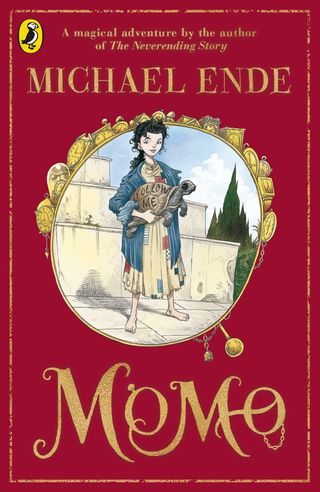
Cover of Momo

Momo

Michael Ende

Original language: German · Paperback · ISBN 978-0140317534

Momo, a young homeless girl, lives in the ruins of an old amphitheater at the edge of an unnamed city. She owns almost nothing, yet people seek her out because she possesses an unusual gift: she listens. When friends sit with her, arguments resolve, shy people find words, and confused people discover what they actually want. The amphitheater becomes a gathering place where time feels unhurried and generous.

That changes when the men in grey appear. Dressed in identical suits and carrying briefcases, they persuade the city's adults to save time by cutting out anything unproductive. Conversations shorten, games disappear, and people begin to feel poorer even as they work harder. The men in grey are time thieves, and the hours they collect do not return to those who surrendered them. Momo, unbothered by their arguments, becomes the only person capable of resisting their influence.

Michael Ende published Momo in 1973, six years before The Neverending Story. The book is a fantasy aimed at all ages, but its central subject is concrete: how modern societies measure, spend, and lose time. Ende set these questions inside a story shaped like a fairy tale, with a tortoise, a mysterious keeper of time, and a girl whose strongest power is simply paying attention.

Plot

At the edge of the city, in the ruins of an old amphitheater, there lives a little homeless girl called Momo. Momo has a special talent that she uses to help all her friends who come to visit her. Then one day the sinister men in grey arrive and silently take over the city. Only Momo has the power to resist them

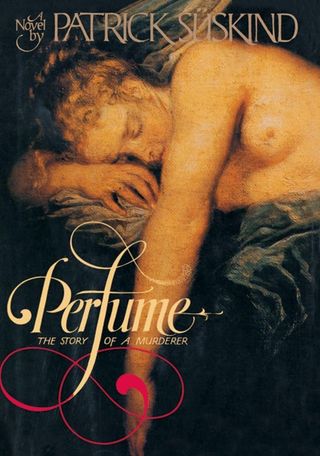
Cover of Perfume: The Story of Murder

Perfume: The Story of Murder

Patrick Suskind

Original language: German · Hardcover · ISBN 978-0394550848

In 1738 Paris, a baby is born beneath a fishmonger's table in a crowded marketplace and immediately abandoned. The child, Jean-Baptiste Grenouille, survives despite neglect at every stage of his early life. He unsettles everyone around him for reasons they cannot quite articulate. His wet nurse notices something strange: the infant has no body scent at all. Yet Grenouille himself possesses an extraordinary sense of smell, one so precise he can identify and separate every odor in the city around him.

As he grows older, Grenouille apprentices with a perfumer and learns the craft of blending oils and essences. His ability far exceeds what his teacher can offer. He becomes consumed by the idea of capturing scents that no one has bottled before, from metal surfaces to freshly cut wood. This obsession eventually turns toward something darker when he encounters a particular human scent that fixes itself in his mind. From that point, his pursuit takes on a sinister and increasingly dangerous shape.

Patrick Süskind published the novel in 1985, originally in German. Set entirely in eighteenth-century France, the story follows Grenouille's world through its sensory details, building an atmosphere where smell replaces sight as the dominant way of understanding people and places.

Plot

The year is 1738; the place, Paris. A baby is born under a fish-monger’s bloody table in a marketplace, and abandoned. Orphaned, passed over to the monks as a charity case, already there is something in the aura of the tiny infant that is unsettling. No one will look after him; he is somehow too demanding, and, even more disturbing, something is missing: as his wet nurse tries to explain, he doesn’t smell the way a baby should smell; indeed, he has no scent at all. Slowly, as we watch Jean-Baptiste Grenouille cling stubbornly to life, we begin to realize that a monster is growing before our eyes.

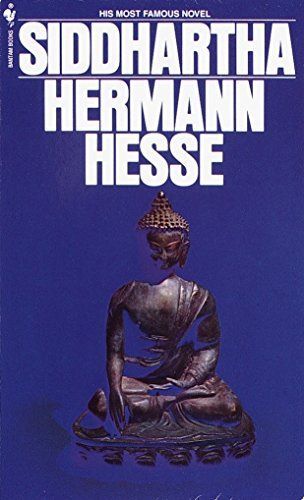
Cover of Siddhartha

Siddhartha

Hermann Hesse

Original language: German · Paperback · ISBN 978-0553208849

Siddhartha, written by Hermann Hesse and first published in 1922, follows a young Brahmin in ancient India who leaves behind wealth and privilege to search for spiritual understanding. The story is set during the time of Gautama Buddha, and the title character encounters the Buddha's teachings early in his path. Yet Siddhartha chooses not to become a follower, believing that genuine insight cannot be passed from one person to another through doctrine alone.

His search leads him through sharply different phases of life. He spends time among wandering ascetics practicing self-denial, then enters a city where he learns the ways of trade and pleasure from a merchant and a courtesan named Kamala. Each stage brings knowledge but also restlessness, and Siddhartha eventually finds himself near a river, where a quiet ferryman lives a life of close attention to the water and its movements.

Hesse traveled to India in the 1910s, and the novel reflects his interest in both Hindu and Buddhist traditions. The book is short and structured almost like a parable, with each chapter marking a distinct turn in Siddhartha's experience. Fatherhood, loss, and ordinary labor all figure into the later sections of the story.

Plot

It is the story of the quest of Siddhartha, a wealthy Indian Brahmin who casts off a life of privilege and comfort to seek spiritual fulfillment and wisdom. On his journey, Siddhartha encounters wandering ascetics, Buddhist monks, and successful merchants, as well as a courtesan named Kamala and a simple ferryman who has attained enlightenment. Traveling among these people and experiencing life’s vital passages–love, work, friendship, and fatherhood–Siddhartha discovers that true knowledge is guided from within.

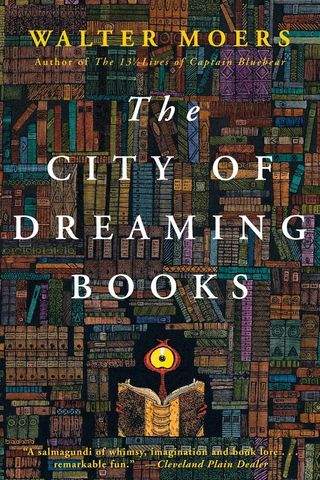
Cover of The City of Dreaming Books

The City of Dreaming Books

Walter Moers

Original language: German · Paperback · ISBN 978-1590201114

When the godfather of young poet Hildegunst von Mythenmetz dies, he leaves behind little besides a manuscript. The writing is so flawless that Mythenmetz feels compelled to track down its mysterious origin. His search leads him to Bookholm, a city entirely devoted to books, where the streets smell of old leather, printer's ink, and the faint acid tang of aging paper. Walter Moers sets this story in his invented continent of Zamonia, a place populated by peculiar species and governed by its own strange logic.

Bookholm pulls Mythenmetz deeper into its book-obsessed world. Ruthless book hunters compete for rare bibliophilic treasures, and beneath the city stretches a vast network of catacombs where reading carries real physical danger. A figure known as the Shadow King rules over parts of this underground realm, and small creatures called Booklins roam its passages. After the scheming Pfistomel Smyke betrays him, Mythenmetz finds himself stranded in this subterranean labyrinth.

Moers wrote and illustrated the original German edition, filling it with his own drawings. The novel belongs to a series of books set in Zamonia, each following different characters. Bookholm functions as both a setting and a satire of literary culture, where the love of books becomes obsession, commerce, and sometimes peril.

Plot

The search for the author’s identity takes Yarnspinner to Bookholm—the so-called City of Dreaming Books. On entering its streets, our hero feels as if he has opened the door of a gigantic second-hand bookshop. His nostrils are assailed by clouds of book dust, the stimulating scent of ancient leather, and the tang of printer’s ink. Soon, though, Yarnspinner falls into the clutches of the city’s evil genius, Pfistomel Smyke, who treacherously maroons him in the labyrinthine catacombs underneath the city, where reading books can be genuinely dangerous.

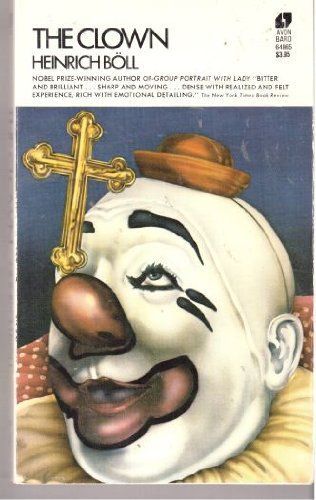
Cover of The Clown

The Clown

Heinrich Böll

Original language: Germany · Mass Market Paperback · ISBN 978-0380003334

Hans Schnier is a professional clown and mime living in Bonn, the former West German capital. When his partner Marie leaves him over his refusal to marry within the Catholic Church, Hans falls into a personal crisis. Alone in his apartment, injured and unable to perform, he begins telephoning people from his past, replaying memories and confrontations that expose the fractures running through postwar German society.

Much of the novel unfolds through these calls and recollections. Hans revisits the death of his sister during the war, his strained relationship with his wealthy father, and the behavior of his mother, who supported the Nazi regime and later reinvented herself as an advocate for reconciliation. The people around him, many of them Catholic intellectuals, appear comfortable with their own contradictions in ways Hans cannot accept. His refusal to adapt or perform socially isolates him further.

Heinrich Böll published the novel in 1963, during a period when questions about guilt, conformity, and institutional authority were pressing concerns in West Germany. The story is set almost entirely within the span of a single evening, giving it a compressed, claustrophobic quality as Hans moves between present distress and layered memory.

Plot

Acclaimed entertainer Hans Schneir collapses when his beloved Marie leaves him because he won’t marry her within the Catholic Church. The desertion triggers a searing re-examination of his lifeâ the loss of his sister during the war, the demands of his millionaire father and the hypocrisies of his mother, who first fought to “save” Germany from the Jews, then worked for “reconciliation” afterwards.

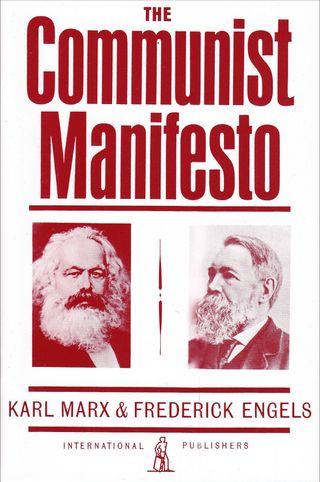
Cover of The Communist Manifesto

The Communist Manifesto

Karl Marx and Friedrich Engels

Original language: German · Paperback · ISBN 978-0717802418

The Communist Manifesto was first published in 1848, written by Karl Marx and Friedrich Engels. Its original German title was Manifest der Kommunistischen Partei, or Manifesto of the Communist Party. The text was produced as a statement of aims for the Communist League, a political organization active in 19th-century Europe. At fewer than fifty pages in most editions, it is a notably compact work for the scale of argument it attempts.

Marx and Engels present a theory of history organized around conflict between social classes. In their account, economic systems produce groups with opposing interests, and political change follows from that opposition. The book outlines how industrial capitalism shaped a working class whose conditions, the authors argue, would drive collective action. It also addresses competing socialist and communist movements of the period, distinguishing its own position from theirs.

The text was written in German and published in London in February 1848, a year of widespread political upheaval across Europe. It has since been translated into most of the world's major languages and remains one of the most widely circulated political documents from that century.

Plot

The Communist Manifesto, originally titled Manifesto of the Communist Party (German: Manifest der Kommunistischen Partei) is a short 1848 book written by the German Marxist political theorists Karl Marx and Friedrich Engels. It has since been recognized as one of the world's most influential political manuscripts.

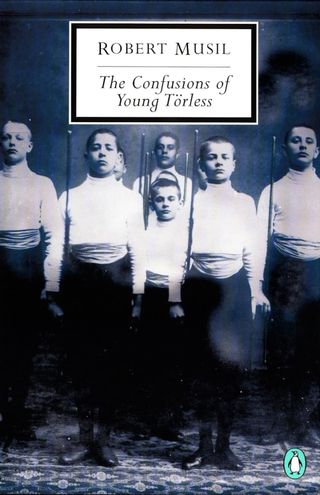
Cover of The Confusions of Young Törless

The Confusions of Young Törless

Robert Musil

Original language: German · Paperback · ISBN 978-0142180006

Robert Musil's first novel, published while he was still a student, is set at a remote military boarding school on the edges of the Austro-Hungarian Empire. Four cadets drift into a closed circle of secrecy and domination. Törless, the central figure, watches as his companions Beineberg and Reiting subject a fellow student named Basini to escalating cruelty and humiliation. The story follows Törless not as a straightforward victim or aggressor but as an observer caught between fascination and unease, unable to locate a firm moral position.

The novel traces the psychology of adolescence with unusual precision. Törless struggles to articulate what he sees and feels, caught in a gap between rational thought and darker impulses he cannot name. Musil draws connections between the atmosphere inside the school and the broader culture of the late Austro-Hungarian world, where traditional authority was fraying and ideas about strength and submission were taking new and dangerous forms.

Musil wrote the book partly from experience. He attended a military boarding school in Moravia as a young man. The novel's interest in irrational undercurrents beneath orderly surfaces placed him in conversation with early psychoanalytic thinking, and his later, unfinished masterwork The Man Without Qualities would expand many of the same concerns across a far wider canvas.

Plot

At a bleak, isolated military school on the fringes of the Austro-Hungarian Empire, four young cadets —Torless, Beineberg, Reiting and their victim Basini—rift even further away from their school- fellows into a private world of ritual, secrecy and torture.

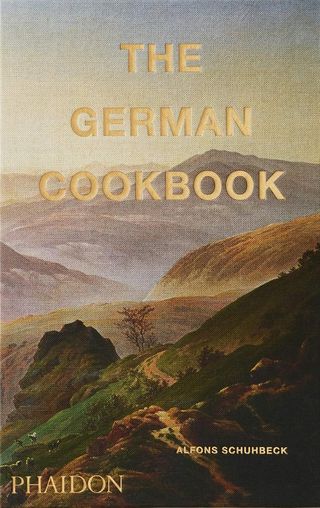
Cover of The German Cookbook

The German Cookbook

Alfons Schuhbeck

Original language: German · Hardcover · ISBN 978-0714877327

The German Cookbook by Alfons Schuhbeck gathers 500 recipes that span the full breadth of German regional cooking. Germany's culinary landscape varies sharply from north to south and east to west. Coastal cities like Hamburg draw on North Sea fish and seafood, while Munich and the Alpine south favor hearty meat dishes, dumplings, and dairy. Berlin and Frankfurt each carry their own local traditions. The book covers this geographic range, moving through snacks, soups, main courses of meat, poultry, and fish, potato and noodle dishes, and desserts.

Beyond traditional recipes, the collection includes contemporary preparations that reflect how German cooking has changed in recent decades. Each recipe was tested in a home kitchen, and icons mark vegetarian, gluten-free, and dairy-free options alongside dishes that require five ingredients or fewer or only a single pot. An introductory section outlines the culinary history of the country and traces the origins of many classic dishes.

The book is published by Phaidon as part of a series of country-focused cookbooks. At roughly 450 pages in hardcover, it functions as both a reference for everyday meals and a guide to less familiar regional specialties across Germany.

Plot

The only comprehensive collection of German recipes - from authentic traditional dishes to contemporary cuisine Germany is made up of a series of distinct regional culinary cultures. From Hamburg on the north coast to Munich in the Alpine south, and from Frankfurt in the west to Berlin in the east, Germany's cities and farmland yield a remarkable variety of ingredients and influences. This authoritative book showcases this diversity, with 500 recipes including both beloved traditional cuisine and contemporary dishes representing the new direction of German cooking - from snacks to desserts, meat, poultry, and fish, to potatoes, dumplings, and noodles.

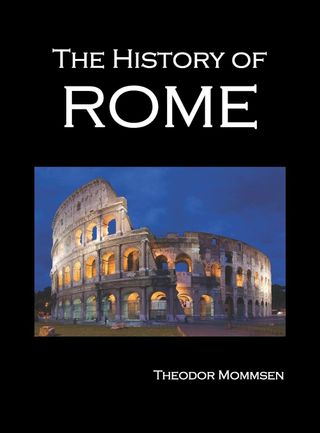
Cover of The History of Rome

The History of Rome

Theodor Mommsen

Original language: German · Hardcover · ISBN 978-1849023054

Theodor Mommsen published The History of Rome in three volumes during the 1850s, covering the story of Rome from its earliest beginnings through the fall of the Republic and the rise of Julius Caesar. Mommsen was a German historian and jurist, and his approach combined careful scholarship with a vivid narrative style that set the work apart from drier academic histories of the period. He received the Nobel Prize in Literature in 1902, one of very few scholars of non-fiction to be honored with that award.

A distinctive feature of the book is Mommsen's habit of drawing parallels between Roman political life and the European politics of his own nineteenth century. He used modern political vocabulary to describe ancient institutions, making senators and tribunes feel immediate rather than distant. This method brought Roman debates about power, law, and citizenship closer to readers familiar with the upheavals of 1848 and the unification struggles across Europe. The work ends with the period of Caesar and does not continue into the Imperial era, a planned continuation that Mommsen never completed in published form.

Plot

Theodor Mommsen, a Nobel Prize winner in literature, not only expounded Roman history up to the end of the Roman republic and the rule of Julius Caesar, but also closely compared the political thought and terminology of the ancient Republic, especially during its last century, with the situation of his own time.

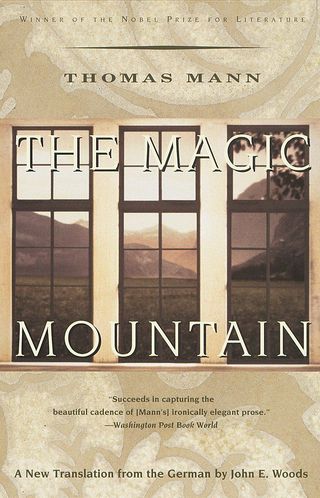
Cover of The Magic Mountain

The Magic Mountain

Thomas Mann

Original language: German · Paperback · ISBN 978-0679772873

Hans Castorp, a young marine engineer from Hamburg, travels to a sanatorium high in the Swiss Alps to visit his ailing cousin. What begins as a brief stay stretches into years, as Castorp becomes absorbed into the enclosed world of the clinic and its patients. The mountain setting isolates the characters from ordinary life below, and time itself seems to slow and distort at altitude.

Thomas Mann published the novel in 1924, and it draws on his own visit to a sanatorium in Davos, where his wife was treated for a lung condition. The residents of the fictional Berghof sanatorium debate philosophy, politics, science, love, and death in long, detailed conversations. Two intellectual rivals, the humanist Settembrini and the authoritarian Naphta, compete for influence over Castorp's thinking, each representing a different current in European thought.

The novel uses the closed community of the sick as a small model for the broader condition of Europe in the years leading up to 1914. Illness, both physical and ideological, runs through the book as a central subject. Mann treats the passage of time with deliberate strangeness, letting weeks and months blur together as Castorp settles deeper into his life on the mountain.

Plot

In this dizzyingly rich novel of ideas, Mann uses a sanatorium in the Swiss Alps--a community devoted exclusively to sickness--as a microcosm for Europe, which in the years before 1914 was already exhibiting the first symptoms of its own terminal irrationality.

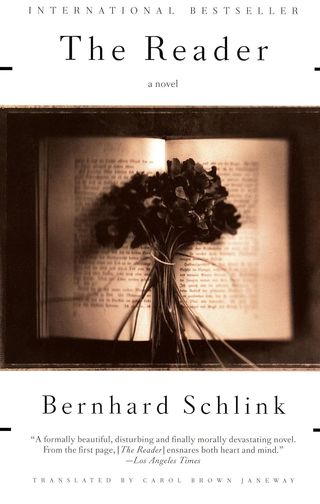
Cover of The Reader

The Reader

Bernhard Schlink

Original language: German · Paperback · ISBN 978-0375707971

In postwar Germany, fifteen-year-old Michael Berg falls ill on his way home from school and is helped by Hanna Schmitz, a woman in her mid-thirties. He returns to thank her, and what begins as gratitude develops into a secretive affair. Hanna is volatile and guarded, refusing to answer questions about her past. She vanishes from Michael's life without explanation, leaving him with memories he cannot resolve.

Years later, Michael is a law student observing courtroom proceedings when he sees Hanna again. She stands accused of a serious crime committed during the war. As the trial unfolds, her behavior puzzles him and others in the courtroom: she appears unwilling to mount a proper defense. Michael begins to suspect that Hanna is protecting a personal secret she finds even more unbearable than the charges against her. This realization stays with him for years afterward.

Bernhard Schlink, a German law professor and judge, published The Reader in 1995. Michael narrates as an adult, looking back across both periods of his life. The story examines how personal entanglement with someone from the war generation forces questions about guilt, shame, and the limits of understanding onto those born after the conflict ended.

Plot

When he falls ill on his way home from school, fifteen-year-old Michael Berg is rescued by Hanna, a woman twice his age. In time she becomes his lover—then she inexplicably disappears. When Michael next sees her, he is a young law student, and she is on trial for a hideous crime. As he watches her refuse to defend her innocence, Michael gradually realizes that Hanna may be guarding a secret she considers more shameful than murder.

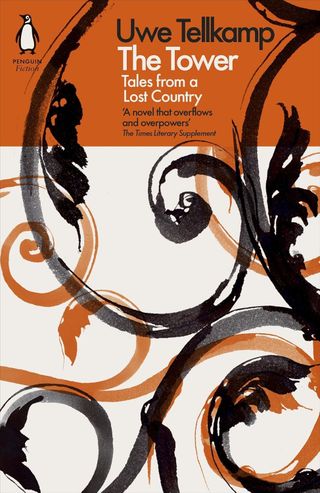
Cover of The Tower: Tales from a Lost Country

The Tower: Tales from a Lost Country

Uwe Tellkamp

Original language: German · Paperback · ISBN 978-0141979250

Set in Dresden from 1982, The Tower follows an educated, middle-class family through the final years of East Germany. Meno works as an editor at a publishing house and must work around state censorship. His brother-in-law, a respected surgeon, leads a double life, and with his blind wife has raised a son in a home built on culture, music and hard work.

The family's affluent quarter works like a bubble, an echo of cultivated nineteenth-century Germany preserved inside a productivist socialist state. Tellkamp sets that carefully maintained private world against the system around it. Characters respond in different ways: some retreat into nostalgia, some conform, and others test the narrow ground between East and West, where mistakes carry real consequences.

The novel moves through several overlapping lives, among them a soldier, a surgeon, a nurse and a publisher, so the period appears as a composite rather than a single line of narration. The polished surface soon shows cracks, and the country itself begins to shake. Tellkamp avoids the tone of denunciation, tracing instead the quiet compromises that tie this enclosed world to the state, up to November 9, 1989.

Plot

In derelict Dresden a cultivated, middle-class family does all it can to cope amid the Communist downfall. This striking tapestry of the East German experience is told through the tangled lives of a soldier, surgeon, nurse and publisher. With evocative detail, Uwe Tellkamp masterfully reveals the myriad perspectives of the time as people battled for individuality, retreated to nostalgia, chose to conform, or toed the perilous line between East and West.

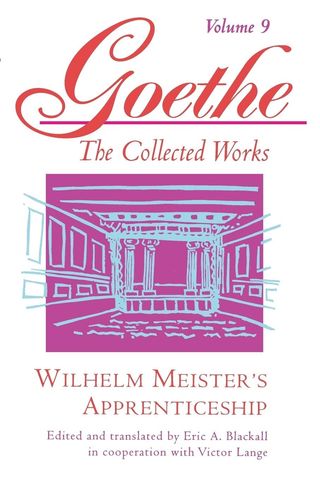
Cover of Wilhelm Meister's Apprenticeship

Wilhelm Meister's Apprenticeship

Johann Wolfgang von Goethe

Original language: German · Paperback · ISBN 978-0691043449

Wilhelm Meister's Apprenticeship is Johann Wolfgang von Goethe's second novel. It follows Wilhelm, a young man in the mid-1700s who wants to leave behind the commercial middle-class world of his upbringing. He hopes to find purpose in the theater, first as an actor and later as a playwright, and his path crosses with traveling performers and other figures who shape his sense of art and society.

The book is often described as the first Bildungsroman, a German term for a novel built around one character's formation and growth from youth into maturity. It drew strong responses from German thinkers: Hegel, Schelling, Novalis, and Schopenhauer counted it among the most important novels then written, and Friedrich Schlegel placed it beside the French Revolution and Fichte's philosophy as a defining tendency of the age.

Goethe placed poems and songs inside the prose, and Beethoven, Schubert, and Schumann later set some of them to music. The novel also reached British readers in the nineteenth century, where it shaped writers including George Eliot, and Thomas Carlyle made the first English translation. This edition comes from Princeton's collected works of Goethe.

Plot

The story centers on Wilhelm, a young man living in the mid-1700s who strives to break free from the restrictive bourgeois world of his upbringing and seek fulfillment as an actor and playwright. Goethe’s novel had a huge impact on the Romantics. Hegel, Schelling, Novalis, and Schopenhauer considered it one of the most important novels yet written. Schlegel famously called it one of the “three tendencies of the age,” along with the French Revolution and the philosophy of Fichte. And Beethoven, Schubert, and Schumann composed songs to poems from the novel. It also had a major influence on nineteenth-century British writers, including Thomas Carlyle, who was its first English translator, and George Eliot. Drawn from Princeton’s authoritative collected works of Goethe, this is the definitive English version of a landmark of world literature.

More from Germany

See the country page for Germany for its map, facts and largest cities, or browse books from other countries.

Free editions are on Project Gutenberg, matched by title and author. Links go to Amazon; Hookito doesn’t sell books. Know a book that belongs here, or spotted a mistake? Write to submissions@hookito.com.

Where to next?

Back to the globe
Hookito landscape illustration