Hookito

Denmark · Books

Books from Denmark

7 books from and about Denmark: what each is about, the plot, and a note from Professor Kogi.

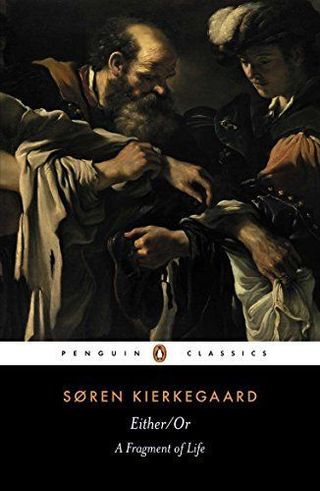
Cover of Either/Or: A Fragment of Life

Either/Or: A Fragment of Life

S¢ren Kierkegaard

Original language: Danish · Paperback · ISBN 978-0140445770

Søren Kierkegaard published Either/Or in 1843 in Copenhagen, presenting it as a collection of papers supposedly found by a fictional editor named Victor Eremita. The book is split into two contrasting sections, each written in the voice of a different character. The first belongs to an unnamed young man referred to only as A, who writes on music, drama, boredom, and pleasure. His essays include a lengthy analysis of Mozart's Don Giovanni and the well-known Seducer's Diary, which traces the calculated courtship and cold abandonment of a young woman.

The second section belongs to Judge Vilhelm, an older married man who writes long letters addressed to A. Where A treats life as a series of sensory and intellectual experiences to be savoured or discarded, the Judge argues for commitment, duty, and the ethical shape a life gains through sustained choices. The two voices never resolve into a single answer. Kierkegaard leaves the tension between them open, offering no final editorial verdict.

The structure itself carries the argument. By placing an aesthetic outlook and an ethical one side by side without declaring a winner, Kierkegaard turns the reader's own response into part of the philosophical exercise. The book was his first major work and remains central to existentialist thought.

Plot

In Either/Or, using the voices of two characters—the aesthetic young man of part one, called simply "A," and the ethical Judge Vilhelm of the second section—Kierkegaard reflects upon the search for a meaningful existence, contemplating subjects as diverse as Mozart, drama, boredom, and, in the famous Seducer's Diary, the cynical seduction and ultimate rejection of a young, beautiful woman.
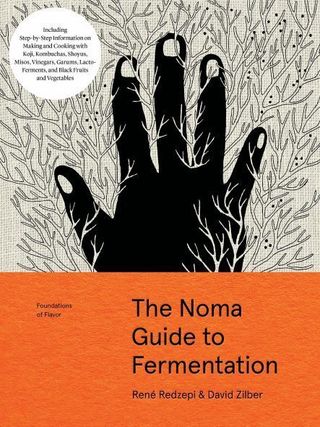
Cover of Foundations of Flavor: The Noma Guide to Fermentation

Foundations of Flavor: The Noma Guide to Fermentation

René Redzepi, David Zilber

Original language: English · Hardcover · ISBN 978-1579657185

Noma, the Copenhagen restaurant recognized multiple times as the best in the world, built much of its cooking identity around fermentation. René Redzepi, the restaurant's chef and co-owner, and David Zilber, who led its fermentation lab, wrote this book to make their methods accessible outside a professional kitchen. The focus goes well beyond familiar fermented foods like kimchi and sauerkraut, covering koji, kombucha, shoyu, miso, garum, vinegar, lacto-ferments, and black fruits and vegetables.

Garum, for example, is an ancient protein-based sauce with roots in Roman cooking, here adapted using modern techniques. Koji is a grain or legume inoculated with the mold Aspergillus oryzae, central to Japanese brewing and sauce-making for centuries. The book explains each category of ferment with step-by-step photographs and illustrations, numbering over 500 in total. Recipes are written for home cooks and have been tested for that setting.

Beyond the ferments themselves, the book includes over 100 original dishes that show how to apply these ingredients in everyday cooking. The structure moves from building a pantry of fermented bases to putting them to use in finished plates.

Plot

At Noma—four times named the world’s best restaurant—every dish includes some form of fermentation, whether it’s a bright hit of vinegar, a deeply savory miso, an electrifying drop of garum, or the sweet intensity of black garlic. Fermentation is one of the foundations behind Noma’s extraordinary flavor profiles. Now René Redzepi, chef and co-owner of Noma, and David Zilber, the chef who runs the restaurant’s acclaimed fermentation lab, share never-before-revealed techniques for creating Noma’s extensive pantry of ferments. And they do so with a book conceived specifically to share their knowledge and techniques with home cooks. With more than 500 step-by-step photographs and illustrations, and with every recipe approachably written and meticulously tested, The Noma Guide to Fermentation takes readers far beyond the typical kimchi and sauerkraut to include koji, kombuchas, shoyus, misos, lacto-ferments, vinegar, garums, and black fruits and vegetables. And—perhaps even more important—it shows how to use these game-changing pantry ingredients in more than 100 original recipes.

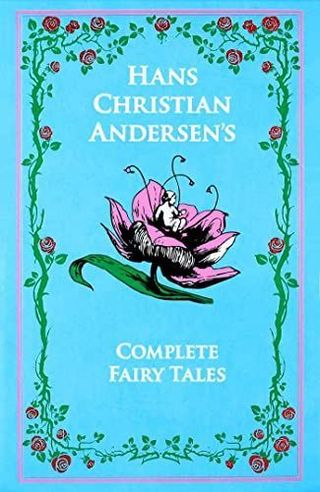
Cover of Hans Christian Andersen's Complete Fairy Tales

Hans Christian Andersen's Complete Fairy Tales

Hans Christian Andersen

Original language: Danish · Hardcover · ISBN 978-1626860995

Hans Christian Andersen's Complete Fairy Tales gathers the stories of the Danish writer born in Odense in 1805, who later spent much of his working life in Copenhagen. His tales appeared from the 1830s onward, drawing on Danish folk tradition and on his own invention. The result was a form of short story that did not fit neatly into earlier European models.

The collection includes widely read tales such as The Ugly Duckling, Thumbelina, The Red Shoes, The Princess on the Pea, and The Emperor's New Clothes, together with many less familiar pieces. Some run a page or two; others stretch across several scenes. Andersen wrote for young listeners while also observing vanity, loneliness, and social rank, often through animals or household objects.

This edition is a leather-bound collector's volume that keeps the short anecdotes and the longer narratives in one place, which suits bedtime reading in small portions or a longer sitting on a wet afternoon. Because the tales vary so much in length and tone, the book can be opened at almost any page without losing the thread.

Plot

All the best-loved fairy tales of Hans Christian Andersen, including “The Ugly Duckling,” “Thumbelina,” “The Red Shoes,” “The Princess on the Pea,” and “The Emperor’s New Clothes,” fill the pages of this beautiful leather-bound collector’s edition.

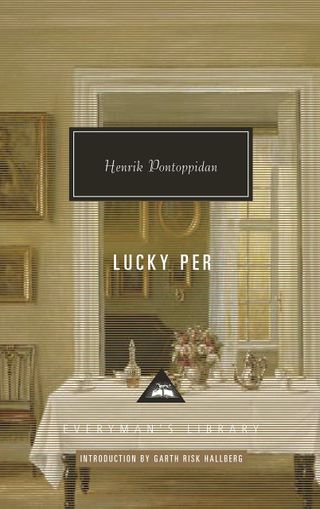
Cover of Lucky Per

Lucky Per

Henrik Pontoppidan

Original language: Danish · Paperback · ISBN 978-1101908099

Lucky Per, first published in 1898-1904, is a bildungsroman by Danish author Henrik Pontoppidan, who shared the Nobel Prize in Literature in 1917. The novel follows Per, the son of a provincial clergyman, who breaks away from his family's strict religious world and moves to Copenhagen. He arrives in the capital full of ambition, convinced that fortune is something to be chased down and seized by force. His plans are grand, his confidence is high, and his sense of his own abilities is firm.

In Copenhagen, Per enters a wider social world that includes Jakobe, a Jewish heiress who becomes his love interest. The teaser material describes her as the strongest character in the book and one of the notable Jewish heroines in European fiction. Through Per's encounters with wealth, intellectual circles, love, and his own upbringing, the novel tracks the distance between what a person wants and what a person is able to become. Questions of faith, class, cultural identity, and self-knowledge run through the story without arriving at simple answers.

Pontoppidan wrote the novel across several years, and it appeared in eight parts before being collected as a single work. It has been called the great Danish novel, though it remained little known outside Scandinavia for much of the twentieth century.

Plot

Lucky Per is a bildungsroman about the ambitious son of a clergyman who rejects his faith and flees his restricted life in the Danish countryside for the capital city. Per is a gifted young man who arrives in Copenhagen believing that "you had to hunt down luck as if it were a wild creature, a crooked-fanged beast . . . and capture and bind it." Per's love interest, a Jewish heiress, is both the strongest character in the book and one of the greatest Jewish heroines of European literature.

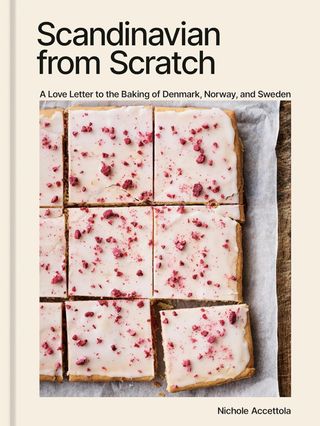
Cover of Scandinavian from Scratch

Scandinavian from Scratch

Nichole Accettola

Original language: English · Hardcover · ISBN 978-1984861948

Scandinavian from Scratch is a baking cookbook by chef Nichole Accettola that gathers 75 recipes drawn from the baking traditions of the Scandinavian countries. The recipes are grouped by occasion, covering breakfast and brunch, afternoon tea, and holiday gatherings, and within the book they run from the simplest preparations toward the more involved ones. That order lets a home cook begin with approachable bakes.

Alongside pastry and cake, the collection includes simple morning and midday meals. Named recipes include Coconut Dream Cake, Black Currant Caves, Cardamom Morning Buns, Saffron Rusks, and a Gravlax and Chive Potato Salad Smørrebrød. Smørrebrød is the Danish practice of building an open-faced sandwich on dense rye bread, usually eaten with a knife and fork rather than lifted by hand.

Cardamom and saffron run through several of these bakes, spices that travelled far north through trade and settled into Nordic kitchens for both everyday breads and seasonal sweets. Accettola presents her selection as a curated set rather than a complete survey, written for home kitchens with steps that are easy to follow. The stated aim is to widen a baker's range.

Plot

In Scandinavian from Scratch, Accettola has curated 75 delicious bakes, organized by occasion and arranged from simplest to most complex, drawing from her collection of each Scandinavian country’s baking traditions. Fill your home kitchen with the enticing aromas of Coconut Dream Cake, Black Currant Caves, Cardamom Morning Buns, Saffron Rusks, Gravlax and Chive Potato Salad Smørrebrød, and so much more. The easy-to-follow recipes will expand your baking horizons and bring something special to the table, from breakfast and brunch to afternoon tea to holiday celebrations.

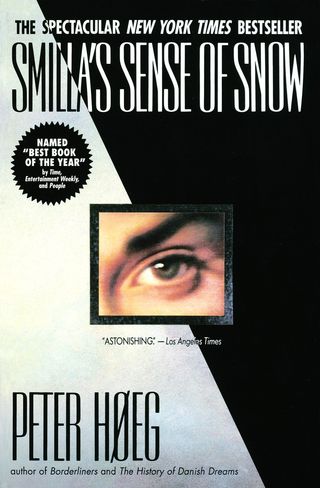
Cover of Smilla's Sense of Snow

Smilla's Sense of Snow

Peter Hoeg

Original language: Danish · Paperback · ISBN 978-0385315142

Smilla Jaspersen is a Greenlander living in Copenhagen, a woman whose understanding of snow and ice runs deeper than her grasp of love. When a six-year-old boy from her apartment building, also a Greenlander, falls from the roof and dies, the police record an accident. Smilla studies the tracks left in the rooftop snow and reads them differently. Her sense of how snow holds a footprint tells her the verdict is wrong.

She is a woman of numbers and science, more at ease with frozen ground than with company, carrying memories of Greenland and an outsider's eye for Danish society. Her questions about the boy's death draw her out of the margins and into a widening set of secrets, set between the density of Copenhagen and the Arctic territory of Greenland, long governed from Denmark.

Peter Hoeg published the novel in Danish in 1992. It works as a crime story and as an account of cultural displacement, colonial history, and the gap between institutional authority and one person's careful observation. Snow itself functions as evidence here, a surface that records what happened before anyone arrives to explain it.

Plot

She thinks more highly of snow and ice than she does of love. She lives in a world of numbers, science, and memories--a dark, exotic stranger in a strange land. And now Smilla Jaspersen is convinced she has uncovered a shattering crime...

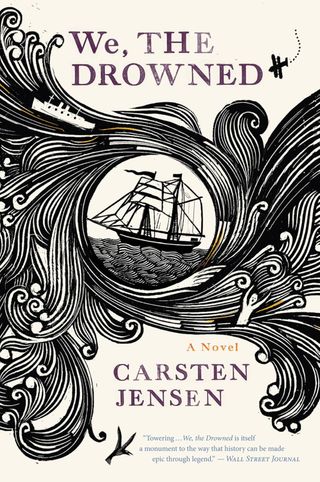
Cover of We, the Drowned

We, the Drowned

Carsten Jensen

Original language: Danish · Paperback · ISBN 978-0547737362

We, the Drowned follows the port town of Marstal on the Danish island of Aero across roughly a century, from the mid-1800s through the end of the Second World War. Carsten Jensen builds the narrative around successive generations of sailors, shipowners, and the families who stay ashore. The town's economy, identity, and self-understanding all revolve around the sea, and each generation inherits the pull of distant waters along with the losses that come with them.

The novel moves through periods of wooden sailing ships, steam power, and global conflict. Wars destroy vessels and crews; industrial change reshapes the shipping trade; and the town itself shifts as the wider world presses in. Jensen populates the story with a large cast, mixing fictional lives with the textures of local history. Cannibals, shipwrecks, prophetic dreams, and long separations appear alongside quieter domestic tensions between those who leave and those who wait.

Marstal is a real town, and its maritime heritage is central to its character. Jensen uses that specific setting to trace how a small coastal community absorbs decades of upheaval, expansion, and loss without ever fully stepping back from the ocean that defines it.

Plot

Filled with adventure, cannibals, shrunken heads, prophetic dreams, forbidden passions, cowards, heroes, tragedies, love, and survival, this book takes its place among the greatest seafaring literature. We, the Drowned is the story of the port town of Marstal, Denmark, whose inhabitants sailed the world from the mid-nineteenth century to the end of the Second World War. The novel tells of ships wrecked and blown up in wars, of places of terror and violence that continue to lure each generation. The result is a brilliant seafaring novel, a gripping saga encompassing industrial growth, the years of expansion and exploration, the crucible of the first half of the twentieth century, and most of all, the sea.

More from Denmark

See the country page for Denmark for its map, facts and largest cities, or browse books from other countries.

Links go to Amazon; Hookito doesn’t sell books. Know a book that belongs here, or spotted a mistake? Write to submissions@hookito.com.

Where to next?

Back to the globe
Hookito landscape illustration