Hookito

Egypt · Books

Books from Egypt

14 books from and about Egypt: what each is about, the plot, and a note from Professor Kogi.

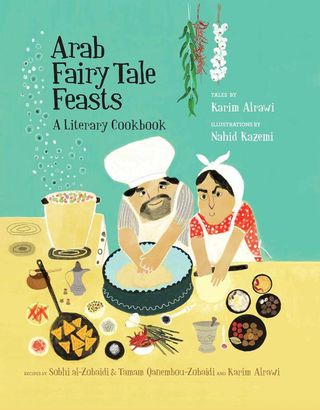
Cover of Arab Fairy Tale Feasts: A Literary Cookbook

Arab Fairy Tale Feasts: A Literary Cookbook

Karim Alrawi

Original language: English · Paperback · ISBN 978-1623719081

Arab Fairy Tale Feasts: A Literary Cookbook pairs original stories by Karim Alrawi with traditional recipes drawn from Arab food culture. The book belongs to the Fairy Tale Feasts Collection, a series that combines folk tales with cooking instructions designed for younger readers. Each story in the collection uses food as a central element within the narrative, and every tale ends with a recipe connected to the ingredients or dishes that appear in the plot.

Alrawi, a writer and storyteller with roots in Arab culture, created the stories specifically for this volume rather than retelling existing folk tales directly. The tales aim to present aspects of Arab life and perspective through settings, characters, and the role food plays in daily and ceremonial occasions. Folkloric illustrations accompany both the stories and the recipes, giving the book a visual style that connects its two halves.

The format is intended for families to use together, with stories suitable for reading aloud and recipes simple enough for children to help prepare. By placing a narrative before each recipe, the book gives young cooks a reason to care about what they are making and where the dish comes from. The country association for this volume is Egypt, though the stories draw on broader Arab traditions.

Plot

Award-winning writer and storyteller, Karim Alrawi, draws on his deep knowledge of Arab culture to create original stories that are a feast for young imaginations. Told with intriguing details, the tales take young readers on a delicious cultural journey and invite them to consider an Arab perspective. Each tale symbolically incorporates food and concludes with a traditional recipe, lovingly flavored with colorful folkloric illustrations, making this a literary banquet to savor with family and friends across generations time and again.
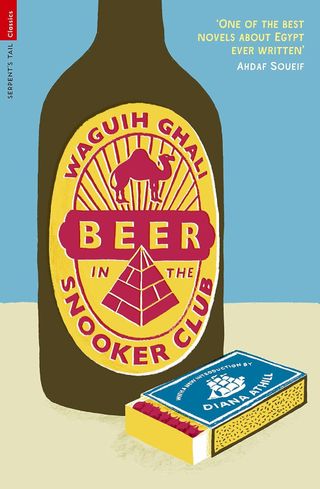
Cover of Beer In The Snooker Club

Beer In The Snooker Club

Original language: English · Paperback · ISBN 978-1846687563

Beer in the Snooker Club, first published in 1964, follows two friends, Ram and Font, in Cairo during the years of Gamal Abdel Nasser's rule. Behind the bar at a place called Jameel's hang two mugs engraved with their names, souvenirs from their time together in London, where they drank pints of Bass ale. Back in Egypt, Bass is unavailable, so they mix beer, vodka, and whisky instead. The mugs serve as small monuments to a life elsewhere.

Ram and Font occupy an uncomfortable position between two worlds. Their years in England shaped their expectations, but returning to Cairo means living under a political order they find frustrating. The revolution, as they see it, neither improves ordinary life nor preserves the comfortable habits of their wealthy aunts. Caught in this gap, the two face a choice between open political opposition, which carries real danger, and a quiet acceptance they find difficult to stomach.

The novel belongs to the literature of emigration and displacement, set against a specific historical moment in Egypt. Its Cairo is a city of social clubs, family obligations, and political tension, observed through characters whose attachment to a foreign beer brand says as much about their loyalties as any speech could.

Plot

Behind the bar at Jameel's in Cairo hang two mugs engraved with the names of Ram and Font. During their years together in London, they drank many a pint of Bass from these mugs. But there is no Bass in Nasser's Egypt, so Ram and Font have to make do with a heady mixture of beer, vodka and whisky. Yearning for Bass they long to be far from a revolution that neither serves the people nor allows their rich aunts to live the life of leisure they are accustomed to. Stranded between two cultures, Ram and Font must choose between dangerous political opposition and reluctant acquiescence.

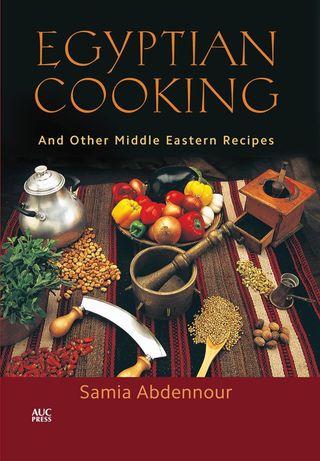
Cover of Egyptian Cooking

Egyptian Cooking

Samia Abdennour

Original language: English · Spira-Bound · ISBN 978-9774167119

Egyptian Cooking by Samia Abdennour is a cookbook first published in 1984 that collects 485 recipes spanning the breadth of Egyptian home and street food. The book covers everyday staples such as foul midammis, a slow-cooked fava bean dish eaten across the country, and kushari, a layered combination of pasta, rice, and lentils topped with tomato sauce. It also includes more elaborate preparations like roast leg of lamb and baked stuffed fish. Beyond Egyptian dishes, the collection draws from the cuisines of the Levant, the Gulf, and North Africa.

Recipes are organized into sections for mezze, breakfast, main courses, sweets and desserts, and beverages. The book is spiral-bound so it can lie flat on a kitchen counter, and it provides color photographs alongside the recipes. Practical notes on shopping, food preparation, and less common ingredients accompany the dishes, and Arabic names are given for individual items and recipes throughout.

Abdennour includes guidance aimed at cooks with varying levels of experience. The book has been described as an Egyptian bestseller and has remained in print for decades, serving as a reference point for Egyptian cuisine both inside and outside the country.

Plot

From hearty staples like foul midammis (stewed fava beans) and kushari (a mix of pasta, rice, and lentils under a rich tomato sauce) to more complex meals such as roast leg of lamb and baked stuffed fish, Egyptian Cooking runs the gamut of the national cuisine and includes some of the most popular dishes from the Levant, the Gulf, and North Africa as well. With 485 recipes and mouthwatering color photographs, this versatile guide gives users a wide array of basic meals and sumptuous dishes. With entries organized under the categories of Mezze, Breakfast, Main Courses, Sweets and Desserts, and Beverages, Egyptian Cooking offers a comprehensive collection of Middle Eastern recipes in one volume. Spiral-bound for easy accessibility while cooking, this practical handbook offers detailed advice on shopping, food preparation, and unusual ingredients, as well as the Arabic names for individual items and recipes. Ideal for the novice as well as the experienced cook, this Egyptian bestseller is the ideal introduction to cooking this delicious cuisine at home.

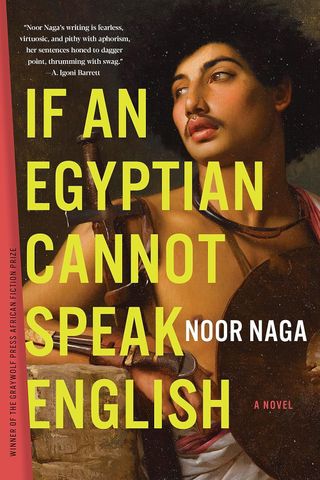
Cover of If an Egyptian Cannot Speak English

If an Egyptian Cannot Speak English

Noor Naga

Original language: English · Paperback · ISBN 978-1644450819

In the years following the Arab Spring, two people from very different versions of Egypt meet at a café in Cairo. One is a man from Shobrakheit, a village in the Nile Delta, who photographed the revolution but now lives in a rooftop shack, unemployed and struggling with cocaine addiction. The other is an Egyptian American woman, the daughter of immigrants, who has come to Cairo for the first time to teach English. She lives in a bright apartment with balconies. He moves in with her, and their relationship becomes the center of the novel.

Noor Naga uses this couple to examine how power operates inside an intimate relationship shaped by class, language, diaspora, and colonial aftereffects. The woman carries an outsider's romantic idea of Egypt. The man carries direct experience of its recent upheaval. English itself becomes a fault line between them, a marker of access and displacement. As their bond deepens, the imbalance between them sharpens into something dangerous.

The novel is structured as an experiment in form, shifting between perspectives and modes of storytelling. It won the Graywolf Press African Fiction Prize. Shobrakheit, the village where the male character grew up, is a real settlement in the Beheira Governorate of northern Egypt, situated in the western part of the Nile Delta.

Plot

In the aftermath of the Arab Spring, an Egyptian American woman and a man from the village of Shobrakheit meet at a café in Cairo. He was a photographer of the revolution, but now finds himself unemployed and addicted to cocaine, living in a rooftop shack. She is a nostalgic daughter of immigrants “returning” to a country she’s never been to before, teaching English and living in a light-filled flat with balconies on all sides. They fall in love and he moves in. But soon their desire―for one another, for the selves they want to become through the other―takes a violent turn that neither of them expected.

Cover of In the Spider's Room

In the Spider's Room

Muhammad Abdelnabi

Original language: Arabic · Paperback · ISBN 978-9774168758

In the Spider's Room follows Hani, a man arrested near Cairo's Tahrir Square after an informant points him out to police. He is loaded into a truck and detained for seven months as part of a mass prosecution known as the Queen Boat affair, which targeted gay men in Egypt. The novel is set in contemporary Cairo and draws on a real event that drew international attention to the Egyptian state's treatment of its gay citizens.

After his release, Hani finds himself unable to speak about what happened. Instead, he begins to write. His account reaches back through his life: early awareness of desire, the difficult closeness with his mother, a marriage entered for social cover, and his relationship with Abdel Aziz, the one man he loved. The act of writing becomes his way of recovering a voice that detention took from him.

Muhammad Abdelnabi sets the personal story against a wider pattern of surveillance and social pressure. Hani's silence after prison, and his decision to break it on paper rather than aloud, shapes the novel's structure. The Queen Boat case involved the arrest of over fifty men, and the book uses that specific history as its framework for one character's private reckoning with both loss and identity.

Plot

Hani was out for an evening stroll near Cairo’s Tahrir Square when a heavy hand landed on his shoulder. An informant had identified him, and he was thrown into the back of a police truck. There began a seven-month nightmare as he was swept up, along with fifty other men, in the infamous Queen Boat affair that targeted Egypt’s gay community. Finally free, but traumatized into speechlessness, Hani writes down the events of his life—his first sexual desires, his relationship with his mother, his marriage of convenience, and his passion for Abdel Aziz, the only man he ever truly loved.

Cover of Otared

Otared

Mohammad Rabie

Original language: Arabic · Paperback · ISBN 978-9774167843

Otared is set in a fictional 2025 Cairo, fourteen years after a revolution that failed to change the country's course. Egypt faces a new foreign invasion, and the city's central districts have deteriorated into zones of survival rather than civic life. Against this backdrop, a former police officer named Ahmed Otared falls in with a cell of ex-colleagues who believe armed resistance is the only remaining path to liberation.

Mohammad Rabie constructs a dystopian version of Egypt where violence, drugs, and desperation have overtaken ordinary existence. The novel follows Otared as he moves through a Cairo that has become almost unrecognizable, shaped by occupation and internal collapse in equal measure. Rather than offering a heroic resistance narrative, the story tracks what happens to people and institutions when order gives way entirely.

The book was originally written in Arabic and is rooted in the geography and politics of modern Cairo. Its near-future setting draws on real tensions from the years following the 2011 Egyptian uprising, projecting them forward into a speculative scenario where the worst possibilities have materialized. Rabie uses this framework to examine loyalty, futility, and the cost of prolonged instability on a single city and its inhabitants.

Plot

2025: fourteen years after the failed revolution, Egypt is invaded once more. As traumatized Egyptians eke out a feral existence in Cairo's dusty downtown, former cop Ahmed Otared joins a group of fellow officers seeking Egypt's liberation through the barrel of a gun. As Cairo becomes a foul cauldron of drugs, sex, and senseless violence, Otared finally understands his country's fate.

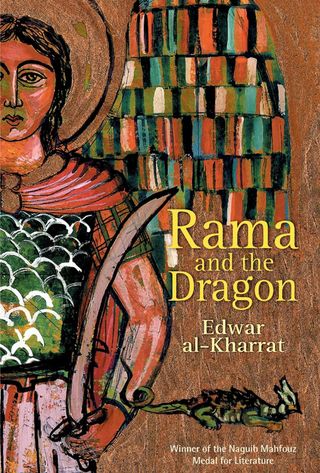
Cover of Rama and the Dragon

Rama and the Dragon

Edwar al-Kharrat

Original language: Arabic · Hardcover · ISBN 978-9774246760

Rama and the Dragon is a novel by Egyptian writer Edwar al-Kharrat that centers on the relationship between two characters, Rama and Mikhail. Their connection is marked by unrequited passion, and each figure carries a distinct symbolic weight. Rama is associated with multiplicity and creativity, while Mikhail represents unity and constancy. The tension between them mirrors broader contrasts within Egyptian life: Copt and Muslim, Upper Egypt and Lower Egypt, individual longing and collective experience.

Al-Kharrat builds the novel through layered narratives and intertextual references, weaving together dreams, fears, hopes, and disappointments. The structure moves between the personal scale of two people and wider patterns of human anxiety and desire. Rather than following a single linear plot, the book sets different narrative threads alongside one another, letting them shape meaning through proximity and contrast.

The novel received the Naguib Mahfouz Medal for Literature. In their citation, the judges described the book as a breakthrough in the literary history of modern Arabic fiction. Al-Kharrat, a Coptic Egyptian author born in Alexandria, was known for experimental prose that drew on his own background and the cultural landscape of Egypt.

Plot

Rama and the Dragon, a multi-layered novel about the depths of human experience and the struggle between polarities, on the surface presents a love story of unrequited passion between Rama―the symbol of multiplicity and creativity―and Mikhail―the symbol of unity and constancy. Their story reflects the relationship not only between man and woman, Copt and Muslim, but also between Upper and Lower Egypt. Through a delicate grid of intertextual references and juxtaposed narratives, the dreams and hopes, fears and defeats of Rama and Mikhail move from the local to the global, corresponding to human dreams and anxieties everywhere.

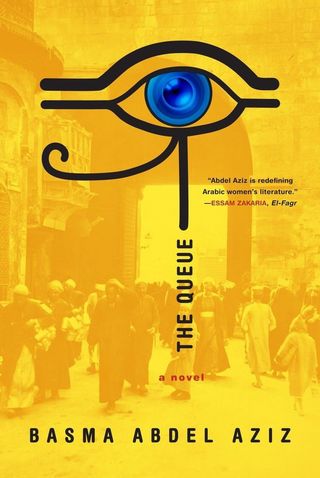
Cover of The Queue

The Queue

Basma Abdel Aziz

Original language: Arabic · Paperback · ISBN 978-1612195162

In a fictional version of modern Egypt, a centralized power called the Gate has taken control after a failed popular uprising referred to as the Disgraceful Events. Every citizen now needs the Gate's approval for ordinary tasks, from medical procedures to routine paperwork. But the Gate never opens. Instead, a line of people stretches longer each day, and those waiting begin to form a small, uneasy society of their own. Among them are a journalist, a sheikh, a mother worried about her sick daughter, and the brother of a security officer who died during the unrest.

At the center of the story is Yehia, a man carrying a bullet in his pelvis from the Events. He needs surgery, but no official will grant authorization, and some deny the bullet exists at all. His condition worsens while bureaucracy loops around him. His doctor, Tarek, faces a quiet but serious dilemma: follow the rules he has always respected, or act against them to save a patient's life.

Basma Abdel Aziz, an Egyptian psychiatrist and writer, published this debut novel originally in Arabic. The story uses dark humor and surreal logic to examine how authoritarian systems control information and wear down individual agency, even among those who believe they are loyal to the system.

Plot

In a surreal, but familiar, vision of modern day Egypt, a centralized authority known as ‘the Gate’ has risen to power in the aftermath of the ‘Disgraceful Events,’ a failed popular uprising. Citizens are required to obtain permission from the Gate in order to take care of even the most basic of their daily affairs, yet the Gate never opens, and the queue in front of it grows longer. Citizens from all walks of life mix and wait in the sun: a revolutionary journalist, a sheikh, a poor woman concerned for her daughter’s health, and even the brother of a security officer killed in clashes with protestors. Among them is Yehia, a man who was shot during the Events and is waiting for permission from the Gate to remove a bullet that remains lodged in his pelvis. Yehia’s health steadily declines, yet at every turn, officials refuse to assist him, actively denying the very existence of the bullet. Ultimately it is Tarek, the principled doctor tending to Yehia’s case, who must decide whether to follow protocol as he has always done, or to disobey the law and risk his career to operate on Yehia and save his life.

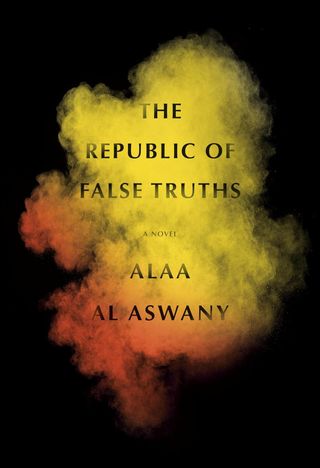
Cover of The Republic of False Truths

The Republic of False Truths

Alaa Al Aswany

Original language: Arabic · Hardcover · ISBN 978-0307957221

The Republic of False Truths is set in Cairo in 2011, during the period of mounting unrest that led to the Egyptian Revolution. Alaa Al Aswany builds the novel around a wide cast of characters whose lives are pulled toward Tahrir Square from very different starting points. Among them are General Alwany, a senior figure in the state security apparatus who reconciles religious devotion and family loyalty with the routine use of torture; Asma, a young teacher frustrated by entrenched corruption in her school; and Ashraf, an unemployed actor drawn into the protests almost by accident.

Class, power, and personal compromise run through each storyline. Nourhan, a television presenter, uses her platform to defend the ruling order, while others risk their safety to challenge it. Love affairs cross social boundaries, and families fracture as younger members side with the protesters. General Alwany faces a particular tension when his own daughter joins the demonstrations, forcing the public and private halves of his life into direct conflict.

The novel was reportedly banned in several countries in the region. Al Aswany, an Egyptian writer who trained as a dentist before turning to fiction, is also known for The Yacoubian Building. The story tracks how ordinary routines break apart when a political crisis makes neutrality impossible.

Plot

Cairo, 2011. After decades under a repressive regime, tensions are rising in the city streets. No one is out of reach of the revolution. There is General Alwany, a high-ranking member of the government's security agency, a pious man who loves his family yet won't hesitate to torture enemies of the state; Asma, a young teacher who chafes against the brazen corruption at her school; Ashraf, an out-of-work actor who is having an affair with his maid and who gets pulled into Tahrir Square through a chance encounter; Nourhan, a television personality who loyally defends those in power; and many more. As these lives collide, a new generation finds a voice, love blossoms across class divides, and the revolution gains strength. Even the general finds himself at a crossroads as his own daughter joins the protests. Yet the old regime will not give up without a fight.

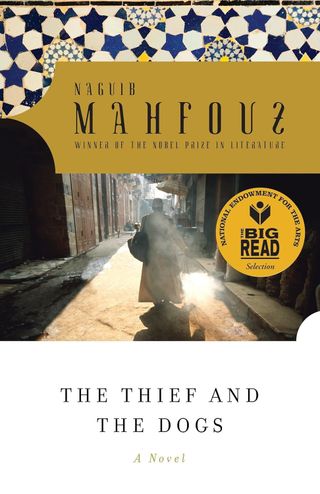
Cover of The Thief and the Dogs

The Thief and the Dogs

Naguib Mahfouz

Original language: Arabic · Paperback · ISBN 978-0385264624

Said Mahran, a young thief, walks out of prison after four years to find that both his country and his personal life have shifted beneath him. Egypt has passed through a revolution, and his wife has married the very man who helped send Said to jail. Together they are raising his six-year-old daughter, and Said is shut out. The premise sets a tight, fast-moving story in which personal grievance and political change press against each other from the first pages.

Equally painful for Said is the transformation of Rauf Ilwan, the radical thinker who once taught him that robbing the wealthy was a form of social justice. Ilwan is now a prosperous newspaper editor with no interest in his former protégé. Said's attempts to settle accounts go badly wrong, turning him from pursuer into fugitive. Naguib Mahfouz, the Egyptian novelist who received the Nobel Prize in Literature in 1988, uses the structure of a chase story to examine betrayal, class resentment, and the distance between revolutionary ideals and what people do once they hold power. The novella is set in Cairo and draws much of its tension from the city's crowded streets and shifting loyalties.

Plot

After four years in prison, the skilled young thief Said Mahran emerges bent on revenge. He finds a world that has changed in more ways than one. Egypt has undergone a revolution and, on a more personal level, his beloved wife and his trusted henchman, who conspired to betray him to the police, are now married to each other and are keeping his six-year-old daughter from him. But in the most bitter betrayal, his mentor, Rauf Ilwan, once a firebrand revolutionary who convinced Said that stealing from the rich in a unjust society is an act of justice, is now himself a rich man, a respected newspaper editor who wants nothing to do with the disgraced Said. As Said's wild attempts to achieve his idea of justice badly misfire, he becomes a hunted man so driven by hatred that he can only recognize too late his last chance at redemption.

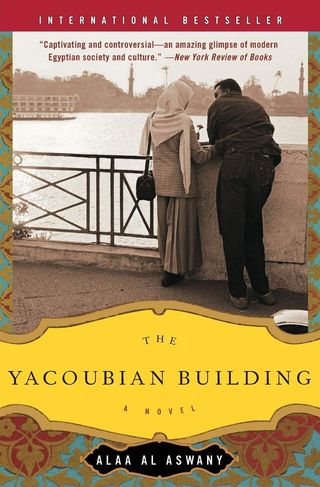
Cover of The Yacoubian Building

The Yacoubian Building

Alaa Al Aswany

Original language: Arabic · Paperback · ISBN 978-0060878139

The Yacoubian Building takes its name from an actual apartment block in downtown Cairo, a former Art Deco landmark that has aged alongside the city around it. Alaa Al Aswany sets his novel inside and around this single address, using it as a vertical cross-section of Egyptian society. The residents range from a aging aristocrat who fashions himself an expert on women to a politically connected businessman who bends religious language to suit his own appetites. A young doorman drawn toward religious fundamentalism, a newspaper editor conducting a hidden relationship with a policeman, and a tailor's family living on the rooftop all share the same structure while occupying very different social worlds.

The building functions almost as a character itself, its faded grandeur reflecting shifts in Cairo's political and economic life over several decades. Al Aswany, who worked as a dentist in central Cairo, drew on close observation of the neighborhood. The novel was first published in Arabic in 2002 and became an international bestseller, later adapted into an Egyptian film. Its storylines move between class, religion, sexuality, and political corruption, tracing how these pressures shape each resident's choices as their paths converge.

Plot

All manner of flawed and fragile humanity reside in the Yacoubian Building, a once-elegant temple of Art Deco splendor now slowly decaying in the smog and bustle of downtown Cairo: a fading aristocrat and self-proclaimed "scientist of women"; a sultry, voluptuous siren; a devout young student, feeling the irresistible pull toward fundamentalism; a newspaper editor helplessly in love with a policeman; a corrupt and corpulent politician, twisting the Koran to justify his desires.

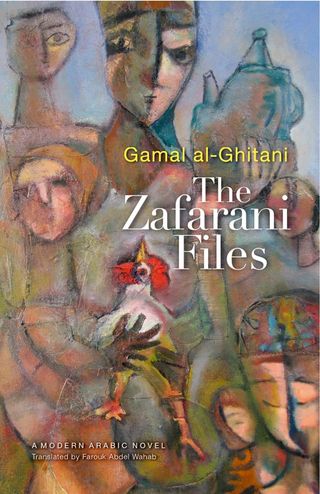
Cover of The Zafarani Files

The Zafarani Files

Gamal al-Ghitani

Original language: Arabic · Hardcover · ISBN 978-9774161902

In a narrow alley of old Cairo, an unnamed figure watches. The residents of Zafarani Alley go about their daily lives, unaware that someone is recording their movements, habits, and secrets. A college graduate, a taxi driver, street vendors, a political prisoner, a cafe owner, and a young green-eyed wife married to a difficult husband all become subjects in an expanding file of observations. As the surveillance accumulates, the boundary between the watcher's reports and the story of the alley itself begins to blur.

Gamal al-Ghitani sets his novel in a neighborhood that functions almost like a village inside a city. Zafarani Alley is a place where gossip circulates freely, suspicion runs close to the surface, and superstition shapes daily reasoning. The residents are tightly connected, yet each one guards something private. Al-Ghitani uses this enclosed world to explore how ordinary people behave under scrutiny and how power can operate through quiet, persistent attention rather than open force.

The novel carries a dark comic tone throughout. Its satire draws on the texture of Cairo street life, layering humor over unease. The characters feel specific to their setting, grounded in the rhythms and tensions of a particular kind of urban community.

Plot

An unknown observer is watching the residents of a small, closely-knit neighborhood in Cairo’s old city, making notes. The college graduate, the street vendors, the political prisoner, the café owner, the taxi driver, the beautiful green-eyed young wife with the troll of a husband―all are subjects of surveillance. The watcher’s reports flow seamlessly into a narrative about Zafarani Alley, a village tucked into a corner of the city, where intrigue is the main entertainment, and everyone has a secret. Suspicion, superstition, and a wicked humor prevail in this darkly comedic novel.

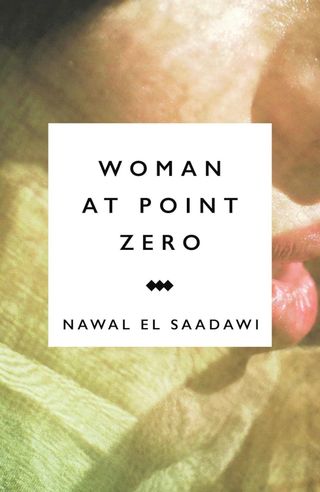
Cover of Woman at Point Zero

Woman at Point Zero

Nawal El Saadawi

Original language: Arabic · Paperback · ISBN 978-1783605941

Woman at Point Zero is a novel by Egyptian writer Nawal El Saadawi, structured around a single conversation in a Cairo prison. Firdaus, a woman sentenced to death for killing a pimp, recounts the full arc of her life to a visiting psychiatrist. The story moves from a peasant childhood in rural Egypt through a series of encounters with men who exploit, control, or abandon her. Each stage of her life strips away a layer of illusion about the promises society makes to women.

Firdaus grows up seeking affection and learning, but finds that both are withheld or used as tools of power. Marriage, education, and work each offer a brief possibility of independence before closing again. She eventually turns to prostitution, which she describes not as degradation but as a form of clarity about transactions that were always present in her relationships. Her refusal to ask for mercy after her arrest becomes a final assertion of control over her own story.

The novel is set against the social structures of mid-twentieth-century Egypt, where rural poverty, religious authority, and urban inequality shape the options available to women. El Saadawi, herself a physician and activist, draws on interviews she conducted with women in Qanatir Prison near Cairo.

Plot

'All the men I did get to know filled me with but one desire: to lift my hand and bring it smashing down on his face.' So begins Firdaus's remarkable story of rebellion against a society founded on lies, hypocrisy, brutality and oppression. Born to a peasant family in the Egyptian countryside, Firdaus struggles through childhood, seeking compassion and knowledge in a world which gives her little of either. As she grows up and escapes the fetters of her childhood, each new relationship teaches her a bitter but liberating truth – that the only free people are those who want nothing, fear nothing and hope for nothing.

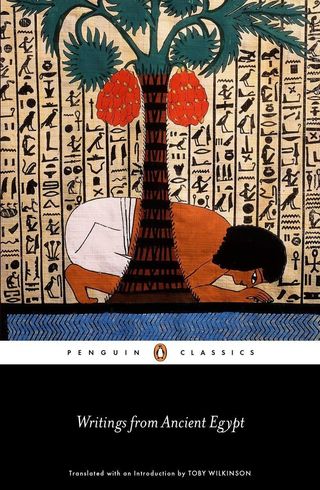
Cover of Writings from Ancient Egypt

Writings from Ancient Egypt

Toby Wilkinson

Original language: English · Paperback · ISBN 978-0141395951

Writings from Ancient Egypt is a collection of hieroglyphic texts translated into modern English by Egyptologist Toby Wilkinson. The material spans more than two thousand years of Egyptian civilization and covers a wide range of forms: battle accounts, royal proclamations, hymns, songs, satires, mortuary spells, obelisk inscriptions, and tales of shipwreck and wonder. Some of these pieces appear in a general anthology for the first time in this edition.

Hieroglyphic writing was carved into stone on tombs and temple walls, painted on coffins and statues, or written in ink on papyrus scrolls. For centuries the script was unreadable to modern scholars, until it was finally decoded in the 1820s. The texts collected here offer a direct view into how ancient Egyptians recorded war, religion, governance, daily advice, and storytelling. One selection includes counsel from a pharaoh to his son. Another preserves a first-hand description of a natural disaster.

Wilkinson provides an introduction alongside the translations. The collection moves between public and private registers, from formal inscriptions meant to last forever to personal and literary texts that circulated on fragile papyrus. Together, these writings show how central the written word was to Egyptian culture and statecraft.

Plot

The fascination that Ancient Egypt holds in our minds has many sources, but at the heart of it lie hieroglyphics. This extraordinary writing system was for many years seen as the ultimate puzzle, before finally being cracked in the 1820s. Preserved carved in stone or inked on papyri, hieroglyphic writings give a unique insight into an awe-inspiring but also deeply mysterious culture. For this collection, Toby Wilkinson has translated a rich selection of pieces, ranging from accounts of battles to hymns to stories to royal proclamations

More from Egypt

See the country page for Egypt for its map, facts and largest cities, or browse books from other countries.

Links go to Amazon; Hookito doesn’t sell books. Know a book that belongs here, or spotted a mistake? Write to submissions@hookito.com.

Where to next?

Back to the globe
Hookito landscape illustration