
Hookito

Western Sahara · Books

Books from Western Sahara
3 books from and about Western Sahara: what each is about, the plot, and a note from Professor Kogi.

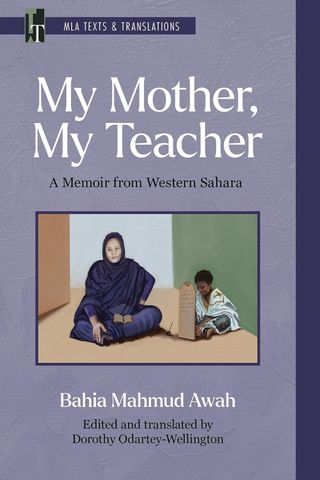
Cover of My Mother, My Teacher

My Mother, My Teacher

Bahia Mahmud Awah

Original language: Spanish · Paperback · ISBN 978-1603296458

Bahia Mahmud Awah's memoir recounts growing up in Western Sahara and being separated from his family during the failed decolonization process that uprooted Saharawi communities in the mid-1970s. At the center of the book is his mother, whose presence shaped his understanding of language, culture, and endurance. Awah describes her sacrifices and her steady optimism during years of displacement, drawing on memories that held him together when distance from home was at its sharpest.

The memoir incorporates poetry written in Hassaniya, the Arabic dialect traditionally spoken by the Saharawi people. Through these poems, many of them his mother's own, Awah explores how language carries identity forward even in exile. The work connects one family's story to the broader pattern of loss and scattering across the region, showing how shared memory and oral tradition sustain a community when its territory remains contested.

First published in 2011, this edition presents the first complete English translation alongside the original text. It also includes a new epilogue by the author with additional recollections of his mother and further examples of her poetry.

Plot

Separated from his family in the aftermath of the failed decolonization process in Western Sahara, Bahia Mahmud Awah was sustained by recollections of his mother. In this memoir, he describes her sacrifices, her optimism, and her deep love. His family's experiences exemplify the larger story of loss and displacement in the region even as his story shows how shared memories can nourish community and culture across generations, even in exile. Incorporating poetry in Hassaniya, the traditional Saharawi language, the work highlights the role of language in shaping identity and resisting colonialism.
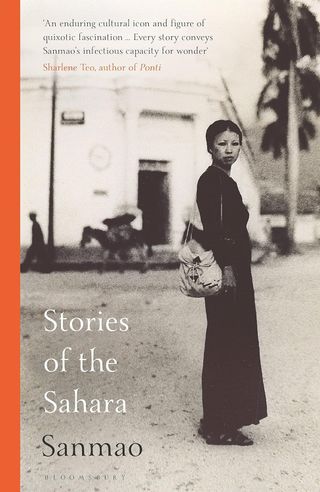
Cover of Stories of the Sahara

Stories of the Sahara

Sanmao

Original language: Mandarin · Hardcover · ISBN 978-1408881873

Sanmao was born in China in 1943 and grew up in Taiwan, where she first encountered the Sahara through the pages of National Geographic. In 1974, she traveled to El Aaiún, then a Spanish-controlled territory in the Western Sahara, drawn by the vast and quiet landscape she had studied from afar. Her boyfriend José left Madrid to join her there and proposed marriage. Together they settled into daily life in the desert, far from the cities and conventions they had known.

The book collects Sanmao's accounts of living among the indigenous people of the Western Sahara. She writes about the routines of married life, encounters with local customs she found both fascinating and bewildering, and the slow realization that the desert she had imagined did not always match the one she inhabited. Loneliness and curiosity sit close together in her telling, as she navigates being a permanent outsider in a place she chose freely.

Stories of the Sahara became enormously popular across the Chinese-speaking world, selling an estimated fifteen million copies. For decades it existed only in Chinese. The edition carrying ISBN 978-1408881873 marks its first translation into English, with an introduction by Sharlene Teo.

Plot

Leafing through the pages of National Geographic as a young girl growing up in Taiwan, Sanmao became enchanted by the infinite and wonderous landscape of the Sahara. Years later, in 1974, she sets out for the Spanish desert territory of El Aaiún in hopes of becoming the first female explorer to cross the hauntingly beautiful expanse. Her boyfriend José would have to wait, or join her. He packs his things, leaves Madrid, and asks Sanmao to marry him. As Sanmao settles in to married life alongside the indigenous people of the Western Sahara, she is confronted by a culture and desert lifestyle that both captivate and confound her. Drawn in by the mystery of such desolate lands but disappointed by the drawl of life as a perpetual outsider, Sanmao begins to wonder if the desert is what she imagined it to be, and if her insatiably curious heart can beat forever in just one place.

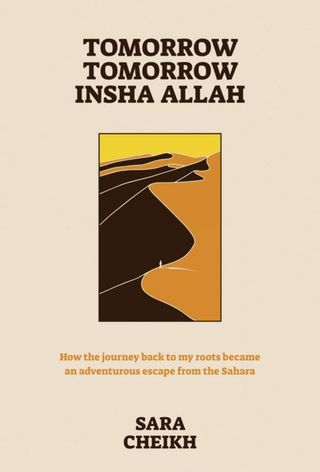
Cover of Tomorrow, Tomorrow, Insha Allah

Tomorrow, Tomorrow, Insha Allah

Sara Cheikh

Original language: English · Paperback · ISBN 978-1627311397

Sara Cheikh's memoir opens at the start of the Covid-19 pandemic, when a long-planned return to her homeland turns into an unplanned ordeal. Stranded far from where she needs to be, she finds herself dodging border guards, rationing candy bars for meals, and sharing the road with travel companions she neither chose nor expected. Her goal is to cross into Algeria, and every route she tries brings fresh obstacles: the threat of arrest, the real possibility of going hungry, and encounters that test her patience and her nerve.

The book is noted as the first memoir published in English by a Saharawi woman writer. The Saharawi people have lived for decades in displacement, with many settled in refugee camps in western Algeria after conflict over the territory of Western Sahara. Cheikh's account moves between tense moments and lighter, sometimes comic episodes as she reflects on what cultural heritage means when your homeland remains politically unresolved. Questions about belonging, borders, and identity run through the narrative, grounded in the specific details of one person's attempt to get home during a period when much of the world had stopped moving.

Plot

At the beginning of the Coronavirus outbreak, what was supposed to be a long-awaited homecoming becomes a desperate adventure escaping border guards and surviving on candy bars, all the while trying to avoid losing her cool with unwanted and unlikely traveling companions. On her odyssey back home through a changing world, she faces starvation, the possibility of arrest, and kidnapping, as she attempts to cross the border into Algeria by any means possible. Alternating between tense, poignant, and funny, this heartfelt first-hand account explores life and lessons from the plight of the Saharawi people. Sara's story questions the meaning of cultural heritage and the universal desire to have a homeland.

More from Western Sahara

See the country page for Western Sahara for its map, facts and largest cities, or browse books from other countries.

Links go to Amazon; Hookito doesn’t sell books. Know a book that belongs here, or spotted a mistake? Write to submissions@hookito.com.

Where to next?

Back to the globe
Hookito landscape illustration