Hookito

Spain · Books

Books from Spain

11 books from and about Spain: what each is about, the plot, and a note from Professor Kogi.

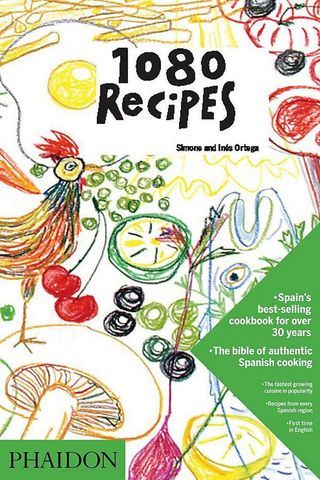
Cover of 1080 Recipes

1080 Recipes

Simone Ortega, Inés Ortega

Original language: Spanish · Hardcover · ISBN 978-0714848365

First published in Spain decades ago, 1080 Recipes by Simone Ortega and her daughter Inés Ortega has become one of the most widely owned cookbooks in the country. Millions of copies have been sold. The book gathers recipes from every Spanish region, covering appetizers, soups, stews, vegetables, fish, meat, and desserts. Its focus is home cooking rather than restaurant technique, and the recipes serve as a practical reference for daily meals.

This English-language edition was revised and updated for readers outside Spain. Javier Mariscal, a well-known Spanish graphic designer and illustrator, created hundreds of original illustrations for this version, and the book includes specially commissioned photographs. With 1080 individual recipes, the scope extends well beyond the tapas and paella that many associate with Spanish food, taking in dishes from across the country's varied geography.

Because the recipes draw from regions as different as Galicia, Andalusia, Catalonia, and the Basque Country, the collection reflects a wide range of ingredients and cooking traditions. Olive oil, garlic, peppers, and seafood appear frequently, but regional variety means no single set of flavors dominates. The book gives space to both simple weeknight preparations and more involved dishes suited to celebrations.

Plot

A bestseller since its publication almost forty years ago, millions of copies have been sold in Spain Spanish cuisine is the fastest growing cuisine in popularity, with Spanish restaurants and tapas bars opening in cities all over the world Contains 1080 recipes from all Spanish regions for everything from appetizers to stews, from vegetables to desserts All recipes thoroughly updated and revised for the English-speaking markets Designed by the famous Spanish graphic designer and illustrator, Javier Mariscal, and including over 500 illustrations he has created for this edition together with 104 specially commissioned photographs
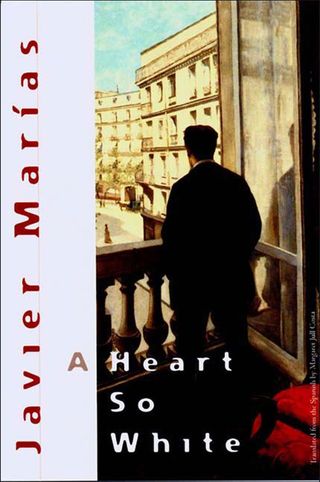
Cover of A Heart So White

A Heart So White

Javier Marías

Original language: Spanish · Paperback · ISBN 978-0811215053

A Heart So White opens with a shocking act that shadows everything that follows. The narrator, Juan, is a translator living in Madrid who has recently married Luisa. During their honeymoon in Havana, a brief, unsettling encounter with a stranger on the street stirs in him a growing unease about his own marriage and the life that preceded it. His father, Ranz, married three times before Juan was born, and the circumstances surrounding those earlier marriages remain largely unspoken.

Juan is not someone who goes looking for answers. He is, by temperament, a person who would rather not know. Yet the act of marrying pulls him closer to his father's history, and the question of what happened in the past becomes harder to avoid. The novel circles around secrecy, the way silence can function as both protection and burden, and the unsettling weight of words once they have been spoken aloud.

Originally written in Spanish, the book has been published in dozens of countries and translated into 37 languages. It received the 1997 International Dublin Literary Award, previously known as the IMPAC Dublin Literary Award, for the best novel published in English that year.

Plot

Javier Marías's A Heart So White chronicles with unnerving insistence the relentless power of the past. Juan knows little of the interior life of his father Ranz; but when Juan marries, he begins to consider the past anew, and begins to ponder what he doesn't really want to know. Secrecy―its possible convenience, its price, and even its civility―hovers throughout the novel. A Heart So White becomes a sort of anti-detective story of human nature.

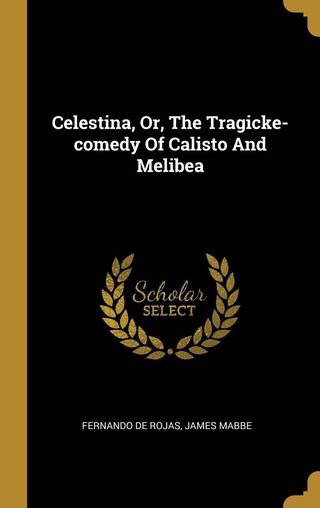
Cover of Celestina, Or, The Tragicke-comedy Of Calisto And Melibea

Celestina, Or, The Tragicke-comedy Of Calisto And Melibea

Fernando de Rojas, James Mabbe

Original language: Spanish · Hardcover · ISBN 978-1012702687

Celestina, first published in Spain at the end of the fifteenth century, is one of the earliest extended prose works in Spanish literature. It follows Calisto, a young nobleman overcome by desire for Melibea, a woman who initially rejects him. Desperate to reach her, he turns to Celestina, an aging go-between with a sharp tongue and a talent for manipulation. Celestina agrees to help, but her motives are bound to profit rather than kindness, and the arrangement draws in Calisto's servants, each pursuing gains of their own.

The work unfolds almost entirely through dialogue, reading closer to a play than a novel, though its length made stage performance impractical in its own time. Characters speak in ways that shift between formal courtly language and blunt, street-level speech, giving each figure a distinct voice. Greed, lust, and self-deception drive the plot forward, and the consequences that follow are sharp and physical rather than abstract.

This English edition uses the translation by James Mabbe, an early seventeenth-century scholar who rendered the Spanish text into vigorous Jacobean English. Mabbe's version became a notable work of English prose in its own right, preserving the story's mix of comedy and violence in language shaped by the same period that produced Shakespeare and Ben Jonson.

Plot

Celestina tells the story of Calisto, a young nobleman who becomes passionately infatuated with the beautiful Melibea. Unable to win her love on his own, he enlists the help of Celestina, an old and shrewd procuress skilled in manipulation, flattery, and magic.

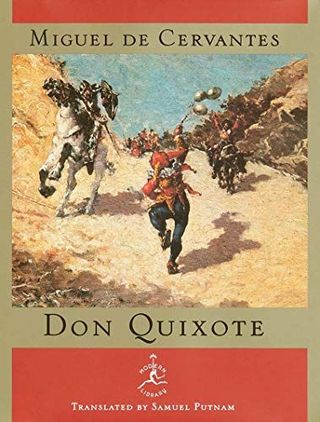
Cover of Don Quixote de La Mancha

Don Quixote de La Mancha

Miguel De Cervantes Saavedra

Original language: Spanish · hardcover

Miguel de Cervantes Saavedra's novel follows an aging gentleman from La Mancha, a dry plain in central Spain, who reads so many tales of chivalry that he loses hold of ordinary life. He renames himself Don Quixote, declares himself a knight-errant, and rides out to right wrongs. Beside him goes Sancho Panza, a practical farmer serving as squire in hope of one day governing an island.

The book appeared in two parts, the first in 1605 and the second in 1615, and is widely described as the first modern novel. Cervantes gathers several kinds of storytelling into one frame: pastoral episodes, roadside comedy, and short tales told by people the pair meet. The knight's horse is bony and his armour improvised, and the giants he charges turn out to be windmills.

Set among the plains, inns, and rural roads of sixteenth-century Spain, the story keeps returning to the gap between what Don Quixote sees and what is there. The bond between knight and squire shifts as they travel, each taking on something of the other, and the comedy carries a steady question about idealism meeting the ordinary world.

Plot

Widely regarded as the world's first modern novel, Don Quixote chronicles the famous picaresque adventures of the noble knight-errant Don Quixote de La Mancha and his faithful squire, Sancho Panza, as they travel through sixteenth-century Spain.

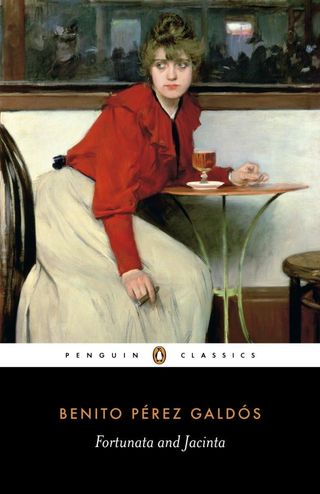
Cover of Fortunata and Jacinta

Fortunata and Jacinta

Benito Pérez Galdós

Original language: Spanish · Paperback · ISBN 978-0140433050

Fortunata and Jacinta is a four-part novel by Benito Pérez Galdós, published in 1886-1887. Set in Madrid during the 1870s, it follows two women whose lives become entangled through shared emotional ties and sharp differences in social standing. Fortunata belongs to the working poor of the city, while Jacinta occupies the comfortable world of the commercial bourgeoisie. The men who connect them, including husbands and lovers, move between these worlds with varying degrees of loyalty and self-interest.

Galdós builds the story around the dense network of family alliances, business relationships, and neighborhood bonds that shaped daily life in Madrid. The novel maps the city in close detail, from its markets and tenements to its prosperous households, grounding the personal conflicts of its characters in specific streets and social circles. Class is not treated as a backdrop but as a force that determines what each character can want, say, or become.

Galdós wrote nearly eighty novels over his career, and Fortunata and Jacinta is widely regarded as his central achievement. The book's scope and psychological attention place it among the major works of nineteenth-century European realism, alongside novels by Tolstoy and Zola that similarly turned urban societies into extended fictional worlds.

Plot

Galdoz's four-part Fortunata and Jacinta (1886-7), the masterpiece among his almost 80 novels, tells the turbulent story of two women, their husbands and their lovers, set against the intricate web of dynastic alliances and class contrasts of Madrid in the 1870s.

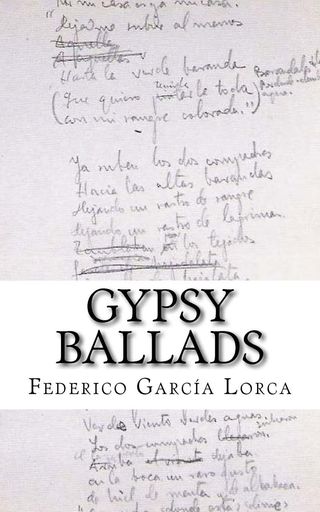
Cover of Gypsy Ballads

Gypsy Ballads

Federico Garcia Lorca

Original language: Spanish · Paperback · ISBN 978-1542582834

Gypsy Ballads, first published in Spanish in 1928 as Romancero Gitano, gathers eighteen poems by Federico García Lorca. It is set in Andalusia, the region of southern Spain where he grew up, and centers on Romani lives and the pressures placed on them by surrounding society. Lorca called the book a retablo, meaning a painted altarpiece panel, of the region.

The poems move between concrete scenes of daily life and a more symbolic register. Rivers, wind, and the moon act almost as characters, and the Civil Guard appears as an armed presence, blurring the line between observed reality and dream. Violence, desire, grief, and defiance surface through compressed images rather than plain statement, and Lorca set the moral territory beside the painted world of Hieronymus Bosch.

The title points to a traditional form. The Spanish romance is a narrative ballad in eight-syllable lines, carried for centuries by singers and reciters before poets adopted it in print. Lorca wrote within that inherited shape while pulling it toward his own imagery. He belonged to the Generation of 27, a circle of Spanish writers and artists active in the late 1920s and 1930s.

Plot

Lorca described his poetic study of human nature as an intricate retablo of southern Spain. On the surface it depicts the daily struggles of a marginalized people, but beneath the surface there is so much more. In these eighteen poems Lorca illustrates for us with words and lyrical incantations the daily interactions of the oppressors and the oppressed. Here we have on display the seven deadly sins (and three last things!) that Hieronymus Bosch explored hundreds of years earlier with oil paint.

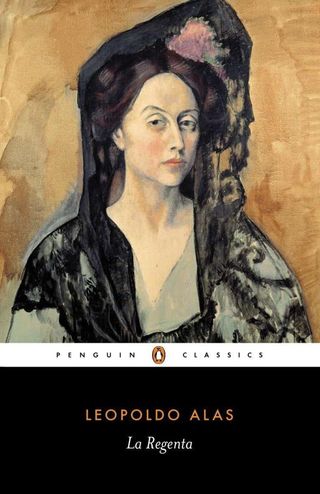
Cover of La Regenta

La Regenta

Leopoldo Alas

Original language: Spanish · Paperback · ISBN 978-0140443462

Ana Ozores is married to the much older retired magistrate of Vetusta, a fictional provincial city in northern Spain. She respects her husband but finds daily life in this small, conservative town suffocating. Restless and intelligent, Ana begins searching for something to fill the emptiness, turning first to intense religious devotion and then to the attentions of a local seducer. Two men compete for influence over her: an ambitious priest who sees Ana as both a spiritual project and a personal obsession, and a charming aristocrat styling himself as a modern Don Juan.

Vetusta, widely understood as a thinly disguised version of Oviedo in Asturias, serves as a character in its own right. Leopoldo Alas uses the town's gossip, class rituals, and petty social hierarchies to build a detailed portrait of Spanish provincial life in the late nineteenth century. The clergy, the local gentry, and the professional classes all come under sharp observation.

First published in two volumes in 1884 and 1885, La Regenta caused controversy in Spain for its direct treatment of sexuality and its pointed criticism of the Catholic Church's role in everyday social life. It is one of the longest and most structurally ambitious novels of nineteenth-century Spanish literature.

Plot

Married to the retired magistrate of Vetusta, Ana Ozores cares deeply for her much older husband but feels stifled by the monotony of her life in the shabby and conservative provincial town. And when she embarks on a quest for fulfillment through religion and even adultery, a bitter struggle begins between a powerful priest and a would-be Don Juan for the passionate young woman's body and soul.

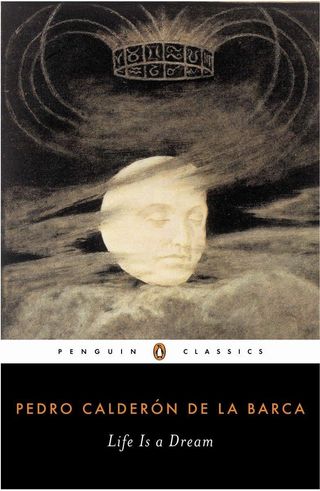
Cover of Life Is a Dream

Life Is a Dream

Pedro Calderon de la Barca

Original language: Spanish · Paperback · ISBN 978-0143104827

Life Is a Dream, originally written in Spanish as La vida es sueño, is a verse play by Pedro Calderón de la Barca first performed in the 1630s during the Spanish Golden Age. The story is set in a fictionalized Poland, where a prince named Segismundo has been locked in a remote tower since birth. His father, King Basilio, imprisoned him after astrologers predicted the prince would grow into a tyrant. The play opens with Segismundo chained in a mountainous wasteland, unaware of his royal identity.

A parallel storyline follows Rosaura, a noblewoman who arrives in Poland disguised and seeking justice against a man who betrayed her. Her path crosses with Segismundo's, and both characters become entangled in the political tensions surrounding the throne. When Basilio decides to test his son by briefly granting him power, the experiment raises urgent questions about whether people can overcome a destiny imposed on them.

The play's central tension sits between fate and personal choice. Calderón uses the recurring image of life as a dream to ask whether what we experience while awake is any more certain than what we experience while asleep. The structure moves between philosophical monologue and court intrigue, grounding abstract ideas in specific dramatic conflict.

Plot

Imbued with highly poetic language and humanist ideals, it is an allegory that considers contending themes of free will and predestination, illusion and reality, played out against the backdrop of court intrigue and the restoration of personal honor. In the mountainous barrens of Poland, the rightful heir to the kingdom has been imprisoned since birth in an attempt by his father to thwart fate. Meanwhile, a noblewoman arrives to seek revenge against the man who deceived and forsook her love for the prospect of becoming king of Poland. Richly symbolic and metaphorical, Life Is a Dream explores the deepest mysteries of human experience.

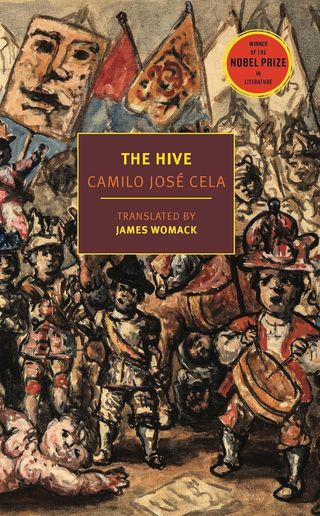
Cover of The Hive

The Hive

Camilo José Cela

Original language: Spanish · Paperback · ISBN 978-1681376158

The Hive by Camilo José Cela unfolds over a handful of days in Madrid in 1943, a few years after the Spanish Civil War ended, when Francisco Franco's regime held its tightest control over daily life. The novel tracks more than three hundred characters as they move through the city, and none of them holds the center for long. Cela builds the picture through fragments rather than one continuous plot.

That structure matches the crowded, restless quality of city life under restriction. Conversations in cafes, chance meetings on the street, and small private crises accumulate into a group portrait of a society marked by hunger, moral compromise, and political pressure. Cela's tone is blunt and often irreverent, and he keeps his distance from the people he observes rather than explaining them.

The Hive first appeared in Buenos Aires in 1951, after censors in Spain blocked its publication there. Cela later received the Nobel Prize in Literature in 1989. This English edition presents the novel complete and uncensored for the first time, restoring passages that earlier versions left out.

Plot

The Hive is set over the course of a few days in the Madrid of 1943, not long after the end of the Spanish Civil War, when the regime of General Francisco Franco was at its most oppressive. The book includes more than three hundred characters whose comings and goings it tracks to hypnotic effect. Scabrous, scandalous, and profane, The Hive is a virtuosic group portrait of a wounded and sick society.

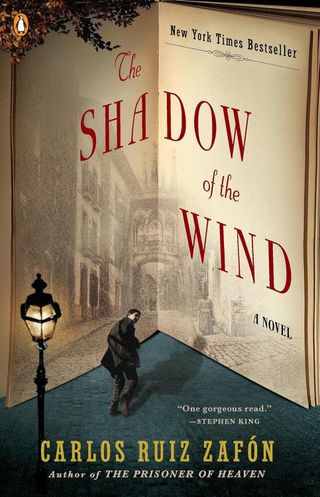
Cover of The Shadow of the Wind

The Shadow of the Wind

Carlos Ruiz Zafón

Original language: Spanish · Paperback · ISBN 978-0143034902

In Barcelona in 1945, a boy named Daniel is taken by his father, a dealer in old books, to a hidden place called the Cemetery of Forgotten Books. There he discovers a novel by an obscure writer named Julián Carax. The story grips Daniel, and he begins searching for other titles by the same author. What he finds instead is troubling: someone has been tracking down and destroying every known copy of everything Carax ever wrote. The book Daniel holds may be the only one left.

Daniel's effort to learn who Carax was and why his work is being erased pulls him deeper into the layered history of the city itself. The trail connects to events from decades earlier, crossing paths with violence, failed love, and secrets that several people in Barcelona would prefer to keep buried. Carlos Ruiz Zafón sets the story against the long aftermath of the Spanish Civil War, a period when the city was still marked by loss and suspicion.

The novel is structured as a mystery but draws equally on gothic atmosphere and literary fiction. Its Barcelona is mapped in detail, from the narrow streets of the old quarter to the grand houses on Avenida del Tibidabo, and the city functions almost as a character in its own right.

Plot

Barcelona, 1945: A city slowly heals in the aftermath of the Spanish Civil War, and Daniel, an antiquarian book dealer’s son who mourns the loss of his mother, finds solace in a mysterious book entitled The Shadow of the Wind, by one Julián Carax. But when he sets out to find the author’s other works, he makes a shocking discovery: someone has been systematically destroying every copy of every book Carax has written. In fact, Daniel may have the last of Carax’s books in existence. Soon Daniel’s seemingly innocent quest opens a door into one of Barcelona’s darkest secrets—an epic story of murder, madness, and doomed love.

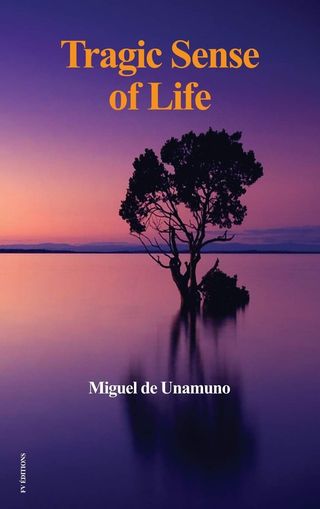
Cover of Tragic Sense of Life

Tragic Sense of Life

Miguel de Unamuno

Original language: Spanish · Hardcover · ISBN 979-1029909283

Miguel de Unamuno first published Del sentimiento trágico de la vida in 1913. The book is a work of philosophy, but it does not follow the usual academic structure of arguments and proofs. Instead, it reads as a personal and often anguished exploration of what it means to live knowing that death is certain and that reason cannot promise anything beyond it. Unamuno places the individual human being, not an abstract system, at the center of his thinking.

The core tension in the book runs between faith and reason. Unamuno argues that the desire for immortality is a basic human need, yet rational thought offers no reliable grounds for believing in it. Rather than resolving this conflict, he insists that the struggle itself gives life its depth and seriousness. He draws on theology, literature, and his own inner life to build a case that uncertainty is not a problem to be solved but a condition to be lived with.

Unamuno was a Basque writer and rector of the University of Salamanca. The book was recognized in his lifetime as an early contribution to existentialist thought, shaped by the same questions that later occupied thinkers across Europe in the twentieth century.

Plot

One hundred years ago, in 1913, Miguel de Unamuno published a book called The Tragic Sense of Life. It was considered - in his time - to be a masterpiece, an influential work of early existentialist philosophy. But The Tragic Sense of Life is more (or you might say less) than a work of philosophy. It is a deeply personal account of one man's anguish in the night.

More from Spain

See the country page for Spain for its map, facts and largest cities, or browse books from other countries.

Free editions are on Project Gutenberg, matched by title and author. Links go to Amazon; Hookito doesn’t sell books. Know a book that belongs here, or spotted a mistake? Write to submissions@hookito.com.

Where to next?

Back to the globe
Hookito landscape illustration