Hookito

United Kingdom · Books

Books from United Kingdom
33 books from and about United Kingdom: what each is about, the plot, and a note from Professor Kogi.

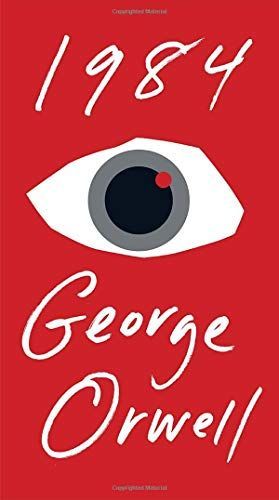
Cover of 1984

1984

George Orwell

Original language: English · Paperback · ISBN 978-0451524935

Published in 1949, George Orwell's 1984 is set in a future London within a superstate called Oceania. Society is controlled by the Party, which maintains power through constant surveillance, propaganda, and the suppression of independent thought. Citizens are monitored in their homes, and unapproved thinking is classified as thoughtcrime. At the center of the system is Big Brother, whose image appears on posters and screens across the city.

Winston Smith works at the Ministry of Truth, where his job is to alter historical records so they match the Party's current claims. Each correction removes a fact and replaces it with an approved version. Over time, Winston begins to resist the system he serves, keeping a secret diary and forming private judgments. Both acts place him in direct conflict with a regime built to eliminate personal memory and individual reasoning.

Orwell wrote the novel shortly after the Second World War, drawing on the totalitarian states of the twentieth century. The book examines how language can be narrowed to limit thought and how records can be rewritten to serve authority. Several of its invented terms, including Newspeak, doublethink, and Big Brother, have since entered everyday English.

Plot

Winston Smith toes the Party line, rewriting history to satisfy the demands of the Ministry of Truth. With each lie he writes, Winston grows to hate the Party that seeks power for its own sake and persecutes those who dare to commit thoughtcrimes. But as he starts to think for himself, Winston can’t escape the fact that Big Brother is always watching...
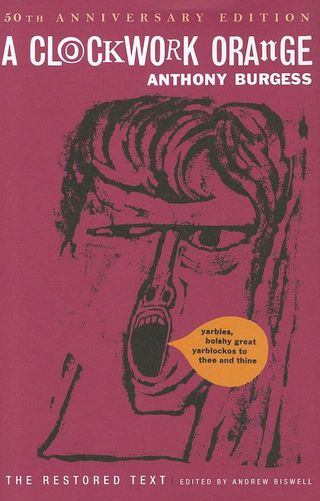
Cover of A Clockwork Orange

A Clockwork Orange

Anthony Burgess

Original language: English · Hardcover · ISBN 978-0393089134

A Clockwork Orange, first published in 1962, is Anthony Burgess's novel set in a near-future society where teenage gangs roam freely and the state responds with its own forms of control. The story follows Alex, a young man who leads a small group through nights of violence and crime, narrating events in a slang called Nadsat, a invented vocabulary drawn partly from Russian, Cockney rhyming slang, and other sources. When Alex is arrested and subjected to an experimental conditioning program designed to eliminate his capacity for violence, the novel turns toward questions about free will, state power, and whether forced goodness has any moral value.

Burgess wrote the book in part as a response to behaviorist psychology and the idea that human beings could be engineered into obedience. The American edition originally omitted the final twenty-first chapter, which altered the shape of the story. Stanley Kubrick's 1971 film adaptation, based on the shorter American text, was withdrawn from British cinemas for years at Kubrick's own request.

This revised edition, prepared by Andrew Biswell of the International Burgess Foundation, compares three published versions and the original typescript to reconstruct the text as Burgess intended it. It includes six illustrations drawn by Burgess himself.

Plot

nightmare vision of the future told in its own fantastically inventive lexicon, it has since become a classic of modern literature and the basis for Stanley Kubrick’s once-banned film, whose recent reissue has brought this revolutionary tale on modern civilization to an even wider audience. Andrew Biswell, PhD, director of the International Burgess Foundation, has taken a close look at the three varying published editions alongside the original typescript to recreate the novel as Anthony Burgess envisioned it.

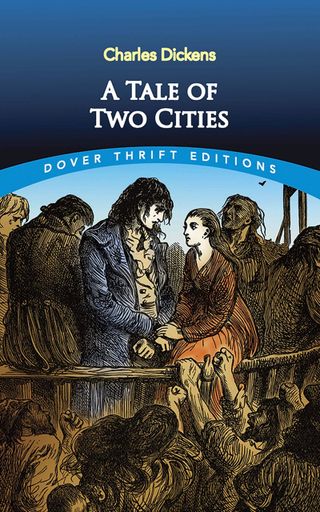
Cover of A Tale of Two Cities

A Tale of Two Cities

Charles Dickens

Original language: English · Unabridged Edition · ISBN 978-0486406510

Published in 1859, A Tale of Two Cities is a historical novel by Charles Dickens set in London and Paris during the years surrounding the French Revolution. The story begins with Dr. Alexandre Manette, who has spent eighteen years as a prisoner in the Bastille. After his release, he is reunited with his daughter Lucie, whom he has never known, and the two settle in England. Their hope for a quiet life is disrupted when they are called to testify at the Old Bailey in the trial of Charles Darnay, a young Frenchman facing a false charge of treason.

The novel moves between the two capital cities as political unrest in France builds toward the Reign of Terror. Dickens places his characters in escalating personal danger against a backdrop of mass upheaval, mob violence, and institutional cruelty. Loyalty, sacrifice, and the arbitrary nature of justice under both aristocratic and revolutionary rule run through the plot. Critic Don D'Ammassa has classified the book as adventure fiction, noting that its protagonists face constant threats of imprisonment or death.

A Tale of Two Cities is frequently cited as one of the best-selling novels of all time. It ranked 63rd on the BBC's Big Read poll in 2003 and has been adapted numerous times for film, television, radio, and stage.

Plot

Unjustly imprisoned for 18 years in the Bastille, Dr. Alexandre Manette is reunited with his daughter, Lucie, and safely transported from France to England. It would seem that they could take up the threads of their lives in peace. As fate would have it though, the pair are summoned to the Old Bailey to testify against a young Frenchman — Charles Darnay — falsely accused of treason

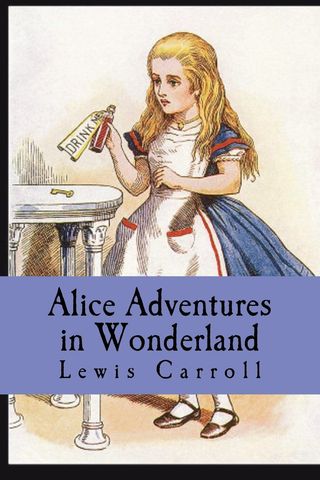
Cover of Alice's Adventures in Wonderland

Alice's Adventures in Wonderland

Lewis Carroll

Original language: English · Paperback · ISBN 978-1503222687

Alice's Adventures in Wonderland appeared in 1865, written by Charles Lutwidge Dodgson under the pen name Lewis Carroll. The story follows a girl named Alice who falls down a rabbit hole and lands in a strange world populated by talking, human-like animals. Carroll, a mathematician who taught at Christ Church in Oxford, first told the tale to children during a boating trip on the Thames.

The world Alice enters operates on its own peculiar logic. She changes size repeatedly, meets a grinning cat that can vanish, sits through a tea party that never ends, and encounters a queen quick to order beheadings. Carroll's writing belongs to the literary nonsense tradition, a style that plays with language, logic and expectation rather than following conventional storytelling rules. Characters speak in riddles, and familiar verses are rewritten into absurdity.

The book is among the best-known works of Victorian literature, and its structure, characters and imagery have shaped popular culture and later fiction, especially fantasy. Names such as the White Rabbit and the Cheshire Cat now circulate far beyond the page, in film, music and everyday speech.

Plot

Alice's Adventures in Wonderland tells of a girl named Alice falling through a rabbit hole into a fantasy world populated by peculiar, anthropomorphic creatures. ts narrative course and structure, characters and imagery have been enormously influential in both popular culture and literature, especially in the fantasy genre.

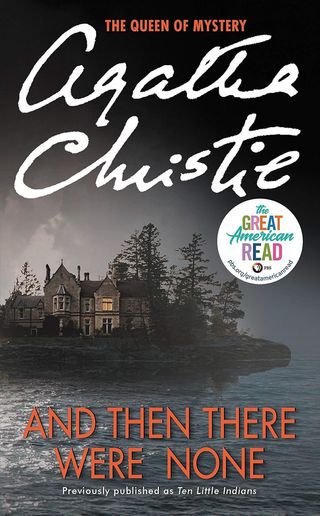
Cover of And Then There Were None

And Then There Were None

Agatha Christie

Original language: English · Mass Market Paperback · ISBN 978-0062073488

Ten strangers receive invitations to a mansion on a small island off the Devon coast of England. Their host, known only by the initials U.N. Owen, never appears. Instead, during dinner, a recorded voice announces that each guest carries responsibility for a past death. Before the night ends, one of the ten is dead.

A storm cuts the island off from the mainland, and no help can reach the group. A framed nursery rhyme hanging in each bedroom describes ten figures disappearing one after another, and the deaths on the island begin to follow its pattern. Suspicion shifts constantly. Every guest has a reason to hide something, and every guest has a reason to fear the others. The setting is confined and the tension methodical, built less on physical danger than on the question of who among the group is responsible.

Agatha Christie published the novel in 1939, and it became the best-selling mystery novel of all time. The story has been adapted many times for stage, film, and television. Its structure, placing a closed group of suspects in an isolated location with no outside contact, became one of the most widely imitated setups in crime fiction.

Plot

Ten people, each with something to hide and something to fear, are invited to an isolated mansion on Indian Island by a host who, surprisingly, fails to appear. On the island they are cut off from everything but each other and the inescapable shadows of their own past lives. One by one, the guests share the darkest secrets of their wicked pasts. And one by one, they die… Which among them is the killer and will any of them survive?

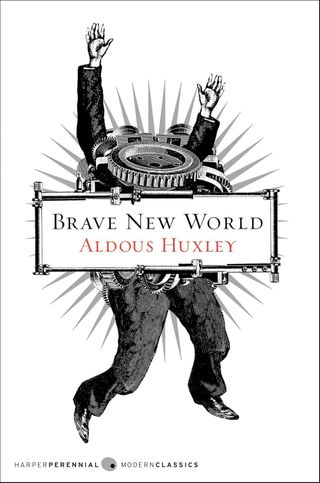
Cover of Brave New World

Brave New World

Aldous Huxley

Original language: English · Paperback · ISBN 978-0060850524

Brave New World, first published in 1932, is set in a future society where human beings are produced through artificial reproduction and sorted into rigid social castes before birth. The story takes place in the year 632 AF, a calendar that counts forward from Henry Ford, who is treated as a near-divine figure. Citizens are conditioned from infancy to accept their roles, and a widely available drug called soma keeps the population calm and compliant. Individuality, family bonds, and strong emotions are treated as threats to stability.

The novel follows Bernard Marx, an outsider among the privileged upper caste, and Lenina Crowne, who largely accepts the world as it is. Their visit to a reservation outside the controlled society introduces them to people who still live with illness, aging, and freedom. The encounter sets up a collision between two ways of life and raises questions about what is lost when comfort replaces choice.

Aldous Huxley wrote the book during a period marked by the rise of authoritarian movements in Europe. Its concerns with mass production, pharmaceutical control, engineered consent, and entertainment as a tool of power have kept it a frequent reference point in discussions about technology and governance.

Plot

Huxley was a man of incomparable talents: equally an artist, a spiritual seeker, and one of history’s keenest observers of human nature and civilization. Brave New World, his masterpiece, has enthralled and terrified millions of readers, and retains its urgent relevance to this day as both a warning to be heeded as we head into tomorrow and as thought-provoking, satisfying work of literature. Written in the shadow of the rise of fascism during the 1930s, Brave New World likewise speaks to a 21st-century world dominated by mass-entertainment, technology, medicine and pharmaceuticals, the arts of persuasion, and the hidden influence of elites.

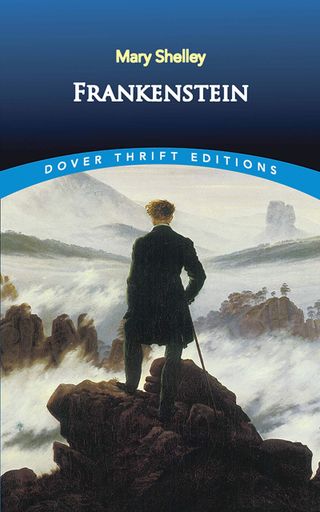
Cover of Frankenstein

Frankenstein

Mary Shelley

Original language: English · Paperback · ISBN 978-0486282114

Frankenstein began during the summer of 1816 at Lake Geneva, where Mary Wollstonecraft Godwin, Percy Bysshe Shelley, and Lord Byron challenged one another to write a ghost story. Godwin, then eighteen, produced a tale about a young scientist named Victor Frankenstein who assembles and animates a creature from dead matter. The novel was first published anonymously in London in 1818, and a revised edition appeared in 1831 with Mary Shelley named as author.

Victor Frankenstein is a university student in Ingolstadt, Bavaria, consumed by the idea of creating life. When his experiment succeeds, he is horrified by the being he has made and abandons it. The creature, intelligent and articulate but rejected by everyone it encounters, turns to violence. The story moves across Europe and eventually into the Arctic, structured as a series of nested narratives: a sea captain's letters frame Frankenstein's own account, which in turn contains the creature's.

The book raises questions about scientific responsibility, isolation, and what a creator owes to what it creates. Shelley wrote it at a time when galvanism and early electrical experiments were generating public curiosity about the boundary between life and death.

Plot

Few creatures of horror have seized readers' imaginations and held them for so long as the anguished monster of Mary Shelley's Frankenstein. The story of Victor Frankenstein's terrible creation and the havoc it caused has enthralled generations of readers and inspired countless writers of horror and suspense. Considering the gothic novel's enduring success, it is remarkable that it began merely as a whim of Lord Byron. "We will each write a story," Byron announced to his next-door neighbors, Mary Wollstonecraft Godwin and her lover, the romantic poet Percy Bysshe Shelley.

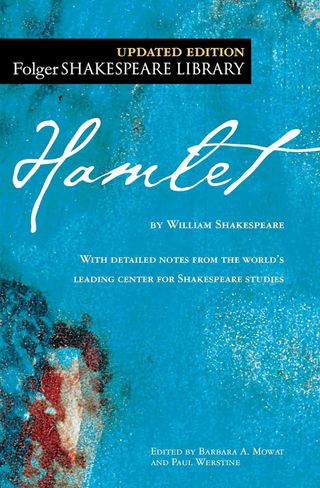
Cover of Hamlet

Hamlet

William Shakespeare

Original language: English · Paperback · ISBN 978-1451669411

Hamlet, by William Shakespeare, follows a prince of Denmark who learns that his father was murdered by his own uncle, Claudius, now king and married to Hamlet's mother, Gertrude. The play uses the shape of a revenge tragedy, a form in which a wronged figure sets out to punish a killer, then fills it with hesitation and doubt.

Much of the play's hold comes from what it refuses to settle. A ghost appears claiming to be Hamlet's dead father and demanding justice, yet its nature stays open. Hamlet's behaviour shifts between apparent madness and deliberate performance, and his reasons for delaying action against Claudius remain debatable. Gertrude's knowledge of the murder is unresolved too. Confrontations and long soliloquies examine guilt, duty, grief, and acting on incomplete knowledge.

The title role is widely regarded as one of the most demanding parts in English-language theatre, and generations of leading actors have measured themselves against it. The play has been staged continuously since the early 1600s, and its setting is Elsinore, the royal seat on the Danish coast. Its other roles are drawn with similar care.

Plot

It follows the form of a "revenge tragedy," in which the hero, Hamlet, seeks vengeance against his father's murderer, his uncle Claudius, now the king of Denmark. Much of its fascination, however, lies in its uncertainties. Among them: What is the Ghost--Hamlet's father demanding justice, a tempting demon, an angelic messenger? Does Hamlet go mad, or merely pretend to? Once he is sure that Claudius is a murderer, why does he not act? Was his mother, Gertrude, unfaithful to her husband or complicit in his murder?

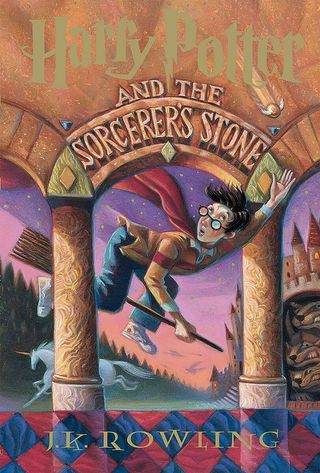
Cover of Harry Potter and the Sorcerer's Stone

Harry Potter and the Sorcerer's Stone

J.K. Rowling

Original language: English · Hardcover · ISBN 978-0590353403

Harry Potter has spent the first ten years of his life in the household of the Dursleys, his aunt and uncle, who lavish attention on their own son Dudley while treating Harry as an unwelcome burden. The household at number four, Privet Drive is disrupted when mysterious letters addressed in green ink on yellowish parchment begin arriving for Harry. The Dursleys confiscate every one. On Harry's eleventh birthday, a large man named Rubeus Hagrid appears with news that changes everything: Harry is a wizard, and a place is waiting for him at Hogwarts School of Witchcraft and Wizardry.

At Hogwarts, Harry encounters a world organized around four school houses, each represented by a different animal: lion, eagle, badger, and snake. He learns to fly on broomsticks and plays Quidditch, an aerial sport central to school life. He forms close friendships and, alongside them, accumulates enemies. The school is full of hidden corners and concealed dangers, and Harry gradually learns that his own past is tied to darker events than anyone has told him.

J.K. Rowling's first novel was originally published in the United Kingdom under the title Harry Potter and the Philosopher's Stone. The American edition, retitled Harry Potter and the Sorcerer's Stone, introduced the story to readers across the Atlantic.

Plot

Harry Potter spent ten long years living with Mr. and Mrs. Dursley, an aunt and uncle whose outrageous favoritism of their perfectly awful son Dudley leads to some of the most inspired dark comedy since Charlie and the Chocolate Factory. But fortunately for Harry, he's about to be granted a scholarship to a unique boarding school called THE HOGWARTS SCHOOL OF WITCHCRAFT AND WIZARDRY, where he will become a school hero at the game of Quidditch (a kind of aerial soccer played high above the ground on broomsticks), he will make some wonderful friends, and, unfortunately, a few terrible enemies.

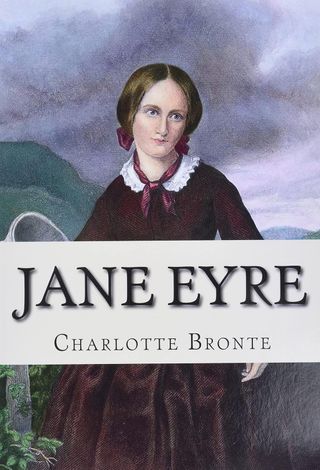
Cover of Jane Eyre

Jane Eyre

Charlotte Brontë

Original language: English · Paperback · ISBN 978-1503278196

Jane Eyre, published in 1847 under the pen name Currer Bell, follows its narrator from a difficult childhood through adolescence and into adult life. As a young orphan living at Gateshead Hall in the north of England, Jane endures mistreatment from her aunt and cousins before being sent to Lowood School. There she finds both friendship and hardship, and eventually qualifies as a teacher and governess.

Her position at Thornfield Hall introduces her to Edward Rochester, the estate's moody and compelling master. The relationship between governess and employer becomes the novel's central tension, shaped by differences in wealth, social standing, and temperament. Charlotte Brontë grounds the story in Jane's inner life, filtering every scene through her moral awareness and emotional responses. This internal focus was unusual for fiction at the time and gave the narrative a concentrated intensity closer to poetry than to the social novels of its era.

Later chapters follow Jane away from Thornfield and into the household of the Rivers family, where the clergyman St John Rivers presents her with a very different kind of future. The novel traces Jane's repeated confrontations with dependence, conscience, and self-respect across each stage of her life.

Plot

Primarily of the bildungsroman genre, Jane Eyre follows the emotions and experiences of its title character, including her growth to adulthood, and her love for Mr. Rochester, the byronic master of fictitious Thornfield Hall. In its internalisation of the action — the focus is on the gradual unfolding of Jane's moral and spiritual sensibility and all the events are coloured by a heightened intensity that was previously the domain of poetry — Jane Eyre revolutionised the art of fiction.

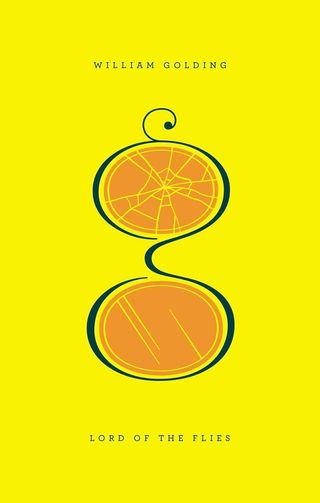
Cover of Lord of the Flies

Lord of the Flies

William Golding

Original language: English · Hardcover · ISBN 978-0143124290

William Golding's 1954 novel opens with a plane crash on an uninhabited island during a future war. The survivors are all boys, British schoolchildren with no adults among them. Left to organize themselves, they hold assemblies, assign roles, and try to keep a signal fire burning in hopes of rescue. Two informal leaders emerge with opposing instincts: one pushes for rules and cooperation, the other for hunting and immediate freedom. The early days feel like an open-ended holiday, but that mood does not last.

As fear of something unseen on the island spreads, the fragile structure the boys have built begins to crack. Alliances shift, rituals grow wilder, and the line between play and genuine threat disappears. Golding uses the isolated setting to examine how quickly social order can unravel when survival pressure meets the absence of authority. The story traces tensions between collective agreement and individual impulse, between reasoned decision-making and raw emotion.

The novel was published in London and has since appeared on several notable reading lists, including the Modern Library 100 Best Novels and Time magazine's 100 best English-language novels from 1923 to 2005. Golding later received the Nobel Prize in Literature.

Plot

At the dawn of the next world war, a plane crashes on an uncharted island, stranding a group of schoolboys. At first, with no adult supervision, their freedom is something to celebrate; this far from civilization the boys can do anything they want. Anything. They attempt to forge their own society, failing, however, in the face of terror, sin and evil. And as order collapses, as strange howls echo in the night, as terror begins its reign, the hope of adventure seems as far from reality as the hope of being rescued.

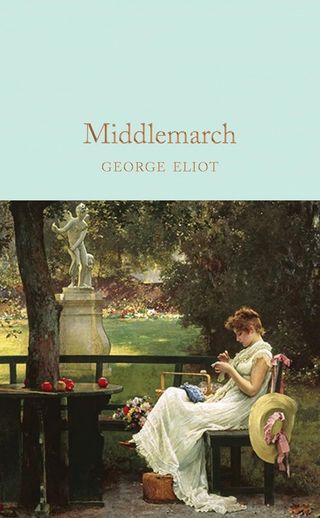
Cover of Middlemarch

Middlemarch

George Eliot

Original language: English · Hardcover · ISBN 978-1509857449

Middlemarch is set in a fictional English Midlands town during the years 1830 to 1832, a period of political and social change in Britain. George Eliot, the pen name of Mary Ann Evans, built the novel around several interlocking storylines that follow residents of the town as they face questions of marriage, ambition, religion, and reform. The result is a detailed portrait of provincial life shaped by both personal choices and wider social pressure.

Dorothea Brooke, a young woman driven by idealism and a wish to do meaningful work, marries the older scholar Edward Casaubon, believing his intellectual pursuits match her own values. She soon finds herself confined in a disappointing marriage. Tertius Lydgate, a doctor determined to bring modern medicine to the provinces, meets local resistance and unreturned affection. Around them, Eliot places a wide cast whose fortunes intersect through money, politics, family ties, and town talk.

The novel first appeared in eight instalments between 1871 and 1872, more than a generation after the years it describes. Its stated concerns include the position of women, social expectation and hypocrisy, religion, education, and political reform, all observed at the scale of one town rather than a capital city.

Plot

Dorothea Brooke is a beautiful and idealistic young woman set on filling her life with good deeds. She pursues the pompous Edward Casuabon, convinced that he embodies these principles, and becomes trapped in an unhappy marriage. Then there is Tertius Lydgate, an anguished progressive whose determination to bring modern medicine to the provinces is muddied by unrequited love. They, and a multitude of other brilliantly drawn characters, reside in the town Middlemarch – the background to George Eliot’s incomparable portrait of Victorian life.

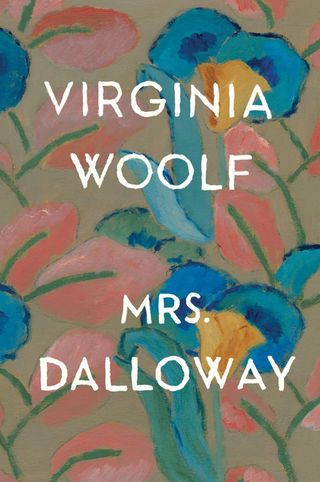
Cover of Mrs. Dalloway

Mrs. Dalloway

Virginia Woolf

Original language: English · Paperback · ISBN 978-0156628709

Mrs. Dalloway follows a single day in the life of Clarissa Dalloway, the wife of a politician in 1920s London. The novel opens as Clarissa sets out on morning errands to prepare for a party she will host that evening. Along the way, encounters with old acquaintances and the ordinary texture of the city stir memories of her youth, including past friendships, a former love, and the choices that shaped her present life.

As Clarissa moves through London, figures from her past reappear, unsettling the composure she has built around herself. She reflects on the marriage she chose, the freedoms she set aside, and the distance between who she once was and who she has become. A separate thread follows Septimus Warren Smith, a young veteran struggling with the aftereffects of the First World War, whose story runs parallel to Clarissa's without directly crossing it for much of the book.

Virginia Woolf structures the novel almost entirely through interior thought, shifting between characters as they pass through the same streets and hours. The book stays close to the surface of a single London day while reaching into questions of memory, identity, and time. It later inspired Michael Cunningham's 1998 novel The Hours.

Plot

In this vivid portrait of a single day in a woman’s life, Mrs. Clarissa Dalloway is preoccupied with the last-minute details of preparation for a party while in her mind she is something much more than a perfect society hostess. As she readies her house for friends and neighbors, she is flooded with remembrances of the past—the passionate loves of her carefree youth, her practical choice of husband, and the approach and retreat of war. And, met with the realities of the present, Clarissa reexamines the choices that brought her there, hesitantly looking ahead to the unfamiliar work of growing old.

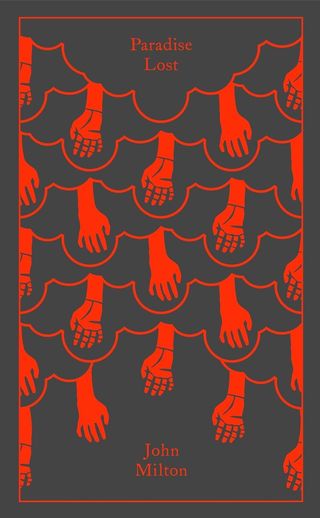
Cover of Paradise Lost

Paradise Lost

John Milton

Original language: English · Hardcover · ISBN 978-0241240618

Paradise Lost is a long narrative poem by John Milton, first published in 1667. It retells the Biblical story of the Fall of Man, beginning with Satan's rebellion against God and his expulsion from Heaven, then following his journey through Chaos to the newly created Earth. There he finds Adam and Eve in the Garden of Eden and sets about their temptation. The poem moves between cosmic warfare, theological argument, and domestic scenes of the first two human beings living together before the arrival of sin.

Milton composed the work during a difficult period of his life. He had gone blind by 1652 and was dictating the poem to assistants and family members. The political cause he had supported, the English Commonwealth, had collapsed with the restoration of the monarchy in 1660, and Milton himself faced real danger of punishment for his republican writings. These circumstances shape the poem's treatment of obedience, authority, and defeat.

One of the poem's most discussed features is its portrayal of Satan, who speaks with persuasive force and carries a sense of wounded pride that some readers have found sympathetic. Whether Milton intended this effect or whether it works against the poem's stated goal of justifying God's actions has been a subject of critical debate for centuries.

Plot

In Paradise Lost, Milton produced a poem of epic scale, conjuring up a vast, awe-inspiring cosmos ranging across huge tracts of space and time. And yet, in putting a charismatic Satan and naked Adam and Eve at the center of this story, he also created an intensely human tragedy on the Fall of Man. Written when Milton was in his fifties—blind, bitterly disappointed by the Restoration, and briefly in danger of execution—Paradise Lost’s apparent ambivalence toward authority has led to intense debate about whether it manages to “justify the ways of God to men,” or exposes the cruelty of Christianity.

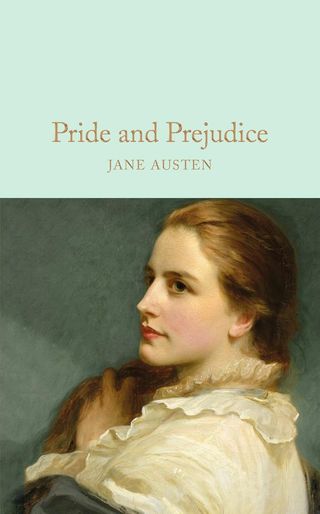
Cover of Pride and Prejudice

Pride and Prejudice

Jane Austen

Original language: English · Hardcover · ISBN 978-1909621657

Pride and Prejudice, published in 1813, is a novel of manners by Jane Austen. It centers on Elizabeth Bennet, the second of five daughters in a family living on the Longbourn estate in Hertfordshire. Because the estate is entailed to a male heir and neither Mr. nor Mrs. Bennet holds a separate fortune, the family's financial future depends on the daughters making suitable marriages. This practical pressure shapes much of the story's action and the choices available to its characters.

Elizabeth is observant, quick-witted, and confident in her ability to read people. When she encounters the wealthy and reserved Mr. Darcy, her early impressions harden into firm dislike. Darcy, for his part, carries assumptions of his own about Elizabeth's social standing and family. The novel tracks how both characters confront the gap between first impressions and deeper understanding, gradually recognizing where pride and snap judgment have led them astray.

Austen sets the story across country houses, village assemblies, and drawing rooms in rural England, using sharp dialogue and social detail to expose the economics and unspoken rules governing courtship in the early nineteenth century.

Plot

A tour de force of wit and sparkling dialogue, Pride and Prejudice shows how the headstrong Elizabeth Bennet and the aristocratic Mr Darcy must have their pride humbled and their prejudices dissolved before they can acknowledge their love for each other.

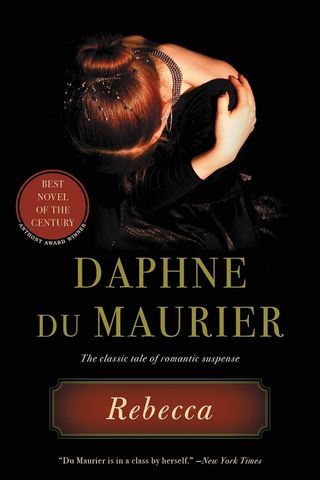
Cover of Rebecca

Rebecca

Daphne du Maurier

Original language: English · Paperback · ISBN 978-0316575201

A young, unnamed narrator meets the wealthy widower Maxim de Winter while working as a companion to an older woman in Monte Carlo. His proposal comes quickly, and the two marry before she has had time to learn much about his past. When she arrives at Manderley, his grand estate on the coast of Cornwall, she finds that the memory of his first wife, Rebecca, saturates every room and routine of the household.

The housekeeper, Mrs. Danvers, maintains Rebecca's private rooms in perfect order, as though their former occupant might return at any moment. The new Mrs. de Winter, inexperienced and uncertain of her place, struggles against a presence she can feel but never met. Daphne du Maurier sets the story's tension between the living and the remembered, between a marriage that is just beginning and one that refuses to end. Cornwall's isolated landscape, with its fog, cliffs, and sea, reinforces the atmosphere of confinement.

Published in 1938, Rebecca became one of du Maurier's most widely read novels. The book opens with its narrator looking back on Manderley from a distance, a structure that establishes from the first page that whatever happened there has already passed but still holds its grip.

Plot

In Monte Carlo, our heroine is swept off her feet by the dashing widower Maxim de Winter and his sudden proposal of marriage. Orphaned and working as a lady’s maid, she can barely believe her luck. It is only when they arrive at Manderley, her husband’s cavernous estate on the Cornish coast, that she realizes how vast a shadow his late wife, Rebecca, will cast over their lives—introducing a lingering evil that threatens to destroy their love from beyond the grave.

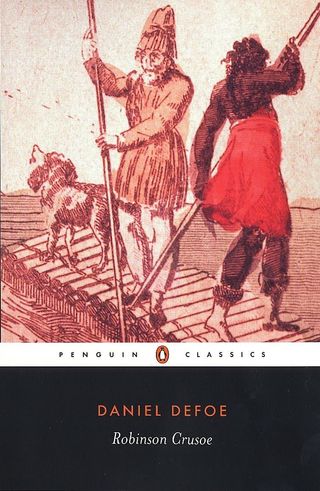
Cover of Robinson Crusoe

Robinson Crusoe

Daniel Defoe

Original language: English · Paperback · ISBN 978-0141439822

Robinson Crusoe, first published in 1719 by Daniel Defoe, follows a man stranded alone on an uninhabited island after a shipwreck. Told through his journal entries, the story tracks his efforts to build shelter, make clothing, grow food, and establish a functioning daily life from almost nothing. Over time he encounters other people on the island, including an indigenous man he names Friday, and later faces threats from both cannibals and mutineers. The novel is set during an era when European maritime exploration and colonial trade were expanding rapidly.

Defoe wrote the book in a plain, factual style meant to read like a real account rather than a work of fiction. This approach, grounding an extraordinary situation in small practical details, helped establish patterns that later novels in English would follow. Scholars have read the story in several ways: as an expression of British colonial attitudes, as an experiment in depicting a person stripped down to basic survival, or as a moral narrative about self-reliance and adaptation. The edition associated with this record includes explanatory notes, a glossary, a chronology of Defoe's life, and a critical introduction that discusses the novel's place in the early history of psychological realism.

Plot

The sole survivor of a shipwreck, Robinson Crusoe is washed up on a desert island. In his journal he chronicles his daily battle to stay alive, as he conquers isolation, fashions shelter and clothes, enlists the help of a native islander who he names 'Friday', and fights off cannibals and mutineers. Written in an age of exploration and enterprise, it has been variously interpreted as an embodiment of British imperialist values, as a portrayal of 'natural man', or as a moral fable. But above all is a brilliant narrative, depicting Crusoe's transformation from terrified survivor to self-sufficient master of an island. This edition contains a full chronology of Defoe's life and times, explanatory notes, glossary and a critical introduction discussing Robinson Crusoe as a pioneering work of modern psychological realism.

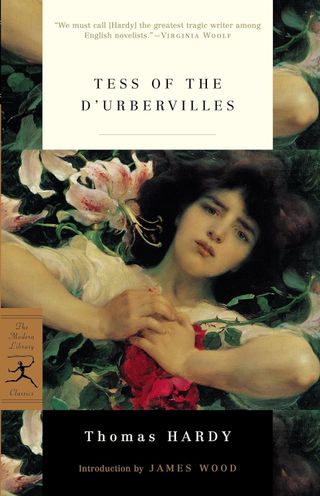
Cover of Tess of the d'Urbervilles

Tess of the d'Urbervilles

Thomas Hardy

Original language: English · Paperback · ISBN 978-0375756795

Tess Durbeyfield is a young woman from a poor rural family in the English county of Dorset, or rather its fictional counterpart, Wessex, the landscape Thomas Hardy used across much of his fiction. When her father discovers that the family name traces back to the ancient d'Urbervilles, a once-noble lineage, he sends Tess to seek connection with supposed relatives. That decision sets off a chain of events shaped by poverty, exploitation, and the rigid moral codes of late Victorian society.

Tess becomes caught between two men whose influence over her life pulls in opposite directions. Alec d'Urberville is wealthy and predatory; Angel Clare, whom Tess later marries, holds ideals about purity that leave little room for forgiveness. Hardy uses their contrasting hold on Tess to expose how class, gender, and moral convention can close in on a person with few resources and little power.

The novel was first published in 1891 and provoked strong reactions for its frank treatment of sexual violence and its sympathy toward a heroine whom conventional morality would have condemned. Hardy subtitled the book A Pure Woman, a pointed challenge to the social judgments the story examines.

Plot

Etched against the background of a dying rural society, Tess of the d'Urbervilles was Thomas Hardy's 'bestseller,' and Tess Durbeyfield remains his most striking and tragic heroine. Of all the characters he created, she meant the most to him. Hopelessly torn between two men—Alec d'Urberville, a wealthy, dissolute young man who seduces her in a lonely wood, and Angel Clare, her provincial, moralistic, and unforgiving husband—Tess escapes from her vise of passion through a horrible, desperate act.

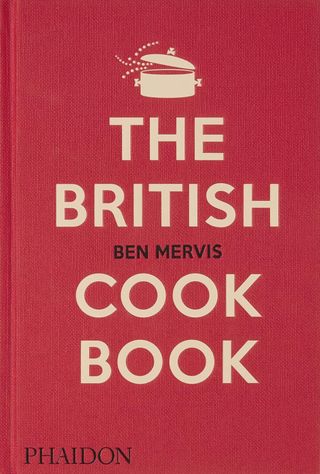
Cover of The British Cookbook

The British Cookbook

Ben Mervis

Original language: English · Hardcover · ISBN 978-1838665289

The British Cookbook by Ben Mervis is a collection of 550 recipes drawn from across England, Wales, Scotland, and Northern Ireland. Mervis, a food historian, presents the book as both a practical kitchen reference and a record of how British food developed. The recipes range from home classics such as Shepherd's Pie, Welsh Rarebit, and Victoria Sponge to regional dishes far less familiar outside their areas of origin, such as Bonfire Night Black Peas and Scottish Crumpets.

A notable thread running through the collection is the inclusion of dishes whose roots lie outside the United Kingdom but which have become firmly established in British cooking. Chicken Tikka Masala, Curry Goat, and Sesame Prawn Toast each appear alongside older recipes like Haggis and Devils on Horseback. By placing these side by side, the book presents British food as something shaped by migration, trade, and everyday adaptation rather than a fixed national tradition.

Some titles carry geography or the calendar with them, as with Dublin Bay Prawns, tying a dish to one stretch of water. Mervis gives each nation and region separate attention, linking recipes to nearby ingredients and to the occasions on which people cooked them.

Plot

In The British Cookbook, author and food historian Ben Mervis takes readers on a mouth-watering culinary tour across England, Wales, Scotland, and Northern Ireland, revealing a cuisine as diverse as the landscape from which it originates. Part cookbook, part cultural history, this deeply researched collection of 550 authentic recipes encompasses home-cooked classics, such as Shepherd's Pie, Welsh Rarebit, Scottish Crumpets, and Victoria Sponge; lesser-known and regional recipes, such as Bonfire Night Black Peas and Dublin Bay Prawns; dishes deeply steeped in British history, such as Haggis and Devils on Horseback; and iconic dishes with roots outside of the United Kingdom, such as Chicken Tikka Masala, Curry Goat, and Sesame Prawn Toast.

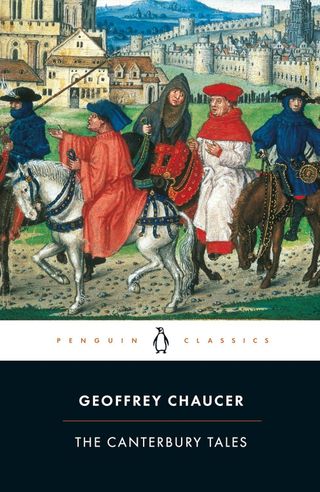
Cover of The Canterbury Tales

The Canterbury Tales

Geoffrey Chaucer

Original language: Middle English · Paperback · ISBN 978-0140424386

Geoffrey Chaucer composed The Canterbury Tales near the end of the fourteenth century, mostly in verse with some sections in prose. Its frame is a storytelling competition among pilgrims who set out from Southwark, just south of London, and ride toward Canterbury Cathedral, where the shrine of Saint Thomas Becket drew travellers from across medieval England. The company is gathered from many different social positions.

A knight, a miller, a cook, the Wife of Bath, and members of the clergy each tell a tale fitted to their character and rank. The material ranges from courtly romance and moral allegory to broad, coarse comedy. Chaucer uses both the stories and the portraits of the people telling them to examine English society, with particular attention to the Church.

The structure reflects Boccaccio's Decameron, which Chaucer probably met during a diplomatic visit to Italy in 1372. Boccaccio's narrators are nobles in retreat, while Chaucer fills his road with mixed and ordinary company. This edition carries Nevill Coghill's modern English verse translation, prepared because the original Middle English has become difficult for most readers to follow without help.

Plot

In The Canterbury Tales Chaucer created one of the great touchstones of English literature, a masterly collection of chivalric romances, moral allegories and low farce. A story-telling competition between a group of pilgrims from all walks of life is the occasion for a series of tales that range from the Knight’s account of courtly love and the ebullient Wife of Bath’s Arthurian legend, to the ribald anecdotes of the Miller and the Cook. Rich and diverse, The Canterbury Tales offer us an unrivalled glimpse into the life and mind of medieval England.

Cover of The Complete Sherlock Holmes

The Complete Sherlock Holmes

Arthur Conan Doyle

Original language: English · Hardcover · ISBN 978-0785848790

This collected edition gathers every Sherlock Holmes story written by Arthur Conan Doyle into a single volume. The series begins with A Study in Scarlet, first published in 1887, and runs through decades of short story collections and novels. Among them are well-known works such as The Hound of the Baskervilles, originally serialized in 1901 and 1902, and later compilations including The Case-Book of Sherlock Holmes.

Holmes operates from 221B Baker Street in London, solving cases alongside his friend and chronicler, Dr. John Watson. The stories range from locked-room puzzles and missing-person searches to blackmail schemes and apparent hauntings. Doyle, a physician by training, gave Holmes a method built on close observation and logical deduction, setting a pattern that shaped detective fiction for generations. Watson's narration grounds the stories in everyday detail, contrasting with Holmes's unusual habits and singular focus.

This edition is presented as a collected heirloom volume. Doyle wrote four Holmes novels and fifty-six short stories in total, published across a span of roughly forty years. The cases move between London's streets, the English countryside, and occasionally further abroad, drawing on the geography and social texture of late Victorian and Edwardian Britain.

Plot

Containing every known Sherlock Holmes tale ever written, this elegantly designed edition brings the world’s greatest detective to life. From Holmes’s first appearance in “A Study in Scarlet” (1887) and The Hound of the Baskervilles (1901–1902), through the collection of stories in The Case-Book of Sherlock Holmes, this deluxe edition boasts the entire Holmes catalog.

Cover of The Forsyte Saga

The Forsyte Saga

John Galsworthy

Original language: English · Paperback · ISBN 978-0199549894

The Forsyte Saga brings together three novels that follow the Forsyte family, a prosperous upper-middle-class clan whose wealth comes from commerce and property. The story begins in 1886 and runs through to 1920, a period in which the social certainties that once supported families like the Forsytes were shifting beneath them. John Galsworthy sets much of the action in London, where the family's houses, legal offices, and social gatherings form a map of their status and anxieties.

Property, in every sense, sits at the centre of the saga. The Forsytes measure the world in terms of ownership, and Galsworthy traces how that instinct shapes their marriages, their conflicts, and their responses to people who value different things. The changing position of women across these decades is a recurring thread, as characters test or resist the boundaries that family expectation and law place around them.

This critical edition includes detailed notes on the artistic and literary references Galsworthy wove into the text, along with explanations of period slang. These annotations help clarify passages that depend on knowledge of late-Victorian and Edwardian cultural life that later readers may not share.

Plot

The three novels which make up The Forsyte Saga chronicle the ebbing social power of the commercial upper-middle-class Forsyte family between 1886 and 1920. Galsworthy's masterly narrative examines not only their fortunes but also the wider developments within society, particularly the changing position of women.

Cover of The Golden Notebook

The Golden Notebook

Doris Lessing

Original language: English · Paperback · ISBN 978-0061582486

Anna Wulf is a writer living in London, a single mother, and a member of the Communist Party. She has published one successful novel but finds herself unable to write another. Instead, she keeps four separate notebooks, each assigned a different color and a different part of her life. The black notebook covers her years in southern Africa. The red notebook tracks her political activity and growing disillusionment with organized communism. In a yellow notebook she drafts fiction whose heroine closely mirrors her own circumstances. A blue notebook serves as her personal diary.

The novel's structure moves between these four notebooks and a conventional narrative called Free Women, which frames the whole book. Each notebook captures a distinct layer of Anna's experience, and the tensions between them reflect her struggle to hold a coherent sense of self. Political disappointment, creative paralysis, and fractured personal relationships press on her from different directions at once. The prospect of a fifth notebook, the golden one, represents her attempt to reconcile these divided accounts into something whole.

Doris Lessing published the novel in 1962. It became closely associated with the Women's Movement, which recognized its detailed treatment of a woman's inner and outer life during a period of political and personal upheaval.

Plot

Anna is a writer, author of one very successful novel, who now keeps four notebooks. In one, with a black cover, she reviews the African experience of her earlier years. In a red one she records her political life, her disillusionment with communism. In a yellow one she writes a novel in which the heroine relives part of her own experience. And in a blue one she keeps a personal diary. Finally, in love with an American writer and threatened with insanity, Anna resolves to bring the threads of all four books together in a golden notebook.

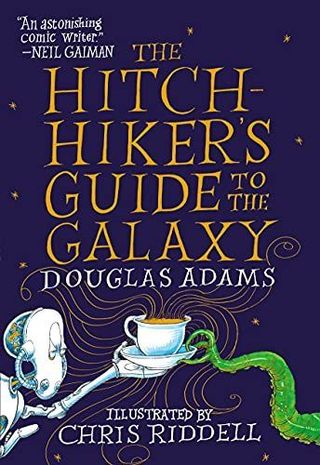
Cover of The Hitchhiker's Guide to the Galaxy

The Hitchhiker's Guide to the Galaxy

Douglas Adams

Original language: English · Kindle · ISBN 978-1400052929

Arthur Dent's Thursday begins with the demolition of his house and worsens when Earth itself is destroyed to clear room for a hyperspace express route. His best friend turns out to be an alien. Armed with a towel, a small yellow fish that handles translation, and a copy of a fictional encyclopaedia called The Hitchhiker's Guide to the Galaxy, Arthur travels with a group of unreliable aliens.

Douglas Adams first wrote the story as a BBC radio series, then adapted the opening parts into this novel. It was published in London on 12 October 1979, and a quarter of a million copies sold within three months. The book began a series Adams called a trilogy in five parts, which eventually reached six volumes. The Guide the characters carry was modelled on a real travel handbook, the Hitch-hiker's Guide to Europe.

The novel treats large-scale destruction, bureaucracy, and cosmic indifference as material for comedy rather than drama. Adams built jokes around everyday objects such as digital watches, ballpoint pens, and potted plants, then set them against interstellar travel and planetary engineering. The Guide's cover carries the words DON'T PANIC in large, friendly letters. It also promises an ultimate answer to life, the universe and everything, though the matching question stays elusive.

Plot

This beautifully illustrated edition of the New York Times bestselling classic celebrates the 42nd anniversary of the original publication Plot: It’s an ordinary Thursday morning for Arthur Dent . . . until his house gets demolished. The Earth follows shortly after to make way for a new hyperspace express route, and Arthur’s best friend has just announced that he’s an alien. After that, things get much, much worse. With just a towel, a small yellow fish, and a book, Arthur has to navigate through a very hostile universe in the company of a gang of unreliable aliens. Luckily the fish is quite good at languages. And the book is The Hitchhiker’s Guide to the Galaxy . . . which helpfully has the words DON’T PANIC inscribed in large, friendly letters on its cover. Douglas Adams’s mega-selling pop-culture classic sends logic into orbit, plays havoc with both time and physics, offers up pithy commentary on such things as ballpoint pens, potted plants, and digital watches . . . and, most important, reveals the ultimate answer to life, the universe, and everything. Now, if you could only figure out the question. . . .

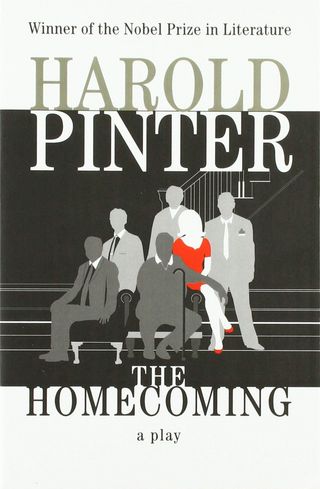
Cover of The Homecoming

The Homecoming

Harold Pinter

Original language: English · Paperback · ISBN 978-0802151056

The Homecoming is a play by Harold Pinter, first staged in London in 1965 and produced in New York in 1967. The setting is a run-down house in North London, home to an all-male household: Max, the aging and aggressive father; his quiet brother Sam; and two sons, Lenny, a small-time pimp, and Joey, an aspiring boxer. A third son, Teddy, left years earlier to teach philosophy in the United States.

Teddy returns with his wife Ruth to introduce her to relatives she has never met. As the visit continues, the younger brothers make increasingly provocative advances toward her, growing bolder in front of a husband who responds with strange detachment. Ruth becomes the focus of the household's buried tensions around control, desire, and territory.

Pinter builds pressure through clipped dialogue and long silences rather than conventional plot mechanics, so the characters' competing needs surface in what they avoid saying. The single setting and small cast keep attention on these exchanges, and the house itself works as contested ground that each occupant tries to claim.

Plot

In an old and slightly seedy house in North London, there lives a family of men: Max, the aging but still aggressive patriarch; his younger, ineffectual brother Sam; and two of Max's three sons, neither of whom is married -- Lenny, a small-time pimp, and Joey, who dreams of success as a boxer. Into this sinister abode comes the eldest son, Teddy, who, having spent the past six years teaching philosophy in America, is now bringing his wife, Ruth, home to visit the family she has never met. As the play progresses, the younger brothers make increasingly outrageous passes at their sister-in-law until they are practically making love to her in front of her stunned but strangely aloof husband.

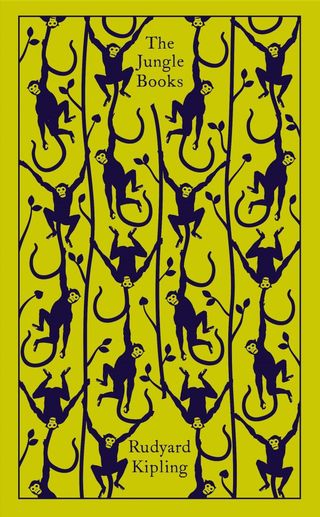
Cover of The Jungle Books

The Jungle Books

Rudyard Kipling

Original language: English · Paperback · ISBN 978-0199536450

The Jungle Books brings together two volumes of stories Rudyard Kipling published in the 1890s. The best-known tales follow Mowgli, a boy raised by wolves in the forests of central India, who learns the rules and customs of animal society while gradually coming to understand his own place among them. Around Mowgli stand characters like the bear Baloo, the panther Bagheera, and the tiger Shere Khan, each carrying a distinct role in the social order of the jungle. The stories draw on older traditions of beast fables and elements of Buddhist thought, filtered through Kipling's own upbringing in British India.

Not all the tales concern Mowgli. The collection also includes stories set in different parts of the world, featuring seals in the North Pacific, a young mongoose in a colonial bungalow, and elephants in their hidden gathering places. What connects them is a recurring concern with rules of conduct, loyalty, and the process of learning where one belongs. Kipling called this framework the Law, a set of principles that governs behavior across species and settings.

The stories blend fantasy, myth, and close observation of animal behavior. Kipling wrote them as tales told by an adult to children, but their layered structure and symbolic weight have kept them in print and in discussion well beyond their original audience.

Plot

The Jungle Books, regarded as classic stories told by an adult to children and best known for the "Mowgli" series, also constitutes a complex literary work of art in which the whole of Kipling's philosophy of life is expressed in miniature. The stories, a mixture of fantasy, myth and magic, are underpinned by Kipling's abiding preoccupation with the theme of self-discovery and the nature of the "Law."

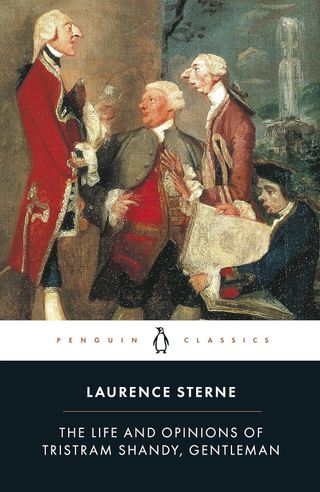
Cover of The Life and Opinions of Tristram Shandy, Gentleman

The Life and Opinions of Tristram Shandy, Gentleman

Laurence Sterne

Original language: English · Paperback · ISBN 978-0141439778

Laurence Sterne published this book in nine volumes between 1759 and 1767. It sets out to tell the story of its narrator's life, starting before his birth, then wanders away from that task. Digressions, jokes, blank and marbled pages, and odd typography interrupt the text so often that Tristram barely gets himself born by the third volume.

The cast around Tristram carries much of the energy. His father Walter holds elaborate theories about names, noses, and education, delivered in speeches other characters rarely follow. Uncle Toby, a retired soldier wounded at the siege of Namur, re-enacts military campaigns on a bowling green with Corporal Trim. The parson Yorick and the physician Dr Slop bring their own quirks. Sterne uses them to show people talking past one another.

The broken structure has led readers and scholars to compare the book with experimental fiction written much later. Sterne plays with the conventions of storytelling, adding visual oddities and direct addresses to the reader that keep the printed object in view. This Penguin Classics edition follows the text and notes of the Florida Edition, with a critical introduction by Melvyn New and an essay by Christopher Ricks.

Plot

Part novel, part digression, its gloriously disordered narrative interweaves the birth and life of the unfortunate 'hero' Tristram Shandy, the eccentric philosophy of his father Walter, the amours and military obsessions of Uncle Toby, and a host of other characters, including Dr Slop, Corporal Trim and the parson Yorick. A joyful celebration of the endless possibilities of the art of fiction, Tristram Shandy is also a wry demonstration of its limitations. The text and notes of this volume are based on the acclaimed Florida Edition, with a critical introduction by Melvyn New and Christopher Ricks's introductory essay from the first Penguin Classics edition.

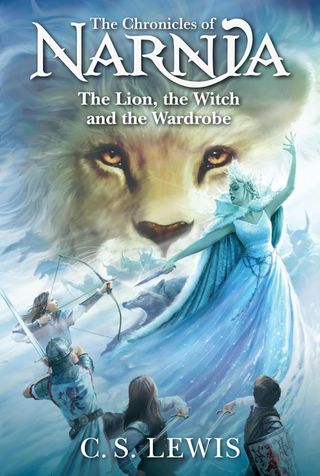
Cover of The Lion, the Witch and the Wardrobe

The Lion, the Witch and the Wardrobe

C. S. Lewis

Original language: English · Paperback · ISBN 978-0064404990

Four English children, Peter, Susan, Edmund, and Lucy, are sent to stay in a professor's large country house. Lucy, the youngest, steps through an old wardrobe into a snow-covered land called Narnia, where she learns the country has been held in endless winter by the White Witch. When she returns, no one believes her. One by one, the others follow.

Narnia's frozen landscape begins to change with the arrival of Aslan, a great lion whose return the White Witch fears. The story follows the children through shifting loyalties, betrayal inside their own family, and the question of what must be surrendered to break the Witch's hold. The wardrobe works as a plain physical boundary between an ordinary house and a world running on different rules.

C. S. Lewis published the book in 1950 in the United Kingdom, the first Narnia story to appear in print, though many later editions place it second in an internal chronology of seven volumes. Its wartime opening reflects a period when children were moved from British cities to the countryside, and moral allegory sits alongside the fantasy.

Plot

Four siblings step through a mysterious wardrobe and into the magical Narnia, a once-peaceful land now frozen in snow and stone by the cruelty of the evil White Witch. Only the return of the Great Lion, Aslan, can put an end to the White Witch’s tyranny and restore peace. But for winter to meet its death and spring to come again, a great sacrifice must be made. . . . And there is more to the adventure. The Lion, the Witch and the Wardrobe is the second book in C. S. Lewis's classic fantasy series, The Chronicles of Narnia, which has captivated readers of all ages with a magical land and unforgettable characters for over seventy-five years.

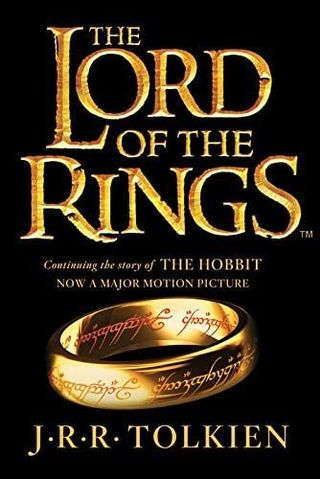
Cover of The Lord Of The Rings

The Lord Of The Rings

J.R.R. Tolkien

Original language: English · Paperback · ISBN 978-0544003415

J.R.R. Tolkien's The Lord of the Rings first appeared in three volumes between 1954 and 1956: The Fellowship of the Ring, The Two Towers, and The Return of the King. It is set in Middle-earth, a world given its own geography, peoples, and long history. At its centre is a plain gold ring, forged by the Dark Lord Sauron to control all other Rings of Power.

Lost for ages, the Ring came by chance to the hobbit Bilbo Baggins, and it passes from him to his young heir Frodo. Frodo leaves the Shire with a company called the Fellowship of the Ring: the wizard Gandalf, three other hobbits, a dwarf, an elf, a man of Gondor, and a tall ranger known as Strider. Their aim is Mordor, where the Ring can be unmade.

Tolkien worked as a philologist, a scholar of languages and old texts, and that training shaped the fiction. He built complete invented languages for his peoples, and the names, songs, and inscriptions in the book grow out of them. The story reaches beyond the central quest into the alliances and conflicts of many kingdoms, while Sauron's power spreads again across Middle-earth.

Plot

In ancient times the Rings of Power were crafted by the Elven smiths, and Sauron, the Dark Lord, forged the One Ring, filling it with his own power so that he could rule all others. But the One Ring was taken from him, and though he sought it throughout Middle-earth, it remained lost to him. After many ages, it fell by chance into the hands of the hobbit Bilbo Baggins.

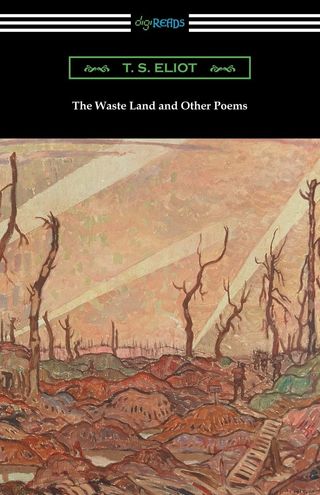
Cover of The Waste Land and Other Poems

The Waste Land and Other Poems

T. S. Eliot

Original language: English · Paperback · ISBN 978-1420953800

The Waste Land, first published in 1922, is a long poem built on layers of quotation and allusion drawn from dozens of sources, including the Arthurian legend of the Holy Grail and the figure of the Fisher King. Its structure shifts between voices, languages, and settings without clear transitions, a technique that was unusual at the time and became closely associated with Modernist poetry. The poem addresses disillusionment, despair, and death, and its fragmented form mirrors those themes.

This collection also includes The Love Song of J. Alfred Prufrock, which appeared in 1910 and is often described as the poem that marked the start of Eliot's most influential period. Prufrock was initially seen as eccentric, but it came to be recognized as a turning point away from Romantic conventions toward a newer, more self-conscious style. Together with twenty-three additional poems, the two major works give a broad view of Eliot's range during the years when Modernism was taking shape in English-language writing.

Eliot was born in St. Louis, Missouri, and later settled in England, where he became a British citizen in 1927. His poetry often draws on European literary traditions while registering the anxieties of the early twentieth century.

Plot

Loosely based on the Arthurian legend of the Holy Grail and the Fisher King, “The Waste Land”, which first appeared in 1922, is a landmark work of Modernist poetry. Containing hundreds of allusions and quotations from other works, “The Waste Land” is marked by a disjointed structure which moves between voices and imagery without a clear delineation for the reader, a hallmark of Modernist literature. Arguably Eliot’s most famous work, the theme of the poem, as the title would suggest, is ultimately a dire one, of disillusionment, despair, and death. Also included in this collection is “The Love Song of J. Alfred Prufrock” a work which preceded “The Waste Land” having been first published in 1910. Regarded as the beginning of Eliot’s influential period, “Prufrock” was considered idiosyncratic at first but with time has been recognized as an important shift in poetry from the Romantic era to the Modernist one.

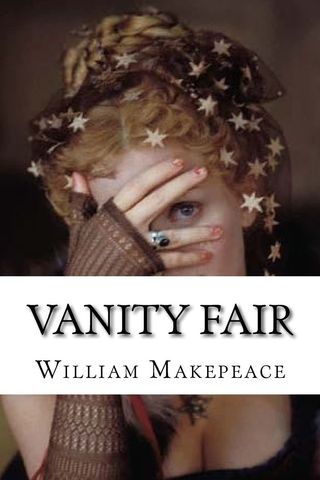
Cover of Vanity Fair

Vanity Fair

William Makepeace Thackeray

Original language: English · Paperback · ISBN 978-1533149596

Vanity Fair, first published in serial form between 1847 and 1848, is a satirical novel by William Makepeace Thackeray set largely in London and Brussels during the early nineteenth century. The story follows two contrasting young women after they leave school: Becky Sharp, a penniless and resourceful orphan determined to climb the social ladder, and Amelia Sedley, her gentle, sheltered friend from a prosperous family. Becky, dismissed by polite society for her lack of wealth and family connections, relies on intelligence, charm, and calculated social maneuvering to escape her expected fate as a governess.

Thackeray subtitled the novel A Novel without a Hero, signaling his interest in flawed, self-serving characters rather than moral exemplars. The book tracks its cast through courtship, marriage, financial ruin, and the upheaval surrounding the Battle of Waterloo in 1815. Class anxiety, social performance, and the gap between public reputation and private motive run through nearly every scene.

The title borrows from John Bunyan's The Pilgrim's Progress, where Vanity Fair is a marketplace of worldly temptations. Thackeray uses it to frame a broad portrait of upper-middle-class English life in which ambition, money, and appearances govern almost every relationship.

Plot

I think I could be a good woman, if I had five thousand a year,” observes beautiful and clever Becky Sharp, one of the wickedest—and most appealing—women in all of literature. Becky is just one of the many fascinating figures that populate William Makepeace Thackeray’s novel Vanity Fair, a wonderfully satirical panorama of upper-middle-class life and manners in London at the beginning of the nineteenth century. Scorned for her lack of money and breeding, Becky must use all her wit, charm and considerable sex appeal to escape her drab destiny as a governess.

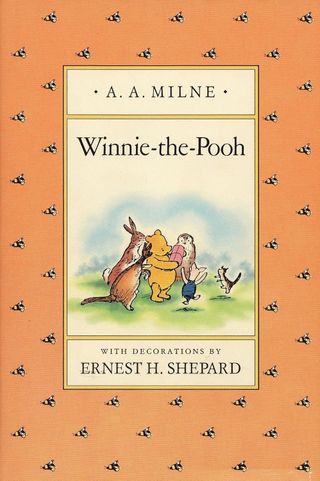
Cover of Winnie-the-Pooh

Winnie-the-Pooh

A. A. Milne

Original language: English · Hardcover · ISBN 978-0525444435

Winnie-the-Pooh, first published in 1926, is a collection of ten linked stories written by A. A. Milne for his young son, Christopher Robin. The book follows a bear of very little brain and his companions through the Hundred Acre Wood, a small woodland where everyday problems take on a gentle scale. Pooh searches for honey, Eeyore loses his tail, Piglet worries about Heffalumps, and Christopher Robin organizes an expedition to find the North Pole. Each chapter is self-contained but shares the same cast and quiet pace.

The animals in the stories were based on real stuffed toys belonging to Christopher Robin Milne. Milne's wife gave each toy a distinct speaking voice at home, and the illustrator Ernest H. Shepard drew the characters from these actual figures, lending them personality through posture and expression rather than exaggeration. The result is a book where character comes through in small, specific moments: Eeyore's persistent gloom, Owl's shaky spelling, Piglet's nervous loyalty.

The ten chapters move between minor adventures and social occasions, from a surprise birthday to a flood to a farewell party. Milne writes with deliberate simplicity, using repetition and invented words like Expotition to echo the way young children speak and think.

Plot

Since 1926, Winnie-the-Pooh and his friends—Piglet, Owl, Tigger, and the ever doleful Eeyore—have endured as the unforgettable creations of A.A. Milne, who wrote this book for his son, Christopher Robin, and Ernest H. Shepard, who lovingly gave Pooh and his companions shape. These characters and their stories are timeless treasures of childhood that continue to speak to all of us with the kind of freshness and heart that distinguishes true storytelling.

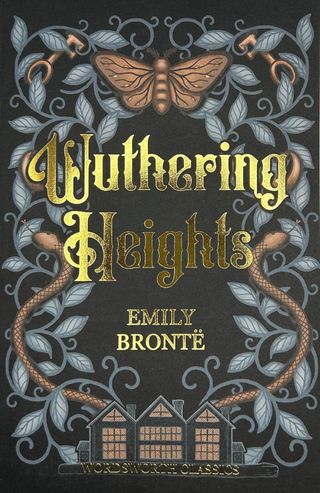
Cover of Wuthering Heights

Wuthering Heights

Emily Bronte

Original language: English · Paperback · ISBN 978-1853260018

Wuthering Heights, first published in 1847 under the pseudonym Ellis Bell, follows two families of the landed gentry on the West Yorkshire moors. The Earnshaws of Wuthering Heights and the Lintons of nearby Thrushcross Grange become entangled through Heathcliff, a foundling taken in by Mr. Earnshaw and raised alongside his children, Catherine and Hindley. Catherine and Heathcliff form an intense bond, but after Mr. Earnshaw dies, Hindley degrades Heathcliff to the status of a servant. When Heathcliff comes to believe Catherine does not return his feelings, he disappears, only to return years later transformed into a man of wealth and purpose.

The story is told largely through layered narration, with a tenant named Lockwood hearing the history of the two households from Nelly Dean, a longtime servant. This structure moves back and forth across decades, gradually revealing how Heathcliff sets out to punish both families for the suffering he endured. The moors themselves are a constant presence, shaping the isolation and roughness of daily life at the Heights.

Emily Bronte drew on elements of Romanticism and Gothic fiction. The novel's Yorkshire setting, its closed world of farmhouses separated by open heath, and the friction between social classes give the story a physical weight that stays close to the landscape it describes.

Plot

Wuthering Heights by Emily Bronte is a wild, passionate story of the intense and almost demonic love between Catherine Earnshaw and Heathcliff, a foundling adopted by Catherine's father. After Mr Earnshaw's death, Heathcliff is bullied and humiliated by Catherine's brother Hindley and wrongly believing that his love for Catherine is not reciprocated, leaves Wuthering Heights, only to return years later as a wealthy and polished man. He proceeds to exact a terrible revenge for his former miseries. The action of the story is chaotic and unremittingly violent, but the accomplished handling of a complex structure, the evocative descriptions of the lonely moorland setting and the poetic grandeur of vision combine to make this unique novel a masterpiece of English literature.

More from United Kingdom

See the country page for United Kingdom for its map, facts and largest cities, or browse books from other countries.

Free editions are on Project Gutenberg, matched by title and author. Links go to Amazon; Hookito doesn’t sell books. Know a book that belongs here, or spotted a mistake? Write to submissions@hookito.com.

Where to next?

Back to the globe
Hookito landscape illustration