
Hookito

Grenada · Books

Books from Grenada

4 books from and about Grenada: what each is about, the plot, and a note from Professor Kogi.

Cover of Morgan Freeman and Friends: Caribbean Cooking for a Cause

Morgan Freeman and Friends: Caribbean Cooking for a Cause

Wendy Wilkinson, Morgan Freeman

Original language: English · Hardcover · ISBN 978-1594864247

In September 2004, Hurricane Ivan struck the small Caribbean island of Grenada, destroying homes and altering the landscape of daily life. Actor Morgan Freeman, who had spent time on the island over the years, responded by establishing the Grenada Relief Fund in 2005. This cookbook grew out of that effort, with proceeds directed toward rebuilding on the island. It pairs Caribbean recipes with personal stories from contributors who share a connection to the region.

The book gathers contributions from more than fifteen well-known figures, among them Michael Douglas, Kenny Chesney, Katie Couric, Tom Hanks, Hilary Swank, and Alicia Keys. Each shares a favorite Caribbean recipe alongside reflections on what island life means to them. Freeman himself contributes a grilled swordfish steak with lemon caperberry butter. Chesney offers a key lime pie, photographed while he prepares it at his home on St. John in the U.S. Virgin Islands. Chefs from Caribbean resorts and private retreats also contribute recipes from their own kitchens.

The collection is presented with full-color photography throughout. Alongside the celebrity entries, the professional chefs featured in the book represent restaurants and resort kitchens across the Caribbean, offering dishes that reflect local ingredients and cooking traditions specific to the islands.

Plot

In September 2004, Hurricane Ivan ravaged the small Caribbean island of Grenada, destroying homes and changing lives forever. Longtime island-lover Morgan Freeman established the Grenada Relief Fund in 2005. Now comes this beautiful cookbook, bringing together a bevy of celebrities to benefit this island in need. This star-studded cookbook features: • more than 15 celebrities―including Michael Douglas, Kenny Chesney, Katie Couric, Tom Hanks, Hilary Swank, and Alicia Keys―appearing in gorgeous full-color photographs, sharing their favorite Caribbean recipes, and telling heartwarming stories of what the islands mean to them • dozens of delicious recipes, such as Grilled Swordfish Steak with Lemon Caperberry Butter from Morgan Freeman, and Kenny Chesney's favorite Key Lime Pie with photographs of Mr. Chesney baking it himself in the kitchen of his home on St. John • renowned chefs from Caribbean hideaways of the stars and top-rated resorts, revealing some of their most coveted Caribbean recipes
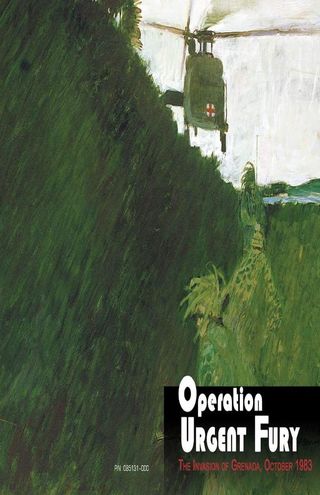
Cover of Operation Urgent Fury: The Invasion of Grenada, October 1983

Operation Urgent Fury: The Invasion of Grenada, October 1983

Richard W Stewart, Edgar F Raines

Original language: English · Paperback · ISBN 978-1494241711

In October 1983, the United States military launched Operation Urgent Fury, a rapid intervention on the Caribbean island of Grenada. The operation followed a period of political instability on the island, including a military coup, and was justified in part by concerns for American medical students studying there. This book by Richard W. Stewart and Edgar F. Raines examines the invasion as a military operation, placing it within the broader context of the U.S. Army's reconstruction after the Vietnam War.

Through the 1970s and early 1980s, the Army had been rebuilding itself into an all-volunteer force oriented toward a possible conflict with the Soviet Union and Warsaw Pact in Europe. New doctrine, equipment, and leadership shaped this transformation, formalized in documents such as Field Manual 100-5, Operations, published in 1976. The Grenada operation tested these changes in an actual combat setting, but it also exposed the early difficulties of coordinating a joint operation across multiple military branches.

Stewart and Raines trace how the planning, execution, and coordination unfolded during the intervention. Their account addresses the gap between the Army the planners wanted and the force that was available when events on Grenada forced a rapid decision. The book treats Urgent Fury as a case study in how real-world crises can outpace institutional readiness.

Plot

The U.S. Army spent much of the decade after its retreat from Vietnam rebuilding itself into a supremely capable, all-volunteer force. With the application of new doctrine, equipment, and, especially, dynamic leadership at all levels, the Army slowly recovered from that traumatic time. Focused primarily on preparations to counter the Soviet and Warsaw Pact threat to central Europe, the U.S. Army trained hard in conventional operations as enshrined in its primary doctrinal manual, Field Manual 100–5, Operations (1976). Within ten years of the end of U.S. involvement in Vietnam, the Army had rebuilt itself but had only begun to integrate into a joint team capable of fighting in a synchronized multiservice operation. World events, however, have a way of forcing a nation to go to war or, at least, to engage in operations “with the Army it has, and not the Army it wants,” to quote a more contemporary statement of how occurrences have a way of surprising policymakers.

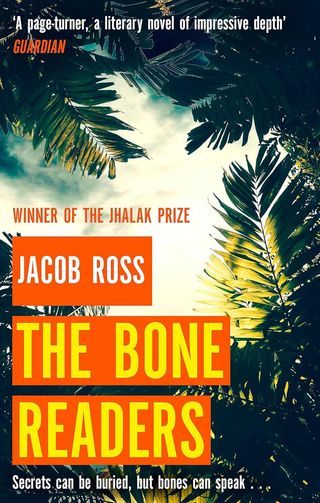
Cover of The Bone Readers

The Bone Readers

Jacob Ross

Original language: English · Paperback · ISBN 978-0751574463

On the fictional Caribbean island of Camaho, young Michael Digson, known as Digger, witnesses a murder in broad daylight. The event draws him into a small, semi-official homicide unit led by DS Chilman, a veteran officer with his own fixations. The squad operates outside normal police structures, a plain-clothes group with limited authority and considerable independence. Digger brings an unusual skill set: a sharp talent for forensic analysis that lets him read physical evidence others overlook.

Chilman pulls Digger into a cold case involving a young man who vanished without explanation. At the same time, Digger carries a personal investigation of his own. His mother was killed years earlier by a rogue police squad, and that loss still drives him. His partner in the unit is Miss Stanislaus, a quiet and perceptive newcomer whose observational abilities complement his forensic thinking. Together they begin to uncover layered dangers on an island where official power and criminal violence overlap.

Jacob Ross sets this crime novel in a Caribbean landscape shaped by close community ties, informal authority, and old grievances. The story is the first in a series featuring Digger and Miss Stanislaus, and Ross is a Grenadian-born writer whose fiction often draws on the geography and social fabric of the Eastern Caribbean.

Plot

After standing witness to a murder on the streets of the Caribbean island of Camaho, young Michael 'Digger' Digson is recruited into a unique plain clothes homicide squad, an eclectic group of semi-official police officers, led by the enigmatic DS Chilman. Digger becomes enmeshed in Chilman's obsession with a cold case, the disappearance of a young man. But Digger has a murder to pursue too: that of his mother, killed by a renegade police squad when he was a boy. He has two weapons at his disposal - his skill in forensics, and Chilman's latest recruit, the mysterious, observant Miss Stanislaus. Together, the two find themselves dragged into a world of dangerous secrets that demands every ounce of their courage to survive.

Cover of The Ladies Are Upstairs

The Ladies Are Upstairs

Merle Collins

Original language: English · Paperback · ISBN 978-1845231798

The Ladies Are Upstairs follows Doux Thibaut across decades of life on Paz, a Caribbean island shaped by rigid social divisions. Beginning in the 1930s, Doux faces poverty, the stigma of illegitimacy, and a community split along religious lines between Catholics and Protestants. Racism and class barriers press against her daily choices, yet she finds ways to persist with quiet determination.

Merle Collins structures the book as a mosaic novel, a form built from linked stories that together compose a larger narrative arc. As Doux ages and moves between her grown children's homes in Boston and New York, the setting shifts from island life to diaspora routines. In these later sections Doux wonders whether her children and grandchildren understand the struggles that came before them, or whether such experience must be learned anew by each generation.

Collins is a writer from Grenada whose work often centers on Caribbean history, migration, and everyday survival. The novel spans from the 1930s into the early years of a new century, tracing one woman's passage through overlapping pressures of faith, class, race, and family expectation. Doux's story is set down as a demand that lives like hers are not forgotten.

Plot

Doux Thibaut negotiates a hard life on the Caribbean island of Paz, confronting the shame of poverty and illegitimacy, the hazards of sectarianism on an island segregated into Catholics and Protestants, and the injustices of racism and classism. As an old lady moving between the homes of her children in Boston and New York, Doux wonders whether they and her grandchildren really appreciate what her engagement with life has taught her. In The Ladies Are Upstairs, Merle Collins has created a mosaic novel from these stories of a Caribbean woman’s life, demanding that such lives not be forgotten.

More from Grenada

See the country page for Grenada for its map, facts and largest cities, or browse books from other countries.

Links go to Amazon; Hookito doesn’t sell books. Know a book that belongs here, or spotted a mistake? Write to submissions@hookito.com.

Where to next?

Back to the globe
Hookito landscape illustration