Hookito

Ghana · Books

Books from Ghana

6 books from and about Ghana: what each is about, the plot, and a note from Professor Kogi.

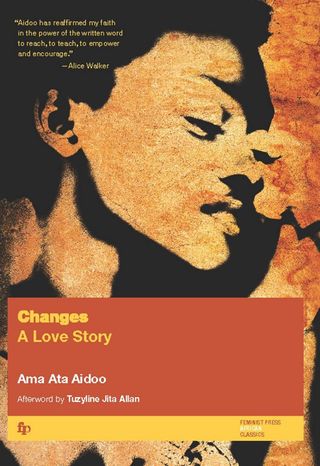
Cover of Changes: A Love Story

Changes: A Love Story

Ama Ata Aidoo

Original language: English · Paperback · ISBN 978-1558610651

Esi Sekyi lives in Accra, Ghana's capital, where she holds a postgraduate degree and works as a data analyst. After enduring repeated marital rape, she decides to leave her husband. Her friends and relatives struggle to understand the decision, some pointing out that he never physically beats her, as though that should be enough. Esi persists, determined to shape her own life on her own terms.

What follows is not the independence she expects. Esi falls in love with Ali, a wealthy man already married, and agrees to become his second wife in a polygamous arrangement. The structure that once seemed like a practical solution introduces its own constraints: long absences, competing loyalties, and the quiet erosion of the autonomy she fought to protect. Ama Ata Aidoo sets these tensions inside a recognizable modern Accra of offices, universities, and social gatherings, grounding the story in specific everyday details rather than broad allegory.

The novel's subtitle, A Love Story, carries a deliberate irony. Aidoo examines how marriage, desire, and economic power interact for educated women in a society where older customs and newer aspirations coexist without settling into a comfortable arrangement.

Plot

Living in Ghana’s capital city of Accra with a postgraduate degree and a career in data analysis, Esi Sekyi is a thoroughly modern African woman. Perhaps that is why she decides to divorce her husband after enduring yet another morning’s marital rape. Though her friends and family are baffled by her decision (after all, he doesn’t beat her!), Esi holds fast. When she falls in love with a married man—wealthy, and able to arrange a polygamous marriage—the modern woman finds herself trapped in a new set of problems.
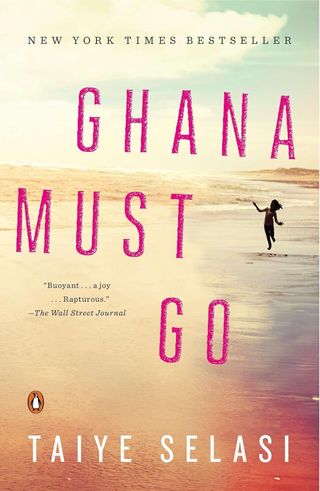
Cover of Ghana Must Go

Ghana Must Go

Taiye Selasi

Original language: English · Paperback · ISBN 978-0143124979

Kweku Sai, a gifted surgeon, dies at dawn outside his house in suburban Accra. He left his family years earlier, and his sudden death pulls them back into contact across several countries. His wife and children have scattered to Lagos, London, and New York, each carrying private memories of the household that fell apart. The novel follows the Sai family as they move toward one another again, tracing the separate paths each member took after Kweku's departure.

Taiye Selasi sets the story across West Africa, England, and the United States, shifting between past and present to show how the family broke apart in stages. Each character carries a different version of the same events, and the gaps between those versions shape the tensions among them. Questions of belonging run through the book: where each person chose to settle, what they kept from their parents' origins, and what they tried to leave behind.

The title refers to a phrase associated with the 1969 expulsion of undocumented Ghanaian workers from Nigeria, which became shorthand for a larger history of migration and displacement in West Africa. Selasi uses this background to frame her fictional family's movements without reducing them to a single national story.

Plot

In a sweeping narrative that takes readers from Accra to Lagos to London to New York, it is at once a portrait of a modern family and an exploration of the importance of where we come from to who we are. A renowned surgeon and failed husband, Kweku Sai dies suddenly at dawn outside his home in suburban Accra. The news of his death sends a ripple around the world, bringing together the family he abandoned years before. Moving with great elegance through time and place, Ghana Must Go charts their circuitous journey to one another and, along the way, teaches us that the truths we speak can heal the wounds we hide.

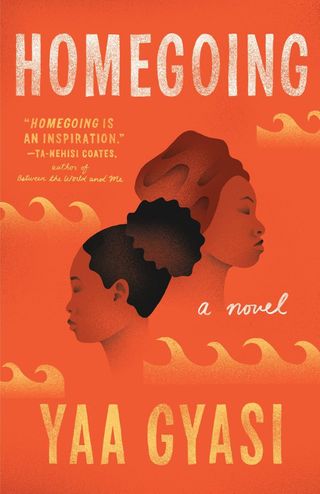
Cover of Homegoing

Homegoing

Yaa Gyasi

Original language: English · Paperback · ISBN 978-1101971062

In eighteenth-century Ghana, two half sisters are born to the same Asante mother but raised in separate villages, neither knowing the other exists. Their lives converge at Cape Coast Castle, a British-controlled fort on the Gold Coast. Effia marries the English governor and lives in the upper rooms of the castle. Esi is captured in a raid, held in the dungeons below, and sold into slavery.

Each chapter of Homegoing follows a new character, one descendant per generation, alternating between the two family lines. One branch extends through Ghana across the centuries. The other moves through the American South, the Civil War, and northward to Harlem during the Jazz Age. The structure spans roughly three hundred years and eight generations, tracing how the slave trade shaped daily life and identity on both sides of the ocean.

Yaa Gyasi's first novel appeared in 2016. Honours listed for it include the John Leonard Award from the National Book Critics Circle, which recognises a debut, the 2017 Hemingway Foundation/PEN Award, and an American Book Award. The setting is anchored in Cape Coast Castle, a real fort in present-day Ghana that held captives before they were shipped across the Atlantic.

Plot

Ghana, eighteenth century: two half sisters are born into different villages, each unaware of the other. One will marry an Englishman and lead a life of comfort in the palatial rooms of the Cape Coast Castle. The other will be captured in a raid on her village, imprisoned in the very same castle, and sold into slavery. Homegoing follows the parallel paths of these sisters and their descendants through eight generations: from the Gold Coast to the plantations of Mississippi, from the American Civil War to Jazz Age Harlem.

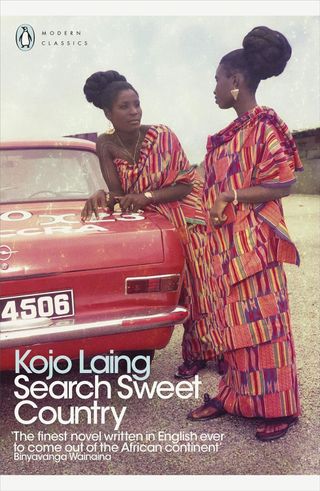
Cover of Search Sweet Country

Search Sweet Country

Kojo Laing

Original language: English · Paperback · ISBN 978-0241370094

Search Sweet Country is set in Accra, Ghana, during the mid-1970s, a period when the country was navigating its post-colonial identity. Kojo Laing populates the novel with a wide cast of characters whose lives overlap across the city: a professor with idealistic aims, a young woman described as a witch, a student still new to the world, a corrupt politician paired with a loyal subordinate, a healer, a bishop, and a man determined to establish his own village. Their stories intersect and accumulate into a composite portrait of Accra as a place of restless energy and uncertainty.

Laing's prose style is dense and lyrical, building the city through layered, sometimes disorienting language. Accra in the novel is sprawling and chaotic, full of competing voices and impulses. The characters range from the ambitious to the eccentric, and many carry a strain of melancholy beneath their surface activity. The novel traces political tensions between the lingering effects of colonial rule and the difficulty of building democratic institutions.

The book received the Valco Fund Literary Award for Fiction and the Ghana Book Award. Laing, a Ghanaian writer, spent much of his life in Accra, and the novel reflects a close familiarity with the city's geography and social layers.

Plot

Search Sweet Country follows the lives of an eclectic, interconnected group of Ghanaians living in and around the sprawling, chaotic city of Accra in the mid-1970s. Bringing the city to life in dizzying, lyrical prose, Laing weaves a story filled with bizarre and often melancholy characters: an idealistic professor, a lovely young witch, a wide-eyed student, a corrupt politician and his hack sidekick, a business-savvy young woman, a healer, a bishop and a crazy man intent on founding his own village. Their collective narratives create a portrait of a country where colonialism is dying, but democracy remains elusive. Search Sweet Country is a timeless, near-forgotten gem by a virtuosic writer, as necessary now as when the book was first published. Like Joyce's Dublin and Dickens's London, Laing's Accra brims with both lush specificity and universal relevance.

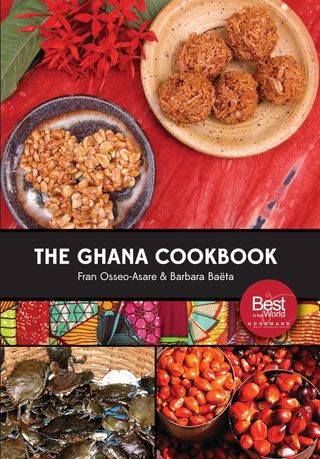
Cover of The Ghana Cookbook

The Ghana Cookbook

Fran Osseo-Asare, Barbara Baëta

Original language: English · Paperback · ISBN 978-0781813433

The Ghana Cookbook, written by Fran Osseo-Asare and Barbara Baëta, collects over 140 recipes drawn from all regions of Ghana. The book opens with an Akan proverb that connects good cooking to the land itself, and this idea of seasonal, locally sourced ingredients runs through the entire collection. Chapters are organized around flavor principles, seasoning techniques, and foundational stocks before moving into specific categories such as snacks, soups, stews, protein dishes, beverages, and baked goods.

Ghanaian cooking relies heavily on starches like plantain, cassava, taro, sweet potato, and millet rather than wheat or dairy. This means many of the recipes are naturally gluten-free, lactose-free, or vegan without requiring substitutions. Nut-based soups and sauces provide richness in place of cream or butter. Fish and seafood, much of it locally caught, appear frequently alongside vegetables, fruits, and legumes.

The book received the Gourmand Cookbook Award for Best African Cuisine Cookbook. Baëta is a Ghanaian cooking teacher, and Osseo-Asare is a food writer and researcher who has studied West African foodways for decades. Together they present a working reference organized around the practical structure of Ghanaian meals rather than a single regional tradition.

Plot

The Akan proverb “The good soup comes from the good earth” elegantly sums up Ghana’s tradition of cooking with seasonal, local ingredients. With an emphasis on locally caught fish and seafood, vegetables, fruits and legumes, Ghana’s cuisine is vibrant, healthful, and eminently appealing. Limited access to wheat and dairy results in a variety of gluten-free, lactose-free, and vegan options using starches such as plantains, cassava, taro, sweet potatoes and millet, and creamy nut-based soups and sauces. In over 140 recipes that represent all regions of Ghana, the authors highlight flavor principles, seasoning techniques, and basic stocks, with later chapters dedicated to snacks, soups and stews, protein entrees, beverages, baked goods, and much more.

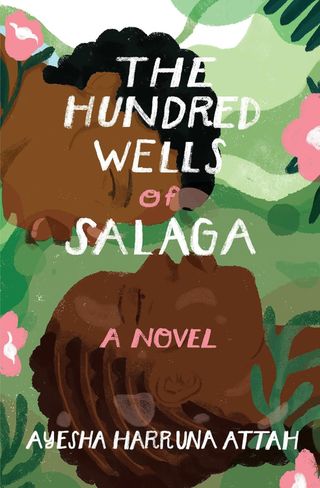
Cover of The Hundred Wells of Salaga

The Hundred Wells of Salaga

Ayesha Harruna Attah

Original language: English · Paperback · ISBN 978-1590519950

Set in late nineteenth-century Ghana, The Hundred Wells of Salaga follows two women whose lives are shaped by the slave trade and political conflict in the region. Aminah grows up in a peaceful setting before she is violently taken from her family and forced into a life far removed from everything she has known. The experience changes her from a quiet, inward-looking girl into someone who must find ways to endure. Wurche, meanwhile, is the strong-willed daughter of a local chief. She wants influence in her father's court, but the politics around her are volatile and increasingly dangerous.

The novel is drawn from true events and takes place during a period when internal power struggles among communities in what is now northern Ghana coincided with growing European interest in the continent. Ayesha Harruna Attah uses the two alternating perspectives to show how the slave trade operated not only through outside forces but also through local rivalries and alliances. Salaga itself was a real market town, historically one of the largest trading centers in the region.

By grounding its narrative in specific places and documented history, the book gives a close view of how ordinary lives were caught up in larger shifts of power during the final decades before colonial rule reshaped West Africa.

Plot

Aminah lives an idyllic life until she is brutally separated from her home and forced on a journey that transforms her from a daydreamer into a resilient woman. Wurche, the willful daughter of a chief, is desperate to play an important role in her father's court. These two women's lives converge as infighting among Wurche's people threatens the region, during the height of the slave trade at the end of the nineteenth century. Through the experiences of Aminah and Wurche, The Hundred Wells of Salaga offers a remarkable view of slavery and how the scramble for Africa affected the lives of everyday people.

More from Ghana

See the country page for Ghana for its map, facts and largest cities, or browse books from other countries.

Links go to Amazon; Hookito doesn’t sell books. Know a book that belongs here, or spotted a mistake? Write to submissions@hookito.com.

Where to next?

Back to the globe
Hookito landscape illustration