Hookito

Guinea · Books

Books from Guinea

4 books from and about Guinea: what each is about, the plot, and a note from Professor Kogi.

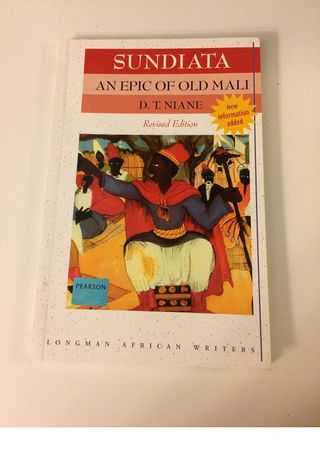
Cover of Sundiata: An Epic of Old Mali

Sundiata: An Epic of Old Mali

Djibril Tamsir Niane

Original language: French · Paperback · ISBN 978-1405849425

Sundiata: An Epic of Old Mali presents the story of Sundiata Keita, a historical figure from the thirteenth century who united twelve kingdoms into the Mali Empire. The account is drawn from the oral tradition preserved by griots, professional storytellers and historians who have passed this narrative through generations in West Africa. Djibril Tamsir Niane, a Guinean historian, collected and transcribed the tale, giving it written form while retaining the voice and structure of spoken performance.

The narrative blends historical events with legend. Sundiata is said to have been prophesied as a great unifier, and the story follows his path from an unlikely beginning toward that destiny. Along the way, it traces the social customs, religious beliefs, and political arrangements of medieval West African kingdoms. The revised edition of the book adds background material covering the geographical, religious, social, and political setting of the story, helping readers locate these events within a broader context.

Niane's role as editor and translator places the text between oral and written literary traditions. The griots who preserved the epic served as living archives, carrying not only the events but also the cultural meaning attached to them across centuries.

Plot

Retold by griots, the guardians of African Culture, this oral tradition has been handed down from the thirteenth century and captures all the mystery and majesty of medieval African kingship. It is the epic tale, based on an actual figure, of Sundiata (Sunjata). Part history and part legend, it tells how Sundiata fulfilled the prophesies that he would unite the twelve kingdoms of Mali into a powerful empire.


Cover of The Black Terrorist

The Black Terrorist

Tierno Monénembo

Original language: French · Paperback · ISBN 978-1937306366

Tierno Monénembo's novel draws on the real but largely forgotten life of Addi Bâ, a Guinean-born soldier who fought for France during World War II. Bâ was born around 1916, brought to France in the late 1930s, and enlisted as a rifleman in the Twelfth Regiment of Tirailleurs Sénégalais, a unit composed of soldiers from French colonies in Africa. After being captured following the Battle of the Meuse, he escaped German forces and spent time hiding in forests before reaching a small village in the Vosges mountains of northeastern France.

There, Bâ joined the French Resistance and eventually led a local network. His activities against the German occupation earned him the name that gives the novel its title. He was captured, tortured, and executed in December 1943. Monénembo tells his story sixty years after the events, filtering it through multiple voices. The primary narrator is Germaine Tergoresse, now around eighty years old, recounting her wartime memories to Bâ's nephew. Running through the narrative is a quiet, persistent question: who betrayed Addi Bâ.

The book received the Erckmann-Chatrian Prize in 2012, followed by the Palatine Grand Prize and the Ahmadou-Kourouma Prize in 2013. Monénembo, himself born in Guinea, has written extensively about African histories shaped by colonial ties to France.

Plot

The Black Terrorist is a fictional account built around the true, extraordinary, but little-known story of Addi Bâ. Addi Bâ was born in Guinea about 1916, brought to France in the late 1930s, and became a riflemen in the Twelfth Regiment de Tirailleurs Sénégalais (African soldiers from French colonies) fighting for France during World War II. Captured after the Battle of the Meuse, Addi escapes from German forces, wanders in the forests, before finding refuge in a village in the Vosges, where he encounters the French Resistance and becomes a leader of a Resistance network. However, Addi is captured, tortured, and executed in December 1943. His military exploits against the Germans earned him the name "the black terrorist." The story of Addi Bâ is told sixty years later from a number of perspectives, though largely from Germaine Tergoresse, who was a young girl during the war, now eighty years old relating her memories to Bâ's nephew. But who betrayed Addi Bâ?

Cover of The Radiance of the King

The Radiance of the King

Camara Laye

Original language: French · Paperback · ISBN 978-1590174555

Camara Laye's novel follows Clarence, a European who arrives on the coast of Africa after a shipwreck. Confident in his own status, he sets out to meet the king, only to learn that the king has departed south. What begins as a straightforward pursuit becomes something stranger. Clarence travels deeper into the interior alongside a beggar and two mischievous boys, passing through landscapes that grow increasingly dreamlike and disorienting.

As Clarence moves further from the coast, his assumptions about his own worth are steadily dismantled. The social position he once took for granted offers no protection here. He loses control of his circumstances until he is eventually sold into the royal harem as a slave, a pointed reversal of colonial hierarchies. The novel uses this inversion not for shock but as part of a longer process of transformation, in which Clarence must confront an image of himself that is both uncomfortable and strangely clarifying.

Laye, born in Kouroussa in what is now Guinea, published the novel in French in 1954. The story operates on both a realistic and a symbolic level, drawing on West African spiritual traditions to shape its structure. Its setting shifts between the recognizable and the surreal, making the physical journey inseparable from an interior one.

Plot

At the beginning of this masterpiece of African literature, Clarence, a white man, has been shipwrecked on the coast of Africa. Flush with self-importance, he demands to see the king, but the king has just left for the south of his realm. Traveling through an increasingly phantasmagoric landscape in the company of a beggar and two roguish boys, Clarence is gradually stripped of his pretensions, until he is sold to the royal harem as a slave. But in the end Clarence’s bewildering journey is the occasion of a revelation, as he discovers the image, both shameful and beautiful, of his own humanity in the alien splendor of the king.

Cover of Tropical Circle

Tropical Circle

Alioum Fantoure

Original language: French · Paperback · ISBN 978-0813912080

Tropical Circle follows the rise of a tyrannical leader in a fictional African country moving from colonial rule toward independence. The novel traces the power struggles that shape the transition period and then turns inward, examining how the new ruler consolidates authority through repression. Alioum Fantoure uses satire and irony to expose the mechanics of dictatorship, portraying how liberation movements can give way to regimes as oppressive as the ones they replaced.

Fantoure, a Guinean writer, drew on patterns visible across post-independence Africa during the mid-twentieth century. The book does not name a specific country, but its setting in a former colony and the arc of its central figure echo real political trajectories in West Africa and beyond. The narrative voice maintains a sharp, often darkly comic distance from events, allowing the story to function both as political fiction and as a broader commentary on how power operates when institutions are fragile.

The novel received the Grand Prix de Littérature d'Afrique Noire, a prize awarded annually for literary work in French by African writers. Originally published in French, it was later translated into English, reaching readers outside the Francophone world.

Plot

From the power struggles leading up to independence in a former African colony emerges a terrifying, tyrannic leader. The inside story of his ruthless repressive rule is narrated with insight and irony in this highly original satire.

More from Guinea

See the country page for Guinea for its map, facts and largest cities, or browse books from other countries.

Links go to Amazon; Hookito doesn’t sell books. Know a book that belongs here, or spotted a mistake? Write to submissions@hookito.com.

Where to next?

Back to the globe
Hookito landscape illustration