

Hookito

Equatorial Guinea · Books

Books from Equatorial Guinea
3 books from and about Equatorial Guinea: what each is about, the plot, and a note from Professor Kogi.

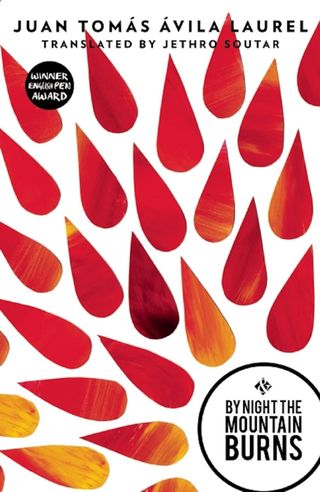
Cover of By Night the Mountain Burns

By Night the Mountain Burns

Juan Tomás Ávila Laurel

Original language: Spanish · Paperback · ISBN 978-1908276407

By Night the Mountain Burns is a novel by Juan Tomás Ávila Laurel, born in 1966 in Equatorial Guinea. It draws on his memories of growing up on Annobón, a small island in the Gulf of Guinea off the west African coast. The child narrator lives with his grandfather, several mothers and no fathers, and tells his story in the manner of oral storytelling.

The island passes through a dark chapter of its history. A bush fire destroys the crops, and a cholera outbreak then kills hundreds of people. Superstition dominates the response. The islanders give up their possessions to an ocean god they believe is enraged, hoping the sacrifice will settle it, while the boy tries to understand a world shaped by scarcity and belief.

Ávila Laurel writes in Spanish, the official language of Equatorial Guinea, and is among the few writers from the country whose work reaches readers abroad. Annobón itself lies far out in the Atlantic, closer to São Tomé than to the African mainland. In 2011 he drew wide attention by beginning a hunger strike as part of an anti-government protest.

Plot

This novel tells of childhood on a remote island off the west African coast. Superstition dominates in dark times and the hard-pressed islanders sacrifice their possessions to the enraged ocean. What of their lives will they save? Juan Tomás Ávila Laurel was born in 1966 in Equatorial Guinea. By Night the Mountain Burns is based on his memories of growing up on the remote Annobón Island. He made headlines in 2011 by embarking on a hunger strike in an anti-government protest.
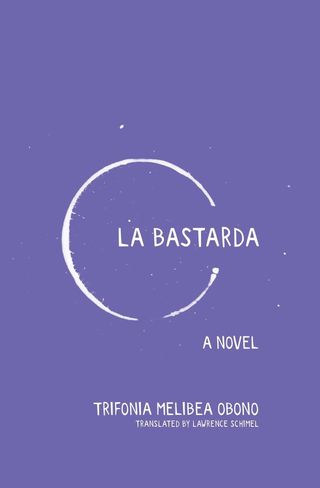
Cover of La Bastarda

La Bastarda

Trifonia Melibea Obono

Original language: Spanish · Paperback · ISBN 978-1936932238

La Bastarda follows Okomo, an orphaned teenager living under the close supervision of her grandmother in a Fang community in Equatorial Guinea. Okomo longs to find her father, but her grandmother forbids it. With no clear path forward, she turns to the people around her who also exist on the edges of village life: her gay uncle and a group of young women known for defying local expectations of how women should behave.

The group operates outside the boundaries set by Fang cultural tradition, and Okomo is gradually pulled into their world. As she grows closer to the girls and their leader, she begins to fall in love, a development that places her in direct conflict with the social rules she has grown up with. The novel treats questions of sexuality, belonging, and family silence with a matter-of-fact tone, grounding them in daily village realities rather than abstraction.

Trifonia Melibea Obono is from Equatorial Guinea, one of the smallest countries on the African continent. La Bastarda is noted as the first novel by an Equatorial Guinean woman to be translated into English. The original text was written in Spanish, the official language of the country since the colonial period.

Plot

La Bastarda is the story of the orphaned teen Okomo, who lives under the watchful eye of her grandmother and dreams of finding her father. Forbidden from seeking him out, she enlists the help of other village outcasts: her gay uncle and a gang of “mysterious” girls reveling in their so-called indecency. Drawn into their illicit trysts, Okomo finds herself falling in love with their leader and rebelling against the rigid norms of Fang culture.

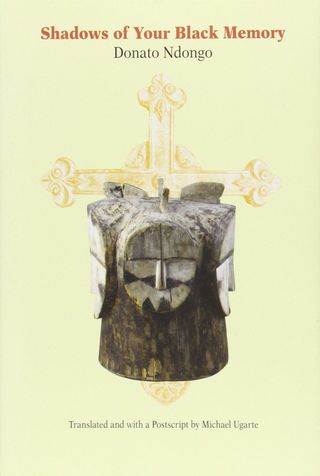
Cover of Shadows of Your Black Memory

Shadows of Your Black Memory

Donato Ndongo

Original language: Spanish · Paperback · ISBN 978-0974888125

Shadows of Your Black Memory is set during the final years of Spanish colonial rule in Equatorial Guinea, then known as Spanish Guinea. The novel follows a nameless young man looking back on his childhood in a landscape shaped by dense forests, village life, and the presence of Catholic missionaries alongside older local traditions. Donato Ndongo, himself from Equatorial Guinea, builds the story as a coming-of-age narrative in which the protagonist tries to understand the competing forces around him: ancestral worship and Catholicism, African customs and Spanish authority, community bonds and colonial structures.

The boy's extended family, village merchants, local healers, and Catholic priests all populate the story. Ndongo treats these figures with a mixture of critical distance and warmth, sometimes finding humor in the contradictions of daily life under colonial administration. As the country moves toward an independence that will prove difficult, the young man's own search for identity mirrors the larger national uncertainty. The cultural collisions he witnesses are specific to Equatorial Guinea, one of the few Spanish-speaking countries in sub-Saharan Africa, but the tensions between inherited tradition and imposed modernity run through colonial histories across the continent.

Plot

Set during the last years of Spanish rule in Equatorial Guinea, Shadows of Your Black Memory presents the voice of a young African man reflecting on his childhood. Through the idealistic eyes of the nameless protagonist, Donato Ndongo portrays the cultural conflicts between Africa and Spain, ancestral worship competing with Catholicism, and tradition giving way to modernity. The backdrop of a nation moving toward a troubled independence parallels the young man’s internal struggle to define his own identity.

More from Equatorial Guinea

See the country page for Equatorial Guinea for its map, facts and largest cities, or browse books from other countries.

Links go to Amazon; Hookito doesn’t sell books. Know a book that belongs here, or spotted a mistake? Write to submissions@hookito.com.

Where to next?

Back to the globe
Hookito landscape illustration