Hookito

Greece · Books

Books from Greece

16 books from and about Greece: what each is about, the plot, and a note from Professor Kogi.

Cover of C.P.Cavafy Collected Poems

C.P.Cavafy Collected Poems

Constantine P Cavafy

Original language: Greek · Paperback · ISBN 978-0701136628

Constantine P. Cavafy was born in 1863 and spent most of his life in Alexandria, Egypt, writing in Greek and sharing his poems only with a chosen circle of readers rather than seeking a wide public. He issued no conventional collected volume during his lifetime. After his death in 1933 his reputation grew steadily, and he is now read as one of the twentieth century's major poets.

This edition gathers about one hundred and seventy-five poems, the body of mature work, in an English translation that keeps his plain, conversational use of language. It carries over his direct writing about homosexual desire, his lasting attachment to Hellenism, meaning the Greek cultural world that spread far beyond Greece itself, and the cool political skepticism that runs through his historical pieces.

Many poems place figures from myth and from the later Greek and Roman past in small, exactly observed moments, held inside careful formal structures. Notes by George Savidis give the date of composition for each poem, point out unusual metrical arrangements, and explain mythological and historical references, with biographical and bibliographical material included as well.

Plot

The Greek poet C. P. Cavafy (1863-1933) lived most of his life in Alexandria, where he was content to circulate his work only among a select group of readers; but since his death he has come to be recognised and widely enjoyed as one of the great poets of the twentieth century in any language celebrated for his elegant formal structures, for his brilliant reanimation of myth and for his subtle treatment of erotic experience.

Cover of Captain Corelli's Mandolin

Captain Corelli's Mandolin

Louis de Bernieres

Original language: English · Paperback · ISBN 978-0679763970

Captain Corelli's Mandolin is set on Cephallonia, a Greek island in the Ionian Sea, during the Second World War. The story opens with Pelagia, a strong-minded young woman living with her father, the local doctor. Her life shifts when the Italian army occupies the island and Captain Antonio Corelli, an officer who would rather play his mandolin than wage war, is billeted in their home. Before the occupation, Pelagia was engaged to Mandras, a local fisherman who leaves to fight and returns changed by the violence of the partisan resistance.

The novel follows these characters as the war reshapes their loyalties, their beliefs, and their connections to one another. Mandras transforms from a gentle young man into something harder, while Corelli struggles with the contradictions of being an occupier who has no appetite for conquest. Pelagia, caught between the two, faces choices shaped by circumstances far beyond the island.

Louis de Bernieres sets the personal drama against real historical events, including the Italian occupation of the Greek islands and the tensions between Italian and German forces in the region. The narrative also draws on the island's longer history and folklore, grounding its characters in a place where myth and daily life have long coexisted.

Plot

The place is the Greek island of Cephallonia, where gods once dabbled in the affairs of men and the local saint periodically rises from his sarcophagus to cure the mad. Then the tide of World War II rolls onto the island's shores in the form of the conquering Italian army. Caught in the occupation are Pelagia, a willful, beautiful young woman, and the two suitors vying for her love: Mandras, a gentle fisherman turned ruthless guerilla, and the charming, mandolin-playing Captain Corelli, a reluctant officer of the Italian garrison on the island.

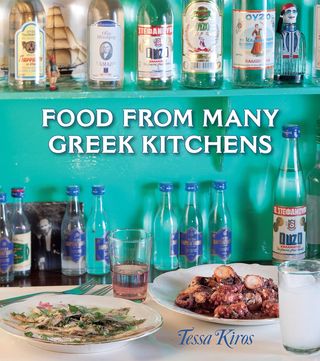
Cover of Food from Many Greek Kitchens

Food from Many Greek Kitchens

Tessa Kiros

Original language: English · Hardcover · ISBN 978-1449406523

Tessa Kiros draws on her Greek-Cypriot family background to collect more than 200 recipes shaped by tradition, religion, and seasonal life in Greece. The book follows earlier titles including Venezia and Falling Cloudberries, turning this time to the kitchens of relatives and friends across the Greek world. Dishes are organized around the occasions that give them meaning: fasting periods, religious festivals, and the large shared meals that mark holidays and family gatherings.

Greek Orthodox fasting traditions, which restrict animal products during certain weeks of the church calendar, have produced a distinct strand of cooking that appears alongside richer feast-day dishes. Kiros treats both categories as part of a single kitchen calendar rather than separating everyday food from celebration food. A glossary covers ingredients and terms that may be unfamiliar outside Greece or Cyprus.

The book connects food preparation to personal and cultural memory, recording how specific dishes pass through families and communities. Rather than presenting recipes in isolation, Kiros places each one inside a context of place, people, and routine, giving the collection a biographical shape alongside its practical use.

Plot

Food, culture, celebration, and memory are inexorably tied together inside Tessa Kiros's Food from Many Greek Kitchens. As the follow-up to her best-selling Venezia and Falling Cloudberries, Food from Many Greek Kitchens explores Kiros's Greek-Cypriot heritage and takes readers on a colorful journey into the Greek kitchens of her friends and family as she catalogs the traditional foods for fasting, festivals, and feast days.

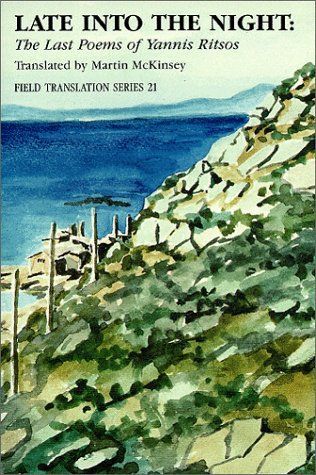
Cover of Late into the Night

Late into the Night

Yannis Ritsos

Original language: Greek · Paperback · ISBN 978-0932440716

Yannis Ritsos was one of the most prominent Greek poets of the twentieth century, and Late into the Night gathers work from the final period of his life. By this stage he was contending with declining health and with political defeat, after a career shaped by military dictatorship, internal exile, and the banning of his books in Greece. These late poems register those experiences without settling into complaint.

What distinguishes this collection is its combination of sadness and energy. Ritsos continued to observe the ordinary world around him with close attention, recording small details of daily life plainly and exactly. Defeat in health and politics runs through the poems, yet they also hold a surge of creative activity and an unexpected note of hope.

Ritsos favours short, concrete lines built from what is in front of him rather than abstraction. The poems are arranged in chronological order, so the sequence itself carries information: a reader can follow how quickly he wrote and how the tone shifts across the months. It is a record of a poet still setting things down.

Plot

The last poems of this 20th-century Greek master are tinged with sadness and loss, but they also, in their candidly poetic reporting of the life and world around him, hum with vitality and an odd note of hope. Ritsos felt defeated in his own health and politics, but as a poet he experienced a surge of creativity that is fascinating to follow in its chronology and exactitude.

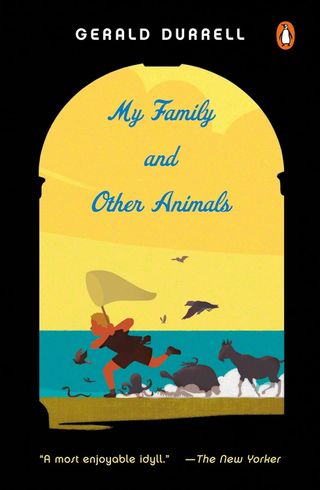
Cover of My Family and Other Animals

My Family and Other Animals

Gerald Durrell

Original language: English · Paperback · ISBN 978-0142004418

In the 1930s, the Durrell family left England for the Greek island of Corfu, trading damp weather for Mediterranean sun. Gerald, the youngest of four children, was already fascinated by animals, and the island became his outdoor classroom. My Family and Other Animals is the first book of the Corfu Trilogy, and it recounts those years through the eyes of a young naturalist in an unconventional household.

Durrell set out to record the natural history of Corfu, but the book became broader. It moves between the creatures he collected and observed, among them scorpions, geckoes, octopuses and bats, and the people who filled the family's days. His mother, siblings, tutors and a stream of local visitors appear alongside the animals, and much of the book's texture comes from the collision of those two worlds.

Corfu itself is a steady presence. Durrell writes about olive groves, rocky shores and warm shallow water in close detail, placing each animal in the ground where he found it. The household's rented houses, tolerant of puppies, toads and glowworms indoors, form the other setting: domestic, crowded and rarely quiet.

Plot

When the unconventional Durrell family can no longer endure the damp, gray English climate, they do what any sensible family would do: sell their house and relocate to the sunny Greek isle of Corfu. My Family and Other Animals was intended to embrace the natural history of the island but ended up as a delightful account of Durrell’s family’s experiences, from the many eccentric hangers-on to the ceaseless procession of puppies, toads, scorpions, geckoes, ladybugs, glowworms, octopuses, bats, and butterflies into their home.

Cover of Plato: Complete Works

Plato: Complete Works

Plato

Original language: Ancient Greek · Hardcover · ISBN 978-0872203495

This volume gathers every surviving text attributed to Plato into a single edition. It includes the well-known dialogues such as the Republic, the Symposium, and the Apology, alongside shorter and less frequently read works that are sometimes omitted from smaller collections. The translations were produced by contemporary scholars, with several prepared specifically for this book. John Cooper, who edited the collection, wrote an introductory essay covering questions about the order in which Plato composed these works and the particular challenges of reading philosophy written as dialogue rather than direct argument.

Cooper and D.S. Hutchinson also provided individual introductions to each piece, offering context for the dramatic setting, speakers, and subjects under discussion. Annotations throughout the volume are designed to be useful both to specialists and to readers approaching Plato for the first time. A comprehensive index supports cross-referencing across the full corpus.

Plato wrote in Athens during the fourth century BCE, and his dialogues often feature his teacher Socrates questioning fellow citizens about justice, knowledge, beauty, love, and the nature of the soul. The texts collected here span a wide range of subjects and tones, from myth and myth-like storytelling to close logical argument.

Plot

In his introductory essay, John Cooper explains the presentation of these works, discusses questions concerning the chronology of their composition, comments on the dialogue form in which Plato wrote, and offers guidance on approaching the reading and study of Plato's works. Also included are concise introductions by Cooper and Hutchinson to each translation, meticulous annotation designed to serve both scholar and general reader, and a comprehensive index. This handsome volume offers fine paper and a high-quality Smyth-sewn cloth binding in a sturdy, elegant edition.

Cover of Sophocles I: The Theban Plays

Sophocles I: The Theban Plays

Sophocles

Original language: Ancient Greek · Paperback · ISBN 978-0226311517

This volume collects three plays by the Athenian dramatist Sophocles, all set in or around the city of Thebes: Antigone, Oedipus the King, and Oedipus at Colonus. Written in the fifth century BCE, these tragedies follow the royal house of Thebes across generations, tracing conflicts between family loyalty and civic law, between human will and fate, and between knowledge and self-deception. Oedipus the King, perhaps the most widely studied Greek tragedy, centers on a ruler's investigation into a plague afflicting his city, an inquiry that turns inward with devastating consequences.

The translations in this third edition are part of the University of Chicago Press series originally overseen by David Grene and Richmond Lattimore, a project that aimed to produce accurate, readable English versions of all the surviving Greek tragedies by Aeschylus, Sophocles, and Euripides. Mark Griffith and Glenn W. Most updated this edition, adjusting the English to follow the ancient Greek more closely while preserving the directness the series is known for.

Each play stands on its own dramatically, but reading all three together reveals how Sophocles returned to the same family and city at different points in his career, reworking questions of guilt, burial rights, and political authority from shifting angles.

Plot

Many years ago, the University of Chicago Press undertook a momentous project: a new translation of the Greek tragedies that would be the ultimate resource for teachers, students, and readers. They succeeded. Under the expert management of eminent classicists David Grene and Richmond Lattimore, those translations combined accuracy, poetic immediacy, and clarity of presentation to render the surviving masterpieces of Aeschylus, Sophocles, and Euripides in an English so lively and compelling that they remain the standard translations. The updated third editions of these classic works were designed to ensure that our Greek tragedies remain the leading English-language versions throughout the twenty-first century.

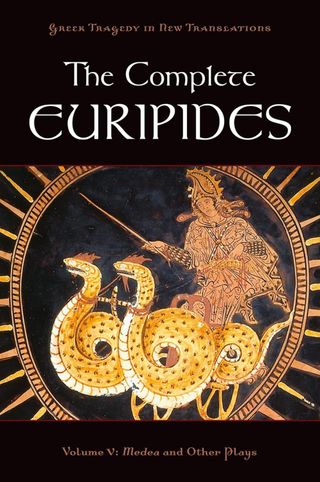
Cover of The Complete Euripides

The Complete Euripides

Euripides

Original language: Ancient Greek · Paperback · ISBN 978-0195388718

The Complete Euripides gathers four plays by the Athenian dramatist into one volume, each rendered into English by a different team of translators. Alcestis, translated by William Arrowsmith, is the earliest surviving work by Euripides and turns on a wife who agrees to die in place of her husband Admetos. Medea, translated by Michael Collier and Georgia Machemer, follows a woman answering betrayal by her husband Jason.

Helen, in Peter Burian's version, uses an alternative telling of the myth in which Helen never reached Troy and waits instead in Egypt, a premise that crosses the usual line between tragedy and comedy. Cyclops, translated by Heather McHugh and David Konstan, reworks a famous episode from the Odyssey as a satyr play, the only complete example of that form to survive.

The translations belong to the Greek Tragedy in New Translations series, which reaches past literal meaning in order to suggest the poetry of the Greek. Each play keeps the introduction and explanatory notes from its earlier single-play edition, while this volume adds one combined glossary and Greek line numbers, allowing passages to be matched against the original text.

Plot

This volume collects Euipides' Alcestis (translated by William Arrowsmith), a subtle drama about Alcestis and her husband Admetos, which is the oldest surviving work by the dramatist; Medea (Michael Collier and Georgia Machemer), a moving vengeance story and an excellent example of the prominence and complexity that Euripides gave to female characters; Helen (Peter Burian), a genre breaking play based on the myth of Helen in Egypt; and Cyclops (Heather McHugh and David Konstan), a highly lyrical drama based on a celebrated episode from the Odyssey. This volume retains the informative introductions and explanatory notes of the original editions and adds a single combined glossary and Greek line numbers.

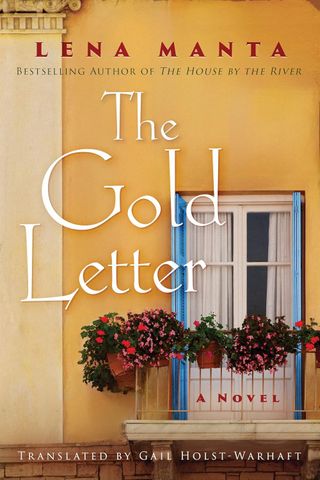
Cover of The Gold Letter

The Gold Letter

Lena Manta

Original language: Greek · Paperback · ISBN 978-1542042765

Fenia Karapanos has spent years in Germany, far from her Greek origins and weighed down by a difficult, abusive past. When her estranged grandfather dies and leaves her his villa in Athens, she returns to a country and a family history she barely knows. The inheritance feels less like generosity than an attempt at repair: her grandfather had disowned her late mother, and the villa carries that unresolved fracture.

Once in Athens, Fenia begins restoring the property with the help of a Syrian refugee she takes in. During the work, she finds a collection of love letters hidden beneath the floorboards, some dating back nearly a century. Letter by letter, the correspondence opens up the lives of earlier generations of women in her family, tracing patterns of loss, separation, and attachment that stretch across decades.

Lena Manta, a bestselling Greek author also known for The House by the River, sets this multigenerational story against both modern and early twentieth-century Greece. The novel follows three generations of women whose fates are linked by the hidden letters, connecting questions of displacement and belonging across borders and time periods.

Plot

After years spent in Germany struggling to come to terms with a dispirited and abusive past, Fenia Karapanos has returned to her roots in Greece. Her estranged grandfather has bequeathed her his villa in Athens, a gesture she assumes is reparation for having disowned her late mother. After taking in a grateful Syrian refugee to help her restore the property―and her life―Fenia discovers a collection of love letters hidden under the floorboards, reaching back nearly a century. In each one, Fenia unfolds another piece of her broken family history.

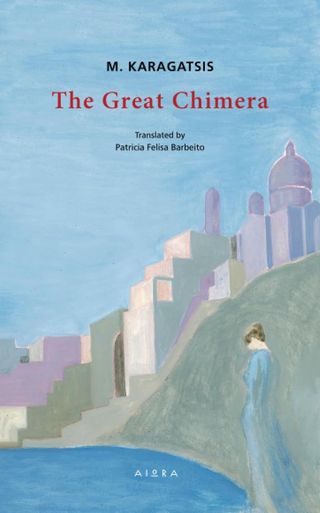
Cover of The Great Chimera

The Great Chimera

M. Karagatsis

Original language: Greek · Paperback · ISBN 978-6185048990

Marina, a young French woman eager to leave behind her provincial background and a difficult family history, meets a Greek sea-captain at the port of Rouen. She marries him and follows him to the Aegean island of Syros, where she enters the household of his imposing mother-in-law and begins adjusting to life in Greece. Drawn to her new surroundings and to her husband's learned younger brother, she throws herself into studying contemporary Greek culture, hoping to connect her classical education with the living country around her.

The novel is set in the early decades of the twentieth century, a period when Greece's maritime economy and its cultural identity were both shifting. When financial disaster strikes her husband's shipping business, the stability Marina has built starts to collapse. The story follows her increasingly turbulent inner life as love, desire, and loss pull her in competing directions.

M. Karagatsis, one of the notable Greek prose writers of the twentieth century, moves between lyrical and plain-spoken styles across the book. The collision between French and Greek ways of living, between idealized classical learning and messy daily reality, runs through the narrative. Syros itself, a small Cycladic island with a long history as a commercial port, serves as a vivid and contained setting for these tensions.

Plot

Eager to flee the parochialism of her French upbringing, and a painful family past, the young and beautiful Marina falls in love with a seductive Greek sea-captain she meets at the port of Rouen. She follows him to the Aegean island of Syros to begin a new life as a married woman in the home of her formidable mother-in-law. Enchanted by the beauty of her surroundings, and fascinated by her husband's erudite younger brother, she aspires to learn all she can about contemporary Greek culture and live up to the ideals of her classical education. But when disaster upends her husband's shipping business and the comfortable stability of their life together, Marina's world slides into a vicious circle of love, passion, and death. Set in the early decades of the twentieth century, this is an exquisite account of the inner life of the heroine, and the collisions of different cultures and ways of being.

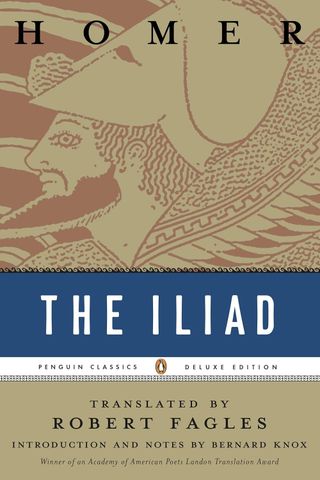
Cover of The Iliad

The Iliad

Homer

Original language: Ancient Greek · Paperback · ISBN 978-0140275360

The Iliad is an ancient Greek epic poem attributed to Homer, composed around the eighth or ninth century B.C. It follows events during the final year of the Trojan War, centering on the warrior Achilles and his devastating anger after a dispute with Agamemnon, commander of the Greek forces. The conflict between personal honor and collective obligation drives the poem forward, drawing in figures on both the Greek and Trojan sides as well as gods who intervene with their own interests and rivalries.

This edition presents a translation by Robert Fagles, with an introduction by the classicist Bernard Knox. The poem is organized into twenty-four books and moves through episodes of combat, assembly, grief, and negotiation. Its treatment of war is direct and often brutal, depicting injury and death in plain physical detail. At the same time, scenes of domestic life, friendship, and longing for peace appear alongside the fighting.

The setting is the plain before the city of Troy, in the region that corresponds to the northwestern coast of modern Turkey. Much of the action takes place between the Greek camp on the shore and the walls of Troy, a narrow landscape charged with years of siege and loss.

Plot

Dating to the ninth century B.C., Homer’s timeless poem still vividly conveys the horror and heroism of men and gods wrestling with towering emotions and battling amidst devastation and destruction, as it moves inexorably to the wrenching, tragic conclusion of the Trojan War. Renowned classicist Bernard Knox observes in his superb introduction that although the violence of the Iliad is grim and relentless, it coexists with both images of civilized life and a poignant yearning for peace.

Cover of The Magus

The Magus

John Fowles

Original language: English · Mass Market Paperback · ISBN 978-0440351627

Nicholas Urfe, a young English graduate, takes a teaching post at a private school on a small Greek island. Isolated and restless, he fills his spare time walking the landscape alone until he encounters a wealthy, enigmatic local figure whose estate dominates the island. What begins as a curious friendship shifts into something far less stable, as Urfe is drawn into an elaborate series of psychological games orchestrated by his host.

The games grow stranger and more unsettling. Staged events blur the line between what is real and what is performance. A young woman appears who may or may not be complicit in the manipulations, and Urfe finds himself unable to tell whether he is a guest, a subject, or a prisoner. Sensual encounters, orchestrated scenes of violence, and layered deceptions push him toward genuine crisis.

John Fowles first published The Magus in 1965 and later revised it substantially for a 1977 edition. The novel is set on a fictional Greek island, though Fowles drew on his own experience teaching at a school on the island of Spetses in the early 1950s. The story operates through accumulating ambiguity, leaving questions about control, freedom, and self-knowledge unresolved for much of its length.

Plot

Filled with shocks and chilling surprises, The Magus is a masterwork of contemporary literature. In it, a young Englishman, Nicholas Urfe, accepts a teaching position on a Greek island where his friendship with the owner of the islands most magnificent estate leads him into a nightmare. As reality and fantasy are deliberately confused by staged deaths, sensual encounters, and terrifying violence, Urfe becomes a desperate man fighting for his sanity and his life.

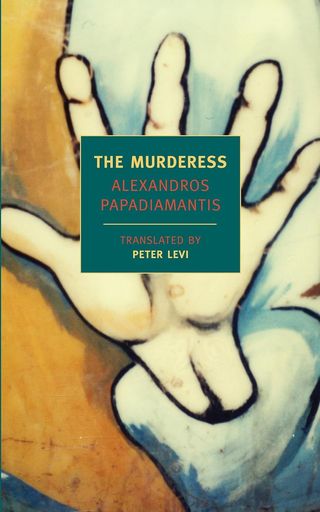
Cover of The Murderess

The Murderess

Alexandros Papadiamantis

Original language: Greek · Paperback · ISBN 978-1590173503

The Murderess is set on Skiathos, a small island in the Aegean Sea that was also the birthplace of its author, Alexandros Papadiamantis. The story follows Hadoula, an elderly woman living at the edges of village society. She is known locally for her knowledge of herbs and their uses, and other women seek her out when they need help. Hadoula carries a deep awareness of the suffering that shapes women's lives on the island, a place where poverty is constant and options are few.

The novel opens as Hadoula tends to her newborn granddaughter, rocking the baby so her exhausted daughter can sleep. In that quiet domestic moment, a grim conviction takes hold: that being born female on this island means a life of hardship, and that she has the ability to intervene. What follows is a story driven by that conviction and by the question of where such reasoning leads when it is taken to its conclusion.

Papadiamantis published the book in 1903 as a serial. It is considered one of the central works of modern Greek literature. The narrative draws on the customs, dialect, and landscape of Skiathos to ground its events in a specific, closely observed place.

Plot

Set on the dirt-poor Aegean island of Skiathos, it is the story of Hadoula, an old woman living on the margins of society and at the outer limits of respectability. Hadoula knows about herbs and their hidden properties, and women come to her when they need help. She knows women’s secrets and she knows the misery of their lives, and as the book begins, she is trying to stop her new-born granddaughter from crying so that her daughter can at last get a little sleep. She rocks the baby and rocks her and then the terrible truth hits her: there’s nothing worse than being born a woman, and there’s something that she, Hadoula, can do about that.

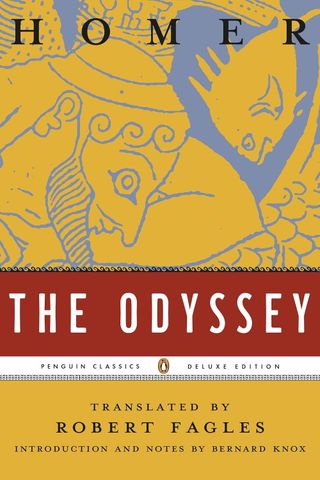
Cover of The Odyssey

The Odyssey

Homer

Original language: Ancient Greek · Paperback · ISBN 978-0140268867

The Odyssey is an ancient Greek epic poem attributed to Homer, believed to have been composed near the end of the 8th century BC in Ionia, the Greek-speaking coastal region of Anatolia. It follows Odysseus as he tries to return home to the island of Ithaca after the fall of Troy. The voyage takes ten years and carries him through encounters with storms, hostile lands, divine interference, and creatures drawn from Greek myth. Meanwhile, his household on Ithaca faces its own pressures as suitors crowd his palace and court his wife Penelope, assuming he is dead.

The poem works partly as a sequel to the Iliad, Homer's account of the Trojan War, but shifts its focus from battlefield conflict to a single person's long effort to reach home. Themes of endurance, cunning, loyalty, and homecoming run through the narrative. Odysseus is defined less by strength than by resourcefulness, and many of the poem's episodes test his ability to adapt.

This edition presents a modern-verse English translation by Robert Fagles, who received the PEN/Ralph Manheim Medal for Translation and a 1996 Academy Award in Literature from the American Academy of Arts and Letters. The Odyssey stands as the second oldest surviving work of Western literature, after the Iliad.

Plot

Robert Fagles, winner of the PEN/Ralph Manheim Medal for Translation and a 1996 Academy Award in Literature from the American Academy of Arts and Letters, presents us with Homer's best-loved and most accessible poem in a stunning modern-verse translation. "Sing to me of the man, Muse, the man of twists and turns driven time and again off course, once he had plundered the hallowed heights of Troy." So begins Robert Fagles' magnificent translation of the Odyssey, which Jasper Griffin in the New York Times Book Review hails as "a distinguished achievement."

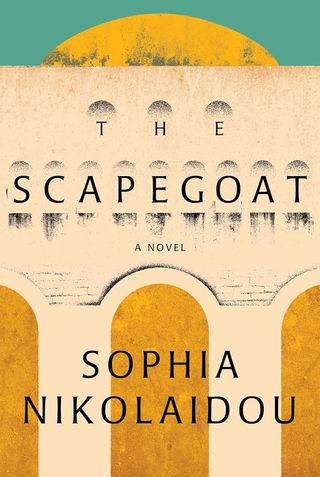
Cover of The Scapegoat

The Scapegoat

Sophia Nikolaidou

Original language: Greek · Hardcover · ISBN 978-1612193847

The Scapegoat — Painting by William Holman Hunt (1854)

Plot

In 1948, the body of an American journalist is found floating in the bay off Thessaloniki. A small-time Greek journalist is tried and convicted for the murder...but when he's released twelve years later, he claims his confession was the result of torture. Flash forward to contemporary Greece, where a rebellious young high school student is given an assignment for a school project: find the truth. And as he begrudgingly takes it on, he begins to make a startling series of gripping discoveries--about history, love, and even his own family's involvement.

Cover of Zorba the Greek

Zorba the Greek

Nikos Kazantzakis

Original language: Greek · Paperback · ISBN 978-1476782812

First published in 1946, this novel by Nikos Kazantzakis follows an unnamed narrator, a bookish intellectual, who travels to Crete to operate a lignite mine. There he meets Alexis Zorba, a middle-aged working man whose appetite for life stands in sharp contrast to the narrator's cautious, cerebral temperament. The two form an unlikely partnership on the island, and the story unfolds around their daily labour, the local community, and the men and women of the small town where they settle.

Zorba is physical, spontaneous, and unguarded. He dances, eats, argues, and loves without hesitation. The narrator, by contrast, lives largely through books and abstract ideas. Their friction and growing friendship form the novel's central engine, pressing the narrator to reconsider what it means to act rather than merely think. Around them, Kazantzakis draws the landscape and social fabric of rural Crete, with its traditions, unspoken codes, and hard terrain. Questions about faith, courage, and the distance between thought and action run through the story, grounded always in the specific textures of place, work, and the complicated lives of the people nearby.

Plot

First published in 1946, Zorba the Greek, is, on one hand, the story of a Greek working man named Zorba, a passionate lover of life, the unnamed narrator who he accompanies to Crete to work in a lignite mine, and the men and women of the town where they settle. On the other hand it is the story of God and man, The Devil and the Saints; the struggle of men to find their souls and purpose in life and it is about love, courage and faith.

More from Greece

See the country page for Greece for its map, facts and largest cities, or browse books from other countries.

Free editions are on Project Gutenberg, matched by title and author. Links go to Amazon; Hookito doesn’t sell books. Know a book that belongs here, or spotted a mistake? Write to submissions@hookito.com.

Where to next?

Back to the globe
Hookito landscape illustration