Hookito

Guatemala · Books

Books from Guatemala

6 books from and about Guatemala: what each is about, the plot, and a note from Professor Kogi.

Cover of Amalia's Guatemalan Kitchen

Amalia's Guatemalan Kitchen

159298553X

Original language: English · Hardcover · ISBN 978-1592985531

Amalia's Guatemalan Kitchen is a cookbook by Amalia Moreno-Damgaard, a Guatemalan-American chef with formal training in French culinary technique. The book collects 170 recipes drawn from Guatemalan cooking traditions, organized for home cooks who may be approaching this cuisine for the first time. Moreno-Damgaard's background bridges two culinary worlds: the ingredients and preparations rooted in Guatemala's food culture, and the structured methods of classical French training.

Guatemala's cuisine reflects layers of history, including ingredients such as corn, black beans, chiles, and squash that have been central to the region's cooking since long before European contact. The recipes in this collection cover a range of occasions and aim to be practical for everyday preparation. Moreno-Damgaard presents dishes that emphasize fresh ingredients and straightforward steps, making them accessible without requiring specialized equipment or hard-to-find products.

This is Moreno-Damgaard's first cookbook. It functions both as a recipe collection and as a window into Guatemalan food customs, connecting specific dishes to the broader culture from which they come. The book is oriented toward cooks interested in adding Central American dishes to their regular cooking rather than toward professional kitchens.

Plot

Amalia Moreno-Damgaard, a Guatemalan-American chef classically educated in the French culinary tradition, shares 170 of her favorite Guatemalan recipes for every occasion in her first cookbook aimed at home cooks. These healthy, quick, and easy gourmet dishes provide the perfect way to explore a fascinating culture that dates back to the ancient Mayan civilization.
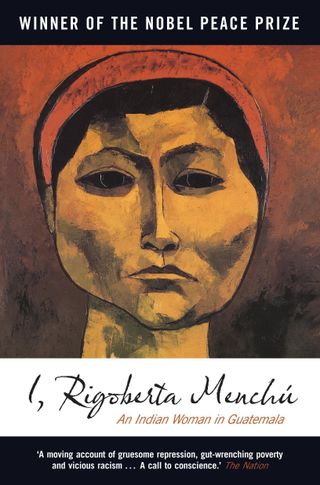
Cover of I, Rigoberta Menchu

I, Rigoberta Menchu

Rigoberta Menchu

Original language: Spanish · Paperback · ISBN 978-1844674183

Rigoberta Menchú grew up in the highlands of Guatemala as part of the K'iche' Maya community. Her account, originally narrated in Spanish to anthropologist Elisabeth Burgos-Debray and published in 1983, describes the daily realities of indigenous life in a country shaped by deep inequalities between ladino and Maya populations. Menchú details agricultural labor, communal customs, and the spiritual practices that structured her community's calendar and identity.

The book also records how Guatemala's military conflict reached into rural villages during the late 1970s and early 1980s. Menchú's brother, father, and mother were killed by the Guatemalan military, events she recounts with directness. Facing continued danger, she learned Spanish as a second language and began organizing through both Catholic catechist networks and broader political movements. Her testimony sits at the intersection of religious commitment and political resistance, reflecting how indigenous communities responded to state violence.

Menchú was awarded the Nobel Peace Prize in 1992, partly in recognition of this testimony and her wider advocacy for indigenous rights across Latin America. The book has since been widely read and debated in universities and human rights circles around the world.

Plot

Now a global bestseller, the remarkable life of Rigoberta Menchú, a Guatemalan peasant woman, reflects on the experiences common to many Indian communities in Latin America. Menchú suffered gross injustice and hardship in her early life: her brother, father, and mother were murdered by the Guatemalan military. She learned Spanish and turned to catechistic work as an expression of political revolt as well as religious commitment. Menchú vividly conveys the traditional beliefs of her community and her personal response to feminist and socialist ideas. Above all, these pages are illuminated by the enduring courage and passionate sense of justice of an extraordinary woman.

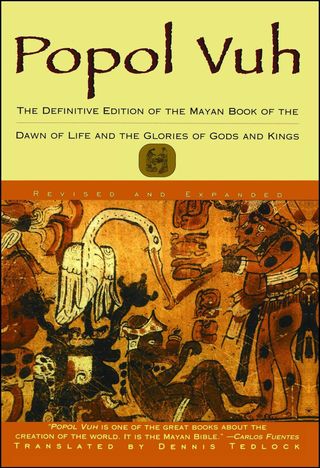
Cover of Popol Vuh

Popol Vuh

Kʼicheʼ people

Original language: Qʼanjobʼal · Paperback · ISBN 978-0684818450

The Popol Vuh is the creation narrative of the Kʼicheʼ Maya, one of the most significant texts to survive from the indigenous languages of the Americas. It opens in a dark, still sea where gods speak the world into existence, then moves through cycles of divine effort and failure as they attempt to shape beings capable of thought and gratitude. The story also follows the Hero Twins, whose encounters with the lords of the underworld form a central sequence of trials and transformations.

The text originated in Mayan hieroglyphs and was transcribed into the Roman alphabet during the sixteenth century in the Guatemalan highlands, the homeland of the Kʼicheʼ kingdom. That alphabetic version preserved content that might otherwise have been lost as colonial authorities destroyed indigenous manuscripts. Dennis Tedlock produced an unabridged English translation accompanied by extensive notes and commentary. A later edition added newly translated passages, newly deciphered hieroglyphs, and over forty illustrations.

The narrative links cosmic origins to the political foundations of the Kʼicheʼ people, connecting the acts of gods and ancestors to the landscape of highland Guatemala. Agricultural cycles, the behavior of animals, and the movements of celestial bodies all appear within the story as consequences of the events it describes.

Plot

Popol Vuh, the Quiché Mayan book of creation, is not only the most important text in the native languages of the Americas, but it is also an extraordinary document of the human imagination. It begins with the deeds of Mayan gods in the darkness of a primeval sea and ends with the radiant splendor of the Mayan lords who founded the Quiché kingdom in the Guatemalan highlands. Originally written in Mayan hieroglyphs, it was transcribed into the Roman alphabet in the sixteenth century.

Cover of The Polish Boxer

The Polish Boxer

Eduardo Halfon

Original language: Spanish · Paperback · ISBN 978-1934137536

The Polish Boxer is a novel by the Guatemalan writer Eduardo Halfon. Its narrator shares the author's name and profession, a literature professor in Guatemala, which blurs the line between fiction and autobiography. At its center sits a family question: the narrator's Polish grandfather carries a tattooed number from his imprisonment during the Second World War, and the story behind it stays half-told. The grandson's effort to understand that silence sets the book's course.

Around that thread, the book gathers other lives. A Serbian pianist longs for a heritage he was kept from. A young Mayan poet is pulled between his studies and duties to his family. An Israeli woman looks for answers in Central America. A professor travels to a Mark Twain conference hoping for knowledge he cannot find in books. Each meeting feeds the narrator's own search, and each figure holds a tension between belonging and displacement.

Halfon first wrote these linked chapters in Spanish, and the book moves between Guatemala, Europe, and the United States. Its people reach toward what reason cannot hold, through humor, music, poetry, or things left unsaid, while the narrator keeps turning the same questions of origin back on himself.

Plot

The Polish Boxer covers a vast landscape of human experience while enfolding a search for origins: a grandson tries to make sense of his Polish grandfather’s past and the story behind his numbered tattoo; a Serbian classical pianist longs for his forbidden heritage; a Mayan poet is torn between his studies and filial obligations; a striking young Israeli woman seeks answers in Central America; a university professor yearns for knowledge that he can’t find in books and discovers something unexpected at a Mark Twain conference. Drawn to what lies beyond the range of reason, they all reach for the beautiful and fleeting, whether through humor, music, poetry, or unspoken words. Across his encounters with each of them, the narrator—a Guatemalan literature professor and writer named Eduardo Halfon—pursues his most enigmatic subject: himself.

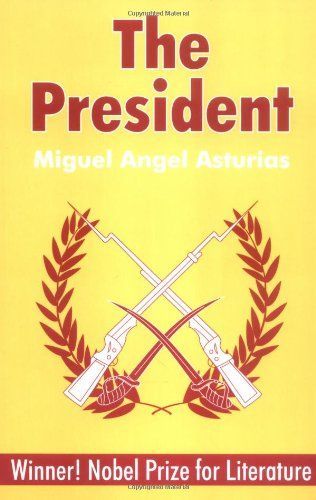
Cover of The President

The President

Miguel Angel Asturias

Original language: Spanish · Paperback · ISBN 978-0881339512

Miguel Angel Asturias began writing The President while he was still a law student in Guatemala, drawing on his firsthand observations as a journalist working under a repressive government. The novel centers on a nameless dictator whose regime saturates every layer of daily life, from the police apparatus down to the fears and dreams of ordinary citizens. Asturias based the figure loosely on Manuel Estrada Cabrera, who ruled Guatemala from 1898 to 1920, though the portrait extends beyond any single ruler to describe how authoritarian power reshapes an entire society.

The book moves between satirical passages and surrealistic dream sequences. Satire exposes the absurdities and cruelties of official conduct, while the dream episodes show how state violence penetrates the inner lives of individuals, distorting memory, loyalty, and trust. The effect is a narrative that shifts between sharp political observation and something closer to hallucination, reflecting the disorientation that unchecked authority can produce.

Asturias, who was born in Guatemala City in 1899, spent years in Paris during the 1920s and 1930s, where he studied Mayan mythology at the Sorbonne and revised the manuscript extensively. He was later awarded the Nobel Prize in Literature in 1967, with his fiction and poetry recognized for their roots in the traditions and outlook of Latin American peoples.

Plot

Drawing from his experiences as a journalist writing under repressive conditions, Asturias employs such literary devices as satire to convey the government's transgressions and surrealistic dream sequences to demonstrate the police state's impact on the individual psyche. Asturias's stance against all forms of injustice in Guatemala caused critics to view the author as a compassionate spokesperson for the oppressed. "My work," Asturias promised when he accepted the Nobel Prize, "will continue to reflect the voice of the people, gathering their myths and popular beliefs and at the same time seeking to give birth to a universal consciousness of Latin American problems."

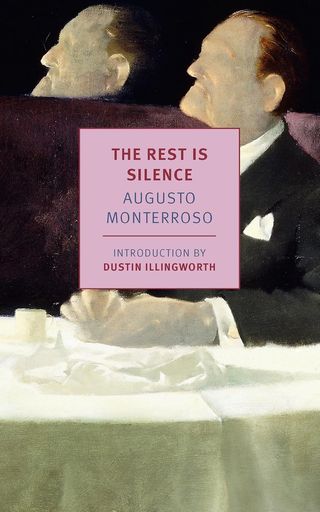
Cover of The Rest Is Silence

The Rest Is Silence

Augusto Monterroso

Original language: Spanish · Paperback · ISBN 978-1681378824

Augusto Monterroso, born in Honduras and raised in Guatemala, became one of Latin America's most distinctive prose writers by working almost exclusively in very short forms. His fiction tends toward the compressed and surreal, with a sharp comic edge. Italo Calvino praised his stories in striking terms. The Rest Is Silence is Monterroso's only novel, a departure in scale from the miniature narratives that defined most of his career.

The book assembles a fragmented portrait of Eduardo Torres, a provincial literary critic in Mexico who writes for Sunday newspaper supplements. Torres is presented as a figure of grand ambition and deep misunderstanding, someone whose readings of literature go spectacularly wrong while his self-regard remains entirely intact. The novel builds this portrait through multiple angles rather than a single linear plot, giving it a kaleidoscopic structure that fits a character who is, in effect, a small-town Don Quixote of letters.

Monterroso's comedy here operates through the gap between Torres's confidence and his actual grasp of the material he critiques. The setting in provincial Mexican literary culture provides a specific social world where minor authority and genuine absurdity can coexist comfortably.

Plot

The one and only novel by the renowned Guatemalan writer Augusto Monterroso—Latin America’s most expansive miniaturist, whose tiny, acid, and bracingly surreal narratives Italo Calvino dubbed “the most beautiful stories in the world”—The Rest Is Silence presents the reader with the kaleidoscopic portrait of a provincial Mexican literary critic, one Eduardo Torres, a sort of Don Quixote of the Sunday supplements, whose colossal misreadings are matched only by the scale of his vanity.

More from Guatemala

See the country page for Guatemala for its map, facts and largest cities, or browse books from other countries.

Links go to Amazon; Hookito doesn’t sell books. Know a book that belongs here, or spotted a mistake? Write to submissions@hookito.com.

Where to next?

Back to the globe
Hookito landscape illustration