
Hookito

Guinea-Bissau · Books

Books from Guinea-Bissau
2 books from and about Guinea-Bissau: what each is about, the plot, and a note from Professor Kogi.

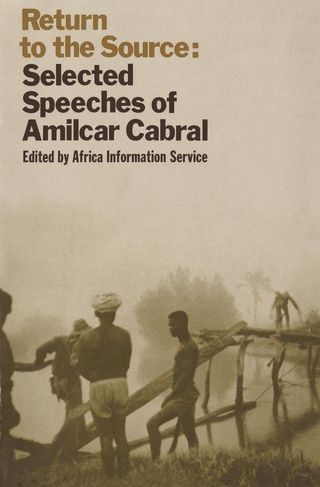
Cover of Return to the Source: Selected Speeches of Amilcar Cabral

Return to the Source: Selected Speeches of Amilcar Cabral

Africa Information Service Staff

Original language: English · Paperback · ISBN 978-0853453451

Amilcar Cabral served as Secretary-General of the African Party for the Independence of Guinea and the Cape Verde Islands, known by its Portuguese acronym PAIGC. Under his leadership, the PAIGC gained control of roughly three-quarters of Guinea's rural territory in under ten years of armed struggle against Portuguese colonial rule. Cabral was assassinated by Portuguese agents on January 20, 1973, shortly before Guinea-Bissau declared independence.

This collection gathers several of Cabral's principal speeches from his final years, delivered during visits to the United States. The talks address anti-colonial theory and revolutionary strategy, subjects Cabral had studied and developed over a long preparatory period before the armed campaign began. His approach was notable for the depth of its theoretical groundwork, combining practical organization with sustained political analysis.

The book was edited by the Africa Information Service and presents Cabral's ideas in his own words, drawn from a period when the independence movement was well advanced. Guinea-Bissau, a small West African country between Senegal and Guinea, remained under Portuguese administration until 1974. The speeches collected here reflect the political conditions and arguments of that transitional period.

Plot

Amilcar Cabral, who was the Secretary-General of the African Party for the Independence of Guinea and the Cape Verde Islands (PAIGC), was assassinated by Portuguese agents on January 20, 1973. Under his leadership, the PAIGC liberated three-quarters of the countryside of Guinea in less than ten years of revolutionary struggle. Cabral distinguished himself among modern revolutionaries by the long and careful preparation, both theoretical and practical, which he undertook before launching the revolutionary struggle, and, in the course of the preparation, became one of the world's outstanding theoreticians of anti-imperialist struggle.
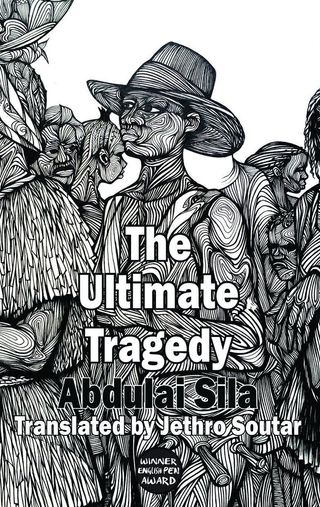
Cover of The Ultimate Tragedy

The Ultimate Tragedy

Abdulai Sila

Original language: Portugese · Paperback · ISBN 978-1910213544

Ndani, a young woman from a rural village, travels to the capital of what is now Guinea-Bissau in search of a different life. She finds work as a domestic servant for a Portuguese colonial family. The lady of the house, Dona Deolinda, takes it upon herself to guide Ndani through religious instruction, while the man of the house pursues her with far less honourable motives. When Ndani is forced out, she returns toward her home region and enters a marriage with a local chief who has built a grand house and a school to assert his standing before the Portuguese administrator. That marriage, too, collapses after the chief discovers she is not a virgin.

Ndani eventually finds a genuine connection with the teacher at the chief's school, an educated man whose ambitions place him at odds with both colonial authority and local power structures. Their attempt to build a shared future unfolds against rising political tensions as anti-colonial resistance begins to take shape across the territory.

Abdulai Sila is one of the first novelists from Guinea-Bissau to publish fiction in Portuguese. The story follows Ndani through overlapping systems of control, including colonial households, village hierarchies, and expectations placed on women, each limiting her choices in distinct ways.

Plot

Ndani leaves her village to seek a better life in the capital, finding work as a maid for a Portuguese family. The mistress of the house, Dona Deolinda, embarks on a mission to save Ndani's soul through religious teaching, but the master of the house has less righteous intentions. Ndani is expelled from the house and drifts towards home, where she becomes the wife of a village chief. He has built a mansion and a school to flaunt his power to the local Portuguese administrator, but he abandons Ndani when he finds she's not a virgin. She eventually finds love with the school's teacher, but in tumultuous times, making a future with an educated black man involves a series of hurdles.

More from Guinea-Bissau

See the country page for Guinea-Bissau for its map, facts and largest cities, or browse books from other countries.

Links go to Amazon; Hookito doesn’t sell books. Know a book that belongs here, or spotted a mistake? Write to submissions@hookito.com.

Where to next?

Back to the globe
Hookito landscape illustration