Hookito

Hongkong · Books

Books from Hongkong

10 books from and about Hongkong: what each is about, the plot, and a note from Professor Kogi.

Cover of A Chinese Wedding

A Chinese Wedding

Simon Elegant

Original language: English · Hardcover · ISBN 978-0749902391

Amy Wyse meets Winston Lee at a loud party in Philadelphia, and within a year she finds herself seated at a traditional Chinese wedding banquet in Hong Kong as his bride. At first the city feels like a liberation from the predictable routines of lower middle class American life. But living alongside three generations of the Lee family introduces pressures Amy did not anticipate, and the cultural distance between her upbringing and Winston's begins to surface in ways that affect how she sees both her marriage and herself.

The novel moves between Hong Kong, Philadelphia, and the Philippines, using flashbacks alongside its main narrative to build a portrait of Amy as she tries to understand what she actually wants. Simon Elegant focuses on the small, accumulating tensions of daily life in a household where expectations about loyalty, family hierarchy, and personal ambition do not align. Amy was raised to pursue her own goals directly, a habit that collides with the codes governing the Lee household.

The story centers on how far mutual affection can carry two people whose assumptions about ordinary life are shaped by very different places. Elegant treats both sides of that gap with attention rather than caricature, grounding the conflict in specific domestic scenes rather than broad cultural generalizations.

Plot

When Amy Wyse first exchanges a few shouted words with Winston Lee at a noisy party in Philadelphia, she has no inkling that a year later she will be sitting at a traditional Chinese wedding feast in Hong Kong as his bride. And at first, glorying in the exotic newness of Hong Kong, Amy believes her dreams of escape from the mundane world of lower middle class America have at last been realised. Living in close proximity with three generations of the Lee family, however, soon forces Amy to reassess her whole what kind of future she sees for herself; above all the true nature of the man she has married. Brought up to reach for what she wants, Amy acts, but in acting exposes the vast gulf that still exists between Hong Kong and Philadelphia - a gulf that even love may not be able to bridge. Mixing flashbacks and conventional narrative, Simon Elegant draws a complex portrait of a young woman groping her way into the world and towards an understanding of herself.
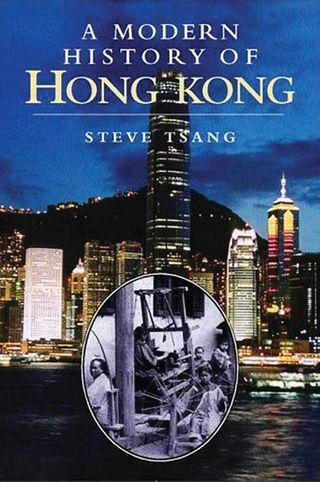
Cover of A Modern History of Hong Kong

A Modern History of Hong Kong

Steve Tsang

Original language: English · Paperback · ISBN 978-1845114190

Steve Tsang's history covers Hong Kong from 1841, when Britain first occupied the territory, through to the 1997 handover to Chinese sovereignty. Drawing on both British and Chinese sources, including official records and private papers, the book traces how a small fishing settlement on the southern edge of China grew into one of the most internationally connected cities in Asia over roughly 156 years of colonial rule.

A central thread running through the account is the shifting relationship between Hong Kong's local Chinese population and the expatriate community that governed and shaped much of the territory's institutions. Tsang follows the stages of this relationship across several eras: the founding period, the decades as a relatively minor imperial outpost, and the later transformation into what many called the pearl of the British Empire. Alongside these political and social changes, the book examines how a distinct local identity gradually formed among Hong Kong's residents, separate from both mainland Chinese and British frameworks.

The final sections address the negotiations and events that led to the end of British administration, placing them in the context of the longer patterns Tsang has outlined across the preceding century and a half.

Plot

From a little-known fishing community at the periphery of China, Hong Kong developed into one of the world's most spectacular and cosmopolitan metropoles after a century and a half of British imperial rule. This history of Hong Kong -- from its occupation by the British in 1841 to its return to Chinese sovereignty in 1997 -- includes the foundation of modern Hong Kong; its developments as an imperial outpost, its transformation into the ""pearl"" of the British Empire and of the Orient and the events leading to the end of British rule.

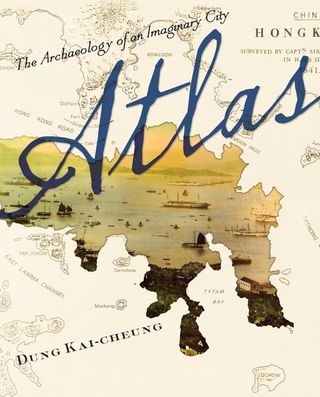
Cover of Atlas: The Archaeology of an Imaginary City

Atlas: The Archaeology of an Imaginary City

Dung Kai-cheung

Original language: Chinese · Hardcover · ISBN 978-0231161008

Atlas: The Archaeology of an Imaginary City is a novel by Dung Kai-cheung set in the City of Victoria, a fictional place that closely resembles Hong Kong. The book is written from the perspective of future archaeologists who are trying to reconstruct this lost metropolis using maps, historical documents, and recovered artifacts. Victoria is not a straightforward stand-in for Hong Kong but a layered invention, blending real-world geography and events with imagined people, places, and social commentary.

The novel is divided into four sections: Theory, The City, Streets, and Signs. Each section approaches Victoria from a different angle, moving between speculation and documentation, personal anecdote and broader cultural observation. The structure mirrors the work of archaeology itself, piecing together fragments to form a picture that may or may not be accurate. Questions about memory, urban identity, and colonial history run through the text, but they emerge from the fictional evidence rather than from direct argument.

Dung Kai-cheung mixes genres freely. The book draws on conventions of academic writing, city guidebooks, and speculative fiction without settling into any single category. Its form reflects the unstable, contested nature of the city it describes.

Plot

Set in the long-lost City of Victoria (a fictional world similar to Hong Kong), Atlas is written from the unified perspective of future archaeologists struggling to rebuild a thrilling metropolis. Divided into four sections―"Theory," "The City," "Streets," and "Signs"―the novel reimagines Victoria through maps and other historical documents and artifacts, mixing real-world scenarios with purely imaginary people and events while incorporating anecdotes and actual and fictional social commentary and critique.

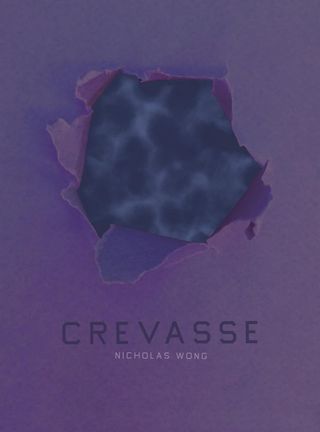
Cover of Crevasse

Crevasse

Nicholas Wong

Original language: English · Paperback · ISBN 978-1885030207

Crevasse gathers poems by Nicholas Wong, a poet and teacher based in Hong Kong. An epigraph from the French philosopher Maurice Merleau-Ponty sets the terms: a person cannot fully see his own body, so a second body, itself unseen, becomes necessary as a vantage point. The poems that follow search for the seam where watching and being watched meet.

English is Wong's second language, learned after Cantonese, and he writes in it by choice, much as Samuel Beckett chose to write in French. Working outside a first language lets him unsettle familiar habits of sound and sense, assembling meaning one deliberate word at a time. The body stays present across these pages, through illness, redirected desire, and the marks left by colonization.

The collection moves among the overlapping groups Wong belongs to as a queer Asian writer from Hong Kong, and also as reader and lover. Some poems are lyric, others experimental in form. Crevasse won the 2016 Lambda Literary Award. Wong was a finalist twice, once for the New Letters Poetry Award and once for the Wabash Prize in poetry, and he earned an MFA at City University of Hong Kong.

Plot

The poems in Crevasse seek to uncover the thread connecting these mutually observed and observing bodies. Like Samuel Beckett and others before him, Wong has deliberately chosen to write in a non-native language―English, his second language after Cantonese. Freed from the assumptions and conventions of his mother tongue, Wong strips down, interrogates and ultimately reorients the fragmented complexities of the multiple communities he inhabits―queer, Asian, poet, reader, lover―in a collection of poems that exposes the gap between familiarity and the inevitable distance of the body.

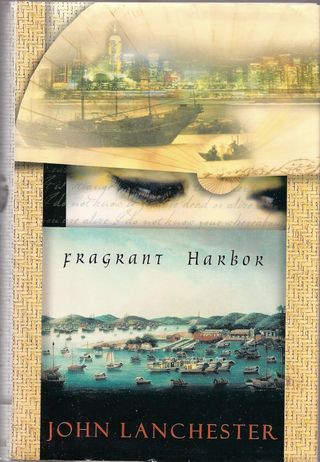
Cover of Fragrant Harbor

Fragrant Harbor

John Lanchester

Original language: English · Hardcover · ISBN 978-0399148668

Fragrant Harbor follows Tom Stewart, a young Englishman who arrives in Hong Kong in 1935 after buying a cheap passage aboard the SS Darjeeling. During the six-week voyage, he becomes caught up in a wager between a Yorkshire businessman and a Chinese missionary nun, Sister Maria, who bets she can teach Stewart Cantonese before the ship docks. What starts as a contest grows into something deeper, setting the course of Stewart's life in the colony for decades to come.

The novel spans roughly seven decades, moving through the intrigue and corruption of 1930s Hong Kong, the Japanese occupation during the Second World War, and the city's later rise as a center of international finance. A third central figure, Dawn Stone, is an ambitious young journalist pursuing her career in this shifting landscape. John Lanchester connects these characters across eras of colonialism, conflict, and rapid economic change, leading up to the 1997 handover of Hong Kong to China.

At its core, the book traces a forbidden attachment between Stewart and Sister Maria, whose religious vows create a barrier neither can simply set aside. Their bond persists across wartime upheaval and the city's transformation into a global commercial hub, shaping the choices each character makes over the course of their lives.

Plot

The main character, Tom Stewart, is an Englishman who arrives in Hong Kong in the 1930s and builds a life and career there over several decades. Alongside him are Dawn Stone, an ambitious young journalist chasing success, and Sister Maria, a nun devoted to helping the city’s poor and dying. The story weaves their lives together against the backdrop of colonialism, war, and modern capitalism, leading up to the 1997 handover of Hong Kong to China.

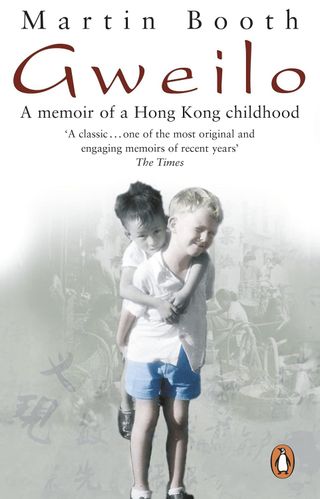
Cover of Gweilo: Memories of a Hong Kong Childhood

Gweilo: Memories of a Hong Kong Childhood

Martin Booth

Original language: English · Paperback · ISBN 978-0553816723

Martin Booth arrived in Hong Kong as a seven-year-old in the early 1950s, when his father was posted to the British colony. In this memoir he recalls moving through the city with unusual freedom, learning Cantonese, befriending rickshaw pullers and stallholders, and tasting century eggs and boiled water beetles. The title comes from the Cantonese word gweilo, used for a pale foreigner.

His explorations took him into places few Western children saw, including the Kowloon Walled City, a dense enclave largely outside colonial administration, and an opium den. He met street performers, a man with a dancing monkey, and a homeless woman known as the Queen of Kowloon, rumoured to be a Romanov. Not every encounter was harmless; the book also names an adult who preyed on children.

Family tension runs beneath the account. Booth's mother shared his interest in Chinese life, while his father objected to what he saw as the family drifting away from English habits. Booth finished the manuscript shortly before his death in February 2004, recording a colonial arrangement that no longer exists.

Plot

As an inquisitive seven-year-old, Martin Booth found himself with the whole of Hong Kong at his feet when his father was posted there in the early 1950s. Unrestricted by parental control, he had free access to hidden corners of the colony normally closed to a Gweilo, a “pale fellow” like him. Befriending rickshaw coolies and local stallholders, he learned Cantonese, sampled delicacies such as boiled water beetles and one-hundred-year-old eggs, and participated in colourful festivals. He even entered the forbidden Kowloon Walled City, wandered into the secret lair of the Triads and visited an opium den. Along the way he encountered a colourful array of people, from the plink plonk man with his dancing monkey to Nagasaki Jim, a drunken child molester, and the Queen of Kowloon, the crazed tramp who may have been a member of the Romanov family.

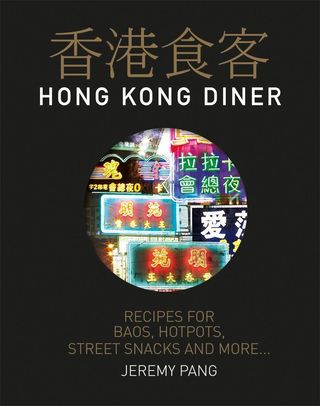
Cover of Hong Kong Diner: Recipes for Baos, Hotpots, Street Snacks and More

Hong Kong Diner: Recipes for Baos, Hotpots, Street Snacks and More

Jeremy Pang

Original language: English · Hardcover · ISBN 978-1849499927

Hong Kong Diner is a cookbook by Jeremy Pang featuring over 70 recipes drawn from the cafe and street food culture of Hong Kong. Pang grew up in the city, and the book reflects the way Hong Kong cooking absorbs influences from classic Chinese traditions, French Vietnamese flavors, and American west coast tastes. The result is a cuisine shaped by constant movement and a population accustomed to eating out at all hours.

Recipes range across baos, dumplings, buns, tofu rolls, and barbecue to hotpots, claypot rice, and fried noodles. Drinks and desserts also appear, including bubble tea, milk tea, and pineapple buns. Some combinations may surprise readers unfamiliar with Hong Kong dining habits: peanut butter French toast, for example, sits comfortably alongside beef brisket noodle soup and savory doughnuts. These pairings reflect how the city's food stalls and small restaurants have long treated eastern and western ingredients as part of a single working pantry.

The book pairs its recipes with photography and design intended to echo the look of Hong Kong itself. Pang treats these dishes as everyday comfort food rather than formal cuisine, and the collection leans toward items that can be prepared at home without specialized restaurant equipment.

Plot

With a cool aesthetic, vibrant photography and cutting-edge design, Hong Kong Diner is inspired by the unique city where Jeremy Pang grew up, where western sensibilities and food tastes overlap with an ancient cuisine. Featuring a selection of 70 dishes, including bao, buns, hotpots, fried noodles and bubble tea, Hong Kong Diner reveals the recipes of Hong Kong café and street food culture.

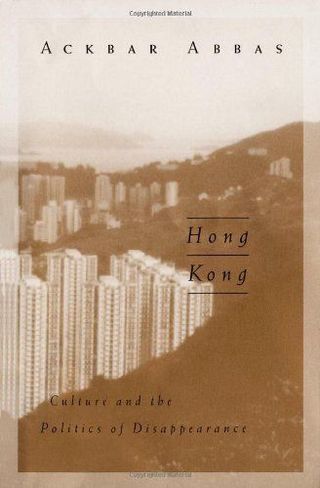
Cover of Hong Kong: Culture and the Politics of Disappearance

Hong Kong: Culture and the Politics of Disappearance

Ackbar Abbas

Original language: English · Paperback · ISBN 978-0816629251

Ackbar Abbas wrote this study of Hong Kong culture in the years before the 1997 handover, when the territory was to pass from British colonial rule to the People's Republic of China. He examines cinema, architecture, photography, and literature, arguing that Hong Kong long worked less as a rooted place than as a point of transit, its residents thinking of themselves as migrants between China and elsewhere.

The book traces a shift that began after the 1984 Sino-British Joint Declaration, the agreement that set the terms of the handover. Abbas argues that the prospect of mainland authority prompted an urgent search for a distinct Hong Kong identity that had not felt necessary before. He links this to a politics of disappearance, in which the city's culture became visible as its familiar status was ending.

His examples range from action filmmakers such as Jackie Chan and John Woo to the contrast between colonial-era buildings and the postmodern towers of the skyline. Abbas treats the city as a case that raises wider questions about the futures of colonial cities and global cities.

Plot

On June 30, 1997, Hong Kong as we know it will disappear, ceasing its singular and ambiguous existence as a colonial holdover and becoming part of the People’s Republic of China. In an intriguing and provocative exploration of its cinema, architecture, photography, and literature, Ackbar Abbas considers what Hong Kong, with its unique relations to decolonization and disappearance, can teach us about the future of both the colonial city and the global city. The culture of Hong Kong encompasses Jackie Chan and John Woo, British colonial architecture and postmodern skyscrapers. Ironically, it was not until they were faced with the imposition of Mainland power—with the signing of the Sino-British Joint Agreement in 1984—that the denizens of the colony began the search for a Hong Kong identity. According to Abbas, Hong Kong’s peculiar lack of identity is due to its status as “not so much a place as a space of transit,” whose residents think of themselves as transients and migrants on their way from China to somewhere else.

Cover of Sour Sweet

Sour Sweet

Timothy Mo

Original language: English · Paperback · ISBN 978-0952419327

Sour Sweet, published in 1982 by Timothy Mo, is set in 1960s London and centers on the Chen family, immigrants from Hong Kong working to build a livelihood around a Chinese takeaway in the Soho area. The novel was shortlisted for the Booker Prize. Chen and his wife Lily manage the small business while raising their family, and much of the story turns on the friction between holding onto Chinese customs and adapting to English surroundings.

Beneath the surface of the Chens' domestic routine, the book traces a second, more dangerous layer of life in London's Chinese community. Triad networks operate alongside legitimate businesses, and the family's path crosses with these criminal structures in ways that complicate their already difficult position. Lily emerges as a determined figure whose choices shape the household's direction, even as economic pressure and cultural misunderstanding close in from several sides.

Mo writes with a satirical eye, treating both the immigrant experience and British society with dry, observant humor. The novel draws its tension from the gap between what the Chens understand of their new country and what remains opaque to them, while the world they left behind continues to exert its own pull through loyalty and obligation.

Plot

"Sour Sweet" (1982) is a darkly comic and richly textured novel by Timothy Mo, shortlisted for the Booker Prize. Set in 1960s London, the story follows the Chen family, recent immigrants from Hong Kong, as they struggle to establish a new life and run a Chinese takeaway in Soho’s Chinatown. Behind the daily grind of family life and business, the novel reveals the hidden networks of clan loyalties, cultural tensions, and criminal underworlds, particularly the growing influence of the Triads. As the Chens try to navigate between traditional Chinese values and the pressures of assimilation, the family—especially the strong-willed wife Lily—faces moral dilemmas, economic hardships, and cultural misunderstandings.

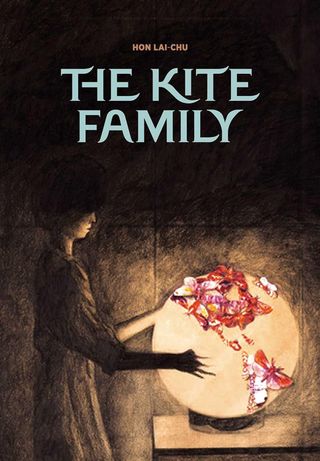
Cover of The Kite Family

The Kite Family

Hon Lai-chu

Original language: Chinese · Paperback · ISBN 978-9881604798

The Kite Family is a collection of stories by Hong Kong writer Hon Lai-chu. Each tale unfolds in a world governed by absurd rules and quiet desperation. In one, a patient leaves an asylum only to stand motionless as a mannequin in a department store window. In another, living alone is declared illegal, and a woman who shares her apartment with her cat is assigned by officials to join a manufactured household. A man, tired of his lack of fortune, turns himself into a chair so that others may literally sit on him. The scenarios are strange, but the characters inhabit them with a flat, matter-of-fact composure that makes the strangeness feel ordinary.

Hon Lai-chu uses surreal premises to examine how people negotiate freedom and individuality when the structures around them leave little room for either. The stories sit at the border between fable and social observation, pressing everyday frustrations into exaggerated shapes. Bureaucracy, loneliness, and the pressure to fit a designated role run through the collection as recurring concerns.

The book received the New Writer's Novella first prize from Taiwan's Unitas Literary Association and was named one of 2008's Books of the Year by Taiwan's China Times. It was also selected among the Top 10 Chinese Novels Worldwide.

Plot

A patient escapes from an asylum, to spend his life as the perfect mannequin in a department store display; when living alone is outlawed, a woman who resides quietly with her cat is assigned by bureaucrats to a role in an artificially created "family;" a luckless man transforms himself into a chair so people can, literally, sit on him. These are just a few of the inhabitants of Hon Lai-chu's stories, where surreal characters struggle to carve out space for freedom and individuality in an absurd world.

More from Hongkong

See the country page for Hongkong for its map, facts and largest cities, or browse books from other countries.

Links go to Amazon; Hookito doesn’t sell books. Know a book that belongs here, or spotted a mistake? Write to submissions@hookito.com.

Where to next?

Back to the globe
Hookito landscape illustration