Hookito

Honduras · Books

Books from Honduras

4 books from and about Honduras: what each is about, the plot, and a note from Professor Kogi.

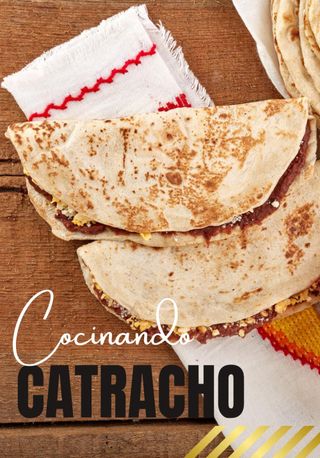
Cover of Cocinando Catracho: Traditional Recipes from Honduras

Cocinando Catracho: Traditional Recipes from Honduras

Sean T Rust

Original language: English · Paperback · ISBN 979-8872586524

Cocinando Catracho is a cookbook focused on the food traditions of Honduras. The title uses the word catracho, an informal term Hondurans use to describe themselves and their culture. Sean T Rust presents a collection of recipes that covers both long-established dishes and more recent preparations, aiming to represent the range of cooking found across the country. Honduras sits in Central America between Guatemala, El Salvador, and Nicaragua, with coastlines on both the Caribbean Sea and the Pacific Ocean, and this geographic variety shapes its ingredients and regional styles.

The book is organized for accessibility, with step-by-step instructions intended for cooks at different skill levels. Photographs accompany the recipes. Honduran cuisine draws on indigenous, Spanish, African, and Caribbean influences, and common ingredients include corn, beans, plantains, coconut, and fresh seafood along the coasts. Dishes such as baleadas, tamales, and sopa de caracol reflect these overlapping traditions. The cookbook treats food as a window into daily life and household customs in Honduras, presenting recipes alongside cultural context rather than listing them in isolation.

Plot

Featuring a harmonious blend of traditional and contemporary dishes, this cookbook is a tribute to the diversity of Honduran culinary traditions. Whether you're a seasoned chef or a home cook eager to explore new flavors, the easy-to-follow recipes and vibrant imagery will inspire you to recreate the warmth and hospitality of Honduran kitchens in your own home.
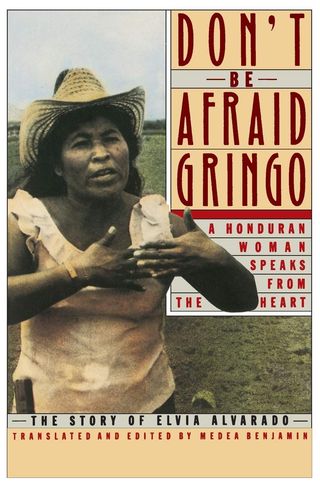
Cover of Don't Be Afraid, Gringo

Don't Be Afraid, Gringo

Elvia Alvarado

Original language: Spanish · Paperback · ISBN 978-0060972059

Don't Be Afraid, Gringo is an oral history told by Elvia Alvarado, a campesina (peasant) organizer in Honduras. Translated and edited by Medea Benjamin, the book follows Alvarado from her early work with Catholic Church-sponsored women's groups focused on combating malnutrition to her growing political consciousness. As she began asking why campesinos were malnourished in the first place, her focus shifted from relief work to the structural causes of rural poverty in what the record describes as the poorest country in Central America.

Alvarado's account covers her travels on foot across Honduras, through back roads and villages, talking with people whose experiences shaped her understanding of how land, power, and wealth were distributed. She became an organizer who led land recovery actions, efforts to enforce national land reform laws that existed on paper but were rarely applied. These actions brought direct consequences: harassment, imprisonment, and torture by the Honduran military.

The book's title refers to the term gringo, here used as a direct address to English-speaking readers. Benjamin's editing preserves Alvarado's voice while making her perspective accessible to an audience largely unfamiliar with daily life in rural Honduras. The record notes the book received award recognition.

Plot

Don’t be Afraid, Gringo is the award-winning oral history of Elvia Alvarado, a courageous Campesina [peasant] activist in Honduras, the poorest country in Central America. Trained by the Catholic Church to organize women’s groups to combat malnutrition, Alvarado began to question why Campesinos were malnourished, to begin with. Her growing political awareness, her travels by foot, over the back roads of Honduras, and her conversations with people from all over the country have given her insights into the internal workings of her society that far surpass those of the majority of Campesinos who have never ventured from their villages. Working as a Campesino organizer, Alvarado has led dangerous land recovery actions in an effort to enforce the national land reform laws. As a result of these actions, she has been harassed, jailed, and tortured at the hands of the Honduran military.

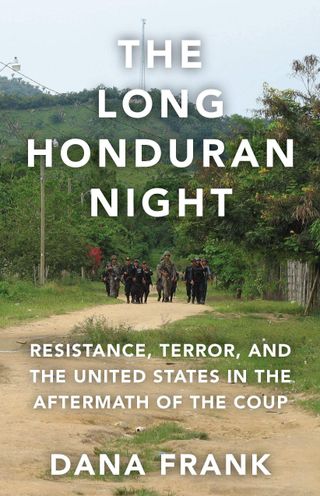
Cover of The Long Honduran Night

The Long Honduran Night

Dana Frank

Original language: English · Paperback · ISBN 978-1608469604

In June 2009, a military coup removed President Manuel Zelaya from power in Honduras. Dana Frank's The Long Honduran Night follows what happened in the years after that event, combining first-person observations with broader political analysis. The book traces the consolidation of an authoritarian regime and examines how United States foreign policy continued to support it. Frank, a historian, builds her account from direct experience in the country alongside research into the structural forces shaping Honduran governance.

A second thread runs through the narrative: the growth of a Honduran resistance movement that emerged in response to state repression. Frank also documents a parallel solidarity movement that developed inside the United States, connecting activists across borders. Rather than presenting Honduras as a place defined only by violence and despair, the book treats the people organizing against repression as active political participants with strategies, setbacks, and goals of their own.

The book was shortlisted for the 2019 Juan E. Méndez Book Award for Human Rights in Latin America. Its structure moves between close ground-level reporting and wider policy discussion, linking events in Tegucigalpa and Washington through cause and consequence rather than treating them as separate stories.

Plot

Shortlisted for the 2019 Juan E. Méndez Book Award for Human Rights in Latin America, this powerful narrative recounts the dramatic years in Honduras following the June 2009 military coup that deposed President Manuel Zelaya, told in part through first-person experiences, layered into deeper political analysis. It weaves together two broad pictures: first, the repressive regime that was launched with the coup, and the ways in which U.S. policy has continued to support that regime; and second, the brave and evolving Honduran resistance movement, with aid from a new solidarity movement in the United States.

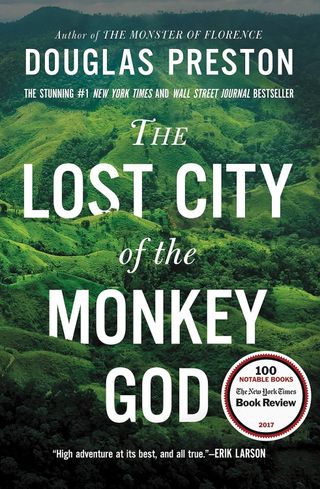
Cover of The Lost City of the Monkey God

The Lost City of the Monkey God

Douglas Preston

Original language: English · Hardcover · ISBN 978-1455569410

For centuries, stories have described a wealthy city hidden deep in the interior of Honduras. Two names attach to it: the White City, and the Lost City of the Monkey God. Indigenous accounts speak of ancestors who fled there to escape Spanish invaders, along with a warning that anyone entering the sacred place would fall ill and die.

In 1940 the journalist Theodore Morde came out of the rainforest with hundreds of artifacts and the claim that he had found the site, then died by suicide without saying where it was. Roughly seventy-five years later, Douglas Preston joined a team of scientists carrying lidar, a laser mapping tool that can record ground shapes beneath thick forest canopy from the air.

Flown over an unexplored valley ringed by steep mountains in 2012, the scans showed the outline of a large settlement under the trees. A ground expedition followed, through heavy rain, deep mud, biting insects, snakes, and jaguar country. Afterwards Preston and several others learned they had contracted a serious disease at the ruins, and the book follows that medical aftermath.

Plot

Since the days of conquistador Hernán Cortés, rumors have circulated about a lost city of immense wealth hidden somewhere in the Honduran interior, called the White City or the Lost City of the Monkey God. Indigenous tribes speak of ancestors who fled there to escape the Spanish invaders, and they warn that anyone who enters this sacred city will fall ill and die. In 1940, swashbuckling journalist Theodore Morde returned from the rainforest with hundreds of artifacts and an electrifying story of having found the Lost City of the Monkey God-but then committed suicide without revealing its location.

More from Honduras

See the country page for Honduras for its map, facts and largest cities, or browse books from other countries.

Links go to Amazon; Hookito doesn’t sell books. Know a book that belongs here, or spotted a mistake? Write to submissions@hookito.com.

Where to next?

Back to the globe
Hookito landscape illustration