Hookito

Croatia · Books

Books from Croatia

11 books from and about Croatia: what each is about, the plot, and a note from Professor Kogi.

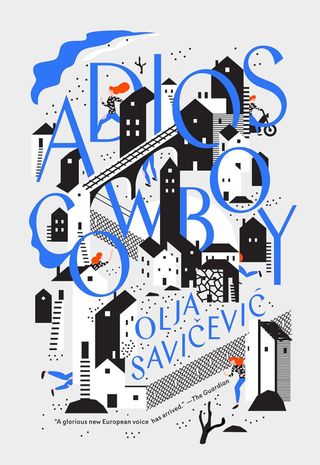
Cover of Adios, Cowboy

Adios, Cowboy

Olja Savicevic

Original language: Croatian · Paperback · ISBN 978-1940450490

Dada has been drifting through life in Zagreb, caught between a relationship with a married man and a job that leads nowhere. When her sister asks her to come home and help care for their aging mother, Dada leaves the city without much resistance. The coastal town she returns to, however, is thick with unfinished grief. Her mother stockpiles medication. Her sister smokes constantly. Their father's shoes still sit on the steps years after his death. And the bedroom of their younger brother Daniel, who died by throwing himself under a train four years earlier, remains unchanged, his cowboy posters still hanging on the walls.

Dada decides to look into the final days of Daniel's life, hoping that understanding what happened might release the family from its paralysis. The novel follows her search through a small Croatian town where silence, gossip, and old loyalties make answers difficult to find. Savičević writes about a generation shaped by economic stagnation and the long aftereffects of the 1990s wars, people who grew up in a country that was itself trying to start over.

The story is set against the Dalmatian coast, mixing domestic tension with a broader portrait of post-war Croatian life. Savičević is also known as a poet, and the prose carries a compressed, physical quality throughout.

Plot

Dada’s life is at a standstill in Zagreb—she’s sleeping with a married man, working a dead-end job, and even the parties have started to feel exhausting. So when her sister calls her back home to help with their aging mother, she doesn’t hesitate to leave the city behind. But she arrives to find her mother hoarding pills, her sister chain-smoking, her long-dead father’s shoes still lined up on the steps, and the cowboy posters of her younger brother Daniel (who threw himself under a train four years ago) still on the walls. Hoping to free her family from the grip of the past, Dada vows to unravel the mystery of Daniel’s final days.
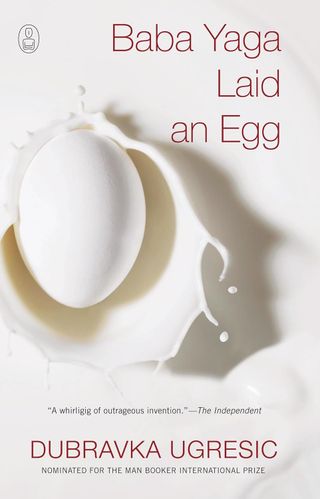
Cover of Baba Yaga Laid an Egg

Baba Yaga Laid an Egg

Dubravka Ugresic

Original language: Croatian · Paperback · ISBN 978-0802145208

In Slavic folklore, Baba Yaga is a fearsome figure: a witch who flies in a giant mortar, lives in a house perched on chicken legs, and snatches small children. She appears across Russian and Eastern European culture in literature, film, animation, and music. Croatian writer Dubravka Ugresic takes this old character as a starting point for a novel that follows four women in contemporary Eastern Europe, each facing questions about aging, identity, and visibility.

One woman is a writer who travels to her dying mother's hometown in Bulgaria to fulfill a final wish. Another is an elderly woman who wakes each day hoping it will be her last. A third is a hospital worker who has abandoned hope of finding love. The fourth is a serial widow with a hidden skill for writing. Ugresic connects their separate stories through the framework of the Baba Yaga myth, drawing out parallels between the ancient figure and the modern lives of women who feel overlooked or unseen.

The novel is structured as a postmodern retelling, layering folklore with present-day narrative. Ugresic, who left Croatia in the 1990s and became known for writing from a position of cultural displacement, brings a sharp and sometimes barbed tone to subjects like femininity and the experience of growing old.

Plot

According to Slavic myth, Baba Yaga is a witch who lives in a house built on chicken legs and kidnaps small children. With barbed wisdom and razor-sharp wit, Ugresic weaves together the stories of four women in contemporary Eastern Europe: a writer who grants her dying mother’s final wish by traveling to her hometown in Bulgaria, an elderly woman who wakes up every day hoping to die, a buxom blonde hospital worker who’s given up on love, and a serial widow who harbors a secret talent for writing. Through the women’s fears and desires, and their struggles against invisibility, Ugresic presents a brilliantly postmodern retelling of an ancient myth that is infused with humanity and the joy of storytelling.

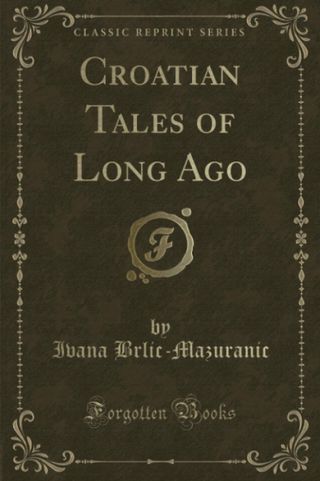
Cover of Croatian Tales of Long Ago

Croatian Tales of Long Ago

Ivana Brlić-Mažuranić

Original language: Croatian · Paperback · ISBN 978-1332117697

Croatian Tales of Long Ago is a collection of fairy tales by Ivana Brlić-Mažuranić, a Croatian writer sometimes compared to Hans Christian Andersen and the Brothers Grimm. The stories draw on Slavic folklore, populating their pages with goblins, sprites, and shape-shifting creatures. Settings range from dense mysterious forests to high mountain landscapes, and the characters include trusting children, protective grandfathers, and figures whose outward appearance hides a darker nature.

The tales do not soften the harsher side of life. Cold, cruelty, and human weakness appear alongside wonder and enchantment. Wicked neighbours and treacherous relatives pose real dangers, and the children in these stories face situations with genuine stakes. At the same time, the narratives follow an older pattern in which resourcefulness and plain kindness still count for something.

This English-language edition brings the collection to readers outside Croatia. The book belongs to a European line of writers who gathered regional oral material and reshaped it into written tales with named authors and a fixed printed form, meant for reading as much as for telling aloud.

Plot

Complete with goblins, gullible children, and mischievous and kindly sprites. The stories whisk you through a world of mysterious woods, towering mountains, cloaks of dazzling gold, and doting grandfathers. They have the characters arrayed against wicked neighbors, cruel family members, and snakes in human clothing. Like her predecessors, Anderson and the Brothers Grimm, Mazuranic does not flinch from the darker realities of life, the biting cold, and the fallibility of humans, but as only a genius can she wraps the brutal realities in a narrative that allows the reader to make sense of it and feel that they just have won the day.

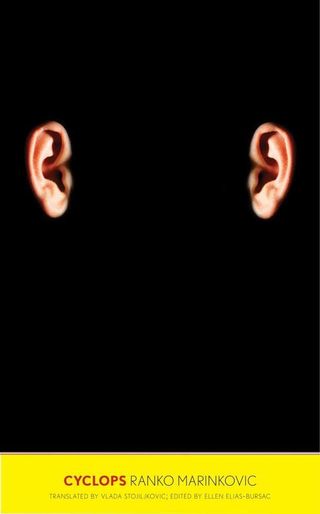
Cover of Cyclops

Cyclops

Ranko Marinkovic

Original language: Croatian · Hardcover · ISBN 978-0300152418

Cyclops is a semiautobiographical novel by Croatian writer Ranko Marinković, set in Zagreb during the Second World War. Its central figure, Melkior Tresić, is a young theater critic who chooses to starve himself rather than be sent to the front lines. As hunger and anxiety reshape his perception of the city, Melkior drifts through Zagreb in a state somewhere between waking life and hallucination, encountering the people who still occupy its streets and cafés.

The cast around Melkior includes fortune-tellers, actors, prostitutes, bohemians, and intellectuals, all carrying on their routines inside a society that is visibly fracturing. Marinković treats this world with dark humor and close attention to the absurd ways people adapt when the ground beneath ordinary life shifts. Melkior's self-imposed starvation is both a survival strategy and a slow collapse, and the novel follows his paranoid, weakening perspective without offering easy sympathy or heroism.

Originally published in Croatian, Cyclops appeared in English translation for the first time through Yale University Press. The novel belongs to the tradition of Central European modernist fiction, where the personal and the political press against each other in confined urban spaces during wartime.

Plot

In this semiautobiographical novel, Croatian writer Ranko Marinkovic recounts the adventures of young theater critic Melkior Tresic, an archetypal antihero who decides to starve himself to avoid fighting on the front lines in World War II. As he wanders Zagreb in a near-hallucinatory state of paranoia and malnourishment, Melkior encounters a colorful circus of characters—fortune-tellers, shamans, actors, prostitutes, bohemians, and café intellectuals—all living in a fragile dream of a society about to be changed forever.

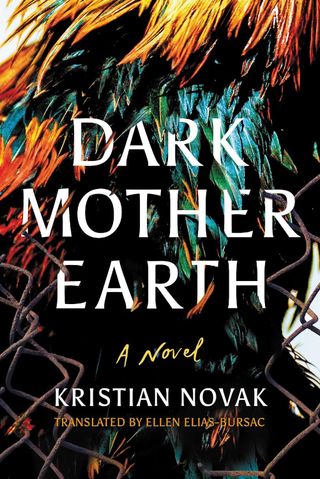
Cover of Dark Mother Earth

Dark Mother Earth

Kristian Novak

Original language: Croatian · Hardcover · ISBN 978-1542016100

Matija is a young Croatian novelist with two well-received books behind him and a third that failed. His professional trouble runs alongside a personal collapse: his girlfriend has left him over his constant lying. The habit reaches far beyond his fiction. For years he has built false versions of his own childhood, filling gaps in memory with invention.

At the center of those gaps is his father's death, an event he cannot clearly recall. What remains is fear, anger, and a sense of responsibility whose origins he does not understand. Now, not yet thirty, Matija sets out to stop reinventing his past and face what actually happened to him as a boy.

His wish to reconnect with the woman he lost gives him a reason to try, though the memories he begins to uncover carry risks of their own. Kristian Novak is an award-winning Croatian author, and this is his first novel to appear in English. It examines how a private mythology can work as both shelter and trap.

Plot

As a novelist, Matija makes things up for a living. Not yet thirty, he’s written two well-received books. It’s his third that is as big a failure as his private life. Unable to confine his fabrications to fiction, he’s been abandoned by his girlfriend over his lies. But all Matija has is invention. Especially when it comes to his childhood and the death of his father. Whatever happened to Matija as a young boy, he can’t remember. He feels frightened, angry, and responsible… Now, after years of burying and reinventing his past, Matija must confront it. Longing for connection, he might even win back the love of his life. But discovering the profound fears he has suppressed has its risks. Finally seeing the real world he emerged from could upend it all over again.

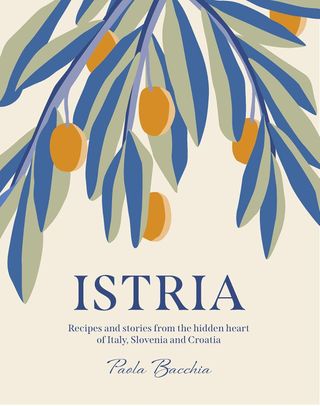
Cover of Istria: Recipes and stories from the hidden heart of Italy, Slovenia and Croatia

Istria: Recipes and stories from the hidden heart of Italy, Slovenia and Croatia

Paola Bacchia

Original language: English · Hardcover · ISBN 978-1922417183

Istria is a peninsula at the northern end of the Adriatic Sea, divided today between Croatia, Slovenia, and a small strip of Italy. Paola Bacchia's book uses the region's food as a way into its layered history and mixed cultural identity. The recipes draw on home kitchens rather than restaurants, reflecting what families have cooked across generations shaped by Venetian, Viennese, Hungarian, and Balkan influences. Dishes range from semolina dumplings and beef goulash to apricot strudel and cinnamon-flavored biscuits, each one tied to a specific household or memory.

Alongside the recipes, Bacchia traces the stories of Italian-Istrians who stayed in the region after the border changes of the 1940s and those who left for other countries. Her own family connections to the Adriatic coast run through the book, linking personal recollection to broader patterns of migration and cultural persistence. Grain soups, seafood, and stacked crepes appear not as isolated dishes but as markers of place and season.

The book treats Istrian cooking as something shaped by overlapping borders rather than confined by any single national tradition. Gardens, coastline, and proximity to several culinary traditions all figure in the ingredients and methods recorded here.

Plot

This book is a record of traditions, of these cultures and of Paola's family: recipes from her childhood, the region's past, and her family and friends who still live beside the Adriatic coast. Among recipes for semolina dumplings, beef and pork goulash, and apricot strudel are memories of the region and the stories of the recipes' authors: the Italian-Istrians who remained in the region after the 1940s, and those who left for new countries. Istria is full of recipes inspired by home kitchens and memories of what grew in the owner's gardens: hearty grain soups and seafood, crepes piled high, and biscuits flavored with cinnamon. Istrian cuisine is a rich blend of Venice and Vienna, Hungary, and the Balkans - food doesn't have borders, and certainly not in this book's recipes.

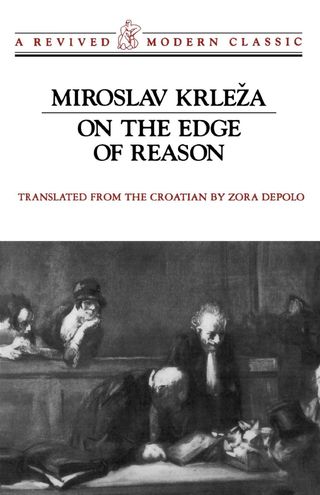
Cover of On the Edge of Reason

On the Edge of Reason

Miroslav Krleza

Original language: Croatian · Paperback · ISBN 978-0811213066

Miroslav Krleza, a Croatian writer who lived from 1893 to 1981, wrote On the Edge of Reason as a story about what happens when a single moment of honesty disrupts a carefully ordered life. The central figure is a middle-aged lawyer, well established and well regarded in his community, who attends a gathering of local notables. During the evening he speaks an unguarded truthful remark, and this small act sets off a chain of consequences that steadily dismantles his standing.

What follows is a confrontation between the individual and the social machinery around him. As others react to his breach of decorum, layers of pretense and collective self-deception become visible. The novel tracks how conformity enforces itself and how the structures people depend on for status and security can turn hostile the moment someone steps outside agreed-upon conventions. Krleza builds the pressure gradually, letting absurdity and hypocrisy accumulate until the boundary between reasonable behavior and unreason grows difficult to locate.

The book is set against a recognizably Central European social landscape, and Krleza draws on his long engagement with questions of political and cultural authority in the region. Susan Sontag described it as one of the great European novels of the first half of the twentieth century.

Plot

In On the Edge of Reason, the protagonist is a middle-aged lawyer whose life and career have been eminently respectable and respected. One evening, at a party, attended by the local elite, he inadvertently blurts out an honest thought. From this moment, all hell breaks loose

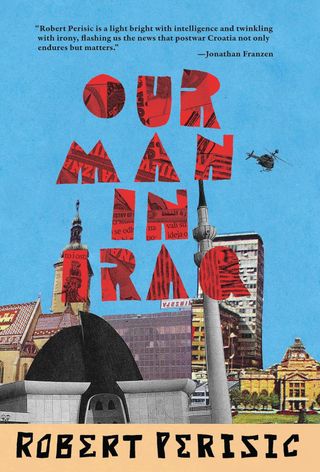
Cover of Our Man in Iraq

Our Man in Iraq

Robert Perisic

Original language: Croatian · Paperback · ISBN 978-1936787050

Set in 2003, Our Man in Iraq follows Toni, a journalist working in Zagreb during a period when Croatia is shifting rapidly from its socialist past toward globalized capitalism. Toni juggles a precarious career, a demanding family, and a volatile girlfriend. In a rash moment, he suggests that his cousin Boris, an unpredictable Arabic speaker, travel to Iraq as a war correspondent. Boris accepts and begins sending dispatches from the conflict zone, but his reports grow stranger and harder to use.

Rather than confronting the situation honestly, Toni starts rewriting Boris's chaotic dispatches in secret, presenting them to his editors as credible journalism. The arrangement holds together until Boris disappears, and Toni finds that his own grip on what is real and what he has fabricated is slipping. The novel traces how personal dishonesty and larger political upheaval feed into each other, with Toni's small deceptions mirroring the bigger fictions circulating in media and politics around him.

Robert Perisic is a Croatian writer, and Our Man in Iraq was the first of his novels to appear in English translation. The story is rooted in Zagreb but extends outward through the Iraq War, connecting two very different countries caught up in periods of rapid, disorienting change.

Plot

2003: As Croatia lurches from socialism into globalized capitalism, Toni, a cocky journalist in Zagreb, struggles to balance his fragile career, pushy family, and hotheaded girlfriend. But in a moment of vulnerability he makes a mistake: volunteering his unhinged Arabic–speaking cousin Boris to report on the Iraq War. Boris begins filing Gonzo missives from the conflict zone and Toni decides it is better to secretly rewrite his cousin’s increasingly incoherent ramblings than face up to the truth. But when Boris goes missing, Toni’s own sense of reality—and reliability—begins to unravel.

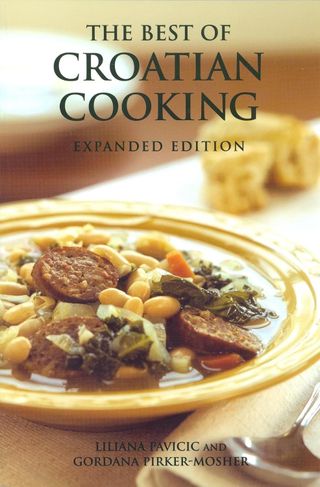
Cover of The Best of Croatian Cooking

The Best of Croatian Cooking

Liliana Pavicic, Gordana Pirker-Mosher

Original language: English · Paperback · ISBN 978-0781812030

The Best of Croatian Cooking by Liliana Pavicic and Gordana Pirker-Mosher is a cookbook presenting over 200 recipes drawn from Croatia's varied food traditions. The collection reflects a cuisine shaped by geographic and cultural crossroads, where central European, Mediterranean, and Near Eastern cooking styles overlap. Recipes have been adapted for the American kitchen, adjusting ingredients and methods so that cooks outside Croatia can reproduce the dishes with locally available supplies.

Croatia's food culture shifts noticeably along its length. The long Adriatic coastline, with its warm climate and access to seafood, supports a style of cooking closer to Italian and Greek traditions, with olive oil, fresh fish, and herbs. Inland areas lean toward heavier dishes influenced by Hungarian and Austrian neighbors, featuring stews, roasted meats, and pastries. The book draws from both of these regional currents, giving a broad picture of what Croatian households and restaurants prepare.

Pavicic and Pirker-Mosher organize the recipes to cover everyday meals as well as special-occasion cooking. The range extends across appetizers, soups, main courses, and desserts, offering a practical reference for anyone interested in preparing Croatian food at home.

Plot

Croatia offers a sunny Adriatic coastline and breath-taking scenery, as well as a distinctive culinary tradition that combines central European, Mediterranean, and Near Eastern influences.

Cover of Trieste

Trieste

Dasa Drndic

Original language: Croatian · Hardcover · ISBN 978-0547725147

Haya Tedeschi is an elderly woman sitting alone in Gorizia, a city in northeastern Italy near the Slovenian border. Around her lies a collection of photographs, newspaper clippings, and documents. She is waiting to meet the son who was taken from her sixty-two years earlier by German authorities under the Lebensborn program, a secret project organized by Heinrich Himmler to raise children considered racially suitable by the Nazi regime. The boy's father was an SS officer.

Haya's memories reach back through her family's history as Catholicized Jews in the region around Trieste, where Italian Jews were deported and killed in local concentration camps during the German occupation. Her search for her son pulls her through layers of evidence: trial testimonies from Nuremberg, interviews with people born to survivors, eyewitness reports of violence carried out nearby, fragments of poetry, and old maps. The novel by Croatian author Dasa Drndic assembles these elements as a broad collage, mixing fictional narrative with historical documentation.

The structure moves between personal memory and the public record of Nazi occupation in northern Italy. Drndic draws on real names, dates, and places alongside her fictional characters, blurring the boundary between novel and archive.

Plot

Haya Tedeschi sits alone in Gorizia, in northeastern Italy, surrounded by a basket of photographs and newspaper clippings. Now an old woman, she waits to be reunited after sixty-two years with her son, fathered by an SS officer and stolen from her by the German authorities as part of Himmler’s clandestine Lebensborn project. Haya reflects on her Catholicized Jewish family’s experiences, dealing unsparingly with the massacre of Italian Jews in the concentration camps of Trieste. Her obsessive search for her son leads her to photographs, maps, and fragments of verse, to testimonies from the Nuremberg trials and interviews with second-generation Jews, and to eyewitness accounts of atrocities that took place on her doorstep. From this broad collage of material and memory arises the staggering chronicle of Nazi occupation in northern Italy.

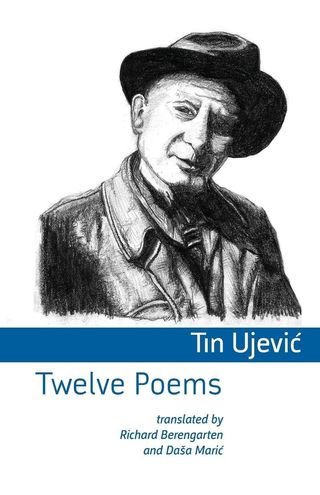
Cover of Twelve Poems

Twelve Poems

Tin Ujevic

Original language: Croatian · Paperback · ISBN 978-1848613164

Augustin Ujevic, known as Tin Ujevic, was a Croatian poet born in 1891 and active through the first half of the twentieth century until his death in 1955. This small English-language collection presents twelve of his poems, offering a rare point of entry for readers outside the South Slavic world. Ujevic is widely regarded as one of the finest lyric poets to have written in Croatian, and his reputation extends across the region that once formed Yugoslavia.

Throughout much of the twentieth century, many of Ujevic's lyrics were memorized and quoted by ordinary people across the former Yugoslav Federation, not only by dedicated readers of poetry. The record compares this broad cultural presence to the way certain early poems by W.B. Yeats circulate in Ireland and the United Kingdom, where lines are passed along by people with no special interest in literature. Despite this deep familiarity in his home region, Ujevic's work remains little known in English.

Twelve Poems is a bilingual or translated selection that tries to bridge that gap. It sits at the intersection of Croatian literary tradition and the wider European poetry of its era, a period shaped by two world wars and shifting borders across southeastern Europe.

Plot

While Tin Ujevic's poems are hardly known in English, they are loved in his native Croatia and throughout former Yugoslavia. At least until the break-up of the Yugoslav Federation, many of Tin's lyrics were known by heart and quoted by people all over the country, even those who weren't particularly literary, in much the same way as some of W.B. Yeats's early poems, like 'The Lake Isle of Innisfree', 'He Wishes for the Cloths of Heaven' and 'Down by the Salley Gardens', are known and quoted all over Ireland and the UK.

More from Croatia

See the country page for Croatia for its map, facts and largest cities, or browse books from other countries.

Free editions are on Project Gutenberg, matched by title and author. Links go to Amazon; Hookito doesn’t sell books. Know a book that belongs here, or spotted a mistake? Write to submissions@hookito.com.

Where to next?

Back to the globe
Hookito landscape illustration