Hookito

Hungary · Books

Books from Hungary

9 books from and about Hungary: what each is about, the plot, and a note from Professor Kogi.

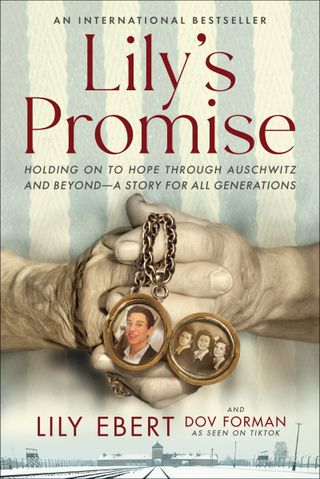
Cover of Lily's Promise

Lily's Promise

Lily Ebert

Original language: English · Hardcover · ISBN 978-0063230279

Lily Ebert grew up in a Jewish family in Hungary. In 1944, she was deported to Auschwitz, where her mother and two youngest siblings were killed on arrival. Still a teenager, she resolved to protect her two remaining sisters and to survive so she could one day bear witness. The memoir recounts her childhood before the war, the conditions inside the camp, and the small acts of defiance that helped her endure.

After liberation, Lily gradually rebuilt her life, eventually settling in London and raising a family. Decades later, at ninety-eight, she co-wrote this book with her great-grandson Dov Forman, who also helped her reach a wide audience through TikTok. The result is an intergenerational account that pairs Lily's firsthand testimony with a younger perspective on why that testimony still matters.

The book traces a path from prewar Hungary through the camp and into the long aftermath of survival. Lily's promise, made to herself on Yom Kippur 1944, was to tell the world what happened on behalf of those who could not. This memoir is the fulfillment of that commitment.

Plot

On Yom Kippur, 1944, fighting to stay alive as a prisoner in Auschwitz, Lily Ebert made a promise to herself. She would survive the hell she was in and tell the world her story, for everyone who couldn’t. Now, at ninety-eight, this remarkable woman—and TikTok sensation, thanks to the help of her eighteen-year-old great-grandson—fulfills that vow, relaying the details of her harrowing experiences with candor, charm, and an overflowing heart. In these pages, she writes movingly about her happy childhood in Hungary, the death of her mother and two youngest siblings on their arrival at Auschwitz, and her determination to keep her two other sisters safe. She describes the inhumanity of the camp and the small acts of defiance that gave her strength. Lily lost so much, but she built a new life for herself and her family, first in Israel and then in London.
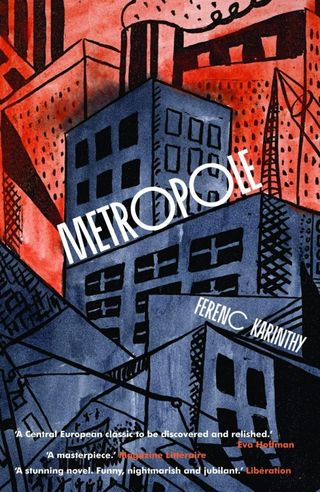
Cover of Metropole

Metropole

Ferenc Karinthy

Original language: Hungarian · Paperback · ISBN 978-1846590344

Budai, a linguist heading to a professional conference in Helsinki, somehow ends up in an unknown city. Nothing about the place is familiar. The signs, announcements, and conversations around him are in languages he cannot identify, and no one he meets can understand him either. The city is enormously crowded, its streets and buildings packed with people speaking what seems like an endless variety of tongues. Budai has no way to ask for help, buy food reliably, or find out where he is.

Each day in the city repeats the same desperate pattern. Budai tries to communicate, fails, and retreats to his hotel, where his only point of human contact is the woman who operates the elevator. Their connection develops without a shared language, built on gestures and proximity. Meanwhile, he worries that his wife back home believes he is dead. The metropolis itself feels sealed off, offering no visible exit and no clue about its location on a map.

Ferenc Karinthy, a Hungarian novelist and the son of the well-known satirist Frigyes Karinthy, wrote Metropole as a novel about isolation pressed into the shape of a city. The book strips away every tool its protagonist relies on as a linguist and places him in a setting where expertise in language counts for nothing.

Plot

Budai finds himself in a strange city where he can’t understand a word anyone says. One claustrophobic day blurs into another as he desperately struggles to survive in this vastly overpopulated metropolis where there are as many languages as there are people.

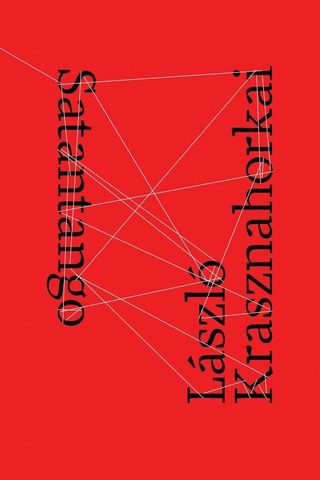
Cover of Satantango

Satantango

László Krasznahorkai

Original language: Hungarian · Paperback · ISBN 978-0811220897

Satantango is set in a small, nearly abandoned hamlet on the Hungarian plain. Over a handful of rain-soaked days, about a dozen remaining residents drift through schemes, betrayals, infidelity, and collapsing hopes. Into this stagnant place arrives a figure who seems to offer a way out, a messianic promise that pulls the villagers toward him.

The novel's structure mirrors the tango of its title. Its chapters move forward and then double back, revisiting the same events from different angles so that the reader gradually assembles a fuller picture of what is happening and why. László Krasznahorkai writes in long, winding sentences that carry the narrative forward without conventional breaks, creating a dense, unrelenting rhythm. The Hungarian author published the book in 1985, and it later became the basis for Béla Tarr's seven-hour film adaptation.

George Szirtes translated the novel into English, keeping the sustained, looping sentence style that defines Krasznahorkai's prose. The atmosphere of slow decay and uneasy expectation runs through the book, along with themes of collective credulity, the appeal of a promised rescue, and the difficulty of leaving a place that has already failed.

Plot

Now in paperback, Satantango, the novel that inspired Béla Tarr’s classic film, is proof that the devil has all the good times. Set in an isolated hamlet, the novel unfolds over the course of a few rain-soaked days. Only a dozen inhabitants remain in the bleak village, rank with the stench of failed schemes, betrayals, failure, infidelity, sudden hopes, and aborted dreams. “Their world,” in the words of the renowned translator George Szirtes is “rough and ready, lost somewhere between the cosmic and tragic, in one small insignificant corner of the cosmos. Theirs is the dance of death.” Into this world comes, it seems, a messiah…

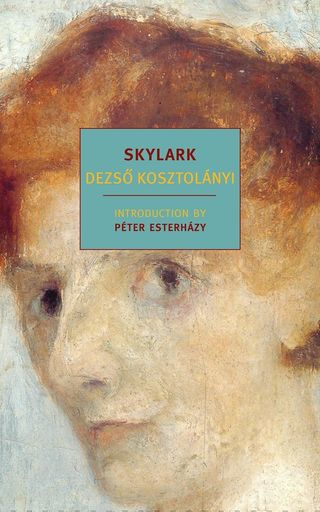
Cover of Skylark

Skylark

Dezso Kosztolanyi

Original language: Hungarian · Paperback · ISBN 978-1590173398

Set in the autumn of 1899, Skylark follows an elderly Hungarian couple, the Vajkays, through one unusual week. They live in Sárszeg, a provincial town in the Austro-Hungarian Empire. Father spends his days on genealogical research and heraldry. Mother keeps house. Their unmarried daughter, nicknamed Skylark, cooks and sews for them and anchors their quiet life. When Skylark leaves for a rare visit to relatives in the country, the couple is alone.

At first the Vajkays are lost without her. Gradually they return to the social life of the town they had withdrawn from: dinners, theater, conversation with neighbors. Pleasures they had set aside resurface across the week, and with them feelings that are harder to admit. Kosztolányi uses the daughter's absence to expose what the parents have hidden from themselves about their attachment and its cost.

Dezső Kosztolányi published the novel in 1924, drawing on the provincial Hungary he knew from childhood. It is regarded as a central work of twentieth-century Hungarian fiction, built on controlled irony and close observation of small-town society at the turn of the century. The action covers a single week and stays within one household's ordinary hours.

Plot

It is 1900, give or take a few years. The Vajkays—call them Mother and Father—live in Sárszeg, a dead-end burg in the provincial heart of the Austro-Hungarian Empire. Father retired some years ago to devote his days to genealogical research and quaint questions of heraldry. Mother keeps house. Both are utterly enthralled with their daughter, Skylark. Unintelligent, unimaginative, unattractive, and unmarried, Skylark cooks and sews for her parents and anchors the unremitting tedium of their lives.

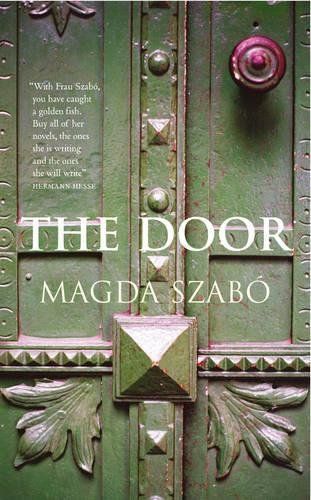
Cover of The Door

The Door

Magda Szabo

Original language: Hungarian · Paperback · ISBN 978-1843431930

Magda Szabo's The Door, published in Hungarian as Az Ajto in 1987, follows a writer named Magda who hires a housekeeper, Emerence, on a friend's recommendation. Their connection develops over roughly twenty years in twentieth-century Hungary. Emerence is dependable and tireless in her work, yet stubborn, coarse in speech, and openly dismissive of her employer's opinions. She lets nobody past her own front door.

Emerence covers her face with a veil and says almost nothing about her earlier life, which leaves her both feared and admired by the people around her. Magda, absorbed in writing and public life, gradually begins to press for answers. A dog the two women take in becomes part of what holds them together, and their arguments carry genuine humor alongside the friction.

The novel sets one kind of force, literary and verbal, against another that is physical and practical. Around the household, the history of twentieth-century Hungary keeps pressing in, and the rooms Emerence guards hold matters she has never explained to anyone. Szabo builds the book around trust, privacy, and how much one person can ever know of another.

Plot

A busy young writer struggling to cope with domestic chores, hires a housekeeper recommended by a friend. The housekeeper's reputation is one built on dependable efficiency, though she is something of an oddity. Stubborn, foul-mouthed, and with a flagrant disregard for her employer's opinions she may even be crazy. She allows no one to set foot inside her house; she masks herself with a veil and is equally guarded about her personal life. And yet Emerence is revered as much as she is feared. As the story progresses, her energy and passion to help become clear, extinguishing any doubts arising out of her bizarre behavior.

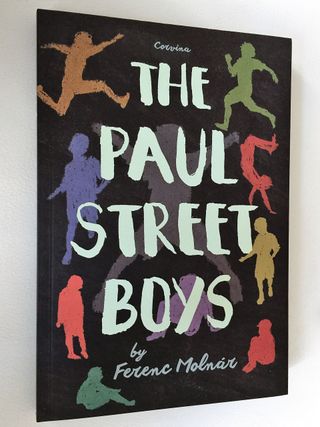
Cover of The Paul Street Boys

The Paul Street Boys

Ferenc Molnar

Original language: Hungarian · Paperback · ISBN 978-9631359527

Ferenc Molnar published The Paul Street Boys in 1906. Set in Budapest, the novel follows a group of schoolboys who claim a vacant lot, known as the grund, as their territory for games and meetings. A rival gang called the Redshirts wants to take the lot for themselves, and the story builds around the escalating conflict between the two groups. The boys organize with military-style ranks and codes of honor, treating their dispute over a patch of urban ground with complete seriousness.

Among the Paul Street boys, Nemecsek stands out as the only one holding the rank of private. His loyalty to the group and his determination to prove himself drive much of the novel's emotional weight. Molnar, as his grandson Mátyás Sárközi notes in a later preface, was influenced by the popularity of James Fenimore Cooper's frontier stories in Hungary at the time. The comparison to Mark Twain is also relevant: Molnar balances humor and absurdity against genuine feeling without tipping into sentimentality.

The novel explores how children construct hierarchies, enforce loyalty, and assign meaning to places that adults consider unremarkable. Its Budapest setting grounds the action in a specific neighborhood, giving the boys' struggle a concrete geography rather than an abstract backdrop.

Plot

"At the time Ferenc Molnár wrote The Paul Street Boys, Cooper's Indian war stories were extremely popular in Hungary and there is the flavor of their morality in this book," writes Mátyás Sárközi, Molnár's grandson, in his Preface to the present edition. "There are examples of good camaraderie, loyalty, and idealism, but Molnár always manages to save himself from being too sentimental. Like Mark Twain, he has the wit and the good writer's sense to mix the grotesque with the pathetic."

Cover of The Traditional Hungarian Kitchen

The Traditional Hungarian Kitchen

Ilona Horvath

Original language: Hungarian · Paperback · ISBN 978-9637826702

The Traditional Hungarian Kitchen by Ilona Horvath is a cookbook containing 133 recipes drawn from widely used Hungarian home cooking. The collection covers both everyday meals and dishes prepared for holidays and celebrations, offering a practical cross-section of the country's food traditions. Recipes are presented as accessible and straightforward, aimed at cooks who want to reproduce Hungarian dishes without specialist equipment or hard-to-find ingredients.

Hungarian cuisine relies on a handful of distinctive elements. Paprika, both sweet and hot, appears across soups, stews, and sauces. Sour cream is used to finish many dishes, and lard has historically served as the primary cooking fat. Familiar preparations such as gulyás, a beef and onion soup seasoned with paprika, and chicken paprikás with sour cream sauce represent a cooking style built around slow-simmered meats and generous seasoning. Noodles, dumplings, and filled pastries round out many meals.

Horvath's book organizes these traditions into a single volume sized for regular kitchen use. By grouping recipes for both daily and festive cooking, it reflects the way Hungarian households have long treated certain dishes as ordinary fare and others as markers of specific occasions or seasons.

Plot

Filled with 133 easy recipes for everyday and holiday occasions, each entry in this resource is drawn from the most popular Hungarian cookery book.

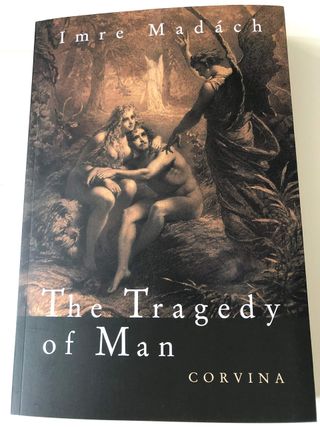
Cover of The Tragedy of Man

The Tragedy of Man

Imre Madách

Original language: Hungarian · Paperback · ISBN 978-9631339949

The Tragedy of Man is a dramatic work by Hungarian author Imre Madách, first published in 1861. Written in fifteen scenes, the play follows three recurring figures, Adam, Eve, and Lucifer, through a sweeping arc that begins with creation and ends in a distant frozen future. Between those poles, the characters reappear across ten historical periods, each time wearing different identities. Adam appears as a Pharaoh in ancient Egypt, as the Athenian general Miltiades, as the astronomer Johannes Kepler in Prague, and as Georges Danton during the French Revolution, among other roles. Eve and Lucifer shift alongside him, sometimes as allies, sometimes as adversaries.

The settings move from Eden to Egypt, Athens, Rome, Constantinople during the First Crusade, and onward through London in the nineteenth century and into imagined futures. One scene places Adam and Lucifer inside a rigid collectivist society where they pose as traveling chemists. Another sends them into space. The final historical scene depicts an ice age thousands of years ahead, before the play circles back to its starting point outside Eden.

Many lines from the work have entered everyday speech in Hungary, and it remains one of the most frequently staged Hungarian plays. A 1984 live-action film and a 2011 animated adaptation have both drawn on its structure and themes.

Plot

The Tragedy of Man (Hungarian: Az ember tragédiája) is a play written by the Hungarian author Imre Madách. It was first published in 1861. Many lines have become common quotations in Hungary. The 1984 film The Annunciation (Angyali üdvözlet) was based on the play, as was the 2011 animated film The Tragedy of Man.

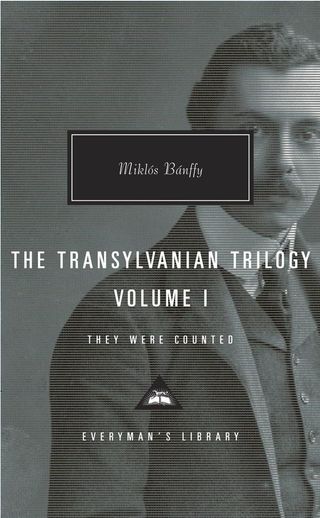
Cover of The Transylvanian Trilogy, Volume I: They Were Counted

The Transylvanian Trilogy, Volume I: They Were Counted

Miklós Bánffy

Original language: Hungarian · Hardcover · ISBN 978-0375712296

They Were Counted is the opening volume of Miklós Bánffy's Transylvanian Trilogy, set during the final years of the Austro-Hungarian Empire. The novel follows two upper-class Hungarian cousins whose lives run in opposite directions. Count Bálint Abády is a liberal-minded politician who takes a serious interest in the conditions of Romanian peasants living on Transylvanian estates. His cousin László moves through a cycle of parties, hunts, gambling, and social display, largely indifferent to the political tensions building around him.

Bánffy, himself a Transylvanian aristocrat, writes from close knowledge of the world he depicts. The society in his novel is lavish and self-absorbed, its members occupied with love affairs, duels, and political maneuvering while the structures holding their empire together weaken. Transylvania's landscape, with its forests and mountain ridges, forms a persistent backdrop to the social drama.

The novel is the first of three. The subsequent volumes, They Were Found Wanting and They Were Divided, continue the story through the years leading up to the First World War. Bánffy's trilogy has drawn comparisons to the work of Joseph Roth and Marcel Proust for its attention to a vanishing aristocratic order and the slow arrival of historical change.

Plot

They Were Counted, the first novel in the trilogy, introduces us to a decadent, frivolous, and corrupt society unwittingly bent on its own destruction during the last years of the Austro-Hungarian Empire. Bánffy’s lush depiction of an opulent lost paradise focuses on two upper-class cousins who couldn’t be more different: Count Balint Abády, a liberal politician who compassionately defends his homeland’s downtrodden Romanian peasants, and his dissipated cousin László, whose life is a whirl of parties, balls, hunting, and gambling. They Were Counted launches a story that brims with intrigues, love affairs, duels, murder, comedy, and tragedy, set against the rugged and ravishing scenery of Transylvania. Along with the other two novels in the trilogy—They Were Found Wanting and They Were Divided—it combines a Proustian nostalgia for the past, insight into a collapsing empire reminiscent of the work of Joseph Roth, and the drama and epic sweep of Tolstoy.

More from Hungary

See the country page for Hungary for its map, facts and largest cities, or browse books from other countries.

Links go to Amazon; Hookito doesn’t sell books. Know a book that belongs here, or spotted a mistake? Write to submissions@hookito.com.

Where to next?

Back to the globe
Hookito landscape illustration