Hookito

Indonesia · Books

Books from Indonesia
11 books from and about Indonesia: what each is about, the plot, and a note from Professor Kogi.

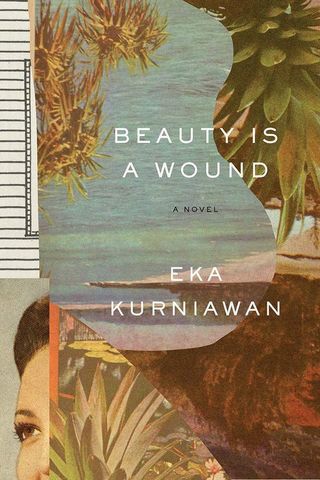
Cover of Beauty Is a Wound

Beauty Is a Wound

Eka Kurniawan

Original language: Indonesian · Paperback · ISBN 978-0811223638

Beauty Is a Wound opens with a striking premise: a woman named Dewi Ayu climbs out of her grave after twenty-one years of death. From that starting point, the novel expands into a layered story centered on Dewi Ayu, a beautiful Indo prostitute, and her four daughters. Their lives become a lens for Indonesia's turbulent modern history, from colonial exploitation through the chaotic struggle for independence, the mass killings of suspected Communists in 1965, and the long authoritarian rule of Suharto that followed.

Eka Kurniawan, a West Javanese writer, draws on Indonesian storytelling traditions including shadow puppet theater (wayang) and regional folk tales. These local forms, known for mixing bawdy humor with grand narrative scope, shape the novel's tone. Kurniawan also cites Melville, Gogol, and Marquez among his literary influences. The result is a novel that moves between satire, legend, family tragedy, and romance, often within the same scene.

The book's plotlines involve incest, murder, insanity, and encounters with vengeful undead figures. Kurniawan uses exaggeration and grotesque imagery as tools for political commentary, directing sharp criticism at the violence and greed running through Indonesia's recent past. The novel was his English-language debut.

Plot

Beauty Is a Wound astonishes from its opening line: One afternoon on a weekend in May, Dewi Ayu rose from her grave after being dead for twenty-one years.... Drawing on local sources―folk tales and the all-night shadow puppet plays, with their bawdy wit and epic scope―and inspired by Melville and Gogol, Kurniawan’s distinctive voice brings something luscious yet astringent to contemporary literature.

Cover of Coconut and Sambal: Recipes from my Indonesian Kitchen

Coconut and Sambal: Recipes from my Indonesian Kitchen

Lara Lee

Original language: English · Hardcover · ISBN 978-1526603517

Coconut and Sambal is a cookbook by Lara Lee focused on Indonesian home cooking. The collection contains over eighty recipes drawn from traditions passed across generations, covering everyday staples and celebration dishes alike. Readers will find preparations for well-known foods such as nasi goreng (Indonesian fried rice), beef rendang (a slow-cooked spiced meat dish originating from West Sumatra), chilli prawn satay, and pandan cake, a soft sponge flavoured with the fragrant pandan leaf common across Southeast Asia.

A central thread running through the book is sambal, the broad family of chilli-based relishes that appear at nearly every Indonesian meal. Sambals vary widely by region and household, ranging from raw crushed preparations to slow-fried pastes built on shallots, garlic, shrimp paste, and local chillies. The book presents several sambal recipes, treating them as essential companions rather than optional side dishes.

Indonesia spans more than seventeen thousand islands, and its food traditions reflect that geography. Coconut milk, palm sugar, turmeric, galangal, and lemongrass recur throughout these recipes, linking them to the tropical ingredients available across the archipelago. The book organizes these ingredients and techniques for cooks working outside Indonesia, explaining sourcing and substitution where needed.

Plot

With more than 80 traditional and vibrant recipes that have been passed down through the generations, you will discover dishes such as Nasi goreng, Beef rendang, Chilli prawn satay and Pandan cake, alongside a variety of recipes for sambals: fragrant, spicy relishes that are undoubtedly the heart and soul of every meal.

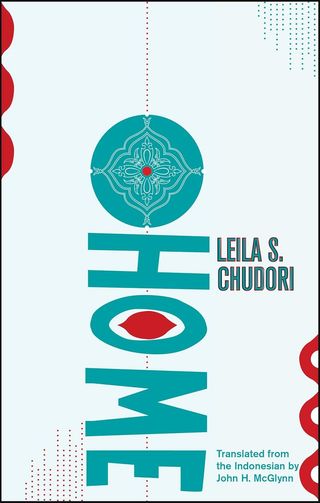
Cover of Home

Home

Leila S. Chudori

Original language: Indonesian · Paperback · ISBN 978-1941920107

Home follows a group of Indonesian political exiles living in Paris after the 1965 mass killings of suspected leftists and their sympathizers. Under the Suharto regime, which held power from 1965 to 1998, thousands of Indonesians abroad found themselves unable to return. The novel traces how these displaced lives take shape over decades in a foreign city, tracking friendships, romantic relationships, and the slow accumulation of distance from a homeland that remains both vivid and unreachable.

The narrative moves between Paris and Jakarta, connecting the older generation of exiles with younger characters who grew up shaped by choices they did not make. Indonesian food runs through the story as a recurring thread, grounding memory and identity in specific flavors and dishes. Alongside personal stories of longing and betrayal, the novel maps a period of Indonesian history that remained largely unspoken inside the country for decades.

Leila S. Chudori is one of Indonesia's best-known journalists. Home is her first novel and received the Khatulistiwa Literary Award in 2013, considered one of Indonesia's most significant literary prizes. The book was originally written in Indonesian before being translated into English.

Plot

Home examines the tragedy of political exiles during Suharto's regime (1965-1998) forced out of Indonesia after the 1965 massacre of presumed leftists and sympathizers, alternating between Paris and Jakarta, delving into the lives of the exiles, their families and friends. A story of longing, lust, and betrayal, but also love, laughter, adventure, and mouthwatering descriptions of Indonesian food, Home further illuminates Indonesia's tragic twentieth-century history made known in the West by the Oscar-nominated documentary The Act of Killing.

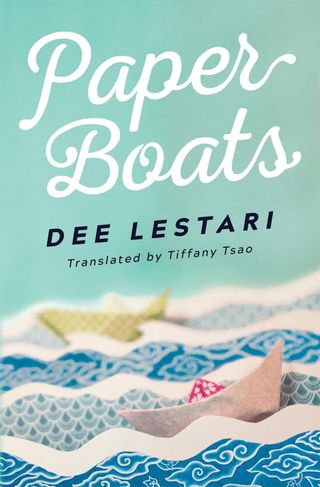
Cover of Paper Boats

Paper Boats

Dee Lestari

Original language: Indonesian · Paperback · ISBN 978-1503943582

Kugy is a young woman who has always expressed herself through writing. She composes whimsical stories and fills letters with private longings, folding them into paper boats that she sends off on the water. As she grows older, she faces a familiar tension: follow her passion for storytelling or settle into a more conventional career. She chooses the practical route, trying at the same time to push away her feelings for Keenan, a quiet young man whose presence makes her world feel like one of her own invented tales.

Keenan, for his part, is a reserved and sensitive aspiring artist who feels similar pressure to abandon his creative ambitions. He is drawn to Kugy from the start, struck by her warmth and her willingness to be different. The two share an obvious connection, but acting on it would risk both their friendship and their loyalty to other people close to them. The story follows both characters as they weigh honesty against obligation and personal dreams against outside expectations.

Paper Boats is a novel by Indonesian author Dee Lestari, originally published in Indonesian under the title Perahu Kertas. The English translation brought the story to a wider audience. It is set against the everyday pressures of young adulthood, where choosing between love, loyalty, and creative ambition carries real consequences.

Plot

For as long as she can remember, Kugy has loved to write. Whimsical stories are her passion, along with letters full of secret longings that she folds into paper boats and sets out to sea. Now that she’s older, she dreams of following her heart and becoming a true teller of tales, but she decides to get a “real job” instead and forget all about Keenan, the guy who makes her feel as if she’s living in one of her own fairy tales. Sensitive and introverted, Keenan is an aspiring artist, but he feels pressured to pursue a more practical path. He’s drawn to Kugy from first sight: she’s unconventional, and the light radiating from her eyes and the warmth of her presence pull him in. They seem like a perfect match―both on and off the page―but revealing their secret feelings means risking their friendship and betraying the people they love most. Can they find the courage to admit their love for each other and chase their long-held dreams?

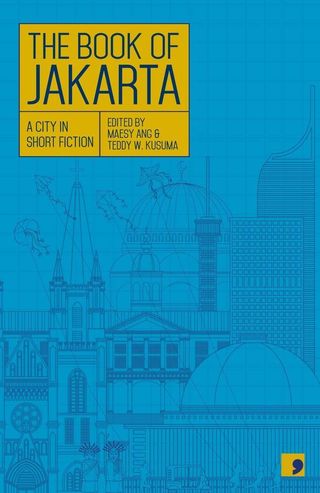
Cover of The Book of Jakarta

The Book of Jakarta

Hanna Fransisca, Sabda Armandio Alif, Ziggy Zesyazeoviennazabrizkie, Cyntha Hariadi, Yusi Avianto Pareanom, Ben Sohib, Dewi Kharisma Michellia, Afrizal Malna

Original language: English · Paperback · ISBN 978-1912697328

The Book of Jakarta is a short fiction anthology featuring work by eight Indonesian writers. Each story is set in or around the Indonesian capital, a city of roughly ten million people spread across a coastal plain on the island of Java. The collection moves between neighborhoods and districts, following characters whose lives reflect the contradictions of a fast-changing metropolis. One story follows a young woman in a driverless taxi heading toward a destination that has been swallowed by rising water. Another tracks a group of elderly women on a final visit to a well-known amusement park. A third centers on a bride who, the day before her wedding, crosses the city to meet a former lover at a seafood restaurant.

Indonesia is the world's fourth most populous country and spans more than 17,000 islands, yet its literature remains relatively unfamiliar outside the region. The anthology draws on that gap, presenting contemporary urban fiction rooted in a city whose political and physical landscape keeps shifting. Jakarta is widely cited as one of the fastest-sinking cities on Earth, with parts of its northern coast subsiding due to groundwater extraction. Several of the stories engage with that precariousness, placing everyday human decisions against a backdrop of environmental and social uncertainty.

Plot

A young woman takes a driverless taxi through the streets of Jakarta, only to discover that the destination she is hurtling towards is now entirely submerged... A group of elderly women visit a famous amusement park for one last ride, but things don’t go quite according to plan... The day before her wedding, a bride risks everything to meet her former lover at their favourite seafood restaurant on the other side of the tracks... Despite being the world’s fourth-largest nation—made up of over 17,000 islands— very little of Indonesian history and contemporary politics are known to outsiders. From feudal states and sultanates to a Cold War killing field and a now struggling, flawed democracy, the country’s political history, as well as its literature, defies easy explanation. Like Indonesia itself, the capital city Jakarta is a multiplicity; irreducible, unpredictable, and full of surprises. Traversing the different neighbourhoods and districts, the stories gathered here attempt to capture the essence of contemporary Jakarta and its writing, as well as the ever-changing landscape of the fastest-sinking city in the world.

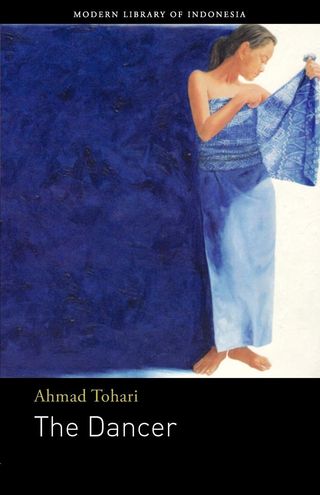
Cover of The Dancer

The Dancer

Ahmad Tohari

Original language: Indonesian · Paperback · ISBN 978-6029144215

The Dancer is a trilogy by the Indonesian author Ahmad Tohari, set during the political upheaval of mid-1960s Indonesia. The story follows two central figures from a remote village: Srintil, a traditional dancer, and Rasus, a young man caught between the pull of local customs and the forces of a changing nation. Their separate paths run through the crisis surrounding the 1965 coup and its aftermath.

Rasus leaves the village and meets a wider world that reshapes his understanding of himself. Srintil stays closer to home, but the outside world eventually reaches her community with consequences she cannot control. Both characters arrive at personal reckonings with shame and moral conflict, shaped by circumstances that are at once intimate and tied to large-scale political violence. Tohari presents these events from ground level, through ordinary lives rather than official accounts.

The trilogy was written in Indonesian and has since been translated into English, reaching readers well beyond its first audience. In 2011 a film adaptation drawn from the three volumes was produced by Shanty Harman and directed by Ifa Irfansyah, carrying the village setting and the events of 1965 onto Indonesian cinema screens.

Plot

It highlights the lives of Srintil, a dancer, and Rasus, a bewildered young man torn between tradition and political progress. Through experience, both learn the concept of shame and sin: Rasus after he leaves their village and journeys into the world and Srintil when the world finally comes crashing into her remote village. The Dancer gives a ground-level view of the political turmoil leading up to and following the coup in 1965. In 2011, a movie produced by Shanty Harman and directed by Ifa Irfansyah was made based on this trilogy.

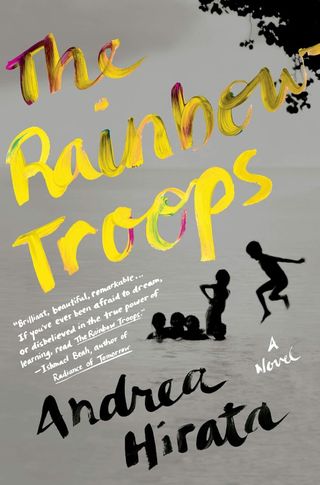
Cover of The Rainbow Troops

The Rainbow Troops

Andrea Hirata

Original language: Indonesia · Paperback · ISBN 978-0374534448

The Rainbow Troops follows Ikal, a boy attending the poorest school on the Indonesian island of Belitong. In this village, finishing sixth grade counts as a real achievement. The school itself faces constant threat of closure, caught between indifferent government officials and the interests of large mining corporations operating on the island. Ikal and his classmates, a small group who come to be called the Rainbow Troops, struggle against deepening poverty, crumbling classrooms, and the quiet pressure of low expectations.

Andrea Hirata's debut novel draws closely on his own childhood in Belitong, an island off the east coast of Sumatra in the province of Bangka Belitung. First published in Indonesia in 2005, the book sold over five million copies there, breaking national sales records. Its story centers on the gap between the wealth extracted from the island's tin and mineral resources and the conditions faced by the communities living alongside that industry.

The novel's tensions are specific and grounded: a teacher trying to keep enrollment high enough to avoid shutdown, children walking long distances to reach class, and families weighing the cost of education against immediate survival. These details give the story a concrete setting rather than a generalized portrait of hardship.

Plot

Ikal is a student at the poorest village school on the Indonesian island of Belitong, where graduating from sixth grade is considered remarkable. His school is under constant threat of closure. Ikal and his friends―a group nicknamed the Rainbow Troops―face threats from every angle: skeptical government officials, greedy corporations, deepening poverty, crumbling infrastructure, and their own low self-confidence.

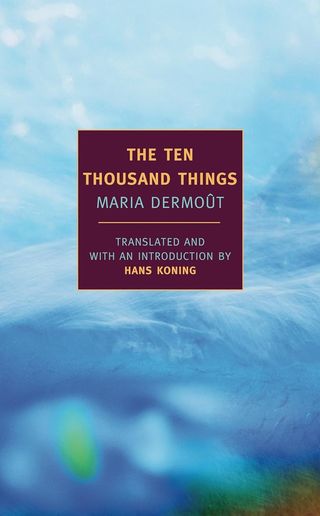
Cover of The Ten Thousand Things

The Ten Thousand Things

Maria Dermoût

Original language: Dutch · Paperback · ISBN 978-1590170137

Maria Dermoût's novel follows Felicia, a young woman who leaves Holland and returns with her infant son to the Spice Islands of Indonesia, where she was born. The family house and its garden are still governed by her formidable grandmother, and Felicia settles back into a landscape both familiar and unsettling. The story is set in the Moluccas, an archipelago once central to the global spice trade, where colonial Dutch life and local traditions coexist in uneasy proximity.

Objects in Felicia's world carry stories of their own. The dead do not stay entirely absent, and the boundary between past and present grows thin. Violence and mystery surface alongside the lush natural surroundings, and the novel moves through these elements with a calm, strange rhythm rather than conventional plot momentum. Dermoût, who was born and raised in the Dutch East Indies, drew on decades of personal familiarity with the region.

The book was first published in the Netherlands in 1955 and was recognized at the time as unlike anything in Dutch literary tradition. Its atmosphere combines precise observation of tropical plants, sea, and domestic life with an openness to the uncanny that gives the narrative an unusual, quiet intensity.

Plot

In Wild, Cheryl Strayed writes of The Ten Thousand Things: "Each of Dermoût’s sentences came at me like a soft knowing dagger, depicting a far-off land that felt to me like the blood of all the places I used to love.” And it's true, The Ten Thousand Things is at once novel of shimmering strangeness—and familiarity. It is the story of Felicia, who returns with her baby son from Holland to the Spice Islands of Indonesia, to the house and garden that were her birthplace, over which her powerful grandmother still presides. There Felicia finds herself wedded to an uncanny and dangerous world, full of mystery and violence, where objects tell tales, the dead come and go, and the past is as potent as the present. First published in Holland in 1955, Maria Dermoût's novel was immediately recognized as a magical work, like nothing else Dutch—or European—literature had seen before. The Ten

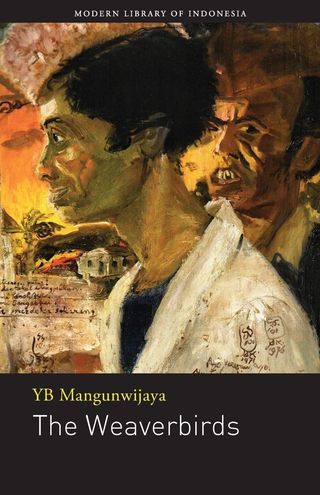
Cover of The Weaverbirds

The Weaverbirds

Y.B. Mangunwijaya

Original language: Indonesian · Paperback · ISBN 978-6029144208

The Weaverbirds follows two characters whose lives run parallel to the turbulent decades of modern Indonesian history. Larasati, daughter of the Antana family, and Setadewa, son of a military captain named Brajabasuki, grow up as childhood friends. As they mature, however, the political upheavals shaping their country pull them toward opposing positions. The novel traces their story from the early period of Indonesian independence through to the oil crisis of the mid-1970s, a stretch of time marked by rapid social change, ideological conflict, and economic pressure.

Y.B. Mangunwijaya, a Catholic priest, architect, and writer based in Yogyakarta, published the novel in Indonesian under the title Burung-Burung Manyar. The book's title refers to the weaverbird, a species known across Southeast Asia for constructing elaborate hanging nests. In the story, the image of these birds carries weight as Larasati and Setadewa attempt to build their own paths through a society where personal bonds and political loyalties do not always align.

The central tension sits between private attachment and public division. Mangunwijaya sets the two characters on different sides of Indonesia's political landscape, then watches what happens to a friendship shaped by forces larger than either person can control.

Plot

The story spans from the formative days of Indonesia’s independence to Indonesia’s oil crisis in the mid 1970s. Larasati, the precious daughter of Mr. and Mrs. Antana, and Setadewa, the army-brat son of Capt. And Mrs. Brajabasuki, are childhood friends. But when they are older, they find themselves on the opposite sides of the country’s political spectrum. Even with their many differences, their relationship offers guidance to survival in a chaotic world.

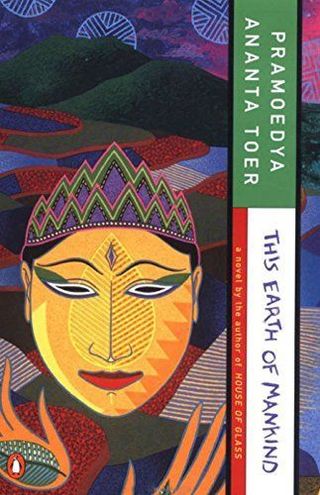
Cover of This Earth of Mankind

This Earth of Mankind

Pramoedya Ananta Toer

Original language: Indonesian · Paperback · ISBN 978-0140256352

This Earth of Mankind is set in 19th-century Java during Dutch colonial rule. Its central figure, Minke, is a young Javanese man of sharp intellect who receives a European-style education, placing him in an unusual position between the colonial administration and the indigenous society he comes from. The novel follows his growing awareness of the social and legal systems that govern daily life under colonial authority, and the contradictions he encounters as he moves between these worlds.

Minke's relationship with Annelies, a young woman of mixed European and Javanese heritage, becomes a focal point of the story. Through their connection, the novel examines how colonial law, racial hierarchy, and family structures intersect in ways that shape individual lives. The pressures they face are not abstract but rooted in specific legal and social mechanisms of the Dutch East Indies.

The author, Pramoedya Ananta Toer, was born in Java in 1925 and spent years as a political prisoner, first under Dutch colonial rule and later under the Indonesian government. He composed this novel orally while imprisoned on Buru Island, telling it to fellow inmates before it was written down. He received both the PEN Freedom to Write Award and the Ramon Magsaysay Award.

Plot

Minke is a young Javanese student of great intelligence and ambition. Living equally among the colonists and colonized of 19th-century Java, he battles against the confines of colonial strictures. It is his love for Annelies that enables him to find the strength to embrace his world.

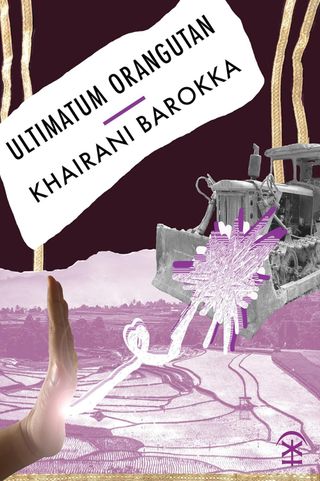
Cover of Ultimatum Orangutan

Ultimatum Orangutan

Khairani Barokka

Original language: English · Paperback · ISBN 978-1913437091

Ultimatum Orangutan is the second poetry collection by Khairani Barokka, an Indonesian poet and artist. The poems trace lines between colonial exploitation of land, people, animals, and ecosystems, treating these as connected rather than separate histories. Indonesia's forests, wildlife, and communities appear throughout the work, with the orangutan of the title standing at one visible edge of environmental destruction driven by extraction and resource control.

A central thread in the collection is the body, particularly the disabled body, treated as its own ecosystem. Barokka, who writes and works across disability arts and ecology, positions bodily experience alongside landscapes shaped by colonial violence. The poems move between personal and political registers, linking damage done to places with damage done to people who depend on them. Resistance appears alongside loss, and the language is precise rather than decorative.

The collection connects climate crisis to its colonial roots, grounding broad environmental questions in specific geographies and lived realities. Barokka's approach is layered, with individual poems often holding several scales of attention at once, from a single body to an entire forest system under threat.

Plot

Khairani Barokka's acute, interlaced language draws clear connections between colonial exploitation of fellow humans, landscapes, animals, and ecosystems. Amidst the horrifying damage that has resulted for peoples as interlinked with places, there is firm resistance. Resonant and deeply attentive, the lyricism of these poems is juxtaposed with the traumatic circumstances from which they emerge. Through these defiant, potent verses, the bodyparticularly the disabled bodyis centred as an ecosystem in its own right. Barokka's poems are every bit as alarming, urgent and luminous as is necessary in the age of climate catastrophe as outgrowth of colonial violence.

More from Indonesia

See the country page for Indonesia for its map, facts and largest cities, or browse books from other countries.

Links go to Amazon; Hookito doesn’t sell books. Know a book that belongs here, or spotted a mistake? Write to submissions@hookito.com.

Where to next?

Back to the globe
Hookito landscape illustration