Hookito

Ireland · Books

Books from Ireland

22 books from and about Ireland: what each is about, the plot, and a note from Professor Kogi.

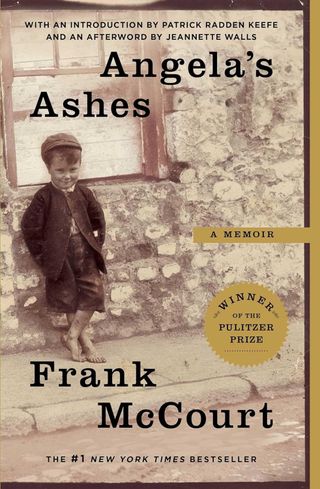
Cover of Angela's Ashes

Angela's Ashes

Frank McCour

Original language: English · Paperback · ISBN 978-0684842677

Frank McCourt was born in Brooklyn during the Depression to parents who had recently emigrated from Ireland. The family soon returned to Limerick, where they settled in the city's poorer lanes during the 1930s and 40s. His mother, Angela, struggled to feed and clothe the children while his father, Malachy, drifted between jobs and spent what little he earned on drink. The memoir follows Frank through these early years, recording hunger, illness, and the small rituals of survival in a household that rarely had enough.

Malachy was unreliable as a provider, but he carried stories. He told Frank about Cuchulain, the legendary warrior of Irish myth, and about the Angel on the Seventh Step, a family tale tied to the arrival of new siblings. These stories gave Frank something durable in circumstances that offered very little else. The book traces how language and narrative took root in a child surrounded by scarcity.

Limerick in those decades was a city of narrow streets, church authority, and tightly packed neighborhoods where poverty was ordinary and widely shared. McCourt describes relatives, neighbors, and schoolteachers with specific detail, building a portrait of a community shaped by Catholic tradition, limited opportunity, and close quarters.

Plot

“When I look back on my childhood I wonder how I managed to survive at all. It was, of course, a miserable childhood: the happy childhood is hardly worth your while. Worse than the ordinary miserable childhood is the miserable Irish childhood, and worse yet is the miserable Irish Catholic childhood.” So begins the luminous memoir of Frank McCourt, born in Depression-era Brooklyn to recent Irish immigrants and raised in the slums of Limerick, Ireland. Frank’s mother, Angela, has no money to feed the children since Frank’s father, Malachy, rarely works, and when he does he drinks his wages. Yet Malachy—exasperating, irresponsible, and beguiling—does nurture in Frank an appetite for the one thing he can provide: a story. Frank lives for his father’s tales of Cuchulain, who saved Ireland, and of the Angel on the Seventh Step, who brings his mother babies.
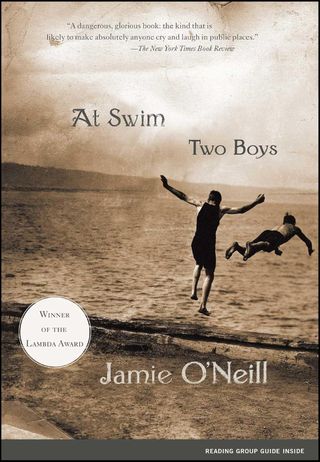
Cover of At Swim, Two Boys

At Swim, Two Boys

Jamie O’Neill

Original language: English · Paperback · ISBN 978-0743222952

Jamie O'Neill's novel unfolds in Dublin during the year before the Easter Rising of 1916, when Irish republicans took up arms against British rule. Its two central figures are teenage boys from different worlds. Jim Mack is a studious, sheltered scholar whose father keeps a small shop and dreams of expanding it. Doyler Doyle, son of Mr. Mack's old army companion, is rougher and drawn to revolutionary politics.

They meet at the Forty Foot, a rocky bathing place on the south Dublin coast where men swim naked in open water. There Doyler offers to teach Jim to swim, and they set a goal: by Easter 1916, they will cross to Muglins Rock, a small beacon-marked island offshore, and claim it for themselves. Over the months, their friendship grows into something neither expected.

Jim's father, meanwhile, stays absorbed in plans for a chain of corner shops and notices little of his son's life or of the shifting political mood. O'Neill spent about ten years writing the book, and its language is densely worked, using Irish English idiom to move between private feeling and public upheaval.

Plot

Jim Mack is a naïve young scholar and the son of a foolish, aspiring shopkeeper. Doyler Doyle is the rough-diamond son—revolutionary and blasphemous—of Mr. Mack’s old army pal. Out at the Forty Foot, that great jut of rock where gentlemen bathe in the nude, the two boys make a pact: Doyler will teach Jim to swim, and in a year, on Easter of 1916, they will swim to the distant beacon of Muglins Rock and claim that island for themselves. All the while Mr. Mack, who has grand plans for a corner shop empire, remains unaware of the depth of the boys’ burgeoning friendship and of the changing landscape of a nation.

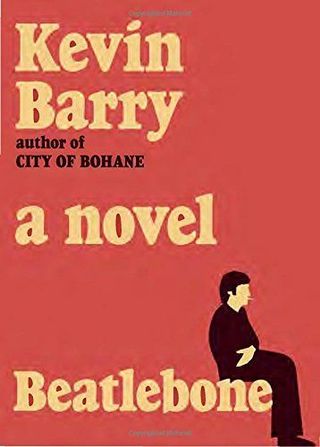
Cover of Beatlebone

Beatlebone

Kevin Barry

Original language: English · Hardcover · ISBN 978-0385540292

Kevin Barry's Beatlebone is a novel set in 1978, following a fictionalized John Lennon as he leaves New York City and travels to the west coast of Ireland. His destination is a small island he purchased over a decade earlier. Lennon in real life did buy Dorinish, an uninhabited island in Clew Bay off County Mayo, in 1967. In the novel, he is nearing forty, struggling to write or compose, and weighed down by memories of his parents. He hopes that solitude on the island will quiet his mind and restart his creative instincts.

The trip does not go as planned. Lennon falls in with a local driver whose personality shifts between warmth, mischief, and something stranger. Their exchanges pull the story away from realism and into surreal, unpredictable territory. Barry uses the rural Irish landscape and Lennon's interior restlessness to build a narrative that moves between hallucination and sharp emotional detail.

The novel also threads in a section where Barry writes about his own research along the Mayo coast, folding the process of making the book into the book itself. This structural choice blurs the line between author and character, fiction and documentary.

Plot

It is 1978, and John Lennon has escaped New York City to try to find the island off the west coast of Ireland he bought eleven years prior. Leaving behind domesticity, his approaching forties, his inability to create, and his memories of his parents, he sets off to calm his unquiet soul in the comfortable silence of isolation. But when he puts himself in the hands of a shape-shifting driver full of Irish charm and dark whimsy, what ensues can only be termed a magical mystery tour.

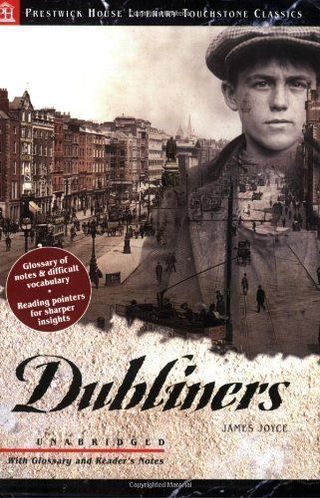
Cover of Dubliners

Dubliners

James Joyce

Original language: English · Paperback · ISBN 978-1580491655

Dubliners is a collection of fifteen short stories by James Joyce, first published in 1914 after a decade of disputes with publishers over its content. Joyce resisted pressure to remove real place names, specific language, and even whole stories. Set in Dublin at the turn of the twentieth century, each piece follows an ordinary resident through a brief, closely observed episode. The characters do not know one another, yet their lives unfold along the same streets and share concerns: missed chances, isolation, and regret.

Joyce organized the collection to move through four stages of life. The opening stories, including The Sisters, An Encounter, and Araby, center on childhood. A second group addresses adolescence, followed by stories of adult life such as A Little Cloud, Counterparts, and A Painful Case. The final section turns to public and communal experience. The closing story, The Dead, stands somewhat apart in scope and length.

Joyce described his goal as writing a chapter of the moral history of Ireland, choosing Dublin because he saw it as a centre of paralysis. The stories examine how religious rigidity, social expectation, and attachment to tradition shape daily life, while his ear for local speech gives the collection a concrete sense of place.

Plot

Each of the beautifully written short stories in this collection precisely details a brief scene in the life of a resident of Dublin at the turn of the 20th century. Although the characters do not know each other, their experiences unfold along the same streets and often overlap thematically. Their tragedies mirror that of Ireland, a country struggling for political identity and held back, in Joyce's view, by rigid religious ideas and adherence to tradition.

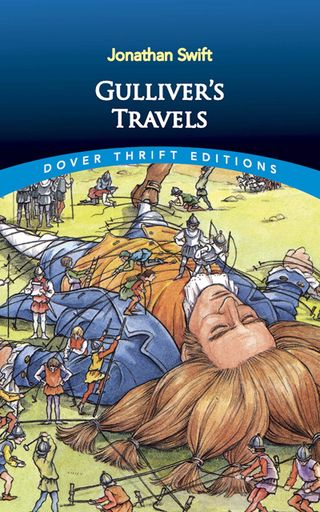
Cover of Gulliver's Travels

Gulliver's Travels

Jonathan Swift

Original language: English · Paperback · ISBN 978-0486292731

Gulliver's Travels, first published in 1726, follows Lemuel Gulliver, a ship's surgeon, through four voyages to strange and unsettling lands. Jonathan Swift structured the book as a parody of the popular traveler's tales of his era, but its real purpose is satire. Each destination holds up a different mirror to human behavior, politics, and self-regard.

In Lilliput, Gulliver towers over six-inch-tall inhabitants whose fierce disputes concern matters of almost no consequence. In Brobdingnag, the situation reverses: surrounded by giants, Gulliver becomes a curiosity, small enough to be displayed for entertainment. A third voyage brings him to the flying island of Laputa, a kingdom absorbed in music and mathematics, and then onward through Balnibarbi, Luggnagg, Glubbdubdrib, and Japan. His final journey lands him among the Houyhnhnms, rational horses whose society forces Gulliver to reconsider what it means to be human.

Swift wrote in plain, direct prose that reads like a factual travel report, which sharpens the comedy and the criticism alike. The book works on several levels at once, offering younger readers a fantasy of strange lands while presenting adults with a pointed examination of pride, pettiness, and political absurdity.

Plot

Savagely ironic, it portrays man as foolish at best, and at worst, not much more than an ape. The direct and unadorned narrative describes four remarkable journies of ship's surgeon Lemuel Gulliver, among them, one to the land of Lilliput, where six-inch-high inhabitants bicker over trivialities; and another to Brobdingnag, a land where giants reduce man to insignificance.

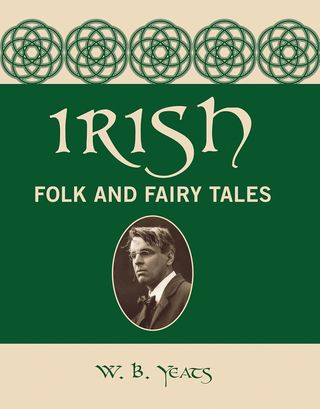
Cover of Irish Folk and Fairy Tales

Irish Folk and Fairy Tales

W.B. Yeats

Original language: English · Hardcover · ISBN 978-0785833482

W.B. Yeats, born and educated in Dublin, held a lifelong interest in Irish legends and the supernatural. Irish Folk and Fairy Tales is his gathering of traditional stories, songs, and poems drawn from Ireland's oral and literary heritage. The collection covers a wide range of figures from Irish folklore, including Trooping Fairies, Banshees, kings and queens, giants, devils, and the Leprechaun. Each piece reflects the particular landscape and belief systems of rural and ancient Ireland, where the boundary between the everyday world and the otherworld was treated as thin and permeable.

Yeats arranged these tales not as a scholarly archive but as living literature, giving shape to material that had circulated for generations in spoken form. His own voice as a poet colors the selection and framing, though many of the stories originated with anonymous storytellers and earlier collectors. The volume sits alongside his broader work in recovering and presenting Irish cultural traditions during a period when Ireland's distinct identity was a subject of intense public attention.

Yeats received the Nobel Prize in Literature in 1923, becoming the first Irish writer to receive that honor. This collection remains one of the more accessible entry points into the folklore he spent decades studying and reshaping.

Plot

In this volume, extraordinary Irish characters are brought to life through the incandescent poetic voice of W.B. Yeats, who as the first Irish writer to be honored with the Nobel Peace Prize in Literature in 1923. Born and educated in Dublin, from an early age Yeats was fascinated by both Irish legends and the occult, which are brilliantly visited in Irish Folk and Fairy Tales. These legendary stories include Trooping Fairies, a Banshee, Kings and Queens, Giants, Devils and the enigmatic Irish Leprechaun that will delight and entertain readers of all ages. Poets, readers, children and adults will all fall in love with these classic Irish Folk and Fairy Tales from one of the world’s greatest poets, W. B. Yeats.

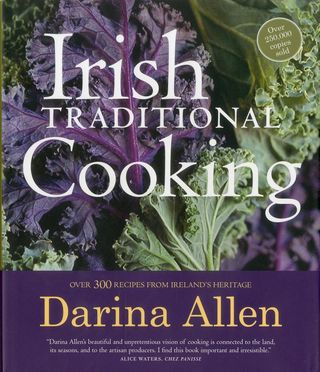
Cover of Irish Traditional Cooking

Irish Traditional Cooking

Darina Allen

Original language: English · Hardcover · ISBN 978-1906868765

Irish Traditional Cooking by Darina Allen is a large collection of around 300 dishes rooted in Ireland's food history. The book covers a wide range of categories, from broths and soups to fish, game, vegetables, cakes, and biscuits. Allen, one of Ireland's most recognized cooking teachers and food writers, draws on recipes and kitchen customs that have been handed along through families and communities over many generations.

Each recipe sits alongside notes on the food's background, local customs, and small stories connected to particular ingredients or methods. These details give the book a documentary quality, recording not only how dishes are prepared but why certain foods became central to Irish tables. Chapters move through everyday staples and seasonal cooking, offering a practical picture of what people across Ireland have eaten over the decades.

Allen based her work at the Ballymaloe Cookery School in County Cork, a place closely linked to Irish food culture. This edition expanded the original collection with roughly 100 additional recipes. The book functions both as a working recipe reference and as a record of food traditions specific to different parts of the island.

Plot

This book includes tips, tales, historical insights and common Irish customs, many of which have been passed down from one generation to the next. It also includes chapters on Broths and Soups, Fish, Game, Vegetables and Cakes and Biscuits Ireland's rich culinary heritage is brought to life in this new edition of Darina's bestselling Irish Traditional Cooking. With 300 traditional dishes, including 100 new recipes, this is the most comprehensive and entertaining tome on the subject. Each recipe is complemented by tips, tales, historical insights and common Irish customs, many of which have been passed down from one generation to the next.

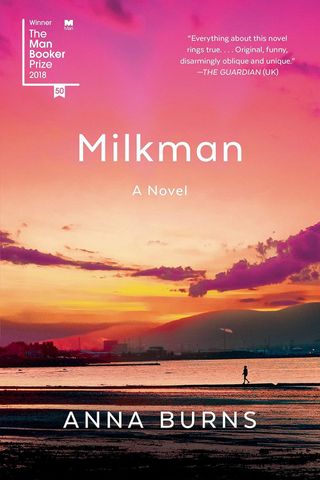
Cover of Milkman

Milkman

Anna Burns

Original language: English · Paperback · ISBN 978-1644450000

Milkman by Anna Burns is set in an unnamed city during a period of political conflict. The narrator, known only as middle sister, attracts unwanted attention through small, ordinary habits. She reads while walking. She takes French evening classes in a different part of town. These details, harmless elsewhere, mark her as unusual in a community where standing out carries real danger. When an older paramilitary figure called the milkman begins to follow her, the neighborhood takes notice, and middle sister finds herself caught in a web of gossip and suspicion she cannot control.

No characters in the novel carry proper names. They are identified by family position, occupation, or loose description, a choice that gives the story an unsettling closeness to fable while remaining grounded in recognizable social pressures. Middle sister tries to manage her relationship with a maybe-boyfriend, dodge her mother's questions, and stay invisible, but the community's attention has already decided her story for her.

Burns builds the novel around the idea that in a divided society, even passive choices become political. The wrong flag, the wrong religion, or simply looking at a sunset from the wrong hillside can be read as a statement. The book won the Man Booker Prize in 2018.

Plot

In an unnamed city, middle sister stands out for the wrong reasons. She reads while walking, for one. And she has been taking French night classes downtown. So when a local paramilitary known as the milkman begins pursuing her, she suddenly becomes “interesting,” the last thing she ever wanted to be. Despite middle sister’s attempts to avoid him―and to keep her mother from finding out about her maybe-boyfriend―rumors spread and the threat of violence lingers. Milkman is a story of the way inaction can have enormous repercussions, in a time when the wrong flag, wrong religion, or even a sunset can be subversive.

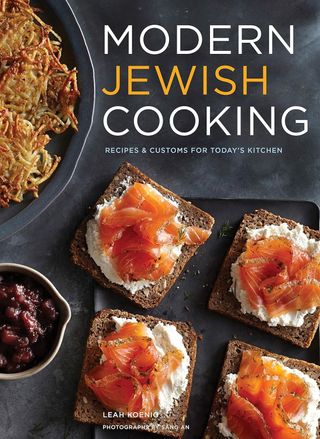
Cover of Modern Jewish Cooking

Modern Jewish Cooking

Leah Koenig

Original language: English · Hardcover · ISBN 978-1452127484

Modern Jewish Cooking by Leah Koenig collects 175 recipes that emphasize seasonal ingredients and vegetables as central elements rather than side dishes. The book covers familiar staples of Jewish cooking, including latkes, matzoh balls, challah, and hamantaschen, reworking each with updated techniques and a broader palette of spices. Koenig draws on the geographic breadth of the Jewish diaspora, pulling flavors and methods from North Africa through Central Europe.

The recipes range from soups to sweets, and the book includes menus organized around Jewish holidays. Photography accompanies the collection throughout. Rather than treating traditional dishes as fixed forms, Koenig approaches them as living recipes shaped by migration and local ingredients over centuries. The result is a cookbook grounded in culinary heritage but oriented toward how people actually cook and eat today, with an emphasis on handmade preparation and produce-centered meals.

Jewish culinary traditions vary widely depending on geography. Ashkenazi cooking from Central and Eastern Europe developed around root vegetables, grains, and preserved foods suited to cold climates, while Sephardi and Mizrahi traditions from the Mediterranean and Middle East feature olive oil, fresh herbs, and warm spices. Koenig's approach bridges these regional threads in a single collection.

Plot

Author Leah Koenig shares 175 recipes showcasing handmade, seasonal, vegetable-forward dishes. Classics of Jewish culinary culture—such as latkes, matzoh balls, challah, and hamantaschen—are updated with smart techniques and vibrant spices. Approachable recipes for everything from soups to sweets go beyond the traditional, incorporating regional influences from North Africa to Central Europe. Featuring holiday menus and rich photography, this collection is at once a guide to establishing traditions and a celebration of the way we eat now.

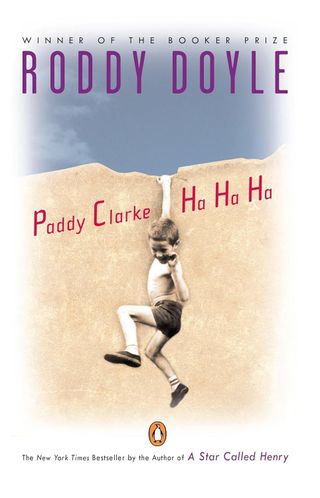
Cover of Paddy Clarke Ha Ha Ha

Paddy Clarke Ha Ha Ha

Roddy Doyle

Original language: English · Paperback · ISBN 978-0140233902

Set in 1968, Paddy Clarke Ha Ha Ha follows ten-year-old Patrick Clarke through daily life in Barrytown, a working-class area on the north side of Dublin. Paddy and his best friend Kevin scratch their names into wet cement, play football, and invent games. Among his favourite things are Geronimo, the Three Stooges and the smell of a hot water bottle. His younger brother Sinbad irritates him constantly.

Underneath the energy of Paddy's outdoor world, something harder is taking shape at home. His parents argue more often, then behave as though nothing has happened. Paddy notices the tension but has no framework to interpret it, and the novel tracks that gap between sharp perception and limited understanding as it widens. Schoolyard hierarchies, neighbourhood cruelty, and small acts of loyalty fill his days.

Doyle tells the story in Paddy's own voice, in short present-tense fragments that move between playground rules, half-heard adult conversation, and facts collected at school. The same fictional suburb of Barrytown appears in Doyle's earlier novels. Published to strong sales, the book won the Booker Prize.

Plot

It is 1968. Patrick Clarke is ten. He loves Geronimo, the Three Stooges, and the smell of his hot water bottle. He can't stand his little brother Sinbad. His best friend is Kevin, and their names are all over Barrytown, written with sticks in wet cement. They play football, lepers, and jumping to the bottom of the sea. But why didn't anyone help him when Charles Leavy had been going to kill him? Why do his ma and da argue so much, but act like everything is fine? Paddy sees everything, but he understands less and less. Hilarious and poignant, Paddy Clarke Ha Ha Ha charts the triumphs, indignities, and bewilderment of a young boy and his world, a place full of warmth, cruelty, confusion and love.

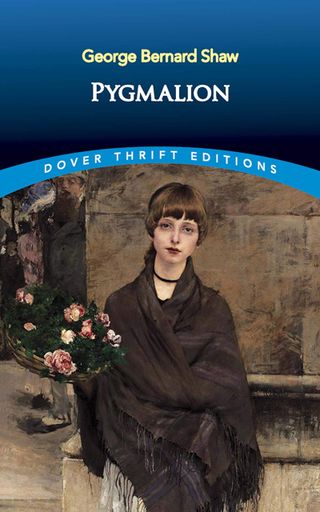
Cover of Pygmalion

Pygmalion

George Bernard Shaw

Original language: English · Paperback · ISBN 978-0486282220

Pygmalion is a five-act play by George Bernard Shaw, first staged in the early twentieth century. It reworks the ancient Greek myth of Pygmalion, a sculptor who falls in love with a statue he has carved, transplanting the story into Edwardian London. Professor Henry Higgins, a specialist in phonetics, wagers that he can turn Eliza Doolittle, a cockney flower seller, into someone who could pass for a duchess at a society gathering. His method is purely linguistic: replace her accent, correct her grammar, and drill her in the manners expected of the upper class.

Shaw uses the bet as a frame for examining the British class system. The play asks how much of social standing depends on birth and how much on speech, dress, and learned behaviour. Eliza is not simply a passive subject in the experiment. As her confidence and self-awareness grow, tensions develop between her and Higgins over who she is becoming and what she owes to him.

The play became a successful London and New York stage production and was later adapted into the 1964 musical My Fair Lady. Shaw himself wrote a screenplay version that reached cinemas during the 1930s. It remains one of the most frequently performed English-language comedies in theatre programs and university drama courses.

Plot

In Shaw's clever adaptation, Professor Henry Higgins, a linguistic expert, takes on a bet that he can transform an awkward cockney flower seller into a refined young lady simply by polishing her manners and changing the way she speaks. In the process of convincing society that his creation is a mysterious royal figure, the Professor also falls in love with his elegant handiwork.

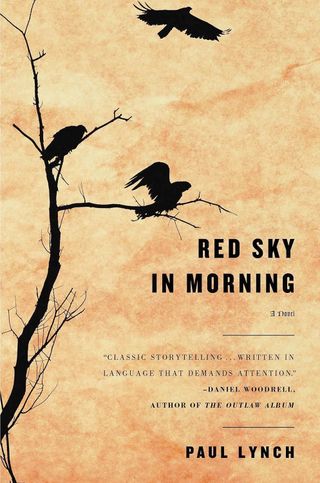
Cover of Red Sky in Morning

Red Sky in Morning

Paul Lynch

Original language: English · Hardcover · ISBN 978-0316230254

In 1832 Ireland, a man named Coll Coyle commits a killing that sets the rest of his life on a desperate course. The victim's father, a skilled tracker with a cold appetite for revenge, begins pursuing Coyle from the boglands of County Donegal. The chase does not end at the Irish coast. It crosses the Atlantic and continues into the labor camps of the Pennsylvania Railroad, where Irish immigrants worked under brutal conditions in a country still taking shape.

Paul Lynch's first novel draws on historical events to build a story about pursuit, survival, and the landscapes that shape both. The setting shifts from the exposed, wind-cut terrain of northwest Ireland to the rough interior of early nineteenth-century America, and Lynch treats both places with close physical attention. The prose is dense and rhythmic, holding the tension between a hunted man's fear and the relentless will of his pursuer.

The novel sits at the intersection of historical fiction and something closer to parable. Coyle is not a hero in any simple sense, and the tracker is not merely a villain. Their fates are bound by an act of violence that neither can undo, played out across two continents and an ocean.

Plot

It's 1832 and Coll Coyle has killed the wrong man. The dead man's father is an expert tracker and ruthless killer with a single-minded focus on vengeance. The hunt leads from the windswept bogs of County Donegal, across the Atlantic to the choleric work camps of the Pennsylvania railroad, where both men will find their fates in the hardship and rough country of the fledgling United States.

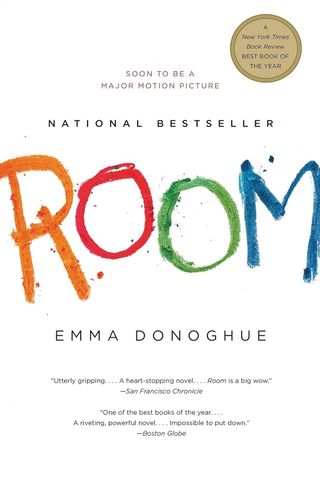
Cover of Room

Room

Emma Donoghue

Original language: English · Paperback · ISBN 978-0316098328

Room, published in 2010 by Irish-Canadian author Emma Donoghue, is narrated by five-year-old Jack. To Jack, the eleven-by-eleven-foot shed where he lives with his mother is the whole world. He was born there, and all he knows fits inside its walls. His Ma fills their days with routines, games, and lessons, and at night she shuts him in a wardrobe before a man he calls Old Nick arrives. Jack does not grasp what his mother knows: she has been held there for seven years.

Donoghue has said the story was prompted by the Fritzl case in Austria, where children were confined for years in a hidden basement. The novel uses Jack's limited viewpoint to show how a child can accept extraordinary conditions as normal while an adult in the same space understands them very differently. As Jack's curiosity about what lies beyond Room grows, his mother weighs a narrow chance at freedom.

The book was shortlisted for the 2010 Booker Prize and received several other recognitions, including the 2011 Commonwealth Writers' Prize regional award for the Caribbean and Canada. It was also shortlisted for the Rogers Writers' Trust Fiction Prize and the Governor General's Awards.

Plot

Held captive for years in a small shed, a woman and her precocious young son finally gain their freedom, and the boy experiences the outside world for the first time. To five-year-old-Jack, Room is the world. It's where he was born, it's where he and his Ma eat and sleep and play and learn. At night, his Ma shuts him safely in the wardrobe, where he is meant to be asleep when Old Nick visits. Room is home to Jack, but to Ma it's the prison where she has been held for seven years. Through her fierce love for her son, she has created a life for him in this eleven-by-eleven-foot space. But with Jack's curiosity building alongside her own desperation, she knows that Room cannot contain either much longer.

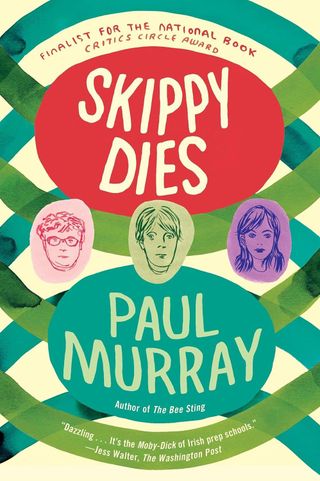
Cover of Skippy Dies

Skippy Dies

Paul Murray

Original language: English · Paperback · ISBN 978-0865478619

Seabrook College is a long-established boys' school in Dublin, and Daniel Juster, known as Skippy, is one of its least remarkable students. His roommate Ruprecht Van Doren is an overweight prodigy consumed by advanced mathematics and the search for extraterrestrial intelligence. Neither attracts much notice until Skippy becomes infatuated with Lori, a girl from the school next door, drawing the attention of Carl, a classmate who deals drugs and radiates menace. What follows is a collision of teenage longing, rivalry, and a doughnut-eating contest with fatal consequences.

Paul Murray populates the novel with a wide, eccentric cast. Among the students are Eoin Flynn, a fourteen-year-old hip-hop enthusiast who calls himself MC Sexecutioner, and Philip Kilfether, a diminutive basketball player. Meanwhile, the school's faculty fight their own battles over whether to modernize the institution or preserve its traditions. The story threads together subjects as varied as Ritalin, string theory, bungee jumping, and the poetry of Robert Frost.

Set against the routines and hierarchies of an Irish boarding school, the novel examines how adults and teenagers inhabit overlapping worlds while understanding almost nothing about each other. Secrets accumulate on both sides of the staff-room door, and the distance between past and present narrows in ways none of the characters expect.

Plot

Why Skippy dies and what happens next is the subject of this dazzling and uproarious novel, unraveling a mystery that links the boys of Seabrook College to their parents and teachers in ways nobody could have imagined. With a cast of characters that ranges from hip-hop-loving fourteen-year-old Eoin "MC Sexecutioner" Flynn to basketball playing midget Philip Kilfether, packed with questions and answers on everything from Ritalin, to M-theory, to bungee jumping, to the hidden meaning of the poetry of Robert Frost, Skippy Dies is a heartfelt, hilarious portrait of the pain, joy, and occasional beauty of adolescence, and a tragic depiction of a world always happy to sacrifice its weakest members.

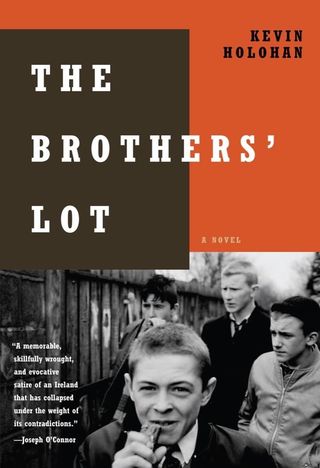
Cover of The Brothers' Lot

The Brothers' Lot

Kevin Holohan

Original language: English · Paperback · ISBN 978-1936070916

The Brothers' Lot is set inside a fictional Catholic institution called the Brothers of Godly Coercion School for Young Boys of Meager Means. The school is falling apart, both physically and morally, and is run by a group of celibate Brothers who range from deeply eccentric to outright cruel. Their one hope for revival is the canonization of their founder, the Venerable Saorseach O'Rahilly, and they are desperate for a verified miracle to advance his case toward sainthood.

When an apparent miracle involving a statuette of the founder surfaces at the school, the Brothers move quickly to claim it as genuine. A Diocesan Investigator, eager to advance his own career, proves willing to cooperate. The school begins to profit from the attention the supposed miracle attracts, but the Brothers face a growing problem: students who have suffered abuse within the institution start to push back, threatening to expose what has really been happening behind the school's walls.

Kevin Holohan's debut novel uses broad comic satire to examine religious hypocrisy, institutional decay, and the gap between pious language and actual conduct within a Catholic educational setting in Ireland. The tone draws on a tradition of darkly funny institutional fiction, with the synopsis comparing its spirit to Kingsley Amis's Lucky Jim.

Plot

Combining the spirit of Kingsley Amis’s Lucky Jim with a bawdy evisceration of hypocrisy in old-school Catholic education, The Brothers’ Lot is a comic satire that tells the story of the Brothers of Godly Coercion School for Young Boys of Meager Means, a dilapidated Dickensian institution run by an assemblage of eccentric, insane, and often nasty celibate Brothers. The school is in decline and the Brothers hunger for a miracle to move their founder, the Venerable Saorseach O’Rahilly, along the path to Sainthood. When a possible miracle presents itself, the Brothers fervently seize on it with the help of the ethically pliant Diocesan Investigator, himself hungry for a miracle to boost his career.

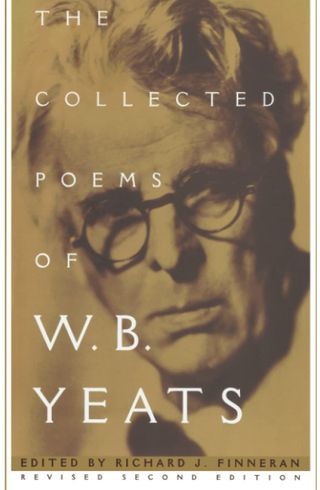
Cover of The Collected Poems of W.B. Yeats

The Collected Poems of W.B. Yeats

William Butler Yeats

Original language: English · Paperback · ISBN 978-0684807317

William Butler Yeats wrote poetry across several decades, and this edition gathers the poems he approved for publication. It follows his full career, from early pieces shaped by Irish myth and legend to later work concerned with old age, memory, and political upheaval. His earliest style drew on the Pre-Raphaelite movement, with its taste for beauty, symbolism, and medieval subjects.

His later poems moved toward a sparer, modernist manner, though he kept working in traditional verse forms rather than the free verse many contemporaries adopted. The book holds love songs, meditations on youth and age, and poems written against a background of war and uprising in Ireland. Yeats lived through the Easter Rising of 1916 and the founding of the Irish Free State.

The paperback is presented as the most comprehensive gathering of Yeats's authorized poems available in that format, so one long career sits inside a single volume. Yeats died in 1939, which sets the outer edge of the selection. Placing early folklore-based lyrics beside late political poems shows how much a poet's subjects and sound can change while the metre stays familiar.

Plot

Breathtaking in range, The Collected Poems of W. B. Yeats includes all of the poems authorized by Yeats for inclusion and encompasses the entire arc of his career: reworkings of ancient Irish myths and legends, meditations on youth and old age, whimsical songs of love, and somber poems of life in a nation torn by war and uprising.

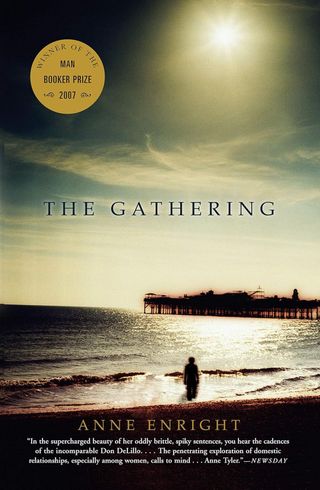
Cover of The Gathering

The Gathering

Anne Enright

Original language: English · Paperback · ISBN 978-1615553372

The Gathering follows Veronica Hegarty as she travels to collect the body of her brother Liam, who has drowned in the sea. Liam was one of a large Irish family, and the nine surviving Hegarty siblings converge on Dublin for his wake. Veronica keeps company with the dead man, holding a secret the two of them shared about something that happened in their grandmother's house in the winter of 1968.

Anne Enright traces the story across three generations, following a line of betrayal and repair that runs from grandmother to parents to children. Veronica's narration is close and unsettled, shifting between sharp observation and doubt about her own memory. The wake becomes a place where grief, family loyalty, and long silences press against one another, while marriages and childhoods from earlier decades keep surfacing.

Enright, born in Dublin, published the novel in 2007, and it received the Man Booker Prize that year. Much of the present action stays in and around Dublin, where the extended family assembles, though Veronica's account keeps returning to older houses and earlier decades. The narrative circles its central episode rather than moving in a straight line, keeping that 1968 winter just out of full view.

Plot

The nine surviving children of the Hegarty clan are gathering in Dublin for the wake of their wayward brother, Liam, drowned in the sea. His sister, Veronica, collects the body and keeps the dead man company, guarding the secret she shares with him—something that happened in their grandmother’s house in the winter of 1968. As Enright traces the line of betrayal and redemption through three generations her distinctive intelligence twists the world a fraction and gives it back to us in a new and unforgettable light.

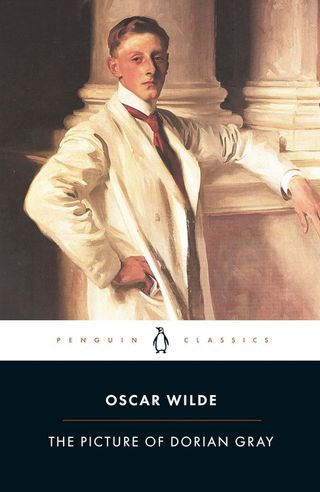
Cover of The Picture of Dorian Gray

The Picture of Dorian Gray

Oscar Wilde

Original language: English · Paperback · ISBN 978-0141439570

Dorian Gray is a young man in Victorian London whose striking appearance becomes the subject of a painting by his friend Basil Hallward. When Dorian first sees the finished portrait, he is so struck by his own beauty that he wishes the painting could age in his place, leaving him forever young. That wish comes true. As the years pass, Dorian's face stays untouched while the canvas slowly changes, recording every cruelty and indulgence he pursues behind closed doors.

Much of Dorian's transformation is guided by Lord Henry Wotton, a witty aristocrat who encourages him to treat pleasure as the highest purpose in life. Dorian takes this philosophy further than Lord Henry likely imagines, leading a double existence in which his public reputation remains largely intact while the portrait hidden upstairs tells a different story. The novel follows the widening gap between the man society sees and the image only Dorian himself can bear to look at.

Oscar Wilde first published a shorter version of the story in Lippincott's Monthly Magazine in July 1890, with an expanded novel-length edition appearing in April 1891. The book is set in London's drawing rooms, theatres, and opium dens, and it explores vanity, influence, and the cost of living without moral consequence.

Plot

Enthralled by his own exquisite portrait, Dorian Gray makes a Faustian bargain to sell his soul in exchange for eternal youth and beauty. Under the influence of Lord Henry Wotton, he is drawn into a corrupt double life, where he is able to indulge his desires while remaining a gentleman in the eyes of polite society. Only Dorian's picture bears the traces of his decadence.

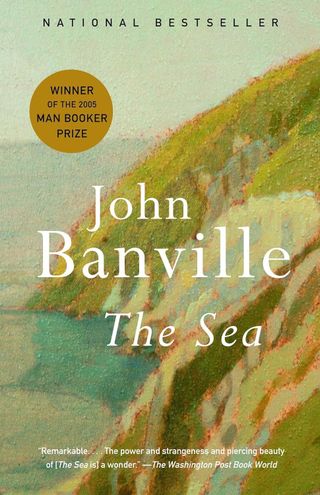
Cover of The Sea

The Sea

John Banville

Original language: English · Paperback · ISBN 978-1400097029

Max Morden, a middle-aged Irishman, returns to the seaside town where he spent childhood summer holidays. He is grieving the recent death of his wife, and the familiar shoreline draws him back toward memories he has carried for decades. The town is also where he first met the Graces, a well-off family whose presence shaped one formative season of his boyhood.

Through the Graces, the young Max encountered love and death for the first time, both arriving abruptly. The novel moves between that summer and the present, held together by Max's interior voice, which circles moments and revisits them rather than reporting events in order. The central question is what he now understands about the past and how firmly it has marked him.

The Sea won the Booker Prize in 2005. Its setting is a small Irish holiday town, the kind of place where families arrive for a few weeks each year and then disperse, leaving houses and beaches to be remembered differently by everyone who passes through. Banville writes grief as an act of careful, uneasy recollection.

Plot

In this luminous novel, John Banville introduces us to Max Morden, a middle-aged Irishman who has gone back to the seaside town where he spent his summer holidays as a child to cope with the recent loss of his wife. It is also a return to the place where he met the Graces, the well-heeled family with whom he experienced the strange suddenness of both love and death for the first time. What Max comes to understand about the past, and about its indelible effects on him, is at the center of this elegiac, gorgeously written novel—among the finest we have had from this masterful writer.

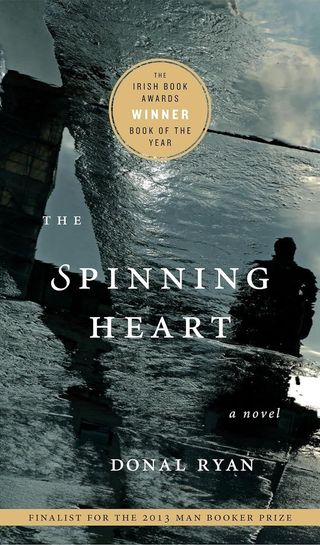
Cover of The Spinning Heart

The Spinning Heart

Donald Ryan

Original language: English · Paperback · ISBN 978-1586422240

The Spinning Heart is set in a small rural Irish town in the period following Ireland's economic crash, sometimes called the Celtic Tiger collapse. The story is told through a series of distinct first-person voices, each belonging to a different resident of the same community. These narrators speak in turns, offering their own versions of events as the consequences of the financial crisis press down on their daily lives, their relationships, and their sense of who they are.

The structure gives each character a single chapter to talk, and their accounts overlap and contradict one another. Public reputation and private feeling pull in different directions. Some characters guard secrets, others struggle with anger or shame, and the tension between what people say out loud and what they hold inside builds steadily across the book. Violence surfaces at points, though the novel stays close to ordinary domestic and social pressures rather than spectacle.

Donal Ryan's debut was originally published in 2012 by a small Irish press. The novel's format, with its rotating monologues and local speech patterns, draws comparison to earlier Irish literary traditions of polyphonic storytelling. It is set in a recognizably specific corner of rural Ireland, where economic boom and sudden collapse reshaped communities within a single generation.

Plot

In the aftermath of Ireland’s financial collapse, dangerous tensions surface in an Irish town. As violence flares, the characters face a battle between public persona and inner desires. Through a chorus of unique voices, each struggling to tell their own kind of truth, a single authentic tale unfolds. Wry, vulnerable, all-too human, it captures the language and spirit of rural Ireland and with uncanny perception articulates the words and thoughts of a generation. Technically daring and evocative of Patrick McCabe and J.M. Synge, this novel of small-town life is witty, dark, and sweetly poignant. Donal Ryan’s brilliantly realized debut announces a stunning new voice in fiction.

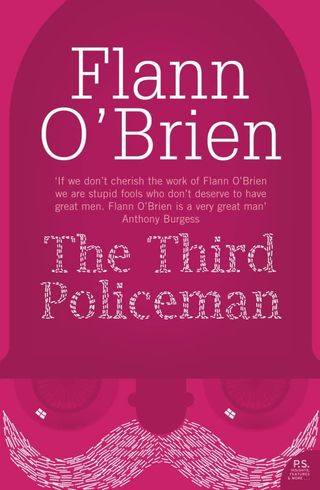
Cover of The Third Policeman

The Third Policeman

Flann O’Brien

Original language: English · Paperback · ISBN 978-0007247172

The Third Policeman is a novel by Flann O'Brien, the pen name of Irish writer Brian O'Nolan, completed around 1940 but not published until 1967, after his death. The story follows an unnamed narrator who, after committing a murder for money, finds himself in a strange rural parish governed by two eccentric policemen obsessed with bicycles and a mysterious third policeman no one has met. What begins as a crime story quickly shifts into something far stranger, as the narrator encounters impossible architecture, a police barracks filled with inexplicable inventions, and a theory that people and their bicycles gradually exchange atoms through prolonged contact.

The novel draws on the invented philosophy of a fictional scholar named de Selby, whose footnoted theories on topics like darkness, mirrors, and the nature of houses interrupt the narrative at regular intervals. These academic digressions parody real scholarly writing while adding layers of absurdity to an already disorienting plot. The setting feels both ordinary and impossible, a countryside that operates according to its own internal logic.

O'Brien wrote the book under the shadow of his earlier novel At Swim-Two-Birds. Unable to find a publisher during his lifetime, he reportedly told friends the manuscript had been lost. The novel became widely known only after its posthumous release.

Plot

A thriller, a hilarious comic satire about an archetypal village police force, a surrealistic vision of eternity, the story of a tender, brief, unrequited love affair between a man and his bicycle, and a chilling fable of unending guilt, ‘The Third Policeman’ is comparable only to ‘Alice in Wonderland’ as an allegory of the absurd.Distinguished by endless comic invention and its delicate balancing of logic and fantasy, ‘The Third Policeman’ is unique in the English language.

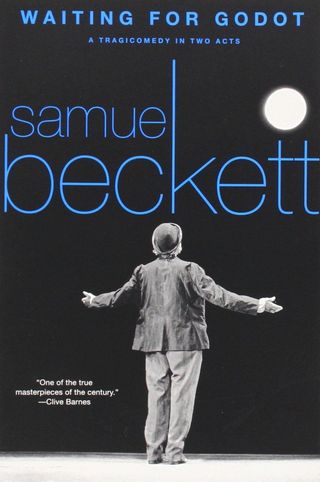
Cover of Waiting for Godot

Waiting for Godot

Samuel Beckett

Original language: English · Paperback · ISBN 978-0802144423

Vladimir and Estragon stand by a bare tree on an empty road, waiting for a figure named Godot. They are not sure when Godot will arrive, or even what he looks like. While they wait, they talk, argue, play word games, swap hats, and consider leaving, though they never do. Two other characters, Pozzo and Lucky, pass through and briefly interrupt the routine. A boy arrives with a message that Godot will not come today but surely will tomorrow. The cycle repeats.

Samuel Beckett wrote the play originally in French, completing it in 1949, and later translated it into English himself. It was first performed in Paris in January 1953. The text strips theatrical convention down to a minimum: there is almost no plot, no detailed set, and little physical action. What remains is language, silence, and repetition. Beckett classified it as a tragicomedy, and the two central figures shift between clowning and despair in short, looping exchanges.

The play has been widely linked to existentialist thought and to the mood of post-World War II Europe, though Beckett himself resisted fixed interpretations. Its sparse structure leaves open the question of who or what Godot represents, and the text provides no answer.

Plot

The story revolves around two seemingly homeless men waiting for someone—or something—named Godot. Vladimir and Estragon wait near a tree, inhabiting a drama spun of their own consciousness. The result is a comical wordplay of poetry, dreamscapes, and nonsense, which has been interpreted as mankind’s inexhaustible search for meaning. Beckett’s language pioneered an expressionistic minimalism that captured the existential post-World War II Europe. His play remains one of the most magical and beautiful allegories of our time.

More from Ireland

See the country page for Ireland for its map, facts and largest cities, or browse books from other countries.

Free editions are on Project Gutenberg, matched by title and author. Links go to Amazon; Hookito doesn’t sell books. Know a book that belongs here, or spotted a mistake? Write to submissions@hookito.com.

Where to next?

Back to the globe
Hookito landscape illustration