Hookito

India · Books

Books from India

22 books from and about India: what each is about, the plot, and a note from Professor Kogi.

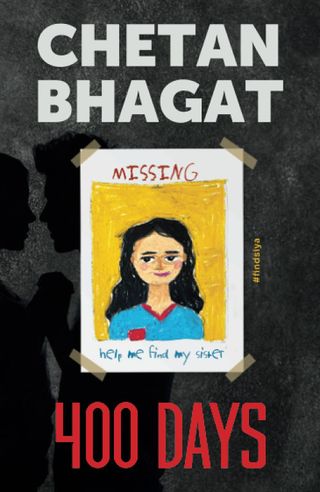
Cover of 400 Days

400 Days

Chetan Bhagat

Original language: Indian English · Paperback · ISBN 978-1542094085

Twelve-year-old Siya has been missing for nine months. The police have classified her disappearance as a cold case, and most of her family has moved on. But her mother, Alia, has not stopped searching. She turns to Keshav, hoping he can help where others have given up. The title refers to the span of time that shapes the story, a window in which leads grow stale and hope becomes harder to sustain.

Chetan Bhagat sets the book in India and builds it around two overlapping threads: a missing-child mystery and a developing connection between Keshav and Alia. The plot follows Keshav as he tries to piece together what happened to Siya, working against fading evidence and the reluctance of those who consider the case closed. Alia's refusal to accept the official verdict drives the investigation forward.

Bhagat is one of India's highest-selling English-language novelists, known for stories set in contemporary Indian life and written in accessible, direct prose. 400 Days blends suspense with personal stakes, centering much of its tension on a parent's determination and the question of whether persistence alone can reopen a trail that others have abandoned.

Plot

12-year-old Siya has been missing nine months. It’s a cold case, but Keshav wants to help her mother, Alia, who refuses to give up. Welcome to 400 Days―a mystery and romance story like no other. ‘My daughter Siya was kidnapped. Nine months ago,’ Alia said. The police had given up. They called it a cold case. Even the rest of her family had stopped searching. Alia wouldn’t stop looking, though. She wanted to know if I could help her.

Cover of A Book of Simple Living: Brief Notes from the Hills

A Book of Simple Living: Brief Notes from the Hills

Ruskin Bond

Original language: English · Hardcover · ISBN 978-8193071007

Ruskin Bond's A Book of Simple Living collects short diary-like entries written from his home in the Himalayan hills of northern India. The entries turn toward small, specific moments: mist settling into valleys, monsoon rain on a tin roof, a wild plum tree in blossom, or the moon rising between two deodar trees. A deep purple whistling thrush visits his window sill and looks out at the rain beside him. Bond watches, listens, and sets down what he notices in plain, unhurried prose.

The book rests on the idea that a life lived close to the natural world and a few trusted companions can hold together without grand events. Bond places loss and its aftermath in the same quiet register as birdsong and seasonal change. A redstart whistles; an old companion returns. The entries record what simplicity looks like day by day rather than arguing for it.

Bond has lived for decades in Mussoorie, a hill station in the northern state of Uttarakhand, and that setting shapes nearly every page. Deodar cedars, the summer monsoon, resident and passing birds, and neighbours walking the road all enter the notes as they come.

Plot

'Mist fills the Himalayan valleys, and monsoon rain sweeps across the hills. Sometimes, during the day, a bird visits me-a deep purple whistling thrush. She perches on the window sill, and looks out with me at the rain.' This personal diary records the many small moments that constitute a life of harmony-with the self, the natural world, and friends, family and passersby. In these pages, we watch a wild plum blossom and the moon come up between two deodar trees; we hear a redstart whistle and the rain drum on a tin roof; we recognize the aftermath of loss and the consolation of old companions.

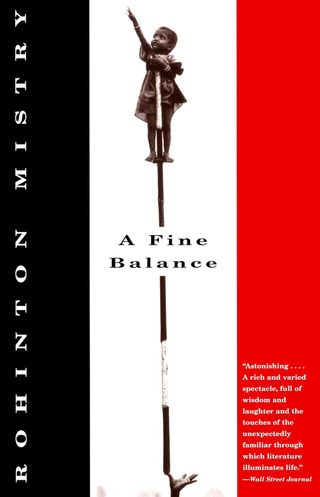
Cover of A Fine Balance

A Fine Balance

Rohinton Mistry

Original language: English · Paperback · ISBN 978-1400030651

A Fine Balance is set in 1975 India, during the period when the government declared a State of Emergency. The novel follows four people brought together by circumstance in an unnamed coastal city. Dina Dalal, a widow determined to maintain her independence, rents out space in her apartment and takes in sewing work. Ishvar and Omprakash, an uncle and nephew, are tailors who have left their village after experiencing caste-based violence. Maneck, a young man from a hill station, arrives as a student lodger. These four strangers, each carrying separate histories, begin sharing a single cramped living space.

The story traces how their initial wariness gives way to trust and attachment, even as the Emergency tightens around them. Rohinton Mistry grounds the novel in specific pressures of that era: forced sterilization campaigns, slum demolitions, political detention, and the daily corruption that shapes ordinary survival. Caste, poverty, and state power operate not as abstract themes but as concrete forces acting on the characters' bodies and choices.

Mistry, born in Bombay, moved to Canada in 1975, the same year the Emergency began. The novel is often compared to the work of Charles Dickens for its large cast, detailed social observation, and attention to people surviving at the edges of a vast system.

Plot

With a compassionate realism and narrative sweep that recall the work of Charles Dickens, this magnificent novel captures all the cruelty and corruption, dignity and heroism, of India. The time is 1975. The place is an unnamed city by the sea. The government has just declared a State of Emergency, in whose upheavals four strangers--a spirited widow, a young student uprooted from his idyllic hill station, and two tailors who have fled the caste violence of their native village--will be thrust together, forced to share one cramped apartment and an uncertain future.

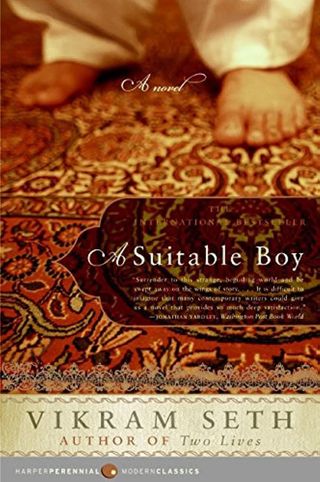
Cover of A Suitable Boy

A Suitable Boy

Vikram Seth

Original language: English · Paperback · ISBN 978-0060786526

A Suitable Boy follows Lata Mehra, a young university student in early 1950s India, and her mother's determined campaign to find her an appropriate husband. Mrs. Rupa Mehra has firm ideas about what makes a good match, but Lata has her own attachments and preferences, and the two do not always agree. The search for a partner becomes a lens through which the novel explores caste, religion, family loyalty, and personal independence in a country only a few years past the end of British rule.

The story moves across four large, interconnected families and through settings that include university towns, rural estates, and political gatherings. India's first general election forms part of the backdrop, and several characters are drawn into its currents as landowners, legislators, or voters confronting new realities. Hindu-Muslim tensions, property reform, and the social weight of tradition all press on the characters' choices.

At roughly 1,500 pages, the novel is one of the longest single-volume works in English. Vikram Seth published it in 1993, and it is set in a fictional but carefully detailed version of northern India, with cities and institutions that echo places in Uttar Pradesh and nearby states.

Plot

Vikram Seth’s novel is, at its core, a love story: the tale of Lata’s—and her mother, Mrs. Rupa Mehra’s—attempts to find a suitable boy for Lata, through love or through exacting maternal appraisal. Set in the early 1950s in an India newly independent and struggling through a time of crisis, this compelling story takes us into the richly imagined world of four large extended families and spins a compulsively readable tale of their lives and loves.

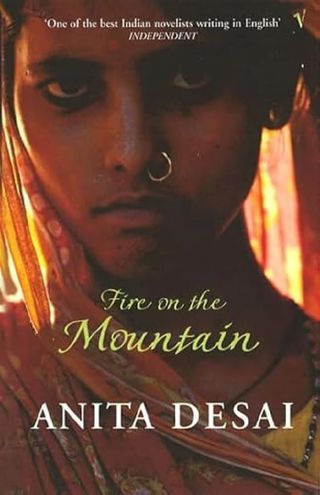
Cover of Fire On The Mountain

Fire On The Mountain

Anita Desai

Original language: English · Paperback · ISBN 978-0099428480

Nanda Kaul lives alone in a villa in the Indian hills, having chosen solitude after a long life. She spends her days in quiet routine, arranging her thoughts and keeping the world at a careful distance. When her great-granddaughter Raka is sent to stay with her for the summer, Nanda Kaul treats the arrival as an unwelcome disruption. Raka, however, is not an ordinary child. She is secretive, watchful, and drawn to the dry landscape around the house rather than to the company of her great-grandmother.

The two characters circle each other through the hot months. Nanda Kaul tries to reach the girl, recognizing something of herself in Raka's self-containment. As the summer stretches on, buried dependencies and old injuries surface beneath the composed exterior of daily life. The hillsides around the villa grow drier, and the threat of forest fire hangs over the story as both backdrop and metaphor.

Anita Desai sets the novel in Kasauli, a small hill station in Himachal Pradesh. The spare, enclosed setting mirrors the emotional landscape of the two central figures. Desai's writing stays close to the textures of heat, rock, and pine, building tension through accumulation rather than dramatic event.

Plot

Nanda Kaul is old. She has chosen to spend her last years high up in the mountains where she can arrange her thoughts into tranquility. But her solitude is broken when her fragile and secretive great-grand-daughter, Raka, comes to stay. It is an intrusion Nanda Kaul deeply resents, but this child has a capacity to change things. Through the long hot summer months hidden dependencies and old wounds are uncovered, until tragedy seems as inevitable as a forest fire on the hillsides surrounding the villa.

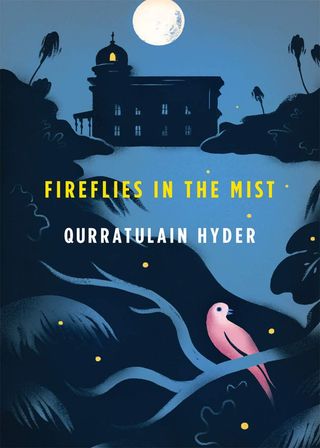
Cover of Fireflies in the Mist

Fireflies in the Mist

Qurratulain Hyder

Original language: Urdu · Paperback · ISBN 978-0811218658

Fireflies in the Mist follows Deepali Sarkar from her sheltered childhood in Dhaka through decades of political upheaval in Bengal. Sarkar grows into a socialist activist during a period that spans the 1947 Partition of British India, the separation of East Pakistan, and the eventual formation of Bangladesh. The novel tracks her alongside other characters whose lives are shaped by the same historical forces, each responding differently to the pressures of nationalism, class, and displacement.

Qurratulain Hyder, one of the major Urdu-language novelists of the twentieth century, uses Sarkar's arc to examine how revolutionary ideals shift over time. As Sarkar moves from provincial Dhaka into a wider cosmopolitan world, the book traces a pattern familiar in postcolonial settings: early conviction giving way to comfort, and political energy gradually absorbed by class privilege. The story does not treat this as simple failure but as a slow, layered process tied to the social structures around each character.

The novel's geographic scope connects several cities and borders that were redrawn within a single generation. Hyder wrote in both Urdu and English, and this edition brings the novel to English-language readers through her own careful rendering of a landscape she knew from multiple directions.

Plot

Fireflies follows the creation of modern-day Bangladesh ― from Indian province to Partition, to the emergence of statehood ― as told through the impassioned voice of Deepali Sarkar and others around her who live through turbulence. Hyder perceptively and majestically follows the trajectory of Sarkar’s life ― from her secluded upbringing in Dhaka to becoming a socialist rebel and to her ultimate transformation as a diasporic Bengali cosmopolitan ― in the way that many of yesterday’s revolutionaries are slowly but surely ensnared within a net of class and luxury dangled in front of them.

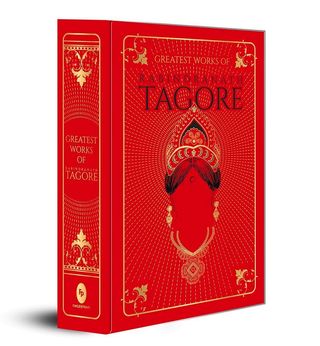
Cover of Greatest Works of Rabindranath Tagore

Greatest Works of Rabindranath Tagore

Rabindranath Tagore

Original language: Bengali · Hardcover

Rabindranath Tagore, born in Calcutta in 1861, wrote across an unusual range of forms: poetry, short fiction, novels, plays, songs, and essays. He composed work in Bengali throughout his life and also produced English translations and original English texts. In 1913 he became the first non-European writer to receive the Nobel Prize in Literature, recognized largely for the English version of his poetry collection Gitanjali. This volume gathers selections from his most widely read output in a single edition.

Tagore's short stories often center on rural Bengal, observing the tensions between tradition and individual feeling within families, villages, and the wider colonial society of British India. His poems move between devotional and personal registers, while his plays explore questions of freedom and social hierarchy. Several of his songs remain part of everyday life in South Asia: the national anthems of both India and Bangladesh draw on compositions he wrote.

This collected edition is organized to present poems, stories, and plays together, offering a cross-section of the literary forms Tagore worked in over a career that spanned more than five decades, from the 1880s until his death in 1941.

Plot

Featuring a collection of the renowned Indian poet's most celebrated works, this beautifully designed book includes poems, stories, and plays that showcase Tagore's mastery of language and his deep insights into the human experience. Experience the depth of his storytelling and profound insights into human emotions and societal dynamics. It is an essential addition to any literature lover's collection.

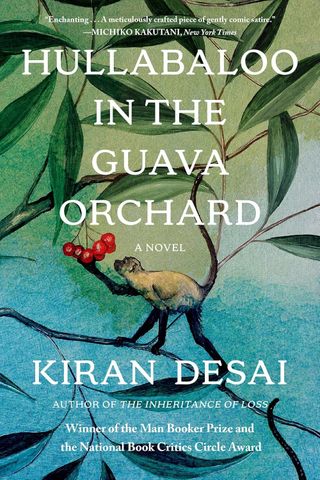
Cover of Hullabaloo in the Guava Orchard

Hullabaloo in the Guava Orchard

Kiran Desai

Original language: English · Paperback · ISBN 978-0802163981

Sampath Chawla is born during a drought into an eccentric family in a small city in northern India. He drifts through his youth without direction, spending his time in tea stalls and daydreaming rather than pursuing any practical ambition. Nothing in his early life suggests he will distinguish himself in any way. Then one day, seeking quiet and solitude, Sampath climbs a guava tree and refuses to come down.

What follows is an escalation that pulls the entire town into disorder. Sampath is taken for a holy man, a guru perched in a tree dispensing wisdom. Pilgrims and curious visitors arrive. His family, previously unremarkable, discovers unexpected financial opportunity in his new status. The novel traces how a single odd act can reshape a household, a neighborhood, and a community, with each party responding according to its own appetites and anxieties.

Kiran Desai published this debut novel in 1998, drawing praise from writers including Salman Rushdie. The story is comic in tone, built around characters whose logic is slightly skewed and a setting where small-town social life amplifies every event beyond proportion. Desai went on to win the Man Booker Prize in 2006 for her second novel, The Inheritance of Loss.

Plot

Praised by Salman Rushdie and Junot Diaz, among others, Hullabaloo in the Guava Orchard was published to great acclaim in 1998, and established Kiran Desai as a vivid literary voice eight years before The Inheritance of Loss won the Man Booker Prize. Sampath Chawla was born in a time of drought into a family not quite like other families, in a town not quite like other towns. After years of failure and spending his days dreaming in tea stalls, it does not seem as if Sampath is going to amount to much—until one day he climbs a guava tree in search of peaceful contemplation and becomes unexpectedly famous as a holy man, sending his tiny town into turmoil.

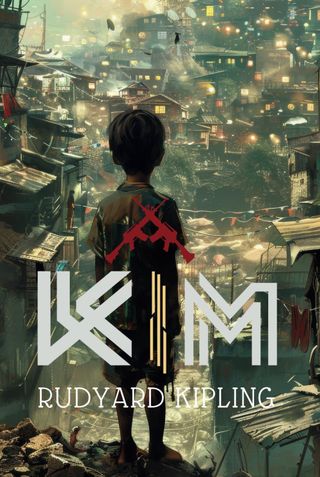
Cover of Kim

Kim

Rudyard Kipling

Original language: English · Hardcover · ISBN 979-8329588767

Kim follows Kimball O'Hara, the orphaned son of an Irish soldier, growing up on the streets of Lahore in British-ruled India. Known simply as Kim, the boy speaks local languages, moves freely among different communities, and passes easily across boundaries of caste and religion. When he encounters a Tibetan lama searching for a sacred river, Kim becomes the old man's companion and disciple, and the two set off together on a long journey across northern India.

Their travels bring them into contact with horse traders, soldiers, monks, spies, and villagers along the Grand Trunk Road and into the Himalayan foothills. At the same time, Kim is drawn into the Great Game, the shadowy contest between Britain and Russia for influence in Central Asia. The novel is set roughly in the 1890s, after the Second Afghan War but before the Third, a period of uneasy watchfulness along the northern frontier.

Rudyard Kipling first published Kim as a serial in McClure's Magazine from December 1900 to October 1901, with book publication by Macmillan in October 1901. The story presents a wide view of Indian society, its bazaars, roads, religions, and daily life, drawn from Kipling's own years in the country. Kipling later received the Nobel Prize in Literature in 1907.

Plot

First published serially in McClure's Magazine from December 1900 to October 1901 as well as in Cassell's Magazine from January to November 1901, and first published in book form by Macmillan & Co. Ltd in October 1901. The story unfolds against the backdrop of The Great Game, the political conflict between Russia and Britain in Central Asia. It is set after the Second Afghan War which ended in 1881, but before the Third, probably in the period 1893 to 1898. The novel is notable for its detailed portrait of the people, culture, and varied religions of India. "The book presents a vivid picture of India, its teeming populations, religions, and superstitions, and the life of the bazaars and the road."

Cover of Madhur Jaffrey's Ultimate Curry Bible

Madhur Jaffrey's Ultimate Curry Bible

Madhur Jaffrey

Original language: English · Hardcover · ISBN 978-0091874155

Madhur Jaffrey's Ultimate Curry Bible is a large cookbook containing over 150 recipes that trace the spread of curry from India outward across continents. Jaffrey, one of the most widely read authors on Indian cooking, organizes the book by starting with Indian curry recipes before moving through the cuisines of Sri Lanka, Burma, Thailand, Vietnam, Japan, China, and even into European adaptations such as French curry sauces. The structure follows the historical paths of Indian immigrants and traders whose cooking shaped food traditions far beyond South Asia.

Each recipe is set within its geographic and cultural context, blending food history with practical instruction. Some of the dishes had not previously appeared in print, including preparations like fish with tamarind and coconut or lamb braised with oranges. Beyond main dishes, the book covers accompanying foods: rice preparations, breads, chutneys, relishes, and sweets. Jaffrey includes her own guidance on pairing these sides with specific curries.

The book treats curry not as a single dish but as a broad category of spiced cooking that developed differently in each place it reached. Its scope extends well past any single national tradition, mapping how one cooking idea traveled and changed along trade and migration routes.

Plot

The influence of the Indian curry has been far-reaching: Indian immigrants and traders influenced the cooking of many other great cuisines of the world, including those of Sri Lanka, Burma, Thailand, Vietnam, Japan and China. History blends with recipes in this meticulously researched book, which will prove fascinating reading for food lovers everywhere. With over 150 mouthwatering recipes, Madhur starts with the best curry recipes in India today, moves on to Asian curries, and even includes European curry ideas such as French curry sauces. Some recipes have never before appeared in print, such as fish seasoned with tamarind and coconut and lamb braised with oranges. Also included are Madhur's tips for the best accompanying foods - she gives us ideas for rice, bread, chutneys, relishes and sweets - the perfect complement for any curry.

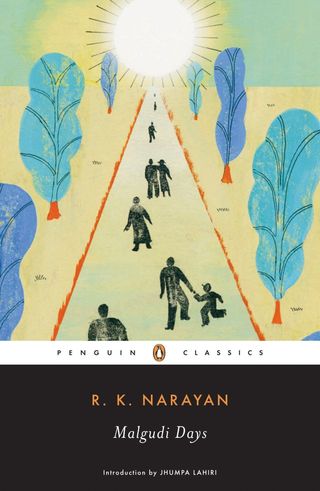
Cover of Malgudi Days

Malgudi Days

R. K. Narayan

Original language: Hindi · Paperback · ISBN 978-0143039655

Malgudi Days is a collection of short stories by R. K. Narayan, set in the fictional South Indian town of Malgudi. Written across a span of nearly four decades, the stories follow ordinary people going about their daily lives: an astrologer reading palms by the roadside, a snake charmer, a postman on his rounds, a vendor selling pies and chapatis. Narayan builds each portrait from small, specific domestic details rather than broad drama.

Malgudi itself functions almost as a character. Though entirely imagined, the town carries the rhythms and textures of real small-town India, with its markets, temples, and familiar social patterns. Narayan once observed that in India a writer need only look out the window to find a character and, with that character, a story. The remark captures the quiet method behind these pieces, where plot tends to grow from personality rather than from external events.

This edition includes an introduction by Jhumpa Lahiri and was published as part of a series marking the centennial of Narayan's birth. The stories span different periods of his long career, offering a view of how his style and concerns shifted over time while the setting of Malgudi remained constant.

Plot

Introducing this collection of stories, R. K. Narayan describes how in India "the writer has only to look out of the window to pick up a character and thereby a story." Composed of powerful, magical portraits of all kinds of people, and comprising stories written over almost forty years, Malgudi Days presents Narayan's imaginary city in full color, revealing the essence of India and of human experience. This edition includes an introduction by Pulitzer Prize-winning author Jhumpa Lahiri.

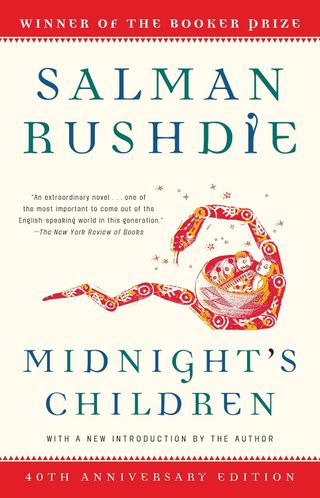
Cover of Midnight's Children

Midnight's Children

Salman Rushdie

Original language: English · Paperback · ISBN 978-0812976533

Saleem Sinai is born at the exact moment India becomes independent, midnight on August 15, 1947. In Salman Rushdie's 1981 novel, his life then runs parallel to the life of the new nation. His health rises and falls with India's fortunes, and his private choices ripple outward into public affairs. He also finds he shares a telepathic link with the other children born in that first hour, each carrying a distinct magical gift.

The book moves across several decades, from the end of British colonial rule and the partition of the subcontinent to the political upheavals that followed. Rushdie makes Saleem both narrator and participant, so documented events reach the page through one personal and often unreliable voice. That mixture of recorded history and invented episode places the novel within magical realist and postcolonial writing, and within postmodern fiction that comments on its own telling.

It took the 1981 Booker Prize and, in the same year, the James Tait Black Memorial Prize. Voters later chose it as the finest Booker winner at the award's 25th and 40th anniversaries, in 1993 and 2008. The BBC's Big Read poll of best-loved novels in the UK listed it in 2003, and Penguin included it among Great Books of the 20th Century.

Plot

Saleem Sinai is born at the stroke of midnight on August 15, 1947, the very moment of India’s independence. Greeted by fireworks displays, cheering crowds, and Prime Minister Nehru himself, Saleem grows up to learn the ominous consequences of this coincidence. His every act is mirrored and magnified in events that sway the course of national affairs; his health and well-being are inextricably bound to those of his nation; his life is inseparable, at times indistinguishable, from the history of his country. Perhaps most remarkable are the telepathic powers linking him with India’s 1,000 other “midnight’s children,” all born in that initial hour and endowed with magical gifts.

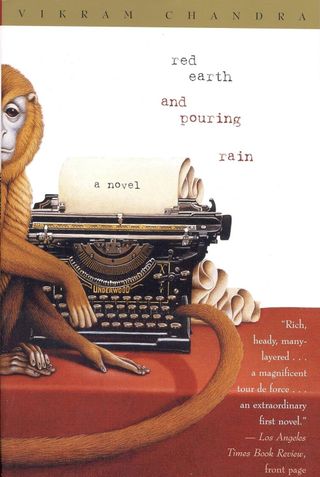
Cover of Red Earth and Pouring Rain

Red Earth and Pouring Rain

Vikram Chandra

Original language: English · Paperback · ISBN 978-0316132930

Red Earth and Pouring Rain by Vikram Chandra opens with a young Indian student returning home from college in the United States. He shoots a monkey, which turns out to be the reincarnation of a nineteenth-century poet. To postpone his death, the monkey-poet strikes a bargain: he will tell stories, and as long as listeners remain engaged, he survives. This framing device sets the novel's structure, with the student and the poet taking turns as narrators.

The poet's chapters reach back into Indian history, recounting episodes of resistance against British colonial rule, battles, love, and loss across generations. The student's chapters sit in a very different register, following his experience of dislocation and restlessness in modern America. The two timelines run in parallel, connected by questions about belonging, memory, and what stories do for the people who tell them.

Chandra draws on classical Indian narrative traditions, where stories nest inside other stories and characters shift between lives. The novel moves between registers of myth and realism, and between continents, without settling permanently in either mode. It was his debut novel, published in 1995.

Plot

Red Earth and Pouring Rain by Vikram Chandra is an epic, multi-layered novel that intertwines myth, history, and modern life. It tells the story of a reincarnated Indian poet who, in the form of a monkey, recounts tales of love, rebellion, and destiny to avoid death. Blending ancient Indian legends with contemporary storytelling, the book explores the power of narrative, the search for identity, and the enduring connections between past and present.

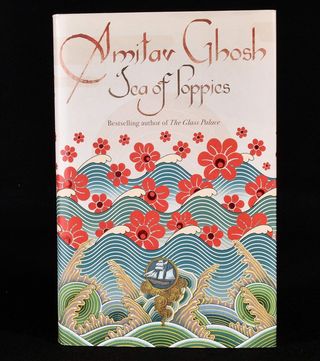
Cover of Sea of Poppies

Sea of Poppies

Amitav Ghosh

Original language: English · Hardcover · ISBN 978-0374174224

Sea of Poppies is set in the late 1830s, just before the Opium Wars between Britain and China. The story centers on the Ibis, a former slave ship now repurposed for a crossing of the Indian Ocean. Aboard are people from sharply different walks of life: a raja facing financial ruin, a village widow, an American freedman of mixed heritage, a French orphan, an evangelical opium trader, and a shifting crew of sailors, stowaways, and transported convicts. Each carries a distinct reason for being on the ship, and those reasons gradually intersect as the voyage takes shape.

The novel moves between the poppy-growing countryside along the Ganges, the port cities of colonial India, and the open sea. Ghosh uses this geography to trace how the opium trade connected distant economies and uprooted ordinary lives. Workers in the poppy fields supplied a commodity that would trigger armed conflict thousands of miles away in China, and the characters aboard the Ibis are caught at various points along that chain.

As old ties of caste, family, and nationality loosen during the passage, the passengers begin calling themselves jahaj-bhais, a Hindi term meaning ship-brothers. Sea of Poppies is the first volume of a trilogy known as the Ibis trilogy.

Plot

At the heart of this vibrant saga is a vast ship, the Ibis. Its destiny is a tumultuous voyage across the Indian Ocean; its purpose, to fight China’s vicious nineteenth-century Opium Wars. As for the crew, they are a motley array of sailors and stowaways, coolies and convicts. In a time of colonial upheaval, fate has thrown together a diverse cast of Indians and Westerners, from a bankrupt raja to a widowed tribeswoman, from a mulatto American freedman to a freespirited French orphan. As their old family ties are washed away, they, like their historical counterparts, come to view themselves as jahaj-bhais, or ship-brothers. An unlikely dynasty is born, which will span continents, races, and generations.

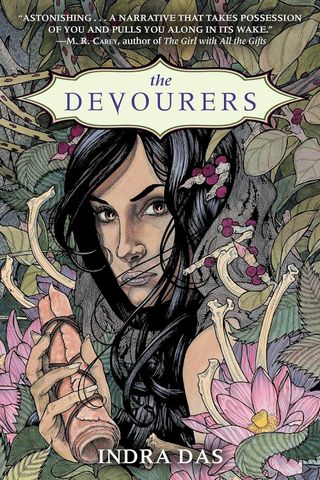
Cover of The Devourers

The Devourers

Indra Das

Original language: English · Paperback · ISBN 978-1101967539

In Kolkata, under a full moon and the sounds of traveling musicians, a college professor named Alok meets a stranger who carries an unusual confession. The stranger asks Alok to transcribe a set of old notebooks, worn parchments, and skins that once belonged to living creatures. Alok agrees, drawn by curiosity and the promise of hearing the rest of an unfinished story. What emerges from these documents is a chronicle spanning centuries, describing beings who exist somewhere between human and animal, governed by ancient instincts.

Part of the chronicle follows a wanderer moving through seventeenth-century Mughal India who becomes entangled with a defiant woman. Their connection pulls him between two opposing worlds, and the story shifts between this historical thread and Alok's present-day encounters with the stranger in modern Kolkata. As Alok transcribes more, his relationship with the stranger deepens and takes on a more unsettling quality.

Indra Das sets the novel across two distinct periods of Indian history, using the frame of transcription to move between them. The book combines elements of dark fantasy with questions about the boundaries of the human body, desire, and predatory nature. Its Kolkata setting grounds the supernatural material in a recognizable city with its own layered past.

Plot

On a cool evening in Kolkata, India, beneath a full moon, as the whirling rhythms of traveling musicians fill the night, college professor Alok encounters a mysterious stranger with a bizarre confession and an extraordinary story. Tantalized by the man’s unfinished tale, Alok will do anything to hear its completion. So Alok agrees, at the stranger’s behest, to transcribe a collection of battered notebooks, weathered parchments, and once-living skins.

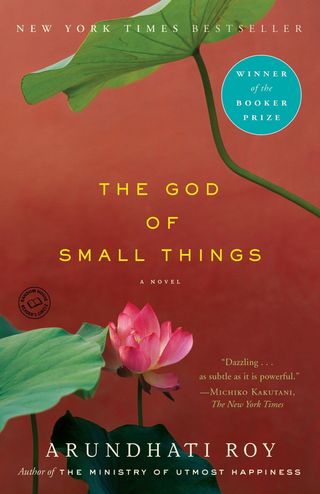
Cover of The God of Small Things

The God of Small Things

Arundhati Roy

Original language: English · Paperback · ISBN 978-0812979657

Set in the southern Indian state of Kerala in 1969, The God of Small Things follows the fraternal twins Estha and Rahel as their comfortable family life fractures after the arrival of their young cousin, Sophie. Arundhati Roy's debut novel moves between the children's view of that year and events decades later, circling back again and again to a single catastrophic day.

The novel is rooted in the hierarchies of caste and class that shape daily life in Kerala, a state where communist organizing and older forms of power sat in tension. Roy uses the twins' close attention to language, detail, and sensation to build a voice that is precise and unsettling at once. Small domestic moments carry heavy consequences, and the children understand only part of what the adults around them are doing.

Roy published the novel in 1997, and it won the Booker Prize that year. Reviewers have set her prose beside Faulkner and Dickens. It reads at once as a family chronicle and as political drama, and it opened a career that has since included fiction and political essays written for readers well beyond India.

Plot

The seven-year-old twins Estha and Rahel see their world shaken irrevocably by the arrival of their beautiful young cousin, Sophie. It is an event that will lead to an illicit liaison and tragedies accidental and intentional, exposing “big things [that] lurk unsaid” in a country drifting dangerously toward unrest.

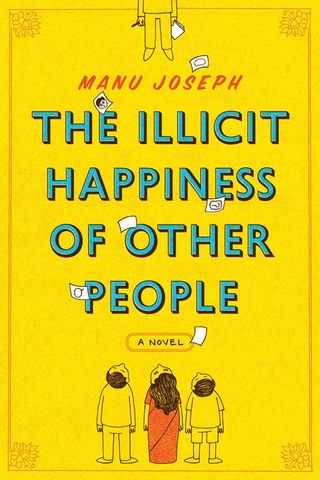
Cover of The Illicit Happiness of Other People

The Illicit Happiness of Other People

Manu Joseph

Original language: English? · Paperback · ISBN 978-0393338621

Set in Madras during the 1990s, The Illicit Happiness of Other People follows the Chacko family three years after the death of seventeen-year-old Unni, who fell from a balcony under unclear circumstances. His father Ousep is an alcoholic journalist who has drifted through grief without confronting it. His mother Mariamma channels her frustration into vivid fantasies of domestic violence. His younger brother Thoma, twelve years old and painfully self-conscious, is absorbed by his first experience of love. The family has survived by avoiding the questions that matter most.

When a comic strip drawn by Unni arrives unexpectedly through the post office, years late, Ousep is jolted into action. He begins to investigate his son's life, speaking to the people Unni knew and trying to understand the world he inhabited. That world included a circle of gifted, unconventional adolescents navigating a city where young men faced intense academic pressure. Unni's drawings appear to carry meaning that Ousep did not previously recognize.

Manu Joseph writes the novel as a darkly comic story threaded with serious questions about perception, truth, and the inner lives people keep hidden. The tone balances dry humor against genuine grief, anchoring both in the specific textures of south Indian domestic life.

Plot

It has been three years since seventeen-year-old Unni Chacko mysteriously fell from a balcony to his death. His family―journalist father Ousep, who smokes two cigarettes at once “because three is too much”; mother Mariamma, who fantasizes gleefully about murdering her husband; and twelve-year-old love-struck brother Thoma with zero self-esteem, have coped by not coping. When the post office delivers a comic drawn by Unni that had been lost in the mail, Ousep, shocked out of his stupor, ventures on a quest to understand his son and rewrite his family’s story.

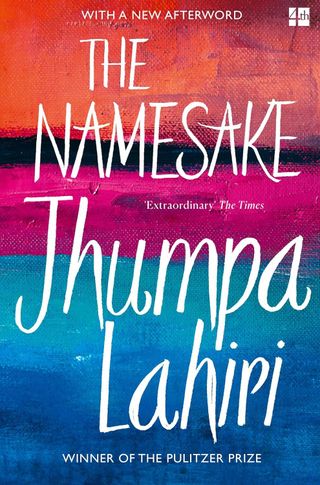
Cover of The Namesake

The Namesake

Jhumpa Lahiri

Original language: English · Paperback · ISBN 978-0007185399

Gogol Ganguli enters the world in an American hospital, but his name arrives through an unplanned detour. His parents, Ashima and Ashoke, Bengali immigrants settled in the suburbs outside Boston, had expected a letter from India carrying the name chosen by a grandmother. When the letter fails to arrive and hospital paperwork cannot wait, Ashoke fills in the gap with Gogol, the surname of the Russian writer Nikolai Gogol, a personal favorite. What begins as a temporary fix becomes permanent, and the name follows the boy through childhood, school, and into adulthood.

As Gogol grows up, the distance between his parents' Bengali customs and his own American surroundings widens steadily. He resents the unusual name, seeing it as a mark of difference he did not choose. Eventually he adopts a new legal name, Nikhil, hoping to define himself on his own terms. The novel tracks his relationships, career choices, and shifting sense of belonging across roughly three decades, moving between the United States and Calcutta.

Jhumpa Lahiri's first novel examines how naming, food, travel, and small domestic rituals carry cultural memory between generations. The Ganguli family's story turns on quiet tensions rather than dramatic events, tracing the slow negotiation between inherited identity and the one a person tries to build alone.

Plot

'The Namesake' is the story of a boy brought up Indian in America. 'When her grandmother learned of Ashima's pregnancy, she was particularly thrilled at the prospect of naming the family's first sahib. And so Ashima and Ashoke have agreed to put off the decision of what to name the baby until a letter comes...' For now, the label on his hospital cot reads simply BABY BOY GANGULI. But as time passes and still no letter arrives from India, American bureaucracy takes over and demands that 'baby boy Ganguli' be given a name. In a panic, his father decides to nickname him 'Gogol' - after his favourite writer. Brought up as an Indian in suburban America, Gogol Ganguli soon finds himself itching to cast off his awkward name, just as he longs to leave behind the inherited values of his Bengali parents. And so he sets off on his own path through life, a path strewn with conflicting loyalties, love and loss...

Cover of The White Tiger

The White Tiger

Aravind Adiga

Original language: English · Paperback · ISBN 978-1416562603

Aravind Adiga's novel The White Tiger is told as a series of letters from Balram Halwai, a village-born man in India, to the visiting president of China. In them Balram traces his path from poverty to work as a chauffeur for a wealthy Delhi family, and later to business life in Bangalore. The letter form gives him a direct, confessional voice as he sets out how he thinks Indian society works.

Balram calls himself a white tiger, a rare animal, to describe someone who appears only once in a generation and rises against the odds. His account moves between the village world of debt, landlords and limited schooling, and the cities where outsourcing and global business bring new money while older arrangements between employers and servants continue much as before.

The book is set during a stretch of rapid economic change in India, and its central tension sits between inherited servitude and the promise of self-invention. Corruption, class, and the daily distance between rich households and the people who work inside them run through Balram's telling, which stays sharp and darkly comic rather than sentimental.

Plot

At the heart of the novel is Balram Halwai, the so-called “white tiger”—a rare creature who rises against the odds. Born in a poor Indian village, Balram becomes a driver for a wealthy family in Delhi before reinventing himself as a self-made Bangalore entrepreneur. As he recounts his journey in a letter to the visiting president of China, Balram exposes the contradictions of Indian society, where deep-rooted traditions of servitude and inequality collide with the promise of global business and outsourcing.

Cover of Think Like a Monk

Think Like a Monk

Jay Shetty

Original language: English · Hardcover · ISBN 978-1982134488

Jay Shetty grew up in north London in a family that expected him to become a doctor or a lawyer. Instead of attending his college graduation, he traveled to India to live as a monk, spending three years in an ashram where he meditated for four to eight hours each day. One of his teachers eventually suggested he could reach more people by leaving monastic life and sharing what he had learned. He returned to London with heavy debt and no conventional career history, but old school friends working in large corporations began asking him for guidance on stress, purpose, and well-being.

Think Like a Monk organizes the practices and ideas Shetty absorbed during those years into structured advice for daily life. The book addresses overthinking, negativity, comparison, fear, and the search for purpose. Shetty presents exercises alongside the underlying principles, drawing on both his personal experience and older contemplative traditions. Topics range from managing difficult thoughts to understanding why seeking happiness directly can be counterproductive.

Shetty built a large following through online video before publishing this book. He was named to the Forbes 30-under-30 list in 2017 in the media category, and his podcast On Purpose became one of the most widely followed programs in the health and wellness space.

Plot

In this inspiring, empowering book, Shetty draws on his time as a monk to show us how we can clear the roadblocks to our potential and power. Combining ancient wisdom and his own rich experiences in the ashram, Think Like a Monk reveals how to overcome negative thoughts and habits, and access the calm and purpose that lie within all of us. He transforms abstract lessons into advice and exercises we can all apply to reduce stress, improve relationships, and give the gifts we find in ourselves to the world. Shetty proves that everyone can—and should—think like a monk.

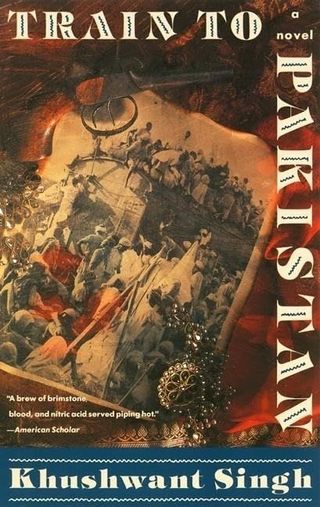
Cover of Train to Pakistan

Train to Pakistan

Khushwant Singh

Original language: English · Paperback · ISBN 978-0802132215

Khushwant Singh's novel is set in the summer of 1947, during the partition of British India into India and Pakistan. Millions of people, Hindu, Muslim, and Sikh, fled across the new borders. In the chaos that followed, mass violence swept through northern India. But in certain small, isolated villages along the frontier, communities that had lived side by side for generations remained, for a time, untouched.

Mano Majra is one such village, a place where Sikhs and Muslims share daily life and have done so for centuries. The story begins when a train pulls into the local station carrying the bodies of dead refugees. This single event cracks the fragile calm, and the villagers find themselves drawn into the sectarian hatred spreading across the subcontinent. Against this backdrop, Singh follows the relationship between a young Sikh man and a Muslim woman, testing whether personal bonds can hold when an entire region is fracturing along religious lines.

The novel also introduces figures from outside the village, including a political worker and a local magistrate, whose motives and methods complicate the situation further. Singh wrote from direct experience of partition-era Punjab, and the book was first published in 1956.

Plot

It is a place, Khushwant Singh goes on to tell us at the beginning of this classic novel, where Sikhs and Muslims have lived together in peace for hundreds of years. Then one day, at the end of the summer, the “ghost train” arrives, a silent, incredible funeral train loaded with the bodies of thousands of refugees, bringing the village its first taste of the horrors of the civil war.

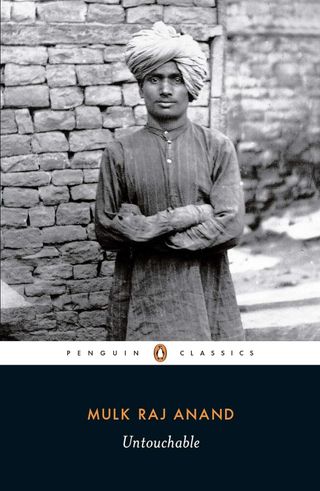
Cover of Untouchable

Untouchable

Mulk Raj Anand

Original language: English · ISBN 978-0141393605

Untouchable, first published in 1935, follows a single day in the life of Bakha, a young man born into the lowest rung of India's caste system. As a sweeper and cleaner of latrines, Bakha is expected to announce his presence on the street so that higher-caste people can avoid contact with him. Despite his physical strength and quiet pride, he occupies a position that the social order treats as a source of contamination. Mulk Raj Anand sets the story in pre-independence India and compresses the narrative into a few hours, giving it an almost real-time intensity.

During this single day, a violent incident forces Bakha to confront the rules that define his existence. He moves through a town where every interaction, from buying bread to walking on a road, is shaped by the restrictions placed on people classified as untouchable. The novel does not offer a distant historical survey but instead stays close to Bakha's immediate experience, recording small humiliations alongside larger questions about whether change is possible.

Anand wrote the book while living in London, and E.M. Forster contributed a preface to the original edition. The story's compressed timeframe and plain, direct prose keep the focus tightly on one person's ordinary reality within a rigid social hierarchy.

Plot

Bakha, an attractive, proud, and strong young man, is also an Untouchable, the lowest of the low in India’s caste system. A sweeper and a toilet-cleaner, he must warn others on the street of his status so that he will not pollute them with his presence. In this urgent 1935 re-creation of one day in the life of an outcast, a violent encounter leads Bakha to question his fate—and to find an answer in the unlikeliest of places.

More from India

See the country page for India for its map, facts and largest cities, or browse books from other countries.

Free editions are on Project Gutenberg, matched by title and author. Links go to Amazon; Hookito doesn’t sell books. Know a book that belongs here, or spotted a mistake? Write to submissions@hookito.com.

Where to next?

Back to the globe
Hookito landscape illustration