Hookito

Jamaica · Books

Books from Jamaica

10 books from and about Jamaica: what each is about, the plot, and a note from Professor Kogi.

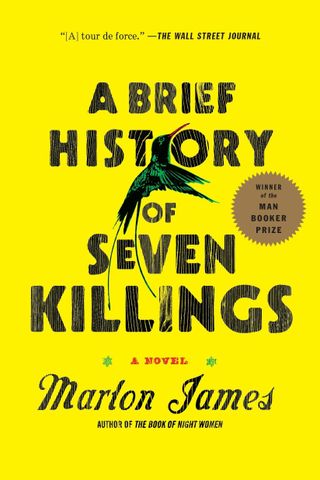
Cover of A Brief History of Seven Killings

A Brief History of Seven Killings

Marlon James

Original language: English · Paperback · ISBN 978-1594633942

On December 3, 1976, seven gunmen entered Bob Marley's house in Kingston, Jamaica, and opened fire. The attack came two days before the Smile Jamaica Concert, which Marley had organized to calm tensions ahead of a general election. Marley, his wife, and his manager were wounded. Others were injured. Little official information about the gunmen was ever released, though speculation about their identities and fates spread widely. Marlon James uses this real incident as the starting point for a large fictional narrative structured as an oral history, told through many voices.

The novel follows a broad cast of characters across decades and locations. Among them are assassins, drug dealers, journalists, and figures from Kingston's political underworld during the volatile 1970s. The story extends forward into the crack trade of 1980s New York and then into a changed Jamaica of the 1990s. James gives each narrator a distinct voice, building the book from overlapping and sometimes contradicting accounts.

The range of perspectives means the novel moves between personal survival, political violence, and the drug economy without settling on a single explanation for any of it. James previously published The Book of Night Women, and this novel shares that earlier work's attention to how power and violence shape ordinary lives in the Caribbean and its diaspora.

Plot

On December 3, 1976, just before the Jamaican general election and two days before Bob Marley was to play the Smile Jamaica Concert to ease political tensions in Kingston, seven unnamed gunmen stormed the singer’s house, machine guns blazing. The attack wounded Marley, his wife, and his manager, and injured several others. Little was officially released about the gunmen, but rumors abounded regarding the assassins’ fates. A Brief History of Seven Killings is James’s fictional exploration of that dangerous and unstable time in Jamaica’s history and beyond. Deftly spanning decades and continents and people with a wide range of characters—assassins, drug dealers, journalists, and even ghosts—James brings to life the people who walked the streets of 1970s Kingston, who dominated the crack houses of 1980s New York, and who reemerged into a radically altered Jamaica of the 1990s.
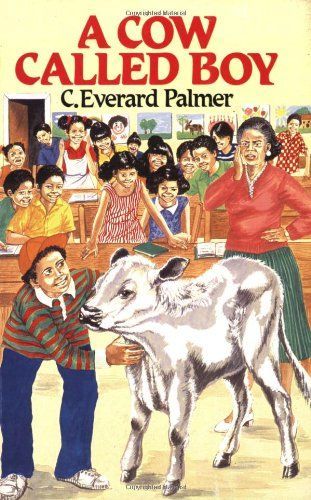

Cover of A Cow Called Boy

A Cow Called Boy

C. Everard Palmer

Original language: English · Paperback · ISBN 978-0333397831

A Cow Called Boy follows Josh, a young Jamaican boy who has hand-reared a bull-calf named Boy from an early age. The story is set in a small rural community where Boy develops an unusual habit of wandering into the local school, disrupting classes and drawing attention from neighbors, teachers, and authorities. Boy's persistent appearances set off a chain of events that range from genuinely serious to openly funny, pulling Josh into conflicts he did not expect.

At the center of the plot is Josh's effort to protect Boy from a butcher who wants the animal for slaughter. What begins as a boy's attachment to his calf becomes a broader struggle involving questions of fairness, ownership, and how much say a young person has when adults make decisions. C. Everard Palmer, a Jamaican author known for stories set in the island's countryside, grounds the narrative in the rhythms of rural life, where livestock, school, and community relationships overlap closely.

The book balances its lighter moments with real tension over Boy's fate, and Josh's determination carries the story forward without simplifying the obstacles he faces. Friendship and loyalty between a child and an animal sit at the core, but the conflicts around them involve the wider village.

Plot

A story of Josh's fight to save his hand-reared bull-calf, Boy, from the butcher's greedy hands. A young and small bull, by the name of Boy, insists on invading a class in a small rural school. Boy's insistence triggers off a stream of reactions, crises, and consequences, some serious, but others mostly humorous.

Cover of All over Again

All over Again

A-dZiko Simba Gegele

Original language: English · Paperback · ISBN 978-9769543614

All Over Again follows a young boy navigating the confusion and small victories of growing up. Written by A-dZiko Simba Gegele, the novel is set in Jamaica and told in an energetic narrative voice that places the reader close to its protagonist's perspective. He contends with puberty, a six-year-old sister who tests his patience at every turn, and parents whose habits baffle him. His mother seems to see through walls, and his father believes that saving every coin and waking at five on Sunday mornings counts as quality time.

Beyond the household, the boy must find ways around the local bully and figure out how to deal with Kenny, a peer who always claims to know best. These everyday pressures, none of them catastrophic on their own, pile up into the particular anxiety of someone not yet sure he is ready for the next stage of life. Gegele draws humor from the gap between childhood logic and the adult world that keeps pressing in.

The book belongs to a tradition of Caribbean coming-of-age fiction that grounds its storytelling in local speech patterns and domestic detail. Its focus stays on ordinary family friction rather than grand events, building its portrait of adolescence from accumulated small moments.

Plot

All Over Again is a hilarious and enchanting coming-of-age story as a young boy goes through the trials and joys and puberty, battles with his 6-year-old sister who is the bane of his existence, worries about disappointing his mother, and understands his father. He has to learn to get around the town's bully while moving beyond know-it-all Kenny. The story is energetically told and has an enchanting narrative style that pulls you into it immediately. Growing up is hard. You know this. And when your mother has X-ray eyes and dances like a wobbling bag of water? When your father's idea of fun is to put all your money in a savings account and make you get up at 5 am every Sunday morning?

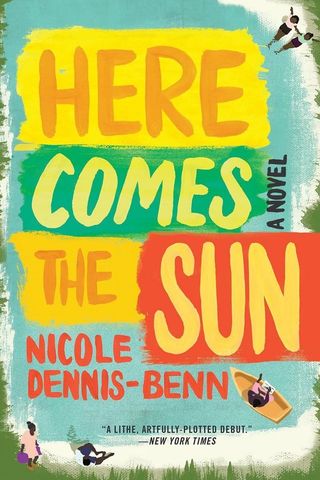
Cover of Here Comes the Sun

Here Comes the Sun

Nicole Dennis-Benn

Original language: English · Paperback · ISBN 978-1631492945

Nicole Dennis-Benn's first novel is set in a Jamaican village near Montego Bay, where Margot works at an expensive resort and sends most of what she earns toward her younger sister Thandi's schooling. As a girl, Margot was taught to use her sexuality as a means of survival, and she is fiercely determined that Thandi will not be pushed toward the same arrangement.

Plans for a new hotel then reach the village, and the news carries two meanings for Margot at once. It threatens the community where her family lives, and it also suggests a route toward financial independence of her own. It may open room for something she has never said aloud, her love for another woman, which the people around her would not accept.

The book moves among several women in one family, each balancing what she owes to others against what she wants for herself, and each holding injuries she has kept private. Dennis-Benn writes Jamaican speech rhythms into the narration and places ordinary working life beside the beaches and turquoise water that visitors arrive to see. The distance between those two versions of one coastline shapes much of the story.

Plot

Capturing the distinct rhythms of Jamaican life and dialect, Nicole Dennis- Benn pens a tender hymn to a world hidden among pristine beaches and the wide expanse of turquoise seas. At an opulent resort in Montego Bay, Margot hustles to send her younger sister, Thandi, to school. Taught as a girl to trade her sexuality for survival, Margot is ruthlessly determined to shield Thandi from the same fate. When plans for a new hotel threaten their village, Margot sees not only an opportunity for her own financial independence but also perhaps a chance to admit a shocking secret: her forbidden love for another woman.

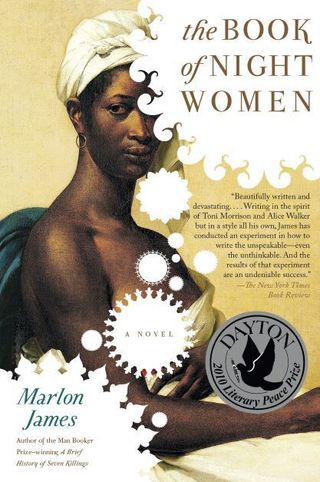
Cover of The Book of Night Women

The Book of Night Women

Marlon James

Original language: English · Paperback · ISBN 978-1594484360

The Book of Night Women by Marlon James is set on a Jamaican sugar plantation in the late eighteenth century. It follows Lilith, a young woman born into slavery whose arrival is marked by something the older enslaved women around her recognize as unusual and unsettling. As Lilith grows up on the plantation, she draws the attention of a secret group who call themselves the Night Women, a circle of enslaved women quietly preparing a revolt against the plantation system that holds them.

The Night Women see Lilith as central to their plans, but Lilith is also forming her own sense of self. Her emerging desires and identity do not always align with the group's expectations, and this tension puts both Lilith and the conspiracy at risk. The novel traces the friction between collective resistance and individual will, set against the daily violence of plantation life in colonial Jamaica.

James writes the novel in a Jamaican Creole-inflected narrative voice that carries the rhythm and texture of the period and place. The story draws on the documented history of slave uprisings in Jamaica, where organized rebellions occurred repeatedly throughout the eighteenth and nineteenth centuries.

Plot

It is the story of Lilith, born into slavery on a Jamaican sugar plantation at the end of the eighteenth century. Even at her birth, the slave women around her recognize a dark power that they- and she will come to both revere and fear. The Night Women, as they call themselves, have long been plotting a slave revolt, and as Lilith comes of age they see her as the key to their plans. But when she begins to understand her own feelings, desires, and identity, Lilith starts to push at the edges of what is imaginable for the life of a slave woman and risks becoming the conspiracy's weak link.

Cover of The Lunatic

The Lunatic

Anthony C. Winkler

Original language: English · Paperback · ISBN 978-1933354293

Aloysius lives on the margins of a Jamaican village. His neighbors tolerate him but keep their distance, and he survives by picking up odd jobs wherever he can find them. He sleeps in the woodland, and with no real human company, he fills his days with long conversations directed at trees and plants. The village regards him as its local madman, though the story suggests that what counts as sanity in this setting is far from straightforward.

His solitary routine shifts when Inga Schmidt, a sturdy German woman, arrives in Jamaica to photograph its plants and wildlife. The two form an unlikely bond, and the novel follows what happens when their separate worlds overlap in a small rural community. Anthony C. Winkler uses their pairing to examine how people define normalcy and who gets to sit inside or outside that boundary.

The book is a comic novel set against the everyday life of rural Jamaica. Winkler draws humor from the gap between social respectability and actual behavior, placing questions about goodness and forgiveness alongside situations that are openly absurd. The tone is broad and irreverent, grounded in the specific landscape and speech patterns of the Jamaican countryside.

Plot

Aloysius is tolerated by neighbors but forced to eke out a living by doing odd jobs, using the hospitable woodlands for shelter. He is starved of human companionship; instead, he has running conversations with trees and plants. Then love or a peculiar version of it comes to Aloysius in the form of a solidly built German lady, Inga Schmidt, who has come to Jamaica to photograph the flora and fauna.

Cover of The Pirate's Daughter

The Pirate's Daughter

Margaret Cezair-Thompson

Original language: English · Paperback · ISBN 978-0812979428

In 1946, Errol Flynn arrived in Jamaica aboard his storm-damaged yacht, the Zaca. The aging Hollywood star settled on Navy Island, off the coast of Port Antonio, where he hosted famous visitors and lived far from the studios that had made him one of the most recognizable actors of his era. Margaret Cezair-Thompson takes this documented period as the starting point for a work of fiction.

Ida Joseph, the teenage daughter of Port Antonio's Justice of the Peace, sets out to meet the visiting actor and is drawn to him despite his unreliable affections. Their connection produces a daughter, May, and the narrative follows both women across two generations as they try to define themselves in a place shaped by family expectation and outside attention.

Themes of belonging, inheritance, and identity run through the story, set in a Jamaica caught between local life and the glamour projected onto it by foreign visitors. The specific geography matters: Navy Island, Port Antonio, and the surrounding coast give the fiction a concrete frame where private ambition meets the social order of the late colonial period.

Plot

In 1946, Hollywood’s most famous swashbuckler, Errol Flynn, arrived in Jamaica in a storm-ravaged boat. After a long and celebrated career on the silver screen, Flynn spent the last years of his life on a small island off the Jamaican coast, where he fell in love with the people, the paradisiacal setting, and the privacy, and brought a touch of Tinseltown glamour to the West Indian community. Based on those years, The Pirate’s Daughter imagines an affair between the aging matinee star and Ida, a beautiful local girl. Flynn’s affections are unpredictable but that doesn’t stop Ida from dreaming of a life with him, especially after the birth of their daughter, May.

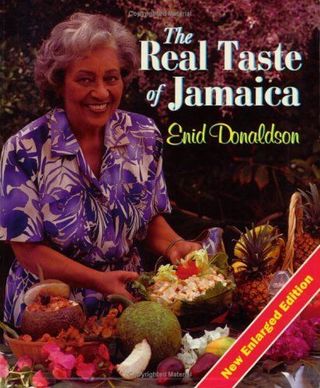
Cover of The Real Taste of Jamaica

The Real Taste of Jamaica

Enid Donaldson

Original language: English · ISBN 978-1894020862

The Real Taste of Jamaica is a cookbook by Enid Donaldson that collects recipes rooted in the island's home kitchens, professional restaurants, and roadside jerk stalls. The dishes draw on traditions shaped by the cooks who prepare them daily, from local housewives to seasoned restaurateurs. Donaldson treats Jamaican food as a living practice rather than a fixed set of instructions, and the book reflects regional variations across the island.

First published in the Caribbean by Ian Randle Publishers, the book was later brought to the North American market by Warwick Publishing in 1996. A revised edition followed after five reprints, with the two publishers collaborating to expand the content. That edition added material on traditional Jamaican cuisine and regional differences between dishes. New food photography by Ray Chen, a Jamaican-Canadian photographer, accompanied the updated text.

The cookbook covers a range of preparations that have traveled well beyond Jamaica, including jerk cooking, which originated as a method of seasoning and slow-smoking meat. By grounding its recipes in everyday practice rather than formal restaurant culture, the book documents how Jamaican flavors are maintained and adapted by the people closest to them.

Plot

Taste native cuisine prepared by local housewives, cooks, restauranteurs and roadside `Jerkies` that food lovers savour all over the world. First published in the Carribbean by Jamaica`s top independent publisher, Ian Randle Publishers, THE REAL TASTE OF JAMAICA was brought to North America by Warwick Publishing in 1996. Four years and five reprints later, Warwick and Randle have collaborated to develop additional material on traditional Jamaican cuisine and regional variations to dishes that round out the flavor of this amazing and original book. In addition, new photography by well-known Jamaican-Canadian food photographer Ray Chen illustrates this revised new edition.

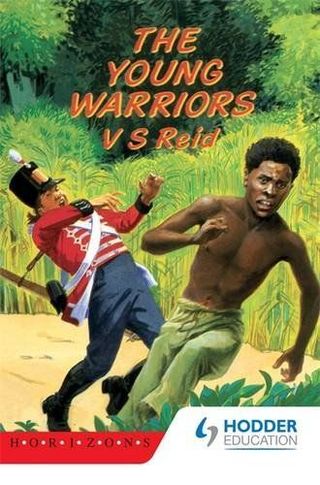
Cover of The Young Warriors

The Young Warriors

Victor Stafford Reid

Original language: English · Paperback · ISBN 978-0582765696

The Young Warriors by Victor Stafford Reid follows five Maroon boys in Jamaica as they undergo tests of skill and endurance to earn their place as warriors within their village. The Maroons were communities of formerly enslaved Africans who escaped into Jamaica's mountainous interior and established independent settlements. Reid sets his story during the colonial-era Maroon wars, when these communities fought to defend their freedom against British military forces.

While out hunting to mark their passage into warrior status, the five boys discover that English Redcoats have moved deep into the surrounding forest, placing their village in serious danger. The odds tilt sharply against the Maroons, and the boys find themselves caught between the responsibilities they have only just accepted and a threat far larger than anything their training prepared them for. Their response to the crisis forms the core of the story.

Reid, one of Jamaica's most recognized novelists, wrote the book for younger readers but grounded it in a real period of armed resistance. The Maroon wars stretched across much of the eighteenth century, and several Maroon communities in Jamaica's Blue Mountains and Cockpit Country survive as distinct settlements today.

Plot

Five Maroon boys pass tests of skill and endurance to become warriors in their village. When they go out hunting to celebrate, they suddenly discover that the forest is full of their enemies, the English Redcoats. In the campaign that follows, the defeat of the Maroons seems certain, but the young warriors help bring about a great victory.

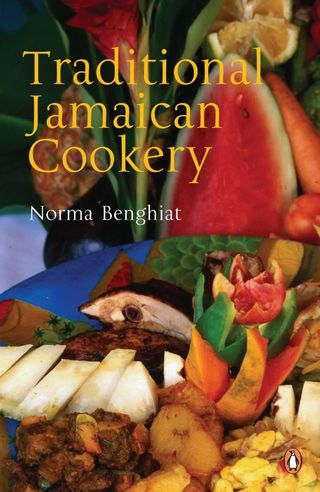
Cover of Traditional Jamaican Cookery

Traditional Jamaican Cookery

Norma Benghiat

Original language: English · Paperback · ISBN 978-0140469257

Traditional Jamaican Cookery by Norma Benghiat is a researched collection of recipes drawn from across the island's culinary history. The book spans a wide range of food traditions, from the elaborate dishes prepared on colonial-era plantations to the resourceful cooking developed by enslaved people and rural communities. That range reflects how Jamaica's food culture was shaped by different populations, ingredients, and circumstances over several centuries.

The book runs to 240 pages and includes notes on Jamaican meal patterns, offering context for how dishes fit into daily life rather than presenting recipes in isolation. A bibliography and index support readers who want to trace ingredients or techniques further. Benghiat's research draws attention to the creativity involved in peasant and working-class cooking, where limited resources led to distinctive flavors and methods that became central to the island's cuisine.

Jamaican cooking draws on African, European, South Asian, and indigenous Taino influences, and many of its staple ingredients, such as ackee, scotch bonnet peppers, and allspice, are tied to specific growing conditions on the island. The book provides a factual record of how these elements combined in kitchens across different social settings.

Plot

240 pages, including notes on Jamaican meal patterns, a bibliography, and an index.

More from Jamaica

See the country page for Jamaica for its map, facts and largest cities, or browse books from other countries.

Links go to Amazon; Hookito doesn’t sell books. Know a book that belongs here, or spotted a mistake? Write to submissions@hookito.com.

Where to next?

Back to the globe
Hookito landscape illustration