Hookito

Cambodia · Books

Books from Cambodia

7 books from and about Cambodia: what each is about, the plot, and a note from Professor Kogi.

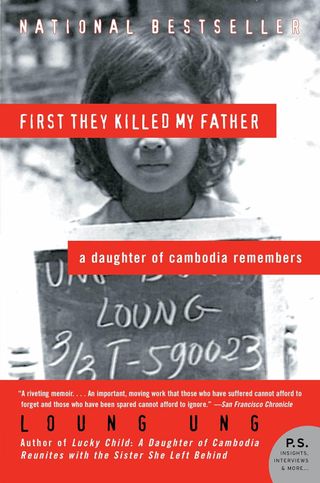
Cover of First They Killed My Father: A Daughter of Cambodia Remembers

First They Killed My Father: A Daughter of Cambodia Remembers

Loung Ung

Original language: English, French, Khmer · Paperback · ISBN 978-0060856267

Loung Ung was five years old and living in Phnom Penh when the Khmer Rouge, led by Pol Pot, took control of Cambodia in April 1975. Her father held a high-ranking position in the government, which made the entire family a target. Within days the city was emptied, and the Ung family was forced to leave their home and begin moving through the countryside, eventually splitting apart to improve their chances of survival.

Loung ended up in a work camp designated for orphans, where she was trained as a child soldier. Her siblings were separated into different labor camps across the country. The memoir recounts these years through Loung's perspective as a young girl navigating forced labor, hunger, and the constant threat of violence under a regime that sought to reshape Cambodian society by dismantling families, education, and urban life.

Loung Ung was one of seven children. The book follows the family from their earlier life in the capital through the years of displacement and separation that followed the Khmer Rouge takeover. It is written as a first-person account, grounded in specific places and events rather than broad historical summary, and draws its detail from the daily realities of a child caught inside a political upheaval.

Plot

One of seven children of a high-ranking government official, Loung Ung lived a privileged life in the Cambodian capital of Phnom Penh until the age of five. Then, in April 1975, Pol Pot's Khmer Rouge army stormed into the city, forcing Ung's family to flee and, eventually, to disperse. Loung was trained as a child soldier in a work camp for orphans, her siblings were sent to labor camps, and those who survived the horrors would not be reunited until the Khmer Rouge was destroyed.
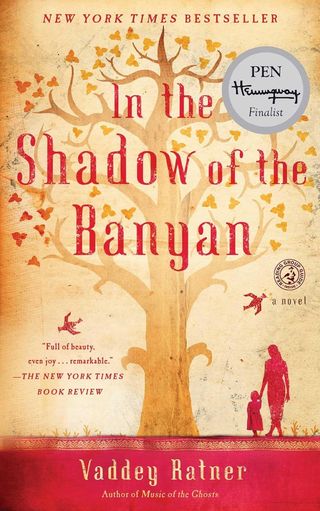
Cover of In the Shadow of the Banyan

In the Shadow of the Banyan

Vaddey Ratner

Original language: English · Paperback · ISBN 978-1451657715

In the Shadow of the Banyan is a novel by Vaddey Ratner, drawn from her own childhood experience in Cambodia during the Khmer Rouge years. The story follows Raami, a seven-year-old girl from a family with royal connections in Phnom Penh. When civil war overtakes the capital, her father arrives home before dawn with news that their sheltered life is about to collapse. The family is soon forced from the city as the new regime begins dismantling every marker of individual identity, privilege, and personal history.

Over the four years that follow, Raami endures starvation, forced labor, and the loss of family members. In a system where personal memory itself can be treated as dangerous, she holds on to the myths, legends, and poems her father once shared with her. These stories become her way of preserving something internal when nearly everything external has been taken away.

The novel was named a finalist for the PEN/Hemingway Award. Ratner sets the book's point of view at the height of a child's perception, where terror and wonder can exist in close proximity, and where inherited stories carry a weight that official power tries to erase.

Plot

For seven-year-old Raami, the shattering end of childhood begins with the footsteps of her father returning home in the early dawn hours, bringing details of the civil war that has overwhelmed the streets of Phnom Penh, Cambodia’s capital. Soon the family’s world of carefully guarded royal privilege is swept up in the chaos of revolution and forced exodus. Over the next four years, as the Khmer Rouge attempts to strip the population of every shred of individual identity, Raami clings to the only remaining vestige of her childhood—the mythical legends and poems told to her by her father.

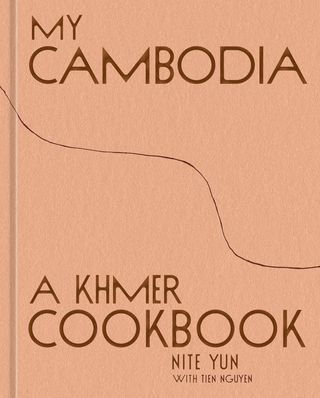
Cover of My Cambodia: A Khmer Cookbook

My Cambodia: A Khmer Cookbook

Nite Yun

Original language: English · Hardcover · ISBN 978-1984863379

My Cambodia is a cookbook by Nite Yun featuring over 100 recipes rooted in Khmer and Cambodian American cooking. Yun is a chef and restaurateur known for her Bay Area restaurants Nyum Bai and Lunette. The book organizes its recipes around different periods and locations in her life, beginning with her childhood in Stockton, California, moving through Cambodia, and arriving at the kitchens she built as an adult. Dishes include Kuy Teav Phnom Penh, a pork and noodle soup that Yun identifies as a formative recipe in her cooking life, and Amok, a preparation of fish steamed in a mixture of kroeung (a Khmer spice paste) and coconut milk.

Beyond recipes, the book provides historical context drawn from what it calls Cambodia's Golden Era, along with cultural details such as the etiquette and customs surrounding rice in Khmer life. Yun includes personal anecdotes about food as a way of maintaining ties to community and heritage. Desserts appear too, among them Nom Kong, palm sugar-glazed donuts finished with sesame seeds. The cookbook positions Khmer American cuisine as a distinct tradition shaped by migration, memory, and the everyday practices of a specific diaspora.

Plot

Filled with the historical context of Cambodia’s Golden Era, cultural fun facts like the rules of rice, and introspective anecdotes on using food as a tool to connect with community, My Cambodia aims to make Khmer American cuisine accessible to all. With recipes organized by different times and places throughout Nite's life, this cookbook takes you on a journey from her childhood in Stockton, California to Cambodia to Nite's popular Bay Area restaurants Nyum Bai and Lunette. Discover her take on dishes such as Kuy Teav Phnom Penh, the fragrant pork and noodle soup that started it all for Nite; Nom Pachok Somlar Khmer, a delicate, rustic chowder filled with rice noodles; and Amok, fish tucked into an aromatic mixture of kroeung and coconut milk and steamed until it puffs up like a souffle. For dessert, try the decadent Nom Kong, donuts glazed in palm sugar and topped with sesame seeds.

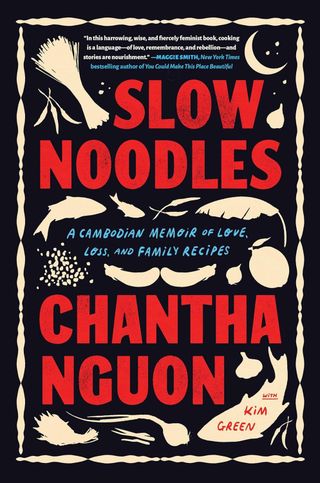
Cover of Slow Noodles: A Cambodian Memoir of Love, Loss, and Family Recipes

Slow Noodles: A Cambodian Memoir of Love, Loss, and Family Recipes

Chantha Nguon

Original language: English · Hardcover · ISBN 978-1643753492

Chantha Nguon grew up in Battambang, a provincial city in western Cambodia, during the 1960s. Her childhood was shaped by the sounds and smells of her mother's kitchen, where food carried the rhythms of daily family life. That world ended when the Khmer Rouge, led by the dictator Pol Pot, dismantled Cambodian society and killed over a million people. Nguon and her family, ethnic Vietnamese Cambodians, were among those directly targeted.

Slow Noodles follows Nguon through decades of displacement. After losing her mother, brothers, and sister while living as an immigrant in Saigon, she eventually reached a refugee camp in Thailand. Over the years she worked in a wide range of settings, cooking in a brothel, serving drinks in a nightclub, selling street food, training as a suture nurse, and weaving silk. Throughout these shifts, the remembered flavors of her mother's cooking remained a persistent thread connecting her to her earlier life in Battambang.

The memoir pairs Nguon's personal account with family recipes, using food as a concrete record of what survived when nearly everything else was lost. The book traces how specific dishes carried meaning across borders, camps, and years of exile.

Plot

In Slow Noodles, Chantha Nguon recounts her life as a Cambodian refugee who loses everything and everyone—her home, her family, her country—all but the remembered tastes and aromas of her mother’s kitchen. She summons the quiet rhythms of 1960s Battambang, her provincial hometown, before the dictator Pol Pot tore her country apart and killed more than a million Cambodians, many of them ethnic Vietnamese like Nguon and her family. Then, as an immigrant in Saigon, Nguon loses her mother, brothers, and sister and eventually flees to a refugee camp in Thailand. For two decades in exile, she survives by cooking in a brothel, serving drinks in a nightclub, making and selling street food, becoming a suture nurse, and weaving silk.

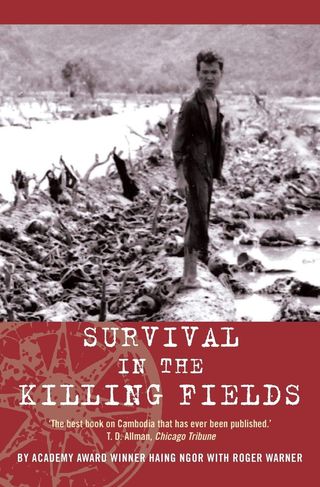
Cover of Survival in the Killing Fields

Survival in the Killing Fields

Haing Ngor

Original language: English · Paperback · ISBN 978-0786713158

Haing Ngor was a doctor in Cambodia before the Khmer Rouge seized power in 1975. Under the regime led by Pol Pot, the country's cities were emptied and millions of people were forced into labor camps and rural communes. Educated professionals, including doctors, were singled out as enemies. Ngor endured forced labor, starvation, disease, and the constant threat of execution across nearly four years of Khmer Rouge rule. His memoir recounts these experiences in direct, specific detail.

After surviving the regime's collapse in 1979, Ngor eventually reached the United States as a refugee. There, with no prior acting experience, he was cast in the 1984 film The Killing Fields, portraying Dith Pran, a Cambodian doctor and interpreter whose wartime ordeal closely paralleled his own. Ngor won an Academy Award for the role. His memoir extends well beyond the scope of the film, drawing on his professional training to observe the physical and psychological conditions imposed on the Cambodian population.

The book documents the systematic dismantling of ordinary life under the Khmer Rouge, including the suppression of education, medicine, and family ties. Ngor writes as both witness and trained physician, recording what he saw with clinical precision alongside personal grief.

Plot

In his memoir, Survival in the Killing Fields, Haing Ngor tells the gripping and frequently terrifying story of his term in the hell created by the communist Khmer Rouge. Like Dith Pran, the Cambodian doctor and interpreter whom Ngor played in an Oscar-winning performance in The Killing Fields, Ngor lived through the atrocities that the 1984 film portrayed. Like Pran, too, Ngor was a doctor by profession, and he experienced firsthand his country's wretched descent, under the Khmer Rouge, into senseless brutality, slavery, squalor, starvation, and disease -- all of which are recounted in sometimes unimaginable horror in Ngor's poignant memoir.

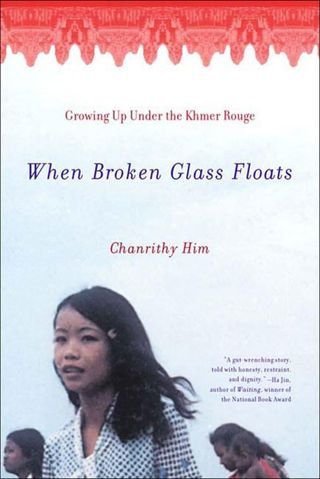
Cover of When Broken Glass Floats: Growing Up Under the Khmer Rouge

When Broken Glass Floats: Growing Up Under the Khmer Rouge

Chanrithy Him

Original language: English · Paperback · ISBN 978-0393322101

The title draws from a Cambodian proverb: when broken glass floats, evil has overtaken good. Chanrithy Him's memoir opens in 1969, when the expanding war in Vietnam destabilized Cambodia and her family moved to Phnom Penh. Six years later the Khmer Rouge seized power and forced the family from their home again. Cars, electricity, and other parts of modern life disappeared.

Him narrates as the child she was, describing rudimentary labor camps where adults and children alike worked, and where illness and death were constant presences. She was a young girl through most of these years. The regime demanded that loyalty belong to itself alone, yet her account traces how the members of her family kept faith with one another under extreme pressure.

In 1979 Vietnamese forces entered Cambodia and drove the Khmer Rouge from power. Of a family of twelve, five of the Him children survived. An uncle living in Oregon sponsored Chanrithy and her siblings, and at sixteen she began a new life in the United States. The memoir spans roughly a decade, moving from a city childhood to the camps and then to resettlement abroad.

Plot

Chanrithy Him gives us a child's-eye view of a Cambodia where rudimentary labor camps for both adults and children are the norm and modern technology no longer exists. Death becomes a companion in the camps, along with illness. Yet through the terror, the members of Chanrithy's family remain loyal to one another, and she and her siblings who survive will find redeemed lives in America.

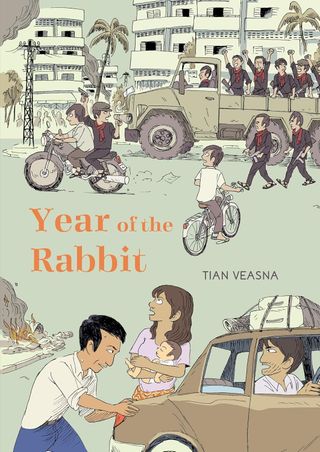
Cover of Year of the Rabbit

Year of the Rabbit

Tian Veasna

Original language: French · Paperback · ISBN 978-1770463769

In April 1975, the Khmer Rouge took control of Phnom Penh and immediately began forcing residents out of the capital and other major cities. Tian Veasna was born just three days into this upheaval, as his family joined the mass displacement from the city into the countryside. Year of the Rabbit is a graphic memoir drawn from the firsthand accounts of his parents and close relatives, tracing their experience under the regime that governed Cambodia until 1979 and caused the deaths of roughly one million people.

Stripped of money and possessions, the family was sent to rural work camps where food was scarce and violence was routine. The book depicts the everyday conditions of survival under the regime: bartering for basic goods, children encouraged to report on their own parents, and the act of reading treated as evidence of disloyalty to the state. Veasna reconstructs these details through his relatives' memories, presenting the period at close range rather than from a historical overview.

The story follows the family's efforts to endure forced labor, hunger, and constant surveillance. As a work of graphic nonfiction, it uses sequential art to convey both the scale of the evacuations and the confined, precarious reality inside the camps.

Plot

Year of the Rabbit tells the true story of one family’s desperate struggle to survive the murderous reign of the Khmer Rouge in Cambodia. In 1975, the Khmer Rouge seized power in the capital city of Phnom Penh. Immediately after declaring victory in the war, they set about evacuating the country’s major cities with the brutal ruthlessness and disregard for humanity that characterized the regime ultimately responsible for the deaths of one million citizens. Cartoonist Tian Veasna was born just three days after the Khmer Rouge takeover, as his family set forth on the chaotic mass exodus from Phnom Penh. Year of the Rabbit is based on firsthand accounts, all told from the perspective of his parents and other close relatives. Stripped of any money or material possessions, Veasna’s family found themselves exiled to the barren countryside along with thousands of others, where food was scarce and brutal violence a constant threat.

More from Cambodia

See the country page for Cambodia for its map, facts and largest cities, or browse books from other countries.

Links go to Amazon; Hookito doesn’t sell books. Know a book that belongs here, or spotted a mistake? Write to submissions@hookito.com.

Where to next?

Back to the globe
Hookito landscape illustration