Hookito

North Korea · Books

Books from North Korea
9 books from and about North Korea: what each is about, the plot, and a note from Professor Kogi.

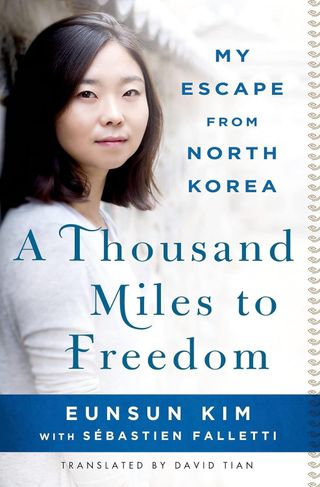
Cover of A Thousand Miles to Freedom: My Escape from North Korea

A Thousand Miles to Freedom: My Escape from North Korea

Eunsun Kim

Original language: Korean · Hardcover · ISBN 978-1250064646

Eunsun Kim grew up in North Korea during the 1990s, a period when widespread famine killed hundreds of thousands of people across the country. As a young girl, she attended public executions on school outings and took part in daily self-criticism sessions, routines she accepted as normal. By the time she was eleven, her father and grandparents had starved to death, and she and her remaining family faced the same danger.

Her mother made the decision to flee with Eunsun and her older sister, beginning what would become a nine-year struggle to reach safety. The route did not follow a single path. The family lived without shelter, fell into the hands of human traffickers in China, endured time in a North Korean labor camp, and eventually crossed the Mongolian desert on foot before arriving in South Korea.

The memoir recounts these years in plain, specific terms, describing both the conditions inside North Korea and the obstacles that follow those who try to leave. Kim wrote the book after settling in the South, giving a detailed personal account of a system that remains largely closed to outside observation. The title refers to the approximate distance between her starting point and her final destination.

Plot

Eunsun Kim was born in North Korea, one of the most secretive and oppressive countries in the modern world. As a child Eunsun loved her country...despite her school field trips to public executions, daily self-criticism sessions, and the increasing gnaw of hunger as the country-wide famine escalated. By the time she was eleven years old, Eunsun's father and grandparents had died of starvation, and Eunsun was in danger of the same. Finally, her mother decided to escape North Korea with Eunsun and her sister, not knowing that they were embarking on a journey that would take them nine long years to complete. Before finally reaching South Korea and freedom, Eunsun and her family would live homeless, fall into the hands of Chinese human traffickers, survive a North Korean labor camp, and cross the deserts of Mongolia on foot.
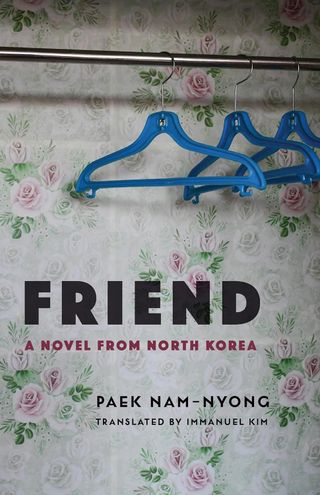
Cover of Friend: A Novel from North Korea

Friend: A Novel from North Korea

Nam-nyong Paek

Original language: Korean · Paperback · ISBN 978-0231195614

Paek Nam-nyong's Friend follows a woman in her thirties who arrives at a North Korean courthouse seeking a divorce. The judge assigned to her case begins looking into the circumstances behind the petition, and the narrative gradually opens up to trace the couple's history. It moves between the early days of their relationship, when they first fell in love, and the slow breakdown of their marriage over the years that followed.

As the investigation continues, the novel examines the effects of the couple's conflict on their young son and on their professional lives. In a parallel thread, the judge handling the case faces difficulties in his own marriage, a detail that complicates his perspective on the dispute before him. The story treats questions of love, loyalty, and domestic abuse within the specific social structures of the DPRK, where legal and community mechanisms around divorce carry their own particular weight.

The book was originally a bestseller in North Korea, where Paek continues to live and write. Its English translation introduced readers outside the country to a domestic novel set in a society whose everyday literary culture is rarely accessible abroad. The focus on ordinary personal struggles rather than political spectacle sets it apart from most writing about North Korea that reaches Western audiences.

Plot

Paek Nam-nyong’s Friend is a tale of marital intrigue, abuse, and divorce in North Korea. A woman in her thirties comes to a courthouse petitioning for a divorce. As the judge who hears her statement begins to investigate the case, the story unfolds into a broader consideration of love and marriage. The novel delves into its protagonists’ past, describing how the couple first fell in love and then how their marriage deteriorated over the years. It chronicles the toll their acrimony takes on their son and their careers alongside the story of the judge’s own marital troubles.

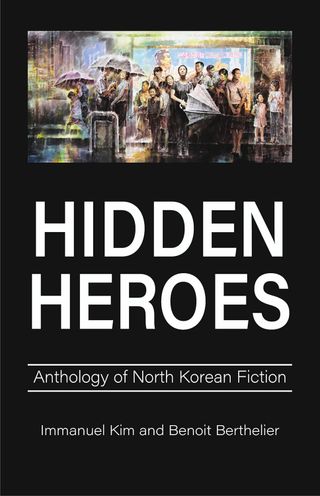
Cover of Hidden Heroes: Anthology of North Korean Fiction

Hidden Heroes: Anthology of North Korean Fiction

Immanuel Kim, Benoit Berthelier

Original language: Korean · Paperback · ISBN 978-1839994661

Hidden Heroes is an anthology of short fiction written by authors from the Democratic People's Republic of Korea, translated and edited by Immanuel Kim and Benoit Berthelier. The stories span from the 1980s to recent years and are organized into three sections: Identities, Communities, and Power. Each section groups stories around different aspects of everyday life in the DPRK, from workplace responsibilities to questions of cultural belonging among diasporic Koreans living in Japan.

The title draws on a phrase used within North Korea to describe ordinary citizens who carry out their work and social obligations with steady, quiet commitment. The characters include factory managers balancing professional duties with family life, neighbors forming bonds during shared outings, and university officials confronting corruption. As with all officially published literature in the DPRK, elements of state ideology run through the texts. The editors acknowledge this context while directing attention toward the personal dimensions of the stories: the relationships, small aspirations, and daily pressures that shape the characters.

Because so little DPRK fiction reaches readers outside the country, the collection provides an unusual point of access. It presents North Korean literary voices in English translation, offering concrete scenes of domestic and working life rather than the broad geopolitical framing that typically surrounds discussion of the country.

Plot

Spanning from the 1980s to the present, these works explore the theme of the “hidden hero,” a popular moniker in the DPRK to describe the average citizen who navigates the complexities of daily life with quiet dedication for their work and country. The anthology is divided into three thematic sections―Identities, Communities, and Power―showcasing a diverse array of characters and settings. Readers will encounter factory managers juggling work and family responsibilities, neighbors bonding during friendly outings, university deans resisting corruption, and diasporic Koreans in Japan grappling with questions of belonging. Through these relatable human experiences, the stories challenge simplistic notions of North Korean society and reveal a more nuanced reality. While elements of propaganda and state ideology are present, as is typical in all officially sanctioned DPRK literature, the focus in the text is rather on the personal struggles, relationships, and aspirations of the characters. By highlighting these universal themes, Hidden Heroes invites readers to look beyond geopolitical tensions and connect with the shared humanity of North Koreans.

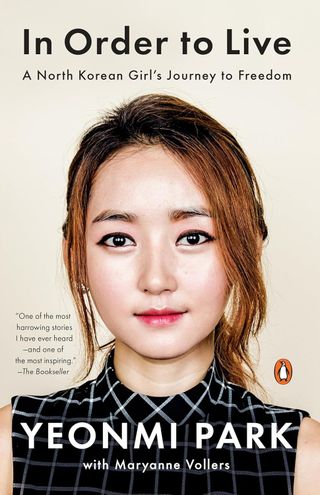
Cover of In Order to Live: A North Korean Girl's Journey to Freedom

In Order to Live: A North Korean Girl's Journey to Freedom

Yeonmi Park, Maryanne Vollers

Original language: English · Paperback · ISBN 978-0143109747

Yeonmi Park was thirteen years old when she and her mother fled North Korea in 2007. What followed was not a straightforward path to safety. After crossing into China, both were sold into forced marriages by brokers who exploited their vulnerability as undocumented refugees. Park and her mother endured two years of captivity and abuse before eventually reaching South Korea in 2009. Written with Maryanne Vollers, this memoir recounts the conditions Park grew up in, the dangers of escape, and the exploitation that awaited on the other side of the border.

Park describes daily life inside North Korea in concrete terms: the scarcity of food and electricity, the state propaganda that shaped her understanding of the outside world, and the slow erosion of her family's circumstances that made leaving feel necessary. She also writes about the difficulty of adjusting to life in South Korea, where she initially concealed parts of her story to fit in.

One factor that pushed Park to speak publicly was her older sister, who had escaped separately and disappeared into China for years. By sharing her account, Park hoped both to locate her sister and to draw attention to the situation of North Koreans still trapped in similar circumstances. She went on to work as a human rights activist focused on these issues.

Plot

In In Order to Live, Yeonmi Park shines a light not just into the darkest corners of life in North Korea, describing the deprivation and deception she endured and which millions of North Korean people continue to endure to this day, but also onto her own most painful and difficult memories. She tells with bravery and dignity for the first time the story of how she and her mother were betrayed and sold into sexual slavery in China and forced to suffer terrible psychological and physical hardship before they finally made their way to Seoul, South Korea—and to freedom. Park confronts her past with a startling resilience. In spite of everything, she has never stopped being proud of where she is from, and never stopped striving for a better life. Indeed, today she is a human rights activist working determinedly to bring attention to the oppression taking place in her home country

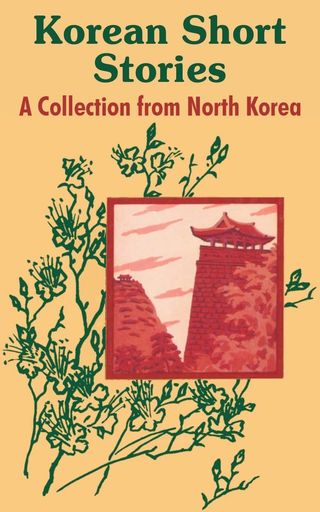
Cover of Korean Short Stories: A Collection from North Korea

Korean Short Stories: A Collection from North Korea

Chon Se Bong, Kim Byong Hun, Ko Byong Sam, Om Dan Ung, Pyon Hui Gun, Sok Yun Gi

Original language: Korean · Paperback · ISBN 978-1410102188

This anthology gathers six short stories by North Korean authors, originally published in Pyongyang in 1986. The stories span roughly two decades of writing, from 1960 to the early 1980s, and carry titles such as History of Iron, Happiness, Ogi, Fellow Travellers, Everyone in Position, and Unfinished Sculpture. Each is credited to a different writer, among them Pyon Hui Gun, Sok Yun Gi, Chon Se Bong, Kim Byong Hun, Om Dan Ung, and Ko Byong Sam.

Collections of North Korean fiction in English translation are uncommon, and this volume offers a window into themes and storytelling conventions that developed under the country's particular literary and political conditions during the 1960s and 1970s. The titles suggest subjects ranging from industrial labor and collective effort to personal fulfillment and artistic creation, concerns that often appear in literature shaped by state publishing frameworks.

The stories were written across a period that included rapid industrialization and social reorganization in North Korea. As primary texts from that era, they reflect the priorities and narrative styles that state-supported authors worked within, making the collection a useful point of reference for readers interested in Korean literary history beyond the more widely available South Korean canon.

Plot

History of Iron (1967) – Pyon Hui Gun Happiness (1963) – Sok Yun Gi Ogi (1961) – Chon Se Bong Fellow Travellers (1960) – Kim Byong Hun Everyone in Position! (1974) – Om Dan Ung Unfinished Sculpture (post 1980) – Ko Byong Sam

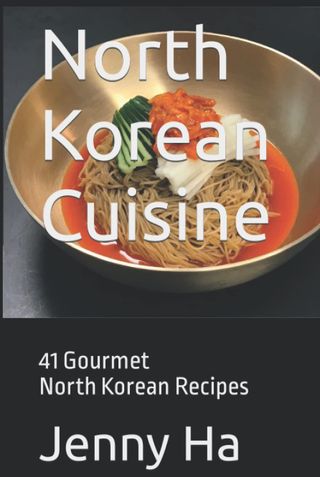
Cover of North Korean Cuisine: 41 Gourmet North Korean Recipes

North Korean Cuisine: 41 Gourmet North Korean Recipes

Jenny Ha

Original language: English · Paperback · ISBN 979-8423878047

North Korean Cuisine: 41 Gourmet North Korean Recipes is a cookbook by Jenny Ha that sets out to collect and document dishes from North Korea, a country whose food traditions are far less accessible to outside cooks than those of South Korea. Ha notes that while South Korean food has gained wide international popularity in recent years, reliable recipes for North Korean dishes remain scarce, and some published sources contain errors or incomplete instructions. The book is her attempt to address that gap.

Ha describes personally researching, preparing, and photographing each dish before assembling the collection. The result is roughly forty recipes that she has adjusted through her own kitchen testing. The book positions itself as a practical reference rather than a cultural survey, focusing on individual dishes and their preparation steps. Because direct access to North Korean culinary knowledge is limited by the country's isolation, projects like this one typically draw on diaspora traditions, historical sources, and cross-border similarities with South Korean cooking.

North and South Korean cuisines share many ingredients and techniques but diverge in notable ways. Northern dishes tend to use less chili and more mild, grain-based preparations. This cookbook offers a starting point for cooks curious about those regional differences.

Plot

"Cooking has always been my passion. I oftentimes find much joy and happiness in preparing a few simple dishes when my friends come over. In the past few years, Korean food has become increasingly popular in the world, much like K-Pop music. While foodies have no trouble finding information on South Korean food, they may find it difficult to get a hand on North Korean dishes given the limited information available. I found a few books introducing North Korean food. Unfortunately, some recipes depict incorrect pictures or contain incomplete recipes. As a result, I researched and fine-tuned some of the recipes for North Korean dishes. Furthermore, I personally prepared each dish, photographed, and assembled 40 recipes for this book."

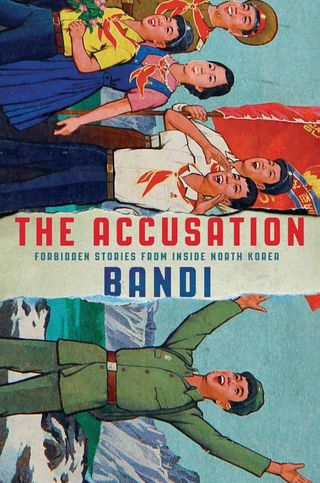
Cover of The Accusation: Forbidden Stories from Inside North Korea

The Accusation: Forbidden Stories from Inside North Korea

Bandi

Original language: Korean · Hardcover · ISBN 978-0802126207

The Accusation gathers seven short stories written under the pen name Bandi, by an author reported to be still living inside North Korea at the time of publication. The manuscript was carried secretly into South Korea and published there and abroad. The stories are set during the years when Kim Il-sung and Kim Jong-il held power.

The characters come from different levels of society. One story centers on a young mother in Pyongyang whose child acts out during a political rally. Another follows a former war hero grown disillusioned as the Party reaches into every corner of his life. A third tracks a father denied a travel permit who boards a train illegally to reach his critically ill mother. Elsewhere a woman struggles to feed her husband during the famine years.

Across the seven pieces, the collection shows how state control shapes decisions as small as a train trip or a child's outburst. Bandi's pen name means firefly in Korean, and the stories were composed and carried out of the country in secrecy. The author's real identity has not been made public.

Plot

Set during the period of Kim Il-sung and Kim Jong-il's leadership, the seven stories that make up The Accusation give voice to people living under this most bizarre and horrifying of dictatorships. The characters of these compelling stories come from a wide variety of backgrounds, from a young mother living among the elite in Pyongyang whose son misbehaves during a political rally, to a former Communist war hero who is deeply disillusioned with the intrusion of the Party into everything he holds dear, to a husband and father who is denied a travel permit and sneaks onto a train in order to visit his critically ill mother. Written with deep emotion and writing talent, The Accusation is a vivid depiction of life in a closed-off one-party state, and also a hopeful testament to the humanity and rich internal life that persists even in such inhumane conditions.

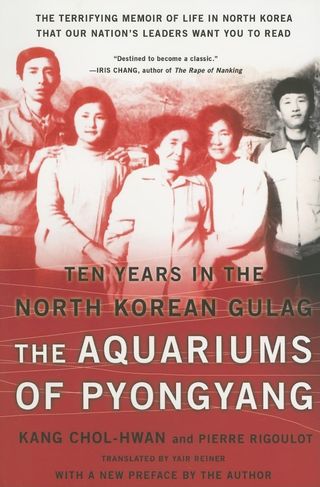
Cover of The Aquariums of Pyongyang: Ten Years in the North Korean Gulag

The Aquariums of Pyongyang: Ten Years in the North Korean Gulag

Chol-Hwan Kang

Original language: Korean · Paperback · ISBN 978-0465011049

Kang Chol-hwan was nine years old when he and his family were sent to Yodok, one of North Korea's political prison camps. His grandfather, a Korean resident of Japan who had voluntarily moved to North Korea, fell out of favor with the regime, and the consequences extended to the entire family. This memoir covers the ten years Kang spent inside the camp, where detainees performed forced labor under extreme deprivation, faced near-starvation food rations, and witnessed public executions carried out as warnings to others.

Life inside Yodok followed a rigid structure designed to break individual will. Kang describes the daily routines, the hierarchy among prisoners, and the methods guards used to maintain control. Children in the camp received a limited education alongside their labor duties. The book also addresses the broader workings of North Korean society outside the camp walls, drawing on Kang's experiences both before and after his detention.

After his release from Yodok, Kang eventually escaped North Korea and reached South Korea in 1992. From there he began speaking publicly about conditions inside the camps, making this one of the earliest firsthand testimonies from a survivor of North Korea's political detention system to reach an international audience.

Plot

Amid escalating nuclear tensions, Kim Jong-un and North Korea's other leaders have kept a tight grasp on their one-party state, quashing any nascent opposition movements and sending all suspected dissidents to its brutal concentration camps for "re-education." Kang Chol-Hwan is the first survivor of one of these camps to escape and tell his story to the world, documenting the extreme conditions in these gulags and providing a personal insight into life in North Korea. Sent to the notorious labor camp Yodok when he was nine years old, Kang observed frequent public executions and endured forced labor and near-starvation rations for ten years. In 1992, he escaped to South Korea, where he found God and now advocates for human rights in North Korea.

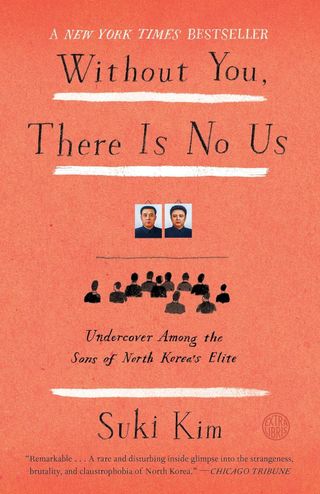
Cover of Without You, There Is No Us: Undercover Among the Sons of North Korea's Elite

Without You, There Is No Us: Undercover Among the Sons of North Korea's Elite

Suki Kim

Original language: English · Paperback · ISBN 978-0307720665

In 2011, Suki Kim entered North Korea posing as a Christian missionary and English teacher at the Pyongyang University of Science and Technology, known as PUST. The walled compound in the capital held around 270 young men from elite families. That year every other university was closed and its students sent to construction sites. Portraits of Kim Il-sung and Kim Jong-il hung in every room.

Kim spent six months inside the compound, eating three meals a day with her students and working to teach them English under constant official supervision. Her position gave her sustained contact with young North Koreans raised at the highest levels of the state. She recorded how they spoke, what they believed about the outside world, and what stayed hidden from them.

The account covers the last six months of Kim Jong-il's rule, which ended with his death in December 2011. It sits between memoir and undercover reporting, and its central strain comes from Kim's need to conceal her purpose from the institution and the authorities while growing attached to the students she taught. The marching song that gives the book its title was sung three times a day.

Plot

Every day, three times a day, the students march in two straight lines, singing praises to Kim Jong-il and North Korea: Without you, there is no motherland. Without you, there is no us. It is a chilling scene, but gradually Suki Kim, too, learns the tune and, without noticing, begins to hum it. It is 2011, and all universities in North Korea have been shut down for an entire year, the students sent to construction fields—except for the 270 students at the all-male Pyongyang University of Science and Technology (PUST), a walled compound where portraits of Kim Il-sung and Kim Jong-il look on impassively from the walls of every room, and where Suki has gone undercover as a missionary and a teacher. Over the next six months, she will eat three meals a day with her young charges and struggle to teach them English, all under the watchful eye of the regime.

More from North Korea

See the country page for North Korea for its map, facts and largest cities, or browse books from other countries.

Links go to Amazon; Hookito doesn’t sell books. Know a book that belongs here, or spotted a mistake? Write to submissions@hookito.com.

Where to next?

Back to the globe
Hookito landscape illustration