Hookito

South Korea · Books

Books from South Korea
20 books from and about South Korea: what each is about, the plot, and a note from Professor Kogi.

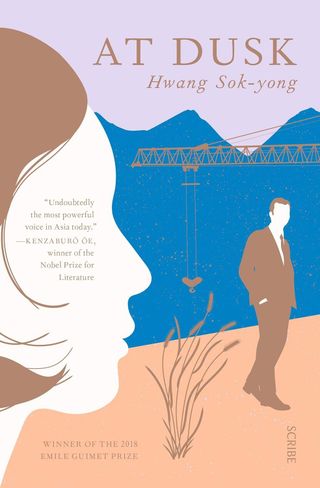
Cover of At Dusk

At Dusk

Hwang Sok-yong

Original language: Korean · Paperback · ISBN 978-1947534667

Park Minwoo grew up poor in Seoul and built himself into the director of a major architectural firm during South Korea's rapid modernization. His career followed the country's own upward arc, moving from a struggling postwar economy into an era of large-scale construction and urban expansion. When a corruption investigation targets his company, Minwoo is forced to look back at what his professional life has actually cost.

Around the same time, he receives a message from Cha Soona, a woman he once loved and later abandoned. Her reappearance pulls him into memories of the neighborhood and the people he left behind as he climbed. Through these two pressures, the novel traces a tension between personal ambition and the communities that get cleared away to make room for new development. Hwang Sok-yong sets the story against Seoul's physical transformation, where old districts were demolished and rebuilt within a single generation.

The book is structured partly around Minwoo's present-day crisis and partly around episodes from his past. A parallel thread follows a younger character whose struggles echo earlier patterns of displacement. Hwang, one of South Korea's most prominent living writers, uses architecture and urban change as a concrete frame for questions about memory, loyalty, and complicity.

Plot

Park Minwoo is, by every measure, a success story. Born into poverty in a miserable neighborhood of Seoul, he has ridden the wave of development in a rapidly modernizing society. Now the director of a large architectural firm, his hard work and ambition have brought him triumph and satisfaction. But when his company is investigated for corruption, he’s forced to reconsider his role in the transformation of his country. At the same time, he receives an unexpected message from an old friend, Cha Soona, a woman that he had once loved, and then betrayed. As memories return unbidden, Minwoo recalls a world he thought had been left behind―a world he now understands that he has helped to destroy.
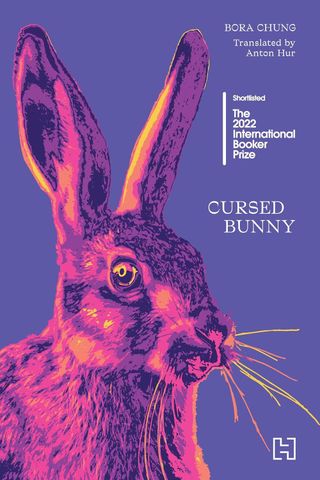
Cover of CURSED BUNNY

CURSED BUNNY

Bora Chung

Original language: Korean · Paperback · ISBN 978-9393701619

Cursed Bunny is a short story collection by South Korean author Bora Chung, translated into English by Anton Hur. The stories blend horror, fantasy, and dark comedy, drawing on folk tale structures while addressing modern concerns such as patriarchy, corporate power, and surveillance technology. Creatures and objects that seem harmless at first turn threatening in ways that are often grotesque and surprising.

The settings range from ordinary apartment buildings to stranger, less recognizable places. Several stories use animal or object transformations to explore how systems of control shape daily life. Chung's writing frequently shifts tone, moving between dark humor and genuine unease within the same piece. The collection was shortlisted for the International Booker Prize in 2022, bringing wider attention to Chung's work outside South Korea.

Chung, who holds a PhD and writes in both Korean and English, constructs each story around a single unsettling premise and follows it to its logical extreme. The results are compact and deliberate, with a tendency toward body horror and surreal imagery. The translation by Anton Hur preserves the directness of the original Korean prose.

Plot

By turns thought-provoking and stomach-turning, here monsters take the shapes of furry woodland creatures and danger lurks in unexpected corners of everyday apartment buildings. But in this unforgettable collection, translated by the acclaimed Anton Hur, Chung’s absurd, haunting universe could be our own, illuminating the ills of contemporary society.

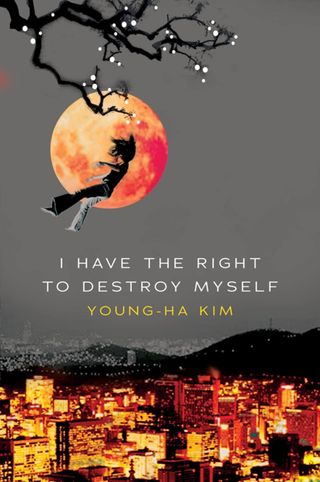
Cover of I Have The Right To Destroy Myself

I Have The Right To Destroy Myself

Young-ha Kim

Original language: Korean · Paperback · ISBN 978-0156030809

Young-ha Kim's novel is set in Seoul, where two brothers, C and K, are each drawn to the same woman, Se-yeon. Their entanglement unfolds against a city defined by speed, density, and emotional distance. The story follows these three characters as they search for genuine closeness in surroundings that seem designed to prevent it.

Threading through their lives is an unnamed narrator whose occupation is unusual and disturbing: he seeks out people in deep distress and helps them end their own lives. His presence gives the novel a strange, hovering quality, as if the story is being observed from just outside the frame. The narrator's sections sit alongside the brothers' storyline, and the two threads gradually pull toward each other.

The book was originally published in South Korea in 1996 and later translated into English. Its structure blends short, linked episodes rather than following a single conventional plot. Kim writes Seoul as both a specific place and a kind of modern condition, where isolation persists even in close quarters. The prose is spare and quick, shaped more by cinematic pacing than by traditional literary storytelling.

Plot

In the fast-paced, high-urban landscape of Seoul, C and K are brothers who have fallen in love with the same woman—Se-yeon—who tears at both of them as they all try desperately to find real connection in an atomized world. A spectral, nameless narrator haunts the edges of their lives as he tells of his work helping the lost and hurting find escape through suicide. Dreamlike and beautiful, the South Korea brought forth in this novel is cinematic in its urgency and its reflection of contemporary life everywhere—far beyond the boundaries of the Korean peninsula.

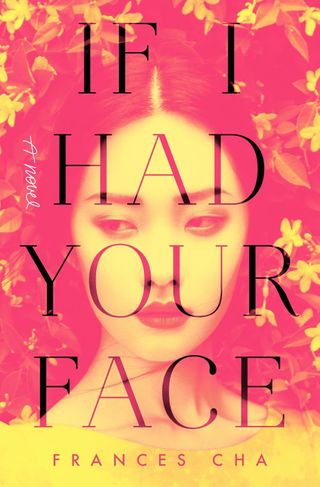
Cover of If I Had Your Face

If I Had Your Face

Frances Cha

Original language: Korean · Hardcover · ISBN 978-0593129463

If I Had Your Face is a debut novel by Frances Cha, set in contemporary Seoul. It follows four young women whose lives intersect in an apartment building in the city. Each woman faces pressures shaped by South Korea's culture of aesthetic perfection, class hierarchy, and the narrow paths available to women trying to build stable lives. The story is told through their alternating perspectives, giving each character a distinct voice and set of circumstances.

One of the four, Kyuri, works at a room salon, an exclusive type of underground bar where women are hired to keep wealthy businessmen company while they drink. She has undergone extensive plastic surgery and takes a calculating approach to her position, but an impulsive decision puts her career at risk. The other women navigate their own struggles with appearance, ambition, and survival in a city where social mobility often depends on looks and connections.

Cha, a former journalist who lived and worked in Seoul, draws on the specific economics of beauty standards in South Korea, where cosmetic surgery is widespread and socially routine. The novel grounds its characters in recognizable Seoul neighborhoods and workplaces, connecting personal choices to larger social structures without simplifying either.

Plot

Kyuri is an achingly beautiful woman with a hard-won job at a Seoul “room salon,” an exclusive underground bar where she entertains businessmen while they drink. Though she prides herself on her cold, clear-eyed approach to life, an impulsive mistake threatens her livelihood.

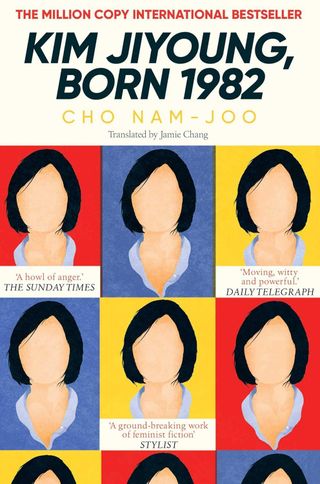
Cover of Kim jiyoung, born 1982

Kim jiyoung, born 1982

Cho Nam-Joo

Original language: Korean · Paperback · ISBN 978-1471184307

Kim Jiyoung lives in a small, neat flat on the outer edges of Seoul with her husband and their baby daughter. She has stepped away from a white-collar desk job to raise the child at home, a step many Korean women are expected to take. Then she starts speaking in the voices of other women, some familiar and some strangers, and her worried husband books a psychiatrist.

The novel moves backward through her earlier years in a clipped third-person account. Born in 1982, she was given the name most often chosen for Korean girls of that year, and she grew up ranked below a younger brother. Male authority shapes her at every stage, from teachers policing girls' uniforms to coworkers who hide a camera in the women's restroom. Her father treats late-night harassment as her own fault.

Her ordinary difficulties sit against South Korea's rapid change, including the end of state family planning campaigns and new laws against gender discrimination. Cho Nam-Joo keeps the psychiatric setting in view, so the question of who gets to interpret a woman's distress stays open alongside the plain record of her daily life.

Plot

Kim Jiyoung is an “ordinary” Korean woman in her early thirties, married with a daughter. Suddenly she begins exhibiting unsettling behavior — talking as if she were other women, including her mother or grandmother. Concerned, her husband urges her to see a psychiatrist. The narrative then takes us backward through her life — childhood, school, work, marriage — revealing how everyday discrimination, gender expectations, social pressures and internalized misogyny have shaped her experience. As her identity blurs in the present, the story asks: what toll does this “ordinary” life take on a woman when she’s constantly asked to conform, to sacrifice, to stay invisible?

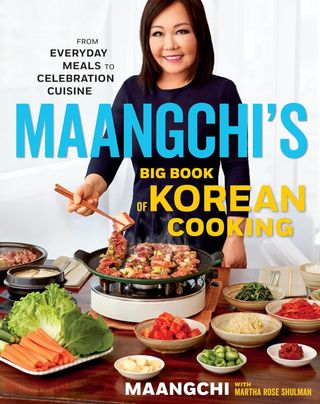
Cover of Maangchi's Big Book Of Korean Cooking

Maangchi's Big Book Of Korean Cooking

Maangchi

Original language: English · Hardcover · ISBN 978-1328988126

Maangchi's Big Book of Korean Cooking is a wide-ranging collection of Korean recipes organized by the author known online by the same name. The book covers familiar dishes such as bulgogi, bibimbap, and Korean barbecue alongside less commonly documented areas of Korean food culture. These include the plant-based cooking associated with Buddhist mountain temples, the portable lunch boxes prepared by Korean parents, and the varied snacks sold by street vendors. A photographic chapter on Korean cooking techniques accompanies the recipes.

The collection groups its contents into categories that reflect how Korean meals are typically structured. Side dishes, known as banchan, receive their own section, as do soups, hotpots, and stews ranging from slow-cooked bone broths to soft tofu preparations. Multiple types of kimchi are covered, reflecting the central role fermented vegetables play in Korean kitchens. Party and gathering recipes appear as well, including homemade rice liquor and seasoned baby back ribs.

Maangchi notes that she has adjusted traditional recipes over time while aiming to keep their original character. The book positions itself as a comprehensive single volume on Korean home cooking, addressing both everyday meals and more elaborate preparations.

Plot

The book contains the favorite dishes Maangchi has perfected over the years, from Korean barbecue and fried chicken to bulgogi and bibimbap. It explores topics not covered in other Korean cookbooks, from the vegan fare of Buddhist mountain temples to the inventive snacks of street vendors to the healthful, beautiful lunch boxes Korean mothers make for their kids. Maangchi has updated and improved the traditional dishes, without losing their authentic spirit. Among the features: Spectacular party food, from homemade clear rice liquor to sweet, spicy, sour baby back ribs Side plates that support and complement every Korean meal Soups, hotpots, and stews, from bone broth to tofu stews An array of different kimchis A detailed photographic chapter on Korean cooking techniques

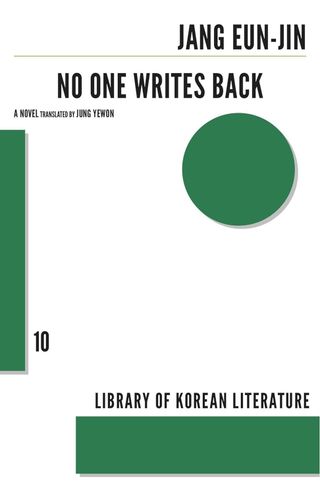
Cover of No One Writes Back

No One Writes Back

Jang Eun-Jin

Original language: Korean · Paperback · ISBN 978-1564789600

A young man sets out from home carrying almost nothing: a blind dog, an MP3 player, and a single book. For three years he drifts between motels with no fixed destination, encountering strangers along the way. Instead of learning their names, he gives each person a number. Among them are 239, a former aspiring poet who now reads her work only to a friend lying in a coma, and 109, who rides trains without end after a painful heartbreak. Number 32 has already resolved to take her own life.

After each encounter the narrator sits down and writes a letter to the person he has just met, hoping to offer some small comfort. The letters also serve as his private record, a kind of journal addressed outward rather than kept to himself. None of the recipients ever reply. The title states this fact plainly, yet the narrator continues writing, carrying a quiet expectation that someone, eventually, might.

Jang Eun-Jin's novel, originally published in South Korea, follows the tension between solitude chosen and solitude endured. The numbered strangers each carry a specific, concrete form of grief, and the narrator's compulsion to document them raises its own questions about whether writing to someone is an act of connection or simply another way of staying alone.

Plot

No One Writes Back is the story of a young man who leaves home with only his blind dog, an MP3 player, and a book, traveling aimlessly for three years, from motel to motel, meeting people on the road. Rather than learn the names of his fellow travelers or invent nicknames for them he assigns them numbers. There's 239, for example, who once dreamed of being a poet, but who now only reads her poems to a friend in a coma; there's 109, who rides trains endlessly because of a broken heart; and 32, who's already decided to commit suicide. The narrator writes letters to these men and women in the hope that he can console them in their various miseries, as well as keep a record of his own experiences: A letter is like a journal entry for me, except that it gets sent to other people. No one writes back, of course, but that doesn't mean that there isn't some hope that one of them will, someday . . .

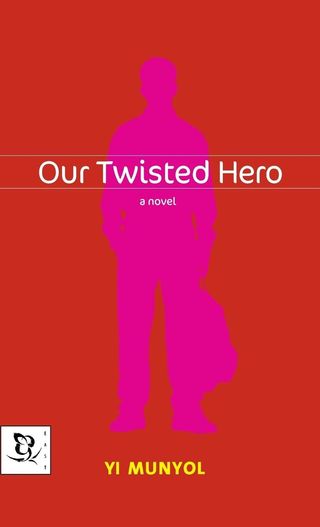
Cover of Our Twisted Hero

Our Twisted Hero

Yi Munyol

Original language: Korean · Hardcover · ISBN 978-0786866700

Our Twisted Hero follows a twelve-year-old boy who transfers from Seoul to a provincial school, expecting his city background to earn him standing among his new classmates. Instead, he discovers that the entire class is controlled by the class monitor, a student who maintains order through a mixture of charm, intimidation, and force. The teacher, pleased by the classroom's apparent discipline, ignores what is happening beneath the surface.

The narrator refuses to accept the monitor's authority and tries different strategies to resist. He appeals to adults, attempts to rally other students, and looks for cracks in the system. Each effort fails or backfires, and the pressure to conform grows steadily stronger. The story traces how a determined individual can be ground down when an entire community has learned to accommodate a single figure's control.

Yi Munyol, one of South Korea's most widely read modern novelists, published this novella as a political allegory. The school classroom stands in for a society caught between authoritarian rule and the uncertain process of moving beyond it. The setting is small and contained, but the tensions it holds are shaped by Korea's broader twentieth-century political experience.

Plot

When the twelve-year-old narrator of Our Twisted Hero moves to a small town and enrolls in the local school, he's confident that his big city sophistication will establish him as a natural leader. He is shocked to find his new classmates and teacher under the spell of the class monitor. As the narrator sets out to overthrow the bully, he is threatened, teased -- and finally broken.

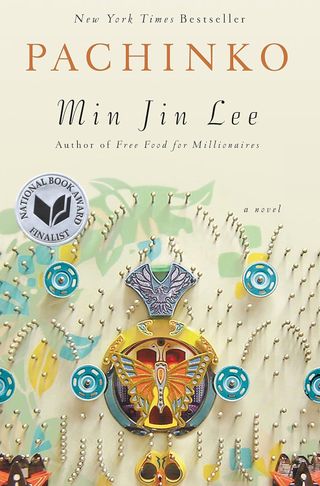
Cover of Pachinko

Pachinko

Min Jin Lee

Original language: English · Hardcover · ISBN 978-1455563937

Pachinko by Min Jin Lee follows four generations of a Korean family, starting in the early 1900s. Sunja, the daughter of a fisherman in Korea, becomes pregnant by a wealthy man she later learns is married. When a young minister suffering from tuberculosis offers to marry her and take her with him to Japan, Sunja accepts and leaves her homeland behind. That single decision shapes the lives of her children and grandchildren across decades.

In Japan, the family contends with poverty, discrimination, and the constant tension of living as ethnic Koreans in a society that treats them as outsiders. Members of the family pursue different paths to survive and find standing, from manual labor to business to education. The title refers to pachinko parlors, a form of pinball gambling in Japan, an industry historically associated with the Korean minority community there.

Lee builds the story around questions of loyalty, shame, and belonging that recur across generations. Each character negotiates between Korean identity and Japanese society in a different way, shaped by the circumstances of their particular era. The novel spans from colonial-era Korea through the late twentieth century, grounding its family chronicle in specific historical pressures rather than abstract themes.

Plot

In the early 1900s, teenaged Sunja, the adored daughter of a crippled fisherman, falls for a wealthy stranger. When she discovers she is pregnant–and that her lover is married–she accepts an offer of marriage from a gentle, sickly minister passing through on his way to Japan. But her decision to abandon her home, and to reject her son's powerful father, sets off a dramatic saga that will echo down through the generations.

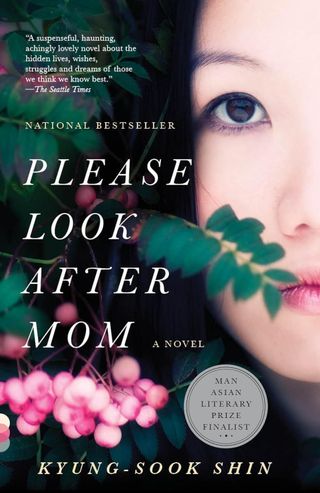
Cover of Please Look After Mom

Please Look After Mom

Kyung-Sook Shin

Original language: Korean · Paperback · ISBN 978-0307739513

Kyung-Sook Shin's novel opens with a disappearance. Sixty-nine-year-old So-nyo becomes separated from her husband in the crowds of a Seoul subway station, and her family cannot find her. What begins as a frantic search quickly turns inward, as each member of the family starts to confront how little attention they paid to the woman at its center. The story is set against the contrasts of modern South Korea, where rural life and the pressures of a fast-growing capital city pull families in different directions.

The novel is structured around multiple viewpoints. So-nyo's adult children and her husband each narrate sections, and through their recollections a fuller picture of her life takes shape. Long-held secrets surface, and private regrets accumulate. The family discovers that So-nyo carried burdens they never asked about and made sacrifices they barely noticed. Each perspective reveals a different gap between what the family assumed and what was actually true.

Originally published in Korean in 2008, the book was translated into English by Chi-Young Kim. It received the Man Asian Literary Prize in 2011, making Kyung-Sook Shin the first woman to win that award.

Plot

When sixty-nine-year-old So-nyo is separated from her husband among the crowds of the Seoul subway station, her family begins a desperate search to find her. Yet as long-held secrets and private sorrows begin to reveal themselves, they are forced to wonder: how well did they actually know the woman they called Mom?

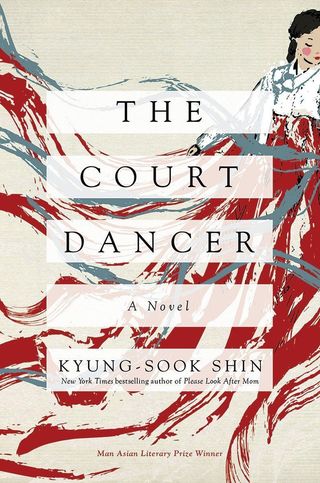
Cover of The Court Dancer

The Court Dancer

Kyung-sook Shin

Original language: Korean · Hardcover · ISBN 978-1681777870

The Court Dancer is a historical novel by Kyung-sook Shin, set during the final decades of the Joseon Dynasty in Korea. It follows Yi Jin, an orphan raised within the royal court who becomes a skilled traditional dancer and a favorite of the Empress. The story draws on a real historical figure and places her at the center of a period when Korea's centuries-old imperial culture faced mounting pressure from foreign powers.

When a young French diplomat witnesses Yi Jin perform at court, he becomes captivated and eventually receives the Emperor's permission to bring her with him to France. In Belle Epoque Paris, Yi Jin discovers a different kind of freedom. She begins working with another Korean student to translate and publish Joseon literature in French, building a life far from the palace hierarchy she once knew. Yet distance from Korea brings its own difficulties, including grief, homesickness, and a deep pull toward the world she left behind.

Shin, who won the Man Asian Literary Prize and reached the New York Times bestseller list with Please Look After Mom, grounds the novel in the political turbulence surrounding the late Joseon court. The book moves between Seoul and Paris, tracing how personal loyalties become entangled with imperial politics.

Plot

Set during the dramatic final years of the Korean Empire, the new novel from Man Asian Literary Prize winner Kyung-Sook Shin features a mysterious dancer caught up in the dizzying sweep of history. Based on a remarkable true story, the New York Times bestselling author of Please Look After Mom brilliantly images the life of Yi Jin, an orphan who would fall under the affections of the Empress and become a jewel in the late Joseon Court. When a novice French diplomat arrives for an audience with the Emperor, he is enraptured by the Joseon Dynasty’s magnificent culture, then at its zenith. But all fades away when he sees Yi Jin perform the delicate traditional Dance of the Spring Oriole. Though well aware that women of the court belong to the palace, the young diplomat confesses his love to the Emperor and gains permission for Yi Jin to accompany him back to France.

Cover of The Hen Who Dreamed She Could Fly

The Hen Who Dreamed She Could Fly

Sun-mi Hwang

Original language: Korean · Paperback · ISBN 978-0143123200

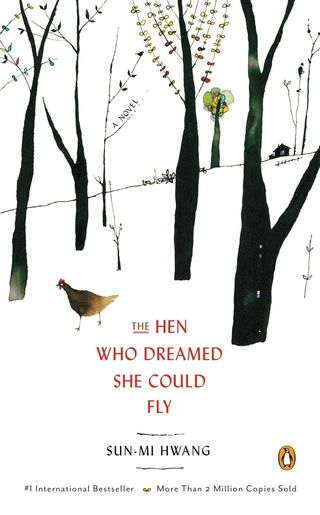
Sprout is a hen on a farm in South Korea who lays eggs each day, only to watch them taken away by the farmer's wife. From inside her cage she can see the barnyard through the doors, where other animals move freely, and she begins to form a plan. She gives herself the name Sprout, a word tied to growth and new life, and decides to break free from the routine that defines her existence.

Once outside, Sprout finds that the barnyard animals reject her. Her one companion is a mallard duck called Straggler, himself an outsider. With his help, she discovers an egg in a briar patch and settles down to hatch it. What emerges is not a chick but a duckling, and Sprout raises it as her own. The story follows her experience of parenthood across the distance between what she expected and what she received, exploring the bonds that form between unlike creatures and the sacrifices involved in caring for the young.

Originally published in South Korea, where it became a bestseller with two million copies sold, the book is illustrated with line drawings by the Japanese artist Nomoco. It is a short, fable-like novel told in plain language.

Plot

This is the story of a hen named Sprout. No longer content to lay eggs on command, only to have them carted off to the market, she glimpses her future every morning through the barn doors, where the other animals roam free, and comes up with a plan to escape into the wild—and to hatch an egg of her own.

Cover of The Island of Sea Women

The Island of Sea Women

Lisa See

Original language: English · Hardcover · ISBN 978-1501154850

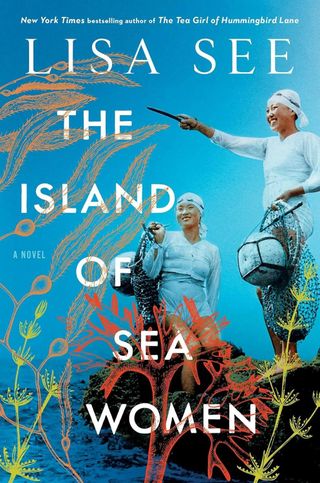
On the Korean island of Jeju, women known as haenyeo have long worked as professional free divers, harvesting the ocean floor while men in their communities care for the children. Lisa See's novel follows two girls, Mi-ja and Young-sook, who grow up on Jeju and join their village's all-female diving collective as beginners. Young-sook descends from a long line of haenyeo and is expected to inherit her mother's role leading the group.

Mi-ja's father worked as a collaborator with the Japanese, an association that marks her for life. The story stretches across decades, beginning in the 1930s under Japanese colonial rule and moving through World War II, the Korean War, and its long aftermath, into the era of mobile phones and wet suits. Jeju's residents find themselves caught between warring empires, and the friendship holds through early hardships while outside pressures pull at it.

Diving is at the center of the book's structure. The haenyeo work without breathing equipment, going down repeatedly into cold water at real physical risk, and the group works under an experienced head diver. See places questions of loyalty, guilt, and inherited standing inside that daily labour.

Plot

Mi-ja and Young-sook, two girls living on the Korean island of Jeju, are best friends that come from very different backgrounds. When they are old enough, they begin working in the sea with their village’s all-female diving collective, led by Young-sook’s mother. As the girls take up their positions as baby divers, they know they are beginning a life of excitement and responsibility but also danger. Despite their love for each other, Mi-ja and Young-sook’s differences are impossible to ignore. The Island of Sea Women is an epoch set over many decades, beginning during a period of Japanese colonialism in the 1930s and 1940s, followed by World War II, the Korean War and its aftermath, through the era of cell phones and wet suits for the women divers.

Cover of The Korean Vegan Cookbook

The Korean Vegan Cookbook

Joanne Lee Molinaro

Original language: English · Paperback · ISBN 978-0593084274

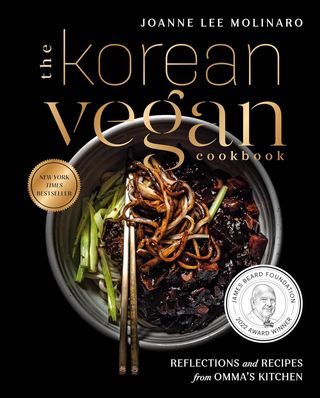
Joanne Lee Molinaro, who writes as The Korean Vegan, begins with a question she hears often: how can someone be both Korean and vegan? Korean food is widely associated with barbecue and fish sauce, yet many of its foundations contain no animal products at all. The book is built around that overlooked fact rather than around substitutes.

The ingredients that filled the bapsang, the spread of dishes served together at a Korean meal, include doenjang, a fermented soybean paste, gochujang, a fermented chili paste, and dashima, a dried kelp used for stock. These are staples of the everyday table, and Molinaro treats them as the starting point for her cooking rather than as adjustments.

Many recipes carry family history. Jjajangmyun, the Korean-Chinese noodle dish in black bean sauce, was her birthday meal as a child, and gamja guk, a plain soup of potato and leek, is her father's. A chocolate sweet potato cake refers to the two foods that kept her mother alive after she left North Korea. The essays alongside them describe immigration, family, and how a diet can be reconsidered without leaving a cuisine.

Plot

As Joanne reveals, she’s often asked, “How can you be vegan and Korean?” Korean cooking is, after all, synonymous with fish sauce and barbecue. And although grilled meat is indeed prevalent in some Korean food, the ingredients that filled out bapsangs on Joanne’s table growing up—doenjang (fermented soybean paste), gochujang (chili sauce), dashima (seaweed), and more—are fully plant-based, unbelievably flavorful, and totally Korean. Some of the recipes come straight from her childhood: Jjajangmyun, the rich Korean-Chinese black bean noodles she ate on birthdays, or the humble Gamja Guk, a potato-and-leek soup her father makes. Some pay homage: Chocolate Sweet Potato Cake is an ode to the two foods that saved her mother’s life after she fled North Korea.

Cover of The Plotters

The Plotters

Un-su Kim

Original language: Korean · Hardcover · ISBN 978-0385544382

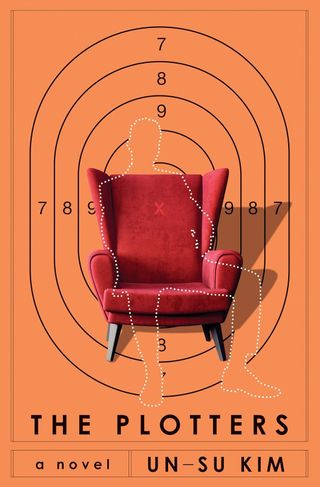
Reseng has been an assassin for most of his life. He was raised inside a criminal headquarters known as The Library, a place stacked with books that nobody reads, run by a veteran killer called Old Raccoon. Reseng grew up following orders without asking questions: where to go, who to eliminate, and why. The novel is set in an alternate version of Seoul, where assassination guilds operate as competing enterprises, each vying for control over contracts and territory. It is a world with its own rigid hierarchy and internal logic, treated by Un-su Kim with dark humor and a matter-of-fact tone.

The story shifts when Reseng breaks from his instructions during an assignment, disturbing a network of carefully arranged plans. He then discovers a scheme orchestrated by three young women: a convenience store clerk, her sister who uses a wheelchair, and a cross-eyed librarian. Their actions push Reseng toward a choice about whether he will continue to serve as an instrument for others or try to determine his own course.

Originally written in Korean, the book blends crime fiction with speculative elements. Its alternate Seoul functions less as a futuristic setting and more as a slightly tilted version of the familiar city, where organized killing has become a structured industry.

Plot

Reseng is an assassin. Raised by a cantankerous killer named Old Raccoon in the crime headquarters "The Library," Reseng never questioned anything: where to go, who to kill, or why his home was filled with books that no one ever read. But one day, Reseng steps out of line on a job, toppling a set of carefully calibrated plans. And when he uncovers an extraordinary scheme set into motion by an eccentric trio of young women--a convenience store clerk, her wheelchair-bound sister, and a cross-eyed librarian--Reseng will have to decide if he will remain a pawn or finally take control of the plot.

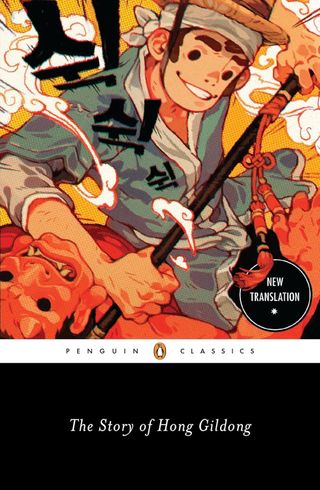
Cover of The Story of Hong Gildong

The Story of Hong Gildong

Minsoo Kang

Original language: Korean · Paperback · ISBN 978-0143107699

Hong Gildong is the son of a high-ranking government minister in premodern Korea, but because he was born to a concubine rather than a primary wife, he is considered illegitimate. Under the rigid social hierarchy of the Joseon period, this status bars him from holding office or rising through official channels, no matter how talented he may be. Frustrated by these limits, Hong Gildong leaves his family behind and falls in with a group of outlaws, eventually becoming their leader.

From there the story takes on a larger scale. Hong Gildong fights assassins and supernatural creatures, and sets out to establish a domain of his own. The tale mixes martial adventure with questions about inherited rank, family loyalty, and what a capable person owes a society that refuses to recognize him. It has been adapted many times in Korean film, television, novels, and comics, and remains one of the most widely known works in Korean literary tradition.

This English edition, translated by Minsoo Kang, draws on what is identified as the earliest and most complete surviving text of the story. Kang is a historian and translator whose work focuses on Korean cultural and intellectual history.

Plot

The Story of Hong Gildong is arguably the single most important work of classic Korean fiction. A fantastic story of adventure, it has been adapted into countless movies, television shows, novels, and comics in Korea. Until now, the earliest and fullest text of this incredible fable has been inaccessible to English readers. Hong Gildong, the brilliant but illegitimate son of a noble government minister, cannot advance in society due to his second-class status, so he leaves home and becomes the leader of a band of outlaws. On the way to building his own empire and gaining acceptance from his family, Hong Gildong vanquishes assassins, battles monsters, and conquers kingdoms. Minsoo Kang’s expressive and lively new translation finally makes the authoritative text of this premodern tale available in English, reintroducing a noble and righteous outlaw and sharing a beloved hallmark of Korean culture.

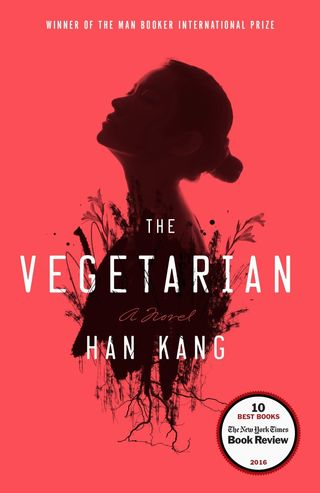
Cover of The Vegetarian

The Vegetarian

Han Kang

Original language: Korean · Paperback · ISBN 978-1101906118

Yeong-hye lives a quiet, unremarkable life with her husband in Seoul until a series of violent nightmares changes everything. The dreams are filled with images of blood and brutality, and they push her toward a single, seemingly modest decision: she stops eating meat. Her husband, accustomed to a predictable domestic routine, treats the refusal as an embarrassment. Her family responds with mounting frustration and aggression, exposing the controlling dynamics that have shaped her life long before the nightmares arrived.

What begins as a personal dietary choice spirals outward through the people around Yeong-hye. The novel is divided into three sections, each narrated from a different perspective, and each stage carries the story further from ordinary life into stranger, more disturbing territory. Han Kang examines how a woman's quiet assertion of bodily autonomy provokes those closest to her, revealing layers of coercion in family relationships, marriage, and social expectation.

Han Kang originally published the novel in Korean in 2007. Deborah Smith's English translation, released in 2015, brought the book to a wide international readership. The novel received the Man Booker International Prize in 2016, shared between author and translator.

Plot

Before the nightmares began, Yeong-hye and her husband lived an ordinary, controlled life. But the dreams—invasive images of blood and brutality—torture her, driving Yeong-hye to purge her mind and renounce eating meat altogether. It’s a small act of independence, but it interrupts her marriage and sets into motion an increasingly grotesque chain of events at home.

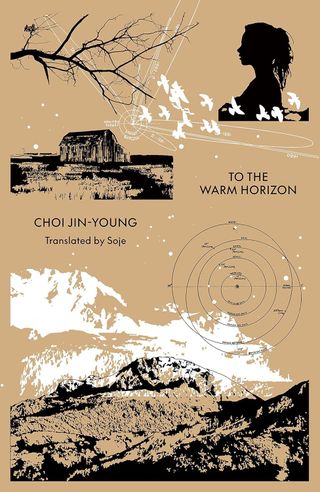
Cover of To the Warm Horizon

To the Warm Horizon

Choi Jin-young

Original language: Korean · Paperback · ISBN 978-1916277144

To the Warm Horizon is a Korean novel by Choi Jin-young, translated into English by Soje. It follows a group of Korean characters moving through a landscape devastated by disease. The world they knew has collapsed, and the story traces how they respond to that collapse, searching for direction, connection, and something worth walking toward. The title itself suggests a distant goal that may be as much psychological as geographic.

At the center of the narrative are two young women, Jina and Dori, who form a bond amid the surrounding ruin. Their relationship becomes one of the few steady points in a setting defined by uncertainty. Around them, other members of the group cope with disaster in different ways, some holding on to old habits and others abandoning them. Choi Jin-young uses the post-apocalyptic premise not mainly for spectacle but to examine how people construct meaning when familiar structures have disappeared.

The novel is compact and focused, concerned less with the mechanics of catastrophe than with the interior lives of survivors. Questions about purpose, intimacy, and the reasons people stay together or drift apart run through the story as the group continues its uncertain migration.

Plot

A group of Koreans are making their way across a disease ravaged landscape--but to what end? To the Warm Horizon shows how in a post-apocalyptic world, humans will still seek purpose, kinship, and even intimacy. Focusing on two young women, Jina and Dori, who find love against all odds, Choi Jin-young creates a dystopia where people are trying to find direction after having their worlds turned upside down.

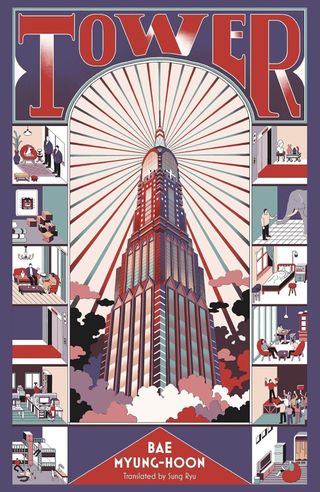
Cover of Tower

Tower

Myung-hoon Bae

Original language: Korean · Paperback · ISBN 978-1916277120

Tower by Myung-hoon Bae is a collection of six interconnected stories set inside a single enormous skyscraper-city called Beanstalk. The building functions as an entire urban society, with its own citizens, government, economy, and social hierarchies. Each story follows different inhabitants as they encounter the forces of authority and institutional power that shape daily life within the structure.

The situations range from absurd to pointed. In one story, a team of researchers must find a way to inform their superior that a powerful figure in their world is, in fact, a dog. In another, a woman turns to the internet to organize the rescue of a downed fighter pilot after the government refuses to act. A third follows an outsider who arrives in Beanstalk and is assigned the unexpected task of training a gentle elephant to disperse protests. Bae uses dark humor and satirical scenarios to examine how ordinary people navigate bureaucracy, media, and concentrated power.

Originally written in Korean, the book compresses an entire society into a vertical setting. The enclosed world of Beanstalk lets each story isolate a different pressure point, from corporate absurdity to state indifference, while the shared location ties them into a single, layered picture of modern institutional life.

Plot

Each story deals with how citizens living in the hypermodern high-rise deal with various influences of power in their lives: a group of researchers have to tell their boss that a major powerbroker is a dog, a woman uses the power of the internet to rescue a downed fighter pilot abandoned by the government, and an out-of-towner finds himself in charge of training a gentle elephant to break up protests. Bae explores the forces that shape modern life with wit and a sly wink at the reader.

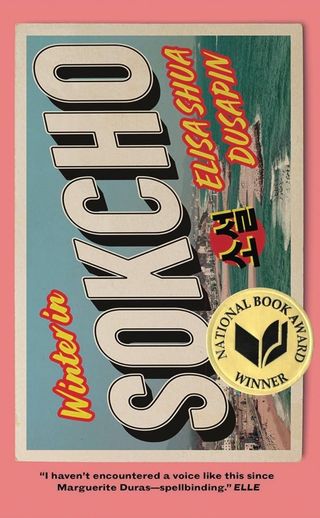
Cover of Winter in Sokcho

Winter in Sokcho

Elisa Shua Dusapin

Original language: Korean · Paperback · ISBN 978-1948830416

Sokcho is a coastal city in South Korea's Gangwon Province, close to the demilitarized zone that separates the two Koreas. In Elisa Shua Dusapin's short novel, winter has settled over the town and slowed its rhythms. A young woman of mixed French and Korean heritage works the front desk of a tired guesthouse. When a French cartoonist checks in, searching for material in this stark border landscape, a cautious connection forms.

She agrees to guide him through the region, visiting mountain peaks, waterfalls, and crossing briefly into North Korea. But he is drawn to a curated version of the country, shaped by outsider ideas of what feels authentic. He shows little interest in the Sokcho she inhabits: the neon-lit streets, the fish market where her mother works, the scars left by decades of military tension.

Originally written in French, the novel won the Prix Robert Walser. Dusapin has both French and Korean family roots, and the book keeps its attention on cultural belonging, on being visible or overlooked, and on the way one person's gaze can reshape another's sense of self.

Plot

It’s winter in Sokcho, a tourist town on the border between South and North Korea. The cold slows everything down. Bodies are red and raw, the fish turn venomous, beyond the beach guns point out from the North’s watchtowers. A young French Korean woman works as a receptionist in a tired guesthouse. One evening, an unexpected guest arrives: a French cartoonist determined to find inspiration in this desolate landscape. The two form an uneasy relationship. When she agrees to accompany him on trips to discover an "authentic" Korea, they visit snowy mountaintops and dramatic waterfalls, and cross into North Korea. But he takes no interest in the Sokcho she knows—the gaudy neon lights, the scars of war, the fish market where her mother works. As she’s pulled into his vision and taken in by his drawings, she strikes upon a way to finally be seen.

More from South Korea

See the country page for South Korea for its map, facts and largest cities, or browse books from other countries.

Links go to Amazon; Hookito doesn’t sell books. Know a book that belongs here, or spotted a mistake? Write to submissions@hookito.com.

Where to next?

Back to the globe
Hookito landscape illustration