Hookito

Kuwait · Books

Books from Kuwait

9 books from and about Kuwait: what each is about, the plot, and a note from Professor Kogi.

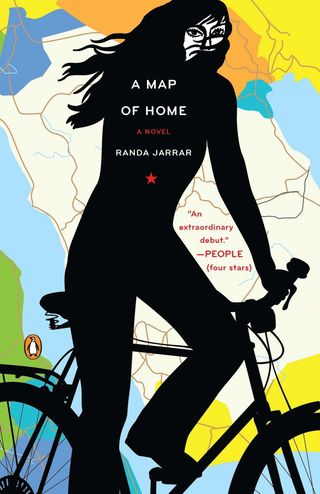
Cover of A Map of Home

A Map of Home

Randa Jarrar

Original language: English · Paperback · ISBN 978-0143116264

Nidali is born in 1970s Boston to a Palestinian father and an Egyptian-Greek mother. Her name, as the novel explains, is a feminine form of the Arabic word for struggle. The family soon relocates to Kuwait, where Nidali grows up in a middle-class household with its own quiet eccentricities. That life is upended when the 1990 Iraqi invasion forces the family to leave, first for Egypt and eventually for Texas.

Randa Jarrar's debut novel follows Nidali from early childhood through her teenage years across these very different settings. Each move reshapes the family's daily routines, social standing, and sense of belonging. Nidali narrates the story herself, and her voice carries a stubborn, comic energy as she watches her parents adapt or resist each new environment. The tensions between generations, between cultures absorbed and cultures left behind, run through the book without settling into simple conclusions.

The geography of the novel covers a wide arc, from the Gulf to the Nile Delta to the American South. Jarrar grounds each location in concrete domestic detail rather than broad cultural commentary, letting the household itself become the space where displacement is most plainly felt.

Plot

In this fresh, funny, and fearless debut novel, Randa Jarrar chronicles the coming-of-age of Nidali, one of the most unique and irrepressible narrators in contemporary fiction. Born in 1970s Boston to an Egyptian-Greek mother and a Palestinian father, the rebellious Nidali—whose name is a feminization of the word “struggle”—soon moves to a very different life in Kuwait. There the family leads a mildly eccentric middle-class existence until the Iraqi invasion drives them first to Egypt and then to Texas.
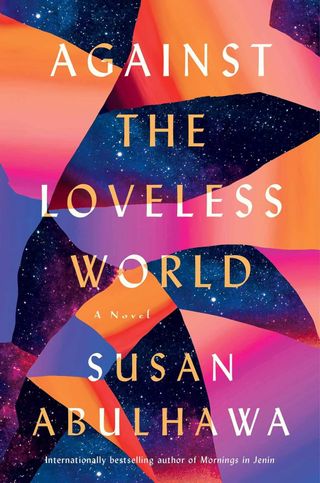
Cover of Against the Loveless World

Against the Loveless World

Susan Abulhawa

Original language: English · Hardcover · ISBN 978-1982137038

Against the Loveless World by Susan Abulhawa unfolds as a reflection from solitary confinement. Nahr, a Palestinian woman, revisits the events that ended with her imprisoned in a state she hardly recognizes as home. Born in Kuwait in the 1970s to refugee parents, she once hoped for love, children, and maybe a small beauty salon.

Those plans collapse. A short marriage ends when the man she believes she loves leaves her, her family drifts toward poverty, and she is pushed into prostitution to survive. The United States invasion of Iraq displaces her once more, repeating the refugee status her parents carried. Jordan becomes another temporary address before she reaches Palestine, settles, and falls in love under Israeli occupation.

Abulhawa gives Nahr sharp, subversive humor and a morally ambiguous view of her own choices instead of a straightforward account of victimhood. The novel won a 2020 Palestine Book Award and was a finalist for the 2021 Aspen Words Literary Prize, and The New York Times described it as beautiful and urgent.

Plot

As Nahr sits, locked away in solitary confinement, she spends her days reflecting on the dramatic events that landed her in prison in a country she barely knows. Born in Kuwait in the 70s to Palestinian refugees, she dreamed of falling in love with the perfect man, raising children, and possibly opening her own beauty salon. Instead, the man she thinks she loves jilts her after a brief marriage, her family teeters on the brink of poverty, she’s forced to prostitute herself, and the US invasion of Iraq makes her a refugee, as her parents had been. After trekking through another temporary home in Jordan, she lands in Palestine, where she finally makes a home, falls in love, and her destiny unfolds under Israeli occupation. Nahr’s subversive humor and moral ambiguity will resonate with fans of My Sister, The Serial Killer, and her dark, contemporary struggle places her as the perfect sister to Carmen Maria Machado’s Her Body and Other Parties.

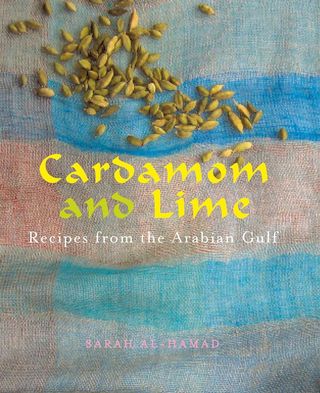
Cover of Cardamom and Lime: Recipes from the Arabian Gulf

Cardamom and Lime: Recipes from the Arabian Gulf

Sarah al-Hamad

Original language: English · Paperback · ISBN 978-1566568494

Cardamom and Lime is a cookbook by Sarah al-Hamad that focuses on the traditional cooking of the Arabian Gulf region, covering dishes from Bahrain, Oman, Kuwait, Qatar, the United Arab Emirates, and Saudi Arabia. The book presents recipes shaped by the spice trade, coastal geography, and desert climate that have defined everyday meals and festive gatherings across these six countries for generations. Cardamom, dried lime, saffron, and rosewater appear frequently, linking the recipes to longstanding trade routes between the Gulf, South Asia, and East Africa.

Al-Hamad, who has roots in Kuwait, organizes the collection to reflect how people in the region actually eat, from rice dishes layered with meat and nuts to slow-cooked stews, grilled fish, and sweets flavored with dates and honey. The book includes photographs and short features on daily life in the Gulf, offering context for how ingredients are sourced and meals are shared.

Gulf cuisine has received relatively little attention in English-language publishing compared to other parts of the Middle East. This collection addresses that gap by documenting home-style cooking traditions that vary from one Gulf state to another, even when they share core ingredients and techniques.

Plot

Little is known in the West about this rich cuisine. Cardamom and Lime provides readers with the inspiration to create these wonderful dishes. Throughout the book there are beautiful photographs and feature spreads to give a flavor of life in the Gulf and its mouthwatering cuisine.

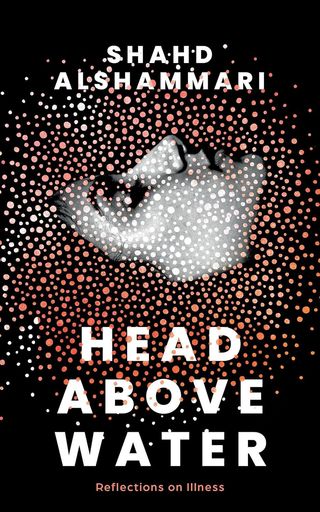
Cover of Head above Water: Reflections on Illness

Head above Water: Reflections on Illness

Shahd Alshammari

Original language: English · Paperback · ISBN 978-1952177071

Shahd Alshammari was eighteen years old when she received a diagnosis of multiple sclerosis. Her neurologist told her she would not live past thirty. This memoir traces what followed: years of navigating medical systems, university life, and the daily realities of chronic illness across two countries, Kuwait and the United Kingdom. Alshammari writes with directness about what it means to be categorized as ill by the people and institutions around her, and how that label shaped her sense of self.

By the time she reached thirty, Alshammari had become a professor of literature. The book moves between her experiences as a patient, a student, and a teacher, examining how disability intersects with questions of gender, race, displacement, and cultural belonging. She is interested not only in the body's limits but in the social structures that define who belongs and who does not.

Throughout the memoir, Alshammari returns to reading and storytelling as forms of agency. She considers how literature offered her a way to make sense of her own situation and to connect with others. The book is philosophical in tone, grounded in specific lived detail rather than abstraction.

Plot

Shahd Alshammari is just eighteen when she is diagnosed with multiple sclerosis, and told by her neurologist that she would not make it past age thirty. Despite what she is told, by thirty, she has become a professor of literature, and has managed to navigate education systems in both Kuwait and the United Kingdom and inspire generations of students. Charting her journey with raw honesty, Alshammari explores disability, displacement, and belonging—not only of the body, but of culture, gender, and race, and imparts wisdom of profound philosophical value throughout. It is people, human connections, that keep us afloat, she argues—"and in storytelling we have the power to gain a sense of agency over our lives."

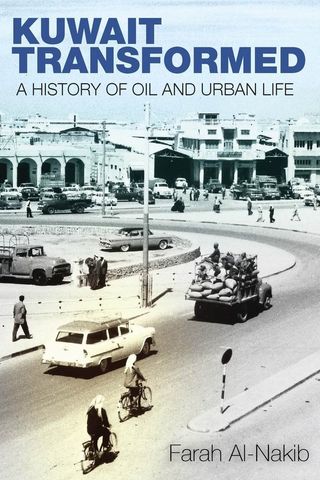
Cover of Kuwait Transformed: A History of Oil and Urban Life

Kuwait Transformed: A History of Oil and Urban Life

Farah Al-Nakib

Original language: English · Paperback · ISBN 978-0804798525

Kuwait City was among the first Gulf cities to undergo a dramatic physical transformation after the discovery of oil. Farah Al-Nakib traces this change from the city's founding as a settlement in 1716 through to the twenty-first century, examining how a compact town of mudbrick courtyard houses and walkable streets became a sprawling modern metropolis of highways, suburbs, and marble-fronted towers. The book treats oil not simply as an economic event but as a force that reshaped how people moved through, lived in, and related to their city.

Al-Nakib connects urban planning decisions to shifts in social life. She argues that decades of suburbanization and privatization broke apart patterns of daily interaction that had sustained a relatively open and mixed society. As residents moved into separated suburban districts and public space gave way to private development, the physical city itself began to sort people by nationality, class, and sect. The result, in her account, is a growing insularity and xenophobia in Kuwaiti social relations.

The book draws on the history of architecture, planning policy, and everyday routines to show how the built environment shapes social behavior over time. Kuwait City serves here as a specific case study, but many of the processes Al-Nakib describes have since repeated across the wider Gulf region.

Plot

As the first Gulf city to experience oil urbanization, Kuwait City's transformation in the mid-twentieth century inaugurated a now-familiar regional narrative: a small traditional town of mudbrick courtyard houses and plentiful foot traffic transformed into a modern city with marble-fronted buildings, vast suburbs, and wide highways. In Kuwait Transformed, Farah Al-Nakib connects the city's past and present, from its settlement in 1716 to the twenty-first century, through the bridge of oil discovery. She traces the relationships between the urban landscape, patterns and practices of everyday life, and social behaviors and relations in Kuwait.

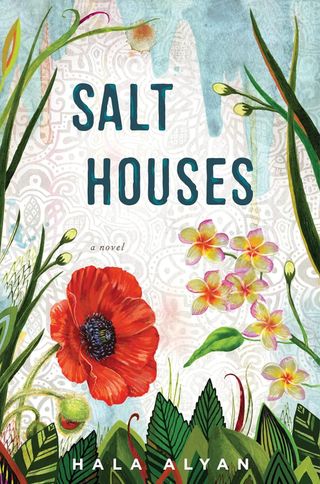
Cover of Salt Houses

Salt Houses

Hala Alyan

Original language: English · Hardcover · ISBN 978-0544912588

Salt Houses by Hala Alyan follows a Palestinian family across several decades and multiple countries, beginning in 1967. On the night before her daughter Alia's wedding, Salma reads the young woman's fortune in coffee grounds and foresees displacement and restlessness ahead. The Six-Day War soon forces Salma from her home in Nablus, while Alia and her husband settle in Kuwait City and start raising three children there.

The family's second uprooting comes with the Iraqi invasion of Kuwait in 1990. Once again they lose what they have built, scattering across cities including Beirut, Paris, and Boston. As Alia's children grow up and form families of their own, each generation faces questions about belonging, identity, and what it means to make a home in a place that was not chosen freely. The novel traces these patterns through intimate domestic details rather than broad political narrative.

Alyan structures the story so that different family members carry successive chapters, shifting perspectives across generations and geographies. The book received the Dayton Literary Peace Prize and the Arab American Book Award. Its timeline stretches from the 1960s into the early twenty-first century, covering roughly half a century of one family's continuous displacement.

Plot

On the eve of her daughter Alia’s wedding, Salma reads the girl’s future in a cup of coffee dregs. She sees an unsettled life for Alia and her children; she also sees travel and luck. While she chooses to keep her predictions to herself that day, they will all soon come to pass when the family is uprooted in the wake of the Six-Day War of 1967.

Cover of The Bamboo Stalk

The Bamboo Stalk

Saud Alsanousi

Original language: Arabic · Hardcover · ISBN 978-9927101779

Josephine Mendoza leaves the Philippines for Kuwait, hoping domestic work will lift her out of poverty. There she meets Rashid, a young Kuwaiti man from a prominent family who dreams of becoming a writer. A relationship forms between them, but when Josephine becomes pregnant, Rashid yields to social and family expectations. With war approaching, he sends her and their infant son, José, back to the Philippines.

José grows up caught between two countries and two cultures. He carries a Kuwaiti passport and an Arab family name alongside a Filipino face and a Christian given name. None of these markers fit neatly together in either society. He holds on to the idea that when he turns eighteen he can return to Kuwait and claim a place in his father's world. What he finds there is a society where public reputation and social standing can weigh more heavily than any official document.

The novel examines the position of migrant workers in Gulf Arab states and the rigid social boundaries they encounter. Through José's split background, it traces questions of race, nationality, religion, and belonging that have no simple resolution. The title refers to bamboo's ability to bend without breaking, a quality José needs as he navigates pressures from both sides of his heritage.

Plot

Josephine Mendoza escapes poverty by coming to Kuwait from the Philippines to work as a maid, where she meets Rashid, an idealistic only son with literary aspirations. Josephine, with all the wide-eyed naivety of youth, believes she has found true love. But when she becomes pregnant, and with the rumble of war growing ever louder, Rashid bows to family and social pressure, and sends her back home with her baby son, José. Brought up struggling with his dual identity, José clings to the hope of returning to his father's country when he is eighteen. He is ill-prepared to plunge headfirst into a world where the fear of tyrants and dictators is nothing compared to the fear of 'what people will say.' And with a Filipino face, a Kuwaiti passport, an Arab surname, and a Christian first name will his father’s country welcome him?

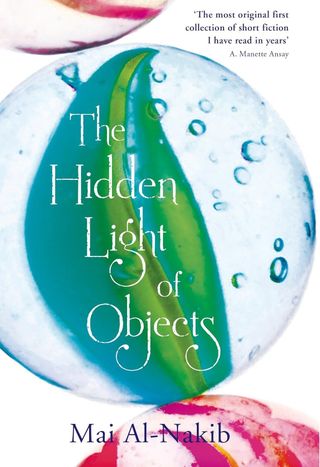
Cover of The Hidden Light of Objects

The Hidden Light of Objects

Mai Al-Nakib

Original language: English · Hardcover · ISBN 978-9992195413

The Hidden Light of Objects is a collection of short stories by Mai Al-Nakib, set largely in Kuwait and the wider Middle East. The stories follow ordinary people whose private lives intersect with larger political and social currents. In one, a girl renamed Amerika to mark the US role in Kuwait's liberation discovers that her name increasingly measures her country's shifting feelings toward the West. In another, a man facing terminal cancer reflects on his infidelities and his wife's persistent forgiveness. Other characters include a Palestinian teenager pulled toward violence by classmates and a Kuwaiti woman returning to her family after years of captivity in Iraq.

Al-Nakib is interested in the gap between headlines and the texture of daily experience. War, occupation, and religious tension form the backdrop, but the foreground belongs to adolescent attachments, strained marriages, and quiet personal losses. Everyday objects carry emotional weight in these stories, holding memories that outlast the events themselves.

Al-Nakib is a Kuwaiti author and academic. The collection draws on settings and histories specific to the Gulf region, grounding its fiction in recognizable geography and recent decades of political change across the Middle East.

Plot

A young girl, renamed Amerika in honour of the US role in the liberation of Kuwait, finds her name has become a barometer of her country’s growing hostility towards the West. A middle-aged man dying from cancer looks back on his extramarital affairs and the abiding forgiveness of his wife. The headlines tell of war, unrest and religious clashes. But if you look beyond them you will see life in the Middle East as it is really lived--adolescent love, the fragility of marriage, pain of the most quotidian kind.

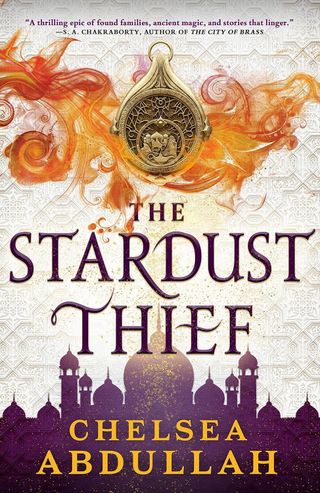
Cover of The Stardust Thief

The Stardust Thief

Chelsea Abdullah

Original language: English · Paperback · ISBN 978-0316368865

Loulie al-Nazari operates under the name the Midnight Merchant, trading in illegal magic across a desert landscape populated by jinn, ghouls, and human rulers. She works alongside a jinn bodyguard whose loyalties and hidden knowledge add complexity to every deal. When she intervenes to save the life of a reluctant prince, her actions catch the notice of his father, the sultan, who uses the threat of execution to force her cooperation in a new task: locating an ancient lamp said to hold the power to restore life to dying lands.

The quest sends Loulie into the desert with the sultan's oldest son, navigating threats that range from ghoul ambushes to a jinn queen seeking revenge. At the same time, a killer connected to Loulie's own history is closing in. Chelsea Abdullah draws on the tradition of One Thousand and One Nights, building a setting where storytelling, magic, and political power are closely linked. The novel follows multiple perspectives, and each character carries separate motives that shift alliances along the way.

Abdullah, who has roots in Kuwait, sets her fantasy in a world shaped by Arabian folklore and the tension between human authority and jinn existence. The narrative treats magic as a commodity, regulated and fought over, rather than a neutral force.

Plot

Neither here nor there, but long ago . . . Loulie al-Nazari is the Midnight Merchant: a criminal who, with the help of her jinn bodyguard, hunts and sells illegal magic. When she saves the life of a cowardly prince, she draws the attention of his powerful father, the sultan, who blackmails her into finding an ancient lamp that has the power to revive the barren land. With no choice but to obey or be executed, Loulie journeys with the sultan's oldest son to find the artifact. Aided by her bodyguard, who has secrets of his own, they must survive ghoul attacks, outwit a vengeful jinn queen, and confront a malicious killer from Loulie's past.

More from Kuwait

See the country page for Kuwait for its map, facts and largest cities, or browse books from other countries.

Links go to Amazon; Hookito doesn’t sell books. Know a book that belongs here, or spotted a mistake? Write to submissions@hookito.com.

Where to next?

Back to the globe
Hookito landscape illustration