5 books from and about Laos: what each is about, the plot, and a note from Professor Kogi.
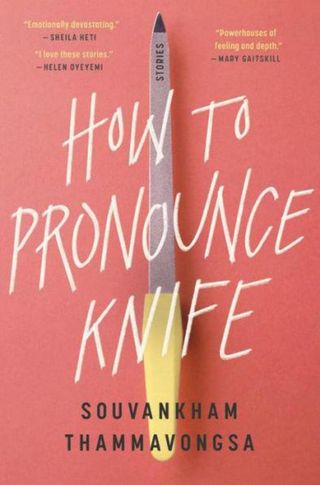
How to Pronounce Knife: Stories
Souvankham Thammavongsa
Original language: English · Hardcover · ISBN 978-0316422130
How to Pronounce Knife is a debut short story collection by Souvankham Thammavongsa, a writer of Lao background. The stories follow immigrants and refugees living in an unnamed city, working jobs that range from plucking feathers at a chicken processing plant to painting nails at a local salon. A former boxer finds unexpected tenderness through his new trade. A housewife picks up English by watching soap operas on daytime television. A mother leads her daughter out at night to gather earthworms. Each story is built around the daily texture of ordinary labor and small decisions.
Thammavongsa writes about people caught between languages, cultures, and generations. Children watch their parents navigate unfamiliar systems. Adults carry old knowledge into new settings where it may or may not serve them. The collection is interested in what happens when belonging is not a given but something that must be assembled from limited materials, shift by shift, word by word.
The prose style is spare and closely observed, with a dry humor running through even the most difficult scenes. Thammavongsa received an O. Henry Award for her short fiction, and this collection marks her first published book of stories.
Plot
A failed boxer painting nails at the local salon. A woman plucking feathers at a chicken processing plant. A housewife learning English from daytime soap operas. A mother teaching her daughter the art of worm harvesting. In her stunning debut story collection, O. Henry Award winner Souvankham Thammavongsa focuses on characters struggling to make a living, illuminating their hopes, disappointments, love affairs, acts of defiance, and above all their pursuit of a place to belong. In spare, intimate prose charged with emotional power and a sly wit, she paints an indelible portrait of watchful children, wounded men, and restless women caught between cultures, languages, and values. As one of Thammavongsa's characters says, "All we wanted was to live." And in these stories, they do—brightly, ferociously, unforgettably.
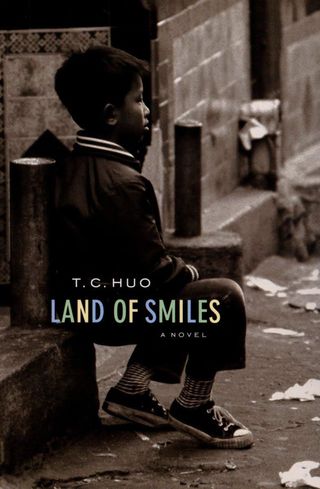
Original language: English · Paperback · ISBN 978-0452281851
Boontakorn is fourteen when he swims across the Mekong River from Laos into Thailand. His mother and sister do not survive the crossing. On the other side he finds his father in a refugee camp, a crowded place governed by unspoken rules. Matchmakers fuss over his father, hoping to find him a wife who will cook. Boontakorn must learn these customs while holding memories of the family he lost.
Father and son eventually reach California, where they depend on relatives and acquaintances. Boontakorn encounters American life in fragments: high school hallways, the figure of Superman, the spectacle of Saturday Night Fever. Each new impression arrives without context, and he has to piece together what these things mean from the outside. T. C. Huo sets moments of gentle comedy alongside the disorientation of starting over in an unfamiliar country.
The novel moves through three settings: a home left behind in Laos, a Thai camp where residents wait, and a new life in the United States. Each has its own code of behavior, and the story follows a teenager working out what each one expects of him and what remains of the place he left.
Plot
The novel opens with a Laotian boy, Boontakone, who swims across the Mekong River, leaving his old life behind, and losing his mother and sister in the process. In a refugee camp in Thailand, Boontakone struggles to decipher the secret codes of his new life. Huo offers a glimpse into a world as highly ordered and dependent on proper observance of social customs and manners as any created by Jane Austen. Eventually Boontakone and his father make their way to America, where the young man will have to sort out impressions as dazzling and puzzling as the American high school, Superman, and Saturday Night Fever.
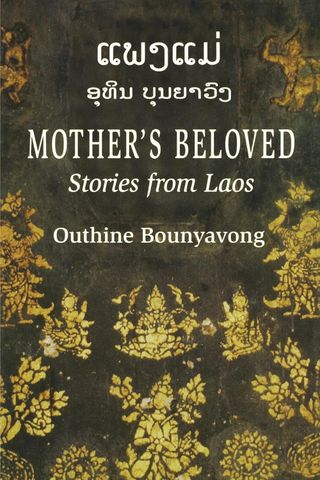
Original language: Lao · Paperback · ISBN 978-0295977362
Mother's Beloved collects fourteen short stories by Outhine Bounyavong, one of the most recognized fiction writers in Laos. The book is a bilingual edition, presenting each story in both English translation and the original Lao text. This format made the collection Outhine's first formal appearance before an English-speaking readership.
The stories draw on village life, personal memory, and the conduct of ordinary people rather than political argument. Outhine writes about families, aging, everyday disappointments, and small moments of kindness. Compassion, respect for elders, and the bonds between generations run through the collection as quiet concerns. At the same time, the effects of war and environmental damage surface as recurring pressures on the communities he describes.
Outhine's characters tend to speak in plain, understated exchanges that carry more weight than they first seem to. The stories stay close to the ground, occupied with farming, rivers, and the practical details of rural Lao society. By keeping the Lao originals alongside the translations, the edition allows readers who know both languages to compare how meaning travels between them.
Plot
Outhine Bounyavong is one of the most prominent contemporary writers in Laos. His stories are animated with Laotian virtues of simplicity, compassion, respect for age, and other village mores; they breathe with a gentleness that is fresh and distinctive. Outhine is interested in his own memories, in how to behave with compassion, and in the chain of life among men and women that reaches into the earth.
Rather than writing through an ideological lens, Outhine focuses on the passions and foibles of ordinary people. Their good luck, disappointments, and plain but poignant conversations reveal the subtle textures of Lao culture. The tragedy of war and the threat of environmental degradation are themes woven into his stories.
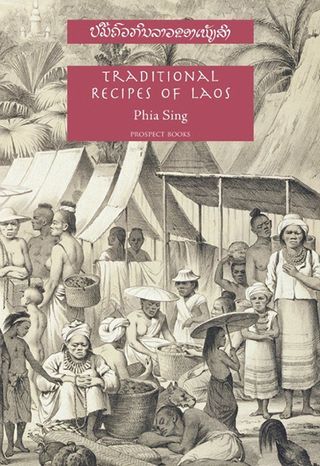
Original language: Lao · Paperback · ISBN 978-1903018958
Traditional Recipes of Laos is a cookbook compiled from the notebooks of Phia Sing, a figure of high standing in Lao society. The collection contains 124 recipes chosen to represent a broad view of Lao cuisine, though shaped by the perspective of its well-positioned author. The book first appeared over thirty years ago, and this edition restores the original Lao-language text alongside the English, which remains unchanged from earlier printings.
A substantial introduction, running to around fifty pages, was written by Alan Davidson and his daughter Jennifer. It covers Phia Sing's life, Lao eating customs and attitudes toward food, culinary vocabulary, kitchen equipment, and the ingredients used in Lao cooking. Throughout the book, illustrations drawn from life by Soun Vannithone and other Lao artists accompany the text, offering visual detail about the food and its preparation.
Since the book first appeared, many of the ingredients and techniques it describes have become more widely available and better understood outside Laos. The recipes are presented as practical and cookable rather than archival. Alan Davidson, who contributed the prefatory material, was a widely respected food writer known for his work on Southeast Asian and fish cookery.
Plot
The notebooks are a precious resource for those wishing to cook Lao food: the 124 recipes were compiled to give a balanced view of the cuisine (albeit from quite a high-ranking perspective). In the thirty years since its first appearance, materials and ingredients have become easier to source, and the cooking techniques and styles more familiar to us. The dishes, therefore, are very cookable. There is a long prefatory section, written by the late Alan Davidson and his daughter Jennifer, which explains much about Lao cookery, ingredients and equipment. The whole book is plentifully illustrated with drawings done from life by Soun Vannithone and other Lao artists. The introduction is 50 pages long and covers the life of Phia Sing; Lao eating habits and attitudes to food; Lao culinary terms and culinary equipment; and Lao ingredients.
Original language: English · Hardcover · ISBN 978-1982185299
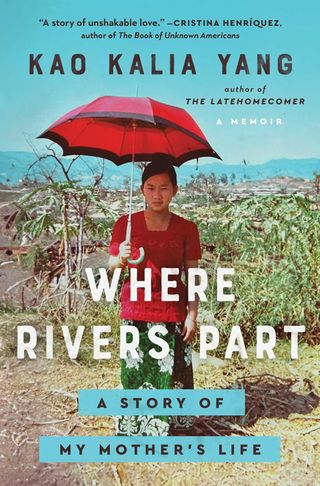
Where Rivers Part tells the life story of Tswb, mother of author Kao Kalia Yang, who was born in 1961 in Laos. She grew up during America's Secret War, in which the CIA recruited Hmong and other ethnic minorities to fight for the United States. After the US withdrew, the Hmong were labelled traitors, and the violence that followed drove Tswb's family into the jungle.
Survival there meant constant movement, scarce food, and fear. During this period Tswb met the man she would marry. She joined his family at a refugee camp, a decision that meant leaving her own mother behind, and that separation stayed with her long afterward. As a mother herself, Tswb raised her daughters through continued hardship until the family was able to emigrate to the United States.
In the US, Tswb and her husband enrolled in high school although both were close to thirty, while working demanding jobs to support their children. Yang follows that path from rural Laos through displacement to resettlement, keeping attention on the choices her mother made under extreme pressure and on the cost of leaving family members behind.
Plot
Born in 1961 in war-torn Laos, Tswb’s childhood was marked by the violence of America’s Secret War and the CIA recruitment of the Hmong and other ethnic minorities into the lost cause. By the time Tswb was a teenager, the US had completely vacated Laos, and the country erupted into genocidal attacks on the Hmong people, who were labeled as traitors. Fearing for their lives, Tswb and her family left everything they knew behind and fled their village for the jungle.
Perpetually on the run and on the brink of starvation, Tswb eventually crossed paths with the man who would become her future husband. Leaving her own mother behind, she joined his family at a refugee camp, a choice that would haunt her for the rest of her life. Eventually becoming a mother herself, Tswb raised her daughters in a state of constant fear and hunger until they were able to emigrate to the US, where the determined couple enrolled in high school even though they were both nearly thirty and worked grueling jobs to provide for their children.

 Books from Laos