Hookito

Lebanon · Books

Books from Lebanon

8 books from and about Lebanon: what each is about, the plot, and a note from Professor Kogi.

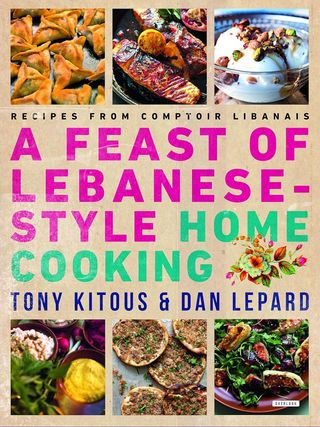
Cover of Feast of Lebanese-Style Home Cooking

Feast of Lebanese-Style Home Cooking

Tony Kitous, Dan Lepard

Original language: English · Paperback · ISBN 978-1468316742

Feast of Lebanese-Style Home Cooking is a cookbook by Tony Kitous and Dan Lepard that gathers around 80 recipes drawn from the home cooking traditions of Lebanon. The book covers mezze, the collection of small dishes such as salads, dips, and warm plates that often form the centerpiece of a Lebanese meal. It also includes recipes for grills, barbecues, soups, breads, pastries, drinks, and desserts. The authors designed each recipe to work with ingredients and kitchen tools that are widely available outside Lebanon.

Tony Kitous, known for bringing North African and Middle Eastern flavors to London through his restaurant work, pairs here with Dan Lepard, a baker and food photographer. Lepard's photography accompanies every recipe in the book, showing each finished dish in detail. The approach leans practical: rather than calling for hard-to-find spices or specialized equipment, the recipes aim to bring Lebanese-style cooking within reach of a general home kitchen.

Lebanese cuisine relies heavily on fresh vegetables, grains, olive oil, herbs like parsley and mint, and dairy products such as labneh, a strained yogurt. These staple ingredients appear throughout the book and connect its recipes to a broader Eastern Mediterranean food tradition.

Plot

This cookbook covers everything from a wide range of mezze—small dishes, including salads, dips, and hot dishes—to grills and barbecues to spectacular recipes for soups, breads, pastries, beverages, and desserts, while ensuring that each dish uses readily available ingredients and basic kitchen equipment. Featuring the striking food photography of award-winning baker Dan Lepard, which accompanies each recipe, A Feast of Lebanese-Style Home Cooking is a culinary celebration that satisfies readers’ yen for delicious, stylish, and simple recipes—perfect for fans of Jerusalem and Ottolenghi.
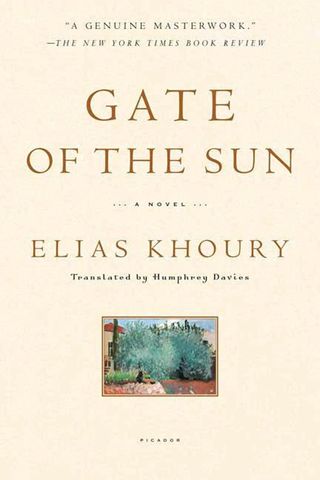
Cover of Gate of the Sun

Gate of the Sun

Elias Khoury

Original language: Arabic · Paperback · ISBN 978-0312426705

Elias Khoury's Gate of the Sun centers on two Palestinian men in a hospital room. Yunes, an elderly fighter who spent decades resisting displacement, lies in a coma. Khalil, a younger man who considers Yunes a father figure, sits beside him and refuses to accept that Yunes may not wake. To fill the silence and keep Yunes tethered to life, Khalil begins telling stories, speaking directly to the unconscious man hour after hour.

The stories Khalil tells move between generations and locations, drawing on the broader experience of Palestinian exile as Khoury gathered it from years of visits to refugee camps. Woven through these accounts is the private history of Yunes and his wife, who met in secret over the years at a place called Bab al-Shams, the Gate of the Sun. Their relationship survived long separations and the upheaval around them, and it forms a quiet center within the larger narrative of loss and displacement.

The novel's structure echoes the Arabian Nights pattern of storytelling as survival. Khalil, like Scheherazade, uses narrative to hold off an ending he cannot control. The setting shifts between Lebanon and historical Palestine, and the accumulated stories build a layered, collective portrait rather than a single linear plot.

Plot

Yunes, an aging Palestinian freedom fighter, lies in a coma. Keeping vigil at the old man's bedside is his spiritual son, Khalil, who nurses Yunes, refusing to admit that his hero may never regain consciousness. Like a modern-day Scheherazade, Khalil relates the story of Palestinian exile while also recalling Yunes's own extraordinary life and his love for his wife, whom he meets secretly over the years at Bab al-Shams, the Gate of the Sun.

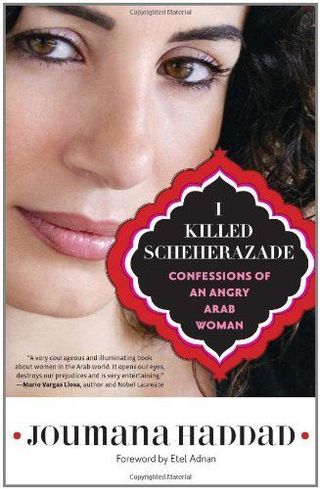
Cover of I Killed Scheherazade

I Killed Scheherazade

Joumana Haddad

Original language: Arabic · Paperback · ISBN 978-1569768402

Joumana Haddad is a Lebanese poet and journalist. In this book, she confronts what she sees as two distortions of Arab womanhood: one produced by Western assumptions, and another maintained within parts of the Arab world itself. The title refers to Scheherazade, the fictional narrator of The Arabian Nights who survived by telling stories to a king. Haddad treats this figure as a symbol she wants to dismantle, arguing that Arab women should not need to perform or persuade to earn safety or approval.

The book is part memoir, part cultural essay. Haddad draws on her own experiences growing up in Lebanon to examine how silence around sexuality, desire, and personal autonomy shapes everyday life for women in the region. She is direct about the gap between private thought and public conduct, describing a culture where certain subjects are constantly present yet rarely spoken about openly. Her criticism extends in both directions, questioning Western observers who flatten Arab women into a single oppressed category, and social pressures within Arab societies that discourage honest self-expression.

Haddad writes from Beirut, a city long positioned between European and Arab cultural influences. Her arguments stay rooted in specifics rather than abstraction, and the book addresses feminism, censorship, and identity without settling for tidy conclusions about any of them.

Plot

Joumana Haddad is angry. She finds the West’s portrayal of Arab women appalling and the image projected by many Middle Eastern women infuriating. “Being an Arab today means you need to be a hypocrite,” Haddad boldly states. “We constantly and obsessively think about sex but dare not talk about it.” In I Killed Scheherazade, Haddad challenges prevalent notions of Arab womanhood and, in the process, shatters the centuries-old stereotype of Scheherazade, the virgin heroine of The Arabian Nights who won the king’s affection. Fiery and candid, this provocative exploration of what it means to be an Arab woman today will enlighten and inform new international feminism.

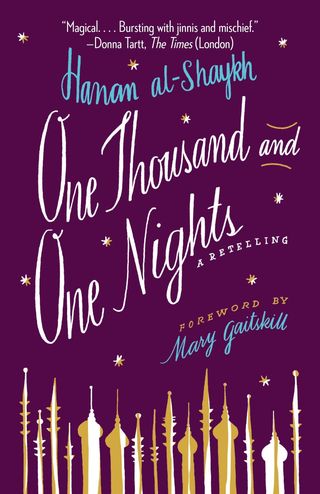
Cover of One Thousand and One Nights: A Retelling

One Thousand and One Nights: A Retelling

Hanan al-Shaykh

Original language: Arabic · Paperback · ISBN 978-0307948991

The stories known collectively as One Thousand and One Nights have traveled across centuries and continents, carrying traces of Indian, Persian, and Arab storytelling traditions. At their center is Shahrazad, a young woman who tells tale after tale to a king who has vowed to execute each new bride at dawn. Her survival depends entirely on her ability to keep the king listening, night after night, story within story.

Lebanese author Hanan al-Shaykh selects nineteen of these tales and renders them in contemporary English. The collection moves between the everyday and the supernatural, touching on love, punishment, poverty, wealth, and the unpredictable workings of fate. Al-Shaykh preserves the humor and sensuality found in the older material while giving the language a directness suited to modern readers. Shahrazad's own cleverness and composure remain a visible thread connecting the separate stories.

The frame narrative, in which storytelling itself becomes a means of staying alive, gives the book an unusual structural tension. Each tale Shahrazad offers must be compelling enough to earn another night. That pressure shapes not only the content of the stories but their pacing and the way one narrative opens into the next.

Plot

Passed down over centuries from India, Persia, and across the Arab world, the mesmerizing stories of One Thousand and One Nights are related by the beautiful, young Shahrazad as she attempts to delay her execution. Retold in modern English by the acclaimed Lebanese author Hanan al-Shaykh, here are stories of the real and the supernatural, love and marriage, power and punishment, wealth and poverty, and the endless trials and uncertainties of fate. Bringing together nineteen classic tales, in these pages, al-Shaykh weaves an utterly intoxicating collection, rich with humor, violence, and romance.

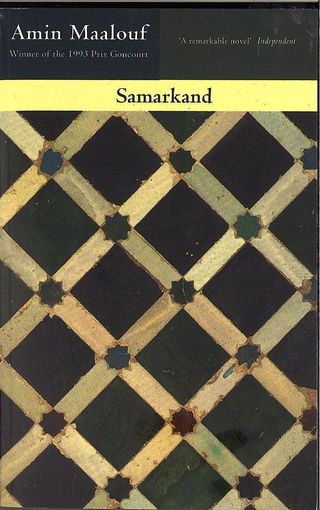
Cover of Samarkand

Samarkand

Amin Maalouf

Original language: Arabic · Paperback · ISBN 978-0349106168

Amin Maalouf's novel Samarkand follows two timelines connected by a single manuscript. In eleventh-century Persia, the poet and scholar Omar Khayyam is accused of offending Islamic codes. The judge assigned to his case recognizes his talent, spares him, and gives him a small blank book, urging him to keep his unconventional ideas within its pages. That book becomes the seed of what will be known as the Rubaiyaat, and Maalouf builds his story around the manuscript's long, precarious life through centuries of political turmoil.

The novel's second timeline moves to a later period, when an American academic becomes consumed by the search for the original Khayyam manuscript. His pursuit draws him into Persia's own struggles for constitutional change, and the story eventually reaches the maiden voyage of the Titanic, binding the manuscript's fate to one of the most well-known maritime disasters in history.

Maalouf, a Lebanese-born writer who has worked in both Arabic and French, constructs the novel as a chain of encounters between poetry, power, and chance. The historical settings shift from Samarkand and Isfahan to early twentieth-century Tehran and the North Atlantic, with each location shaping the manuscript's survival or vulnerability.

Plot

Accused of mocking the inviolate codes of Islam, Persian poet Omar Khayyam fortuitously finds sympathy with the very man who is to judge his alleged crime. He is spared, and thus begins the blend of fact and fiction that is 'Samarkand'.

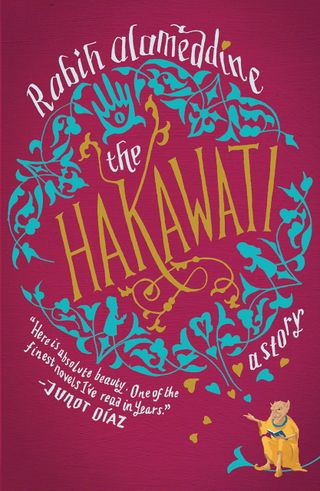
Cover of The Hakawati

The Hakawati

Rabih Alameddine

Original language: Arabic · Paperback · ISBN 978-0307386274

In 2003, Osama al-Kharrat travels back to Beirut from the United States to be at his dying father's side. The return draws his extended family together, and as they wait, old and new stories surface. Osama's grandfather was a hakawati, the Arabic word for a storyteller, someone whose role is to hold an audience through spoken narrative. The novel layers his grandfather's tales alongside figures from scripture, legend, and medieval history, including Abraham, Ishmael, Fatima, and Baybars, the former slave who rose to command Mamluk forces against the Crusaders.

Rabih Alameddine, a Lebanese-American writer, builds the book as a nest of overlapping narratives. Traditional stories sit beside present-day scenes of Lebanese life shaped by decades of conflict and displacement. The structure mirrors a storytelling tradition in which one tale opens inside another, each carrying its own logic and characters, including imps and supernatural figures drawn from regional folklore.

Running through these layered accounts is the question of what stories do for the people who tell and hear them, especially when family, identity, and home have been fractured by war. The contemporary sections follow Osama and his relatives as they navigate divided loyalties between Lebanon and life abroad.

Plot

In 2003, Osama al-Kharrat returns to Beirut after many years in America to stand vigil at his father's deathbed. As the family gathers, stories begin to unfold: Osama's grandfather was a hakawati, or storyteller, and his bewitching tales are interwoven with classic stories of the Middle East. Here are Abraham and Isaac; Ishmael, father of the Arab tribes; the beautiful Fatima; Baybars, the slave prince who vanquished the Crusaders; and a host of mischievous imps. Through Osama, we also enter the world of contemporary Lebanese men and women whose stories tell a larger, heartbreaking tale of seemingly endless war, conflicted identity, and survival.

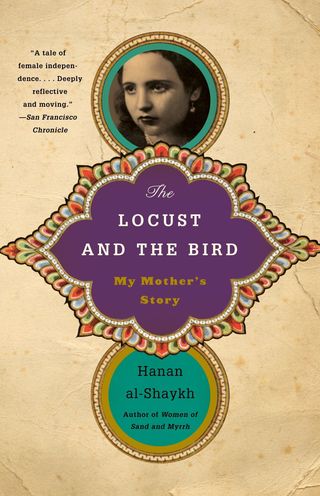
Cover of The Locust and the Bird

The Locust and the Bird

Hanan al-Shaykh

Original language: Arabic · Paperback · ISBN 978-0307472311

Hanan al-Shaykh, a Lebanese novelist, wrote this book as a biographical portrait of her mother, Kamila. Married off at a young age without her consent, Kamila later fell in love with another man, a situation that placed her in an impossible position: she would have to choose between her children and the person she loved. The story follows the consequences of that choice across decades of life in Lebanon.

The setting stretches from 1930s Beirut, with its bazaars, cinemas, and apartment blocks, through to the later decades when the city was reshaped by conflict. Al-Shaykh reconstructs her mother's world using Kamila's own voice and memories, turning a family story into a detailed account of one woman's experience within a society that offered her few sanctioned paths. The book sits between memoir and biography, shaped by a daughter who is also a trained fiction writer.

Kamila's story touches on forced marriage, personal independence, motherhood, and the cost of breaking with social expectations in mid-twentieth-century Lebanon. The narrative moves through periods of both ordinary domestic life and wider upheaval in Beirut, grounding personal decisions in the changing landscape of the city.

Plot

Married at a young age against her will, Kamila soon fell head-over-heels in love with another man—and was thus forced to choose between her children and her lover. As the narrative unfolds through the years—from the bazaars, cinemas, and apartments of 1930s Beirut to its war-torn streets decades later—we follow this passionate woman as she survives the tragedies and celebrates the triumphs of a life lived to the very fullest.

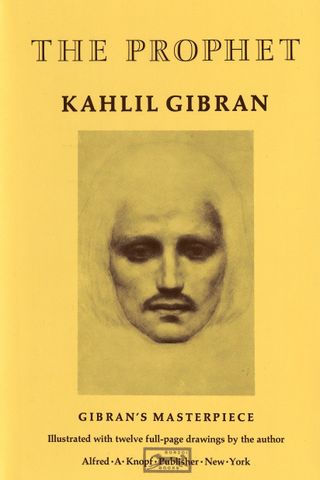
Cover of The Prophet

The Prophet

Kahlil Gibran

Original language: Arabic · Paperback · ISBN 978-0394404288

The Prophet, written in English by Lebanese-American writer and artist Kahlil Gibran, was first published in 1923. The book takes the form of 26 poetic essays spoken by a fictional prophet named Almustafa, who has spent twelve years living in the city of Orphalese. As he prepares to leave by ship and return to his homeland, a group of people gathers and asks him to share what he has learned during his time among them.

Almustafa responds with short, reflective addresses on subjects that span nearly every dimension of daily and inner life. These include love, marriage, children, work, joy and sorrow, freedom, friendship, crime and punishment, reason and passion, self-knowledge, prayer, beauty, good and evil, and death. Each chapter stands on its own, offering observations in a calm, lyrical style that draws on both Eastern and Western literary traditions.

Gibran was born in 1883 in what is now Lebanon and emigrated to the United States as a child. He wrote in both Arabic and English throughout his career. The Prophet remains one of his most widely circulated works and has been translated into dozens of languages since its original publication.

Plot

Gibran’s musings are divided into twenty-eight chapters covering such sprawling topics as love, marriage, children, giving, eating and drinking, work, joy and sorrow, housing, clothes, buying and selling, crime and punishment, laws, freedom, reason and passion, pain, self-knowledge, teaching, friendship, talking, time, good and evil, prayer, pleasure, beauty, religion, and death.

More from Lebanon

See the country page for Lebanon for its map, facts and largest cities, or browse books from other countries.

Links go to Amazon; Hookito doesn’t sell books. Know a book that belongs here, or spotted a mistake? Write to submissions@hookito.com.

Where to next?

Back to the globe
Hookito landscape illustration