Hookito

Sri Lanka · Books

Books from Sri Lanka
10 books from and about Sri Lanka: what each is about, the plot, and a note from Professor Kogi.

Cover of A Passage North

A Passage North

Anuk Arudpragasam

Original language: English · Hardcover · ISBN 978-0593230701

Krishan, a young man recently back in Colombo, receives a phone call with unsettling news. Rani, the woman who cared for his grandmother, has been found dead at the bottom of a well in her northern village, her neck broken. The call arrives at nearly the same moment as an email from Anjum, a woman Krishan once loved during a period he spent in Delhi. Both events pull him toward the past, toward feelings and places he had tried to set aside.

He decides to travel north by train for Rani's funeral, crossing from Colombo into Sri Lanka's Northern Province, a region shaped by decades of civil war. The train journey structures the novel, and during it Krishan turns inward, moving through layers of memory, desire, and loss. Arudpragasam, who also wrote The Story of a Brief Marriage, builds the narrative largely through sustained interior reflection rather than rapid plot shifts. The prose follows the rhythms of thought as Krishan considers his own attachments alongside the larger grief carried by people in the north.

The novel is set against the aftermath of Sri Lanka's conflict, which ended in 2009. It examines how individuals continue to live within landscapes marked by destruction, and how private longing and collective mourning can occupy the same space.

Plot

A Passage North begins with a message from out of the blue: a telephone call informing Krishan that his grandmother’s caretaker, Rani, has died under unexpected circumstances—found at the bottom of a well in her village in the north, her neck broken by the fall. The news arrives on the heels of an email from Anjum, an impassioned yet aloof activist Krishnan fell in love with years before while living in Delhi, stirring old memories and desires from a world he left behind. As Krishan makes the long journey by train from Colombo into the war-torn Northern Province for Rani’s funeral, so begins an astonishing passage into the innermost reaches of a country.

Cover of Brotherless Night

Brotherless Night

V. V. Ganeshananthan

Original language: English · Hardcover · ISBN 978-0812997156

In 1981, sixteen-year-old Sashi lives in Jaffna, a city in northern Sri Lanka, and wants to study medicine. Over the following decade, civil war reshapes her plans and her family. Her four brothers and their friend K are drawn into the escalating conflict between the Sri Lankan state and Tamil militant groups, including the Liberation Tigers of Tamil Eelam, who are fighting for a separate Tamil homeland after years of state discrimination.

Sashi begins working as a medic at a field hospital run by the Tigers, prompted by K's invitation and her own desire to do something useful. But her position grows more complicated as the Tigers carry out killings that reach into her own circle, and Indian peacekeeping forces, sent to stabilize the region, commit abuses of their own. Caught between armed factions, Sashi starts to reconsider her allegiances.

A medical school professor, a Tamil feminist and dissident, offers Sashi a different kind of action: joining a covert effort to document human rights violations. The novel follows Sashi across these years as she moves between loyalty, conscience, and survival in a place where every choice carries consequences. V. V. Ganeshananthan sets the story during the early phase of a war that would last roughly three decades.

Plot

Jaffna, 1981. Sixteen-year-old Sashi wants to become a doctor. But over the next decade, a vicious civil war tears through her home, and her dream spins off course as she sees her four beloved brothers and their friend K swept up in the mounting violence. Desperate to act, Sashi accepts K’s invitation to work as a medic at a field hospital for the militant Tamil Tigers, who, following years of state discrimination and violence, are fighting for a separate homeland for Sri Lanka’s Tamil minority. But after the Tigers murder one of her teachers and Indian peacekeepers arrive only to commit further atrocities, Sashi begins to question where she stands. When one of her medical school professors, a Tamil feminist and dissident, invites her to join a secret project documenting human rights violations, she embarks on a dangerous path that will change her forever.

Cover of Funny Boy

Funny Boy

Shyam Selvadurai

Original language: English · Paperback · ISBN 978-0099459217

Funny Boy follows Arjie Chelvaratnam, the second son of a well-off Tamil family in Colombo, Sri Lanka. As a young child, Arjie gravitates toward staging elaborate make-believe weddings with his female cousins rather than joining the boys for cricket. His family sees this as a problem, and his parents push him toward conventional behavior. Over the course of several linked episodes, Arjie moves from the sheltered world of childhood games into a sharper awareness of desire, identity, and belonging.

The novel is set during the years leading up to the 1983 anti-Tamil riots, sometimes called Black July. While Arjie is quietly working out his own sexuality, the ethnic tensions between the Sinhalese majority and the Tamil minority are intensifying around his family. The two pressures run in parallel: Arjie must navigate a society that punishes difference on both personal and political levels. Sporadic violence gradually reaches the family's own neighborhood, and their privileged position offers less and less protection.

Shyam Selvadurai, who grew up in Colombo before moving to Canada, published Funny Boy in 1994. The story is told entirely through Arjie's perspective, with each chapter structured as a distinct episode covering a different period of his childhood and adolescence.

Plot

In the world of his large family – affluent Tamils living in Colombo, Sri Lanka – Arjie is an oddity, a 'funny boy' who prefers dressing as a girl to playing cricket with his brother.But as Arjie comes to terms with his own homo-sexuality and with the racism of the society in which he lives, Sri Lanka is plunged into civil war as fighting between the army and the Tamil Tigers gradually begins to encroach on the family's comfortable life.Sporadic acts of violence flare into full-scale riots and lead, ultimately, to tragedy.

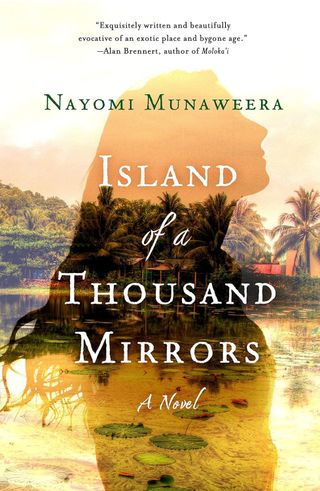
Cover of Island of a Thousand Mirrors

Island of a Thousand Mirrors

Nayomi Munaweera

Original language: English · Paperback · ISBN 978-1250051875

Island of a Thousand Mirrors by Nayomi Munaweera follows two Sri Lankan families whose lives become entangled against the backdrop of the country's civil conflict. The story centers on two young women from different communities, each with her own hopes and plans for the future, whose paths cross in a single encounter that reshapes both their lives. The novel traces how that moment ripples forward through the decades, shaping the choices available to each woman and to the people around her.

Sri Lanka, known historically as Lanka and sometimes called the teardrop of India for its shape off the southern tip of the subcontinent, provides the physical and emotional landscape of the book. Munaweera sets early scenes along the island's coastal towns and moves between Sri Lanka and the diaspora as war displaces families and scatters them abroad. The narrative shifts between the two women's perspectives, letting each side of the ethnic divide carry its own weight of memory and loss.

Rather than presenting the conflict as a single story, the novel builds its structure around parallel lives that mirror and distort each other. Longing, displacement, and the difficulty of peace after prolonged violence run through both timelines, held together by close, domestic detail.

Plot

Before violence tore apart the tapestry of Sri Lanka and turned its pristine beaches red, there were two families; two young women, ripe for love with hopes for the future; and a chance encounter that leads to the terrible heritage they must reckon with for years to come. One tragic moment that defines the fate of these women and their families will haunt their choices for decades to come. In the end, love and longing promise only an uneasy peace.

Cover of Jam Fruit Tree

Jam Fruit Tree

Carl Muller

Original language: English · Paperback · ISBN 978-0140230314

The Jam Fruit Tree follows the Burgher community of Sri Lanka, a group descended from Dutch, Portuguese, British, and other foreign settlers who married and had children with local inhabitants over centuries. Carl Muller, himself a Burgher, draws on his own family history to build a quasi-fictional account of how this mixed-heritage community shaped its identity on the island. The Burghers are often physically distinctive, carrying features from both European and South Asian ancestry, and they developed a reputation for sociability and a readiness to celebrate.

Muller's narrative traces the everyday lives, gatherings, and stubborn persistence of a people who occupy an unusual position in Sri Lankan society. The title refers to the jam fruit tree, a plant known for growing back stubbornly no matter how often it is cut, which Muller uses as a comparison for the Burgher community's refusal to disappear. The tone moves between humor and frankness, mixing affection for his subjects with an honest look at their circumstances.

The book won the Gratiaen Memorial Prize for the best work in English literature by a Sri Lankan writer, awarded for 1993. It is the opening volume of a trilogy centered on the Burgher experience.

Plot

Hilarious, affectionate, candid and moving, this is the story of the Burghers of Sri Lanka... Who are the Burghers? Descended from the Dutch, the Portuguese, the British and other foreigners who arrived in the island-nation of Sri Lanka (and 'mingled' with the local inhabitants), the Burghers often stand out because of their curiously mixed features-grey eyes in an otherwise Dravid face, for instance.... A handsome and guileless people, the Burghers have always lived it up, forever willing to 'put a party'. Carl Muller, a Burgher himself, writes in this quasi-fictional, engaging biography of the lives of his people; they emerge, at the end of his story, as a race of fun-loving, hardy people, much like the jam fruit tree which simply refuses to be contained or destroyed.

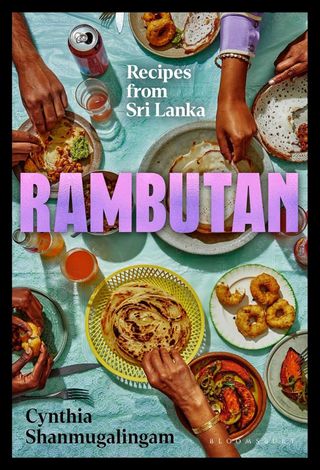
Cover of Rambutan

Rambutan

Cynthia Shanmugalingam

Original language: English · Hardcover · ISBN 978-1526646576

Rambutan is a Sri Lankan cookbook by Cynthia Shanmugalingam, collecting over eighty recipes drawn from the island's cooking traditions and adapted for home kitchens. The book covers a wide range of dishes, from mains like sticky chicken buriani and turmeric-fried potatoes to sweets such as mango fluff pie and milk toffee. Drinks appear too, including lemongrass lime soda and tea cocktails. The recipes are designed to be accessible rather than exhaustive, focusing on dishes Shanmugalingam considers central to Sri Lankan food culture.

Sri Lanka sits at the southern tip of India, and its cuisine reflects centuries of trade, migration, and local agriculture. Coconut, rice, spices like turmeric and cinnamon, and tropical fruits such as the rambutan itself are staples. The book pairs its recipes with photography from the island, mixing food shots with images of everyday Sri Lankan life.

The title refers to the spiky, sweet tropical fruit common across South and Southeast Asia. In choosing it as a name, Shanmugalingam signals a focus on ingredients and flavors specific to the region rather than a general South Asian survey. The book is organized around meals and occasions, moving from dinners through desserts and into drinks.

Plot

In more than 80 recipes, Shanmugalingam takes her favorite parts of the island's culinary tradition and adapts them to be accessible and fun for the home cook: with dinners of sticky chicken buriani and crunchy fried potatoes with turmeric, desserts of mango fluff pie and milk toffee, and drinks of lemongrass lime soda and boozy tea cocktails, Rambutan is designed to deliver as much edible Sri Lankan joy as possible. Combining luscious recipe photography and stunning candids from the island, this exuberant guide is perfect for home cooks looking to explore the exciting Sri Lankan tradition in South Asian cuisine.

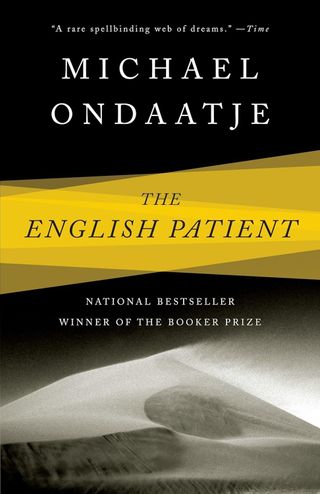
Cover of The English Patient

The English Patient

Michael Ondaatje

Original language: English · Paperback · ISBN 978-0679745204

In the final days of World War II, four people gather in a damaged Italian villa. Hana, a young Canadian nurse worn down by months of caring for dying soldiers, devotes herself to one last patient: a man burned beyond recognition in a plane crash, his identity uncertain. Caravaggio, a thief whose hands have been permanently injured during the war, arrives at the villa carrying his own losses. Kip, an Indian sapper serving in the British army, works nearby defusing unexploded bombs, moving through a landscape where every object could be lethal.

The novel shifts between the villa and earlier times and places. The burned patient's memories reach back to the Sahara and to years spent mapping the North African desert before the war. London during the Blitz, military hospitals in Italy, and the English countryside all surface through the characters' recollections. Ondaatje structures the story in fragments, layering episodes from different periods so that connections between the four lives emerge gradually rather than in sequence.

Michael Ondaatje, born in Sri Lanka and raised partly in England and Canada, published the novel in 1992. It won the Booker Prize. His earlier novel In the Skin of a Lion, set in Toronto, shares at least one character with this book.

Plot

The nurse Hana, exhausted by death, obsessively tends to her last surviving patient. Caravaggio, the thief, tries to re-imagine who he is, now that his hands are hopelessly maimed. The Indian sapper Kip searches for hidden bombs in a landscape where nothing is safe but himself. And at the center of his labyrinth lies the English patient, nameless and hideously burned, a man who is both a riddle and a provocation to his companions—and whose memories of suffering, rescue, and betrayal illuminate this book like flashes of heat lightning.

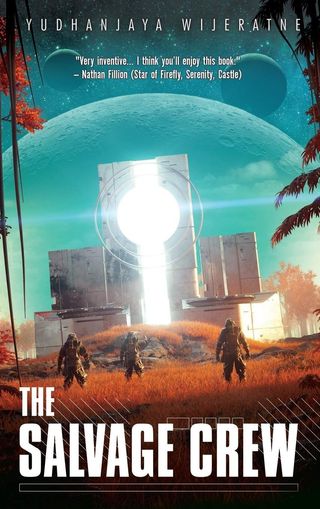
Cover of The Salvage Crew

The Salvage Crew

Yudhanjaya Wijeratne

Original language: English · Hardcover · ISBN 978-1949890709

The Salvage Crew follows an AI overseer and a small human team sent to a remote planet called Urmahon Beta to recover an old United Nations starship. The AI is disgruntled, the crew is underqualified, and the planet sits far from any useful supply line. Their equipment was assembled on a tight budget. The mission is supposed to be straightforward salvage work, unglamorous and slow.

What the crew finds on Urmahon Beta upends that expectation. The planet, assumed to be uninhabited, holds large and dangerous wildlife, a competing crew equipped with superior technology, and something hidden that carries far larger consequences than a routine recovery job. Cut off and outmatched, the team has to improvise survival and progress using limited tools and whatever engineering skills they can scrape together.

Yudhanjaya Wijeratne, a Sri Lankan author, sets this science fiction novel at the intersection of corporate cost-cutting and genuine planetary danger. The story is narrated in part through the perspective of the AI overseer, whose voice carries a dry awareness of how expendable the operation is. The tension between resource scarcity and an increasingly hostile environment shapes much of the plot.

Plot

The overseer is unhappy. The crew, well, they're certainly no A-team. Not even a C-team on the best of days. And worse? Urmahon Beta, the planet, is at the ass-end of nowhere. Everybody expects this to be a long, ugly, and thankless job. Then it all goes disastrously wrong. What they thought was an uninhabited backwater turns out to be anything but empty. Megafauna roam the land, a rival crew with some terrifyingly high-powered gear haunts the dig site, and a secret that will change humanity forever is waiting in the darkness. Stuck on this unmapped, hostile planet, lacking resources, and with tech built by the cheapest bidder, the salvage crew must engineer their way to payday...and beat Urmahon Beta before it kills them all.

Cover of The Seven Moons of Maali Almeida

The Seven Moons of Maali Almeida

Shehan Karunatilaka

Original language: English · Paperback · ISBN 978-1324064824

Maali Almeida is a war photographer, gambler, and closeted gay man in Colombo in 1990, during the Sri Lankan civil war. Or rather, he was. The novel opens with him waking up dead in what looks like a bureaucratic afterlife office. His dismembered body drifts in Beira Lake, and he does not know who killed him. With death squads, suicide bombers, and hired thugs at work, the list of suspects is long.

Maali is given seven moons to reach the living. He wants to contact the man and the woman he loves most and lead them to a hidden set of photographs from his work, images that could expose what has been happening across Sri Lanka. The story moves between the crowded world of the dead and the streets of Colombo, where political violence has become ordinary.

Shehan Karunatilaka places a murder mystery inside a satirical afterlife while keeping the setting anchored in a real conflict. The novel won the 2022 Booker Prize. Its tone joins dark comedy with specific detail about Sri Lankan politics, armed factions, and civilian life in a period when several groups fought for control of the island.

Plot

Colombo, 1990. Maali Almeida―war photographer, gambler, and closet queen―has woken up dead in what seems like a celestial visa office. His dismembered body is sinking in the serene Beira Lake and he has no idea who killed him. In a country where scores are settled by death squads, suicide bombers, and hired goons, the list of suspects is depressingly long, as the ghouls and ghosts with grudges who cluster round can attest. But even in the afterlife, time is running out for Maali. He has seven moons to contact the man and woman he loves most and lead them to the photos that will rock Sri Lanka.

Cover of Wave: A Memoir

Wave: A Memoir

Sonali Deraniyagala

Original language: English · Paperback · ISBN 978-0345804310

On the morning of December 26, 2004, a tsunami struck the southern coast of Sri Lanka. Sonali Deraniyagala was at a beach resort with her husband, her two young sons, and her parents. She was the only one among them who survived. Wave is her account of that event and of the years that followed it.

The memoir moves between two kinds of time. One is the immediate aftermath, in which Deraniyagala describes the first months of loss with a directness that resists softening or comfort. She writes about the difficulty of accepting what had happened, and about the resistance she felt toward a reality she could not change. The other strand reaches further back, tracing her life before the disaster: growing up in Colombo, studying at Cambridge where she met her English husband, settling in London, and raising her children. These memories surface gradually, carrying both pain and detail.

Deraniyagala, an economist by training, structures the book around the tension between remembering and enduring. The recalled scenes of ordinary family life sit alongside the present fact of their absence. The memoir holds these two states without forcing resolution between them.

Plot

In 2004, at a beach resort on the coast of Sri Lanka, Sonali Deraniyagala and her family—parents, husband, sons—were swept away by a tsunami. Only Sonali survived to tell their tale. This is her account of the nearly incomprehensible event and its aftermath.

More from Sri Lanka

See the country page for Sri Lanka for its map, facts and largest cities, or browse books from other countries.

Links go to Amazon; Hookito doesn’t sell books. Know a book that belongs here, or spotted a mistake? Write to submissions@hookito.com.

Where to next?

Back to the globe
Hookito landscape illustration