Hookito

Lesotho · Books

Books from Lesotho

5 books from and about Lesotho: what each is about, the plot, and a note from Professor Kogi.

Cover of Basali!: Stories by and About Women in Lesotho

Basali!: Stories by and About Women in Lesotho

K. Limakatso Kendall

Original language: Southern Sotho · Paperback · ISBN 978-0869809181

Basali! is a Sesotho exclamation meaning women, often spoken with a laugh, a shake of the head, or a clap of the hands. It expresses a particular kind of mutual admiration among Basotho women. Edited by K. Limakatso Kendall, this collection gathers stories written in what the book calls Sesotho-ised English, a form shaped by the rhythms and idioms of Sesotho rather than standard literary English. The result is a set of narratives rooted in the daily textures of life in Lesotho.

The stories move across a wide social landscape. Some center on traditional healers, circumcision schools, bride-prices, and the customs of extended rural families. Others follow households disrupted by migrant labour or individuals marked by the violence of apartheid. A recurring tension runs between rural traditions and the different pace of middle-class office life, where characters find themselves living by a clock that does not match the one their families follow in the countryside.

At the core of each story are the choices women make to protect and provide for their children and the people around them. The collection treats these decisions as ordinary and consequential rather than exceptional, grounding them in specific social pressures, obligations, and relationships within Basotho communities.

Plot

Basali means 'women ' and is one of the most common exclamations in the Sesotho language. The stores offer glimpses of traditional healers, circumcision schools, witches, bride-prices, and extended rural family life.
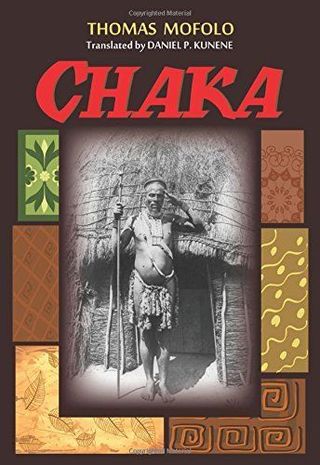
Cover of Chaka

Chaka

Thomas Mofolo

Original language: Southern Sotho · Paperback · ISBN 978-1478607151

Thomas Mofolo wrote Chaka in Sesotho, completing it around 1910, though it was not published until 1925. The novel is a fictionalized account of the life of the Zulu king Shaka, beginning with his birth and following his path from a childhood marked by taunts and mistreatment through his rise as a warrior, conqueror, and ruler. Mofolo, a Mosotho writer from what is now Lesotho, shaped historical material into a story structured around classical tragedy, centering on ambition, the accumulation of power, and the cruelty that accompanies both.

The novel incorporates supernatural elements that serve a symbolic rather than literal function, reinforcing the psychological weight of its central figure's choices. Mofolo uses these episodes to trace how unchecked authority distorts character and leads toward destruction. The English translation by D. P. Kunene preserves the dramatic tension of the original Sesotho prose. Kunene also provides a substantial introduction that places the novel in its literary and historical context.

Chaka stands as one of the earliest novels written in an African language. Its subject, the founder of the Zulu Kingdom, has been retold by many later writers across the continent, but Mofolo's version remains one of the first and most widely translated.

Plot

Mofolo's fictionalized life-story account of Chaka (Shaka), translated from Sesotho by D. P. Kunene, begins with the future Zulu king's birth followed by the unwarranted taunts and abuse he receives during childhood and adolescence. The author manipulates events leading to Chaka's status of great Zulu warrior, conqueror, and king to emphasize classic tragedy's psychological themes of ambition and power, cruelty, and ultimate ruin. Mofolo's clever nods to the supernatural add symbolic value. Kunene's fine translation renders the dramatic and tragic tensions in Mofolo's tale palpable while the richness of the author's own culture is revealed. A substantial introduction by the translator provides valuable context for the modern reader.

Cover of I Did Not Die

I Did Not Die

Tebello Mzamo

Original language: English · Paperback · ISBN 978-0795710735

Botho Pere leaves his wife, Nthatisi, and their two children in Lesotho to work as a miner in South Africa. The separation is common for families in Lesotho, where many men have historically crossed into South Africa to find employment in the mines. Distance strains the household in predictable and less predictable ways, and the novel follows both Botho's life underground and Nthatisi's life managing alone at home.

Secrets run through the story on both sides of the border. Some of the family's problems grow from choices Botho himself has made. Others, according to rumour, have their roots in witchcraft. Tebello Mzamo holds these two kinds of explanation side by side without treating either as automatically more credible than the other, reflecting a world where personal responsibility and supernatural suspicion coexist in everyday conversation.

The title itself signals survival rather than triumph. Mzamo's focus stays on the ordinary pressures of migrant mine labour: the physical danger, the long absences, the money that must stretch across a border, and the family bonds that fray under sustained distance. The setting ties the novel firmly to a pattern of cross-border labour migration that has shaped communities in Lesotho for generations.

Plot

Botho Pere finds work as a miner in South Africa and he has to leave his wife, Nthatisi, and their two children in Lesotho. There are secrets threatening to unravel the delicate thread that has been holding their family together. And though some of Botho’s troubles are of his own making, others are rumoured to be caused by witchcraft.

Cover of Little Suns

Little Suns

Zakes Mda

Original language: English · Paperback · ISBN 978-1909762770

The year is 1903, and a physically weakened man named Malangana, known as Little Suns, is searching for a woman called Mthwakazi. They fell in love two decades earlier, but their lives were torn apart by events surrounding the assassination of Hamilton Hope, a British colonial magistrate stationed in the eastern Cape. Malangana has spent long years in exile in Lesotho, and now he sets out to find the person he lost.

The novel moves between two timelines. In the late nineteenth century, Hope worked to bring the local kingdoms of the eastern Cape under British control. Among those he pressured were the amaMpondomise, the people of Malangana's king. Hope attempted to coerce them into supporting his schemes, and Malangana found himself unable to comply. The consequences of that refusal shaped everything that followed, separating Malangana from Mthwakazi and driving him into exile.

Zakes Mda builds the story around documented historical events, placing invented characters alongside real ones. The structure alternates between Malangana's search in 1903 and the political tensions of the 1880s, connecting personal loss to the broader pressures of colonial expansion in southern Africa. Lesotho and the eastern Cape provide the geographic frame for both timelines.

Plot

It is 1903. A lame and frail Malangana - 'Little Suns' - searches for his beloved Mthwakazi after many lonely years spent in Lesotho. Mthwakazi was the young woman he had fallen in love with twenty years earlier, before the assassination of Hamilton Hope ripped the two of them apart. Intertwined with Malangana's story, is the account of Hope - a colonial magistrate who, in the late nineteenth century, was undermining the local kingdoms of the eastern Cape in order to bring them under the control of the British. It was he who wanted to coerce Malangana's king and his people, the amaMpondomise, into joining his battle - a scheme Malangana's conscience could not allow.

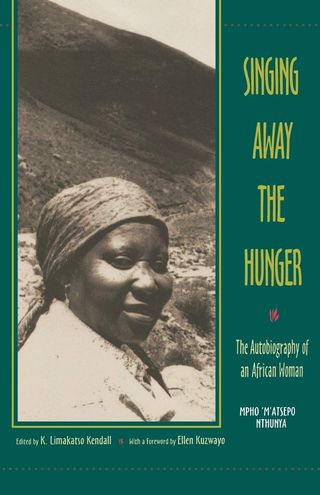
Cover of Singing Away the Hunger : The Autobiography of an African Woman

Singing Away the Hunger : The Autobiography of an African Woman

Mpho ‘M’atsepo Nthunya

Original language: English · Paperback · ISBN 978-0253211620

Mpho 'M'atsepo Nthunya grew up in Lesotho with very little formal schooling and almost no exposure to books or written language. Her autobiography recounts a life shaped by the traditions of a rural, pastoral society and by the harsh realities of labor and survival in South Africa's cities. She describes what it meant to move between these two worlds, where old customs and urban racial violence existed side by side.

Nthunya's account belongs to a kind of life writing that rarely reaches publication. She was not a political figure or a public personality, but a working woman whose concerns included feeding a family, living under apartheid-era South African law, and keeping ties to her home country. The book draws on her skill as a spoken storyteller, and details of food, work, community gatherings and domestic hardship give the text its specific texture.

Lesotho is a small mountainous kingdom entirely surrounded by South Africa, a position that has long shaped its economy. For much of the twentieth century, many Basotho crossed that border for wage work in mines, farms and households, living between two very different social systems. Nthunya's narrative sits inside that long pattern of movement and return.

Plot

A compelling and unique autobiography by an African woman with little formal education, less privilege, and almost no experience of books or writing. Mpho's is a voice almost never heard in literature or history, a voice from within the struggle of "ordinary" African women to negotiate a world which incorporates ancient pastoral ways and the congestion, brutality, and racist violence of city life. It is also the voice of a born storyteller who has a subject worthy of her gifts―a story for all the world to hear.

More from Lesotho

See the country page for Lesotho for its map, facts and largest cities, or browse books from other countries.

Links go to Amazon; Hookito doesn’t sell books. Know a book that belongs here, or spotted a mistake? Write to submissions@hookito.com.

Where to next?

Back to the globe
Hookito landscape illustration