Hookito

Latvia · Books

Books from Latvia

7 books from and about Latvia: what each is about, the plot, and a note from Professor Kogi.

Cover of Baltic: New and Old Recipes from Estonia, Latvia and Lithuania

Baltic: New and Old Recipes from Estonia, Latvia and Lithuania

Simon Bajada

Original language: English · Hardcover · ISBN 978-1743795279

Baltic is a cookbook by Simon Bajada that focuses on the food traditions of Estonia, Latvia, and Lithuania. The book contains close to seventy recipes drawn from the cooking styles of all three countries, with an emphasis on seasonal ingredients and straightforward preparation. Bajada frames the collection around a cuisine that shares certain principles with the New Nordic movement, particularly in its attention to local produce, preservation methods, and simple presentations that let individual ingredients stand out.

The book pairs its recipes with photography of the region's landscapes, markets, and everyday food culture. Rather than treating the three Baltic states as interchangeable, the collection reflects a period in which these countries have been reconnecting with older food customs while developing newer approaches shaped by access to wider ingredients and ideas. Dishes tend toward the wholesome and practical, built around grains, dairy, root vegetables, fish, and foraged foods that suit the region's climate and growing seasons.

Bajada's photography also documents the colors and textures of Baltic produce and settings, giving the book a visual layer alongside its recipes. The result is a record of a specific food culture at a particular moment of change.

Plot

Bringing the Baltic's answer to New Nordic to your kitchen, nearly seventy recipes celebrate this wholesome, creative and intensely seasonal cuisine. As well, stunning photography captures the colour and vibrancy of the produce, culture and landscapes as these unique countries reconnect with the past and embrace new promise for the future.


Cover of Bearslayer

Bearslayer

Andrejs Pumpurs

Original language: Latvian · Paperback · ISBN 978-9354598784

Bearslayer is an English verse translation of Lāčplēsis, the Latvian national epic poem composed by Andrejs Pumpurs and first published in 1888. The poem draws on Latvian folklore to follow its title hero, a figure of extraordinary strength whose name translates roughly as bear-slayer. Set in a mythologized version of ancient Latvia, the story presents conflicts between local peoples and outside forces, weaving together battles, alliances, and encounters with supernatural beings drawn from Baltic oral tradition.

Pumpurs wrote the epic during a period of Latvian cultural awakening in the late nineteenth century, when folklore collection and literary projects in the Latvian language were expanding rapidly. The poem gave shape to scattered legends by organizing them into a continuous heroic narrative, and it became one of the most recognized literary works in Latvian culture. Its central figure later appeared in other art forms, including opera and film.

This edition, restored and reprinted by Alpha Editions, presents the English translation in a format intended to keep the text accessible beyond its earlier out-of-print editions. The work runs in verse and follows the conventions of nineteenth-century epic poetry, with formal language and structured stanzas throughout.

Plot

This remarkable work, long out of print, has been meticulously restored by Alpha Editions for today's readers and future generations, making it not just a reprint, but a true collector's item and a cultural treasure. Dive into the heart of this heroic verse translation, where mythical heroes embark on epic tales that resonate with the spirit of adventure and the struggle between good and evil. ""Bearslayer"" weaves a rich tapestry of folklore poetry, inviting you to explore the depths of Latvian cultural heritage through its vibrant characters and timeless themes. Experience the thrill of battle, the warmth of camaraderie, and the wisdom of ancient traditions as you journey alongside these unforgettable figures. This edition stands out not only for its literary significance but also for its accessibility to both casual readers and classic literature collectors. Whether you are a poetry enthusiast seeking to expand your collection or a newcomer eager to discover the beauty of historical poetry, ""Bearslayer"" offers a unique glimpse into the soul of Latvia's epic storytelling tradition.

Cover of Doom 94

Doom 94

Janis Jonevs

Original language: Latvian · Hardcover · ISBN 978-1903110539

Doom 94 is set in Latvia during the early 1990s, a period when the country regained its independence for the second time. Against this backdrop of political and cultural upheaval, the novel follows a teenage generation searching for identity in a society that is itself being remade. The heavy metal scene becomes a point of gravity for young people drawn to its noise, codes, and sense of belonging.

Janis Jonevs explores what it means to adopt an alternative lifestyle when everything around you is already in flux. The characters find in metal music a structure and community that the wider world cannot yet offer them. Rebellion, in this context, is both personal and generational, shaped by the specific conditions of a small Baltic country moving from Soviet rule into uncertain independence.

The novel also considers the distance between youth and adulthood, between the intensity of a subculture lived at close range and the cooler perspective that comes with time. It asks how long the spirit of rebellion can sustain itself once the circumstances that fed it begin to change. Latvia's own transformation during these years provides the novel with a concrete and particular setting rather than a generic one.

Plot

Caught in cultural chaos, a then-teenage generation turns to the alternative lifestyle offered by an emergent heavy metal scene. Posing the questions of just how long rebellion can last, Doom 94 explores societal change, growing up, and looking back.

Cover of High Tide

High Tide

Inga Abele

Original language: Latvian · Paperback · ISBN 978-1934824801

High Tide follows Ieva, a Latvian woman whose life has been shaped by the choices she and two men close to her made when they were young. One of those men is dead, the other is in prison, and the novel traces backwards through time to show how the three arrived at these outcomes. The story spans roughly three decades, moving in reverse chronological order so that causes appear only after their consequences have already been felt.

The structure gives the book the quality of a psychological mystery. Because events are revealed in reverse, the connections between the three central characters and the full shape of Ieva's situation come into focus gradually. Abele uses this arrangement to control what the reader understands at each stage, letting later chapters reframe earlier ones. The writing combines close attention to landscape and physical detail with careful portrayals of how her characters think and feel.

Inga Abele is considered one of Latvia's prominent younger fiction writers. High Tide won the 2015 AATSEEL Book Award for Best Translation into English, a prize given by the American Association of Teachers of Slavic and East European Languages.

Plot

Told more or less in reverse chronological order, High Tide is the story of Ieva, her dead lover, her imprisoned husband, and the way their youthful decisions dramatically impacted the rest of their lives. Taking place over three decades, High Tide functions as a sort of psychological mystery, with the full scope of Ieva's personal situation—and the relationship between the three main characters—only becoming clear at the end of the novel. One of Latvia's most notable young writers, Abele is a fresh voice in European fiction—her prose is direct, evocative, and exceptionally beautiful. The combination of strikingly lush descriptive writing with the precision with which she depicts the minds of her characters elevates this novel from a simple story of a love triangle into a fascinating, philosophical, haunting book.

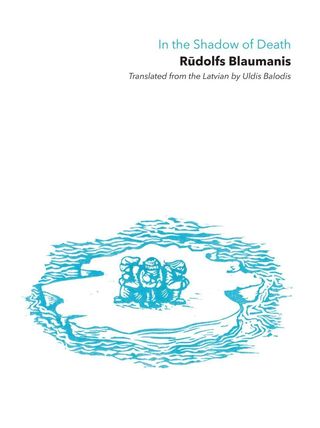
Cover of In The Shadow of Death

In The Shadow of Death

Rūdolfs Blaumanis

Original language: Latvian · Paperback · ISBN 978-1911475361

Rūdolfs Blaumanis published this short story in 1899, drawing on a real newspaper report of fishermen stranded on a drifting ice floe. Thirteen men and a boy find themselves cut off from the mainland after the section of ice they are working on breaks away and moves out to sea. They have fish to eat and two horses with them, but the floe itself is shrinking as it erodes, and the nights bring dangerous cold.

Blaumanis moves through the group one character at a time, observing how each person responds as the situation worsens. Some take on leadership; others fall into fear, calculation, or quiet resignation. The story avoids moral instruction and instead presents each reaction with steady, measured attention. What holds the narrative together is its restraint. The physical facts of the floe, the cold, and the distance from shore do the work that a more dramatic writer might assign to speeches or grand gestures.

Blaumanis is one of the central figures in Latvian literature from the late nineteenth century. He wrote plays, poetry, and prose, often set in rural Latvia. This particular story remains one of his most widely read works, shaped by its basis in an actual event and by its compact, controlled storytelling.

Plot

One by one, the thirteen men and a boy must deal with the creeping reality that they may not see the mainland ― or their loved ones ― again. There is fish to eat, and two horses if necessary, but the very surface of the floe is eroding steadily ... and the nights are cold and terrible. Without ever moralising or over-elaborating, Blaumanis coolly and efficiently observes the state of each of the main characters in turn, whether natural leaders, optimists, craven opportunists, terrified, stoic, compassionate or alienated. In the shadow of encroaching death, each must come to some kind of reckoning.

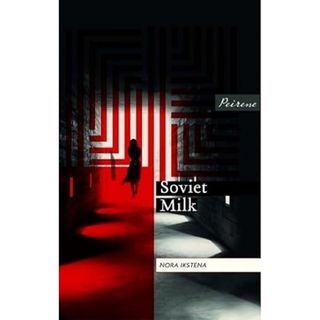
Cover of Soviet Milk

Soviet Milk

Nora Ikstena

Original language: Latvian · Paperback · ISBN 978-1908670427

Soviet Milk follows a woman in Soviet-occupied Latvia whose ambitions as a doctor are cut short by the state. Stripped of her professional path and relocated to a rural village far from Riga, she loses not only her career but her sense of self. The novel spans two decades, from 1969 to 1989, a period during which Latvia remained under Soviet control and personal freedoms were shaped by political decisions made far from home.

The story is told across two generations. As the mother withdraws under the pressure of her circumstances, her daughter grows up largely in the care of a grandmother. This three-generation structure gives the book a quiet axis: the grandmother provides stability and warmth where the mother, consumed by loss, cannot. The relationship between mother and daughter is strained but not simple, marked by forces neither of them chose.

Nora Ikstena sets the story against a specific period of Baltic history, when political change was slowly building but had not yet arrived. The rural Latvian landscape and the distance from Riga serve as both a physical and emotional setting, reinforcing the isolation that Soviet policy imposed on individuals who fell out of favor.

Plot

The central character in the story tries to follow her calling as a doctor. But then the state steps in. She is deprived first of her professional future, then of her identity and finally of her relationship with her daughter. Banished to a village in the Latvian countryside, her sense of isolation increases. Will she and her daughter be able to return to Riga when political change begins to stir?

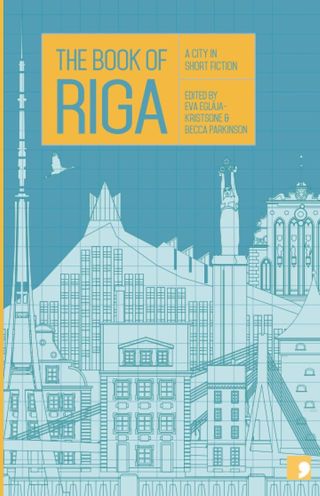
Cover of The Book of Riga: A City in Short Fiction

The Book of Riga: A City in Short Fiction

Eva Eglaja-Kristsone, Vaira Vike-Freiberga, Becca Parkinson

Original language: English · Paperback · ISBN 978-1910974384

Riga has existed for over eight centuries, but Latvia's independence as a nation is far younger. For roughly half of the past hundred years, the city served as a capital under Soviet control. This anthology collects short fiction set in and shaped by that layered history, drawing on writers connected to the Baltic region. The collection is edited by Eva Eglaja-Kristsone, with contributions introduced alongside work by Vaira Vike-Freiberga, and translated into English by Becca Parkinson.

The stories reflect a city defined by contrasts and unfinished change. Several characters are occupied not so much with Riga as it stands today, but with what it might still become. That forward-looking tension sits alongside darker humor and a recurring pull toward myth, both qualities that mark the city's literary culture. Riga appears here as a place still being written, where layers of German, Russian, and Latvian influence press against one another in daily life.

The anthology belongs to a series presenting cities through local short fiction. For Riga, the format suits a place whose identity has shifted repeatedly within living memory, making each perspective partial and each story a fragment of a larger, unresolved picture.

Plot

Riga may be over 800 years old as a city, but its status as capital of an independent Latvia is only a century old, with half of that time spent under Soviet rule. Despite this, it has established itself as a vibrant, creative hub, attracting artists, performers, and writers from across the Baltic region. As its history might suggest, Riga is a work in progress; and for many of the characters in these stories, it is the possibilities of what the city might become, more than merely what it is now, that drives the imagination of its people.

More from Latvia

See the country page for Latvia for its map, facts and largest cities, or browse books from other countries.

Free editions are on Project Gutenberg, matched by title and author. Links go to Amazon; Hookito doesn’t sell books. Know a book that belongs here, or spotted a mistake? Write to submissions@hookito.com.

Where to next?

Back to the globe
Hookito landscape illustration